
Exit Rich · 2026-06-22 · 15 min
Key moments - from our scoring
Substance score
24 / 100
Five dimensions, 20 points each
WeWork's implosion serves as a masterclass in how growth can mask structural dysfunction until the IPO process forces transparency. Michelle Seiler Tucker breaks down six critical failure points using her 6Ps framework from Exit Rich: People (founder dependency with Adam Neumann becoming the business), Proprietary (brand misalignment - positioning as a tech platform while operating as capital-intensive real estate), Processes (weak operational controls failing to scale), Patrons (customer base wanting flexibility but financial model requiring stability), and Profit (fixed long-term lease obligations paired with variable short-term membership revenue). The core problem: WeWork signed 10-15 year landlord commitments while renting month-to-month to customers. This created catastrophic risk when occupancy dropped during economic shifts. The episode is essential for founders scaling past $10-100M in revenue, particularly those in capital-intensive industries or hybrid models. It addresses why revenue growth destroys enterprise value when fundamentals weaken, why boards matter even in private companies, and why scalable businesses require systems and transferable value, not founder charisma.
WeWork's concept was brilliant, but the execution failed due to founder dependency (Adam Neumann becoming the business), weak governance without board accountability, and a fundamentally flawed business model: they signed long-term fixed leases with landlords but rented month-to-month to customers with variable revenue, creating unsustainable financial risk.
WeWork had fixed long-term lease obligations (10-15 years) to landlords but variable short-term membership revenue from customers. When occupancy dropped or economic conditions shifted, they still owed landlords rent while customers could leave immediately, creating a dangerous mismatch of fixed expenses with unpredictable variable revenue.
The 6Ps show People failures (founder dependency, no leadership depth), weak Processes (systems couldn't scale fast enough), Proprietary misalignment (brand positioned as transformational tech platform but fundamentally a capital-intensive real estate business), Patrons misalignment (short-term customer needs conflicted with long-term financial model), and Profit problems (high fixed costs with unpredictable variable revenue).
Growth outpacing infrastructure, founder making all decisions, no independent accountability, revenue growing while profits deteriorate, leadership spending excessively while fundamentals weaken, and valuation becoming more important than operational health are six critical warning signs that danger is approaching.
By slowing expansion, building profitability before hypergrowth, establishing strong governance early, reducing founder dependency, building systems and processes before scaling globally, and focusing on sustainable enterprise value rather than hype-driven valuation - ensuring brand, financial model, and ideal customer align.
Our reviewer’s read on each dimension, with quotes from the episode.
The episode recycles widely-known post-mortems of WeWork's collapse - founder dependency, governance failure, fixed-vs-variable cost mismatch - without adding any original analysis or insider perspective. The ratio of platitude to genuine insight is very high, with significant repetition and throat-clearing throughout.
You cannot scale chaos. It's impossible to scale chaos.
Revenue does not equal enterprise value.
Every point made - charismatic founder risk, long-term lease vs. short-term revenue mismatch, valuation outrunning fundamentals - has been covered exhaustively in mainstream business media, documentaries, and books about WeWork. The 6P framework is the host's own branding but adds no new lens to the analysis.
A scalable business is not built on charisma... it's built on systems, leadership, depth, accountability, processes, profitability, transferable value built to sell.
Scale amplifies weaknesses. If your business model is flawed, at a small level, scaling faster only magnifies the problem.
This is a solo monologue by the host; there is no guest whatsoever. Michelle Seiler Tucker has real M&A credentials and 26 years claimed experience, but she is a business broker commenting on a case study rather than an operator who lived inside anything at comparable scale.
I've been in this industry for 26 years.
I've been on many boards.
A handful of real figures are cited (the $47B valuation, 10-15 year lease terms, the 8-out-of-10 businesses statistic) but they are all surface-level and sourced only loosely; no financial statements, unit economics, occupancy data, or named board members are discussed. Analysis stays at a summary level throughout.
At one point, WeWork was valued at $47 billion.
Long-term commercial leases, but landlords often lasting 10 years, 15 years, sometimes longer.
This is an uninterrupted solo monologue with no guest, no follow-up questions, and no productive tension. The delivery features notable repetition and self-promotional language, undermining even the structural clarity it attempts.
danger will rob us and danger will rob us
There was so much valuable content here, so many golden nuggets. Please go back and listen to this over and over again.
Computed from the transcript - who did the talking, and the words that came up most.
At its peak, WeWork was valued at $47 billion - a shining example of business innovation that seemed unstoppable. Then, it all came crashing down. But was WeWork really a bad idea? The truth is, the concept was brilliant; the execution, however, was fundamentally flawed. Today, we unpack the high-profile collapse of WeWork to reveal the warning signs that every business owner needs to watch for. From founder dependency and governance disasters to the dangerous mismatch between long-term liabilities and short-term revenue, discover how to build a business that is not just scalable, but truly sustainable. If you’re building a company to last - or to sell - these are the critical foundational lessons that could save your business from becoming the next cautionary tale. Love the show? Subscribe, rate, review, and share!
Transcribed and scored by The B2B Podcast Index.
Welcome to the Exit Rich Podcast, where the leading authority on buying, selling, fixing, and growing companies, Michelle Seiler Tucker, is dedicated to helping you find the path to retire rich and move on to your next adventure by exiting your business for the desired dream price you deserve. Get ready to exit rich with your host, Michelle Seiler Tucker. Welcome to another episode of Exit Rich Podcast. You know me, I'm Michelle Sauer-Tucker.
I've been in this industry for 26 years. And today we're going to talk about one of the biggest business collapses in modern entrepreneurial history, WeWork. At one point, WeWork was valued at $47 billion. Then it all came crashing down through the IPO, leadership, scandals, massive losses, bankruptcy.
But here's the real question. Was rework actually a bad idea? Hmm. Think about that.
No. The idea was actually brilliant. The execution, leadership structure, and business fundamentals were the real problems. And if you're a business owner doing $2 million, $10 million, or even $100 million in revenue, there are lessons here that could save your business and potentially save your exit.
Because what happened to WeWork happens to entrepreneurs every single day on a much smaller scale. Let's unpack it. There's a lot of baggage here. So WeWork launched in 2010 with a very compelling concept.
They have flexible office space or startups for entrepreneurs, freelancers, and remote workers. The company exploded because they were solving a real market problem. Businesses really wanted flexibility, community, shared resources, lower overhead, and WeWork created an experience around office space. That's important.
They weren't selling desk. They were selling identity, culture, and belongings. Investors loved it. Money flooded in.
They had so much money. And the company expanded aggressively across the globe. By 2019, we worked reached a valuation of nearly 47 billion. That's what the B, billion.
But here's the first lesson. Growth can hide dysfunction for a very long time, especially when money is cheap. The cracks begin to show everything change when we work prepared for its IPO because private investors might really tolerate chaos and look over things because private investors might tolerate chaos. Public markets absolutely will not.
The PEO filing exposed a lot, exposed massive losses, weak governance, founder excess, unstable financial structure, huge long-term liabilities, no clear path to profitability, and investors panicked. The valuation collapsed almost overnight. This is where entrepreneurs need to really pay close attention. Revenue does not equal enterprise value.
You can grow top-line revenue while simultaneously destroying the foundation of your business That exactly what happened to WeWork The founder dependency problem Now let talk about the biggest issue founder dependency WeWork became Adam Neumann and that is dangerous. The company revolves around his personality, his vision, his decisions, his spending, his leadership style. The business was not institutionalized. It was personalized.
And buyers do not buy personalities. They buy systems. They buy predictability. They buy transferable value.
One of the biggest mistakes entrepreneurs make is building a business around themselves instead of building a business that works without them. Tony Robbins did this. Tony Robbins cannot sell Tony Robbins because he's one of the biggest personalities in the world. He did the ESOP and so to his employees.
It's also the reason why 8 out of 10 businesses will never sell, because the owner is the business. And when the owner becomes unstable, distracted, burned out, or unpredictable, the valuation collapses. That exactly is what happened here with Rework. Governance disaster.
Now let's talk about the board. Because a bad CEO is dangerous. But a bad CEO with no accountability, that's catastrophic. The board failed to challenge leadership.
They allowed excessive spending, reckless expansion, weak financial controls, conflicts of interest, poor strategic discipline. The board became passive instead of protective. A strong board asks difficult questions. I've been on many boards.
A strong board challenges assumptions. A strong board really protects the long-term value of the company. WeWork lacked independent oversight. And when there's no accountability at the top, problems multiply quickly.
This is why governance matters, even in privately held companies, especially in privately held companies. The real business model problem. Now let's talk about the business model itself. WeWork really had a business model problem.
We will sign long-term leases around the world, but we're in an office space short-term. You can see a huge conflict right there. That mismatch created enormous risk. Their obligations were fixed.
They have fixed expenses, but their revenue was variable. So when market conditions changed, the structure became extremely fragile. Here's the lesson. Scale amplifies weaknesses.
If your business model is flawed, at a small level, scaling faster only magnifies the problem. A lot of entrepreneurs think, if I just grow bigger, my problems will disappear. No, bigger businesses magnify operational flaws. Bigger business, bigger problems.
You cannot scale chaos. It's impossible to scale chaos. Let's talk about the Solar 6P breakdown. Let's break WeWork down using the Solid Tucker 6Ps that we discuss in my book, Exit Rich.
We have a people problem. People failures. The company depended too heavily on what founded. No leadership depth.
No accountability. We governance. Product action was very strong. The market clearly wanted flexible workspace solutions.
The ideal itself worked. The ideal itself was brilliant. But processes were weak. Operational systems and controls did not measure fast enough to support growth Let talk about proprietary Proprietary the branding became bigger than operational reality WeWork started presenting itself as a technology company a movement, a transformational platform, a cultural revolution.
But underneath it all, it was just still fundamentally a real estate leasing business with enormous fixed costs. It did not align with the brand. The foundation of the company was not in alignment with the brand. That disconnect really created credibility gap, huge credibility gap.
Ambassadors eventually realized, wait a minute, this isn't a scalable tech company with software margins. It was a capital intensive real estate business trying to command Silicon Valley valuations. That's not purely a branding issue. That's a positioning and valuation issue.
Patrons. We worked, had an ideal client issue, but not in the way most... Patrons. We worked, had an ideal client issue, but not in the way most businesses do.
Instead of the issue being who is our customer, Their issue was that their customer did not match the financial model. A healthy ideal client aligns with profitability, aligns with scalability, aligns with operational structure, creates predictable cash flow. WeWork's early customer base align with growth, but not necessarily with sustainability enterprise value. value.
The simplest explanation, WeWork's customers wanted flexibility, but WeWork's financial structure required stability. That mismatch created ongoing pressure on profitability, predictability, and long-term sustainability. WeWork tried to market long-term leases to short-term clients, and that was one of the core problems in their business model. Long-term commercial leases, but landlords often lasting 10 years, 15 years, sometimes longer.
Then they turned around and rented that space to customers on a monthly membership short-term agreements, flexible contracts, so they have long-term fixed obligations paired with short-term on-projecture revenue. This was a train wreck, a complete train wreck. That mismatch created enormous financial risk. Why this was dangerous if occupancy dropped.
Customers could leave quickly, but we were still old landlords rent for years. That means revenue was flexible, expenses were fixed. You never want to get in that situation. That is a very dangerous structure during economic slowdowns.
Remote work shifts, recession, startup funding, contradictions, and that's exactly what eventually happen. Here's the biggest profit problem we work at. High fixed costs with unpredictable variable revenue. That combination is dangerous.
A healthy business really creates reoccurring revenue, predictable income, controlled expenses. We worked in the exact opposite. You can see the trick back. Warning signs that every entrepreneur must watch for.
Here are the biggest warning signs every business owner should recognize. Warning signs number one, growth outfacing infrastructure Warning signs number two founder making all decisions Warning signs number three no independent accountability Warning sign number four revenue growing while profits are deteriorating Number five I hope you guys write this stuff down leadership spending excessively while fundamentals weaken. Warning sign number six, valuation becoming more important than operational health.
That last one is huge. when perception becomes more important than fundamentals, danger is coming. Danger will rob us and danger will rob us. Now we're going to talk about what WeWork should have done differently, how they could have prevented this.
Now we're going to talk about what WeWork should have done and how they could have prevented this crash. First, slow down expansion. Second, build profitability before hyper growth. Third, stringing governments.
You need that accountability early on. Fourth, reduce founder dependency. Fifth, build systems and processes before scaling globally. Sixth, focus on sustainable enterprise value instead of hype-driven valuation.
Because sustainable business survives, hyper-driven businesses eventually will collapse. Here's the other thing. Make sure that your expenses, your financials align with your ideal client. So if their WeWork's ideal client was what?
It was short-term rentals, but their financial model was long-term lease. The two of those are not in alignment. So here's the bottom line. We did not fail because the idea was bad.
In fact, it was a brilliant idea. It failed because of leadership, governance, and business fundamentals were weak. In fact, I would say a lot of business fundamentals didn't even exist. And this is the lesson that every entrepreneur must understand.
A scalable business is not built on charisma. It's not Tony Robbins. is built on systems, leadership, depth, accountability, processes, profitability, transferable value built to sell. Even if you never plan to sell, and you always should, because never will always come, you should always plan your exit because you never know what's going to happen.
Businesses that are scalable, sellable, and transferable are also the healthiest businesses to own. And if you don't build that way from the beginning, you risk becoming another WeWork story. Thank you so much for listening to another episode of Exit Rich. There was so much valuable content here, so many golden nuggets.
Please go back and listen to this over and over again. Make sure your brand aligns with your financial model and make sure you share this with your network. Please share it with your peers. please share it with your circle of influence.
Remember, always say your network equals your net worth. And remember, don't just build a business. Build a business that works without you. Thank you.
Thanks for listening to the Exit Rich Podcast. Don't forget to check out Michelle Seiler Tucker's Build to Sell Blueprint books and Exit Rich, along with more blogs, videos, and resources at exitrichpodcast.com. Be sure to connect with Michelle on Facebook or LinkedIn and stay tuned for her next episode by subscribing in your favorite podcast player.
Other episodes covering the same guests and topics, from across The B2B Podcast Index.
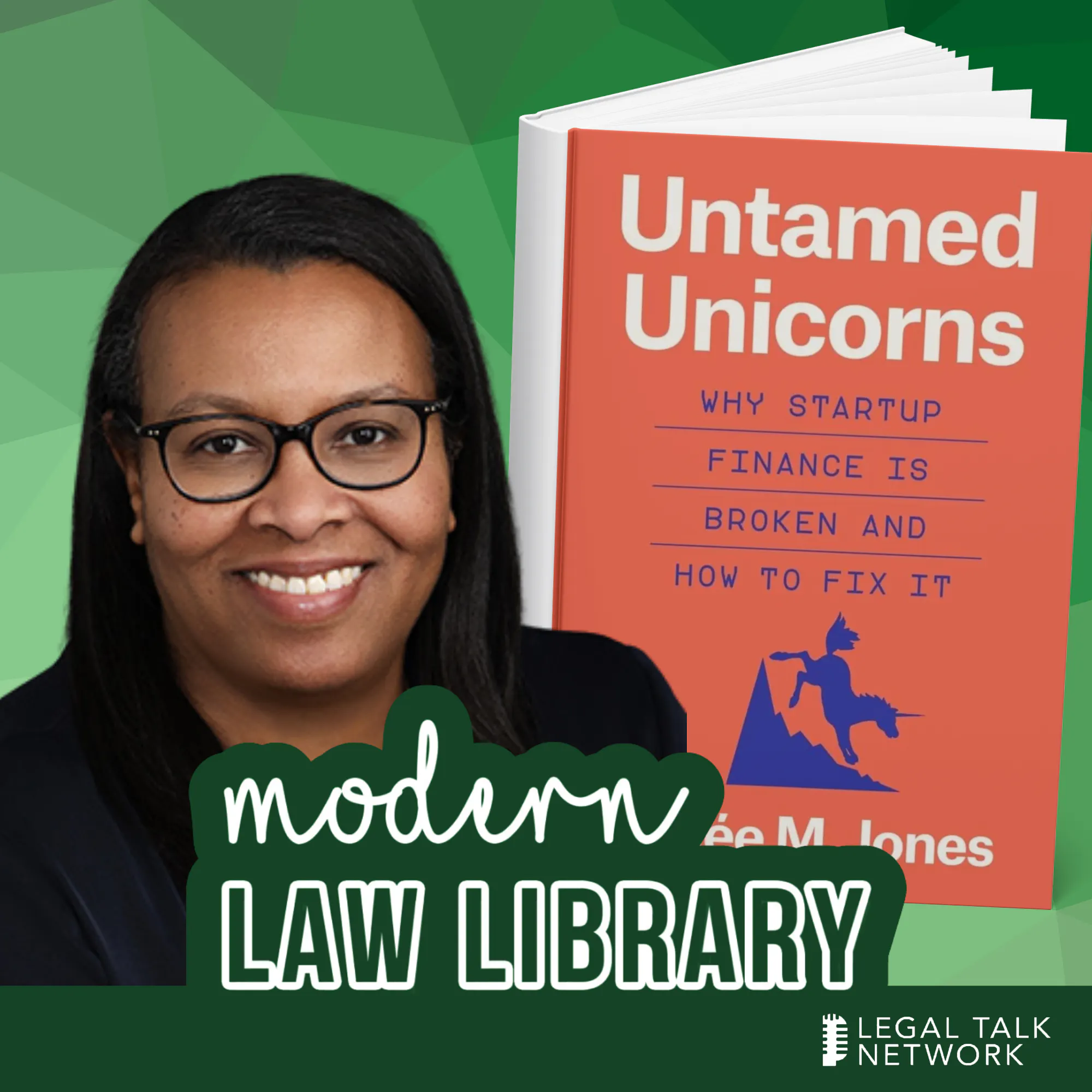 We need to rein in Silicon Valley unicorns, says law profModern Law Library · on WeWork96 / 100
 Ep.283 - Renee Jones on Untamed UnicornsBusiness Scholarship Podcast · on WeWork92 / 100
 The Money Behind Money in VC | Julia MaltbyTank Talks By Ripple Ventures · on WeWork91 / 100
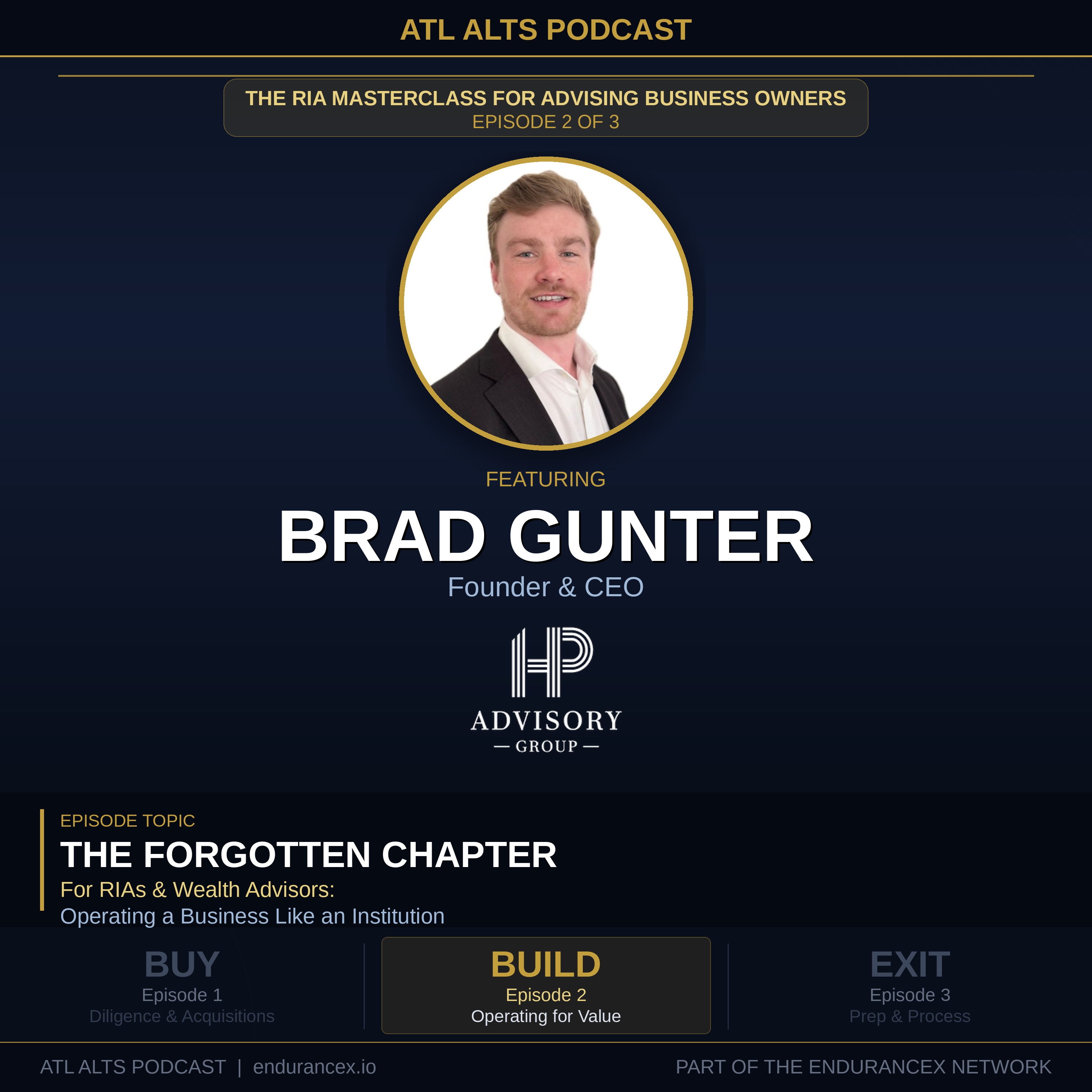 The Forgotten Chapter - Operating a Business Like an InstitutionATLalts · on Board governance88 / 100
 Business Valuation: Why Buyers Ignore Your EBITDA Multiple - Mark Mills, OBEKing Dems Podcast · on Founder dependency85 / 100
 Board Governance, Board Development Part 1Informed Decisions · on Board governance79 / 100Mastering The Business Pivot: A Post-Shark Tank Journey With Byron YoungBag Your Profit With Byron Young, Founder Of CordaRoy’sThe Crash And Burn Of Spirit AirlinesWhy Your Business Is Your Most Valuable AssetGot IP? With Anthony Kjenstad, CEO Of Firefly