
Event Marketing: Redefined · 2026-07-01 · 44 min
Key moments - from our scoring
Substance score
46 / 100
Five dimensions, 20 points each
Matt Kleinrock and Ashley Nuski examine why playing it safe in event marketing kills results, arguing that effective events - whether trade shows, activations, or host events - require strategic intention and authentic surprise, not conveyor-belt thinking. Ashley highlights how 'stale and pale' approaches like generic booth candy, templated messaging, and repeated formats without elevation fail to stand out, while Matt emphasizes the importance of starting with real business objectives (not surface-level 'goals') and understanding why you're attending before moving to tactics. Both stress that events must integrate into broader marketing initiatives rather than operate in silos, serve cross-functional needs (brand, growth, pipeline, retention), and create personalized end-to-end experiences that make attendees feel seen - citing examples like AI-pulled podcast quotes from speakers and thoughtfully curated book gifts selected by career stage. They argue that in an AI-saturated world, immersive in-person experiences have become the differentiator, and that thoughtfulness in execution (pre-event touchpoints, name cards, specific handwritten notes, relevant parting gifts) is table stakes that surprisingly still counts as innovation in most programs.
Common indicators include: looking like you came off a conveyor belt with generic booth builds from on-site vendors, repeating the same messaging across all touchpoints without layered storytelling, using predictable candy bowls and standard branded tchotchkes, and running identical events year-over-year without elevation or expansion - basically following the old playbook without standing out or understanding your specific audience.
Start by reverse engineering from top-down goals: identify which audiences, industries, and deal sizes matter most and what yield you need. Integrate events into main campaign planning from the beginning rather than treating them as siloed initiatives, tie programs to product launches and broader marketing messages, and balance format mix (tier-one trade shows for high-revenue segments, white-glove field events for hard-to-reach C-suite) based on where your decision-makers actually show up.
Layer multiple touchpoints: pre-event digital mailers or invitations, name cards at arrival, personalized notes pulling 1-3 specific data points about attendees (their city, role, interests), and thoughtful parting gifts selected by career stage or need (like curated books). The magic isn't over-personalization but genuine thoughtfulness - making attendees feel seen and extending the experience post-event through follow-up activations like book club discussions.
As AI and digital channels become oversaturated, authentic human connection and immersive experiences have become the key differentiator. Prospects can engage with AI tools independently, but in-person and virtual events allow brands to create memorable, layered experiences that stick with audiences and drive genuine connection in ways that can't be replicated digitally.
Asking about goals typically yields generic corporate answers ('make money,' 'build brand awareness') that don't inform strategy, while asking why you're attending forces specificity about business objectives and measurable outcomes needed in 3, 6, 9, or 12 months - which then shapes everything from budget justification to experience design and ROI calculation.
Our reviewer’s read on each dimension, with quotes from the episode.
There are a handful of genuinely useful frameworks - subjective vs. objective creativity, reverse-engineering the annual program from top-down goals, and layered personalization touch points - but large stretches are conversational filler, anecdote-swapping, and restatements of obvious event-marketing truisms. The insight-to-filler ratio is low.
Integrated is the magic sauce. And it's easier said than done, but that really is. Not everyone's doing it. You know, events are siloed
the driver should be objective creativity, which to me is market awareness... a sign of a good marketer, a good event marketer is someone who has a holistic view the market
The subjective-versus-objective creativity distinction is the episode's freshest conceptual contribution, but almost everything else - tie events to business goals, create shared experiences, personalize touch points - is well-worn event marketing doctrine. No genuinely contrarian or first-principles argument is made.
subjective creativity... is driven by internal bias... personal taste... the driver should be objective creativity, which to me is market awareness
people think they're doing cool shit, but it's not cool if it doesn't hit with your audience
Ashley Nuski is a genuine field-and-event marketing practitioner with ~12 years of hands-on experience running trade show programs, field events, and tier-one conference activations; her examples feel credibly lived-in. However, no company names, verifiable titles, or measurable program scale are disclosed, limiting confidence in the claimed seniority.
in the 12 years that I've been a marketer in field and event marketing, across trade shows, across field events, even virtual events
within three months of joining an org... I found it in to switch something around and have us own the opening night reception
The Medieval Times anecdote (30 attendees, 21 senior execs, 7 Fortune 500 companies, Scottsdale, supply-chain security tech firm) and the Havana Nights reception story offer concrete texture, and Linchpin by Seth Godin is named. However, no pipeline numbers, conversion rates, ROI figures, or company names are provided, and most claims remain at the level of illustrative story rather than verifiable evidence.
we had about 30 people. So it was about 21 senior executives. About seven of those were from Fortune 500 companies
you are spending tens of thousands, up to 20,000 a month on SEO and paid out, you are burning the same amount
The host arrives with a few structured prompts (the subjective/objective creativity distinction, the personalization walkthrough, the 'advice to younger self' closer) and occasionally sharpens the conversation, but there is almost no pushback, no challenged claim, and the host frequently pivots to self-promotional anecdotes about his own company's events, diluting the interrogative quality.
when you ask people goals, they give you bs. Goals they give you nonsense, they give you nothing
let's pause on that for people because I think you're having a business conversation. That's what you're doing. You're removing emotion, ego, everything
Computed from the transcript - who did the talking, and the words that came up most.
Too many events still rely on the same booths, the same activations, and the same “safe” playbook. The result: experiences people walk past, forget, or never meaningfully engage with in the first place. Ashley Nuske, Director of Field & Event Marketing at Goldcast (now Cvent), joins Matt Kleinrock for a candid conversation about what’s broken in event marketing today and why safe strategies rarely produce standout results. Ashley shares how she approaches audience-first event design, builds experiences around business outcomes instead of assumptions, and pushes teams beyond repetitive execution. The episode explores everything from creative field event concepts to executive buy-in, experiential trends, and why immersive experiences matter even more in an AI-saturated world. Learn: What stale event execution actually looks like in today’s market How thoughtful personalization creates stronger audience connection and recall Why event marketers need market awareness, not just internal opinions, to innovate Tune in for a practical conversation on how modern event marketers can create experiences people actually remember and results leadership can actually measure. -
Transcribed and scored by The B2B Podcast Index.
Speaker A: People think they're doing cool shit, but it's not cool if it doesn't hit with your audience. They're going to want different things.
Speaker B: Welcome back to Event Marketing Redefined with your host, Matt Kleinrock.
Speaker A: Welcome to Event Marketing Redefined. I'm, um, your host, Matt Kleinrock, CEO of Rockway Exhibits and and events. Today we are talking how safe doesn't sell, why smart event marketers need to create demand. I have Ashley Nuski with me here today and she is a senior event marketing leader. We are going to kind of drive this conversation, talk about multiple different topics, but really one of the key things that we are going to get into today is how I think it's already been established that ah, trade shows and events are a, you know, part of go to market, part of sales and marketing. But like any good effective sales and marketing efforts, channel strategies, there are certain strategies, intentionalities, ways of doing them. Some people are good at them, some people are bad at them. So but for events, what does that specifically look like? And some of that comes from not playing it safe, making unforgettable moments. So it's kind of a little bit of an intro, kind of what this conversation is going to look like. Ashley, welcome. Looking forward to this conversation. Thanks for your time.
Speaker B: Yeah, happy to be here. Like I said, we're both yappers, so I think this will be fun and fruitful and especially when it comes to event marketing. For those listening, thanks for being here. I don't do fluff or filibuster. I don't think Matt does either. So you're in for a real treat and hot takes and practical examples and use cases. So stay tuned. There we go.
Speaker A: You heard it there. I went back and listened to our original conversation. When we talked about kind of doing this podcast, what we wanted to talk about, what we felt like is important and uh, just from some stuff that I've written about recently and some conversations that I've had recently, one thought that I had that I want to tie to this is trade shows and events, I think it's established, are a part of the sales and marketing function, are a part of go to market, all this cool stuff. We know that they need to produce pipeline, we know that they need to help with customer retention, brand awareness, which is pretty much everything that sales and marketing does, right? But one little thing I'm starting to realize here is that not all good sales and marketing is the same. There are different ways, right? So whether you're really good at cold emailing, whether you're really good at content, whether you're really good at being in person. Like all these different styles, uh, and approaches have different good of what effective looks like. And I think sometimes people are missing that in events because it's an entirely different ball game. It's totally different.
Speaker B: It's an entire ecosystem marrying all that together. That's why it is an events function that's or it is a go to market function, is a channel of its own because you are pulling in, collaborating cross functionally across all those things. So it's not just a matter of if you are good at one of those singular things, it's making sure all of those things are strong, efficient and cohesive. So yeah, I mean I'll die on that hill any day.
Speaker A: And can you kind of produce, you know, can you produce results? Because at the end of the day that's what events have to do. So what I want to do is start with the safe thing because I think you and I kind of both agree that really good events, whether they're trade shows, activations, experiences, dinners, whatever.
Speaker B: Mhm.
Speaker A: They are often not safe. They often think slightly outside the box. They are often about surprise and delight and moments. So tell me a little bit about, you know, what are some signs maybe that you've seen that companies are acting safely, that companies are kind of running an older playbook, that companies are kind of doing things a little bit stale.
Speaker B: Yeah, I mean jumping right into the digs here. No, I'm just kidding. But you know, I think that you know, obviously across different ICPs and audiences there's gonna, there's gonna be, there should be a prescribed, you know, uh, industry specific experience. But generally speaking, regardless of industry, regardless of vertical, you know, in, in the 12 years that I've been a marketer in, in field and event marketing, across trade shows, across field events, even virtual events too, I think what I've seen that is the biggest tell or the biggest standout that something is the sale and standard is when you look like you came right off the conveyor belt, right like you're running the playbook. You know what it looks like when you see it. You know, it's kind of a bent in a box thinking. And I don't mean logistically because operationally that's what you want. You want repeatability, you want efficiency. But I'm talking about you know it when you see it. It's the same. You picked option two out of three to shape your booth from like the on site vendor versus having your own creative modular whatever that you Bring it's the same messaging across all of your touch points at your standalone event, at your trade show, whatever, versus telling a story and building up to something and having it be layered. You know, it's the uh, hey, come by our booth and grab a piece of old candy out of the bowl. You know, it's the Dale and standard and that's safe. But you're just showing up and you're not standing out. And I think the brands that are really innovative and standing out are the ones that are really creating and designing experience that is just like full frontal. Who they are from, a valued prop from a brand, but also in a way that ties in the audience, that doesn't feel random or tacky, but it feels, if you only just do a drive by to our booth or to our standalone activation, like you walk away being like, whoa, that looks really cool. And they do this for this title in this vertical. You know what I mean? Like you understand it, but the safe and stale is when it's just predictable, it's repetitious for the sake of being easy. And that of course look year over year, look at your historicals. Like if you have a signature theme or format that works great, if you're going to run it back, elevate it, deepen it, layer it, uh, you know, expand on it. Don't just do the same thing because it worked last year, do the same thing but like 10 times bigger and better then because that works. I mean, you know, there's huge tier one events that are most likely always. You can predict the theme, but it's different. It's bigger and better every year versus just like blending in with the same row of uh, stale and pale.
Speaker A: Yeah. You know what it makes me think about? It makes me think about how important the approach is to events. Too often people are moving down the line in the process way too fast. Even when they come to companies like mine. Right. Uh, most people are just looking for a nice booth or they're looking for a certain build out. And even when they're looking for experiential or text style engagement ideas, they're not really starting from the beginning which is saying, hey, and it's not the goals. What's your goals? Tell me your goal. It's not really that, uh, it's really more of understanding. Like I always ask question like why are you going? Why are you there?
Speaker B: Yeah.
Speaker A: What are the business objectives that you're tying to. What are the things that when you are 3, 6, 9, 12 months down the line that have to happen for this to be successful.
Speaker B: Specific goals, not.
Speaker A: Yeah, like, because when you ask people goals, they give you bs. Goals they give you nonsense, they give you nothing.
Speaker B: Grinds my gears more than like, especially from like with working with vendors for build outs or custom builds. It's like, listen, if you have to ask me what's your goal goal is to uh, make money, okay? Do we even have to ask that? Having that initial conversation about what your goals are, like they started off and it's just so silly to even be like, why are you going to the event?
Speaker A: I think it goes. Yeah, the point I'm trying to make is like, it goes into the approach of it, which is if you're gonna go. And it also ties to the spend because people love to complain about the spend. And yeah, events are expensive and they're resource suckers. But honestly what I always tell people is that's relative. That's relative to the results you produce. Because if you can produce big results, it's not really expensive. It's kind of like a big investment, right? You make a big investment. It's like the difference between buying a vacation home in the Cape that is going to return you massive investment on your Airbnb versus buying maybe a small apartment near your house that's going to return you far less. Smaller investment, smaller return bigger. It's the same kind of relative thing. But if you don't put the work into the event at uh, and treat it as a sales and marketing channel, and I think that's kind of what I want to get into here with you is what are some of the things that you think are important from that perspective to running a good event, Whether it's a host event, a trade show booth, I don't care. But in the approach, what are some of the things that you're thinking about and considering to know that you're going to go drive the results that you want.
Speaker B: Yeah, I'll say first, quickly on the budget comment. Ah, listen, as a event marketing leader, you know, I see our department budget, okay? And the same amount is being, if not nearly the same is being slotted to events as it is across gen, across brand. So when people say events are expensive, it's only because it's a, uh, physical materialization of what you're spending. What you're not sure, what you're not clocking is you're spending tens of Thousands, up to 20,000amonth on, on SEO and paid out, you are burning the same amount. Um, just, it's a physical representation of Your money, which is a fortunate, unfortunate for the marketer because your goals are realized. That's always fun for us. But when in terms of thinking of what really stands out and setting up events, when I'm curating the annual program, like across the board, reverse engineering from the top down goals, who do we want to be in front of, to what capacity, to what yield, what growth do we want to see with these particular titles, these particular industries? When I'm building from that, I'm making that whole annual program like have a song and dance that ties into that.
Speaker C: Right.
Speaker B: I think from the jump, starting off knowing what your North Star is, not making it arbitrary, not making it like cutesy and random in the middle of H2, like, you know, hey, we had a couple of field events, you know, slated for the end of the year. What do we want to do for that? It's like, no, let's get in front of the bigger picture, the bigger marketing initiatives. Where is product at for the year? Do we have a couple launches?
Speaker A: How do we help drive it?
Speaker B: Yep, yeah, tie like integrated. Integrated is the magic sauce. And it's easier said than done, but that really is. Not everyone's doing it. You know, events are siloed or because of stigmas like budget and things like that, there's some hesitation there or there's hesitation in launching them. So they're not pulled in from the beginning and they're not tied into the integration of the main plan. So then it becomes a little reactive and then that hurts the impact, that hurts the results. So a hot take for me is that it needs to start off at the table of the main campaign planning. It needs to fold in and then it becomes your in person field champion of whatever your message is, whatever your song dances for the year and then obviously tailored in different formats and size and shapes. Like I don't promote one format over the other. I'm not like, hey, debt to trade shows or only field for the win. It's the combination of the bigger picture. If you know you've got high rev goals in a certain segment and that segment really only shows up at tier one events because it's the industry standard, then you know you gotta roll some of those into your program. If you know that your real decision makers are hard to get to C suite senior leaders that have a ton of invites coming their way, then I'm gonna put them in that white glove bucket of maybe like four to ten events throughout the year where we really obsess over them and get them to something really Exclusive and fun and immersive. So it's the marriage of all that, you know, feeding the needs across the board. Because that's what events do. They serve cross functionally. They have to feed brand, they have to feed growth.
Speaker A: Yeah, everything.
Speaker B: Like, yeah, it's just like it is my favorite channel obviously, but it's also, I'm going to say it, I think we have the hardest marketer cap in the group.
Speaker A: Yeah. Uh, yeah. I mean I always kind of use the saying either for ourselves or for when we're working with our customers. I always say, how can we move your audience closer to you? Because that's basically saying, hey, look, if we're talking top of a funnel style event, we're typically talking to people that really don't know a ton about you or people that maybe do or there's some misconceptions. So how do we get them closer to where, you know, they're educated on you, they're intrigued by you, they're interested in you, they got some dwell time, they want to be around what you're doing, you're impressing upon them. Or versus if we're at an event where it's customers, how do you move that customer closer to you? Right. How do you say, hey, like we're working together, we want you to understand us deeper. And it is almost all the time. But your customer learning a little bit more about your point of view, your value prop, what you offer. So it's always about crafting a experience or journey and those words are overused, but when you understand them, they're not. It is about saying, how do you make this interaction, have that person want to lean in versus lean away from you? And I think some of the magic is being authentic. People can smell inauthenticity. Right. People love authenticity. Especially now with all the digital and AI and all the crap going on.
Speaker B: I mean, rampant AI is accelerating in some ways and oversaturating in. And that is why, I mean, I don't subscribe to the trending like events are dead, events are back, events. It's like events are always on. Okay.
Speaker A: Yeah, yeah.
Speaker B: I don't know anyone that's not.
Speaker A: They're just having a. Yeah, people want to be together. They always do.
Speaker C: Yeah.
Speaker B: But literally with the current times that we're in with AI, it's being called now as becoming the differentiator. In my opinion. It's always been the standout.
Speaker A: Yeah, sure.
Speaker B: Immersive experiences and events are the differentiator in this current climate. That is how you will Stand out. That is how you will reach and connect and stick with prospects and customers. Because while they may have their own experience and feeling on all things AI, if it moves them forward, if it helps with productivity, or if they are averse to it, whatever that can, that doesn't relate to you. How you can still connect is by in person, even virtual experiences. So I mean, it's definitely a strong channel and you can't afford to not be extremely considerate and strategic. You know, you can't afford to be reactive with it and just toss some money and pick a restaurant and say, that's our experience.
Speaker A: Uh, hm. How do you sort of think about personalization with your audience when they're coming to see you? Right. I think it's really important. People want to be, feel seen, heard, type deal. They want to feel like you get them type thing. They have to have the ability to learn. I think a lot of companies miss how detail oriented and personalized they need to make things at events. That's a little bit of the magic sauce in there. So what are maybe some steps you go through through or things that you think about when you're planning and you're trying to personalize it?
Speaker B: Yeah, I mean, I think for what it's worth, it's kind of interesting, maybe a little unfortunate that thoughtfulness is considered innovation.
Speaker A: Yeah, it's a great point because, uh,
Speaker B: you think it would be a given. But I think when it comes to that, it has to be layered. Vision. The experience for your targeted attendee, your customer, your partner, your prospect, whatever it is, think of their experience end to end. How many touch points do you have in place that just continue to just like crank up that sentiment meter? Right.
Speaker A: Wow them.
Speaker B: Yeah. Uh, and one on one table stakes is. Yes, you print it out in my name where I sit. Great.
Speaker A: Yeah, it's basic stuff. Yeah.
Speaker B: So basic. Yeah. It's like, yeah, uh, build the personalization. Okay, so maybe when I first arrived, maybe pre event, you've sent me things digitally or in mailers or something that are like, hey, you know, we're looking forward to you joining us for whatever our event is that, you know, RSVP to. Here's a cute little touch point to begin with. Cool. That's the first intro of like feel good. Then I arrive on the event and maybe the personalization is just to the company I'm with, which is like, okay, that's fun. But then maybe I sit down and there's an little envelope with my name on it. That is something actually to me, it's like, hey, you're coming from whatever city.
Speaker A: A note, it's a welcome.
Speaker B: Yeah, something specific to you. Because when you're doing the actual small, intimate field events where you have the capacity to be thoughtful and not saying that you can't do it at scale, for sure you can. But in the instances of field events, how can you not take the time? You've got SDRs, you've got AES, you've got marketing, you've got intel. It's like you have the data to be able to pull at least one to three things about each of your guests that them feel seen. Not just, hey, you've branded the company I worked for over a tote bag and a notebook and a pen. That's not personalization. That's not, you know, if I leave. And not only was the event fun, maybe it was also educational. I'm taking away multiple things from it, but I also have things that are specific to me or that if you have kids, take them home to or pets. That is a uh, layered personalization approach. And so thinking of your end to end experience and how many, if at all, do you have of those touch points and honestly I would say I don't know that there is too many that you can have. M. I would aim to go for too many.
Speaker A: But so there's you know, two. I think they're pretty decent examples that we've executed that I like to tell people. One is, you know, we have our own host event that we do every year. It's about 30ish, you know, director level of events. People like yourself that are running programs that either are managing people in charge of the whole deal, right from trade shows to host events to micro stuff to internal, they're running the shop. And uh, we built out this room at a hotel and we were trying to figure out what to do as like a graphic theme layout scheme. And we built this whole foundational board about what this whole event was about and what the purpose of it and what we're trying to accomplish. And we'd always lean back into that for any ideas versus just these like bullshit, throw it against the wall ideas. And what we ended up coming up with was a lot of the people that came to the event had been on our podcast previously. So with AI and Isshin, uh, Faye on our team, they went back through those people's podcasts that were attending and we pulled really good quotes from them. And then we use, we did a cool graphic with their name and a quote and highlighted them and all the
Speaker B: Quotes in front of guess what, I'm
Speaker A: going to take that exact. Yes, exactly. But it made them feel seen. And then also the quotes were really good because that's what we're there to talk about that week. So people were kicking it around the room. The other one is we were just at a trade show recently. We ran our podcast for three, four days and we basically decided on three books. We picked three different books that we felt were relevant to event marketers and then by doing a little bit of homework on them, basically what stage of career they were at. We then at the end of the interview we would give them a book as a parting gift and every single person was like, oh wow, thank you. Like, yeah, this is great. But then once they see the book, it's relevant and it lands for them and it hits and it's like just constantly thinking about who the audience is. Surprise and delight. It doesn't always have to just be personalization. My first example is personalization. My second is not. But it's like little touches, you know, and it's what makes the magic. I really believe that.
Speaker B: And what I like about both those examples is like, especially in the second one, like you said, it's not over personalized but it is in the moment.
Speaker A: It's thoughtful.
Speaker B: Like you said, it's of the times too because uh, you know, I ship this deck out to everybody. South by Southwest is here in Austin. You go to it for year and last year I went to this one session that if I did nothing else, my ticket paid for it right there.
Speaker A: Really? What session was it?
Speaker B: It was this brand, uh, studios see and the topic was the future of brand like relevance and experiences. And this deck is like 185 slides. It's been a year I still haven't. But why I bring it up is because they talked about macro and micro trends and one of the biggest trends is nostalgia. And not just uh, for specific generations, it's across the board. So you know, the idea of giving somebody a book like it sounds so simple but that, that hits different.
Speaker A: Now it of the books we gave. One of the three we selected was Lynchpin by Seth Goden. And it really is a career building book. Yeah, he is. It's such a cool book for people on it and I think it's relevant to event marketers in the sense that what Seth Go really talks about is how to build your value at organizations through marketing and your skill set and the things in the way you work with people. So yeah, it's just uh, man, those Little things I think about people going home and if 2 out of 10 people open that book in the next 60 days when they start reading it, they're going to be like, man, this was a great book to receive.
Speaker B: Like, well, I mean you know how you get them to and you know how you keep it going. And the value of the event past the it's the live date is by saying, hey, if you really start getting into this book, we're thinking about doing like a little virtual event, like get together.
Speaker A: Yeah. Yep, there you go. That's how you extend it.
Speaker B: We're talking about the book. Yep. You know, it's like that's awesome. But also is community. And so then now you're extending, you're extending your brand and your resonance with them. It's. There's just so many ways is continue it, you know, like again, love that idea.
Speaker A: That's a really good idea. We, we do that in some other ways. But I'm, I am going to pin that actually. I do, I do really like that
Speaker B: could be like uh, all the books too. It doesn't have to be. Yeah, like we're calling out all the
Speaker A: best new group discussion here.
Speaker B: Knowledge share. Yeah, I wouldn't attend that in person or virtual.
Speaker C: Love that.
Speaker A: Uh, when we uh, when we first spoke you made a pretty sharp distinction between what you call subjective creativity and objective creat creativity. Right. So talk to us a little bit about like what you mean by that and kind of what you're describing there.
Speaker B: Yeah, I mean that's definitely probably where I get a little opinionated or you can call it a hot take.
Speaker A: But what this is for. Go ahead, just get opinionated. Go ahead.
Speaker B: I think it needs to be discussed. It's, I would say subjective creativity, uh, to me is driven by internal bias, you know, and what that is personal taste. You know, we're doing this event in this city or this venue because I like it or we're doing this. Someone on the team, you know, someone in the execs recommended it or we saw XYZ company do it last year and it looked like it went well. So we're going to do it or we did it last year, you know, like. Or I saw one thing online that's just like, that's good intel to have in general. It's not useless. But it shouldn't be the driver.
Speaker A: I agree, I agree.
Speaker B: Yeah, the driver should be is objective creativity, which to me is market awareness. You know, I mean to me a sign of a good marketer, a good event marketer is someone who has a holistic view the market. Like a Pulse across industries, a B2B, B2C across hospitality, across entertainment, festivals, you know, seeing what is working. We talked about Meow Wolf and Netflix House, things like that. These cool venues, those are huge players showing us where attention is going and
Speaker A: what creativity, dwell time, experience, immersion looks like.
Speaker B: Uh, when you're an event marketer and you have that pulse, that, that broad, you know, collective insights, then you are like leaps and bounds ahead of the stale and standard and you take all that back and translate that into experiences that make sense to your audience and your brand.
Speaker A: I think it's within the same line. So let me just ask you one thing that I try to impress upon our customers all the time when we're working with them is, you know, there's a lot of opinions inside organizations from executives, from leaders in sales and marketing and it always comes down. Like the amount of times I've heard from a corporate event marketer when we're designing a new booth is, well, my CEO likes this or my CEO wants that. Right. And well, we always tried. That's just one example. There's a lot of other examples, but
Speaker B: that happens a lot.
Speaker A: Yes, it does. And what we try to impress upon is, well, let's get it out of your lens and let's get it into the lens of your audience. What does like that to me is how everything should be built. It's not for you. You are creating it, but you're creating it for them.
Speaker B: Yeah.
Speaker A: So at the end people think they're doing cool shit, but it's not cool if it doesn't hit with your audience. For example, if like your audience is a bunch of like middle aged males that are engineers. Right. That's tech. It's vastly different than maybe like executive or VP level H. It's probably going to be women in their 30s, 40s and 50s. They're going to want different things.
Speaker B: They're going to regionally, culturally.
Speaker A: Oh, culture. Absolutely.
Speaker B: Events, you cannot. There is no one size fits all
Speaker A: and that people explore things differently, they learn differently, they engage differently. Yes, yes.
Speaker B: You have to be bendable and flexible. Um, and open minded and experimental. Huge to be experimental. And on the CEO being like, it's uh, you can't just be like, well, just ignore it.
Speaker A: Obviously no one, of course, CEO. Yeah. Got it.
Speaker B: Like honestly, from being personal experience, from dealing with that all the time, you know, here's what. Because uh, like I said, I don't do fluffy. Here's what I've Done when I've come across them. So if a CEO is like, we're doing this because I said so, it's like, okay, well, have we done it before or are we doing this new just because you said so? Either way, I'm going to look at if we've done it before and we're doing again because of that reason, then let's look at what it yielded last year. That's what we'll go against. We won't go more.
Speaker A: And this is what we're doing. This is what we're going to produce.
Speaker C: Yeah.
Speaker B: Copy and paste. So if you are coming to me to say do more with less and you want me to do the same thing, let's have an honest conversation. And I've been there and I've done that. I've also combated, uh, that and said, okay, heard, but I want to do it in this way. Insert experimental idea.
Speaker A: Yeah.
Speaker B: Need you to trust me on it because here's what I think it will yield when they see and when you have that conversation where you're bringing that forward of I want to do this because it's going to bring this and
Speaker A: it's a business you're having, you're okay, I love that. So let's pause on that for people because I think you're having a business conversation. That's what you're doing. You're removing emotion, ego, everything. And I think that is such a good stop and pause for some maybe lesser experienced event marketers than yourself, which is you can't get run over by people at the company because at the end of the day, when the bag gets dropped, it's going to fall on you, not them. So it is saying, hey, if this is what you want, I got it. You're the boss, you're going to make the call. But what are we benching that on? Because did we do that last year? So what are the results that we want? What are we then trying to accomplish through this? And what have we accomplished? And everyone's like, oh, this works great, okay, what are the results? Because I haven't been here, I'm an idiot. I don't know. What are the results? You start asking because you know, in a way this is not being well thought through there. There is much more detail and sophistication that can go into it versus just liking the way something like, uh. See the amount of times in the last five years, I'll just say that we have been told from an event marketer that we're working with that Our CEO likes bold. Bold, okay, Countless. They want a bold booth can mean a lot of things to a lot of people. Do you know what I mean? And bold to me, doesn't drive results at all. You mean, tell me your audience are going to be walking around this booth going, God, they are bold. Uh, is bold.
Speaker B: What a bold brand.
Speaker A: Uh, no way. No way. They want to learn from you. They want to engage with you on their own terms, in their own pace. They want to experience something, right?
Speaker C: They.
Speaker A: That's just how people are. All the data shows it. So it's, it's so interesting to me. I love your take on the subjectivity and the objectivity and the way you describe it. Because in all honesty, it happens that subjective end to things, whether it's copying stuff, just rolling things out because you think it's going to work or because what your Execs or your VPs or people are like, we should go to this show. Oh, yeah, it's a great show. I mean, how many shows are just getting rammed down the throats of event marketer from other people that say, hey, we should go here? It's like, hey, do me a favor, right? Put a business case together and then get back to me. How about that?
Speaker B: It's like, heard, thanks for the 2 cents. I'll factor that into my valuation. But we're looking at hard facts here. We're looking, Yep. Uh, taking out the emotion or taking out, you know, personal taste and subjectivity. Have we. Are we doing this? And we've gone before. Let's look at it. Is it. We haven't gone before and we're doing this just because you, what, want to heard that a competitor did okay, like, then let's measure against it. Let's start building a real case of, uh, okay, well, here's how many of our top targets on our hit list on our broader ICP that go or don't go to it. Here's what the agenda looks like and here, how much of it is actually relevant to our current messaging or isn't. Here's the attendant size we can expect. Here's how busy or lazy the agenda and the ancillary events. Like, let's look at it objectively and then take that and have an honest conversation when it comes to goaling it. Because you're not going to catch me with surprise goals. You're not. As long as I've been doing these, you're not. I'm gonna look at it. I'm gonna look at it black and white and say, okay, this is the best use case. This is a business case. And when you present that kind of, uh, point of view, then, yeah, the conversation takes an entirely different. Which is, you know, and one of my, you know, win cases of that is within three months of joining an org. I was like, they'd already signed up for a huge tier one event. The. The sponsorship package was a little clunky, in my opinion. I was like, but I gotta put lipstick on a pay. Kind of get the best case scenarios here. And I was like, I found it in to switch something around and have us own the opening night reception. Which that can go so many different ways. Again, if you're not. If you're not creative, that could just become, hey, everybody, show when I have free drinks kind of thing. Like, I was like, trust me on this. And we are going to go strategically bold. Not bold. Sake of being testy and distractive. Yeah. It's like we, um, like we optimize the space that we had. Like, we couldn't choose the venue the show did itself.
Speaker A: Okay.
Speaker B: I was like, well, I can't wait to see what, you know, dusty old ballroom they put us in. But instead it was like the cabana pool, you know.
Speaker A: Oh, nice.
Speaker C: Yeah.
Speaker B: I was like, hear me out. Havana nights, I'm bringing in. I'm bringing in a live. I'm bringing in someone who's gonna roll Cuban cigars. Like, he's a layered activation. And I literally became a bouncer at registration because we were.
Speaker A: Everybody wanted to come in. Yeah.
Speaker B: And when the. Before the event, when the RSVPs were rolling in troves, you know, that is. That CEO was like, not only am I glad, you know, I let you take this, but the whole C suite is going to come out now and be pressed. Those don't have to be exceptions, you know, those can become the standard. If you can back it up with some informed and educated assumptions across goals and objectives and present your case, you'll get buy in.
Speaker A: Tell us. You had told me a story about Medieval Times, which I thought was pretty interesting. I think everybody knows Medieval Times is pretty relevant for people. If you don't, you need to Google it. But why don't you give us the story on medieval Times? Because I think some. I think that when people are putting on events and hosting people, you know, sometimes you have to think outside the box. You have to kind of put people in a position to be a little vulnerable, have some fun, do things that maybe they wouldn't normally do. So I think that's why I like this?
Speaker B: Yeah, I mean this one, like I said, in almost 12 years of doing this is probably one of my top favorite events I've done. I have a group picture printed out somewhere in my office here. But you know, this event worked and stood out because you know, like you said, it broke every expected rule. You know what I mean? And we, the landscape that we were in, it was ah, a field event wrapped around a tier one conference. Huge. Nice.
Speaker A: Okay, cool.
Speaker B: Ancillary events was very competitive. There were so many things going on. But what I did was zoomed out and looked at all the activities going on from what's hosted by the show, what's in the agenda to what our competitors doing, what are our partners are doing, what our customers put them love that.
Speaker A: Yep.
Speaker B: On the table. And what you start to see is patterns. You know.
Speaker A: Okay, where's your opportunity? Yep. Where's your. Yeah.
Speaker B: Where does it start to becoming. This is all red, this is ah, all blue. This is our yellow. And I was like, okay, what area are we in? This was Scottsdale, Arizona things. And I'm like, okay, let's pull some research. Let's you know, scope the area. And I'm like, what is something no one is doing and is so fun and crazy but also still can tie back into our messaging in our brand. You go to the show and there's nights. They're jousting, they're competing. At the time I was at uh, supply chain security techs.
Speaker A: I've done a couple of medieval times in my day.
Speaker B: Friggin blast.
Speaker A: Yeah.
Speaker B: I found a way to tie it into our messaging, our security analysts, our software. It's like they are your watch officers. Like it all.
Speaker C: Yeah.
Speaker A: Your nights. Yeah.
Speaker B: But when I tell you that we had, I think with our team we had about 30 people. So it was about 21 senior executives. About seven of those were from Fortune 500 companies. Can't say which ones, but huge when I tell you that across the board they were all wearing paper crowns, drinking out of war. No.
Speaker A: Yeah. The big beer mugs, your hands are greasy, you're eating the chicken and yeah.
Speaker B: Uh, we are screaming, we're eating turkey legs and crying the cob. It was. And so it's like okay, on, on um, just the sentiment and the planning side.
Speaker A: Yeah.
Speaker B: Wins across the board. But the next page, the most important page is that barriers and walls are just coming down, uh, dominoes, you know what I mean? The room you can.
Speaker A: And it's a shared experience. Shared experience is big. When that, that vulnerability goes down, people just get more comfortable. That to me, right there is a great example of pulling somebody closer to you and how an event and an in person experience is such a catalyst compared to some bullshit cold email or some webinar or some white paper you send them. It is a catalyst. Absolutely. Build that relationship. No, you can't.
Speaker B: If I can put it in a bottle, we'd all be millionaires. But like, that is also, uh, in real time, trust being built.
Speaker A: Yes. It's a great point.
Speaker B: So quickly accessed by any other format in my opinion. Not to knock other tactics and distribution channels, but like, I'm not going to open up an email and be like, oh my gosh, I gotta take my kids to this. My kids will never believe what I was doing. Let me take a picture to my wife and show her that I'm wearing a crown. Everyone was raving and it was literally on the sales side. It was gold. It was, it was candy in the hand of my sales team. Not only are they having a free time, but they see in real time, they see kind of that transition happening of conversations being had and relationships being made. So then they can actually really now enjoy themselves because they feel like, like the work is kind of happening across the board. Like, to this day I still get people, even if I'm out of the vertical or not, that are just like, oh, uh, man, I'll never forget that was such an amazing time. And I mean, I saw it hit all the way to the CRM, all the way to the pipeline and that's great. Was, you know, that was a way to stand out. It wasn't so the grid and tacky and corny. It was like all the promotion, like pre event and post tied in. It was our branding, you know, like our colors with like a knight's helmet, like it all tied in. And there was like even ways in the story because, you know, the Knights are all competing and there's like the trail that happens with something and oh
Speaker A: yeah, it's like, it's like professional wrestling, but they're on horses in their nights.
Speaker B: I mean, I lost my voice at night.
Speaker A: Oh, uh, it's fun.
Speaker B: But yes, those that level of deepened introductions from prospects point of view and also from customers. To answer your earlier question, that is how you get them to lean in more. That's when they're like, yeah, this is why I love this brand, you know, and this is why I'm always gonna look out for their emails or their events going on, you know, because you stick like, you stand out and you
Speaker A: stick It's a great example for any event marketer. Listen, you know, and they're kind of realizing maybe they're playing it a little too safe. Right. What's maybe practical change they could make in their next event or just starting to design more intentional experiences and, and you know, really trying to understand that things do need to be done differently in order to drive results. What's maybe a couple practical things or advice or thoughts that you have for them?
Speaker B: That's a great question. I would say, honestly, it sounds simple, but it's something that you can apply immediately. Pull your audience into the process earlier and what that means when you are workshopping, when you are ideating rather a singular event, or when you're building your event program, reach out to prospects and customers and say, hey John, we are thinking of doing these, this series of events for insert job titles like you throughout the year. Is this something that would stand out to you? Is this something maybe offer them a little incentive for their feedback, whatever that wants to look like a gift or swag or gift card, whatever, because that feedback is grounding. And then on the other side of that, I would do the same thing internally and I would say across teams, ask sales and marketing, hey, personally, professionally, what is a, uh, recent event or experience you've gone to that you can't stop thinking about or that put out to you and why? And then take those insights from customers, prospects from internal teams collectively and put that right back into your ideation and put that right in the event brief, you know, for objectives and goals. Okay, so we all talked about. This is how we want the experience to look like and to feel. This is where we want the conversions to happen based off of these things going this way. And that's how we're going to measure the success of it. Because it's starting everybody off from not thinking of event mode, but thinking experience mode and also thinking of their part in how they can support it and promote it and which customers and prospects to invite to. Like, with personalized outreach like that is, it seems like just the simplest thing, but honestly there's just brands that aren't really attuned to their audience. And agreed, it's free, it's free to reach. You can do it in multiple distribution channels, you get their email, you can do polls on social media, on LinkedIn, you could tie it into the end of a webinar. Hey, by the way, thanks for joining us. We're thinking of doing something crazy. Let me know in the chat if this is something you would go to, if you're in the Chicago area, if you're in the San Fran, like, tie it in. You know what I mean? Like, get, uh, get that feedback. Because that is, that's a free, like, accelerator that is just so helpful.
Speaker A: The feedback loop is big. Uh, something that we always talk about internally is we're always talking about this idea of like building a foundation for either a single event or a series of them so that we can draw upon ideas from there rather than just throwing against the wall to see if it sticks, right? Like, we're like, okay, because everybody has ideas. And what you find is that when you get into a process of creating, people jump way ahead. And they're like, we should do this. And you're like, well, we don't even have some of the basics covered yet. So a few questions we always like to ask. To be grounded is like, what matters to your audience right now? What's relevant to your audience? What's trending? What are they thinking about? What worries do they have? What goals? What are they pushing towards? Like, start understanding them. Then you kind of start understanding how you can put an event on that meets them in the middle that is like, relevant to them and makes sense to them versus you doing a puppy pen. That doesn't matter. Although it's super cool and everyone loves puppies. I love puppies and it would be great, but I think there's a time and place and it's just people love to throw the ideas. Versus is it rooted in some form of foundation that matters to your customer, that, as we're saying, moves them closer, gives you this catalyst type moment, gets them a little vulnerable, gets them to open up, gets them to have a shared experience with you.
Speaker B: That's also like the difference between do you want attention, do you want value, or do you just want to get attention? Factoring that into what you design and what experience do you put on those goes a long way. And that's a great start.
Speaker C: Nice.
Speaker A: Yeah. All right, I'm going to, uh, I'm going to close with my favorite question. I ask almost everybody this. What is advice to your younger self? Right? In the sense of like event marketer getting into the corporate event marketing space. They're in their first two, three jobs, maybe just getting settled. What's advice to them?
Speaker B: I mean, I would tie back to that market pulse and I would say get out of your own way. Be super open minded and curious in regards to experiences because you don't know what audience you're going to be marketing to from day One to the next. You could be at a getting your feet wet with your first company, but you don't know what. Where you're going to be at in three to five years, whatever. So broadening your exposure to experiences, to the immersive experience economy, like, go out and try things for yourself. Don't hold your personal experience as the bl endo, but go try things. Expand your resources and your knowledge across fun things virtually and in person. Because there are significant amount of event marketers in, in the stale and standard industry that the only time they travel in the year is to go to their set events. They're not doing any on their own, you know, so get out there, expose yourself, learn new things, different flavors and experiences, because that is only going to make your ideation cap 10 times stronger when it comes to creating your event marketing program. Yeah.
Speaker A: You start to understand what the good and the bad is. You start to understand what resonates with you, what didn't, what was surprising, what was delightful, what was thought full, what. Yeah. What was like, oh, God, the ick factor or just like, when we talk about, like, inauthenticity, like people are just not being authentic and you can just smell it, feel it when you're at an event. Yeah. Nothing worse. All right, Ash, this was great. I enjoyed the conversation as always. Uh, yeah. Nice job. Where, where can people find you before I close this out here?
Speaker B: Well, you know, I guess the World Wide web. No, I mean LinkedIn of course, on there every now and then. I'm probably a little more active on it as of lately, but yeah, hopefully, you know, if they're lucky enough, they can find me at a next event.
Speaker A: Fantastic. All right, well, thanks for doing this. I appreciate everybody listening. Have a great day. Thanks for listening. We'll catch you next time.
Speaker B: Thanks, everyone.
Speaker C: Real quick, before you go, I want to invite you to join us live. If you have a problem you need to solve a challenge you want to talk through, join us and we can help. We host the Event Marketing Redefined show a few times a month on Zoom so you can share issues and get input from us and our guests. And of course, you get to network with other listeners. Don't be shy. Register to get the Zoom link@eventmarketingredefined.com that's, uh, eventmarketing redefined.com.
Other episodes covering the same guests and topics, from across The B2B Podcast Index.
 The Trade Show Strategy Behind a Six-Figure Niche Agency (ft. Matt Aldrich w/ Pet Engine Marketing) | Episode 218The Agency Growth Podcast · on Trade shows90 / 100
 The Art of Building a Different Kind of Private Equity Firm - Bobby Ocampo on Raising the BrandRaising the Brand · on go-to-market strategy87 / 100
 Why DTC Brands Lose Customers They Think Are Already Theirs | Agnes Seville, Little SleepiesThe MarTech Matrix · on customer retention79 / 100
 Moving from Product Partnerships to Revenue: Jira Cooley on Owning the NumberBetween Product and Partnerships · on Pipeline Generation76 / 100
 What It Really Takes to Go from Services to SaaSGo to Market Coffee Talks · on go-to-market strategy72 / 100
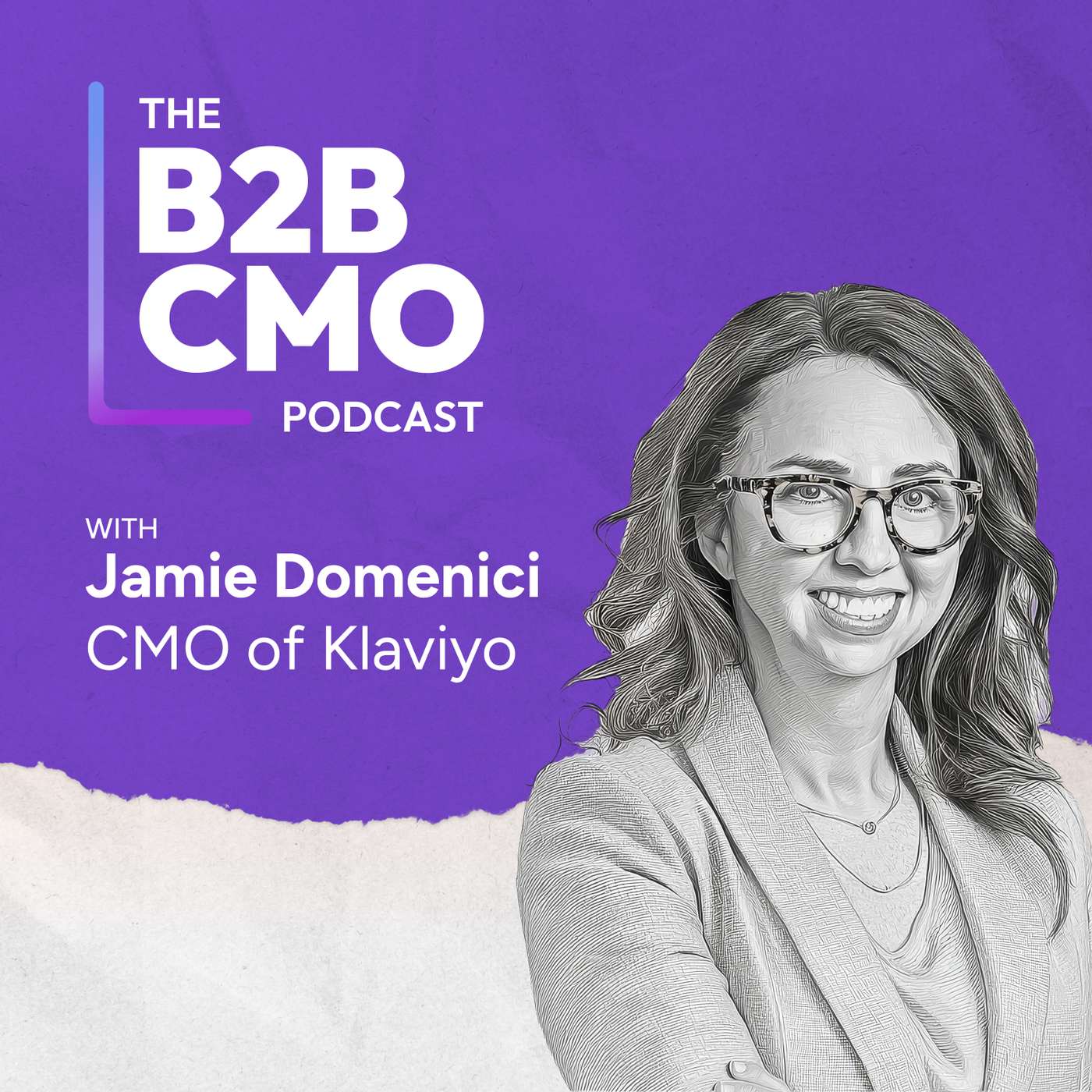 Define the Message and the Roadmap Follows with Jamie Domenici, CMO of KlaviyoThe B2B CMO Podcast with Jon Miller and Sydney Sloan · on Personalization at scale70 / 100
 EP 188 | Are You Summer-Busy or Fall-Ready?
 EP 187 | Signals vs. Metrics: What Actually Tells You Your Event Is Working
 EP 186 | If Your Trade Shows Aren’t Driving Pipeline, What Are They Doing?
 EP 185 | Most Booths Are Designed for the Wrong View
 EP 184 | Everyone Wants Better Event ROI. Few Teams Are Set Up for It.