
Energy Thinks with Tisha Schuller · 2026-07-02 · 33 min
Key moments - from our scoring
Substance score
49 / 100
Five dimensions, 20 points each
Lee Beck brings nuanced perspective to why energy has become so politically fraught despite being fundamentally necessary to all societies. She argues the core issue isn't energy itself but the political economy surrounding it - who pays, who benefits, how decisions get made - layered with questions of identity and morality that have made the topic emotionally charged. She highlights how energy crises reshape priorities: Europeans focus on dependency and autonomy; Americans on dominance and jobs; Middle Eastern producers on long-term prosperity. Beck emphasizes the danger of "political hitchhiking," where separate issues (AI, critical minerals, geopolitical rivalry with China and Russia) get attached to energy debates, further polarizing them. She advocates for pragmatic approaches like managing the current system while building the next one, moving away from binary clean-versus-dirty framing toward carbon intensity measurement and incremental fuel blending. Her work at HIF Global on synthetic hydrocarbons reflects this philosophy: achieving 80% emissions reductions while leveraging existing infrastructure rather than wholesale replacement. She also stresses the importance of social fabric and participatory capitalism in infrastructure projects, arguing that quality community engagement and benefit-sharing matter far more than marketing campaigns in softening opposition to necessary projects.
Energy itself isn't polarizing, but the political economy around it is - the questions of who pays, who benefits, who decides, combined with energy consumption becoming tied to identity and morality in wealthy nations, have made energy highly divisive.
It's the practice of attaching unrelated political agendas and issues (like AI, critical minerals, geopolitical competition with China and Russia) to energy discussions, which multiplies polarization and obscures the real tradeoffs people need to understand.
By valuing incremental emissions reductions through carbon intensity measurement, blending fossil fuels with synthetic fuels and renewable natural gas, and leveraging the billions in existing compatible infrastructure rather than pursuing wholesale replacement.
Quality community engagement, genuine listening, participatory decision-making, and equitable benefit-sharing (including potential equity stakes) matter far more than marketing campaigns in building social fabric around projects.
During energy shocks when affordability and security dominate, climate work continues but with lower political urgency; maintaining public support requires proving that energy transition can deliver both affordability and jobs as promised.
Our reviewer’s read on each dimension, with quotes from the episode.
The episode delivers a moderate number of genuine insights - the political-economy framing of energy polarization, the Project Tempo voter data, and the drop-in e-fuels blending logic - but the conversation meanders through lengthy mutual affirmations and surface summaries that dilute the density considerably.
a quarter of Europeans would prioritize cheap energy, even if it meant buying from Russia. A quarter favored substituting Russian oil and gas for US and Gulf imports, even if that slows the climate transition. And then a third wants to accelerate the shift from fossil fuels, even if it increases dependence on China.
political agenda hitchhiking. Right. So we're attaching more and more issues to the energy debate.
The 'political agenda hitchhiking' coinage and the reframe that energy itself is not polarising - only the meanings attached to it are - show genuine intellectual freshness, but most frameworks invoked (the energy trilemma, all-of-the-above, messy-vs-linear transition) are well-circulated in energy policy circles and receive no contrarian interrogation.
I like to say, political agenda hitchhiking
moving more from persuasion to participation
Lee Beck is a legitimate practitioner with cross-domain experience in carbon capture, synthetic fuels, and industrial policy, and she is actively working at an operating e-fuels company (HIF Global), which grounds her claims in real work; however, her background is predominantly policy and advocacy rather than P&L-level operations at scale.
I joined my company, HEF Global, which produces um, synthetic hydrocarbons which are chemically equivalent to fossil fuels, but 80% less um, emitting.
my company actually produces them in, in southern Chile from where we exit export them to Europe. They can be used in aviation, shipping, heavy industry.
The episode contains several concrete anchors - named Project Tempo survey figures, the Greek Deputy Energy Minister by name, a Jason Bordoff WSJ citation, and HIF Global's Chile operations - but most policy claims and transition projections are left vague, without timelines, dollar figures, or production volumes.
this nonprofit called Project Tempo in Europe found that roughly a quarter of Europeans would prioritize cheap energy, even if it meant buying from Russia.
the Greek Deputy Energy Minister, Nicholas Sappho, he said we must manage the system we have while we build the system we want
The host is knowledgeable but consistently affirms rather than probes - summarising the guest's answers back to her, expressing admiration, and rarely pressing for harder evidence or confronting contradictions; the result is an agreeable intellectual chat rather than a rigorous interview.
Yeah, that really emphasizes why I love talking to you Lee, because you're, you do wrap this all up in ways that I find very coherent and um, uh, and inspiring
I agree with that.
Computed from the transcript - who did the talking, and the words that came up most.
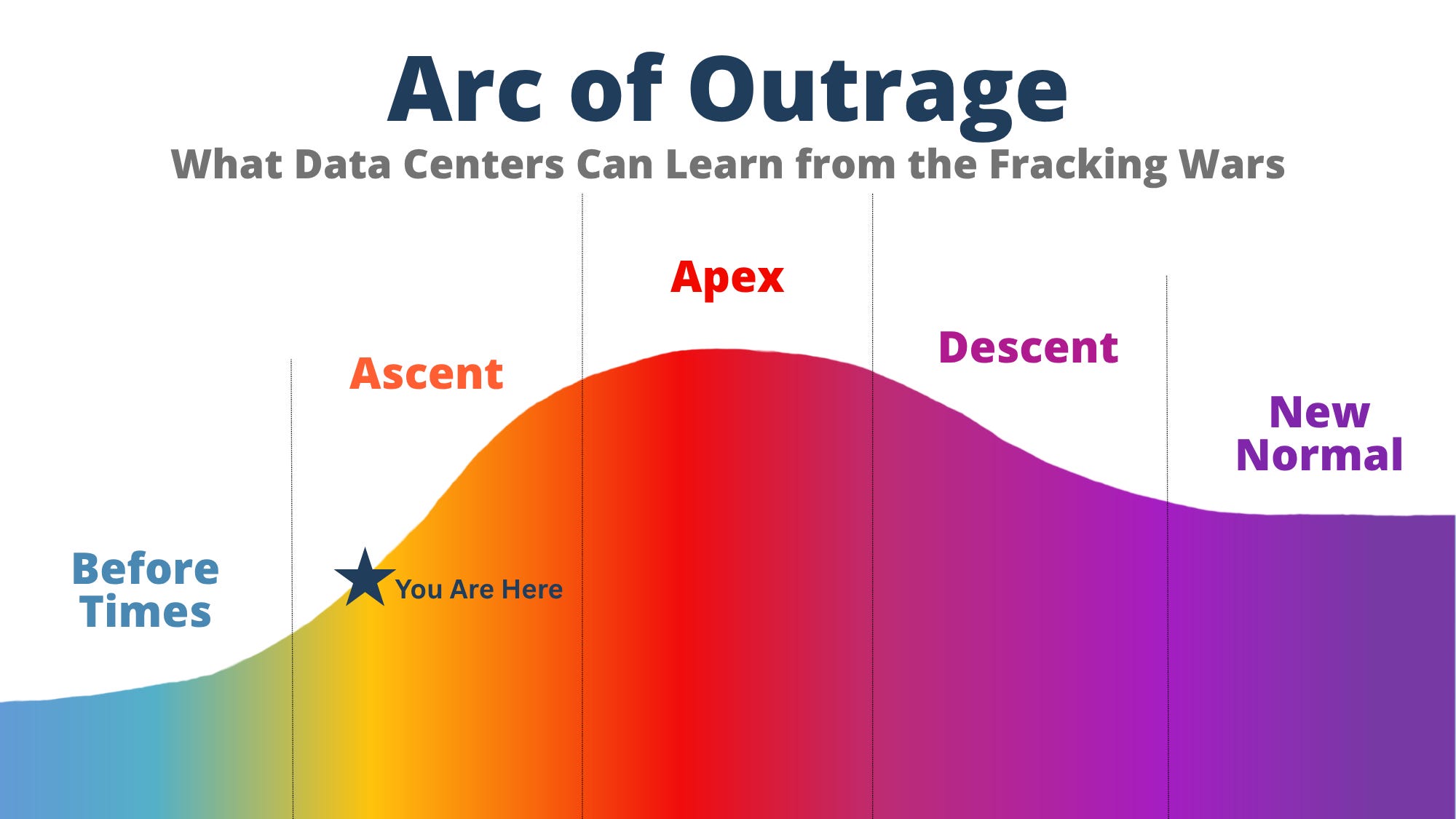
What you’ll get in this episode of Energy Thinks My most important conversations right now are focused on the Arc of Outrage - and what it takes to lead your company through the Arc when opposition to your projects is no longer theoretical. Last week’s Both True explored the Arc : why data center outrage is still climbing, why the worst is likely ahead, and why leaders need to staff for the Arc they are actually in - not the one they hoped for. This conversation with Lee Beck, chief global policy officer at HIF Global , picks up from there. In this episode , I sit down with Lee to talk about what it takes to make progress in a world that increasingly rewards outrage. Why Lee Beck? Whenever I see Lee at a conference, I grab the seat next to her. Partly because she’ll inevitably raise her hand and ask an insightful and provocative question. Mostly because we will have the kind of wide-ranging conversation you will hear in this episode. Lee challenges us to reframe the way we understand the political polarization of energy. Why is energy so incendiary? Because of the issues, values, and meaning we’re now attaching to it: identity, fairness, who pays, who benefits, and who decides.
Transcribed and scored by The B2B Podcast Index.
Speaker A: Foreign. Welcome to Energy. Thanks. A podcast about leading into the energy future. I'm, um, Tisha Schuller, your host and the CEO of Adamantine Energy. I'm having conversations related to two things, my book the Myth and the Moment From Polarization to Progress and the New Energy Landscape, and also my recent series, the Arc of Outrage. On today's show, I have such a nice, far ranging, interesting conversation with Lee Beck. She is Chief Global Policy Officer at HIF Global, and she spent her career working across carbon captures, synthetic fuels, industrial policy. She's had leadership roles at Clean Air Task Force, the Atlantic Council, and the Global CCS Institute. Whenever there's a conference and I see Lee, I always go to grab the seat next to her because one in the event she'll always raise your hand and ask like the most insightful question. I aspire to be her, but also because then we have these conversations which essentially you're going to hear today, where I just ask her, what do you think about this? What do you think about that? What do you think about this? And it helps inform and update and upgrade my thinking. So you can learn more about Lee in our show notes. If you'd like to stay connected, please go to energythinks.com and you can subscribe to my weekly newsletter. Both of these things are true. I think you're really going to enjoy the conversations we had about where carbon intensity and climate fits into that hierarchy of things we're all trying to solve for in the energy system right now. Now please enjoy my conversation with Lee Beck. Lee Beck, welcome to the Energy Things podcast. Thank you so much for joining me.
Speaker B: Thank you so much for having me.
Speaker A: So you've worked around the world in businesses, think tanks, across all kinds of parts of the industry. Carbon capture, hydrogen, synthetic fuels, industrial policy. I wanted to talk to you about politics, policy and polarization. So let's just start, you know, high up in the air at 30,000ft and then drill down to the community level. Why do you think energy is so wildly polarized, not just in the US but around the world?
Speaker B: Yeah, you know, Tish, I really had to think about that question for a little bit because actually I think that energy itself is not polarized. It's pretty fundamental to life. And everyone, I think, knows that. I think it's more the meaning that we attach to it that is polarizing. Everyone needs energy, right? Everything depends. Mobility, heating, industry, food, health care, the economy. And then what I think about is really the political economy that has wrapped itself around energy that has become polarizing Right. So who pays, who benefits, who bears the risk, who decides? And then of course, climate, the need to decarbonize has added on a layer of complexity to that polarization. In the west in particular, energy consumption has become attached to morality and identity, good and bad, the values. And so I think that's really what it's more about, the meaning that we have attached to energy that's become polarizing.
Speaker A: It's a great um, discernment you make there between. Energy itself isn't polarizing, it's just straight up fundamental. But then you put this. I love the phrase political economy. Like all these things from our identity, our place in society, our sense of well being. Can you talk a little bit about why you think then the energy debates become so, so emotional so quickly and you and I have sat in many rooms together with like, well, many people who want to find solutions and things just go, can go off the rails with this emotional content. Why do you think that happens?
Speaker B: Yeah, again I think, you know, energy to me is like engineering. We need to, to find solutions and innovate, create more solutions m more energy supply. But over the years it has become wrapped up in identity, morality. And I think especially in this political economy we've seen a lot of what I like to say, political agenda hitchhiking. Right. So we're attaching more and more issues to the energy debate. And also, uh, the climate discussion I think is a good example of that. And that to me has led to a politicization. Right. Energy and climate is now a politically divisive issue that then has led to this polarization where we have a right or wrong framing our own energy choices. Affordability now is extremely important to, I would say, um, you know, the average person all over the world, given we're in the third energy shock in just six years. But politics is really kind of still discussing the trade offs and the good and the bad. And so I think that's what makes it really emotional because it's, it's, we're coming so close to something that's so fundamental to people's lives.
Speaker A: I love your phrase political hitchhiking because it, it's funny how I've been thinking a lot lately about how in politics so many people try to pick whatever you care about and then you try to attach it to the priorities of the day. So if you care about climate, you're like, climate is the solution to affordability. Or if you care about offshore wind. Offshore wind is the solution to geopolitical turmoil. But it is true and it actually does not serve the cause that you want to help because all it does is wrap up all these emotional identity polarized items into this super fraught soup. So let's take the show on the road. You worked across Europe, the Middle east, you've thought about global energy market your whole career. And now here we are at a time where people who didn't even think they had to think about global energy markets are thinking about global energy markets all the time. Um, security is front and center. So has this changed some of this, some of these dynamics around, uh, the political economy of fuels? Are policymakers changing how they're talking about fuels? Are people understanding the centrality of energy and how actually it shouldn't be anything other than core and fundamental to the way we run our society. What do you see happening in the policymaker space?
Speaker B: Yeah, and it's, I find it. I just want to point out that you're asking about fuels specifically versus say electricity, which has been really the focus of the debate for so long. But with I think the closure of the strait of hormones, this unprecedented energy shock, we're focusing on fuels. And again, I think for policymakers it really depends on the vantage point. Right. For Europeans, fuels is mostly about dependency. The European Union is the biggest energy importer in the world and it also stands in tension with decarbonization. Then in the US we have this discussion about autonomy, investment, jobs, social fabric, but also the growth engine of, uh, dominance. Right. Or the growth of energy dominance. And then in the Middle east, frankly it's, it's about prosperity and long term growth. Right. And so I think if I drill down into each of these regions, like in Europe, we have two kinds of policymakers and there's one kind of policymaker which really wraps up fuels and electricity. Everything is the same. And energy security is the same as strategic autonomy, reducing the dependence and focusing on supply made in Europe, mostly manufactured in the eu. But that number one takes time and number two is also inflationary. And that's where I think security and affordability diverge and get confused and industrial policy gets layered on. And then I think, you know, as we see rising costs, you will only have drive, another political durability or credibility crisis. But then there's another set of policymakers in Europe that are much more pragmatic, I would say, uh, to put it in the words. And I really liked how he said it, the Greek Deputy Energy Minister, Nicholas Sappho, he said we must manage the system we have while we build the system we want. And he was Kind of noting the realities of constrained refinery capacity and also the need to go back to local energy production in Europe and then in the US I heard something super interesting this morning, right. Uh, where an administration official here in D.C. said that the Western Hemisphere from Alaska to Venezuela is the center of the universe of energy and critical minerals. Right. So that's like completely new shining city on a hill framing from that perspective. And then I think in the Middle east it's really about, okay, how can we continue to be reliable suppliers, build alternative infrastructure to bring supply to the markets that need and are dependent on the energy we supply. So very divergent based on the vantage point.
Speaker A: It's uh, such an interesting perspective that you bring to this because you unpacked a lot of things that get interwoven power from fuels, security from affordability. But then you can add almost infinite layers. Industrial policy as an engine for economic growth, critical minerals as this, um, sort of global chess game for the future of energy security based on all the other things we're going to need for the energy future. And so what I'm wondering is if you're seeing, and maybe it's different everywhere you go, but is there a kind of pragmatism that is emerging now where decarbonization and climate are in the right place in the stack of things we're trying to engage? Because climate and decarbonization really drove global conversations for the last ten years or so. Are they in the right place in the priority and what do you see is required so that they don't go away altogether? Because I kind of see like this, this pendulum swing where you have these extremes around. Like we want decarbonization right sized in the hierarchy of sort of energy needs. And we want it right sized in its emotional, uh, like the ways in which it engages our emotions, but we don't want to go away. How do you see that evolving in these global conversations around energy?
Speaker B: Yeah, I think that climate. It's interesting if you look at kind of voter data from the Munich Security Conference, climate was not as important to voters in advanced economies, but emerging markets that are feeling the impact of climate change are ranking it pretty high. Second, third priority. That was from January before I think we hit this energy shock. I think again, it depends on the vantage point. Right. I think in the US it obviously has kind of taken a backseat where energy is now. I think energy affordability is really important and has also been wrapped up in an even more divisive topic, and that is data centers and AI. Last week, FT Title Right. The US leads the world in AI data center backlash. And so I think that again, it's wrapped up in this political economy. And I wanted to um, share some data from Europe, which I found quite interesting, of how the geopolitics kind of play into voters choices. And this nonprofit called Project Tempo in Europe found that roughly a quarter of Europeans would prioritize cheap energy, even if it meant buying from Russia. A quarter favored substituting Russian oil and gas for US and Gulf imports, even if that slows the climate transition. And then a third wants to accelerate the shift from fossil fuels, even if it increases dependence on China. And support for restarting Russian energy flows is strongest among far right voters, while enthusiasm for faster green transition, regardless of Chinese dependence, is highest among far left and green voters. So you can, uh, to me, that is in one paragraph, the politicization of energy and climate and affordability wrapped up in global geopolitical reordering. I think the last thing that I will say where I'm optimistic and uh, I'd be curious what you think about this because I think you're focusing on this right now is energy access in Africa that is receiving much more attention. And it's receiving much more attention moving away from this little framing like everyone should have a light bulb, right? Kind of mini energy access to, okay, how do we enable large scale industrialization and have a minimum energy amount needed to sustain a growing economy? So I think that I'm very optimistic that that is receiving much more attention. And sustainability I think is not excluded from this conversation, but put at the right level of priority here.
Speaker A: I agree with that. And I think your perspective about the rising recognition that we need to create modern energy at scale for industrialization, for emerging economies, particularly in sub Saharan Africa, where you just have a tremendous growing population of young people and resource availability that it's interesting. Before the current energy shock, I really felt like there was kind of a shared understanding in developed economies that this is the next prize for the world is to address this inequity in countries that don't have just basic modern minimal energy. But interesting in the current shock, suddenly that that insular focus of like what does our country need? That what does our community need rises higher. So it's interesting in order to address I think these global imperatives like energy for development, you really do need abundant, affordable, reliable energy as a precondition. No one's going to be thinking about what uh, the options are around the world and if they're concerned about their basic security at home. So it's just a reminder, like we were having all these conversations because we could take abundant, affordable, reliable energy for granted. And now that has been brought back to, I think, our collective attention. It kind of scrambles the playing field of what, of what prizes where we're going to be going for. Do you think that's a fair assessment?
Speaker B: Yeah, I think so. I mean, I think that Jason Bordoff put it actually really well in a recent Wall Street Journal article where he said that the transition, uh, that prices that we find ourselves in is going to accelerate both investment and new fossil infrastructure, but also in the clean energy transition. And that really, again, depends on the location. Right. Who can kind of drill for homegrown, uh, fossil supply versus who has abundant renewable resources, land access and also the trade relationships to deploy renewable and clean energy really fast. And so I think that this is a good lesson for the world because we've talked about climate as this very linear project, that here's a model, we just add so and so much renewables and so and so much carbon capture and then it will all be fine by 2050. Right. And these models didn't really take into account that a lot of technologies still have to be brought to scale. But also it's not going to progress in this linear fashion, but it's going to be messy. And I think that these models were, a lot of them were born in a world where we had low inflation, low interest rates, a lot of capital available. That has changed. Right. And so I think energy transitions will be messy, we will transition. But as I think we said earlier, we have to work with the system we have while we build the one we want.
Speaker A: I think that makes a lot of sense. And, um, to pull a thread that you mentioned earlier, let's talk a little bit about data centers and uh, the opposition that we're seeing, particularly in the US that I think is likely a harbinger of the kind of opposition you may see in Europe and other other places as well. So I'm in the middle of a series called the Arc of Outrage, where I'm taking lessons learned from other infrastructure battles, from the fracking wars to CO2 pipelines, and thinking about what is the cycle that the outrage goes through. And my. I, uh, probably my two big takeaways are that you can't avoid the arc of outrage. Once it's, once you've embarked upon it, it's like there's no avoiding it through some kind of slick ad campaign or magical community engagement. You're on it. So the real opportunity is to soften the arc and shorten the arc. And you do that through the quality of the engagement and agency that you give to the communities within which you operate. And I have thought back off into a conversation you and I had this spring where you talked about the importance, importance of social fabric and a sense that, uh, just the sense of what it is and what people are looking for. And so I wanted you to talk a little bit about your thinking about the importance of social fabric and connect the dots between energy infrastructure projects and what's happening at community and the local areas.
Speaker B: Yeah. And I think this is an important framing of this issue. And I read some of your pieces and you wrote that there it's the quality of the engagement, the quality of the listening, of the trust building of how your much time are you spending in these communities really trying to understand. And I think that you know, historically if we think about energy projects, yes, they were social fabric, right. They created local, um, economic opportunities and the communities were built around them in many cases. And so I think nowadays we have to, number one is I think these interpersonal skills and this emotional intelligence versus throwing another ad campaign, right. Which are learnable skills. So hearing to understand, not just to respond, and moving more from persuasion to participation. So how do you build infrastructure with communities? And to me, right, if I'm thinking about all the headlines, all the billions of dollars being invested in infrastructure in the US in particular, right. I mean the question comes up for me, how do we sweeten the deal for the communities to host these. Right. And I think there is a lot more participatory capitalism. Um, right. And as a German, obviously I grew up in stakeholder capitalism, social market economy, right. Where this is like very values integrated but participatory capitalism where uh, communities get a say in how it gets built, potentially equity shares, right. For local taxation. I think there's a lot that can be done in addition to the relationship layer to see, I think social fabric of the future and kind of thriving communities in the future. And so I think that's really, really important. And I'm glad you're putting the spotlight on the quality of the engagement and the quality of frankly the deals. Right. Because the communities will think what's in it for us? Mhm. Mm.
Speaker A: It's unfortunate that the outrage to data centers has happened so quickly and so, uh, vehemently. On the other hand, it does give us an opportunity to take this build out and do it right. And make sure that our, that our communities, our social fabric is better for it. And there's nothing like a good crisis to focus the mind. So I'm always optimistic, even in the face of crisis that we can do this and make our, our projects, our infrastructure, our. So I continue to weave your thinking on social fabric and into my work. You'll, you'll continue to see it. Let's talk a little bit about uh, a big element of data center and all energy center build out continues to be to think about what I think is the right level of, of climate centricness, which is like carbon intensity, carbon accounting, like the ways in which we are going to integrate decarbonization into our infrastructure and our energy and our fuels. So can you talk a little bit about. I've always found you to be very thoughtful and pragmatic and just like, just right down this intellectual lane of how we can um, have abundant energy, that it does not have increasing negative effects. Can you talk a little bit about how you think about clean or dirty fuels, carbon intensity, what's on your plate, what are you thinking about and what are you working on in that space?
Speaker B: Yeah, for sure. That's one of my favorite topics. Right. I think um, it's interesting because in the energy transition we really focus so much on electricity and electrification, even though two thirds of the energy system is driven by fuels in the transportation sector, in the electricity production sector as well. And so I think um, that the framing to you know, fossil and we have to replace it with clean is not really serving us and it's also not delivered the progress that we need to, we have seen. And so I think I joined my company, HEF Global, which produces um, synthetic hydrocarbons which are chemically equivalent to fossil fuels, but 80% less um, emitting. Because I wanted to understand, okay, what can we actually do about transitioning the fuel sector. And I think what we need to think about is a system that is transitioning while bringing on more supply. And the way to do that is to actually put value on each incremental emissions reductions through accurate carbon intensity and valuing different kinds of emissions reductions. On um, the fossil side that can be methane management, carbon management, enhancer recovery, but then also bringing on new fuels like RNG for example. And then of course we have also the clean fuels which we want to blend into the system because they are more expensive than fossil fuels. And fossil fuels are amazing. Right. They're easy to store, easy to transport, and we have billions of dollars of uh, global infrastructure that's compatible with them. So dropping in, that's why we call the synthetic fuels or E fuels dropping fuels because they work with existing infrastructure. And so thinking more of how can we blend uh, different kinds of products to have incremental or marginal emissions reductions rather than one. The old system and the new system I think is really, really important and that that's what will make or break the fuels transition.
Speaker A: I think that's it hearkens to the quote that you gave us, which is essentially you have to deal with the system you have while working toward the system you want. And I'm a tremendous fan of incremental progress. I might be the only passionate advocate um, on planet Earth for incremental progress. But it really is what you're speaking to, which is it's not an all or nothing proposition continuing to blend fuels to make incremental progress. I think what you're describing is just deeply pragmatic, but also it's what's going to lead to the sustainable energy system of the future because we will have built it, iterating off of our learnings as we go, not trying to wholesale replace as you said, you know, this, this wonderful, these wonderful resources that have billions of dollars of infrastructure devoted to them. We're better off building off of that system. Um, talk a little bit about where does something like carbon accounting or carbon intensity, where does it fall in the stack of priorities in a crisis like we're in right now, where affordability is front and center, geopolitical security is front and center. Where do you think carbon like realistically, where does that fit in? Are we going to be on a carbon intensity holiday until things pause, or is it something that we do need to keep working toward consistently? What do you think is realistic?
Speaker B: Yeah, and um, I think we do need to keep working on it. And we are working on it, as I said, right. The crisis has, is accelerating clean energy investment on the one hand, but also fossil investment on the other. For energy security reasons. That is in my mind, you know, having supply at appropriate prices. Now I think that for consumers affordability is really, really important. And as I said earlier, we're in a very different macroeconomic environment. And so to me the political durability of any buy in into the energy transition will depend on can we actually keep bringing energy prices down and can we? Because we promised, right? We promised, um, if we pursue climate action aggressively, everyone is going to have affordable energy and there will be lots of jobs. Right? And so that has, I think has not come true as fast as people were expecting it. So I think to continue to have the support, we need to make sure that we are clear eyed about the trade offs in this trilemma, affordability, reliable D and security and are making the right choices in service of the long term M goals. And I think that is something that I would like more policymakers to pay more thoughtful attention to. Right. And so going back to kind of clean synthetic fuels, there are places on earth where you have abundant renewable uh, electricity that you cannot use to decarbonize the grid, but you can use it to produce clean fuels. And those places on earth are interested in using those fuels for their domestic energy consumption because otherwise they're importers of fossil fuels. Right. So that I think gives you a good example of the trade offs but also the region specific implications how this trilemma plays out. So I think that we have to be pragmatic and clear eyed and continue to be evaluating trade offs.
Speaker A: Yeah, that really emphasizes why I love talking to you Lee, because you're, you do wrap this all up in ways that I find very coherent and um, uh, and inspiring, such as we need energy transition progress to be essentially durable. And to be durable, um, people have to support it because it made their lives better, whether that's affordable energy or locally sourced energy. The other thing you tied up and nicely I think from the beginning is this idea that the solutions vary. The energy transition is not going to be a linear progress, but it's going to have both fits and starts, but also different kinds of solutions based on the local context. So I love that idea that while synthetic fuels in one place might be unattainable or unaffordable somewhere else, they might actually be the highest and best use of those resources for the local population. So this idea of um, truly all of the above in best of the above by, by jurisdiction is really interesting. Let's geek out for a minute on your specialty which is efuels. Can you talk a little bit about which ones you are? What are you bullish on? Which technologies are you bullish on? What should we watch? Um, I'm pretty synthetic fuel ignorant so feel free to just say these are the things to keep an eye on.
Speaker B: Yeah, and I love all of the above. Best of the above. That's great. Um, I think um, look, e fuels are available today at scale. Um, my company actually produces them in, in southern Chile from where we exit export them to Europe. They can be used in aviation, shipping, heavy industry. And I think that they are going to be important particularly in blended fuel as gasoline, as saf, uh, to help produce uh, incremental emissions reductions. But I think the Defining question for these fuels is, number one, can we find the best place on earth and then can we deploy them to bring down the cost? Because I think that is the biggest pressure, can we bring down the cost to essentially have a globally liquid market? And that is a couple years away or more than a couple years away.
Speaker A: So Leigh, I have a final question for you that I ask all my guests. What, in this whole world of topics that we've covered, the whole energy system globally, what are you most optimistic about?
Speaker B: Yeah, I think I'm most optimistic about the fact that we're learning about the energy system and we're ah, seeing progress in a non linear fashion while also kind of grounding ourselves in the needs of our economies and the needs of the consumers. Right. And so I think that I am optimistic that even in a fragmenting world we will have coalitions of the willing that are best placed to advance different kinds of solutions. And there we've seen huge cost reductions in renewables. I think we'll see that again in other clean energy production. And I think we're also, there is a focus, a durability focus on the energy company side to continue focusing on cleaner products. So I think overall we've seen a positive paradigm shift over the past 10 years. And while it looks messy and uh, politicized and polarized at this point in time, I think that we also have seen a lock in effect that will continue to kind of self reinforce and continue to catalyze progress. So I think it pays to be optimistic, um, and to really pay attention to the different nuances and regional implications.
Speaker A: Lee, thank you for having such a wide ranging, interesting conversation. I look forward to see what you work on next and um, I always welcome conversations with you about how we can make the energy future brighter. So thank you for joining me on the Energy Things podcast.
Speaker B: Thank you so much for having me and having this uh, wide ranging conversation. And I'm um, looking forward to um, your reframing of the next big issues for the energy economy.
Speaker A: That's our episode for today. Thanks so much to you, my listeners, for your continued engagement. And of course I want to thank Lee for joining me. Um, what stayed with me from our conversation today is the thing that brought me to wanting to talk to Lee, which is this idea of social fabric and it really, really was a part of everything we talked about. We talk about it particularly in the context of data centers, like what, what is the thing we're doing, but really because energy is the foundation of society, it is the literal lifeblood that allows for prosperity. The idea that you use energy infrastructure as a way to upgrade your social fabric, to make connections, to have people have agency. It's just such an important, but also intentional, enticing and inspiring idea. And I love the idea of working with it. So I hope that you'll take a moment and rate Energy Thinks wherever you listen to your podcast. It helps others to find my work and if you'd like to get in touch, please reach out@tschulerergythinks.com if you'd like to learn more about our work at Adamantine, you can go to our website. And while you are there@energythinks.com I hope you will subscribe to my weekly newsletter. Both of these things are true. I've had quite a response to the Arc of Outrage series, thank you. And quite a number of you have elected to the paid subscription for Substech, which helps me dedicate more time to this work. So thank you so much. I'd like to thank my colleague Alaina Heyer for making all things podcast possible. Until next time, I'm Tisha Schuller wishing you and yours happiness, prosperity and good health and bloom until your petals fall.
Other episodes covering the same guests and topics, from across The B2B Podcast Index.
 Joe Yaffe, COO at Cowboy Space, on Whether Data Centers in Space Are CheaperBetween Two COO's with Michael Koenig · on Data centers90 / 100
 New Mountain’s Steve Klinsky: The distribution backlog is a timing issue, not a PE issueDeal Talk: Interviews with Private Equity Leaders · on Data centers88 / 100
 Leading Through Energy Affordability | From Customer Service Issue to Business Crisis - Ben Nathan, E Source (S5:E5)Just Power · on Data centers88 / 100
 Finland - a power success story?Plugged In: the energy news podcast · on Data centers82 / 100
 Offices and AIMoody’s Talks · on Data centers81 / 100
 David Porter: From Grid Load to Grid Asset: How Data Centers Can Support the GridNot Your Father’s Data Center · on Data centers78 / 100
 The Ride You Can’t Get Off
 What You Don’t Know About Community Buy-In
 Jim Kerr on Your Generational Opportunity
  Don’t Take the Bait
 Energy Abundance Is Non-Negotiable. Responsibility Is, Too.