Delivering Marketing Joy · 2026-08-14 · 20 min
Key moments - from our scoring
Substance score
34 / 100
Five dimensions, 20 points each
This season finale of Better Merch, Better Marketing tackles a counterintuitive question: are marketers and brand operators asking for too much from every single interaction? Hosts Kirby Hosman and Jade Kreider (who is on maternity leave after this episode) examine how the shift from under-asking to over-asking has created fatigue, especially with QR codes on merchandise and event materials. They use their own podcast event planning as a practical example, where Jade pushed back against multiple QR codes on branded merch, recognizing that not every touchpoint needs a call to action. The discussion anchors on the 75/25 content-to-ask ratio established by traditional television, suggesting that most value should come before any request. A standout example comes from Common SKU, their merchandise fulfillment partner, which sent Jade an unsolicited congratulations gift with a donation option - building affinity through pure generosity rather than marketing mechanics. For B2B operators managing merchandise, events, and digital touchpoints, this episode clarifies when to give versus ask, and how relationship-building without immediate ROI expectations can paradoxically strengthen customer loyalty.
Rather than a set number, evaluate your actual business goal for the interaction; if a QR code doesn't drive that specific outcome (like booking a follow-up meeting), remove it. The hosts discovered their event had too many overlapping QR codes and eliminated unnecessary ones, keeping only those tied to their core objective.
The 75/25 ratio from traditional television provides a good framework: 75% of your content or interaction should be value-giving (like a 22-23 minute episode), while only 25% should be asks or calls to action (like 7 minutes of commercials in a 30-minute show).
When Jade Kreider mentioned she was going on maternity leave, Common SKU sent an unsolicited congratulations email and gift shop link with a donation option - building relationship affinity without any call to action or ask, which strengthened the long-standing partnership.
Over-asking at every interaction creates fatigue and makes gifts feel transactional rather than genuine; it can diminish the appreciation or value of the experience itself and train customers to expect an ask with every engagement.
Our reviewer’s read on each dimension, with quotes from the episode.
The episode presents one core insight - that not every brand interaction needs an ask, illustrated primarily through the 75/25 give-to-ask ratio borrowed from TV commercial standards. While this is useful, much of the transcript consists of personal anecdotes, casual banter, and tangential stories (travel prep, pregnancy announcements, product recommendations) that dilute the density of actionable marketing insights for B2B operators.
if you're wondering what the give to, uh, ask ratio should be, TV has already defined it. Right. And so, and what I mean by that is if you look at a half hour TV show traditionally, you know, not the Netflix stuff, but, you know, Friends or those shows that had commercials, they would usually have 22 to 23 minutes of content for 7 minutes a show. So it was 75, 25 ish.
not every brand interact action needs to be an immediate ask
The core thesis - over-asking in marketing and the value of 'give first' tactics - echoes established frameworks the host himself has already written about (mentioned: 'I wrote a book about success in the give first economy'). The Common SKU example is nice but serves as validation rather than revelation. There's little contrarian or first-principles thinking; mostly affirmation of known best practices.
I wrote a book about success in the give first economy, which talks about giving joy, giving praise, just providing value upfront without asking for anything in order to build a relationship
they weren't marketing anything. They were just giving. They were providing value. They were, they were building the relationship. Right.
This is a two-host co-hosted episode with no external guest. While both hosts appear to work in merch and branding, the transcript provides no evidence of their specific operating scale, company size, revenue impact, or track record beyond personal anecdotes and one partner company testimonial. This disqualifies the episode from being scored on guest caliber.
Jade, how are you?
I am one of your hosts, Kirby Hosman, and joining me, as she always does, is our branding bestie, Jade Kreider.
The episode references Common SKU and Brumate by name and discusses a real maternity leave scenario, but lacks concrete metrics, dollar figures, conversion rates, or detailed case studies. The 75/25 ratio is borrowed from broadcast TV rather than tested in the hosts' own operations. Most examples remain anecdotal ('they sent me a gift,' 'it went over really well') without quantified outcomes.
Common Skew Partners, we've been with them for 2014
We have this one. We did this one for a recent event that we did for a lot of our clients. That was huge. It went over really, really well.
The hosts demonstrate genuine rapport and riff naturally off each other, with occasional follow-ups and conversational tangents. However, there are few sharp probing questions, no productive disagreement, and limited accountability for claims. The conversation stays comfortable and surface-level; neither host pushes the other to defend positions or dig deeper into the mechanics of when and how the give-first approach fails.
Well, and so I'm going to give our example because I think it actually adds some context
It's a real thing.
Computed from the transcript - who did the talking, and the words that came up most.
Welcome to Better Merch... Better Marketing, the podcast where Kirby Hasseman and Jade Crider explore how branded merchandise and smart marketing work together to help businesses stand out, build stronger relationships, and grow. In the Season 2 finale, Kirby and Jade ask a question marketers probably don't consider often enough: Are we over-marketing everything? Does every email, social post, gift, or customer interaction really need a call to action? Or can some of the most effective marketing happen when a brand simply gives value without immediately asking for something in return? Kirby and Jade explore the balance between giving and asking - and why the classic "jab, jab, jab, right hook" philosophy still matters. They also share a perfect real-world example of appreciation marketing after commonsku sent Jade a thoughtful baby gift with no strings attached. It's a simple gesture that demonstrates how giving first can create a memorable brand experience and strengthen relationships. Plus, Kirby shares some early details about the upcoming launch of his new book, HYBRID Marketing, and Kirby and Jade explain why they're taking a short break before returning for Season 3.
Transcribed and scored by The B2B Podcast Index.
Speaker A: And what I didn't want to be doing is having Jade pack a podcast microphone so that she could be doing Lamaze breathing during the final episode.
Speaker B: That wasn't happening. Let's be clear.
Speaker A: Yeah. Hey there. Hi there, ho there. And welcome to the season finale, we'll call it, of, uh, of season two of the Better Merch, Better Marketing Podcast. I am one of your hosts, Kirby Hosman, and joining me, as she always does, is our branding bestie, Jade Kreider. Jade, how are you?
Speaker B: Still pregnant, still large, excited.
Speaker A: It's a radio show. If you just. If you just give a thumbs up, the. A lot of the audience. Yeah, yeah. Uh, but she gave a thumbs up. So for the radio audience, she's doing well. I felt like there was sarcasm in her thumbs up. So I'm just going to translate a little energy for you. Uh, I'm doing well. I'm doing well. Uh, actually doing really well. Getting ready to do some traveling, um, which is always. I love to travel. I love to see things. I actually, and. And to say it clearly, honestly, I love to travel, but I also love to travel with your mom, with Amy, and we get each other's sense of humor. I don't know why she likes me, but she does. And so it's, uh, I'm looking forward to that. That's going to be really fun. Um, but in doing so, you know, you get, like, there's a. There's a ton of st. You got to get ready. And so I've been running hard as an. And your mom's been running really hard to get all her stuff ready. And I feel like we're like, I. I don't even want to say it. Like, I feel like we're close to being ready. And so it's, uh. Yeah, so we're. This is one of the final days,
Speaker B: like, all the things coming to head, and you kind of feel like you have, like, five seconds of peace. John sat down on the couch the other night and said, I feel not stressed. What's gonna go wrong tonight? And I was like, honey, that's not. We don't need to do that.
Speaker A: It's a real thing.
Speaker B: It's funny how you do that, though.
Speaker A: Well, when you've been operating in a state of stress for weeks at a time, when you have that moment of peace, it's almost like, what's wrong?
Speaker B: Right. Right. Where's the other shoe? Yes.
Speaker A: Yeah. So we gotta give ourselves, uh, some space for that. But long story short, I'm doing well. Excited about this, and we Talked about, uh, sort of, uh, season two finale. We'll discuss a little bit more about that before we're all said and done. But I'm excited to dive in today, Jade. So, um, why don't you lead us on whatever we're going to talk about.
Speaker B: Love it. Love it. All right, we're starting off strong. This is a fun one. Um, that I. We kind of both went back and forth on that we said kind of came up in our marketing recently. And so that's kind of why it felt like it was a good topic to talk about. So the topic is, are we over marketing everything? And it sounds very backwards coming from us. And it's funny because we talk, um, we talk about doing all the things that I'm going to mention, but I think we want to just be careful to, like, when and where and how we're doing these kinds of things. So essentially, are we over marketing everything? Every interaction that we're doing has become scan this QR code, follow us, tag us, leave a review, join our email list. At some point, can we just enjoy the thing that we got? Can we just be excited about the thing? Can I just give away this branded merch item without it feeling like an ask or it just feeling like a give and not an ask kind of thing? And so just being careful about. Not every brand interact action needs to be an immediate ask. The thunder agrees. And so just being a little bit more intentional about that. And so I thought we could chat about it because we were even talking about items for our show with this.
Speaker A: Yeah, no, I. And it's such an interesting thing because I think that as is the case with so many things in culture, the things in marketing do this as well is we swing one way to the other too far often. Um, and I'll be the first to say that for a long time, I didn't do enough asking, which I know sounds like what we were. I mean, I wrote a book about success in the give first economy, which talks about giving joy, giving praise, just providing value upfront without asking for anything in order to build a relationship. So people trust you and then you can ask. And my problem was when you fall into that, then you also kind of get, oh, uh, I don't want to ask.
Speaker B: And.
Speaker A: And it's like, I'll just keep providing value and at some point they'll come to me. Well, at some point you gotta ask, right? But so you can go too far that way. On the other side, I'll be the. I'll be the first to Say that I'm starting to maybe go too far the other way where it's like, okay, we've created a piece of content. What's the call to action? I've created this. What's the call to action? What are we asking them to do next? And I do think what you said is exactly right, is that we just not every single interaction needs to have an ask. Mhm. Right. And again, because sometimes it's just about building the relationship. But I will say I struggle with what that balance has to be.
Speaker B: Well, and so I'm going to give our example because I think it actually adds some context and I think it's a great example of what it is. So for our show we're doing a lot of merch. And the other point that I'd give is that the new thing, I think it's newer with merch in general, is that there is an opportunity for a QR code. All of a sudden that wasn't always an option with a one color imprint cup, you know what I mean? Like that's just not the same option. Um, and so also when art is a little bit more exciting and stuff like that, you can do it. But for our event we, um, will have. One of the things that I was kind of pushing back with was the fact that, you know, you scan into our event, there's a QR code to scan in. And then we were asking people to do this and we're asking people to do that and not even asking, but we're giving them this information. But you just can all these QR codes. And then one of our pieces of merch could come with something. And she's like, do you want to add a QR code? And I was like, no, we have too many freaking QR codes. I don't want another freaking QR code. I just want to give people the really cool merch that we created. That's really fun. And so there is. I think it just comes back to just evaluating again as a whole it was helpful. We did a image, like a canva graphic image and I just put all the different merch on there. And sometimes once you get to see all of it together, you go, okay, we have a QR code on that and we have a QR code on that and we have a QR code on that. Too many, like we just got to bring back. And so sometimes if you're doing it with your merch, creating that graphic can be helpful. But just kind of doing a once over of the event, making sure it's not too much sometimes too. Yeah.
Speaker A: Back to the idea that just because you can do it doesn't mean you always should. And one of the things that I was thinking about is if you're listening to this and you're like, oh, well, but how do I know? I feel like part of the thing is, is we've defined this year better than we have in the past. What we actually want to have happen after the show. And so then it's just like, well, if we're not driving them, um, to that, then let's not do it. We don't need something to. To have them go like our Facebook page or go subscribe to YouTube or go like. That's not the goal of the show. So once you know, okay, our goal for the show is to have a conversation. Book a meeting with us afterwards to discuss the show. That's the goal of our show this year is yes, I want them to get cool ideas, but that's part of the merch. I want them to have a great experience. I want them to feel appreciated. None of that requires a call to action, right? That's just come to the event and enjoy. The only thing that we are looking for at the end of this was like, hey, let's try to have a follow up conversation to see what the next step is for them. So m defining what that is has helped me go, yeah, but it's a great point. What are we trying to get them to do? Because if it's not that great point, let's not do it. You know what I mean?
Speaker B: Well, it's the same way that you need to know your target audience. You need to know what you want out of it. Like the same way you need to know who you're giving it to. You need to know why. Like why? What's the goal of giving them this merch? Are we just giving it to show appreciation? Because then there should be zero QR codes. There should be no if that like. However, unless there's like a video or. I, um. I know there's exceptions. I don't want to minimize like a video saying thank you. I don't want to minimize things. But in the same token, just being aware of as much as you're asking giving kind of thing, like being aware of all the things is what I would say.
Speaker A: Yeah. Two other thoughts that are popping into my head as this conversation goes on. Number one, I think of like some of the. We use common SKU as an example. I know we're going to talk about them here In a second. They do a really nice job of making the logo and their branding pretty subtle. Well, that's. So that's a gift. Right? So it's a little bit more subtle. Um, and I think that when you do that, it feels less like, pow, we're in your face about that. And so I think that's the other thing. And then the final thought I had on this was 75, 25. If you are wondering what the give to, uh, ask ratio should be, TV has already defined it. Right. And so, and what I mean by that is if you look at a half hour TV show traditionally, you know, not the Netflix stuff, but, you know, Friends or those shows that had commercials, they would usually have 22 to 23 minutes of content for 7 minutes a show. So it was 75, 25 ish. So that it was like the 75% was the give. So if you're like, um, well, how do I define it? That's a place to jump off because they, they did studies around to define what the right ratio is. And that's a, that's a good jumping off.
Speaker B: It's a really good. It's funny because we just recently were watching, I don't remember what streaming service, but it had way too many. I mean like to the point where we literally stopped the movie halfway and went, it's not worth it. Like, I'm not, I'm not doing any. This two hour movie we've been watching for two hours already and we're not halfway through.
Speaker A: Yeah.
Speaker B: What is happening right now? So it is funny that. That's very interesting. Um, but yes, that's a great example. It did it kind of jaded it.
Speaker A: Yeah.
Speaker B: No pun intended. Um, okay, so, uh, we're gonna move on to our next topic. This one, you know, hit me in my heartstrings kind of thing. But it's a great example. We just were talking about them, um, of companies that are doing stuff right. So if you don't know, Common SKU is one of our partners that we do a lot of our order processing through. I don't. It's the easiest way to explain it. But Common Skew Partners, we've been with them for seven ever. We love them, what they did do. Um, so I am in the process, if you don't know, also, uh, very pregnant having a baby. And I am in the process of kind of switching over all of my contacts to, um, reach out to our inside sales rep, which is Claire. Shout out to her because she's taking on a lot for Me. Thank you, Claire. Uh, but I reached out to my friends at commonsky and just like, hey, we're trying to figure out a few things to make sure that Claire is notified if notifications come through so that nothing is held up for our clients. Um, I'm getting ready to go on maternity leave and I just want to make sure there's nothing left out. And, and our friends at Commons Q sent me back an email, said, oh my gosh, congratulations. I don't know how I didn't know you were pregnant. Whatever. Cause again, it's our inside rep. I don't see her in person as much kind of thing. Um, um. And then they immediately sent me a separate email that just says, hey, we at commonsku wanted to wish you a wonderful rest as you head into your maternity leave. Sending you so much happiness. And then they sent me to a link that sent me to a gift that they are just sending me as a congratulations on having a baby. And it comes back to, we've talked about this. It's the second person in our industry that has sent me a gift and it's the sweetest thing ever, but it comes back to the one that you wouldn't expect kind of thing. You know what I mean? Like, I wouldn't expect like a partner in that sense to send me a gift. And it's one of those that I haven't even looked at it. It could be a bottle of perfume for all I care. But I about cried just because it was so sweet that they like went out of their way from just an email of, hey, we want to fix this in our system to hey, let us give you this gift. So they do it right there.
Speaker A: So they do. And it's a great shout out. And it actually is a. It's a funny tie to what we just talked about.
Speaker B: Mhm.
Speaker A: They weren't marketing anything. They were just giving. They were providing value. They were, they were building the relationship. Right. And what does that do? It brings you more affinity to the brand and it actually does marketing. Right. It builds a relationship. And so I think that there is such, uh, such a lesson there that it's just like, hey, I'm thinking of you. This is a personalized experience for you. I'm going to do it over digital.
Speaker B: Right.
Speaker A: Reach out via email. I'm going to send you a shop where you can check it and then you're going to get something physical which will for a long time be a reminder of the relationship we have. M. When you get the opportunity to do something like that it is difficult sometimes to go, well, what's the ROI? The ROI is we've been doing business with them since 2014.
Speaker B: Right. And we won't be stopping anytime soon. They're building that relationship for sure.
Speaker A: Yeah. So it's certainly a shout out to them as one of those organizations that does things right. But it's also, uh, the lesson in there is there is opportunities to sustain and build relationships without it being a call to action, without it being, you know, something that is click here, buy there. The example I use a lot of times is when you get a birthday card from somebody and it's at the office or whatever and you open it up and their business card falls out. It's like the business card didn't need to be there. Like, I'm not going to be like, oh, it's the business card from my accountant. I need, I need to. Yeah, no, it's. If you're gonna do something nice, do something nice. If you're gonna do an ask, do an ask either way. So, uh, it's.
Speaker B: It.
Speaker A: The, the lesson there is that that is a powerful reminder about how to do things right. And so.
Speaker B: And again, just another shout out to the way that they did it. It's obviously a really cool shop. I love everything about it. But one of the things that's in here is that if you don't necessarily need anything, if you're in a spot where whatever, you can also just choose to make a donation. And then Common SKU will also just make a donation which again, it's just a. I'm giving that shout out to Common sku. It's just like, you don't have to do that. Like that's such a. Like again, if you aren't allowed to accept gifts, I know there's different things for people that can't accept gifts and things like that. And so it's such a cool way to be like, hey, this is really sweet of you. I just can't accept this. Give it to charity. And then Commonsku makes the same donation. But then it still has that impact because I still then got to be like, hey, yeah, give this to charity. And so it's. I wanted to give a shout out to them because it was one of those that truly made my whole morning and so was very excited about.
Speaker A: And it's a great example of a give first appreciation marketing in and tying digital to physical. So it does a lot of the stuff we talk about. But yes, by it built our relationship. So I love that.
Speaker B: Okay, all right, next up is. I mean, I was just kind of mentioning it if you didn't know. I'm very pregnant. So we are going to be taking a little bit of a break. As Kirby mentioned at the beginning, this is kind of our season finale here for a little while, and so I thought we would give you kind of a rundown. Kirby can give the rundown, and then if there's anything you're missing, I can run it in.
Speaker A: Yeah, yeah, you can tell me. You tell me where I'm wrong. Uh. Uh, so, yeah, as of when. When this podcast drops, I will be traveling, and I'll be traveling for a couple of weeks, and so I'll be out of the office. Jade is in her third trimester, and so we're not sure when, uh, the baby's coming. Um, and so we sort of wanted to be intentional about when we were going to take a break, because we knew we'd taking a break. And what I didn't want to be doing is having Jade pack a podcast microphone so that she could be doing Lamaze breathing during the final episode.
Speaker B: That wasn't happening. Let's be clear.
Speaker A: Yeah. So, um, this will be our final one for a little bit. I will tell you that season, uh, three has already been approved. Uh, you know, Netflix, I think you said, is picking it up.
Speaker B: Yeah. Funded it. So we're good.
Speaker A: So we're not going away forever. But this is an opportunity for us to take a break. And I think, you know, one of those where we did this after season one, where we took a quick break, it was. It was healthy, gave, uh, us both perspective and what it f. What at least the last time did for me is it made me go, ooh, I'm excited to get back into it. And, uh, hopefully this does the same thing. So.
Speaker B: Yeah, and hopefully we'll have some fresh new topics, because I will say there for a little while, we were struggling to come up with some of them. So this gives us a little reset here. And let's be very clear, I'm not recording any podcasts while I'm breathing through contractions. However, if you do want to see random updates, I will try and keep my Instagram story up to date. Ish here and there. Little man's face probably won't be on the Internet. However, you could just see some little toesies here and there to make sure he made it. So. All right.
Speaker A: Love that.
Speaker B: Last but certainly not least.
Speaker A: Yeah, uh, so we mentioned this last week. I will just bring it up again. My, uh, new book, Hybrid Marketing, is Going to be launching in September. September 7th through the 11th is going to be launch week. We'll be giving away the Kindle version of the book for free. Um, if you are interested in getting the book in advance, the book is finished. Uh, I can send you a copy of it. Just, uh, join the Facebook launch group, look that up. Um, or message me and I can invite you to the launch group. Excited about what we're doing there? I've recorded the audiobook. Uh, there's editing and all that stuff has to be involved. So there's, there's lots happening, uh, sort of behind the scenes as it were. But I am very excited about that concept. Um, and, uh, yeah, so that's coming up too. We got a lot, we got a lot of moving parts, all kinds of stuff.
Speaker B: There's a reason that we need a little bit of a break here and there. All right. I said last but not least, but now it's going to actually be last but not least. Sorry. We do have a product of the week, which I'm excited about because it's one of my favorites. This week's product of the week is the 25 ounce Brumate. I don't know how you say that word. It's a really great Brumate tumbler is the summary. Um, it's muv. I don't know if that's move or move or m. Whatever. Move.
Speaker A: Let's go.
Speaker B: Move. Okay. Move. Tumblr. It's great. We have this one. We did this one for a recent event that we did for a lot of our clients. That was huge. It went over really, really well. Obviously with Brewmate you get that brand name recognition which is a win. They're not near as expensive as some of the Yeti and Stanley and things like that, but yet you still get that brand name with the Brewmate, which is a really big win. I think in my opinion at least 24 piece minimum, which is pretty low considering. And I will say I have this mug. My husband won't use it sometimes because it keeps my coffee so hot. Like it's one of those, like you have to take the lid off to let it cool. Like it's such a good mug but it's fine because it's bright purple so he doesn't need to steal it. It's totally my mug. So, yeah, love this mug.
Speaker A: It's a really great piece and I think that, I guess my, my thought about this is because we are taking a break here for season two, we, um, have this shop where you can check out the cool, um, products of the week, but now is the time, uh, to start considering what you're going to be doing for year end gifts. You don't have to order them right now if you, if you feel like you have the time. But on the other hand you can and then you have them in hands and not be worried about stock and all the things that you do toward the end of the year. So, um, this is, if you're looking for a really cool end of year item, this one's a really good one. So.
Speaker B: And as someone who likes to have her Christmas shopping done by Halloween, just do it. I'm telling you, come November, you feel good. It feels so good to be done. I like it.
Speaker A: I like it. Well, cool. Jade, thank you so much. Um, and as always, this is one of the thing that I'm, uh, like bummed about that we're going to be taking a break from season two is that at least once a week you and I get to spend some time laughing and joking and stuff like that. We have to schedule some time to do that, um, because it's one of my favorite parts of the week. So appreciate you doing it.
Speaker B: Appreciate you.
Speaker A: All right, see you next time.
Speaker B: Mhm.
Other episodes covering the same guests and topics, from across The B2B Podcast Index.
 Delivering Marketing Joy Episode 606 - Embracing Failure in Business48 / 100
 Delivering Marketing Joy Episode 612 - The Role of Communication in Sales
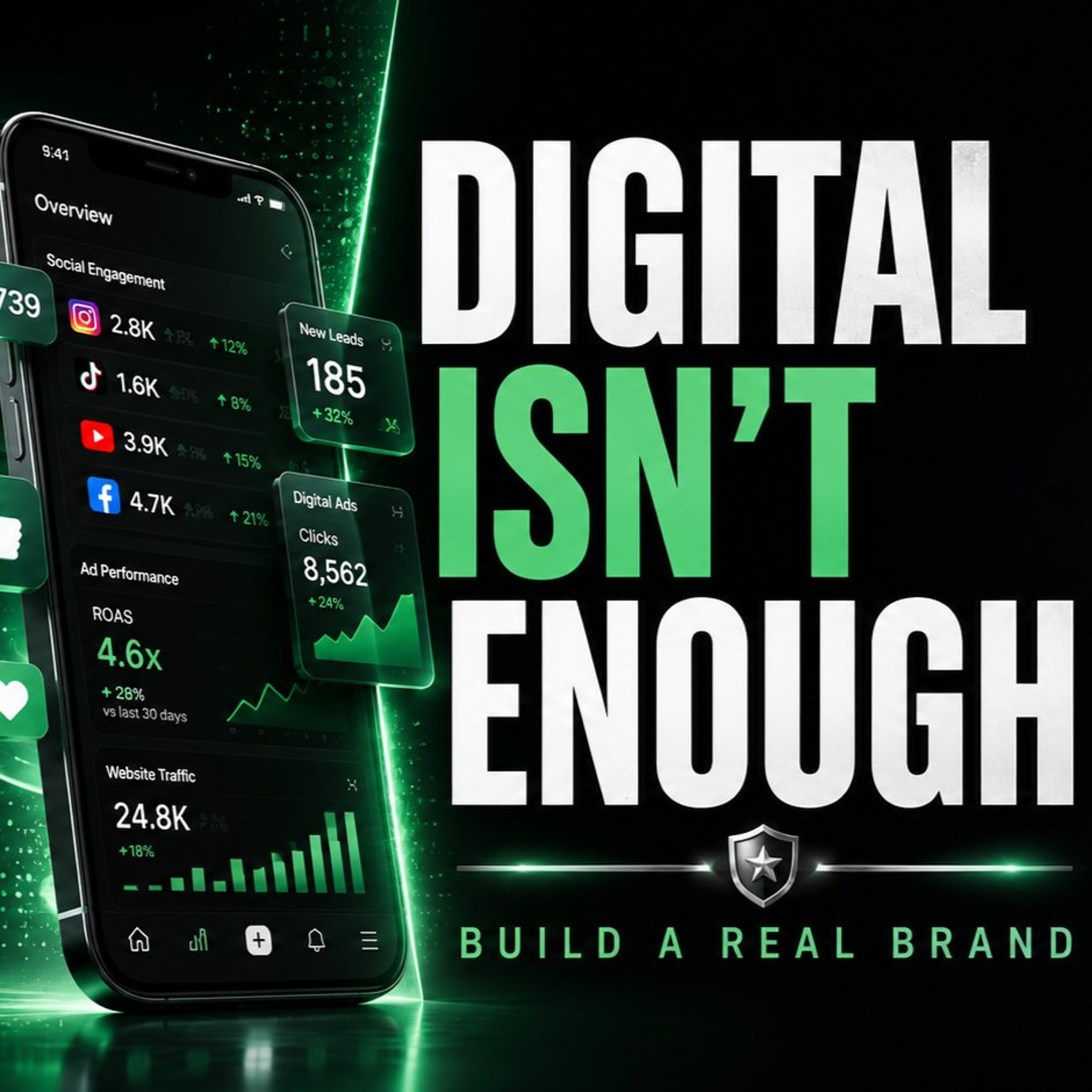 Why Digital Marketing Isn't Enough
 Everyone Nails the First Impression. Nobody Thinks About the Second.
 Delivering Marketing Joy Episode 611 - The Rise of podcasting in PR