
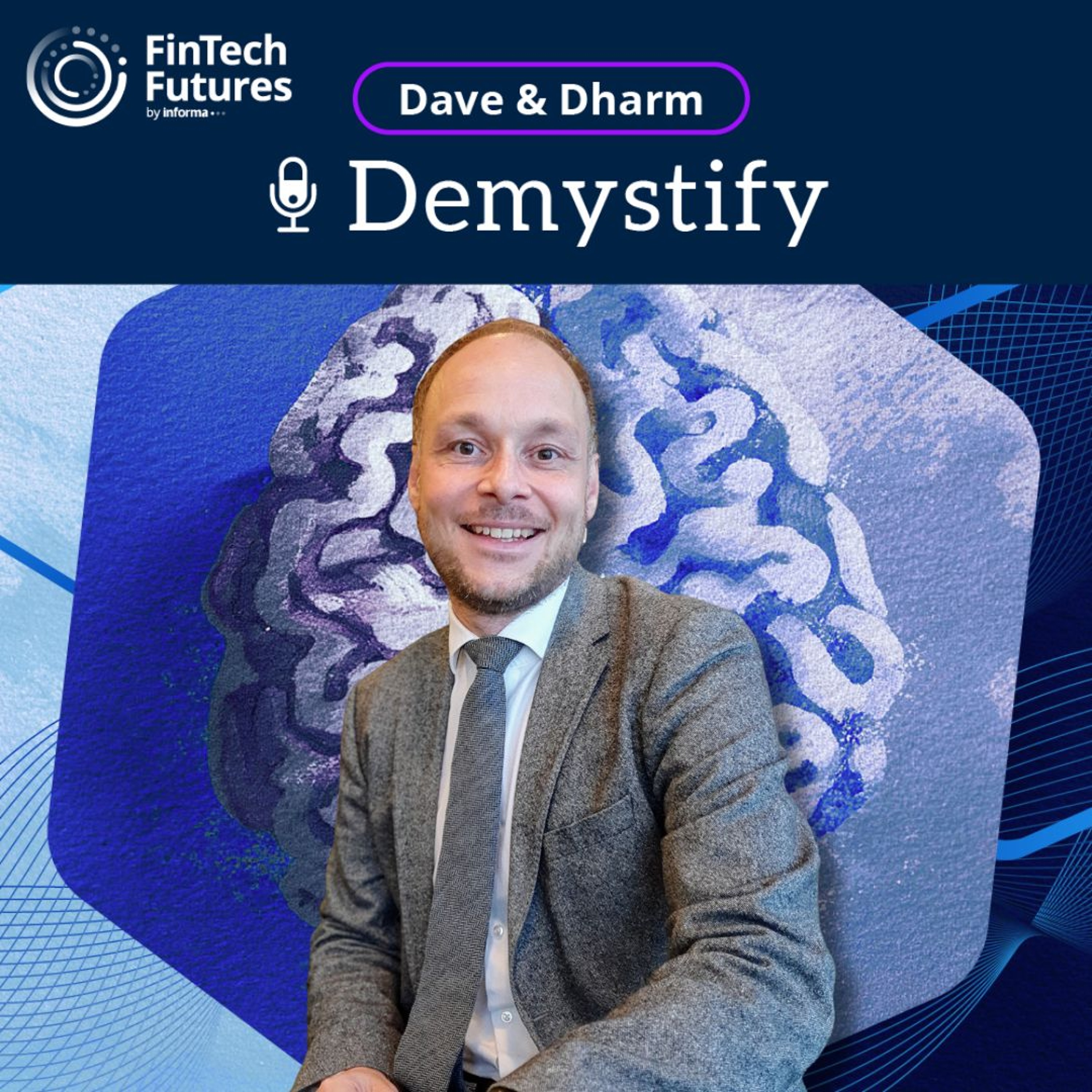
Dave and Dharm DeMystify · 2026-06-09 · 27 min
Key moments - from our scoring
Substance score
51 / 100
Five dimensions, 20 points each
Bartosz Skwarczek, founder and chairman of G2A.com, discusses how the 16-year-old global digital marketplace has scaled to 35 million users across 180 countries while maintaining trust as its core competitive advantage. G2A processes 1.5 million transactions monthly across entertainment, gaming, and digital goods, operating through 300 banking channels with PayPal, iDEAL, and other payment partners. The conversation centers on how trust evolves in the AI era - shifting from buyer-seller relationships to complex ecosystems involving AI agents. Research conducted with Juniper Research reveals 30% of consumers would authorize AI agents to conduct full purchases including payments, yet 25% of seller applications are rejected through G2A's rigorous 100+ parameter verification process. Skwarczek reveals G2A began its AI journey in 2017 with Shodan, a machine learning anti-fraud system built in Warsaw, predating ChatGPT by five years. He emphasizes that trust now requires technological infrastructure, not just relationships, and advocates for a "human in the loop" approach as agent-to-agent transactions are projected to represent 25% of e-commerce by 2029. The discussion covers layered fraud prevention combining KYB verification, PCI DSS compliance, real-time anomaly detection, and data-driven optimization to balance security with conversion.
Only 25% of seller applications are accepted, meaning 75% are declined. G2A checks over 100 different parameters on deeper verification and maintains strict KYB (Know Your Business) processes to ensure only verified business sellers can operate on the platform.
According to G2A's research with Juniper Research, 30% of consumers surveyed across the US, Brazil, European countries, and Australia would trust an AI agent to conduct full purchases including payments and research, a significant increase from near 0% one year prior.
G2A began its AI journey in 2017 - five years before ChatGPT became public - when it assembled an R&D team in Warsaw that included top experts from Google Switzerland to build Shodan, a machine learning-based anti-fraud system that was compared against industry leaders like Accertify.
Research cited by Skwarczek indicates that agent-to-agent transactions should represent approximately 25% of e-commerce by 2029, with the remaining 75% involving some other combination of buyer, seller, marketplace, and agent interactions.
G2A processes approximately 60,000 transactions daily, which requires conducting 1 million total operations when accounting for requirements from 300 banking channel partners like PayPal and regional payment providers.
Our reviewer’s read on each dimension, with quotes from the episode.
The episode contains a handful of genuinely useful data points (25% seller acceptance rate, 1.5M monthly transactions, AI programme since 2017, 25% agent-to-agent by 2029) but is heavily padded with origin-story nostalgia, hotel-receptionist anecdotes, and the host's son story, leaving moderate net insight per minute.
only 25% of the application actually is accepted by us. Okay, that's 75% is declined
what research shows 2029 there should be 25% of E commerce being agent to agent transactions
The reframing of trust as layered infrastructure across buyer→seller→marketplace→agent is a coherent and somewhat fresh angle, but the broader AI-disrupts-everything thesis and 'human in the loop' observation are well-worn; little here would surprise a plugged-in B2B operator.
trust is technological. Not only relationship, but technological, infrastructural change and critical point
Now we have seller, agent, marketplace agent, or many buyer agent. And the main question which will arise within the next months and years will be, can I trust the agent?
Bartosz is a genuine founder-operator who built G2A from six people to 35M users across 180 countries over 16 years, with real practitioner depth on fraud, seller verification, and payments infrastructure; however the interview fails to extract the depth his experience could support.
I am founder and chairman of G2A.com Group. Everything we built for last 16 years
we process 1.5 million transactions monthly, which is 60,000 transactions daily
Reasonable specificity with named figures (100+ verification parameters, 25% seller acceptance, 30% from 9,000-person Juniper study, 1M daily operations, 300 banking channels, PCI DSS), but the crucial 2029 agent-to-agent 25% stat is attributed only to an unnamed 'big research company' and several other claims float without sourcing.
we check over 100 parameters on a basic level 48. But when you go deeper, over 100 different parameters of the seller
30% buyers, they would like not only to research, they would like to use the agent to conduct the whole purchase including payments
The host occasionally steers toward substantive topics (fraud, agent-to-agent trust) but questions are soft and prefaced with filler, there is zero pushback on any claim, and valuable minutes are burned on the host's son and a hotel anecdote rather than follow-up probing.
I mean I guess it's such a fascinating because you've also done this amazing research with Juniper Reese
I should say that I've got bragging rights with my son. Normally when I do a podcast, I will say to my son
Computed from the transcript - who did the talking, and the words that came up most.
In this week’s episode, Dave is joined by Bartosz Skwarczek, Founder and Chairman of G2A, for a fascinating conversation about trust, artificial intelligence, and how digital marketplaces are preparing for the next era of online commerce. Bartosz shares the story behind G2A’s growth from a small gaming business in Poland to one of the world’s largest digital entertainment marketplaces, serving more than 35 million users across 180 countries. What began as a traditional online store evolved into a global marketplace, creating an ecosystem where buyers and sellers can connect at scale while maintaining security and trust. A key theme throughout the episode is the changing nature of trust in the age of AI. Historically, trust in e-commerce centred on the relationship between buyers, sellers, and marketplaces. However, as AI agents become increasingly capable of making decisions on behalf of users, businesses are now facing a new challenge: how do consumers learn to trust autonomous systems?
Transcribed and scored by The B2B Podcast Index.
Narrator: Welcome to Dave and Dom Demystify, a fintech futures podcast helping make sense of the world of fintech and digital finance. Please sit back and listen as the two Ds take a subject and discuss it to make it clearer and easier to understand
Host: Demystify. So Bartosz, thank you so much for joining me. No, I'm actually joining you, aren't I? So we're sat in Warsaw and um, what an incredible view we have. So we're sort of looking out over the city and it's a very, very beautiful city. But thank you. We're here at the G2A conference. I m wondered if you could just briefly start by introducing yourself and then telling us about G2A.com and how you started the business and where the business is going.
Bartosz Skwarczek: Thank you very much Dave for being here in Warsaw, for coming at the conference. Um, I am very honored to have you here and answering the question about how we started, how many hours we have. Okay, I'm joking.
Host: The potted history. Uh, please.
Bartosz Skwarczek: But this is actually super interesting story. I am founder and chairman of G2A.com Group. Everything we built for last 16 years, G2A is actually today a matured business. It's a business which is fully global. We are in Warsaw because we started in Poland. So some Ghanians are Polish. Many of them are across the world. Our users, clients. When I say client, I always mean the buyer, the seller, the employee, everybody. So our users, when in terms of buyers, we have 35 million users across 180 countries and they already purchase 150 million different items on G2A dot com. That's why we call ourselves the largest global marketplace for entertainment. And also what you can find is 125 different offerings at the marketplace. So that to give you just a
Host: few, I mean it's a huge scale business. I have to ask, when you started the business, did you ever imagine it would be so big?
Bartosz Skwarczek: To be honest, not really. Because when we started in a very humble fashion, it was six people, one small room at the last floor of the very old building in Zhesuf because that was the cheapest office in the city. No elevator, no air condition, fourth floor. And this is how we started. And the room was like just a fraction of the room we are today. And at the very beginning, yes, we can say it's not the Silicon Valley garish story, but this is very European story, how entrepreneurial journey begins. And at the very beginning, G2A was a store, not a marketplace. So at that time we Bought and we sold games keys. And that was the very beginning. And also the very beginning was for us difficult. On one side the sales was doing very good. But uh, on the other side we wanted to be official distributor of big AAA publishers. So I was flying around the world at every gaming conference from Korea to United States to Gamescom to E3 to Brazil to any other you find. And I was knocking the door now every door in gaming industry. And I must say that big publishers, it's quite hermetic. It's quite hermetic. I'm looking for the good word. It's quite hermetic, let's say industry. And even though we were one of the biggest seller of World of Warcraft, every gamer knows the title in Europe. When we asked Blizzard, hey Blizzard, we would like to talk to you, they didn't want. So we, on this frustration basis we decided to create a marketplace. We said we want to scale the business, we want to be a global, very user friendly and legitimate business. And we turned E commerce store into a marketplace. And this is when the journey really happens. And my dream was always that we will be big enough that publishers come to us saying hey, we would like to work with you. So long story short, that happened actually Blizzard, yes. One day I got a LinkedIn message. Hello, we see you, we would like to have a meeting. And I was invited to Paris to the headquarter for everything but the United States. And I had a very good over two hours meeting with top three people there, with the CEO and head of sales and head of operations, payments including. And that was the first iteration. And when we talk to publishers there was always a challenge. On one side they were saying, hey, we would like to work with you but there is one condition. If you want to sell our games, you must delete from the marketplace all the other sellers. And we're saying wait a second, but that's the marketplace idea. Like ebay, like Amazon marketplace. Marketplace idea is about the openness, it's about that there can be many sellers because this is good for the user, good for the buyer. When there is more sellers, there is a competitive pricing, there is better user experience. Sellers are competing between each other to deliver better experience to the end user, to the buyer. So that's the idea of the marketplace. That's why marketplaces are 83% of E commerce in the world. Unfortunately, publishers, they wanted to control, I understand that, I respect that because every producer, publisher included, they want to control the environment. But at the same time that was against the idea of the Marketplace. So even though we had the agreements from few top AAA publishers on the table, we couldn't agree on the condition that we will remove all the other sellers from our marketplace. So that is one of the very interesting paths in our story.
Host: It's fascinating. And I mean just in terms of the marketplaces, I guess we're here and we're talking about the trust algorithm. The importance of trust in the marketplace, I think is absolutely the most fundamental thing, isn't it? But you are dealing with trust in terms of your users, but also your vendors or the people who are your sellers on the platform as well. And I just wondered if you could kind of talk about trust and, um, how that relates to the proposition.
Bartosz Skwarczek: The title of the conference is on purpose because we believe that trust is a new currency. Trust used to be super important. At the same time, rather identified with cybersecurity, with some payment checkout or maybe the relationship between buyer and seller when they retrace from one to another. Today, especially in the AI era, AI revolution, I would say, because in my opinion, this is industry revolution. Another one like Internet before steam engine. Now we have AI. And from our point of view, trust is technological. Not only relationship, but technological, infrastructural change and critical point. Example, we had the relationship between buyer and seller. That's it. Then we had relationship between buyer, marketplace and seller. So seller was selling, buyer was buying, marketplace was in the middle, facilitating safe and secure environment to do this. Now we have seller, agent, marketplace agent, or many buyer agent. And the main question which will arise within the next months and years will be, can I trust the agent? Not only can I trust the seller, we know we can. If you have very good verification process like a, uh, G2A, you can trust the seller. We as a marketplace, we check over 100 parameters on a basic level 48. But when you go deeper, over 100 different parameters of the seller. Because@g2a.com, we implemented the most strict process in the industry and only 25% of the application actually is accepted by us. Okay, that's 75% is declined. We are saying, sorry, your business is not yet there. To be a seller on G2Amarketplace, respectfully, no. This is our homework that we've done from the past. There was a time when any individual seller could be the seller on G2AMarketplace. Not anymore. For many years we raised the bar fundamentally. And now let's go to this AI. So you are not worried about seller anymore when you go to the marketplace. But who is Going to check the agent, what procedure, how we still not only NG2A but any industry in the world. We still don't have uh, the tools, the knowledge, the data. Everybody is trying something, everybody is developing. But when I was at the largest AI agent conference in New York three weeks ago, the main question was can I trust the agent? The main challenge was how many mistakes AI agents are doing right now in this reality which we have. And the most often thesis was human in the loop. Because in AI world still human is giving us trust which is the topic of the conference today.
Host: I mean I guess it's such a fascinating because you've also done this amazing research with Juniper Reese, which we saw as well. And one of the things that stood out for me was the fact that 30% of respondents would trust an AI agent to go and find a product, buy the product on their behalf, you know, do also a service as well. Which you know, to me 30% is a. It's a lot because I think they talk to 9,000 people. So that's a lot of people. But it means that you as G2A I guess you have to have an agentic strategy as well. So I presume that you would be looking at agents to sort of marshal some of these things as well, you know.
Bartosz Skwarczek: Yeah, of course. So with Juniper research we did amazing report because we look at different countries from United States to Brazil to European countries to Australia. And we checked what is the sentiment and it turned uh out like you said, that 30% buyers, they would like not only to research, they would like to use the agent to conduct the whole purchase including payments. So they are open to AI agent to do everything for them. Everything. 30%. And we are just at the beginning of this.
Host: Well, I mean you weren't in the I asked the question is if you did this, asked that question this time last year, what would the response have been?
Bartosz Skwarczek: 000.
Host: So yeah, it's very fast. But how do you stay on top of that? I mean it's uh, a massive challenge.
Bartosz Skwarczek: It's of course challenging. But we look at this as another important challenge. It's like the challenge we had with, with the seller verification. So what we did, we just raised the bar and we implemented the seller verification process which is the golden standard for the industry. That's exactly the same case with Antifraud. Not too many people know that due to A journey with AI started in 2017. 2017, when almost nobody heard about AI, about machine learning. It wasn't the ChatGPT time 2022 it was five years earlier when in Warsaw. You can actually see the building from where we are. We set up the R and D team, uh, bringing top expert class like from Google Switzerland people to build anti fraud system using machine learning. We called it Shodan and we compared the results with Accertify, uh, one of the best systems in the world. And that was the very beginning for us, AI and machine learning. And from that time 2017 we've been developing and learning AI. So today in G2A, AI is not a tool, it's not an app that you are giving your employee. We treat AI as a backbone of every process. And when two years ago, maybe year and eight months we had internal meeting where every department presented what they do with AI. It was 100 slides presentation from different departments. When every department was saying two years ago, hey, we do this and that, uh, marketing this and that, uh, legal we use AI this and uh, that. It wasn't like hey, we use ChatGPT. We are AI native. No, no.
Host: Well, I mean it's great to hear. I mean and I think other uh, businesses could learn from that because I think you know so many businesses they have an AI strategy which is let's just launch Copilot. And it's like, well hang on.
Bartosz Skwarczek: Very often it looks like this. We are far from being perfect. Of course this is still the AI revolution. So it's changing every day. You can see Claude did this, chatgpt this, llama this. Hey, but we have news from China and there is some other development. Every day you hear something. The point is that when you want to have AI native component, you have to educate every your employee. So we implemented a year ago an AI academy for every employee to learn them how they can understand and use AI assistants agents. What's the difference between assistant AI assistant and AI agent. How should I look at this? So that was one of many that were m. One of the, was one of many initiatives that we did to get people closer to the technology and eventually to develop better solutions for our users.
Host: So often I'm talking to people in the financial services industry, but I think it's when you look at a marketplace like yours, you are at, we would call it the coal face of what is happening from a kind of consumer point of view. You have the benefit of kind of customers all around the world. And again one of the things that's interesting about the research is the difference in people's views on AI from around the world. But I think if I was a bank or a fintech, I'D be looking to a company like you and saying, well, what's going on from a kind of consumer point of view? Because to your point around trust is the relationship between software agents, users, buyers, sellers, that's going to be quite a mix. So I mean, I guess at some point in the future the trust equation will be agent to agent as well. So what does. Do you have any views on what agent to agent trust might look like?
Bartosz Skwarczek: Yes. Let me put this into the context. So G2A is high volume digital commerce platform. What I mean by that high volume digital commerce platform, we process 1.5 million transactions monthly, which is 60,000 transactions daily, more or less. But in reality this is daily 1 million operations. So to process 60,000 transactions daily, you have to do 1 million operations, including all the things which is required from us by our payments partners. Because since we deliver 300 banking channels, working with companies like PayPal, Ideal Blick in Poland, so many different great payment providers, each and every of them has requirements from us. So we have to be ready and up to date with what is happening on the market. And when we go back to this agent to agent transactions, let's look again at data. What research shows 2029 there should be 25% of E commerce being agent to agent transactions, which is surprisingly a lot and small at the same time. Yeah, okay. If that is so good, if that is so fast, if that is so convenient at the same time, research says, not ours. Big research company said I can send you the data, I know it from the conference three weeks ago. 25% 2029, agent to agent. So 75% still will be not agent to agent, but some other combination. Combination and where we are. I think the world needs one more year to get this technology settled to see the real use cases working properly being really implemented. And of course we want to be one of the first, but we don't want to be the first because the first is always exposed to the biggest numbers of mistakes. And we don't like mistakes. We are trying to deliver very secure environment. So we are okay with being on avant garde but at the same time developing the results that are solid. I think that's a good word, that are uh, really solid. So my take on agent to agent conclusions. One, it's going to happen for sure. Two, it's still not there. So many mistakes, so many challenges, sometimes even dangerous. We heard many stories from the market that people are losing even millions of dollars because of stupid mistake of agent because it was not properly designed, structured, written, whatever and the third, it's going to happen for sure. Because like I said before at the conference, too many people want this. They really want. I saw this on my own eyes, 2,000 experts, everybody's building.
Host: But it also looks like consumers want it as well, you know, and it
Bartosz Skwarczek: comes from our report, what you mentioned.
Host: Exactly.
Bartosz Skwarczek: They really want it.
Host: Exactly. So where you have these confluences of like business interest and consumer interest, it tends to kind of happen. So, yeah, it's very interesting. I wanted to ask you about fraud because I mean, again, from a bank's point of view, fraud is a fascinating topic. And I guess with the rise of AI, you have tools which mean that you're able to fight fraud better, but fraudsters have access to AI as well, which means that, you know, there must be surprises that you get in terms of what's going on the whole time. So I just wondered if you could briefly talk about your approach to staying ahead of the fraudsters.
Bartosz Skwarczek: It's constant battlefield and it's been for the last 30 years. Uh, because the tools that good actors are using immediately also bad actors are using. So it's not a secret that they are developing more sophisticated, more automated, more difficult to find, to detect strategies, how to find the hole in the system at the same time, of course, we use everything we can and everything market brings to protect the client, to protect the user against the fraud. Our goal is no friction, no doubt in this matter. So a, uh, purchase flow that is fast but predictably safe. And we apply a layered base approach. So on the supply side we have two sides of the marketplace and on the supply side we keep the marketplace clean in the meaning that only verified business sellers can sell. That is helping a lot because when you do properly the KYB, then 90% of your problems is gone because you have good sellers. And on the transactional transaction side, so marketplace to the buyer, then we combine payment partners, we combine PCI DSS grade payment security practices because G2A has PCI DSS license and we were certified by that. And we also use real time anomaly detection. So on the real time we observe what is happening at this very moment, whether there is some misalignment, strange things, something which is not exactly the pattern that we expect or no. And to protect liquidity and conversion. Because when you have a marketplace, it's always important to provide liquidity for your sellers. They want to sell more and more and conversion. So the transactions, of course you can block every transaction and then the market base is perfectly secure. We have zero transactions, perfectly secured, Nobody lost the money. But in the real world you have to optimize the level of successful transactions. And of course we want to have the higher. So we avoid one size fits all approach. We rather test and tune the journey for the client. And we are very much data driven. Data driven development. We look at data constantly, non stop, every day, every moment. We learn from this data, uh, we take conclusions from this data because data without conclusion is nothing. You can have a lot of data many company has, but if you are not taking conclusions in a very honest way, then the data is nonsense. And we always look if there is required, maybe one more step, which is securing the client. And I think this constant day to day battle and improvement is the path every big company is doing. So when you look at Amazon and, and eBay, G2A, that's constant day to day battle, improving against bad actors.
Host: Amazing. Amazing. Well, listen, we're short on time. I want to get back to the conference and hear more about what's going on. I should say that I've got bragging rights with my son. Normally when I do a podcast, I will say to my son, you know, um, often I'm talking to them and he'll look at me as if I'm stupid and who's that? But with you, he was like, oh my God, he's a huge customer of yours. And he was very pleased to hear.
Bartosz Skwarczek: Thank you.
Host: That I was interviewing you. So he got straight on discord and told all his community. So.
Bartosz Skwarczek: Oh, wow. Yeah. One of the most rewarding thing about, you know, G2A is that when you are at the end of the world in like some country, when you think it's like so far from New York and when I have the hoodie of G2A, somebody's coming saying, hey, are you from G2A? I said, Yes, I am m, I am the client. You know, you know, I'm buying games, I'm buying gift cards, something. And I think, oh my God, I love the clients. Thank you.
Host: You're famous.
Bartosz Skwarczek: This is very rewarding. This is very rewarding. And even this morning when I was at the reception of the hotel and I asked the gentleman to print the page for me and he printed the page, piece of paper and he saw G2A, uh, acronym there. He said, Are you from G2A? I said, yes. And the gentleman, it was holiday in hotel, he said, I am the client.
Host: I said, really?
Bartosz Skwarczek: And look this, I was stunned because he said, you know, I had a case with support and I think here it comes. And he said it was really good.
Host: Amazing.
Bartosz Skwarczek: I was, oh, my God. Thank you.
Host: I love it.
Bartosz Skwarczek: We are improving support every day and said it was, you know, fast and everything happened great. And I said, thank you very much. I love our clients. So that was my experience this very morning before the conference.
Host: What a lovely story to end on.
Bartosz Skwarczek: Um, thank you.
Host: Thank you.
Bartosz Skwarczek: Thank you, Dave. Thank you very much. It was big pleasure for me.
Narrator: Thank you for tuning in to Dave and Dom Demystify. We hope you enjoyed the show. Don't forget to like and subscribe and tune in next time as we take another topic and demystify it.
Other episodes covering the same guests and topics, from across The B2B Podcast Index.
 Why AI Pilots Fail: How to Escape AI Pilot Purgatory and Scale Enterprise AI with Ronnie Kwesi ColemanUsing AI at Work · on AI agents92 / 100
 More Agents Than Employees: How Zapier Disrupted Itself Before AI CouldTalking AI · on AI agents90 / 100
 PMs Are Fintech: How Column is Rethinking Property Management BankingThe Profitable Property Management Podcast · on AI agents89 / 100
 Inside an AI-powered personal dashboard | Matthew TiemannPossible · on AI agents83 / 100
 90% of AI prototypes never reach production (w/ Temporal's Samar Abbas) | AI BasicsThis Week in Startups · on AI agents81 / 100
 From Billable Hours to Business Outcomes: How AI Is Rewriting the Rules of IT ConsultingEvolving the Enterprise · on AI agents78 / 100
 Demystifying AI Regulation, Innovation & the Future of Financial Services with Colin Payne82 / 100
 EP 163: Demystifying Core Banking Modernisation, AI, and the Future of Payments76 / 100
 EP 162: Demystifying Tokenisation, Digital Currencies, and the Future of Payments83 / 100
 EP 161: Demystifying Asset Finance, Building Societies, and the Future of Banking Technology66 / 100
 EP 160: Demystifying Cross-Border Payments, Tokenisation, and the Future of Global Banking66 / 100