Creative Friction · 2023-03-03 · 57 min
Key moments - from our scoring
Substance score
60 / 100
Five dimensions, 20 points each
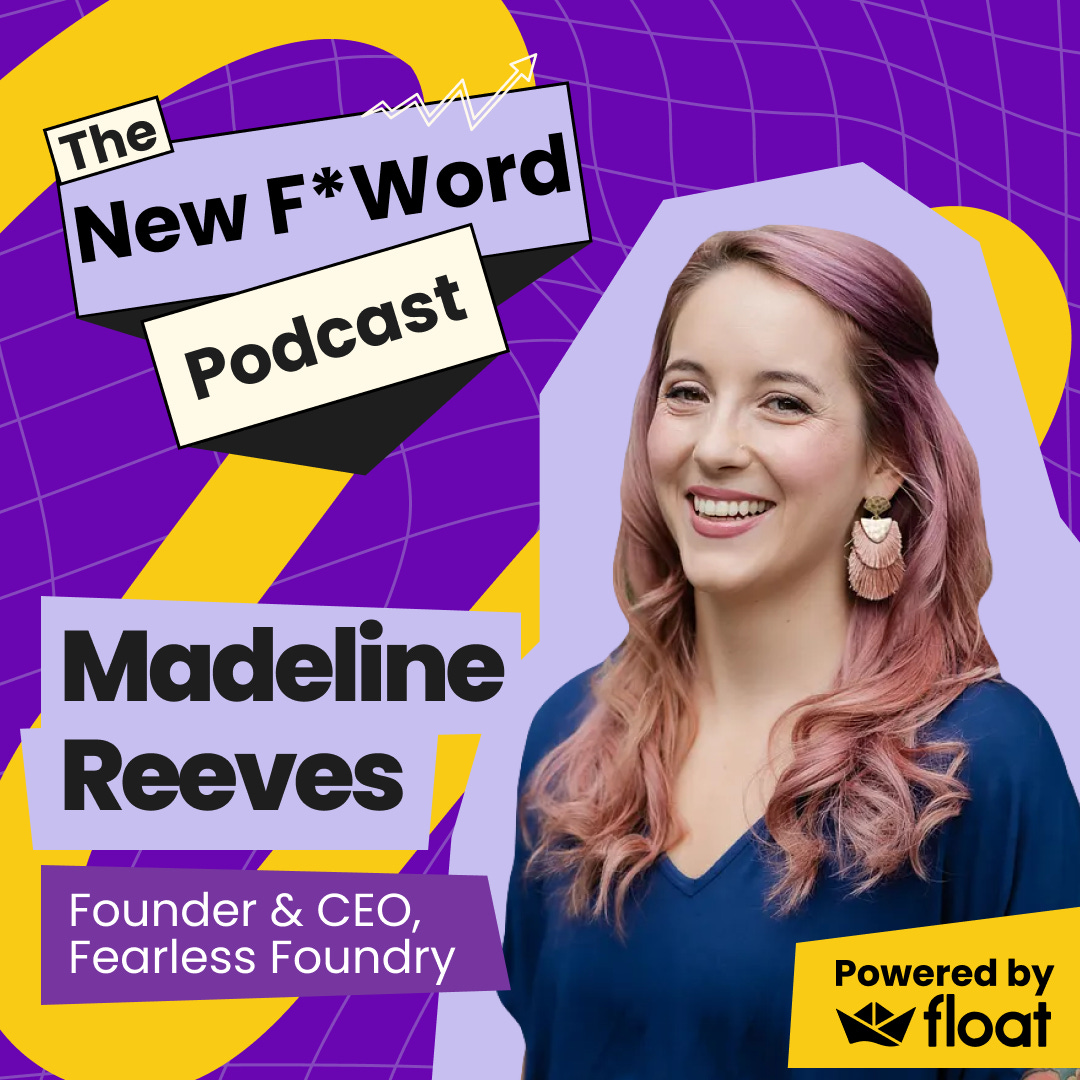
Rather than accepting Women's History Month at face value, Madeline Reeves - founder of Fearless Foundry, a branding and storytelling agency focused on underrepresented entrepreneurs - challenges the gap between corporate messaging and actual commitments to gender equity. The conversation centers on how the month's theme of 'celebrating women who tell our stories' rings hollow when data shows funding for female founders declined for three consecutive years, pay equity has worsened since the pandemic, and women of color entrepreneurs start businesses at higher rates but receive dramatically smaller investment checks than their male counterparts. Reeves argues that meaningful Women's History Month advocacy requires intersectional representation - moving beyond the default white woman persona - and deliberately centering marginalized voices including trans women, who face intensifying legal threats and dangerous erasure from these supposedly celebratory narratives. Jeff Meade moderates as Reeves articulates why surface-level corporate feminism (lobbying dollars toward childcare, transparent pay equity disclosures, year-round commitments) matters more than seasonal pink-washing. The episode reframes Women's History Month not as a marketing opportunity but as a moment to demand systemic accountability from brands with actual power to drive change.
Funding for female founders declined for three consecutive years, women of color entrepreneurs receive statistically much smaller investment checks compared to white men despite starting companies at higher rates, and pay equity for women (particularly women of color) has worsened since the pandemic.
Surface-level campaigns that treat Women's History Month as a seasonal marketing opportunity without backing up messaging with year-round systemic change - like pay equity disclosures, lobbying for childcare support, or funding commitments - feel offensive to women fighting decades of real inequity.
Rather than relying on default white woman personas, campaigns should intentionally include trans women, women of color, and other marginalized identities, allowing each woman to show up with her full humanity and intersecting identities instead of fitting into narrow demographic buckets.
Trans women, especially trans women of color, face intensifying legal threats and violence; increased media representation and visibility correlates with actual physical safety improvements, making their inclusion a justice issue rather than optional diversity work.
Concrete year-round actions including transparent pay equity data disclosure, lobbying dollars toward federal childcare programs, sustained funding for female and women-of-color founders, and leadership representation that reflects the diversity of the population.
Our reviewer’s read on each dimension, with quotes from the episode.
The episode contains meaningful, substantive claims about gender equity - particularly regarding funding gaps for female founders, childcare costs as economic barriers, and intersectionality in feminism. However, much of the second half devolves into general statements about allyship and personal anecdotes that lack novelty or specificity. Several ideas (e.g., 'feminism requires action, not just words') are well-articulated but not novel to B2B operators familiar with equity discussions.
funding for female founders went backwards for three years in a row
I'm dropping three grand a month right now on childcare and schooling for my child. That's more than a mortgage.
The episode applies familiar frameworks (intersectionality, allyship vs. accompliceship) to Women's History Month critique. The core argument - that corporate celebrations of Women's History Month are performative without systemic action - is valid but not novel in 2024. The discussion of trans inclusion in feminism is more timely, but the episode lacks contrarian positions or first-principles arguments that would surprise a sophisticated operator.
it feels like bullshit to me at this point
pink it and shrink it
Madeline Reeves is a founder with relevant operating experience (6 years running Fearless Foundry, a branding agency), and she has hands-on expertise in brand strategy and founder support. However, she is not a founder who has exited, scaled to significant revenue, or operated in capital-intensive environments. Jeff Meade is a coach/consultant rather than an active operator. Neither guest brings data expertise or direct experience in the specific domains (venture funding, policy, childcare systems) they discuss at length.
I started my company, six years ago on paper, to celebrate an uplift the stories of underrepresented individuals
Fearless Foundry
The episode includes some concrete data points (10% of Fortune 500 CEOs are women, funding for female founders declined for three years, $3k/month childcare costs, 51% of population is women), but most claims lack supporting numbers, citations, or named examples. The discussion of childcare economics is more specific than average but still largely anecdotal. Few named companies, studies, or metrics beyond headline statistics.
10% of fortune 500 CEOs are women
funding for female founders went backwards for three years in a row
Jeff functions primarily as a moderator/listener rather than a challenging interviewer. He asks some follow-up questions but rarely pushes back, probe deeper into claims, or introduce contrarian views. Madeline dominates the speaking time with monologues. There is minimal productive disagreement or sharp questioning that would test ideas. The chat interaction ('Andrea' question) is acknowledged but not explored deeply.
I'm going to do is probably ask more questions, and she is going to do a lot more answering
Yeah, yeah. Well, not only that, but I'm like, show me the data
Computed from the transcript - who did the talking, and the words that came up most.
Welcome back to Creative Friction! This week we chatted about why we’re celebrating Women’s History Month differently this year. When we started this show, we committed ourselves to honestly addressing vital topics that we didn’t see being addressed enough in the marketing space. This year in particular, Women’s History Month feels really heavy. There are SO many areas where it feels like support for women is going backward, making many of us feel like the “celebration” of women is hollow and disingenuous. We decided to dive deep into all of the necessary steps and resources needed to create lasting equity, and systematic change. In this episode we cover: - Why we need to push for social policies that actually create gender equity - Why marketers shouldn’t “pink it and shrink it” - What it means to show up, support, and become accomplices in the celebration of women We also mentioned a few resources to aid you this month in celebrating women and truly becoming accomplices, not just allies. One of those resources is the Grapevine Giving Circle, “Women Fighting For Women’s Rights,” led by our own Madeline Reeves!
Transcribed and scored by The B2B Podcast Index.
You're listening to Creative Friction, a podcast for ambitious creatives and agency owners that are looking for honest insights on how to scale their business sustainably and profitably. Each episode we dig into candid conversations about the most pressing topics in our industry, and offer up insights and resources to inspire you to take action. From talking about the latest and greatest in AI, to unpacking how our industry can better represent and reflect our modern world. We're here to guide you on agency growth, marketing strategies, and how to make a meaningful impact as a creative entrepreneur.
Hello, and welcome back to Creative Friction, a podcast for entrepreneurs navigating the challenges of growing a business while staying true to their creative roots. Each episode is recorded live so guests can join and ask questions that matter to them and their business. I'm Madeline Reeves. And I'm Jeff Meade.
And today we're here to talk about why we're celebrating the Women's History Month differently this year. Yes, this topic feels heavy. I told you before we went live that I am. I'm feeling this one in my bones today.
And even though I prepped for this, you know, a week or two ago, I feel like all of the things that I shared with you as we were prepping. I'm like I'm feeling it this week. I'm feeling it. So let's get ready.
I think it's gonna be great for the conversation. My thing is just don't hold back based on everything you shared before. Don't hold back. All right, I'll be real, I'll be real.
So, you know, for anybody who's hearing this podcast for the first time, usually we go back and forth on topics. But today, you'll see that Madeline is really passionate about this topic. So what I'm going to do is probably ask more questions, and she's going to do a lot more answering. Usually we try to balance it out.
But I'm gonna serve as more of a moderate and I'm gonna jump in from day to day, but definitely want to hear your thoughts on Women's History Month. Yeah, and it's, you know, obviously, you know, we're a week out, so to speak on the month starting, but I am already feeling riled up about it. And, you know, when we started this show, Jeff, we said that we would commit ourselves to addressing the topics that we feel are addressed enough by our peers in the marketing space, and to have, you know, honest conversations, even when it felt hard.
And I feel like we did that with our conversation about Black History Month. And when we started brainstorming that conversation, I immediately had said to you, you know, we need to talk about, you know, this celebration of women that happens every month. And why it feels really, I mean, I'm gonna just say it, it feels like bullshit to me at this point. And so, yeah, yeah.
All right. Well, you did. I know, we did this before the Black History Month episode, but you had shared some history on Women's History Month. And frankly, it was stuff that I didn't know.
So I think that's actually a really good place for us to start just like a quick primer on on Women's History Month. Yeah. So I think it's really interesting, because you shared information that I didn't know about Black History Month, and and Women's History Month is actually really similar. So it started as a week, and it started being celebrated nationally in the 80s.
And then in 1987, Congress ruled that the entire month of March should be dedicated to celebrating Women's History. And since then, there's been you know, this national expansion of teaching women's history in schools and each year since 1987. The month has been dedicated to celebrating women alongside a core theme. And so that part is really interesting from the lens of being a storyteller, being a marketer, being a brand expert.
You know, a lot of the folks who listen and follow this podcast may have clients that they're working with to figure out how to they want to show up and share or tell stories during this, you know, critical month, and this year, that theme is called celebrating women who tell our stories. And you know, in the words of National Women's History Alliance, who is you know, a major backer and advocate for this month and for women's history in general. The theme is about quote, encouraging the recognition of women past and present who have been active in all forms of media and storytelling, including print, radio, TV, stage, screen, blogs, podcasts, news and social media.
This timely theme honors women in every community, who have devoted their lives and talents to producing art and news, pursuing truth and reflecting society decade after decade. And for me, of all the ED because there's been many themes in the past, and again, as a marketer have had to like, keep up on what those themes are. And as much as I want to be like, all in on this theme, because I identify as a storyteller as a podcaster, as a blogger, as somebody who creates media and content, I want to be excited about celebrating all of those other women whose work in history is going to be honored this March.
But I am feeling just so heavy right now with the weight of the inequity and gender bias and harassment that I still feel so heavily shaped my story and experience as a woman, as well as just my ability to share about what I go through. And this is like, it's emotional for me because I started my company, six years ago on paper, to celebrate an uplift the stories of underrepresented individuals, but particularly at that time, women and women of color, because I had so many friends who were starting their businesses, and were just coming to me with story after story of like, I went to a bank, and I had my business plan, and I had my projections, and I had everything in place, and they won't lend me the money.
You know, and these were people who were asking for, like, $10,000 loans, like nothing crazy. Or, you know, I, you know, wanted to put my first website online, but this web developer guy, like took me on a ride and took all my money and never gave me the project, you know, and all of these women who were wanting to build businesses, not necessarily because they wanted to, but a lot of times because they felt like they had to because the workplaces, they were in, they were experiencing some form of harassment.
They were mothers who couldn't afford or get the right kind of child's care to support them working. And so they were building businesses out of necessity, right. And then just coming up against obstacle, obstacle obstacle. So I was a friend on the side who had all this marketing and branding knowledge, and was like, let me help you build a website.
Let me help you get your business cards together, let me help you set up your social media accounts and was doing this. And I started doing it to agree where I like started to really love it was like, what if I could do this full time. And that really is what started fearless foundry. But here I am six years in, I don't feel like that shit has changed very much.
Um, man, and I can hear it in your voice. And so I think about what you do and the clients you work with? What? What are you saying to them?
In preparation for women's history month or a week out? Are you? Are you having conversations? Are they having conversations, you know, what's going on there?
You know, it's interesting, because, um, so a lot of our clients who come from this kind of, you know, femme centric, or women centric background, and in our, you know, maybe from a marginalized experience, you know, they approach us when they're at one of two stages, typically, they're either, like, finally ready to, like, take the brand to the next level and therefore relaunching in some way, or, you know, they're bringing a new idea to life. And I, you know, as we approach this month, the kinds of conversations I'm having are really around, what does it look like to show up authentically in this month and talk about your experience, and not just package it in the feel good way, I think we as women feel a pressure, it's like, it's our month, we got to, like, show up and chill out, you know, like, right.
And, and some of us are not feeling that way. Like, you know, for me, you know, one of the things that I'm really focusing a lot of my own content around this month, and my collaborative content with some of our clients and partners, is around the lack of funding for female founders. And I'm talking about it because every one of my clients who is at that moment of big scale, is seeking to get funded. And I recognize I'm aware enough in the space to know what's going on in the economy.
And that fundraising is hard right now. Right? But it's 10 times as hard because they're women and women of color. And, and not only that, but if they get checks, the size of those checks, statistically, are so so much smaller compared to what we see for men, particularly white men in this space.
And so what I'm challenging my clients to do is, okay, take this larger cultural moment, and don't shy away from sharing what's real and true to you. Even if that's something that folks don't want to hear, because your real audience, especially if they're a brand that is out there for other women, if they're a brand that attracts a lot of women, especially for brands to that attract a lot of mothers, we're all feeling this way. And it's actually really cathartic to just feel seen in that content if that makes Somebody says, yeah, no, absolutely.
It, as you were talking, it made me think what I usually see happen when this month comes around is, is just a lot of pink. Right? From a marketing perspective. You know, so it's interesting to hear you say, you know, talk about what's really happening, right?
Don't shy away from how you're feeling. Whereas I feel like the response from marketers really is, well, what can we make pink? And get it out the door? Right?
It's we call it you know, when the term for pink it and shrink it, you know, right? It's classic, right? And not only that, but it's like, it's similar in the same ways that we were talking about Black History Month of like, you know, don't just pander to women during a month out of the year to push a product, just like we don't want folks in February to show up and be like, Oh, look, we remember there are people in some of them are black. Like, we were not interested in that as women, we're like, we're the global majority of the population, we make 50 Up 51% of the population.
We're here, we've been here. How are you using your brand's power to start really impactful conversations that lead to real social change? Because I for me, like, it's very similar to how I feel on like, around like Mother's Day advertising, when it's like, you know, like, like, I won't name names, but like, let's just say like, big brands that like sell some sort of like home product, right? And like, every ad is the same.
It's like, it's a mom, she's doing laundry, and she's loving it. We love moms all year long, like, like, every day and every day like celebrate moms. And I'm like, okay, like, gain, Donnie, you know, brawny paper. Bran is like, you have millions of dollars, if you actually give a crap about moms, why are you not putting lobbying dollars towards a federal program so that women have childcare?
Like, to me, I'm like, it's the same thing as we were talking about when it's like, you know, putting up the black square, or like saying, like, oh, Black Lives Matter, and like, show me how you're committed to that in action. And to me, it's like, it's even more deeply offensive, because, well, actually, I don't want to make a video about comparative suffering. But I would say that, you know, those of us who have been marginalized have been on this path fighting for equity for decades now.
And I don't, I don't see a lot of big brands backing up what they say in terms of how they support women in action, um, like, how many of those companies have statements around pay equity, how many of them are disclosing their financials and showing that they pay women the same as men? It's not federally required. So why would they? Right, right.
You're right, because I think what we see and we talked a bit about this in Black History Month is, you'll see a lot of companies come out and say a bunch of stuff, right? Because they feel like they have to write because somebody's gonna say something if they don't, but, but it really is just talk, right? If you unpack it, you don't see any. They're not lobbying for any way to benefit women.
I think that would be a really interesting conversation, if a company came out and said, Here's what we're doing to support women. And we're doing it year round, right? Like, it's not just that it's happening in March. But this is everything that we've done, but I don't really hear that conversation going on.
So it definitely feels like this is the month when marketers start to pander. Yeah, yeah. Well, not only that, but I'm like, show me the data, like the data doesn't lie. Like, I can tell you that funding for female founders went backwards for three years in a row, I can tell you that pay equity for women, particularly women of color is going backwards since the pandemic like same with accessible childcare, which oh, by the way, the cost for that is just going up, like, so for me, the data doesn't lie.
And I want to see companies that are committed to systemic change, not surface level change. Like for me, you know, let's just let's just play out, like the the gender equity or pay equity side of this conversation. Okay, so, what I think the number now was, like, 10% of fortune 500 CEOs are women. I'm like, oh, there's 50 of us, you know, like, but again, when your use Make Up, you know, 51% of the population if we were just to track that data, and then how many of those women are just like, white blonde ladies as opposed to like, brilliant women of color?
You know, for me, I look at that, and I go, you know, just because we've made like, one step in the right direction. We've got like, one or two more female fortune 500 CEOs, like those numbers don't track because we now have more female entrepreneurs than ever before in the history of this country. And the fastest growing demographic for female entrepreneur entrepreneurship in general, is Hispanic women. And so women of color start companies at statistically like vastly significant rates compared to, you know, sis white males.
And so what I think is really interesting about that is like, statistically, when you're at this ground floor, there's more of us building businesses, but there are so few of us up here running major enterprises, or exiting companies, you know, or getting, you know, to Wall Street or things like that. And all of that, in my opinion, has to do with the ways that we are not funded along the way whether that is the paychecks we're taking home, are the investment dollars we get as we grow our businesses.
Right. That's a really good point. One thing you touched on that I don't ever hear talked about in our industry is, you know, they, they, a lot of agencies may advise their clients on like, you were saying what to do for Women's History Month. But there really isn't this intersectional approach.
And you started to touch on that, right? When usually, when when folks think of, of women's history, there really is almost like a persona, I'd say that people have in mind, right, it's generally going to be, you know, white woman, for the most part, right. And so I think it's interesting. What, what would you recommend to marketers to almost break out of that, or some of these some of our agency folks who are listening who can advise their clients?
Like, how do you start to make this approach more multi dimensional? When you're advising clients? I love this question for so many reasons. Because I've been on this journey, myself, for the past few years, of really trying to broaden my lens of what what we mean when we say women, right, because really, if we are doing our job, well, in moments like this as marketers, we would not have any situation or circumstance where a woman from any walk of life doesn't see herself reflected in the content, or the campaigns that we're producing.
And that's challenging, because we are the global majority. And we are incredibly diverse. Right? And, and, and we come from all different lived experiences, and ethnicities, and religious and, you know, social identities and gender, like all other things, right?
And so how do you, you know, curate, and, and align and tell stories in a way that that feels really representative. And I think, you know, my two cents on this is like, make it as human as possible and make it as diverse as possible. And without being tokenizing in nature. And so what I mean by that is like, being human, is having folks show up, and figuring out how in whatever the moment is, you're creating, from a marketing perspective, they can show off all of the facets of who they are.
So for example, if I was approached by a brand to be featured in their campaign work for something which I have in the past, I am not going to show up and not talk about the fact that I'm clear, I'm not going to not talk about the fact that I'm a mother, I'm not like if I can't bring the whole of who I am to the conversation, I'm just not going to be a part of it. I would I think that brands need to do more of where marketers need to do more of, in pushing their clients to say, let people show all that they are because I think we get so obsessed with like the persona.
And so much persona work is dialed in around specific demographic that doesn't leave room for nuance. And in my opinion, Nuance is where our humanity exists. And so we have to pull that out, as marketers to say, let's see this whole beautiful, complex story that doesn't necessarily fit into these like persona buckets. So that even if, you know, a black woman is watching that content, and she doesn't identify with me from this perspective, she does see my humanity and that I'm also a mother and she's a mother and that I also care about these issues, and she cares about these issues.
And then the second challenge becomes the diversity of thought, you know, so great, I'll join your campaign. But then because I care about equity, I'm gonna go and these are the 10 other women who are coming on to this campaign with me, and they represent totally different identities, right, because their stories are just as if not more important than mine pain, because guess what, it's a lot easier for me to get in that door. And because I'm like Very good at presenting as defense is white.
And if I tap my hair, you can't even tell it's purple. Right? I'm yet to be on that panel discussion to have a trans woman represented. But you best believe that when I'm opening the door she's coming into because that's all a part of the narrative of what it means to be.
So I'd love to take a breath I, but I feel it, I feel it's so much of my body because it's like, it's like, how can we still not get it? Like, how could we still not get that there is so much inequity out there. And I know that you understand that because of your lived experience, you know, it, it means a lot to have a conversation with other people who get it too, I guess, is the thing. Yeah.
And I think the the other part too, is putting the conversation out there the way we are to have folks kind of weigh in and share their thoughts, right, I think that's when we can all start to build and, and really move the industry forward. Because like we both said, this is a conversation that kind of stops usually at all right? We're gonna do something for Women's History Month, and then somebody thinks of something and like you said, they pink it and shrink and and then it's done.
But there are so many more layers to it. And I think that's, that's really what we want to unpack now. What are all those different layers that are meaningful? And how do you, you know, how to you as a brand, as a company start to show up and be an ally, a supporter?
For women, and for the diverse for diverse women as well. At the end, you you mentioned, you know, I'm going to bring the trans woman in to talk about that, because that that never gets brought up for Women's History Month, right, like I have yet to see an ad or or even hear conversations around that, you know, it's very, just doesn't happen. Yeah, and this is where, you know, when I hinted at that I was just on the, the this, I've been on this journey, right? You know, I've been on this journey, and I very much am somebody who would consider myself a feminist.
And, you know, we've had first second and we're now we're on to third wave wave feminism. And yes, I'm an anthropologist, so qualified to talk about these things, because I studied them extensively in school. But, you know, third wave feminism is really, really important about going even further in that intersectional lens, and making space in our movement for all that identify as women. And so that includes trans women.
And we are in such a intense time, dangerous time in this country for trans women, particularly trans women of color. You know, they are, I don't want to get into the stats, because they're frightening, but but the amount of of marginalization that happens and violence that happens towards trans women and trans women of color in this country is insane. And the more that our media, others them, the more marginalized they are, the more unsafe they are. Whereas the more those trans women are seen, the more it is known, the more potential it is for them to be accepted, the more it is I don't like this term, but normalized, it's not seen as scary or other to be trans.
Right. And therefore, that you know, and data shows this with with, you know, the queer community, the more it leads to safety, not just psychologically, but actual physical safety. And for me, this year, in particular, when we have so many laws that are that are that are attempting to become codified right now to demonize further marginalize removed gender affirming health care for for trans people. This is a month where we have to stand up for trans folks.
And I'm going to be saying the same thing in June. I'm like, you know, yes, the whole queer community, but especially trans people, because, you know, I look back. This is kind of an interesting, referential point, but I look back, for example, over the lifetime of my children, and I remember growing up, the first time I saw gay people reflected in television. And this is kind of like, you know, you were talking about with your one.
Oh, God, it was like, I Well, I'm like, I'm like, trying to think about when I saw them reflected well, because that's what I'm like, I like there was like a seventh heaven episode, like sometime in the 90s. And like, it was like a whole thing, I think, because like somebody somebody was gay, and it was like it, you know, like people were not handling it well. But I do remember, in the early aughts, when the show Modern Family came out And the show modern family had the first time in television I had just seen a gay family normalized.
You know, they had a daughter, they were part of the family, you know, they and obviously, they paid into some, like total character tropes. And of course, they were two white men. But for me, what has been so interesting to watch my kids, they've always grown up in a world where there is, you know, folks who are diverse being represented in the media they consume, and part of that, to me as a mother, you know, curating stuff, where they're gonna see stuff that's represented.
But, you know, to them in the same way you were talking about on the Black History Month episode for your kids, like, where you're like, oh, yeah, like, they have plenty of options to choose from my kids. You know, I have my kid, my son, bring me a comic with the other day and go, Oh, you know, this comic book has a non binary character, or this comic book. Here's another one has it has a trans character? And he's like, you know, isn't that cool?
And I'm like, oh, that's when you know, that stuff matters so much. Yeah. Yep. Yeah.
Well, you talk about this comment we're getting from unfair. I love this comment in the chat. Yeah, this is great. So Andrea says hearing this reminds me of my experience with an organization I had interned for.
I had a photo op showing Latin pride, and the manager I had worked with had me change it to something they said is more palatable to our audience. Wow. Yeah. Yeah.
And then she goes on to say, Yeah, read. The second part. Being diverse in the corporate world has ways to go on my opinion that has openness to diversity, but the reality is, if you're gay or trans, if you're a person of color, man or woman who has tattoos or piercings, they question or hesitate if they should be accepting. Yeah, no, I completely agree.
I mean, it's, it's been a while. I mean, I have a tattoo on my arm. But in many places, I'm just kind of glad I can cover it up, right? Until folks get to know me, you know, just in many ways, I've often said, Man, I'm battling too many things already.
Right? When I, when I walk into the room, people see like, a six three black guy. So I'm not trying to, like make any more motions for to, you know, make anybody uncomfortable, unfortunately. But yeah, Andrew, I know exactly what you're saying.
It's so true. You know, being diverse, is definitely, you know, corporate world has some ways to go. And even when I talk to my friends who are in corporate, or agency clients of clients, you know, it's just amazing. We've made so much progress, in many ways.
And then still, you know, this, this time of year comes around, and everybody starts having an erg is inviting people in to speak. And I'm like, How is this the only time that this happens? Right? Like, this doesn't make sense that you start inviting the women in March, you start inviting the black folks in February.
All year long. Yeah. Yeah. It's crazy how these budgets are worked out.
Yeah, well, and the other thing, too, you know, it's so hard. I think it's, it's so hard to read until you get on the inside of an organization, you know, because people can pander pretty well, publicly. Right? You know, and, and I've been in so many environments where I thought I was becoming a part of something that felt progressive, because I was like, well, they're hiring me.
And I'm like, the youngest woman in the room. And no, they don't know it yet. But yeah, I am covered in tattoos. And, and, and, but then got on the inside and then realized, Oh, I was, I was a box they were filling or, you know, I'm the I'm the thing that can hold up and say like, look, we hired, you know, this woman.
So we're doing great. And, and what I will say actually, I think this is really important from the perspective of creatives and agency owners, is watch for the circumstances or scenarios where clients are hiring your agency to be that box for them. And what I mean by that is, you know, as a woman who owns almost an all female agency, our team is female and non binary, you know, and is so value forward. We have run into situations and circumstances over the years where clients wanted to act like they cared about certain things for market potential for sales potential.
And they hired us to build them a brand that made it seem like those were causes and things that they actually cared about, when in reality, you know, they were deeply misogynistic, or they were deeply you know, patriarchal, or they were deeply like doing it so that they looked good and woke on the internet, not because they actually cared about you know, women or cared about the environment or whatever else. They were trying to use our creativity and expertise to make them look good at.
Have you had experiences like that? Jeff, I've got to imagine you've had people who hired you for, you know, cultural clout and things of that nature. Yeah, yeah. Prior to doing this, it, it kind of happened all the time.
You know, what's funny is when I first started out my first agency, and I think I brought it up in the last episode, we actually were focused on urban youth, right. And so it was like this kind of catch 22. Like, I wanted people to bring me in. But I was also conscious that that was the only reason I was in the room.
Right? And so you kind of develop this complex, like, you know, do they respect what I'm bringing to the table? Do they respect the access that I give them to this customer? And there was kind of no way to figure it out, right?
Because I built my business, my business model was built on, hey, we understand urban youth, we understand how to talk to them, connect with them. So there was no way around that. But as I progressed, in my career, definitely, there's definitely been times where you start feeling like, wait a minute, am I checking a box here? You know, because you come in there with all the credentials, but still, you can't help feeling like that.
Right? It's just, it's just tough. No way around it really. So, you know, as I, as I think about the way this conversation is going, and from imagine that someone's listening, like, I love the way these guys are going deep.
How do we then start to offer solutions? You know, how does someone show up? And be an ally? How does someone show up and even be a feminist?
Right? Is there a difference? There? Are there levels to it?
Yeah, I'll start with the feminist one. And then I've got a lot of other ideas, and feminist is my second favorite effort. And, and, and it's also not something to be afraid of, for those of you who don't know, it just means believing that men and women are equal, it's wild concept. But for me, you know, feminism is about action, just in the same way when we talked about ally ship, or about your people's values, and branding, or anything like that, to me, if you can't hold that title, unless you're willing to take action.
And for me, you know, what I believe and what I think that people should challenge themselves in their clients to is, you know, it isn't good enough to just make the statement, you know, and in our individual lives, it isn't just good enough to be you know, I'm a good partner or I'm a good ally or good cope go parent, we need more feminists, particularly male identifying ones, that recognize the importance of creating a world where women are valued and treated equally, and I would say all genders are valued and treated equally.
And, again, you know, the reason I say where we need more male identifying folks to step up and, and identify as feminists is because, you know, it is still such a taboo thing for me to even say that, you know, I'm gonna still like, I've experimented plenty with the algorithms. Anytime I use the word feminist and social media captions, the amount of default trolling I get, because of bots that are built into those platforms are built around those platforms to target those keywords, like, and so when I when I think about it from a movement perspective, you know, feminism is a movement around gender equity.
And if you are going to say in the same way, if I was to say to you, Jeff, I am, I am an ally to you in the fight for racial and social justice, I'm your ally, right? But if I'm only going to sit over here on the sidelines, and be like, I'm gonna like your posts, and sometimes I'll reshare and, you know, I'm gonna cheer you on, you know, right. You're like, that helps me none, right? Yeah.
Whereas what, what I want to see is in that same way that I was talking about, you know, opening up the door, there are different level of power, different levels of power, different levels of access, that exist in our current paradigm, because we live in a patriarchal society. We live in a society where the majority of wealth because we live in a capitalist economy, the majority of wealth is is still held by men. And the majority have positions of power, whether that's political or economical, or you're just straight up in terms of like running big, powerful companies, all that the majority is still held by men.
And you have you know, you and other men have the ability to step into different rooms and say different things, and push for different levels of change that I don't have. And for me, it's just as important to change hearts minds and ideas at the top top level, I'm talking like governmental policy that supports women and girls and pay equity and all those things as it is, for you, as a father to be having conversations with your kids about, you know, the value of their sister of their mother, you know, of their grandmother of their aunties.
And, and that that value is equal to yours, and sometimes greater than yours, too. Because, right, we all bring different special abilities to the table. And it's interesting, because I find, in my experience, a lot of the ways that men enter the conversation around feminism is through having daughters, and then this is like, it's a pandering thing that happens that men will be like, Well, I'm, I care about women, I got a daughter, and I'm like, I'm so glad it like took you having a female child to recognize that women are humans that deserve respect.
So it's like a little annoying. But I've progressed in my understanding to say, like, Whatever gets you there, it's like, Whatever gets you there is great by me. Yeah. But I challenge those men to say, it's great that you want equity for your daughter.
But what about her mother? What about your mother? Because there's so many. Exactly.
And so for me, you know, part of the the frustration is, so the data shows the data shows that that men want, like daughters that are outspoken, and that are, you know, passionate, and that can pursue careers that they they dream of, and, and you know, they're like my dad, they're coming to you and saying like you can do and be anything you want. Right. And the data also shows that men want wives who are passive, and are willing to stay home, and are less committed to their careers than they are their partners careers, and are gonna provide free childcare for them.
And so for me, I'm like, we can't just have this thing where men look down and say, I want better for the next generations, we also have to look up and say, we have the power to change things. Now. This is affecting the women in your lives now. What could you do to change that?
I love that. It makes me think, you know, as I was listening to you, and, and I mentor, I mentor a lot of folks, actually. And I think specifically about some of the women that I mentor. In many ways.
I remember going through your notes, I was like, I wonder if I should be advanced in what I'm doing. Right, instead of kind of mentoring and helping them, you know, think through stuff. How do I become a better supporter of their careers? Right?
Like when I'm when I'm in those rooms? How do I make sure I'm not even make sure how do I remind myself to constantly be pushing them? Right, like being an advocate for their career, as opposed to just kind of receiving stuff and saying, Alright, this is the question you have, let me help you think through that. But when they're not around, you know, looking out for them.
But I think it's a I think it's a great way to look at it. It's, you know, your your example about being an ally is, you know, allies are cool, but it's kind of like, yeah, you you liked my posts, you know, like, yeah, go, go do what you do. But you really do need a supporter, someone who's there with you, you know, who's willing to fight the good fight with you, for the most part. So it was it was really good to hear you said I was like, Yeah, you know, she's right.
How do you how do you make sure you're continually advocating for the women in your life? It's that notion of ally ship versus being an accomplice that came up, you know, you talk through that a little bit. Right. And to me, you know, the challenge is getting out of our own paradigm, right?
Because we, we come to any conversation, any situation we're in with our own perspective, our own, you know, our own ego or our own ideas. And it's, it's a constant battle against what I find is against myself, right to be like, Okay, this is my, you know, worldview. This is my perspective. But how do we Bust the doors open and say, okay, but is this beneficial for other people besides me, right?
You know, and what, what we find is those changes and actually benefiting us all like there's this stupid narrative still that like, Okay, if there's equity for women, like somehow other people are gonna get robbed of the pie they've got or something. Right. And it's like, you know, I'm gonna get on the soapbox because it's affecting me this week. Child Love is a great example of this.
Like, there's, you know, we are one of the few first world nations that does not have a social Safety Net, particularly when it comes to childcare. And the data since the pandemic is devastating for the impact that it has had on women's careers and earning potential, because since the pandemic, so many women stayed home with their kids, because they had to not because they wanted to, and then have struggled to reenter the workforce, or even if they have job opportunities don't necessarily have accessible and affordable childcare that makes it viable for them to work.
And because women are statistically paid significantly less than their male counterparts. When you look at that equation as a household and you go, well, 70% of my earnings are gonna go out the door anyways, to child care, I might as well stay home, right? Statistically, it's still more likely that that person is going to be the woman. And so that impact has all these downstream effects that are horrifying, because women are statistically likely going to live longer, which means that if we don't have as much in retirement, we're we're likely to rely on our children or go bankrupt later in life because of health care costs, because of the fact that we weren't employed as long and we were paid less, therefore we weren't able to save, and we live longer.
So it's like, the downstream effects of you know, what seems like oh, yeah, you were just out of work for a couple years because of the pandemic, if you can't reenter the workforce, or can't reenter, and make more to make up for the money lost and can't find childcare. That's a huge issue. And if we were to think about it, just straight, surefire capitalist economic perspective and go, this is actually good for our society, if women work, they make more money, which they put back statistically into their communities.
This is a big one for me is that women statistically, we we save more, we spend more locally, and we give more to causes that align with our values, so we give back more charitably. And so if we could put social structures in place to ensure that women who want to work have the ability to do so because they have cost effective, I would even dare say free, you know, flexible childcare, other countries are doing it just fine. They figured it out. Think about the downstream effect, not only for our economy, but for our families, for marriages, you know, it for partnerships for you know, think about how that benefits us all, that's not just something over here for women, I mean, kids who who get access to that early education, are statistically significantly more likely to go on to get advanced degrees and to be able to further themselves in their own economic potential.
So it's this fruitful bar, that you look at the societies that that do this work, and it benefits everybody. And so for me, you know, that's just one small piece that, you know, I've studied extensively, both in my academic career, but also in my personal life as a mother who has has two kids. And you know, I'm, I'm dropping three grand a month right now on childcare and schooling for my child. That's more than a mortgage.
Yeah, you know? Yes, you said that I was like, oh, yeah, that's more than my mortgage. That's more than my and that's considered affordable. You know, and let me be clear, there's some privilege in there, one of that cost is my son's private school.
But he's in private school, because the public school is not amenable to his needs. And so that's not a cost I chose to bear. It's one that I have to for the well being of my kid. And again, all the moms I know, with two kids under five and childcare, they're right around that price point unless they have state assistance.
And oh, by the way, if you have state assistance, there's a cap on how many hours you can work. So when I was a single mom, if I made more than a certain price point, all of my childcare has assistance went away. But I also couldn't afford to pay for more childcare. It's like I remember.
Yeah, I still remember I tell this to younger parents all the time. Like once your kids get past that age of like, 567. And then they're in the public schools. It's like getting a raise.
I mean, it's so expensive when they're young. Yes. So tell me this, how, how are you personally going to celebrate differently? This month?
I'm going to be getting pissed off publicly instead of Welcome to my TED talk. No, no, seriously. I mean, for me, I'm like, I've recognized that, you know, I am somebody who has not an insane platform, but a bit of a platform at this point. And it's been really interesting, because, you know, part of the reason I got to this point was I started to share more publicly on my social media about the challenges and, and the benefits.
I'm very good at, you know, what I'm told by people is they they appreciate Get how transparent I am about what is actually like to be a CEO in a mother. And because I think there's a lot of like Girlboss kind of bullshit out there, like mom per newer nonsense that's like, it's gonna be all amazing all the time. And I'm like, I gave a presentation this week with a four year old on an iPad in the background, and I felt guilty about it. And also, that's life when schools closed on asbestos expectedly because of a snow day.
And so there's, there's this tension, this dynamic, that I feel all the time as a working mom, that I've started to share about more publicly, and I will definitely talk a lot more about during March in particular. But what I noticed when I started doing that was how much that content resonated with my audience and how much it resonated with the folks that follow me, which made me recognize I'm not the only one feeling this way. And actually, the more that I share about these things, the better chance I have to help other people uplift and have these kinds of conversations, the more again, that ball starts rolling down the hill, and we can actually push for for mega change.
But for me, I'm shifting from talking to action in some pretty significant ways this month. So I'm going to be a part of an event in New York City in a couple weeks on March 9 With luminary to be celebrating Women's History Month, but also having some really candid conversations about women's history month and what this means, particularly for women entrepreneurs, I'm having a a discussion with the founder of luminary on the 10th. Kate Lucio, we're gonna be talking about funding and why is funding for female founders going backwards?
And what can we do about it, and what are creative ways that women can buck those trends or just sidestep that funding system entirely to build profitable businesses from the ground up, because the more money we have in the pot, our pockets, the more we can create change by investing in the causes we care about, or, you know, fighting for social change with our dollars, all of those things. And then another big initiative that I'm very excited about is I've partnered with an organization called grapevine that has a great find is amazing.
I did actually a LinkedIn live with them this morning. And they are very committed to putting technology together with giving circles so that groups of individuals can get together to raise money to give back to causes that they care about. And I'm not the leader of a group for them called women fighting for women's rights. And so that group is gaining a lot of momentum this month.
And I'm using that as an opportunity to really get so far we've got like 70 plus women, and I think we've got upwards of five grand that we've raised together. And we're going to be rallying and donating that money to an under, you know, typically the donations go to nonprofits that typically wouldn't be seen or recognized in a time like this, because they're started by, you know, underrepresented founders. And so we're going to be doing nominations and pick, you know, a nonprofit to put those dollars behind.
So for me, I'm trying to use all of this, this, like, I'm going to call it rage, and put it I call it, you know, fuel to the few fires, what I call it and and put it into action, how can I turn that into change? And part of that is just simply having, you know, conversations like this one, too, right? Right. That's great.
And we'll definitely put all of those resources in the show notes. So for folks that don't know, we do this on LinkedIn live, but then also the podcast gets dropped on all, all of your podcast sharing platforms, you'll hear that as well. So if you download it, you can go to creativefriction.com.
And when you download, you'll see all the resources that Maddie just listed out. I want to challenge you in return Jeff as as not an ally but as an accomplice. Right. What do you want to try and do this one that again, I'm totally putting you on the spot here.
But you know, you're advising a lot of agency owners, you're mentoring a lot of women, you're a dad to some amazing kids, like, what are you gonna be doing this month? It'd be really intentional in this time. Yeah, no, that's, that's really good. I love it.
And it's what's really good about it is when, you know, had you asked me this question around like Black History Month, I think lots of times to about, you know, people putting up the squares and all that and that stuff is frustrating because I'm like, what are you really doing? Right and, and so there are nonprofits like there's a nonprofit that I work with down here in Dallas called Project unity. And so we do a lot of stuff. A lot of stuff has really been around like, you know, making sure the community is talking with the local police.
Like that stuff really matters a lot to me. I still I tell my kids, my boys, I have twin boys who are 13. It's crazy to me that they're going to be driving soon. But I was actually telling my wife because she was like, Man, I'm going to be driving soon.
And I have this anxiety about them driving. I mean, I still have anxiety when I'm driving, but I'm like, they're young black men. It just scares me to death when they're going to drive. But in so you know, prosecuting these away for me to do all that.
And it's like, it's almost like an easy way. I mean, I donate a lot of time, but they're like the perfect vehicle. And so I love your question, because it's, it's, I need to be a little more active. I have a lot of agencies that I do support a lot of agencies that are run by women, who I think are doing some amazing things for for Women's History Month.
But that's supporting them on the business side, right. But I think it's the nonprofits, I don't have a nonprofit right now that I'm partnered with, in any way. But I remember when we were prepping for this, it did show me you know, as much as I feel like an advocate, or supporter, I was like, you know, what am I doing outside to really to advocate during this month? So it was it was good.
It was good. It was a good challenge, for me, continues to be a good challenge. I'm glad I got a little bit of time before the month kicks off. Yeah, yeah.
Well, and again, that's, that's why we've timed these things in the way we have right is so that folks can, you know, take these thoughts and sit with them. And also, if you're in the midst of preparing, you know, to put anything out in the world during this season, you know, to ensure that it isn't, it isn't what we what we talked about at the top of the hour like that it isn't pandering and pink, you know that it is something more intentional, and and that all requires us to do the work to dig a little deeper and say, Okay, how, how am I really going to show up?
And not just say these things, but but live them out in my actions? Yeah, and it's something we mentioned in the last podcast, too, is it's really not, you don't want to just show up during the month and then be gone, right? Like, what can you start doing year round? This is really a time for celebration.
But what are you doing year round? I think that's that's the point. And, and for me, it's really just been around like the the mentorship, like I mentor a lot of women founders. And you know, I do that, because, like you said, they don't have to support.
I mean, I coach a lot of women, but there are some women who had just not in a position to pay for my coaching services. And, you know, it's probably not the best business decision, but I still coach them because I want to see them successful, because I know all the benefits that come from it. And I think that's one really big way that, you know, men who are trying to figure out how can they better be an advocate and an accomplice, you know, and obviously, like, I'm gonna, I'm gonna put some Asterix here, like don't go DMing women on LinkedIn, awkward to be their mentor, generally, that's seen as like, really creepy.
And that may or may not happen frequently to me. But But, but when there are genuine circumstances situations, you know, whether that is in a moment or over time, to, again, open the door to offer the insight to make the connections. You know, there's so many women, when you talk to those women who have, quote, unquote, made it to the top. A lot of them will say, if it wasn't for this man, or this man who was, you know, willing to fund me or made this connection, or, you know, what have you, you know, I wouldn't have made here.
And so we really do, you know, I come from a very feminist lens. And I really do believe in the importance and the power of men helping us shape this better world, because we all want to be a part of it, you know, and I'm a mom to two boys too. And I want that world for them just as badly as I want it for myself. Wonderful.
I think that might be a good place for us to wrap up. I'll still look for any questions, but any projects you're working on, you want to plug? Yeah, well, I talked about a couple of the main ones. So yeah, I'm really excited about that grapevine initiative.
For sure. And then I would say, you know, coming to New York in in March. So if you're somebody in my network, I haven't hit up yet. And you want to see me when I'm in New York, give me a shout.
And then I I'm kicking off my my mastermind in March as well, and that is specifically for female founders. So just like you do, you know, I mentor a lot of women in business and I'm just excited to get that started. To me that feels like the right way to celebrate women this month is to just be in circle be in community with a bunch of other women business owners and that's something that just fills my cup up. So I'm really stoked about that.
What about for you? Great, great. Yeah, I am launching a profitability work Sharp next month, so that that's exciting. The more I deal with founders from any background, you know, I often tell people who aren't in our world that I deal with the most creative, smart people in the world.
But most of these people didn't go to business school, and they don't want to balance a balance sheet or look at an income statement. And so it's really about getting your team and your leadership group, you know, truly understanding the financial health of the business. So that's going to kick off next month. It's going on tour, and I'll definitely keep everybody updated on it.
But that should be exciting. That's awesome. And it's gonna be so impactful. I mean, like, again, that's a way how can we uplift women in business and help them build profitable companies like I love thank you everyone for tuning in live.
Thank you, Jeff. Good to see you, Fred. Thank you Madeline. You just listened to Creative Friction.
Please leave us a rating and review if you enjoyed the show. And if you want to learn more about fearless foundry or the media company, go to our website at creativefriction.com. All audio and video recordings are owned by Madeline Reeves and Jeff Meade and are recorded live every other Friday on LinkedIn and released once a month.
Other episodes covering the same guests and topics, from across The B2B Podcast Index.
Leaning into Qualitative Customer Research with Ryan Paul Gibson68 / 100Event-Based Marketing To Cultivate Community & Culture with @dominiquebroadway - S1:E875 / 100Hire Slow, Fire Quick: Company Culture Matters - S1:E775 / 100Critical Questions to Ask When Auditing Your Tech Stack - S1:E580 / 100From Content Marketing to Collaborations: Strategies for Building a Robust Sales Pipeline