
Championship Leadership · 2025-02-10 · 32 min
Key moments - from our scoring
Substance score
32 / 100
Five dimensions, 20 points each
Kegan Gill's journey from elite military pilot to medical crisis and recovery offers a stark critique of conventional psychiatry and the VA healthcare system. After ejecting from his F-18 at record speed and surviving against impossible odds, Gill faced a second crisis: delayed-onset PTSD and decompression sickness that triggered psychoses, paranoia, and hypervigilance. Rather than healing him, years of psychotropic medications prescribed through VA psychiatry masked symptoms while his underlying brain injury worsened. The turning point came through hyperbaric oxygen therapy (HBOT) at ATX Hyperbarics run by Eleanor and Clay Womack, combined with functional medicine approaches focusing on sleep, nutrition, clean water, exercise, and sunlight. Gill's book Phoenix Revival details both the dramatic ejection story and the practical, actionable steps for reclaiming health outside the pharmaceutical model. His message resonates for veterans, trauma survivors, and anyone struggling with mental health in silence - emphasizing that asking for help is strength, not weakness, and that foundational health practices outperform pills.
Kegan Gill survived ejection at over 500 knots while his aircraft was in an uncontrolled dive two seconds from ocean impact on January 15, 2014. The ejection parameters were well outside the envelope considered survivable, involving exposure to the sound barrier that resulted in traumatic brain injury, multiple fractures, and extensive nerve damage.
Over two years of disciplined rehabilitation including multiple surgeries, he overcame prescription drug addiction, regained walking ability, and maxed out the Navy's physical fitness test to return to the F-18 cockpit about 18 months after his recovery began.
Psychotropic medications prescribed by VA psychiatrists masked symptoms while his underlying traumatic brain injury continued to worsen, causing psychoses and paranoia. Healing came through hyperbaric oxygen therapy (HBOT) at ATX Hyperbarics combined with functional medicine focusing on sleep, nutrition, clean water, exercise, and sunlight.
HBOT involves spending time in a pressurized oxygen chamber that decreases inflammation and allows blood circulation to damaged brain areas, accelerating healing of traumatic brain injury - Gill underwent a month of consistent HBOT sessions as part of his recovery.
While framed around the dramatic ejection story, the book teaches how to overcome hardship through discipline and consistent effort, provides critique of conventional healthcare, and offers practical actionable steps for reclaiming health through foundational practices rather than pharmaceutical dependence.
Our reviewer’s read on each dimension, with quotes from the episode.
The episode is dominated by inspirational platitudes, two mid-interview promotional segments for the host's own products, and musical bookends. The few substantive observations - about HBOT therapy, decompression sickness, and VA treatment failures - are explained at a surface level and yield nothing actionable for a B2B operator.
concentrating on getting good sleep, good nutrition clean water exercise fresh air sunlight you know all these sort of foundational things are the really the key to our health right further that we drift from that the sicker we become
you've got to find the light in the darkness no matter what you're going through find that light
The ejection survival narrative is genuinely extraordinary and unlike anything in a typical leadership podcast, but every lesson drawn from it defaults to recycled motivational frameworks - including a well-worn Carl Jung quote and generic resilience messaging that circulates everywhere.
ejecting into the sound barrier, impacting the sound barrier with my body just tore me apart. Traumatic brain injury, ripped my helmet off, broke my neck, left shoulder, both my upper arms, my left forearm, extensive nerve damage
in order to grow to reach the heavens, we must have roots that have been deep into hell
Kegan Gill is an authentic, high-credibility practitioner in his own domain - a combat pilot who demonstrably survived a record-setting event and rebuilt himself - but his expertise is entirely in military aviation and personal health recovery, making him thinly relevant to any B2B operator audience.
I was fortunate to survive what is still the fastest survived ejection in naval aviation history
I was able to one, begin walking again, underwent more surgeries, overcame prescription drug addiction to all the medications they had me on. And eventually I was able to max out the Navy's physical fitness test and return to the cockpit of the F-18
The personal narrative is rich with concrete detail - exact dates, named injuries, named facilities, and physiological mechanisms like the 50-G ejection seat spike and type-two decompression sickness - but all specificity is confined to the personal medical story and carries no data, metrics, or evidence relevant to business operations.
it was january 15th 2014
The ejection seat, when that ignites, you get an instantaneous boost of 50 Gs, which compresses your spine oftentimes permanently
The host asks only broad, open-ended softballs and responds almost entirely with affirmations; he interrupts the interview twice with self-promotional segments and never challenges, probes, or redirects any of the guest's claims, leaving several compelling threads - VA system failures, specific alternative treatments, the PTSD diagnosis process - completely unexplored.
Yeah yeah Yeah, yeah. Fresh out of it.
Yeah, absolutely. So today's the 31st. I know, uh, you're, you just have a book that you've released
Computed from the transcript - who did the talking, and the words that came up most.
In this episode of Championship Leadership , we sit down with Kegan Gill , former Navy F/A-18 pilot and author of Phoenix Revival , to discuss his extraordinary journey of survival, resilience, and recovery. On January 15, 2014, Kegan experienced the fastest ejection in naval aviation history, suffering a traumatic brain injury, multiple fractures, and life-altering challenges. Against all odds, he fought his way back to the skies - only to face a new battle with PTSD and brain injury complications. Through resilience, community support, and holistic health practices, Kegan transformed his struggles into a mission to help others. In this episode, he shares powerful insights on overcoming adversity, mental health awareness, and practical strategies for building a stronger mind and body. Don't miss this inspiring conversation with a man who refused to give up. His book Phoenix Revival is available on Amazon and Audible, with more resources on his website. Tune in to gain valuable lessons and discover what it truly means to rise from the ashes!Kegan Gill: Inspiring the Impossible
Transcribed and scored by The B2B Podcast Index.
Before we hop in with our incredible guest here on the Championship Leadership Podcast, I wanted to talk a little bit real quick about my world-class Unleash the Leader Within experience, a four-day experience that is built to give you momentum in life that will create the movement that will allow you to go out and accomplish goals and outcomes that you have felt like are mountains, like mountains that are almost impossible to overcome. Unleash the Leader Within, you go through this experience, all of the different modalities are strategically put in place to help you to become the person today that will allow you to become the person that you want to be tomorrow.
All about creating a life that you love. And we do that in many different ways. We've had incredible results from hundreds of clients that have come through in the last four years that we've been running Unleash the Leader Within. And so if you want to create a new operating system for yourself, if you want to have a level of certainty that would have people respond to you at a much higher level as a leader inside of your life, and you want to go out and have results that, like I said, you thought at one point were insurmountable, and you want to turn mountains into molehills inside of your life and create a life that is unrecognizable, take what feels like the impossible and make it possible then go to www.
natebailey.org forward slash ul w let's go let's go let's go let's go in 05 and 06 i deployed to kuwait i used to wait every day for them to say nature going home i missed my life missed my wife 15 months she was all alone But when I got back, I feel out of control Feeling entitled, I put my life on hold I keep on drinking, so I'm sinking in a river of liquor Me and my wife weren't alright, I didn't reconnect with it I had a business, insurance agent, and rental properties But is there something bigger than this?
I know there's gotta be, so I invested in myself I started seeing coaches Life is a camera, I fixed the lens, and now I see and focus Now my life's unrecognizable From my life just a couple years ago Seventeen plus years of marriage, it's never been better than this And we got three kids, that's who I do it for I'm gonna be a leader, I'ma lead the way, girl Someone from believing, we can do anything we want Look, if I said it, then I meant it, I probably already did it Consider it done Consider it done If you need some inspiration, you should play this Championship Leadership Podcast with Nate Bailey.
Championship, championship, championship, championship, leadership podcast. Championship Leadership Podcast with Nate Bailey. Hey, what's up, everybody? Welcome.
Championship Leadership. We got Keegan Gill here from just outside of Traverse City, Michigan, and excited to have you here. Thanks for being here. Thanks for having me on the show.
Yeah, absolutely. Before we get deep dive too far into, you know, your story and everything else with our conversation today, I always love to ask, championship leadership is the name of the podcast. So what comes to mind for you or what does championship leadership mean to you when you hear that? You know, there's a wide range of leadership lessons that could be pulled out of my life experiences.
experiences. But I think, you know, in my in my experience, the best leaders are those that lead by example and lead by action, vice just talking about it and using buzzwords. So I think there's a plethora of those available in in my story and my journey that I've gone through. And definitely some positive takeaways for people that they can apply to their lives and in leading their own lives and leading their own health in particular, but absolutely applies to a wide a wide range of leadership opportunities for people.
Yeah, absolutely. Um, so today's the 31st. I know, uh, you're, you just have a book that you've released, uh, around your story, uh, last Tuesday as we're recording this, um, 2025, uh, tell us a little bit more about that and maybe a little bit more about yourself and how that book all came to fruition. Sure.
So my book is titled Phoenix Revival, the Aftermath of Naval Aviation's Fastest Survived Ejection. And it details this wild adventure that I went on and decided to join the Navy and become an F-18 pilot. And in my career as an F-18 pilot, I was fortunate to survive what is still the fastest survived ejection in naval aviation history. And that was devastating when it occurred, but there's a pretty transformational, inspirational journey that took place following that, that got me back to being here with you today and able to articulate that experience.
and while the book, you know, it starts with this ejection story to kind of reel the reader in, but the real lessons in it are how do we get through those hardships, those moments of devastation and how do we get to the next level and apply the discipline, the consistent effort to make a reality of what maybe just starts in our mind as an idea and sometimes even a far-fetched idea. It was probably a far-fetched idea for me to even think I could be an F-18 pilot. But when you apply yourself on that goal and you work at it every day, little by little, it's amazing what the human spirit is capable of.
The journey goes into a deep dive on health and highlights some of the positives and negatives of our conventional healthcare system and then provides the reader with very practical, actionable steps that they can apply to their own life. I know we all go through hard times and challenging situations. So what I really wanted is a book that's inspiring and provides some leadership for people going through whatever they're going through. And so many of us are suffering in silence, especially when it comes to the realm of mental health.
You know, we don't like to talk about that stuff, but it's something that we all just face as humans, regardless of how resilient we may be and how functional we may seem on the outside. We all go through those struggles. Take a quick pause here inside of this incredible interview that you are listening to, to let you know about my 100 Mile Mindset audio book. If you would like a copy for free, you just have to send me a quick email at nate at coachnatebailey.
com or you could send me a private message. I'm all over the place on social media at coach Nate Bailey, Instagram. You can find me on Facebook. You can find me on LinkedIn.
You can find me on Twitter. You can even find me on the new social media app out there threads through Instagram. But if you would like the free 100 mile mindset, so you could create a 100 mile mindset for yourself based on my experiences, my lessons learned from being an ultra marathon runner, shoot me a message. I'll, I'll send it to you for free.
how long ago was the fastest world's fastest ejection which probably isn't something that like you ever want to be able to claim but obviously you did and so thankful that you you survived it but uh yeah when did that happen it's been almost exactly 11 years it was january 15th 2014 and uh it's a day i'll always remember and now there's there's a tradition from world war ii pilots which on the day that you survive a near fatal crash that becomes your rebirth day So every year now on the 15th of January I celebrate with my family to celebrate being alive And that just happened not that long ago Yeah yeah Yeah, yeah.
Fresh out of it. Yeah. So tell me like fastest ejection. What are we talking there?
What does that mean? Like how close were we? Yeah. So it's it's the fastest survived ejection in naval aviation history.
There's one Air Force pilot I know that has survived a faster ejection out of an F-15, but at very similar parameters. There's been people who have ejected at faster airspeeds but are not here to talk about it. But on that day, I was in an air combat maneuvering. We were practicing dogfighting out over the Atlantic Ocean.
But when we train, we train as close as possible to the real thing for proficiency. while air combat or dog fighting is not terribly commonly used in the past 20 years of warfare it's still a skill set that we practice just as a special forces member is going to practice knife skills and grappling skills along with their firearms training and while they may not use that on a day-to-day basis you want to have that skill set if it arises and so we're out practicing that And it's an incredibly dynamic training evolution when you're doing this.
You're under high G. It's sort of like a high intensity interval training combined with four dimensional chest. It's commonly referred to as like a knife fight in a phone booth with an elephant on your lap. Your body and everything with your gear weighs about 1500 to 1600 pounds under that sort of G force.
And we're in the midst of a fight and the aircraft got stuck in an out of control dive at the ocean. And so two seconds from impacting the ocean, I pulled the ejection handle and a normal ejection straight and level flight. While, you know, below 180 knots, ideally per the aircraft manual, it's still violent. The ejection seat, when that ignites, you get an instantaneous boost of 50 Gs, which compresses your spine oftentimes permanently.
And then you get flail injuries from hitting that high-speed airflow. Well, the parameters of my ejection were well outside the envelope for what was considered a survivable ejection, but I was very fortunate to endure it and be here to tell you about it. but that, you know, ejecting into the sound barrier, impacting the sound barrier with my body just tore me apart. Traumatic brain injury, ripped my helmet off, broke my neck, left shoulder, both my upper arms, my left forearm, extensive nerve damage.
It ripped the survival gear off of my vest, shredded open my dry suit, broke both my lower legs. And the parachute that was fortunately saved me before I impacted the ocean and slowed me enough so I didn't die in impact with the water, very quickly sunk under that ocean current and swell and started to drown me alive. Again, another gear malfunction caused that not to release properly, and so I remained trapped to that parachute. And through a heroic rescue effort, a Navy rescue swimmer was able to get me out and into a helicopter.
And I spent about two hours in that open ocean water with a very gloomy looking fate. Um, but they got me back to a level one trauma center in Norfolk, Virginia and, and rebuilt, rebuilt me, uh, fasciotomies to salvage my limbs. Uh, they had titanium rods and steel plates reconstruct the internal skeleton of my body. So now I've got a legitimate Wolverine skeleton going on, like from X-Men.
And I spent a couple of weeks in a coma before the light started to come on. And when I awoke, I was paralyzed and they really, you know, eventually the medical staff came in and kind of laid out what had happened. I was, I was really out of it between the head injury and all the medications that they had me on for pain management. But they eventually came in and tried to tell me what had happened.
And when they let me know that I had been in that high speed ejection, they also added, you're likely never going to walk again. You won't be able to use your arms again. And your military flying career is over. And, you know, I had at that moment, I had this opportunity to either just bite onto that and just sink into this deep depression of the world crushing in on me.
The career that I had worked so long and hard for to be part of just evaporated. My body's destroyed. I had every reason to just give up in that moment and not even try to get better. But there was also this little ember of hope that I found in that moment that was, what if I could prove these people wrong?
What would it be like to come back into this hospital in my flight suit with my wings on my chest and say, hey, guess what I'm back doing again? Hell yeah. That's what I decided to feed. And while it started as just this little tiny speck of my imagination that was so far-fetched, and if you did the odds on it, there was no chance that was going to happen.
But because I saw myself, I visualized it, and then my mindset just set, which was, I'm going to do anything I can every single day to get better. And I applied that discipline consistently. And over the course of the next two years, I was able to one, begin walking again, underwent more surgeries, overcame prescription drug addiction to all the medications they had me on. And eventually I was able to max out the Navy's physical fitness test and return to the cockpit of the F-18.
Awesome. That's incredible. That answered that question. So you did get back and you did get to flying again, huh?
I did. I did. And it was at that point, I had been back flying for about a year and a half when sort of disaster struck again. And while I likely had an underlying unresolved traumatic brain injury from the ejection, I was exposed to rapid decompression of the cockpit of the aircraft due to an environmental control system malfunction that induced what's called type two decompression sickness, which is little bubbles that can come out of solution of your blood and get into your brain.
For any scuba divers out there, they might be familiar with this as the bends. So you get it in your joints, it's painful and uncomfortable. But if those bubbles form in your brain, they can block flow of blood and they can cause aneurysm-like symptoms or stroke-like symptoms and even death. And so after a flight that had happened, I was rushed to a hyperbaric oxygen treatment facility.
And that's where I spent the night undergoing repressurization to try to get rid of those bubbles. And, and I wasn't quite right after that. And when I decided eventually reluctantly to go in and see medical, um, which in the military, when you have a high speed job like that, the last thing you want to do is go in and say, you're having some sort of mental issue because there goes your security clearance, there goes your medical clearance. And now that career that you've worked so hard for is going to vanish, especially after having just been through, you know, these years of rehabilitation just to get back in the cockpit.
But I knew that there was something deeply wrong and I didn't know what that was. I pretty quickly got a delayed onset PTSD diagnosis and that set me out on a whole even more challenging journey to try to regain my mental health. And it took me down a dark path of conventional psychiatry treatments that led to psychotropic medications prescribed by those physicians that really mask the symptoms temporarily. But that underlying brain injury, the dysfunction in my physiology, just continued to become exacerbated.
Yeah So that where the story gets much darker as I spent years struggling in that place dealing with psychoses hypervigilance paranoia my life just crumbling apart The person that I was just being crushed by these medications and the continuing exacerbation of my brain injury And I was very fortunate. Eventually I, you know, after living in an inpatient psych facility run by the VA, that was absolutely abysmal treatment of American veterans, uh, that still sort of fills me with a rage when I think about the fact that there are, there are other folks in those treatment facilities today struggling to get better and not being provided the basic fundamentals of nutrition and health and sleep in those facilities.
And instead are just loaded up on countless medications that, that really don't do anything to actually help cure you. Yeah. Yeah. But it's the way the, it's the way the business model of that whole industry works, unfortunately.
But I was fortunate to find a whole different path to healing. Good. How long of a dark period was that for you? And did you like, were you in a relationship?
Were you married? I was. Yeah, my wife and I were newly married within about a year of the onset of this issue. I just had my first little boy.
And, and so she very quickly found herself taking care of not only me going through a mental health crisis, but a little baby at the same time. And so it was incredibly stressful for her. You know, she'd be, she'd be cooking dinner for all of us. And I would run into the kitchen in a psychosis and dump the food out, fearing that we were being poisoned.
I thought the food was poisoned. The water was poisoned. I mean, it was, it was a nightmare for everybody. And that, that process took years.
Um, it took about a year and a half to go through the, um, medical board process to be medically retired from the military. Um, I described that process as like the bureaucratic version of the Indiana Jones temple of doom, but eventually got through that. And then the same treatment continued at the VA for years, which was just, You just got to take these pills. And my mental health just continued to degrade to the point where I found myself living in an inpatient psych facility when I became too much for my wife and family to take care of.
Um, but with their advocacy, eventually I got out of that facility and, and found, uh, help through our mutual friend, Jake Womack and his very generous parents, Eleanor and Clay Womack, who run, uh, ATX hyperbarics down in Austin and Westlake medical arts. And through them, I received some profound access to, to healing that, you know, spending a month consistently going into that hyperbaric oxygen therapy or HBOT therapy helps accelerate the healing of the brain. It decreases inflammation and that allows blood to circulate into places to help your brain start to heal.
And it accelerated that healing process along with Eleanor's advanced expertise in just understanding the human physiology through a whole series of deep blood analysis and genetic testing, she was able to find all these little pieces of the puzzle that had fallen apart. And once she started to treat those individual pieces of my customized physiology, my mental and physical capabilities rapidly improved. And that was one of many treatment options that I gained access to. And really the biggest one, just being concentrating on getting good sleep, good nutrition clean water exercise fresh air sunlight you know all these sort of foundational things are the really the key to our health right further that we drift from that the sicker we become yeah yeah wow what a journey um you you mentioned something earlier about just like how traumatic that whole experience was and actually, and the fact that you survived that, like, was there ever a thought of, um, how did I survive that?
Why did I survive that? Like, like, what does this all mean? Yeah. Yeah.
Does that make sense? Yeah. There's absolutely been that thought, especially as, as I've, you know, made a much deeper connection to whatever you want to call it, God, spirituality, the quantum field. Through this journey, I've come face to face with the divinity that's within all of us.
And I've seen that this was all part of a bigger plan. And through my experience, it's allowed me to grow as a person. And while for a long time, it was why me? Why am I going through such hardship?
What did I do to deserve this? I now see that that was a gift. It was a gift to allow me to become the person I am today, to find my authentic self, to find love in my heart and compassion. And without that hardship that I went through, there's no way I would be the same person I am today.
There's a quote I really love from Carl Jung that's, in order to grow to reach the heavens, we must have roots that have been deep into hell. And I feel the darker the times that we've been through and experienced and climbed our way out of allows us to grow that much higher as an individual. And we see that symbology everywhere, you know, the yin and the yang, the relationship between this light and darkness. Yeah.
Yeah. Yeah, absolutely. Definitely. So how is this experience giving you a purpose or a mission in life or, you know, moving forward?
Yeah, it's absolutely inspired me to share this journey. And I know that so many other people are going through hardship in their lives. I know there's a mental health and physical health crisis in our country right now where so many people are dealing with chronic health issues. from our children up through adulthood and old age, people are suffering.
And so I had this calling to try to share my story. And while the ejection story is kind of this wild and crazy thing to bring people in and attract that kind of reader, what I think people are going to find in this is much deeper is the way that these lessons can be applied to one's own life. And with that inspiration and practical guidance, I hope it can help guide anybody out there that's going through their struggle, whatever that is. And there's no need to compare traumas and say, well, I've never been blown up in an injection or what it doesn't matter.
We all get exposure to things that degrade us mentally and physically, especially with time and age. But there is a way to take the control of your health back into your own hands where you don't need to be on a bunch of pharmaceutical drugs. You don't need to be going to the doctor all the time. And so that's what I wanted to share to help lift others up since some people like, like the Womack family so graciously helped to lift me up.
I want to do the same now and give back in that way. Yeah. Um, absolutely. That's, and that's great that you're doing that to help other people.
Um, like you said, there's, I mean, there's just so many, there's a lot of hurt. There's a lot of trauma. There's, and there's not a lot of sometimes resources or when you're in that experience, I think it's, it's difficult to seek help too sometimes. Right.
Like it's just this weird thing that we have in our nature that feels like it's a weakness or a burden that others. And it's, it's, it's, somebody tells you not to like, it's hard to reach out sometimes. Right. Oh, that, that was the hardest part.
Really. This whole thing was just one recognizing that I needed to ask for help and then doing so Yeah Yeah You know we have this mindset like I just going to handle it Got this Like I need the help Like but as soon as you ask for help and I remember it natural as you degrade into these you know, with health issues that you really isolate yourself and you cut yourself up. And it's really easy in that foggy state of mind and depressed state of mind to believe that, that you no longer matter.
And maybe the world would even be better off without you, but I'm here to tell you, that's not the truth at all. And when I started to even just share a little about what I was going through with friends and family, the amount of outpouring of support was tremendous and really helped me get back on my feet. There is a world of an abundance out there that wants to help people get better and heal people. And I really hope that this book, Phoenix Revival, can help guide people back to that.
And I'm so thankful for podcasts like you. I think there's something wonderful going on in our media world right now where people have access to information like this that I think would oftentimes not get out to the world in the past. But yeah, I know you're also an ultra athlete. Is that right?
Yeah. As part of my recovery, I do some hundred mile runs and things like that. Oh, cool. I've never run a hundred miles, but I did a 115 mile mountain bike race.
That was my longest event. That was 21 hours of brutal mountain biking. Uh, and, and actually one of the first things I did, uh, once I started to reach out to organizations for help was I was invited down to Texas for, it was called the four by four by 48 challenge. It's from the mind of David Goggins, but I've done that challenge.
Yeah. Yeah. Uh, that's probably easy if you can run a hundred miles. Well, you know, it's like, It's challenging.
It is every four hours, uh, getting up and going. It's, it was fun. Yeah. And, and through that event, I got connected with a whole bunch of other veterans who had gone through such a similar journey and struggles that I had.
And it connected me to this entire community that, that helped me get access to so much of the healing that I, that I was fortunate to receive. Um, but, but that was absolutely something that I think I just needed to prove it to myself that I could do those things still. Yeah. Yeah.
And despite having a pretty messed up body and quite a bit of nerve damage still training for that consistently, uh, it's really amazing what the human body can do when, when the mind tells it to do so. Well, it sounds like it kind of, you know, part of that journey brought you into the community too, right? Um, absolutely. Which is vital.
It's a vital part of our healing is reconnecting with a healthy community. mm-hmm yeah definitely well what as we start to wrap this up we you know if there's one let's say just one thing that you could really give the listeners that if they were to apply today into their life could really help them move their life forward today what would that be you've got to find the light in the darkness no matter what you're going through find that light can it it can but but yeah find it and if it's not there imagine it and then kindle that and feed that and visualize that and use it as inspiration to drive you into discipline it and, and consistency.
And if you can do that and apply it to your life, wherever you're at, as small as those steps may seem at first, uh, even if it's just wiggling your finger, you know, which it was for me when I was paralyzed, like, what can I do today? I can't even wiggle my fingers. How am I ever going to fly in a jet again? But when you can, when you can just kindle that little bit of hope and keep driving towards that and be optimistic and try to try to not dive into the darkness when it's there and don't feed that feed the light.
You'd be really amazed what you can get through. We all have this inherent, we all have this inherent, incredibly resilient human spirit within us that, that can get through anything. Isn't that the truth? Yeah.
Yeah. We're so resilient, aren't we? Uh, when we need to be, what, uh, what, uh, what's the best way to follow you on social media as well as to get you, but I imagine the book is just about everywhere, but yeah, I know you mentioned audible coming out here soon. Yeah.
So yeah. Some, some good places you can find me. Uh, If you're interested in the book, you can head over to Amazon. It's the easiest place to get that.
You can get it in hardcover, paperback, e-book, and on Audible. Just head over and look up Phoenix Revival by Lieutenant Kagan Smurf Gill. You can also find me at kagangill.com, which is my personal website, which is K-E-G-A-N-G-I-L-L.
com. there you can find a lot more information about me, links to purchase the book, social media links, a number of videos and podcasts that I've got out there, as well as a whole list of resources that I've been fortunate to utilize that you may be, if you're a veteran or first responder, you may be qualified for too. So it'll guide you whether you want to support those organizations as a donor, or if you'd like to apply to become part of it yourself, you can find that on there.
You can also find me at Kagan Smurf Gill on Instagram. And I'm also on LinkedIn under Kagan Gill. But a lot of different ways to get in touch with me on there. And please feel free to reach out.
And I hope you enjoy the book. Yeah, absolutely. Yeah, please do. We'll get everything loaded up in the show notes too.
So that's easy to find. Perfect. And support Kagan and his new mission and his story. And I'm looking forward to getting in the book myself.
So thanks so much for being here. I really appreciate it. Thanks, and I hope you enjoy it. No doubt you enjoyed that incredible episode of the Championship Leadership Podcast, as always.
And this is, again, just a gentle nudge and reminder to go check us out at natebailey.org forward slash ULW. If you want to transform your life to one that you love, to go out and accomplish things in your life that you've been thinking and dreaming about and just have maybe felt that it wasn't even possible at some point. If that is you and you want to take your life to the next level, go again, natebailey.
org forward slash ULW. Let's have a conversation and let's change your life for the better. Let's go. Let's go.
In 05 and 06, I deployed to Kuwait. I used to wait every day for them to say. Nature going home. I miss my life, miss my wife.
For 15 months, she was all alone. But when I got back, I felt out of control. Feeling entitled, I put my life on hold. I keep on drinking, so I'm sinking in a river of liquor.
Me and my wife weren't all right. I didn't reconnect with it. I had a business, insurance agent, and rental properties. But is there something bigger than this?
I know there's gotta be so I invested in myself, I started seeing coaches Life is a camera, I fixed the lens and now I see and focus Now my life's unrecognizable from my life just a couple years ago Seventeen plus years of marriages, never been better than this And we got three kids, that's who I do it for I'm gonna be a leader, I'ma lead the way, girls, I'm a firm believer We can do anything we want, look if I said it, then I meant it I probably already did it. Consider it done.
Consider it done. If you need some inspiration, you should play this. Championship Leadership Podcast. Nate Bailey.
Championship. Championship. Championship. Championship Leadership Podcast.
Championship Leadership Podcast. With Nate Bailey.
Other episodes covering the same guests and topics, from across The B2B Podcast Index.
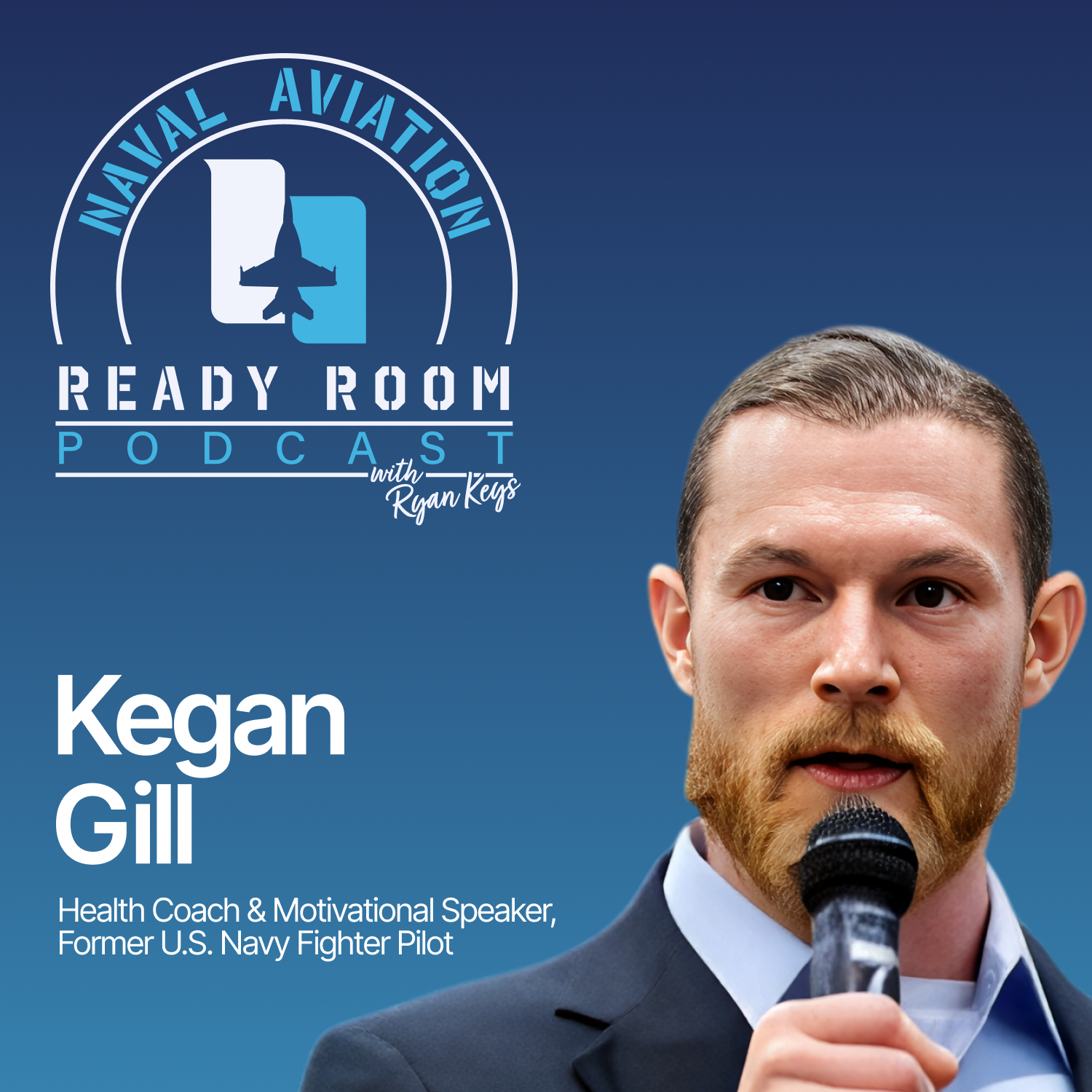 700 MPH Survival: Kegan Gill’s Record-Breaking Navy EjectionThe Naval Aviation Ready Room Podcast with Legends and Leaders · features Kegan Gill48 / 100
 The Future of Healthcare with Dr. David Shulkin, former Secretary of the United States Department of Veterans Affairs Part 2Pharma Sessions · on VA healthcare system89 / 100
 Episode 17: From Pebble Beach to Astrid - Samir Qamar on 25 Years of Reinventing Primary CareThe Root Cause · on functional medicine86 / 100
 Direct Primary Care That Actually Works: Affordable, Human Healthcare with NP Amy BrysonWeeks Weekly with Ed Weeks Jr. MBA · on functional medicine75 / 100
 He Scaled His Growth Team in an Untraditional Way. It Led to a Big Exit. (Philip Ruffini)Growing Forward · on functional medicine73 / 100
 Jason Ott, Herbalist Founder: Silent Habits That Break Entrepreneurs Before Their Business Does (#550)The Deep Wealth Podcast · on functional medicine72 / 100
 Asiye Kilic: The Grasstik Solution
 Matthew & Alesia Blackwood: Unlock Math
 Cindy Quirk: Scout & Zoe's Fur-Ever Success
 Damon Lembi: The Learn It All Leader
 Michael Bellemare: Switch It Up