Building Unbreakable Brands · 2026-05-07 · 10 min
Key moments - from our scoring
Substance score
50 / 100
Five dimensions, 20 points each
This season finale of Building Unbreakable Brands examines two seemingly marketing-focused questions that family business leaders frequently ask: will calling ourselves family-owned make us seem unsophisticated, and do customers actually care about family ownership? Meghan Lynch demonstrates through concrete case studies that these questions surface not from strategic curiosity but from moments of transition - supply chain shifts, market consolidation, generational changes. The manufacturer example shows how a company initially feared their family identity would undermine their scaled operations, only to discover that family ownership signaled craft, continuity, and independence in a market hungry for alternatives to consolidated competitors. However, context matters enormously: in tourism-oriented industries with many family competitors, that same identity can signal lack of sophistication, requiring mitigation through technology narratives. The episode reframes these as existential questions - "who are we and will that be enough?" - that emerge when business conditions destabilize, setting up season three's exploration of how generational transitions become catalysts for strength rather than crisis.
It depends on your market context and what research shows customers actually value. In consolidated industries, family ownership signals independence and personal service; in saturated family-business markets, it can signal lack of sophistication and may require mitigation through technology and scale narratives.
Not necessarily - the perception depends on overall brand presentation and market positioning. The manufacturer in Lynch's example had to update their visual branding (packaging, logo, aesthetic) to signal scale while emphasizing family ownership, rather than abandoning the family identity entirely.
These questions surface during moments of transition - supply chain changes, market consolidation, generational leadership shifts, or when customer needs change - not during stable periods, because they're fundamentally existential questions about identity and viability.
They must return to what is authentically true and unchangeable about themselves, which often turns out to be the family ownership and commitment to quality, rather than trying to maintain claims tied to outdated production methods.
Our reviewer’s read on each dimension, with quotes from the episode.
The episode contains several substantive insights about family business positioning and market dynamics - particularly the counterintuitive finding that 'family owned' can be a competitive advantage in consolidated markets rather than a liability. However, the pacing is slow with considerable throat-clearing and the core insights are stretched across 8+ minutes of narrative when they could be compressed. The concrete examples (manufacturer, industrial, tourism) are illustrative but lack specific numbers, timelines, or quantified outcomes.
They didn't want anyone to think that they had sold out. So the question became, is the family business identity the very thing that's holding us back or is it actually the thing that we need to lead into harder?
Family owned turned out to be the signal the customers in this category were hungry for, precisely because so much of the industry had been consolidated.
The reframing of 'family business' from a positioning liability to a market signal tied to consolidation dynamics is moderately fresh, and the multi-industry comparison (manufacturer vs. industrial vs. tourism) adds some texture. However, the underlying insight - that family ownership can signal authenticity, continuity, or independence - is not novel to B2B operators or brand strategists. The frameworks used are conventional narrative-building approaches.
When we started looking at what customers were actually responding to, not what we assumed they cared about, but what research showed, the family story was generating more interest than the family had expected.
Second generation family owned meant craft. It meant continuity. It meant someone with their name on the door was still making decisions about quality.
Meghan Lynch appears to be a brand strategist/consultant working with family businesses, which is relevant to the topic. However, she is a solo host speaking from consulting experience rather than a guest with hands-on operational credibility. There is no co-guest with direct family-business leadership experience. The brief Henry Lynch appearance (likely a family member) adds a human touch but provides no substantive insight and undermines credibility with a joke.
There are two questions I hear a lot in my work with family businesses.
Henry Lynch (09:01): You bet I do. Here goes. What did the drummer name her twin daughters? Ana one. Anna two.
The episode offers three named industry examples (manufacturer, industrial, tourism) and describes specific customer concerns (supply-demand mismatch, market consolidation, perception of technology gaps). However, virtually no concrete data is provided: no revenue figures, customer counts, timeline specifics, or quantified competitive metrics. The sourcing change is mentioned but not detailed. The narrative relies heavily on generalized patterns ('I see this pattern across industries') rather than named companies or hard evidence.
For the first time in the company's history, they had more supply than demand for their products.
One thing that we heard from customers was that they assumed that the company couldn't fill orders. Not because of the product, but because of how the brand looked.
This is a solo host monologue rather than a conversational interview, so there is no host-guest dynamic, follow-up questioning, or intellectual friction. Lynch narrates case studies smoothly but there is no one pushing back, probing deeper, or challenging the framing. The brief Henry Lynch joke segment appears to break tension but adds no substantive value. For a podcast claiming to explore business strategy, the absence of dialogue and counter-perspective is a significant weakness.
Let me tell you about a family I worked with a few years ago.
Hi, Henry. Do you have a joke for us?
Computed from the transcript - who did the talking, and the words that came up most.
In this Season 2 finale of Building Unbreakable Brands , Meghan Lynch unpacks a question she hears from family business leaders across industries: does calling your company “family-owned” help or hurt your growth? Drawing on real client experience and market insight, Meghan explores how to determine whether “family-owned” is a liability, a differentiator, or something more strategic altogether - and how to make that call with clarity and confidence.
Transcribed and scored by The B2B Podcast Index.
Meghan Lynch : There are two questions I hear a lot in my work with family businesses. The first one is, will calling ourselves a family business make us seem small or unsophisticated like we can't compete at the level our customers need us to? The second one is, do our customers actually even care if we're a family business or is that just something we tell ourselves because it matters to us? I've heard versions of these questions for years.
From leaders in different industries at different stages running companies of very different sizes. They sound like marketing questions, like questions about positioning or messaging or brand strategy. But I don't think that's what they are. I think they're something else.
And as we end season two of building unbreakable brands, this is what I want to unpack with you today, because I think that understanding what's underneath these questions is where some important insights are. : Let me tell you about a family I worked with a few years ago. This was a manufacturer that started creating a product that was higher quality and really different from anything else on the market. They had more demand than supply pretty much from the very beginning.
The product was exceptional and word got out. The second generation of this family business didn't grow up planning to take over, but when the opportunity came, the second gen leader and her husband decided to come back and build on what her parents had started. They had complimentary skills and a real vision for how the company could grow. So they invested.
They built a large new production facility, something that could multiply their capacity significantly and give them the consistency that scaling requires. Buyers love the product, but with that new facility came a problem. For the first time in the company's history, they had more supply than demand for their products. : This is where that first question will saying that we're family owned make us look too small shows up.
It wasn't an abstract concern. It was a real business problem. One thing that we heard from customers was that they assumed that the company couldn't fill orders. Not because of the product, but because of how the brand looked.
The packaging, the logo, the overall aesthetic was signaling small in a way that was working against them. And here's where it got complicated. Because the family knew that they needed to change how they were presenting the brand, but they were also afraid that if they looked too polished or too scaled, they would lose what had made them attractive to customers in the first place. They didn't want anyone to think that they had sold out.
So the question became, is the family business identity the very thing that's holding us back or is it actually the thing that we need to lead into harder? : While we're working through this, something else happened that I think is an even more interesting part of the story. The family had built their original brand story around a very specific claim tied to their unique production and sourcing method. It was genuine.
It was differentiating. And it was the story that their customers had come to know. But as demand grew and they scaled, they needed to change their sourcing. The product quality was the same and even better in some aspects, but the original claim was no longer accurate as an absolute.
The story they had built the brand around was no longer available to them. So they had to go back to what was actually true, what had always been true and what couldn't be taken away. And this is where that second question showed up. Do our customers actually care whether we're family owned?
When we started looking at what customers were actually responding to, not what we assumed they cared about, but what research showed, the family story was generating more interest than the family had expected. : Family owned turned out to be the signal the customers in this category were hungry for, precisely because so much of the industry had been consolidated. Second generation family owned meant craft. It meant continuity.
It meant someone with their name on the door was still making decisions about quality. So the customers did care, not because family ownership is inherently compelling as a concept, but because in this specific market, at this specific moment, it meant something different than what everyone else was offering. When the company communicated the changes in supply chain and updated their brand story, they could be very clear about what hadn't changed, the family ownership and the commitment to quality.
The very claim that they were originally worried would make people not buy from them because they would appear too small or unsophisticated, ended up being the exact message that helped them pivot and grow without losing any of their key customer relationships in the process. : And this story isn't an isolated case. I see this pattern across industries. I'm thinking of a large industrial manufacturer and their industry had also seen some massive consolidation.
Company after company was getting absorbed into huge conglomerates. And what their customers tell them consistently is that their family owned status is a meaningful reason why they choose to work with them. It's not a sentimental detail at all. It's a practical differentiator.
The personal relationship, the responsiveness, the lack of corporate bureaucracy, those are real business advantages that were harder and harder to find in their space. In a consolidated market, family owned means independence and personal service. On the flip side, I know other family owned brands that have experienced the complete opposite. For example, I think of one tourism oriented family brand.
They found that there are a ton of family owned businesses in their industry and that they tend to contrast really sharply with a few market leading large corporate brands that have come in, bringing deep pockets and cutting edge tech. : In their case, family owned has become synonymous with lack of sophistication and technology. So this company has found that now, if they're going to emphasize family owned, they also have to mitigate that story with a strong narrative about their scale, technology, and customer experience.
: Here's what I noticed about all of these situations. Neither question will we seem small? Do customers care? Neither questions surfaced when things were going well.
They surfaced when something was changing. The supply chain shifted, the market consolidated, the generation running the business turned over. The customer that always relied on started making different choices or having different standards. That's not a coincidence.
These are transition questions. They feel like marketing questions, but the one underneath them is much older and heavier than that. It's, who are we and will that be enough to keep us going? That question does not get asked in stable moments.
It gets asked when the ground moves and how family businesses navigate the moment when the ground moves and come out the other side still standing, still themselves and maybe even stronger than before, is what season three of Building Unbreakable brands is going to be about. : We'll be spending this season exploring what it looks like when a generational transition becomes a catalyst instead of a crisis, and also understand how that happens. Because the businesses that are still here, three, four generations in and beyond, the ones that are around for their grandchildren and great grandchildren to inherit, they use these fragile moments to get even stronger.
Season three is going to find these leaders and we're going to learn from them. We're going to look at generational brands that face transitions that threaten their existence and came out stronger. And we're going to look for patterns that can help us all learn from their experience. I can't wait to share what we find.
Now, this episode has been pretty serious, so I think we need to bring in Henry to lighten things up a little. Hi, Henry. Do you have a joke for us? Henry Lynch : You bet I do.
Here goes. What did the drummer name her twin daughters? Ana one. Anna two.
And if you want to learn more about what it actually takes for a family business to last, my mom put together a free email series called Building Unbreakable Brands: Six Practices of Family Business That Endure. The link is in the show notes. Thanks for listening and we'll see you in the next season on Building Unbreakable brands.
Other episodes covering the same guests and topics, from across The B2B Podcast Index.
 How to Break Free from Relying on Referrals to Get Consulting or Coaching Clients with Cori Crawford Van Oss (Ep172)Consulting Matters · on Brand positioning and messaging75 / 100
 Regenerative Tourism - beyond the buzzword in conversation with Tina O'DwyerTruth Behind Travel Podcast · on Tourism industry
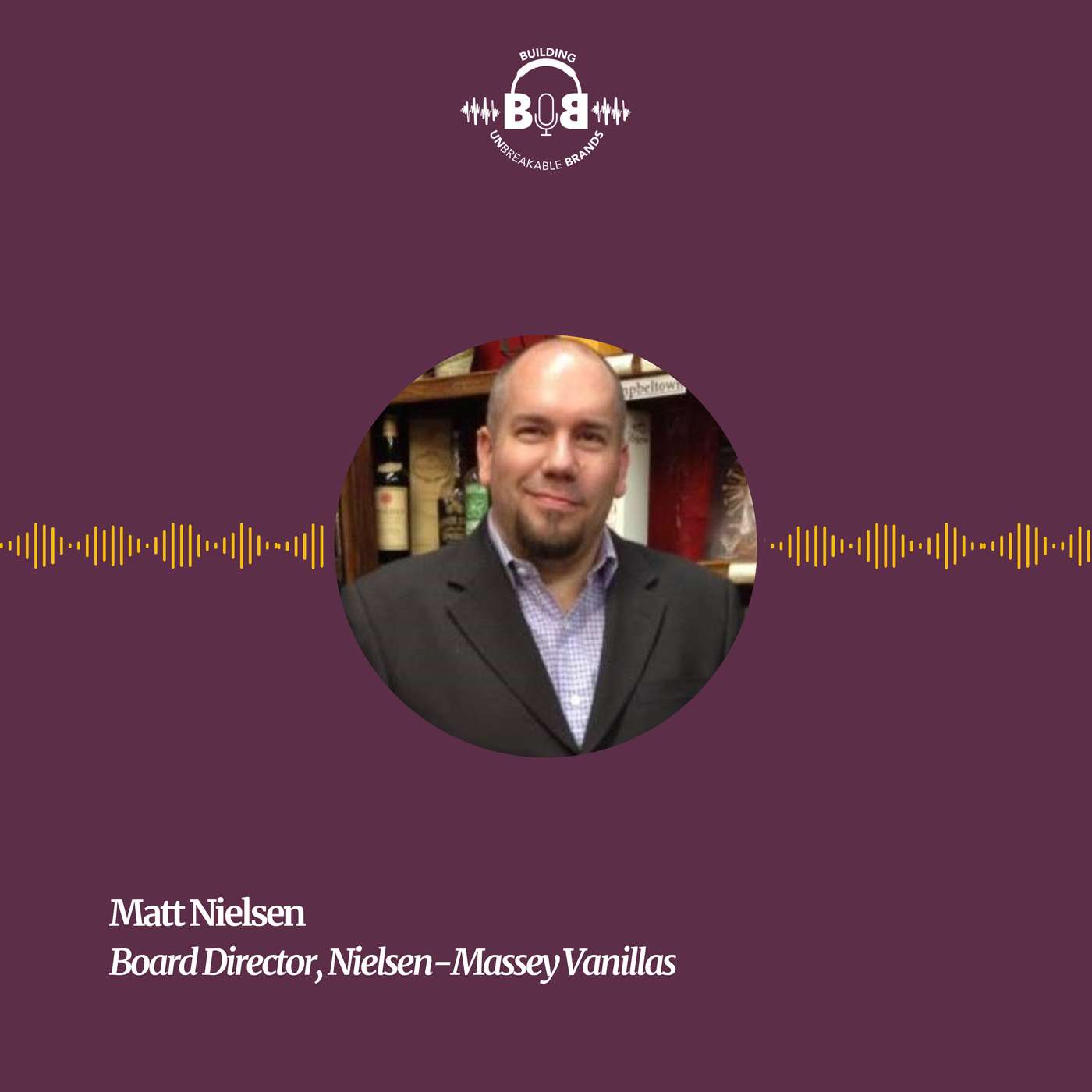 Stewardship Beyond the Family CEO58 / 100
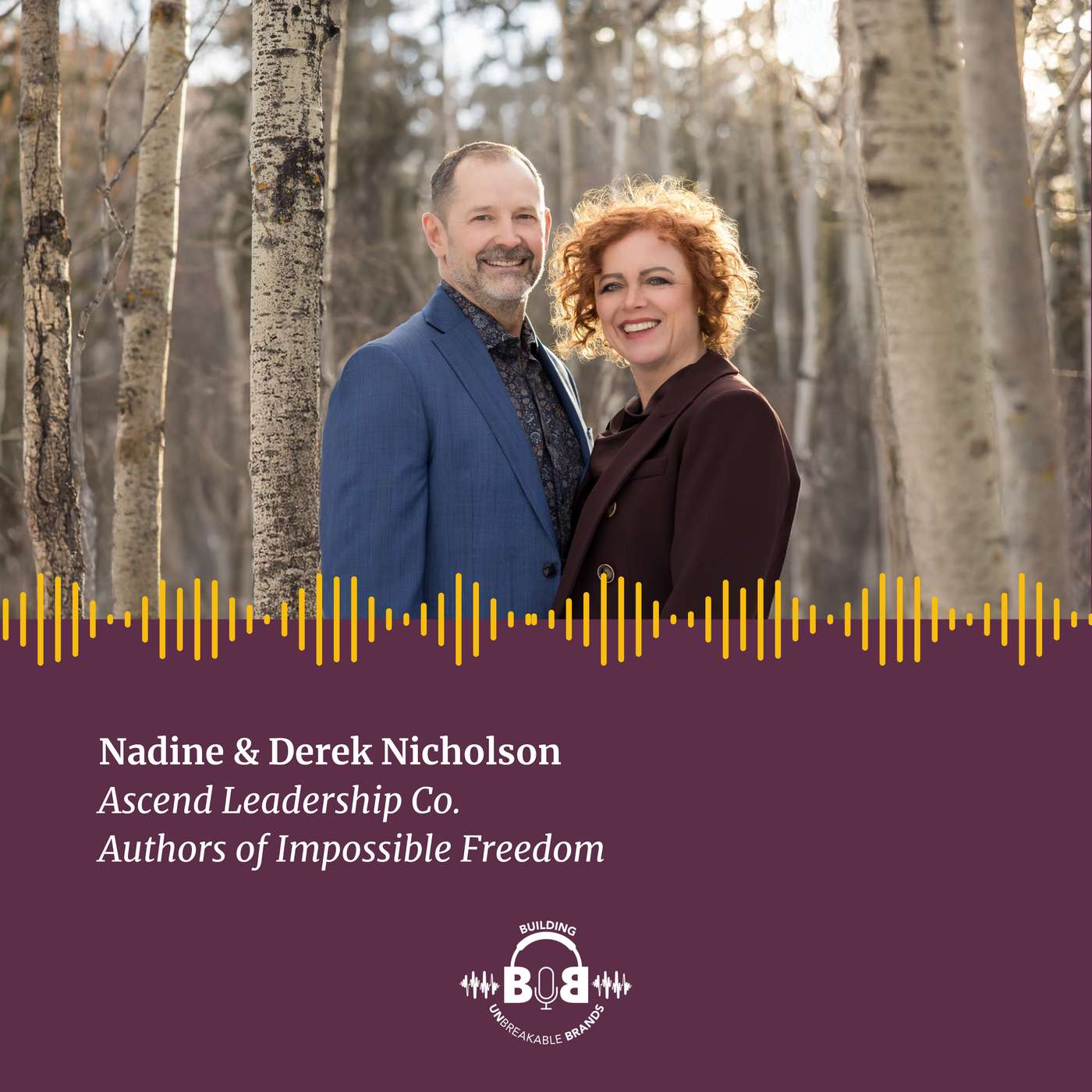 Finding Impossible Freedom in your Family Business with Nadine & Derek Nicholson75 / 100
 Where Do I Fit in the Family Business? with Torri Hawley85 / 100
 108 Years In: What It Takes to Lead in the Third Generation with Jaclyn Leibl-Cote77 / 100
 Choosing Work That Multiplies Impact with Dr. Robert Langer, co-founder of Moderna73 / 100