Billion Dollar Moves™ with Sarah Chen-Spellings · 2026-05-28 · 41 min
Key moments - from our scoring
Substance score
51 / 100
Five dimensions, 20 points each
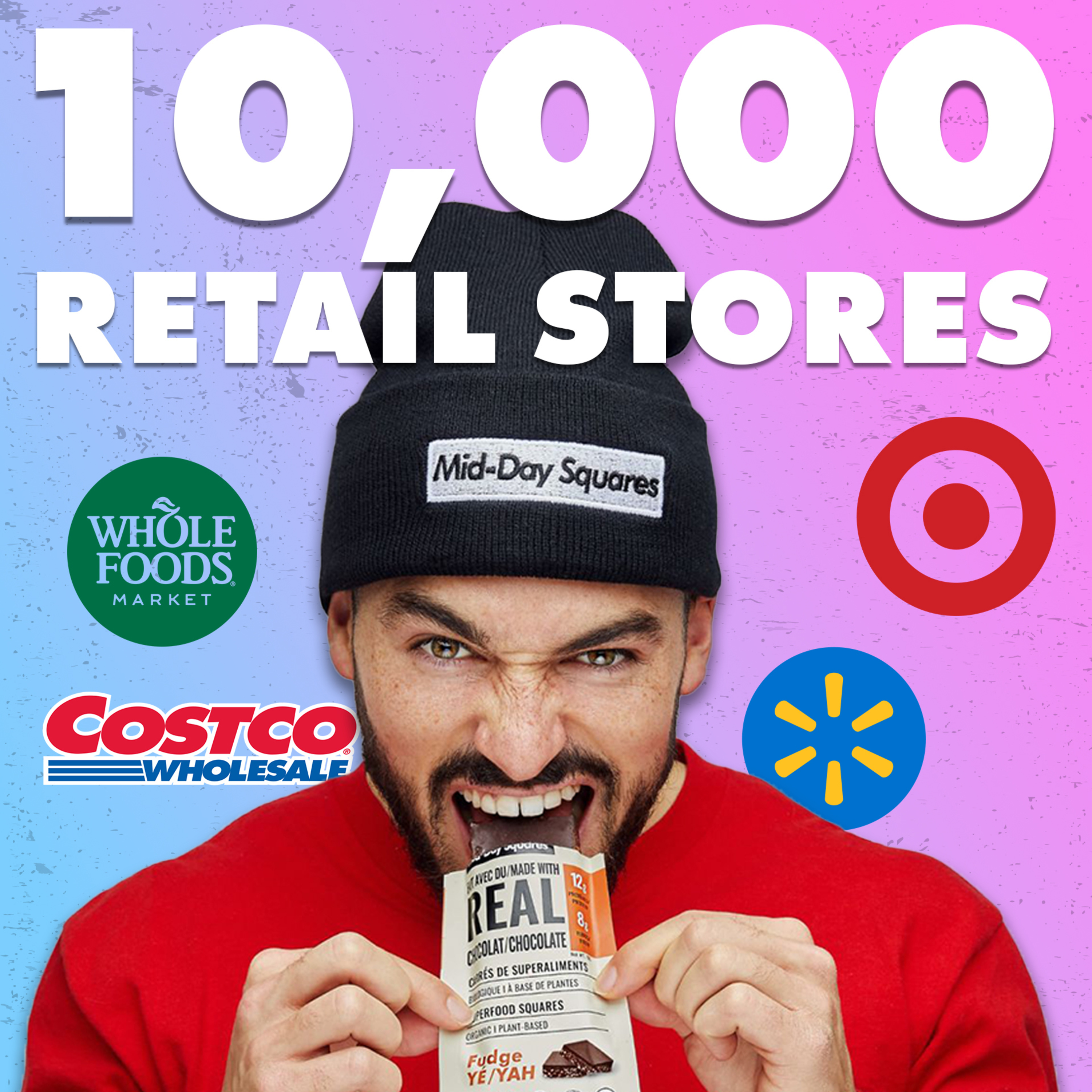
Midday Squares exemplifies founder-led brand building in the competitive better-for-you snacking space. Jake Karls and his co-founders - his sister Leslie and brother-in-law Nick - scaled from hand-making 50 bars daily in 2018 to a fully automated Montreal factory producing 150,000+ daily, now at 40 million revenue across seven SKUs. The turning point came when cocoa prices hit 100-year highs two and a half years ago, threatening the entire business. Rather than raising prices (the conventional advice), they invested two years innovating a breadless PBJ snack using the same manufacturing equipment, which launched three months prior and is now their number-one seller. Critically, the partners institutionalized communication through mandatory weekly therapy - a practice that saved the company during Leslie's nine-month CEO sabbatical due to mental health crisis. The episode dissects how structure (hiring operations-focused CEO Vanessa) combined with creative soul enables scaling. Midday Squares targets 100 million revenue by growing at 40-50% annually - deliberately slower than possible - into US mass grocery (Walmart, Costco expansion) while building a second production line. This conversation appeals to founders managing co-founder dynamics, operators scaling food-and-beverage businesses, and leaders investing in organizational culture and communication infrastructure.
Midday Squares institutionalized weekly therapy for all founders as a non-negotiable requirement before launching - communication and alignment prevent the emotional tensions that destroy family businesses, and the practice evolved to include key team members like their CEO.
Rather than raise prices on an already-premium product (the expert consensus), Midday Squares pivoted to a breadless PBJ snack using peanuts as the primary input, took two years to innovate the product, and launched it three months ago as their number-one seller.
Midday Squares targets 40-50% year-over-year growth deliberately - faster growth burns capital on retailer promotions with no visibility, and manufacturing constraints (two-year lead times on custom machinery) can't support hypergrowth.
The co-founder sister Leslie took a nine-month indefinite sabbatical due to mental health crisis; the operations-focused CEO Vanessa stepped up execution while the founders handled product and brand, and therapy helped the partnership navigate the transition while respecting her recovery needs.
Midday Squares targets 100 million in revenue within three years, with growth focused on US mass grocery expansion (Walmart, deeper Costco penetration) while currently at 40 million with seven SKUs.
Our reviewer’s read on each dimension, with quotes from the episode.
The episode contains a handful of genuinely operational nuggets - mandatory co-founder therapy as a P&L line item, a deliberate 40-50% growth ceiling with structural reasoning, and a pivot forced by cocoa pricing - but these are embedded in long stretches of lifestyle storytelling and motivational commentary that dilute the per-minute idea density significantly.
our investors, believe it or not, love this line item on our P and L because it shows that we're committed to the partnership
We like to target between 40 and 50% growth year over year. We don't want more than that typically and we don't want less unless it's a really rough year
The framing of co-founder therapy as a formal, investor-visible governance tool is a genuinely non-obvious structural choice, and the deliberate growth-rate ceiling rationale has some fresh logic; however, the bulk of the brand-building advice - document everything, be authentic, build community - is well-worn DTC gospel that circulates everywhere.
Let's be a boy and a girl band. Let's act like a band, similar to how bands sell records at the time. You know, let's act like them, but instead of selling records, we're selling chocolate
we go every week, almost every week, year, every together or alone, just to work on our communication. And we've now stayed aligned throughout this
Jake Karls is a genuine practitioner who built a real manufacturing operation from a condo kitchen to 150k units/day and $40M in revenue; he has operational scars including a cocoa-crisis pivot and a CEO sabbatical that stress-tested the company, giving him credible on-the-ground authority - though the brand is still mid-scale and he is not yet a proven exit or billion-dollar operator.
we started in a condo kitchen...Fast forward seven and a half years to today where I'm in front of you...we built a fully automated chocolate factory...that now makes about 150plus thousand of those same bars per day
cocoa...went uh, to 100 year high in pricing...when it's one of your biggest inputs and it goes up four times in price and there's literally nothing you can do
The episode provides a useful cluster of concrete figures - $25-26M equity raised, ~$40M revenue, 150k+ units/day, 60-person team, 40-50% targeted YoY growth, 7.5 years of operation, cocoa at a 100-year pricing high - but key operational specifics such as margin profiles, retail door counts, CAC, and trade-spend ratios are absent or hand-waved.
Our goal has always been, like, get this business to about 100 million
we have 25, 26 million
The host surfaces a genuinely sharp investor-risk question about founder-dependency in an exit scenario and follows through on the CEO sabbatical thread, but most questions are leading, confirmatory, or pivot to lifestyle topics; there is no meaningful pushback on vague claims, no challenge on margin economics, and the closing segment devolves into product tasting.
From an investor standpoint, this is actually a risk because you've built a community that is sticky to you. You in an exit. Most of the times say a big name brand buys you out. Uh, we're probably going to change the management, but the relationships are with you. How do you think about that?
What kind of revenues were you doing at that time?
Computed from the transcript - who did the talking, and the words that came up most.
In this final episode of Billion Dollar Moves for a bit, I sit down with Jake Karls, Co-Founder and Rainmaker of Midday Squares, for a candid conversation about building one of North America’s boldest founder-led consumer brands. Jake shares how he, his sister, and his brother-in-law went from making 50 bars a day in a Montreal condo kitchen to building an automated factory capable of producing more than 150,000 bars daily. We talk about why the co-founders committed to therapy from day one, how founder-led storytelling helped turn customers into a community, and why great marketing is not simply content - it is making people feel part of something. Jake also opens up about burnout, anxiety, his decision to step down as CMO, Midday Squares’ pivot beyond chocolate, and the work required to build a company that can eventually stand without its founders. For founders, funders, family businesses, and consumer investors, this is a conversation about trust, brand, resilience, and what it really takes to build for the long term. Watch the full conversation and subscribe for more discussions at the intersection of capital, leadership, and long-term value.
Transcribed and scored by The B2B Podcast Index.
Speaker A: Our goal has always been, like, get this business to about 100 million. The last seven years were not exciting. Like, it was a lot of, like, pain. I had a burnout two, uh, and a half years ago where I lost control of my life. I used to sleep with so much anxiety. I used to sleep with so much pain. I used to, like, cry myself to sleep saying, like, this is going to fail. No, content is not marketing. Making people feeling something and make people feel part of something is how you build an actual brand. Today. We want this to last. It has to last on its own. We are just extra momentum for it.
Speaker B: Welcome back to billion dollar Moves conversations with billionaires, you confounders and the funders behind billion dollar outcomes. Today's episode is a special one. It is the final episode before Billion Dollar Moves takes a pause as I prepare to enter a new chapter of my own. And this conversation felt like the right place to land. Jake Carls is the co founder and rainmaker behind Midday Squares, one of the boldest founder led consumer brands in North America. But this is not really a conversation about chocolate or a midday snack. It is about what it costs to build nothing. The trust required between co founders, the courage to admit when a role no longer fits you, the toll ambition can take when you ignore the warning signs and the work required to build a company that can eventually stand without you. Because perhaps the real billion dollar move is not simply creating something people love. It is building something strong enough to endure beyond you. Jake Carl, let's get into it.
Speaker A: Oh, I'm fire. Your energy is contagious.
Speaker C: Jake Carls in the flash in the outfit that I had expected.
Speaker A: I'm wild that you expected that. I'm wild.
Speaker C: I was telling my people, like, look, he's gonna show up. Look out for the guy with the cap, sunglasses, probably in jeans and a white T shirt. So tell us for those, I mean, you are an absolute rock star. You call yourself a social personality, uh, in residence rainmaker for Midday squares. But for those of us, as I mentioned, you know, we have folks who are all over the globe who may not have heard of the rock star that you are. Give us some context of who we have the leader we have in front of us today.
Speaker A: Oh, I like, I like your intro. It fires me up. So my name is Jake. Uh, I'm one of the co founders and rainmakers of a brand called Midday Squares. Midday Squares. We're trying to build the next biggest afternoon snacking business globally in the better for your space. And you know, we started in Montreal. My sister, my brother in law and I, uh, very different people. We're in business not because we're family but because we complement, complement each other. So my partners are operators and I'm a huge brand builder and a rainmaker, which I just spend time traveling the world making friends, building relationships for the organization. And uh, you know we started in a condo kitchen in Montreal, a little one that you know, we're hand making these chocolate bars, these better free chocolate bars. And we would make 50 bars a day literally every single day. We were delusional, we were crazy. Everyone laughed at us like the world doesn't know their chocolate bar. The world's neither health bar. And we just, we just put our heads down, we focused, we blocked out all the negative noise, all the judgment, all the, all the uh, stuff that was kind of like you shouldn't do it. And we just started hand making bars every day 5am to 5pm and then 5pm to 10pm hand delivering them. And we were filming everything as we were doing it like crazy people. And fast forward seven and a half years to today where I'm in front of you. You know, we have, we built a fully automated chocolate factory, uh, or snack bar factory in Montreal that now makes about 150plus thousand of those same bars per day. Very similar to the ones we made at the beginning in our condo kitchen. And you know we've built a team of 60 folks. You know, we're growing uh, quite quick. You know, we have millions of customers across North America. We just selling Canada, the United. But one day our ambition is to sell all over the world, uh, to be a global brand.
Speaker C: Amazing. And get us to the why here. You know, um, so we were spending a lot of time um, at Forbes under 30, talking a lot about purpose, impact and just how hard entrepreneurship actually is. Right. Mark Law, as I was saying, the guy behind Wonder and many others said you're essentially putting in 100 hours a week minimum in a low probability environment. So what was your why? Is that still your why?
Speaker A: I think the why is like if I could build a business with my partners in a space that's super saturated, super difficult. The food and beverage world is a low margin world. There's, there's thousands of products, the barriers of entry are very low and we could do it being unapologetically ourselves, doing it our way, that we truly believe, following our gut, being different, then we'll inspire a whole slew of people to go start their businesses. Because I didn't do well in school, uh, I didn't do the traditional path either to my partners. And we're managing to slowly scale this business and actually break through a very saturated market. So my why still remains what it was. The beginning is to inspire a whole generation of people to lean into themselves.
Speaker C: But why chocolate though?
Speaker A: Oh, chocolate. Okay. If you want to go to the why of the product. Yeah, the product. When we start this business, the data was showing that dark chocolate was actually growing very fast at the time, year over year and that plant based proteins were growing really quickly. So my sister, the creator of the actual product, literally made a baby at these two, these two growth, these growth categories. And my brother in law, uh, is he's a data nerd. He loves data. And he said the product you're making for me to eat every day at 2pm an afternoon snack that's delicious but also functional is actually gonna have product market fit in the market. The market is showing that there's a pull, there's a white space. So the why was build people a great snack in the afternoon that's better for you, that tastes good, it makes you feel good. And we just felt that no one was doing it in that sense and in this intention of the afternoon. And that still remained the goal today and the mission and the why. We've now expanded outside of just chocolate products into something even greater what we believe. And we're becoming the midday snacking company.
Speaker C: Yeah, love it. And of course uh, you interestingly talk pretty openly about going to therapy with your sister, your co founder, your sister in law. Uh, so you're really the third wheeler here in some way talk to us a little bit about that relationship. And I love how importantly you phrase we're in business not because we're family, but because we're complementary. How do you think about that dynamic into building midday?
Speaker A: Well, I was scared to go into business with two people I love dearly, like you know, and risk their marriage potentially who they love each other. And I'll never forget my brother in law first, first day of the, of the business we signed, it was August 4, 2018. We launched the company. He came up to me, he said I need you to sign another agreement. And I said what is this agreement? And he said that you're going to come to therapy with Leslie as my sister and Nick's and he said perpetual for the rest of our business. And I said I don't want to do that. Why would I want to go to therapy with my sister and brother in law? It's weird, It's Just like, what are we going to talk about? Your sex life? Like, you know, like, I didn't know what they were going to talk about. He said, well, if you don't want to do that, we can't do this business together. And what he was implying was communication is one of the most important things to any partnership in business, in life or in business. If you can't communicate, you're gonna have a very hard time succeeding because alignment is one of the most critical success stories for any partnership. And basically what he said is, if we're not aligned at all times, there's going to be tension that builds, there's going to be anxiety, fear, emotions that will destroy this business. And I looked at him, I said, I just don't want to do that. And he said, well, let's give it six sessions. And I said to him, if I do six sessions, I need you to do something for me. And what I asked for was, I said to my two partners, said, I'm coming to therapy. I need you guys to get on camera and film yourselves literally unfiltered on social media, which they were very uncomfortable about.
Speaker C: And because they're both introverts.
Speaker A: Both introverts. And at the time social media was blowing up, like, people were so curious to see more about brands. They were so curious to see, you know, the behind the scenes of a company and not just the product or the features or the benefits. So they said, okay, we'll do this. It's uncomfortable for us if you come to this. And I signed that agreement. They signed that agreement. And that was the two best investments we've made. We go every week, almost every week, year, every together or alone, just to work on our communication. And we've now stayed aligned throughout this. We've trust each other more than ever. We love each other more than ever. And our investors, believe it or not, love this line item on our P and L because it shows that we're committed to the partnership. And now we bring teammates into those sessions, if necessary, for communication purposes. And that enhances our relationship, that enhances the communication skills.
Speaker C: And so talk to me a little bit about. I mean, this co founder relationship is one of the biggest risks, right? So the people element is one of the biggest risks in business, and you're investing in it. What's the biggest takeaway from. What is it, seven years of therapy?
Speaker A: Seven and a half.
Speaker C: Almost eight. Yeah, seven and a half.
Speaker A: Hundreds of sessions, tens of thousands of dollars. The biggest thing is communication is the most critical part of an organization. And I'll tell you why. If I disagree with my partners and I hold an emotional tension, I'm going to hold something back, I'm going to start acting different and that's going to build. And then over time that build that, the alignment starts to go like this and once it hits this, there's an explosion. That explosion might not be able to be, uh, fixed after it's done. It might be completely destroy the business. And the soul of the business is gone at that point. So what it's done for us is it's actually protected all of that. So we talk through major issues and also major successes. Because the roller coaster of entrepreneurship, we discussed it just before, is it's up, down, up, down for a very long period of time. The emotional swings are very hard on you. The pressure's high, the stress is high, the anxiety is high. And if you don't openly communicate and you don't have that intention to show up to protect this partnership, you're screwed. I'm telling you, I've seen it countless times, especially family businesses, especially best friend businesses. So you're right. You should be investing in people, you should be investing in communication. If you're not, I think that you're just waiting for a time ticking bomb to just blow up.
Speaker C: So what's the most important question you ask each other or you do an exercise? What is it that you do to frame this communication?
Speaker A: So it starts off just how we're feeling. The first question is, how you feeling? And you know, sometimes I want, because you're building business, you're so busy, you know this, uh, you're 100 hour, 80 hour, whatever the amount of time is, so you don't even think twice. How are you? Like, are you okay? And what if you're going through something and that leaks into the business? How can we help you? You know, my sister, one of the biggest moments was my sister told my partner and I in a session that she was going to step down as CEO. And she stepped down as CEO because she had a nervous breakdown. She had a mental health crisis and she said she was taking an indefinite sabbatical. And that meant that our CEO was going to step back and we still had to run that business. So we worked through that in therapy how to support her as a human and a sister and a wife to my brother in law. But also how do we take over her roles and how do we keep the business growing, keep the business going? So we worked through that for a period of time and that made her feel good. In terms of there was trust, uh, there was positive energy and there was understanding of how she's feeling and it saved our business. I wouldn't be with you today if we didn't go to therapy.
Speaker C: Yeah.
Speaker A: And I was opposed to it at first.
Speaker C: So your sister almost stepped. Well, she stepped down.
Speaker A: She's back now for a while.
Speaker B: She stepped down for a while.
Speaker A: Nine plus months.
Speaker C: Yeah. Which is significant in a business to not have the CEO that we had planned for. How did you handle that situation?
Speaker A: So we have an incredible uh, CEO cfo. Uh, her name is Vanessa. She, we hired her a couple of years back and she's now just taking on more and more responsibility. One thing beautiful about our relationship with Vanessa is she's really good at executing, execution and organization. And my partners and I are really creatives. We're great with like product development, we're great with marketing, we're great with brand building. You know, my brother in law is good software engineer by trade, but when you use someone that understands structure and bureaucracy and you bring soul from other people together, it's a magical uh, mix. You know, it's like, you know, I think that that's like the, what everyone's looking for in business is you want both. Because without structure you can't scale a business. And without the magic and soul, it's very hard to stand out and make something that's really unique or really powerful, uh, to the consumer. So for us, you know, Vanessa has been a critical, critical role for us and she stepped up to the plate. And Nick and I, uh, we did certain roles that we weren't, we weren't supposed to do in quotations, but we did. And, and my sister just asked us not to talk to her about any business. So she went to Japan for a bit. She didn't want any updates. She. So it was hard. You know, imagine my brother in law who goes home at night and when she was at home not talking about the business that we're building, but we respected that and that's that respect was built through therapy and understanding each other very deeply. And you can't buy that in life. You have to earn that and build that.
Speaker C: And so let's go into the business now.
Speaker A: Yes.
Speaker C: Uh, how many SKUs do you now have?
Speaker A: So we just launched our seventh one yesterday.
Speaker C: Okay, seventh one. Congratulations. We will be trying some later. What do you think is your product differentiator today? And you also mentioned you pivoted in a big way last year.
Speaker A: Yeah, we're going to talk about that. Pivot that pivot is critical. So, but I think the differentiation is that, you know, we went, you know, we started in a condo kitchen and when we went to build this product we went to some of the best co manufacturers in the world, third parties that can make bars or chocolate, chocolate snacks. And they all told us the same thing. Your product is very difficult to make. We're going to have to change certain ingredients and change the textures you want to do because our machine, their machines just weren't capable of doing what we wanted. So when you bite it, it's a unique texture and our chocolate is actually very unique in terms of taste. It's dark chocolate. Now last year we went through one of the, you know, greatest crisis I think that we've gone through in a business name anything else. This was the hardest moment and the most challenging time where we almost threw the towel in and handed the keys to somebody. And you know, a couple of years back, two and a half years ago, cocoa, which is one of our greatest inputs, our largest inputs in our supply chain, went uh, to 100 year high in pricing, like really quickly. And when it's one of your biggest inputs and it goes up four times in price and there's literally nothing you can do, like there's a select amount of cocoa in the world and that was, there was a shortage, there was some issues and you know how long that was going to be. You had two options, raise prices. We're already a premium product, we were already priced relatively high. The second option was completely change the product and innovate outside of it. Which is very risky because then you pivot the organization for us. Every expert that we talked to said raise the price and just, just stay with your line. It's gonna be a lot harder to do a new manufacturing process, a new quality. It's gonna confuse the consumer that you're going to have something completely different. So we decided to do the wild, the delusional, ah, crazy that we did at the, we said screw it, we're going to make a new product. We looked at data, data was showing that snacking, PBJ snacks were on fire. And we looked at our own internal data from our consumers that always said you should make a PBJ snack, you should make this. And we basically looked at our manufacturing equipment and said what do we need to create a new version of a PBJ that is no bread, so breadless. Um, you know, it's just a slab, it's a two texture slab of jelly and then on top of a smooth peanut Butter bottom filled, protein fiber, good fats. And how can we justify that within the organization? And the truth was we are a midday snacking company, it's still a 2pm snack. So going back to the why it's still back to the product why that we developed. So we took a huge risk. We took two years to innovate the product and now it just came out three months ago and it's on fire. It's our number one seller. We're building a platform and what it allowed us to do was ice. Coco was eating our whole business like burning capital, tremendous amounts of capital because we kept the prices down, we didn't raise them. This allowed us to gain some momentum on a uh, peanuts like, like raw materials. We were, we were actually able to buy significant amounts. The economies of scale were there. It was a similar in terms of using the same machine equipment other than a couple of add ons. So the actual efficiency was there. And last but not least the consumer loves it because not everyone likes dark chocolate. So this is a sweeter product. So it's more mainstream families are buying it.
Speaker C: So it actually nostalgic.
Speaker A: So the marketing wasn't. We didn't need huge marketing or education and now we're building a platform on pb no bread pbjs. And it's scary, it's exciting, exciting. But it was one of the most brilliant pivots we've done.
Speaker C: So you're now at 40 million with seven SKUs. What would the number be that you're
Speaker A: looking towards like in terms of skewer revenue.
Speaker C: Revenue.
Speaker A: So our goal has always been like get this business to about 100 million and, and look at what's next for the organization. And we do everything in three year tours. So everything's done three years. So every tour we go through we approve the unit economics. We're going for the revenue growth, the distribution targets, the margin profiles that we're going for and we sign off on it and we say we're committed for three years to go 150%, no questions asked, get to that goal and then once that's done, what's the next three years look like? And it's always three years. And the reason being is you can give energy for three years and like we're able to accept that and go all in. If you start talking 10 years it's a lot longer in terms of space and it just renews energy quicker. And maybe you're, you know, you have a different opinion in three years. And one of my partners says well maybe we should do this or maybe we should acquire that, maybe we should sell that. You know, whatever it is, it could change. So we go back to the discussion and actually a lot of it's done through therapy. We actually leave the city and we go to an off site and we go through hours, hours of just nailing down a one page, three year goal. It's a one page.
Speaker C: So you're essentially at series B right now. How much have you raised in total?
Speaker A: 25, 26 million.
Speaker C: 26 million. Does that include debt as well?
Speaker A: No. And then we've raised some debt from uh, our government in Quebec and we're super grateful for that because debt was, was used to buy machines and build the manufacturing plant which created jobs and creates an ecosystem in the area for. And uh, yeah, we, we just actually got approved for more to build a second line which will actually increase our capacities uh, by another three to four times in the same building. So we basically are going to move the offices out. Put a second line.
Speaker C: Yeah.
Speaker A: And have uh, just more space. The office will be somewhere else.
Speaker C: Talk to us a little bit about the structure of the deals that you've taken on. Um, from a distribution perspective. I know you're in Costco. We celebrated that. What are we, how are we thinking from a distribution perspective?
Speaker A: We're focused on going to the right distribution at the right time. So you know, when you go into a business, when you go into a retailer and it's across the entire country, you have to be able to support the marketing efforts, the trade, the promo strategies, the trade, spend. And you don't want to spend too much because then you're going to burn a lot of money. It's very easy to spend money in retail and grow that by basically spending on tons of promotions where you have no idea what's going on, you have no visibility. So for us, you, what we say is you're not, we're not going to grow the fastest as an organization. We like to target between 40 and 50% growth year over year. We don't want more than that typically and we don't want less unless it's a really rough year. And the reason being is our two reasons is refrigeration is very slow to grow in because there's limited space, there's sets in. The retailers take time to reset the program so the product can't just go into a store. It has to wait for the reset to happen. Then they reset the planogram and they could put a certain skew in. But it's not Like I could put a pallet in the middle of a store and just say sell. No, you have this much space. So that's number one. The second part is, uh, you know, manufacturing these is not easy. You know, we can't just turn it on and say let's make $500 million. This, we're not ready for that. We're building towards that, but it's taking a long time. This is like custom machinery. It takes two years to get the machines. And so what we do is the 40 to 50% growth is very strategic, very focused and not just taking every opportunity that comes to us. So over the next year you're going to see us grow actually a significant amount. But we're targeting, um, targeting some mass grocery here in the US we're focused a lot on, on, on blowing more up in the United States because Canada, we're the leader already and in the US we want to start climbing to that eventually over the next two and a half years. So you're going to see us hopefully in you know, places that we want to work with is like Walmart. We want to work more with Costco, we want to work more with, go deeper. Even with Whole Foods and Sprouts, some of them are already our partners and Target as well. And, and the, the idea is to get the PBJ line completely listed into them and yeah, and get that listed because right now the strawberry and grape are just going into retail here in
Speaker C: the US and one of the things that I've hear I think is really smart is the fact that you need to first be known as a brand, you need to have strong brand recognition. And we'll go into your marketing strategy where everything has been done superbly well by yourself. Right. You know, it's your forward facing as a founder here. Um, but what a lot of founders that I work with don't realize is they want to get that Target deal, they want to get that Walmart deal. But you need a first half brand recognition for the foot traffic to find your snack because you're accepting a lot of the terms that these mass retailers give you. Can you walk us through a little bit on your thinking there with regard to planning the brand? I know you sort of had a deck with Backstreet Boys like thinking of yourself as a uh, boy girl.
Speaker A: It's critical, I think that any business, you don't have to be a consumer business to do this. And you know, at the end of the day if you're invisible and you have the best product, you have the Best service, you have, the best software, whatever it is, no one knows you. You're not selling anything. Today's world is a digital world. The attention economy is real. And if you can't get attention, it doesn't matter how much product, market fit you have. Because at the end of the day, consumers, individuals, clients, retailers, investors, they're on their phone scrolling, they're on their computers, we're looking. And you need to be able to get them to stop and say, what is this? And opt into that communication. So what I said to my partners day one was very simple. If we want to win, I don't care how good the chocolate bar, I don't care how good the PBJ is, we need to get people to care. There is 30 to 40,000 other products in a grocery store. That is huge. Think about that. If you have one item, one sku, you start with one sku, it needs to stand out. And it ain't gonna stand out by buying up the shelf. Because we didn't have the money, we couldn't buy up the real estate to put everywhere in the store. So what I said to them is, let's be a boy and a girl band. Let's act like a band, similar to how bands sell records at the time. You know, let's act like them, but instead of selling records, we're selling chocolate. So we need to act as if we're emotionally connected to our fan base. Let's build fans. And how I said that was we were just gonna document and shared the whole thing on social media, the unfiltered way of what it looks like to build a business. Because most businesses are fearful to show the behind the scenes why. They're worried of judgment, they're worried of competitors, they're worried of all this stuff, compliance. I get it. I said to my partners, if we want to make noise, we're from Montreal, it's a small city, we want to make noise in North America, we have to be loud and crazy. And that's what we did. I got on social media and we showed therapy, we showed breakdowns, we showed what winning looks like. We showed what, you know, legal battles, raising money, we showed everything. And what that did was it made consumers feel that they were part of our brand because they knew almost everything. They went to the store and that one SKU stood out to them in front of 30,000 other items and said, I like that brand, I want to buy that brand, I want to support them. And what that did was allow us create momentum. And that momentum Then turned into more of marketing structure and more of now traditional media. We do a lot more influencer work, all that stuff. But that got us off the ground, that got us knowing, that got people excited. And I think a lot of brands miss this because they think marketing is simply features, benefits, and content. No, content is not marketing. Making people feeling something and make people feel part of something is how you build an actual brand today. And again, it doesn't matter if you're in finance, doesn't matter if you're in cpg. We are all competing for the same eyes and ears.
Speaker C: Give me an example of something and a campaign that you led or a crazy idea that you didn't expect to blow up in the way that it did.
Speaker A: Uh, I'll give you the example of Costco. Costco Canada, um, is a great partner of ours today. But when we first pitched them years ago, uh, we just couldn't get a yes. It was many years of no. And then, you know, we told them, like, what do we have to do? And the movement wasn't really happening. And I'll never forget, you know, we just don't want to take no for an answer. As an entrepreneur, you got to be slightly crazy. Respectful, kind, but crazy. And we asked them to do a roadshow. And a roadshow is when you go and you sample your products in Costco and people could buy it on the spot. And I said to my. I said, guys, we're going to break that record. And they go, that's a lot. Like, that's a lot to do in a roadshow. And I said, I don't care. We're going to use our community that we've built, our brand that we've built, the strength of it, and we're going to test it. So what we did was we created storylines on social media saying, like, in order for us to get into Costco, we need to break this record. We need your help. So we asked for help. We told the story. We showed the wildness of prepping the booth, setting up the demos, having our family. My mom worked the booth. Like family vibe storytelling. And people lined up, people showed up through the route. They got Costco memberships just to buy the product, and we broke the record really quickly. What I could tell you is this. After that, when we went back to the negotiating table with Costco, uh, the conversation was slightly different because it was like, wait, our members love your snacks? And that whole thing happened because social media allowed us to spread the word really quickly. And the stories went viral. Millions of Views we got put in the press, on tv, and all this stuff because it was a great underdog story. And again, this story doesn't have to be for just CPG brands. You could tell that story to anybody, because when people feel something, they feel connected, they want to be part of it. And when you use the power of human connection, especially in a world of AI, you really get something powerful.
Speaker C: And so you're selling community here.
Speaker A: We sold community, and it worked. You have to figure out what works for you. We built that, our community. We built that for years before, but people just wanted to support. But we framed it in a way where we needed people's help, and it worked really well. But it has to be authentic.
Speaker C: I was gonna Just not as a buzzword. I was just gonna ask that, are you playing a part here? Like, is this expected outfit playing a role? I mean, I looked at your previous photos. You look very different. This is definitely an image that it was intentionally curated.
Speaker A: So, yeah, uh, honestly, like, I started to take a lot of stages over the last three years, and I realized, like, whether it's podcast, whether it's a media opportunity, whether it's a conference you're speaking at, but, you know, I want someone to remember, not just like, the basic, like, hey, I'm in a regular, you know, a common outfit.
Speaker C: I want.
Speaker A: I want personality. And my personality is to be loud and wild and crazy and dance and have fun. And glasses became something that people actually knew me for. They're like, he's gonna wear glasses. And the cap's always there because it stimulates conversation. Oh, what's Midday Squares? Um. Or if you get an image, what if someone's taking a picture? It gets posted somewhere. It keeps going and going. You're a billboard. So if you could use things that are true to you, that make you feel good and alive, and that's true to you. And people rem it like, you know, like, I'm not gonna remember what you were. What you wore is great. Like, this green outfit. This. It's cool. It's different. Like, it's fun. It's serious, but it's fun. And I think, like, again, if people don't know you and people don't remember, people have no memorabil. Like, Like. Like if, uh, if you're not remarkable or you don't have some sort of thing about you that people can remember and. And. And. And be different about because the world is. Everything's the same, more or less, then you might be forgotten.
Speaker C: Yeah. So how did you think about the plot line of, of Midday Squares and the role that you played. And I know you sort of force. I mean, Leslie's pretty good actually. You know, for being an introvert.
Speaker A: She's awesome.
Speaker C: She's got such an engaging personality online.
Speaker A: People love her.
Speaker C: How did you strategize that among you all? Uh, you know, I mean, you know, if we're going into the detail here, like someone's Posh Spice, someone's Baby Spice, right?
Speaker A: So at the beginning, I was. I was Jake the delivery boy. So I actually was filming everything. They weren't comfortable with camera, so I actually. She took the camera out, I filmed, I edited, I posted, and I was all over social media of Midday Squares for the first three years. And then we switched and Leslie took over because she started to get really comfortable and people started to love her on the camera. She was very vulnerable. She was very transparent, and people love that transparency. And I actually stepped into a different role on the content where I leaned into LinkedIn, where we could attract, uh, more of the corporate setting, where it was investors, it was retailers, it was media. And I was telling our story in a fun way on that platform and Leslie was telling the story on Midday Squares platform as basically the spokesperson of the face. And it just naturally happened. And they both drive tremendous amounts of momentum to the organization, where Leslie's driving a lot of end consumers, where they're fans of the brand. I'm driving a lot of the relationships that we need to actually build the business from, like I said, investment to retail to media. And what I would say to you is this is. I started this business as the CMO of the company. That was my first role. It was like chief marketing officer because my partners were co CEOs. And I was like, we're all third founder. A third or third or third. I gotta be some chief role. So I tried and I was horrible. Excuse my language. I was terrible cmo. Not in the sense of storytelling and mark and brand building, but I was bad at management, I was bad at strategy, I was bad at actually operating that side of the business. So what I did was I just stepped down. And when I stepped down, I tried to figure out what my strengths were, what my superpowers were. My superpower was not management, it wasn't operations. It was literally building relationships, making friends. So I said, what, what do you know rainmakers do? And I looked at them up in the investment banking world, in the legal world, and they literally just bring biz dev to the businesses. They're not lawyers, they're not typically investment
Speaker C: bankers, they're relationships, chief evangelists in some way. Right. Like Canva has that too.
Speaker A: So that's what I am. I think that's another way of putting it. So I travel the world, I make so much noise. I do things like this where we're having the time of our lives and, and I build friends for the organization. And that makes my team know that if I'm out there, I'm making sure that they have everything that they're equipped to do to succeed. And they don't even know where I am half the time. Maybe I don't even know if they know I'm here, but they trust that I'm there, making sure that I'm promoting the brand. I'm screaming about it. I'm building friends. And um, I just think for anyone that's listening to this podcast, whether you are in finance, whether you are an entrepreneur, it's okay to change your role. And I would suggest that you spend most of your time that's free in your life investing in understanding yourself and who you are and what makes you great and what makes. What are you bad at? And be honest, I was bad at being a cmo, so I, I don't want to be that.
Speaker C: Yeah. So let me ask you this. You've all made the choice to be founder forward, right?
Speaker A: Yes.
Speaker C: From an investor standpoint, this is actually a risk because you've built a community that is sticky to you. You in an exit. Most of the times say a big name brand buys you out. Uh, we're probably going to change the management, but the relationships are with you. How do you think about that?
Speaker A: So I love that question. And you're right, it's, it's definitely a risk. But that's how a lot of them also found us. So a lot of the strategics or the investment world found us because they love us. Right. And I think what we're trying to do now is make the organization run without us. So what I mean by that is like remove my partners and I as much from the day to day operations as possible. So that Midday Squares is just a running machine itself. We are just magic powder that they put on it. So relationships, momentum, energy, soul, fun, whatever you want to call it. And we're getting, every year we're getting closer and closer to that. Like even my sister stepping away from CEO and the business growing and that was a huge win and you know, bringing on Vanessa and a management team that has done a phenomenal job. You know, I go to sleep at Night. I don't worry as much. I used to sleep with so much anxiety. I used to sleep with so much pain. I used to like, cry myself to sleep saying, like, this is gonna fail. I don't feel that anymore. I feel really good that the business now runs itself. We launched new flavor yesterday. I didn't even ask about it. It was manufactured. They probably produced hundreds of thousands of those bars. There wasn't a thought process because I trust the team.
Speaker C: What, what was that flip from crying yourself to sleep at night?
Speaker A: Yeah.
Speaker C: Deep inside.
Speaker A: Legitimately crying. Legitimately.
Speaker C: Legitimately.
Speaker B: Right.
Speaker C: I mean, and we need to talk about this because it takes generally most of the time, at least 10 years.
Speaker A: It almost destroyed my life.
Speaker C: Proper exit. Yeah. So how did you flip from huge anxiety to trust and Zen?
Speaker A: So hiring the right people that are better at their expertise than my sister, my brother and I, we're not the smartest people in the organization. And what we did was we spent time looking for people that were really good at what they do. And then that fit the culture of the energy of the business, which is critical because we're allowed a company. We're wild on social media. We film everything. So people have to be comfortable with that. But when we built the team, uh, the mid level management and then the senior level management, you know, we start to, they started to remove like bricks off our shoulders and we start to slowly notice that. And the next thing you know, like, we're not worrying about things that like, we used to worry about every day. So it went from literally anxiety and like pain to like, shit, what do I do? What am I doing? So where do I have to go? Add value, you know? And it was kind of weird because, like, it was a baby. It was my. The three of us, it's our baby. We're still.
Speaker C: What year was that that you saw that inflection?
Speaker A: Two years ago, I would say.
Speaker C: Years ago.
Speaker A: Yeah.
Speaker C: What kind of revenues were you doing at that time?
Speaker A: Like 20 million or so. Uh, and. And we just brought in a great team. We got BRC certified on our manufacturing, which is the high, one of the highest, uh, quality safety certifications globally. So that allowed us to know that our manufacturing was being done at the best level possible. Like being able to be audited whenever audit ready every day. And just like a great sales team. Now we still have to. We're building our marketing team out now. I think that's the next big thing. But honestly, people was the answer. And it was right time, right place. And now look, if we ever do have an Exeter or we ever acquire, we stay in the business forever. We're actually also moving ourselves away from not being the story every day anymore. We're showing other things, like on the packaging on the pbj. You'll see there's these characters, these, like, funky characters. We're leaning to some big marketing with them. So it's not gonna rely on Jake, Nick and Leslie anymore. And I think that what that does is, you know, there's a time and place for everybody, right? You know, you have the 0 to 1 team, you have the 1 to 10, the 10 to 30, 30 to 100. Right. And I think that we're, we're putting the foundations for that. And I don't think that Midday Squares will need Jake, Nick and Leslie forever. I really don't. Because the product has to stand on itself. The infrastructure has to stand on itself. Yes. The storytelling, the fun, the emotions. Yeah, but there's 7 billion people in the world. We ain't touching that with our storytelling.
Speaker C: It's just.
Speaker A: It's too hard. Midday Squares, if we want this to last, it has to last on its own. We are just. Just extra momentum for it. And I think that that's the best thing we could do is do that. And it's also helped my personal life. You know, you said 10 years. I think it's 10 to 20 year overnight success story. It's not two, three years. Some are. You see it sometimes, rarely, but it does happen. I think the journey is way longer than you think. And a lot of the big businesses you see today, it's 30 plus years, they don't talk about the early phases. One thing that we did is we documented everything. So we have every moment of pain, of joy, of momentum. And one day we'll create a documentary of either zero to a billion or zero to crash. And it will be the story of Midday Squares.
Speaker C: It's amazing. Okay, so we are going to try this next, but before this, I play a bit of a card game here.
Speaker A: What moment nearly made you quit and what pulled you back? I, uh, had a burnout two, uh, and a half years ago where I lost control of my life. And, uh, it was a very serious moment that a lot of entrepreneurs go through that you don't talk about it. Uh, I was unstoppable before that. I thought that I could just keep going. I was like. I was actually like. I was in the media bunch. I was on tv. I was doing crazy, fun stuff. We were growing as a business. And then I played hockey one day I played hockey a lot, but I played hockey at night to just release stress. And I took a wrist shot, which is just to take a wrist shot. And I fell and I fell, and I hurt my back. And I felt something like crack in my back. I didn't know what it was, and it was bad pain. And then I went home, and I was like, I'm gonna wake up feeling good. My mom took care of me, and she's like, ice on your back. All this stuff. Woke up, and the pain was vicious. And I was like, oh, my God. My. My. This pain is. I can't move. So I had this crisis that happened instantaneously where my brain was like, wait, this is a serious injury. I can't move. My role as a rainmaker is to travel the world, to meet people, to dance, go wild, have fun. So I had an, uh, in breakdown, a nervous breakdown. My brain suddenly went through the craziest thing, where it literally went from being somewhat like. Like nor life that I've lived 30 for 28 years prior to having major OCD and fearful of my life. I thought I had major diseases. I had shocks going down. I couldn't drive a car. I started to gain all these things. I had to stay home. I slept. I basically stayed home for 40 or 42 days straight. I didn't want to do midday squares anymore. I was just want to get myself healthy. And my brain, it was just like a flicker that just changed. I never thought I would be able to get back up. Slowly, the pain got better. I went to therapy every day. I went to Osteos. I went to everything. But slowly, after a year, I got back and I realized that burnout is a real thing and it affects people. Um, it doesn't matter if you're entrepreneur, doesn't matter if you're a professionalism. It could affect anyone. And if you don't listen to your body when it's telling you signs, you don't know how long it will affect you. It affected me for almost a year of my life, where I. I literally was lost. I was rude to everyone around me. I hid from everyone. I was. I was. It was. It almost thank God for my wife for being there for me, but no one recognized me. And, um, I got back up. I'm. I'm back now. And the learning from it, it was when. When there's exhaustion kicking in, lethargia, you know, all these different signs. Take a minute, recharge, rest, come back, ask yourself why. We're like cars. Cars break down, they run out of gas, they have a flat tire. They have, they war. They put a warning light for your oil. If you don't listen, your car's gonna break down.
Speaker C: Service that car, you service it, right?
Speaker A: And the same thing with servicing yourself. So that was a crazy moment.
Speaker C: Sorry you went through that.
Speaker A: It grateful that I went through it though. What's one piece of advice you would give your younger self? Very simple. It's going to take a lot longer than you think. And that's okay.
Speaker C: Last one.
Speaker A: Which childhood memory still fuels your leadership? Our first ever Wall street meeting in New York City, um, was a couple years back. Was an investment bank. And I can't remember the name of the bank, but it was our first ever going to meet one. We were in the raising capital phase, whatever. And I went with my business partner Nick, and we shared a room because we couldn't afford to have two rooms as a startup. And uh, you know, we shared a bed too, which is kind of off, but I love my brother in law, dear. And we were getting dressed in the morning. I brought a suit. I brought a suit. And I don't wear suits. I respect people, I wear suits. It's beautiful. It just doesn't look good on me. And I just wear them to weddings. And I start putting on the suit and he's looking at, um, me. He's like, he's like, dude, what are you wearing? It's not you. Why are you putting on an outfit? I was like, I gotta play the part. I gotta show up serious. I gotta come, I gotta look good at the briefcase. We're gonna fire it up. He's like, you sure? And that moment I felt this weird fork in the road and I was like, screw it, I'm, um, done. Took it off. I put on shorts. It was cold out. Put on shorts and I put on a beach shirt. And basically like those like, like flower beach shirts and button down. And I, I opened it so much that my. This can sound crazy. My nipples were showing out. So just bear with me. Went to the meeting, got to the office, elevator up, went to the front desk. Person was like, who are you here to meet? Told them, went to the main room, there was an oak wood door and it opened up and there was four people in the room. They all looked back and they just paused, dead serious and then bursted out in laughter. And they're just like, what the hell? Like, it was so much fun. It broke the tension. The meeting was great. The energy was phenomenal and they appreciate the authenticity and the fun. So I would say to you is the pranking just reminds me of having fun and being yourself, because those are the best moments when you're laughing and having joy. Like it's contagious.
Speaker C: Yeah, absolutely. Okay, and the next contagious thing is, as we know, midday square first. So what should we try first? Which is your favorite?
Speaker A: My favorite's pbj. Strawberry pbj, then cookie dough, then peanut.
Speaker C: All right, so we are gonna try this.
Speaker A: I had two today already. I had our grape and then I had a strawberry.
Speaker C: All right, so this is how you sell it.
Speaker A: No bread. Peanut butter jelly.
Speaker C: Peanut butter jelly.
Speaker A: Bit of protein, bit of fiber.
Speaker C: So a little bit ASMR here.
Speaker A: Yo, we do an ad with asmr.
Speaker C: They.
Speaker A: People hate it. They're like the hate comments that come on.
Speaker C: The ad is wild for ASMR of this.
Speaker A: I think it's just because it's me in it, to be honest. And people are just like, they don't know me. They're like. Like, this guy's annoying.
Speaker C: All right, this is.
Speaker A: Look at that. Okay, so complexity.
Speaker C: So, yeah, now I get it.
Speaker A: There's no bread holding that together. Nothing's holding it together. Better for you clean. No artificial ingredients.
Speaker C: Better for you clean. No artificial ingredients.
Speaker A: No bread. Pbj.
Speaker C: No bread. Pbj. Nostalgic qualities that bring you back to your childhood fun. So much fun to be with you. Making billion dollar moves, my friends.
Speaker B: Let's go.
Speaker A: Let's win.
Speaker B: Yes.
Speaker A: Let's go, let's go. We don't stop.
Speaker C: Awesome.
Speaker B: All right.
Speaker C: Any last words?
Speaker A: Yeah. I just think you get one. One chance around the world. You better have the time in your life as you're on this journey, no matter how hard, how long it takes you to build, it's okay. Enjoy it. And, um, if it doesn't work out, doesn't work out. And I'm okay with that. But we're going to build a billion dollar business. That's truly what I believe. But it might not happen. And that's okay, too.
Speaker B: And that is the episode. For years, this show has explored billion dollar outcomes. How companies are built, how capital moves, how conviction is formed. And what it costs to pursue something that may never be guaranteed. But somewhere along the way, these conversations. Conversations taught me something even more important. The outcome is only one part of the story. What matters is who you become while building the people you choose to build. Beside, the courage to change, to dream, the humility to create something that can eventually become bigger than your own presence within it. To every guest who trusted me with their story. Thank you to everyone who helped bring the show to life behind the scenes.
Speaker C: Thank you.
Speaker B: And to you for listening, share, sharing these episodes, sending notes from around the world to me and our team and being part of this journey. Thank you. I hope these conversations have reminded you that wherever you are in your journey as a builder, an investor, an allocator, or simply someone trying to make a meaningful choice, you are not alone now. This is a pause, not an ending. You can still find me at Sarah chenglobal across all social platforms platforms. But until the next chapter, I am Sarah Chen Spellings signing off for the very last time.
Other episodes covering the same guests and topics, from across The B2B Podcast Index.
She Built a Billion-Dollar Company - Then Learned When to Walk Away | Suneera MadhaniFrom Preserving Wealth to Investing Globally | Erika Aquino on Billion Dollar Moves Building Cultural Capital & Leadership Lessons from Jeff Bezos | Latasha Gillespie on Billion Dollar Moves
 Picking Battles in the $5 Trillion Healthcare Market: with David Berry, the Elon Musk of Biotech
 $22M Exit & Buyback | Jaclyn Johnson, Founder, Create & Cultivate & Co-Founder, Cherub