
Behind the Balance Sheet · 2026-09-17 · 1h 22m
Key moments - from our scoring
Substance score
67 / 100
Five dimensions, 20 points each
David Gardner built The Motley Fool from a $48-per-year print newsletter in 1993 into a major investment education platform, and he shares the philosophy that has driven his success. Unlike passive index investing advocates, Gardner argues that beating the market is achievable for disciplined investors who focus on finding exceptional companies. His core strategy centers on identifying top dogs and first movers in important emerging industries - a trait he's used consistently for over 25 years across multiple books including Rule Breakers, Rule Makers (1998) and Rule Breaker Investing. Gardner's $50,000 transparent portfolio launched on AOL in August 1994 grew to over $1 million by February 2000, reaching a 20x return despite the dot-com crash. His cost basis in Amazon and Nvidia is just 16 cents per share. He discusses why he buys stocks after significant run-ups, embraces public criticism about valuations as validation of his thesis, and evaluates management through founders like Howard Schultz at Starbucks. Gardner emphasizes the importance of founder-led companies navigating disruptive change, references Clayton Christensen's Innovator's Dilemma, and acknowledges concentrated holdings in mega-cap tech (Alphabet, Amazon, Apple) while arguing these are exceptional enough to warrant overweighting in portfolios.
Gardner's first and most important trait is identifying the top dog and first mover in an important emerging industry; he articulated six traits in his 1998 book Rule Breakers, Rule Makers and continues using the same framework in Rule Breaker Investing, though the transcript covers primarily the first trait in depth.
The portfolio reached a value of just over $1 million by February 2000, representing a 20x return in six years, with Amazon and Nvidia alone accounting for the majority of gains due to a 16-cent cost basis in each.
Gardner believed Starbucks was an exceptional company with a brilliant founder-leader in Howard Schultz, and the stock was attempting to authentically integrate Internet capabilities into its business model, similar to how companies today are integrating AI.
While he acknowledges the index has become more concentrated in mega-cap tech companies like Alphabet, Amazon, and Apple, Gardner views this as acceptable because these companies are exceptionally well-managed, have strong resources to navigate disruption, and don't find the concentration discomforting given their quality.
Gardner admits something is disconnected in him regarding risk; he's willing to publicly recommend stocks and be wrong, crediting his 'fool' identity as a license to take above-average risk, unlike most investors who avoid making predictions.
Our reviewer’s read on each dimension, with quotes from the episode.
The episode contains solid investment frameworks (the six traits of rule breakers, portfolio principles like 'sleep number') and specific examples (Amazon at 16 cents cost basis, Starbucks' 33% drop, Palantir's AI deployment), but substantial portions are devoted to autobiographical anecdotes about the Motley Fool's founding, Shakespeare tangents, and repeated emphasis on themes already covered. There is genuine substance on contrarian buying, founder quality, and long-term holding, but the signal-to-noise ratio is diminished by padding and circular reinforcement of core ideas.
Trait number one, I look for the top dog and first mover in an important emerging industry.
I love it when people say that stock is so overvalued, or I'm going to wait for the dip. I would never buy it there.
Gardner articulates contrarian ideas on buying high (at 52-week highs), holding through 90% drawdowns, and favoring founder-led companies over seasoned corporate CEOs. However, these ideas are now well-known in certain investor circles, and the core framework (top dog in emerging industry, sustainable competitive advantage, strong management) is conventional within growth investing. The 'overvalued' thesis echoes quality-at-any-price arguments popularised by others. Limited novel analysis on *why* this works beyond brand love and founder energy.
Buy high and try not to sell at all.
Past performance is usually the single best indicator we have of future results for a stock.
David Gardner is a genuinely exceptional guest: founder of a major investment platform, 30+ year track record with documented 1000x returns on Amazon and Nvidia, author of an investment book, and someone with skin in the game (his own portfolio is transparent and massive). His credibility is earned through performance, not celebrity. However, he is primarily a theorist and media figure now rather than an active operator - he picked his 'final stock' years ago and no longer actively manages. His caliber remains high but he is somewhat removed from current operational investing.
my cost basis for both Amazon and Nvidia is just 16 cents
I've seen what wins and I've seen what loses. And especially as an entrepreneur, I've been able to have that extra lens
Gardner provides concrete cost bases (Amazon/Nvidia at 16 cents), specific company examples (Starbucks, Palantir, Peloton, GoPro, Krispy Kreme), and quantified performance metrics (55% hit rate, 20x portfolio growth in six years, Starbucks up 39x from the original price). However, he is often vague on portfolio construction details, avoids naming specific investment criteria thresholds, and does not provide recent quantitative validation of his frameworks. Examples are illustrative but sometimes anecdotal rather than systematic.
Amazon.com, uh, our cost basis is 16 cents, so it almost doesn't matter what else we picked there.
Starbucks by six weeks later had lost one third of its value
Host Steve Clapham asks substantive questions and occasionally pushes back (e.g., on Costco's 60x earnings multiple, whether Gardner is still picking stocks), showing genuine engagement. However, many follow-ups are softballs or affirmations ('I love that you encourage people to own individual stocks'). Clapham frequently pivots to his own credentials or anecdotes rather than drilling deeper into Gardner's reasoning. There are few instances of productive disagreement or sharp questioning that forces Gardner to defend a position rigorously. The conversation is warm but not as forensic as the format demands.
But on the other hand, I interviewed Christopher Tsai, um, and he. I asked him about Costco and Costco's trading at 60 times earnings. And he says, well, I'm not going to sell Costco.
But you're picking stocks for yourself.
Computed from the transcript - who did the talking, and the words that came up most.
David Gardner is the co-founder of The Motley Fool and author of Rule Breaker Investing. He has built an amazing investing record by questioning conventional wisdom and applying his own logic to research. He operates on a principle similar to the VC community where he looks for innovative leaders, buys the stocks when people think they are expensive and after they have gone up. This reverse logic approach has generated huge returns for him and his readers thanks to two 1000-baggers in Nvidia and Amazon and many other 100+ baggers. He delivered over twice the S&P500 for almost 20 years. His strategy may not convince many listeners to abandon a value-oriented approach, but this conversation is guaranteed to make you question the received investment wisdom. Behind the Balance Sheet is a forensic accounting and fundamental investing podcast for serious investors.Each episode dives into how real‑world investors source ideas, build conviction and manage their portfolios. You’ll hear frameworks for analysing industries, understanding business models, and thinking about risk,behaviour and incentives, so you can refine your own process rather than copy stock tips.
Transcribed and scored by The B2B Podcast Index.
Speaker A: Hi, I'm Steve Clapham. Um, and welcome to the behind the Balance Sheet podcast where we meet leading investors and commentators and educate ourselves about the world of investing and the world. Our mission is to remove some of the mystique around investing and improve our understanding of successful investors strategies and tactics. Behind the Balance Sheet is an investment training consultancy. We help professional investors up their game in financial analysis and we have an online school. Over a thousand students, professional and amateur, have taken our courses. Our flagship analyst academy helped one young analyst land a dream job as the partner of a major London hedge fund and helped another, a successful entrepreneur, improve his investing confidence. He made a seven figure sum in year one. Check out the school on our website behind the balance sheet.com where you can also find the show notes to this podcast. And and while you're there, don't forget, sign up for our popular and free weekly substack. Hit the sign up button on the top right of the homepage. Most AI tools today are very good at sounding right. The summary is clean, but can you actually trace it back to the filing, the transcript, the specific passage that drove the answer? Or are you just trusting the confidence of the output? For investors, that's not a minor concern. A missed filing, A, ah, misweighted source context that got lost somewhere in the retrieval chain? Those aren't edge cases. They're how decisions go wrong. AlphaSense is the AI platform built specifically for this. They own the content, over 500 million curated documents, from broker research and expert transcripts to filings and earnings calls. And they own the retrieval layer on top of it. That means every answer links back to an exact verifiable source because the answer is only as good as what's underneath it. And with AlphaSense, you know exactly what that is. See it for yourself. Get a free trial at, uh, alphase uh-dot com BTBS that's alpha, uh, a lphacense.com BTBS or Behind the Balance Sheet. My guest in this episode is David Gardner, founder of the Motley fool and author of Rule Breaker Investing. Destined to be a classic investing book, Gardner practices the art of VC investing but in public markets and has outperformed consistently over a 30 year career, helped by not one but two 1000 baggers. His cost basis for both Amazon and Nvidia is just 16 cents. We talk about the book, about why he likes to buy stocks after they've gone up. Why he gets even more enthusiastic when critics tell him a stock is grossly overvalued. Why picking the top dog and first mover in an important emerging industry is his number one stock tip, and how he assesses exceptional management. Gardner admits it's not easy, but thinks that any interested investor can outperform the market if they direct their efforts in the right area. We joked around in this conversation, and it sounds less serious than some of the other episodes, but I can promise you it's as rich in content as any. You'll enjoy our conversation. So, David Gardner, um, welcome to the podcast. I normally start these conversations by asking, did you always want to be an investor? And I want you to answer that. But I also would love to hear why you and your brother started the motley fool about 30 odd years ago. What you hope to achieve. I'm guessing you wouldn't have dreamt of the success that you have achieved.
Speaker B: Well, you're right. And even if we'd had almost, um, no success at all, it still would have been more than we were expecting when we started a print newsletter. Uh, the only people who would pay us $48 a year back in 1993 were our parents, friends who felt sorry for us. And so we started. But it was called the motley.
Speaker A: $48 is a lot of money then.
Speaker B: Well, you're right, it went a little bit further back then. Uh, pulled, uh, the name from Shakespeare. Scene 7 of as yous like and a fool. The fool. I see A fool of the forest. A motley fool. It's probably the greatest scene of all Shakespeare. Celebrating the fools. Celebrating fools.
Speaker A: All right, okay, I'll give you that.
Speaker B: But I might even go the greatest scene in all of Shakespeare for me. Oh, really?
Speaker A: But you were an English major.
Speaker B: Yeah, but it's a beautiful scene. Invest me in my motley. Give me leave to speak my mind, that I may through and through cleanse the foul body, the infected world. Um, lots of great lines from Jakey's the Seven, uh, Ages of Man. If, you know, that's all in that same beautiful scene.
Speaker A: But anyway, so, uh, this is, this is an aside, and we're doing this at the start of the podcast, which is Beta Wings. Everybody's going to switch off, but. But I was curious about this because I didn't realize you were an English major. And I was asking myself, do they teach Shakespeare in school in America? Because I've just found out that they don't teach geography in school in America. Now, I was thinking we're not as
Speaker B: good at that because the school I
Speaker A: went to, we did two Shakespeare plays a year, and we did a tragedy and a comedy The Comedy in the Summer and one term the tragedy. Sure, as you like it. I didn't even. I didn't like it.
Speaker B: Absolutely brilliant.
Speaker A: Yeah. Oh, that's interesting. Sorry I interrupted you. Go on.
Speaker B: Yeah, no, so there it was, the Motley fool newsletter. And, um, we, we made a good go of it in the first several months. And then this. I found myself spending the other 29 days of the month since it took us two days to put together the newsletter online. And America Online, the decade that America came online, was what I was regularly dialing into. And, uh, I just found myself spending so much time there, fascinated by this new medium as a writer, that instead of just writing off cover letters and sending pieces that would be rejected, I could instead type it up right there online and instantly have feedback, reactions, comments and community around the topic that we loved, which was investing. And you know, Steve, we were taught, um, the stock market by our father. So shares came very naturally to us, uh, in our early teens and as we graduated university, um, even though neither my brother nor I, uh, took any business or investing courses, nevertheless we felt comfortable investing our own money. And as I've sometimes mentioned, and I'll mention it here, When I turned 18, my father said, here you go. This is all you're ever getting from me. I've invested this for you from birth. Anything I have left when I die goes to your kids. Don't screw up. And so we were investing from the earliest days, uh, without knowing it, thanks to a father who was compounding returns for us. And so we felt again, very comfortable with the long term, with. It never would have occurred to me to invest in mutual funds. Uh, we were this idea that you would just become a part owner of good companies, all of those things were, um. As the Motley fool business started, thanks to America Online, we got written up in the Wall Street Journal for an April Fool's joke that we played in inventing a made up penny stock, hyping it in order to lampoon, ah, pump and dump meme stock, uh, investing, which was very popular even back then. And so, having been written up in the Wall Street Journal and Forbes for our April Fool's joke in 1994, AOL said, Would you guys want to take this thing, your newsletter, whatever it is, Motley fool, and bring it on to aol? And that was. We, uh, said, yes, that was a good move.
Speaker A: Yeah, very good move. When did you realize it would become a real business?
Speaker B: Uh, probably about, um, four months later because we launched in August of 1994 and we were written up in the New Yorker magazine in a very popular section of that magazine called Talk of the Town.
Speaker A: Oh yeah.
Speaker B: And so we were the talk of the town in November, just a few years after launch. And so we found that we could hire our first employee in January of 1995. We, we incorporated them and uh, we were on a whirlwind growth period, um, era for five or six years. Uh, again, people who loved business, loved the stock market, but had no entrepreneurial background other than we did have two successful entrepreneur, uh, grandfathers. Uh, so we did have some family understanding of business. But we learned so much in our 20s.
Speaker A: And the portfolio your father gave you when you were 18, what was in it?
Speaker B: Yeah, it was full of, uh, 20 or so companies and it would be like, um, Cap Cities, abc, Harcourt Brace Jovanovich. Washington Post was the number one holding.
Speaker A: And what made you comfortable about managing that yourself because you had an experience.
Speaker B: Well, first of all, when it's just a windfall, I mean, that's just great on its own. So it was not something.
Speaker A: But why did you not gamble away? Because that's what most 18 year olds.
Speaker B: Yeah, well, I mean, I certainly, it wouldn't occur to me to gamble it away because it had been so well invested for me. Uh, and I could see the performance, right. Looking on paper and seeing the Washington Post with Warren Buffett on the board. Compounding over the 18 years of my life thus far. I didn't want to disturb that. Although I did early on immediately move the account from a more expensive traditional broker to a discount broker, which was my first move in my, uh, late teens. And then I did eventually sell Washington Post company in order to buy America Online stock. Um, because I just felt like that was where the world was headed and that was a good move too. So. And by the way, many other bad moves as well. Bought a few penny stocks, had some fun here and there, but only with tiny percentage, tiny allocation to speculation.
Speaker A: The, the $50,000 full portfolio. It was incredibly transparent. So talk about why you did that, why you were confident enough to put your own money and the reputation of this new business on the line. Because you were still quite young and quite inexperienced. Or is it because you were still quite young and quite inexperienced that you didn't recognize the risk?
Speaker B: Well, I think that there wasn't as much risk as one might see looking backwards, now that we think about, we have an enterprise and it's something that people have heard of and ah, we have a business today, it does seem like it was a riskier thing. But back then we were really just transitioning a print newsletter to this exciting new medium. And uh, so that $50,000 was really, um, important for us. So we took our own money and we said, we have been raised in a world, we live in, a world today. And I would still say in 2026, we're still in that world where the vast majority of people believe that it would be lucky to beat the market averages. This is of course something that academia has tightly held for decades. Um, I completely disagree with that. I think that that's always been wrongheaded. Um, most of the studies are looking at sort of, uh, assets as they're invested in 1997 and then do you keep winning in 1998 and then do you keep winning in 1999? But there are very many fewer longer form studies of how to beat the market over time, which of course involves finding great companies and holding them for long periods of time. And that's how I was raised. And so we said from the day one, August 4th of 1994, in AOL, watch us, we're going to put $50,000 to work. We're going to pick stocks just directly, no funds. Also we're going to let you know a few days ahead of time what stock it is. So, yeah, you can front run us. Dear listener, dear viewer, dear online, um, AOL customer. And I'm happy to say that that portfolio did fantastically well.
Speaker A: What was it worth doing?
Speaker B: Well, today it's gone multiple directions, having transitioned, um, as we moved from a free online site on the web in the late 90s to premium subscription, uh, around 2002. But, but, um, I mean you can see all the positions as we closed it down in 2002. And um, it's been incredible because Amazon.com, uh, our cost basis is 16 cents, so it almost doesn't matter what else we picked there. But we had Starbucks, we had Amgen, um, some ebay, we had some other great companies at its height. And again, do remember 2001 where everything came tumbling down, including this portfolio got hit, but at its height it had gone just above a million dollars. So we had 20x the portfolio in six years from, in six years.
Speaker A: So that'd be February 2000.
Speaker B: Yeah, that's right. And um, so happy, um, to say that even though we then laid off a lot of employees in 2001 as Amazon itself went from 95 down to 7. Uh, you remember those years, Steve? It was a really hard time. Dot bomb, as they say these days.
Speaker A: Actually, it Wasn't a hard time for me because all my stocks were going up.
Speaker B: Well, how about for our society or our country? And obviously being slightly serious for a minute, 9, 11. There were just so many bad things that happened. The stock market closed down for a few days. Um, it was a dystopia. Um, and it was very hard for us. But we did transition because. Because we're always playing the long game. Uh, we love business, we love the Motley fool, we love the game of investing. So we, um, retrenched 2002. As I mentioned, we shifted from being a free online site at that point to becoming, um. Would you like to subscribe for $100 a year for our stock picks?
Speaker A: So the price has gone down at this point?
Speaker B: Well, we now have a range of prices, but I would say our most popular offering is what we call an epic Bundle, which bundles, uh, together a couple of our services for about $400 a year.
Speaker A: I love the way you did a quick advert in there.
Speaker B: I mean, you can take it out. I'm not here to. No, no, we'll be a frontman for my company.
Speaker A: We'll leave it in. No, it's fine.
Speaker B: I love to explain what we're doing and what we learned.
Speaker A: I mean, they had gone down because you were charging $48 a year for the print and a hundred dollars a year for the online.
Speaker B: That's right.
Speaker A: And in the meantime, there's been a bit of inflation.
Speaker B: So I was thinking, well, you know, 399 now.
Speaker A: So, uh, I mean, let's start with that.
Speaker B: We're trying to keep up with the times.
Speaker A: So. So you. You said it wasn't risky, but you went on TV and tipped Starbucks and it promptly fell 30% and they invited you back. Did you think it was risky then? Talk about that.
Speaker B: So I. I really don't think that much about risk. And I think that something is disconnected in me that in most human brains, is connected. But I. I'm willing to suffer, um, loss. I'm willing to say something, but publicly, like on a podcast, and be wrong. And perhaps it's because I've given myself license to do so as a fool. Um, and because many of our members also refer to themselves as fools, or if you go to a gathering of our members, they'll say things like, when did you become a fool? So once you start having that in your head and in your blood, then I think you're willing to take above average risk, which is what I've always done. So the View, which is a popular daytime television show still is in the United States, did invite us on to pick a stock. And, uh, it was, it was July of 1998 and the stock was Starbucks. Uh, and Starbucks by six weeks later had lost one third of its value. And they had us back on and we were sad about it. That was. We, we said, we hope you'll have us back. Sorry. That we picked Starbucks six weeks ago, that it lost a third of its value because Howard Schultz was being kind of under promise over deliver with that earnings report. So it said, he said the year ahead may not be as good. And, and there was also the Asian contagion for those who remembered that summer. So there are a number of bad things happening that caused Starbucks to lose a third of its value six weeks after we'd said buy Starbucks on TV. But it's now up 39 times in value from that original price even including the 33% drop. So I think it was good advice. We've never been back on the views since, though I'm sure the producers have all changed over. Nobody remembers, right.
Speaker A: You must write to them. But the. So why did you pick Starbucks? Was there. We're a gung ho in the middle of a dot com boom. You pick a coffee shop.
Speaker B: You know, even Starbucks itself was trying to play there in the pond of the Internet. I remember Howard Schultz, who again is a brilliant founder leader, um, and still somewhat active in the business today. But Howard was saying, well, we're also Starbucks.com and we're also a music venue. We're like a place to come, uh, and enjoy music, original music. And so, I mean, everybody was trying to figure out, sort of like today, Steve, everyone's trying to figure out how AI matters to their business. And if you can truly authentically make AI matter to your business, you enjoy much higher valuation than if you don't. And certainly was true of the Internet back then. So even Starbucks was promoting starbucks dot com.
Speaker A: So, um, I do recall those days. And I, I, if you didn't, if, if you weren't an Internet business, you, you didn't get the rating. So one of my stocks had an Internet business, which today is, is worth a lot of money because it's been separately floated.
Speaker B: Okay.
Speaker A: And when I pointed out the valuation, I forgot, I've forgotten the numbers. But it, it went on the front page of the Financial Times. Wow. That, you know, Stephen Clapham says. And the stock didn't move. And you just think, well, the stock market can be very funny sometimes. But look, I love that you encourage people to Own individual stocks. That, uh, is a belief that I wholeheartedly support and share. Can you talk a little bit about this? And I wonder if you agree with the premise. I had Bill Nygren on the podcast a couple of years ago, and he was making the point that the S&P 500, the index has become a risky growth stock. Now, I know you like risky growth stocks, but when people invest in an index Fund, S&P 500, they assume they're getting some diversification, which they're no longer getting. With 40% being the top 10, and with the hyperscalers now making these very significant investments in capital expenditure, in AI, which may or may not pay off, and they may be burning quite a lot of capital.
Speaker B: We'll know in 10 years.
Speaker A: We'll know.
Speaker B: So I think it's true. Certainly, um, there has been more concentration among the top companies in a lot of ways because those companies have been so well managed. It's funny to think about. I mean, you know, Clayton Christensen, the Harvard, um, professor who taught the world about disruptive innovation in his book the Innovator's Dilemma, pointed out how hard it is to be a really big dog and keep. Or let's not go with dog, let's go with battleship or aircraft carrier and to turn that boat as the seas of technological change, uh, start to roil it. And yet what we found is that Alphabet, Amazon, Apple, the list goes on of really great companies have done a great job navigating and therefore enjoy these outsized advantages with the resources that they have. And as a consequence, as Bill Nygren pointed out, as you just mentioned, Steve, they do occupy a higher percentage ofs and P500 index funds than in the past. Um, I think that's worth pointing out, um, many people who are just checking a box every two weeks trying to save and add a little bit more, pay yourself first to your own account. Um, don't pay attention to that or know about that. Um, and I think it's worth raising consciousness around that. So I'm glad you're mentioning it again, and Bill did a few years ago. Um, there are other alternatives. One can get broader index funds. Russell, 2000 kinds of funds. Um, there are total market index funds.
Speaker A: Yeah. And you can buy.
Speaker B: Even those are a little bit still over, um, concentrated. But nevertheless, I think it's a good, good investment.
Speaker A: Or you can buy the equal weight S and P500.
Speaker B: There you go.
Speaker A: But I mean, do you agree with the, do you agree with the premise it's risky now?
Speaker B: Well, I guess it depends what the word, what connotation the word risky has? Um, I would say that it is riskier that there's more concentration among fewer companies. So in a sense there's. That broad diversification is harder to achieve right now at the same time, because I believe those companies are fantastic, outstanding companies. One can imagine a universe of, uh, broadly diversified companies, all of which are mediocre and don't necessarily create value when you have these juggernauts that are churning forward in a world that is sometimes hostile to capitalism. I'm really happy as an American to think that, um, I was born in Washington D.C. the capital of the free world. I want the free world to survive, I want it to thrive. And so I think it's often these, um, four horsemen kinds of mag. Seven like, um, companies that um, are so well managed, broadly owned by many people. I don't find that, uh, discom, uh, discomforting to be invested in. I, I feel comfortable in those companies. But I understand that from a traditional viewpoint, it's riskier. Okay, so you said an answer or did I? I think I just went too long.
Speaker A: Oh, it's fine. We have, we have time. But, um, the, the. You said something earlier about it's not that hard to beat the market. And all my professional investor listeners, I should have told you that this is, this podcast is particularly listening to professional investors are spitting blood. Um, and this brings us to your book, Rule Breaker Investing, which is on the bookshelf. I love that your license plate in D.C. is future, which encapsulates your strategy very neatly. But talk a little bit about this. I mean, what's the earliest point that you can recognize a potential rule breaker? And what are the signals that it could become an exceptional company? And perhaps for the listeners that haven't read your book, I'm sure there won't be many that haven't. But just explain a little bit about what you do and why you've been so successful.
Speaker B: So I think that for me, I've been abiding by traits that I decided on more than 25 years ago. Um, as a younger person, knowing that a lot of people were following the Motley Fool, I took that deadly seriously. That $50,000 portfolio that we launched with, or the transparency of our services, all of the numerical scoring and accounting that's gone on, where we have all these long term positions and anybody who joins our services can see all of our best and all of our worst decisions and picks. And that's really been important for the Motley Fool. But I think those Six traits which I'll run through really quickly. Um, I continue to use them um, 30 years later. So the 1998 book Rule Breakers, Rule Makers is where I articulated them. And then when it came time to write my final stock market book, which you just mentioned, Rule Breaker Investing from our fellow publisher Harriman House, uh, Rule Breaker Investing has the same six traits. That's, there's a lot more in the book than that, but I'm using the exact same approach. So here they are very quickly. Trait uh, number one, I look for the top dog and first mover in an important emerging industry. And across every industry that means we're looking for the innovator. And there are a lot of industries and a lot of innovators. And if you just focus your time on that stocked pond of usually the best companies of our time and, and just invest there, you're going to do we have very well. So that's the most important trait. But the second trait is that we're looking for companies with sustainable competitive advantage because we're always invested for a dead minimum of three years, preferably three decades. Therefore sustainable competitive advantage, which takes many forms, uh, is important. Trade number three, uh, is about the stock for the first time. The first two were about the company. Trade number three is about the stock. We want companies that have exhibited stellar past price appreciation. And this is the first really contrary thing that most people are not taught to do. Most people hear those harmful four words, buy low, sell high. And I've always said buy high and try not to sell at all.
Speaker A: I mean this is what my friend Nick glydon, the number one technical analyst has just by the 12 month highs.
Speaker B: Okay, great. I think, I mean of course I wouldn't do so mechanically with every company at a 1212 month high. For me I'm looking specifically for top dogs and first movers with uh, important sustainable advantages. And a few other traits I'm about to mention. But I agree with Nick, but momentum works.
Speaker A: I mean it didn't work in July, but.
Speaker B: Right. Well, you know, when I look at it, I only care about 10 year plus returns. So uh, the short term momentum of a uh, share price doesn't matter very much to me other than I specifically make it an indicator. We're looking for, we're looking for the winners because as I've often said, you know, Steve Clapham, what do winners do? The answer is they win and they don't win every time. But I think the financial disclaimer which we've heard brooded about any Number of times over the decades. Past performance is no guarantee of future results. Well, I understand why we have to disclaim. That is dead wrong. Past performance is usually the single best indicator we have of future results for
Speaker A: a stock, not for a fund. That's the point.
Speaker B: Well, I think that's probably right. But I would also say beyond just stocks, I would say for people, for businesses, I think that noticing the caliber, the standard, the quality of someone, something, some stock is an outstanding indicator probably of the direction it's headed over the only term that counts, the long term. So while trade number three, stellar past price appreciation is typically for me only looking back the last three to nine months. Yes. With Nick, I'm like, let's look at the 52 week highs in a world that's often looking for the discarded cigar butts and the buy lows out there. So it's very contrary, I think. Shall I run through the other three?
Speaker A: Yeah, no, please.
Speaker B: Right, so trait number four. We're looking at the people running the company and of course the investors backing the company. So we're looking for good management and smart backing. And I would say it's only been borne in upon me since I first set these down in 1998. How right number four is. Uh, we have Jeff Bezos, you don't let's play ball. We have Elon Musk, you don't let's compete in this industry. Uh, the value of great visionary, often founders, not always is so underappreciated by people who value stocks and people who look at stock valuations. I think. And so this is another rule breakery point is that it's really the people stupid we might say. Um, in a world where a lot of people are just looking at zigs and zags and charts, um, technical charts, they don't actually care what the company does or who's running it. And I care deeply about who's running it. So that's number four.
Speaker A: Do you want to carry on or can I ask you about that? So I mean management, obviously we'll talk about that in a minute. But you mentioned smart backing. So who's a smart backer?
Speaker B: Yeah, well, I think that, and I
Speaker A: should say this is something I wholeheartedly agree with and I think it's the most underestimated tool which even private investors can use. So obviously if you're a professional investor, as I was, by the time the uh, you know, Chris Hone is on, is on the share register, it's too late. You know, you need to be, you need to be before him. He's quite hard to be before. But um, but for a private investor, you know, if, you know, if you see Chris Horn on the share register, you know that he's done his homework. Right. And so why wouldn't you look at that? And that's what, that's what you mean?
Speaker B: Yeah, sure.
Speaker A: Who do you think is, is somebody that you'd like to have in your share register?
Speaker B: Well, it runs the gamut I would say when I first wrote this down. And given that we're talking about top dogs and first movers in important emerging industries, it's often the venture capitalists and you're looking at the pedigree, uh, Kleiner Perkins, um, in, in Silicon Valley when I was first writing about this in 1998 jumped to the fore for me. Um, a 16Z there. There are a lot of impressive venture capitalists and, and sources of venture capital these days that um, I think I'm not going to pay too much attention to that. In the end I really care most about founders. But I'm glad Steve, that you like this one. It resonates with you. And Warren Buffett is a pretty good example of somebody who is very transparent with what he's backing because of public disclosures. So the public has had a 50 year front row seat as to what Buffett thinks and what he's backing. And while I don't take his approach typically I, I admire him and I appreciate that that's true. So fortunately most of this is public through disclosures and I encourage private investors to look and see who has funded that thing, uh, before it comes public.
Speaker A: And what about public um, market investors? Are there any that you look for?
Speaker B: Not as much me because that was not as much my own orientation. I'm much more that sort of the early stage person looking, looking with interest at young companies and upstarts that are coming public. So, and that's even, that's a separate conversation we probably don't have time for today. But when SpaceX comes public with a valuation over a trillion dollars these days, some of the companies that I loved as rule breakers like when Amazon came public sub $2 billion market cap, those same companies these days are waiting and getting much, much larger prior to going public. And fortunately that's not true of every company. But I do find myself somewhat annoyed by companies that come public with um, ah, 13 figure valuations or whatever they are. I'm not as interested. For example, I didn't buy SpaceX, I wouldn't buy SpaceX at the IPO because it's just too big. There's not enough room for exciting appreciation over the next 10 years. Even though I think it's a fantastic company and I hope it's a market beater for people over the next five to 10 years. Just not as much interest to me.
Speaker A: Drink it will beat the market.
Speaker B: You know, I probably would would say yes.
Speaker A: Why?
Speaker B: Because I think it's very hard to predict um, all the things that Elon Musk can do with that many resources at his disposal. One of the first things SpaceX did once it came public is it bought out an AI company. And then you start hearing about XAI and the possibility that SpaceX might also be an AI company. And then there's the potential for a merge with Tesla, which I doubt would actually come to, to fruit. But here again we have examples of uh, optionality and agency. And so it's a very powerful position to have that many resources with an innovative mindset and something while people have very different feelings, uh, both sides around Elon Musk. I generally favor Elon. He's not my favorite type of a person, but he is probably the greatest living entrepreneur today and one of the great innovators of all time at a scale that is breathtaking across multiple industries. So that would be an example of somebody who I would generally be backing. I've done very, very well with my 15 year hold on Tesla and I
Speaker A: think he will merge Tesla into SpaceX. It makes a huge amount of sense.
Speaker B: There's going to be some regulatory questions. I would imagine it might be harder to do that um, given um, some of the prevailing winds around not having too big to fail companies all glom up together. But it'll be interesting to see. And as a Tesla shareholder I guess I'll have mixed feelings but um, it'll be a gigantic company at that point.
Speaker A: Baseline is an equity research tool and screening system, but not your standard system which simply sorts financial data. Instead, Baseline scores 3,600 companies on more than 30 qualitative fields, fields like pricing power, barriers to switching mission criticality, management quality, AI exposure, and more importantly a uh, four out uh, of five in pricing power carries the same meaning for a US software leader and an Indian industrial. What this allows you to do is to screen on qualitative traits like low pricing power and high AI risk or founder led names with accounting red flags. None of these filters exist on a conventional screen. Every field carries an analyst grade. Write up explaining why the score above and the score below were rejected. That represents days of desk work per name already done before you even open the page. There are no prompts to engineer, no waiting 20 minutes for a run, no hallucinations, and no coverage gaps discovered after the fact. Baseline covers the compute costs and rents the platform to users. Importantly, the measures are all relative. If you ask, does ASML have pricing power? A chatbot will simply say yes, but Baseline says it's a four out uh of five because of X, Y and Z. Baseline is available to private investors and to funds. Private users pay a simple monthly cost. Funds access the standard system, but can get custom features built on top to suit their specific needs, new coverage fields and other tools. To learn more about baseline, visit, uh, Bitspot ly BTBS base one that's BTBS for behind the balance sheet base and the number one are you a professional investor? How many 10ks and annual reports do you look at in a year? Ever wished you could cut through the noise and process them faster and more effectively? We run a forensic accounting course for larger institutional clients in their offices. For smaller investment funds and individuals. We also do them in person in London and New York and over zoom. Um, email us at infohindthebalance uh sheet.com for for more details. As an investor, getting an edge means having the right tools and one platform leading the way is AlphaSense. Trusted by 75% of the world's top hedge funds, AlphaSense is the market intelligence platform that gives institutional investors access to over 500 million premium sources, from company filings in broker research to news, trade journal and more. And with its recent acquisition of Teeges, it also includes the world's largest library of expert interview transcripts, over 200,000 calls covering more than 24,000 public and private companies all in one platform. So investment teams can move faster, go deeper and make high conviction decisions with confidence. Now AlphaSense is transforming the research process with the launch of its Deep Research tool, part of the next generation of its AI powered platform. Unlike other deep research tools, the OfficeSense version is purpose built for investment research. It runs multi set iterative analysis using officense proprietary content, including those expert transcripts and in minutes surfaces insights that would take multiple interviews and days of digging to uncover. It's like adding 10 analysts to your team, helping you accelerate analysis, deepen understanding and make sharper decisions. See it in action@alpha-sense.com BTBS this is a tool serious investors won't want to work without. Is there a point at which these companies, they get too big that you just part ways or you got your capital gains are so large that you can't afford to sell.
Speaker B: Yeah, my cost basis for our members, um, is 16 cents for Amazon and 16 cents coincidentally for Nvidia. And so we're sitting on um, massive capital gains. Uh, generally I don't look to sell these companies. Although once something becomes outsized in one's own portfolio and we start losing sleep at night, for anybody who does, I'd be the first to say in pieces sell off massive winners if they're causing you to be over concentrated beyond a level you're comfortable with. Everybody's different. So that level is different for everybody I think Steve. But um, yeah, so you're right, we're sitting on big capital gains and what I've generally done is just held. And that's why, um, also in the rule breaker investing book, beyond the six traits we're talking about, which we'll get back to and close out those last two in a sec. But I also have the six habits of the rule breaker investor, which is actually how the book starts. And habit number one is rule number one, let your winners run high. And I think that's what most people fail to do and why they don't enjoy more market beating gains and find themselves stressed out. When I'm happy to let my winners, it means I don't have to do a lot of work. I buy and maybe I buy some more, but I don't have to have target prices and sell out and then figure out where to repatriate the money. I just keep holding. Uh, so for these reasons, um, eventually some of these companies, as you know Steve, start to pay dividends like Alphabet. All of a sudden meta platforms, they start saying okay, we'll pay a dividend. And so that's also a wonderful outcome for long term holders of these kinds of companies.
Speaker A: Finish the number five and finish and then I'll come back and talk about management and capital.
Speaker B: Thank you. Um, so trait number five of the rule breaker stock is that we're looking for companies that have strong consumer appeal. And that's my way of saying the brand really matters to me. Um, companies that you recognize their brand name as a consumer, you just mechanically buy from them because you trust them. It's not easy to get into position where people trust you so much that they'll just buy you every time. But we have some great brands, um, worldwide. I mean almost every country of note with an economy of note has its own brands and I love those companies. And usually brand isn't really being as you know, better than I, as Somebody who knows accounting far better than I. Uh, brand is really not really captured very well in the financial statements. If a company overpays for another and we can't figure out why, and they're intangibles, we might list it as goodwill. Uh, but really there's no valuation sitting on Apple's balance sheet of its brand or of Amazon's brand.
Speaker A: I would go further. The companies that do have a brand in the balance sheet are usually not worth owning. Aston Martin carries the Aston Martin brand, and at £300 million in his balance sheet, I suspect his market cap is less than that at the low. I don't know.
Speaker B: Didn't know that. Ah, but again, Steve, your knowledge here in this area is deep, so I appreciate that. And coming from you, that means a lot. And I would just say I'm looking for the things that people can't put numbers on. One of the mantras I repeat a few times in my book is there are no numbers for the things that matter most. And whether it's the CEO of the company, no number on that person on the financial statements, the brand, the culture of the company, the innovative capacity of the company. Most of these things are simply not captured in numbers. And then if we're looking at, you know, multiples of cash flow and earnings, all of the best companies therefore look overvalued. And that gets us to the sixth and final trade of rule breaker stocks, and the most outrageous one, and that is that I love it when people say that stock is so overvalued, or I'm going to wait for the dip. I would never buy it there. You already heard me earlier talking, championing, buying stocks at new highs. So, you know, I'm comfortable doing that. I'm not just comfortable doing that. I think that's an incredibly good indicator that you should be buying the stock, um, when again, most people are going the other direction. So that overvalued word means so much to me. Probably my favorite chapter in rule breaker investing is where I get to talk about overvalued, because there are no numbers for the things that matter most. And I know that as an entrepreneur, um, my favorite Buffett line is, I'm a better entrepreneur because I'm a businessman and a better businessman because I'm an entrepreneur. And I felt that deeply having started my own little dot com back in the day. We're still a small company today, but we're bigger than we were back then. And I've learned so much as a consequence of being an entrepreneur. That's Helped me with my stock picking and vice versa. As a stock picker, I'm looking at what other companies are doing, saying I really admire that. Have we tried that at our company? Let's do that. So that has been extremely helpful for me. And I therefore know of the important things that are not being captured in financial statements that usually matter more at a longer term level for compounding returns than many of the things that people typically only look at.
Speaker A: Okay, so we've done the six traits and we've got the book advert. Huh? There's lots of adverts in here.
Speaker B: Cut it all out.
Speaker A: I hate this because you know, sponsor is going to be saying, oh, what are we doing? But just I want to come back to the management and the capital gains. So the capital gains you can now get round in America because you can transfer your stock for an etf, can you?
Speaker B: This is not something that I do. So I, um, while, while that may well be true, um, you've not looked at that. No, not really. Because for me I'm typically not really selling at all. And so, um, but you, I mean
Speaker A: you've got these amazing gains in Amazon, Nvidia and all these. They must be a big percent of your portfolio.
Speaker B: They are.
Speaker A: And what is the level that you're not comfortable with?
Speaker B: So this is an important question and I'll give um, my own personal answer and then a broader answer. So my own personal answer, Steve, is that, um, I have lived an adult life where my largest holding has been up to 80% of my net worth. And if that sounds crazy, um, it probably is. And that's not a constant steady state for me. That's at the extreme. And if you are an entrepreneur and there are a lot of business people listening to us right now, a lot of us, if you're an entrepreneur, your wealth is. The majority of your wealth is tied up in your enterprise. So anybody who's a small business person is used to a big number probably.
Speaker A: And that's why slightly different, isn't it? Because you, if you've got a very valuable business, then you can't sell 10%. Well, you could sell 10%, but it's much more difficult. Whereas if you've got 80% of your worth tied up in Amazon, selling a few shares might m. Make it might be um, a sensible.
Speaker B: Indeed. And so just to be clear, just to restate, I, a crazy fool, have been willing at various points over the course of my adult life to have the majority of my portfolio in one stock over 50%. Yeah. Now to be clear, I have 50 plus stocks. And the only way this ever happens is not because I loaded up on it in the first place. It's purely through appreciation. And as something like Amazon grows and I watch and learn it and I become increasingly comfortable with it over time and it becomes safer than if I were a small business person with 80% of my wealth in my own company, because Amazon, uh, at this point is such a big important company worldwide. So I would just say that's my personal answer. And I'm not putting that out as something anybody else should follow because another section of my book, and the closing section is about the six principles of the rule breaker portfolio. So these are portfolio principles. And again, many private investors might have an inkling as to what kinds of stocks they might want to buy and maybe how they would invest, like would they hold for three years or more, for example. But many people don't have portfolio management principles in place. So I wanted to lay that down in the final third of the book. And number four of our six principles is establish your sleep number. And this is how I hear this conversation. So for those of us, at least in the us, perhaps here in the UK as well, sleep number, uh, makes us think of mattresses and this new high tech mattress where you can dial a number 0 to 100 for your firmness and then your spouse or partner on the other side of the bed can have their own number. And that's the sleep number that's possible for our sleep these days through mattresses. I have repurposed this phrase for investors. I actually think it's even more powerful and helpful in an investment context. But I define your sleep number this way. It is the maximum percentage that you would allow your largest holding to become as a percentage of your overall net worth. Just what you and I are talking about right now. And so principle number four is establish your sleep number. Now parsing that back to what I've just said, I'm saying I have a sleep number at different points in my life that's double digits, high double digits potentially, I would say today as a 60 year old it's probably around 30. So I'm willing to have a single share, be 30% of my overall portfolio. Um, as we get older we probably should be lowering that number. And uh, yet 30 is crazy high for many money managers, for many of us invested in broad index funds, your own sleep number is much closer to one, let's say, or low single digits because you're, you're really broadly diversified. So I just Encourage people to think about that number ahead of time, because as you invest over the course of time, you're going to want to revisit that. Um, and the key is the sleep part of it is that you have your portfolio at that percentage in that large holding, and you're still sleeping at night.
Speaker A: It's very funny because, well, before I read your book, um, so I have an online school and the most popular product is Analyst Academy, which teaches you everything you need to become a serious investor. And one of the modules about portfolio construction, well, what's the right number of stocks to have in your portfolio? And I use exactly that analogy. What would keep you up at night? So I think it's a very simple and very. And the interesting thing is it's very personal. It is. And that's why I think one of the fascinating things about investing, one of the fascinating things I've learned from doing the podcast, is that everybody does it differently.
Speaker B: And that's the important point because I feel as if many people haven't been coached there or realize. And it's even important with your speaking of your spouse or partner on the other side of the bed, they're also on the other side of your financial life there too. So it's not necessarily a personal number for you if you are. Let's say in my case, I'm the husband investing our funds. I have to think about my wife Margaret, and what she's thinking about as well, because we're a team. So even if I'm a crazy cowboy wild westing myself with the portfolio, that wouldn't make her very comfortable. And so it's important, obviously.
Speaker A: Would she know?
Speaker B: Yeah, she knows all the way. But it's important that we arrive at team numbers. Probably not just a single number. But your main point, that it's about sleeping at night. Completely agreed. Your secondary point, that its individual is so important. And that's why I don't put out a sleep number. Principle number four is establish your sleep number, which by the way, can change at different points in life.
Speaker A: No, it's a really important thing. And people don't pay enough attention, I think, to this whole issue of portfolio construction. Um, I know you've read Lee Freeman Shorer's book, the Art of Execution. Very good book. And he talks about that, you know, it's not about getting the stocks right, it's about the execution, about what you do with them. And the. So coming back to management, which was number four.
Speaker B: Lovely.
Speaker A: Yep. Rule breaker companies. You need outstanding management. So how do you Assess the management when the company's young and there isn't much of a track record.
Speaker B: Yeah. So I think, first of all, I listen very carefully to how these managers comport themselves. What do they say about their industry, um, their own business and themselves? And as you might expect, I favor people who are the smartest people in the room in their industry. Um, Robert Frost, the American poet, wrote, um, it's actually the lines on his gravestone. I had a lover's quarrel with the world. And I love managers who have a lover's quarrel with their industry. They come along and say, we're miss serving people or what we're doing here. Like, we're going to change things. It's going to be different now because of this business that I'm starting. So those are visionaries. Those are people who are marching to the tune of their own. Well, drums don't have tunes, so we'll go with lyre. Um. Uh, and these are people that invariably, to me, end up creating the great companies of every era. And, uh, so obviously, we've talked about names like Jeff Bezos, and we've talked about, um, Elon Musk and Howard Schultz, Starbucks. They're in every industry. I would throw out Jensen Huang. It's absolutely phenomenal. Um, and these are usually people who usually have some measure of humility. Some measure of humility. Um, for one thing, they're innovating. Elon Musk, some measures usually. Um, and I would also say that they're people of character. And this is an older school term that you won't see many courses about in school anymore. But I care deeply about human character. I think that underlies everything. So I want to have somebody that I'm proud to be invested in because I really believe them. And I've met enough great people in life that I know they're out there and there are more coming. And so that's where I invest.
Speaker A: But what tells you that they're going to be exceptional and deliver rather than they're just charismatic?
Speaker B: Yeah. Well, I think for me, a lot of it is the proofs in the pudding. Usually if they have gotten at an early age, because usually Steve Jobs, they come out at young ages if they have already scaled something that is providing a product or service that is usually disruptive and special and new, and they've scaled it to the point that they're actually not just venture capital, but they're now public. Ty always goes to thinking that they're probably an exceptional person. And again, I so favor founder, CEOs, and usually young people who've started something versus the typical CEOs running corporate America. I assume the same is true worldwide, where these are people who are somewhere near my age, 60 and they're signing a bull on board. They've just been promoted finally to CEO and they're going to be around for four years and they're going to hope it's a good four years. But they really, they don't have a lot of sway over, um, what went before. In many cases, they're inheriting something and they're sort of renting the leadership of the company for a few years. They hope it goes well and then they go off into the sunset. And that's how a lot of businesses are run today. And I like the ones that are led by people who are 26 and who are shaking up the world for good based on their new product or service. So, um, again, there's no one size fits all answer to a question like how do you judge a leader? Or how do you pick, uh, a good CEO? But these are some of the factors that I care about.
Speaker A: So, um, you said that you like it when the stock people think that's way overvalued. So I understand logic. Talk a little bit more about this and maybe you got a couple of examples of things where it's look stupid and do. I mean, is it one of these things that it feels a little bit uncomfortable M. For you or you, you don't, you just don't care?
Speaker B: Well, I mean, first of all, it took me a while to finally understand and learn this. Um, we launched, as we mentioned, the Motley fool is a newsletter in 1993. Therefore, as we wrote our Rule breakers, uh, Rulemakers 1998 book, that was five years later. And therefore, at that point I'd had people following what we're doing online. And when we would announce a new stock pick, that stock would open up the market next morning. Uh, we wouldn't be buying it for another two days ourselves because we set it up intentionally so that people could front run us. Um, and so I was, I was on the one hand comfortable putting out my opinions in the real world, starting with that $50,000. Uh, and I also felt a lot of responsibility. Um, and so, and that was all developing in my late 20s and early 30s. So I think that, um, the importance of finding great companies and the great people behind them and investing in them early and holding them for long periods of time, because I picked a lot of bad stocks. Krispy Kreme, the donut company which is a very simple company. Somehow I managed to lose 94% for our investors, um, because I picked Krispy Kreme at the wrong moment. We could talk more about Krispy Kreme if you like. But, um, you know, this is a very important point and probably a key section of my book, Losing to Win, where I point out that I have actually made more bad stock picks than anybody in Motley fool history. And this goes right in line with sort of my venture capital mentality, where I'm willing to lose and lose again and look silly, um, in order that we might find the great companies of our time and hold them to points where you don't even care about your losers anymore. Because when Amazon has gone up, um, as over a thousand times for us, it wipes out every loser I've ever made and leaves money on the table.
Speaker A: Have you, have you had more losers and winners?
Speaker B: Um, I would say it's probably about 50. 50. I mean, there's. I picked so many different stocks over the course of time. I mean, most formally through the Stock Advisor and Rule Breaker Service, where I think my hit rate was something like 55%. And that's to beat the market. By the way, if we talk about just if the stock goes up or not, it would be a higher percentage.
Speaker A: Yeah, I know.
Speaker B: I premised all of my work at the Motley fool on beating the market averages. And so, um, I aim for a 60%, uh, rate. And that's what I try to convey to readers or thinkers, everybody listening to us today. I'm not this, um, gunslinger who thinks, like, it'll work out one in ten, and who cares about the other nine? With every single stock pick that I make, I'm trying to beat the market. And I'm thinking that it will beat the market. And I just recognize that that's only going to happen usually for what I do at best, six times out of 10. And by the way, that's a good hit rate because, as you probably know, market studies show that the majority of stocks underperform the market averages. So if we're even at 50, 50, we're probably doing better than average. But the key is not that percentage. The key is the return that you're making off of the stocks that you're buying that are beating the market.
Speaker A: Sure. And, um, plenty of professional investors happy with a 55% hit rate.
Speaker B: Well, indeed. And, you know, I want to circle back to something you said earlier, because you said, you said they're spitting blood here as I'm talking about how easy it is to beat the market. And I want to just speak to that briefly because Steve, um, first of all, uh, I don't want to make it sound like it's easy. And all the time, well, that's a sign bite.
Speaker A: That's a sunbite we want.
Speaker B: Well good, good, because I have experienced heartbreaking loss, um, watching positions that I'd held that were of ah, eight times in value and I'm selling them at a 90% loss. 3D systems ticker symbol DDD would be a good example of that. 3D printing company. And as I've already mentioned, we held Amazon, Nvidia, Netflix through huge losses like Netflix lost two thirds of its value in six months. Um, and this is not uncommon for these kinds of companies. So I want to make it clear that I don't want to make it sound easy or be glib on this point. I recognize the heartbreak that I've experienced as an investor on the way to market beating returns. And I also want to say that a lot of professional investors have a handicap relative to the rest of us private investors. And it's really worth underlining is the professional investors already know this, but those who are listening to us, who don't, who aren't, may not. And that is that I, as a private investor can allow a position to grow outsized in my portfolio without being forced by regulation to sell it down to a certain percentage point. Further, I don't have anybody coming to me saying I need to sell right now, I don't like the market and therefore I have to liquidate positions that I had that I might even appreciate as a professional investor because my clients are forcing me to do so. I don't have any of those handicaps. Um, I'm in the Peter lynch school. Peter, uh, lynch wrote some great books after he finished Fidelity Magellan and his great run there. And he said I had so many handicaps as a professional investor and I felt very empowered in my early 20s as a young man by Lynch's pointing this out, saying you don't have these disadvantages as a private investor. And I've always taken advantage of that as a private investor myself. So I agree that it's very hard, it's harder for professional managers to beat the market relative to private investors who know what they're doing.
Speaker A: And you think for a private investor who is competent, who understands the stock market, I mean it's perfectly possible to beat the market.
Speaker B: I would say it's likely, especially if you're allowing positions to compound over Time, um, because that's really the secret to beating the market. And because there aren't as many studies, because to do a study over 30 years is a lot harder to do the study of an annual performance kind of a thing. And so much of our financial media, as you well know, is so focused on what happened today or what the markets did today, um, or this quarter. Uh, there's just so little attention paid to the long term. Um, whether it's the media that covers the markets, many of the investors who are in the markets that I would say they're not investors, they're traders. Of course, there are people trying to use algorithms, making money inside of a second. All of these are players, uh, in the same game that you and I can play. And I'm just playing it completely differently in a way that I think favors me and my ilk. And that's why I think the Motley fool has grown over the years, because we have helped grow out, um, a base of people who are usually very savvy. They're retired business people themselves. They love the market, they believe in business, and they think that you can pick a stock and say, that's Chipotle is going to do better than Taco Bell. I mean, Starbucks will outperform any other coffee company. To me, these are, it's easy to say now, looking backward, but we were saying this then, looking forward. And I think we've been proven out at the same time that I've made a lot of bad stock picks as well. But the key, and I hope, um, one thing that will come through this interview, I'll say it right now, is that most humans, we know this from behavioral economics, experience loss as three times more painful than equivalent gain. The joy, the pain of loss is three times the joy of gain. And that's now hardwired. That's been hardwired into our bodies as human beings for thousands of years. And yet, of course, for investors, at least rule breaker investors, the joy of game is infinite times the pain of loss. And a lot of people never get there because they don't hold positions long enough. But they don't realize that the worst you can ever lose. Sounds horrible, is a hundred percent. You wouldn't want to lose all your money, would you? Except that if you lost all your money in three stocks and the fourth one went up 10 times in value, if you're mathematically inclined, you would do that every single day of the week and on Sundays as well, and over and over, week after week, year after year, your whole Life long as an investor. So that's really what I try to do.
Speaker A: So letting winners run, I mean, that's a core facet of your strategy.
Speaker B: Yes, sir.
Speaker A: Why do people get this wrong? What causes people to sell great companies, great investments too early?
Speaker B: So it's a variety of factors. I mean, a lot of people just have never been taught or coached to do otherwise. They haven't taken your courses, Steve. They haven't tapped into fool.com. they don't really know. There are a lot of people who just, um, operate off of some old saw. They heard, like, they'll hear somebody say, hey, if the stock doubles, sell half. And you're playing with the house's money at that point, and they just sold out half of their apple that they could have held for 30 years. So there are, there are things we tell ourselves in our minds, little rules that we invent that I don't think have a lot of backing if you actually look at, at the implications of them. I also think that human emotion is such an important factor. And there's some genius people who, while they have a much higher IQ than you or I might, they actually have a much lower eq and they're not well suited to holding and showing patience in the face of loss. And so resilience is not equally distributed. And so I think that's very important if you're going to take this style approach to investing. By the way, there are many ways to approach investing. I'm giving a very angled one mine, since you happen to invite and thank you, Steve, inviting me on today. But I'm the first to say there are a lot of other approaches to the market. I don't use Warren Buffett's approach just about at all. I benefited so much that so many people have lionized Buffett to the point that everybody thinks that's the only way to invest. If you were to invest in stocks, just follow Buffett. I'm specifically doing things opposite the Buffett school and they've worked brilliantly. So I think there are many ways to approach the, uh, markets. There are also many ways to sell your position. Maybe it's just a scary headline, the Wall Street Journal that causes you or somebody said something on the telly and you're like, well, maybe that person is probably right. It's time to get out. Um, there are any number of reasons, forces that are causing people to sell, and that still small voice that you could keep in your head that might say hold can be drowned out by too many other extraneous factors.
Speaker A: I mean, this fascinates me because in one sense, look, I cannot criticize you because you've got one of the best investing records of all the people I've had in the podcast. I mean, it's really quite astonishing. I've got huge admiration and respect for you. But on the other hand, I interviewed Christopher Tsai, um, and he. I asked him about Costco and Costco's trading at 60 times earnings. And he says, well, I'm not going to sell Costco. And I'm like, well, hang on. You know, it's a good company, but it's a very big company and it's not worth 60 times.
Speaker B: Right.
Speaker A: Uh, I, uh, mean, talk a little bit about that and talk a little bit about how you felt when Amazon had failed, fallen 90%. Yeah.
Speaker B: So I think that what gave you
Speaker A: the fortitude to keep it.
Speaker B: So usually stocks are overshooting the actual business performance themselves. And so while, yes, Amazon did lose, um, almost 90% of its value over the course of less than two years, it still had the same CEO in place. People were still buying things online. There was, there was an Amazon dot bomb headline and the COVID of Barron's. Um, so there were a lot of negative forces that are driving the stock. And then I think there are a lot of algorithms that hop on the bandwagon and sell as well, once something. So I think that things can shoot up and down and overshoot in both cases, when you mentioned Costco, a company that I've never recommended, have great deal of admiration for. I'd be even better if I'd been recommending Costco. Fortunately, my brother and others at the Motley fool are Costco fans. I've just never really used Costco that much as a consumer and.
Speaker A: Well, you're too rich.
Speaker B: Yeah. Well, thank you, that's kind. Um, for me, Costco represents an, uh, incredibly great culture and brand. And again, that's not being factored in usually in that 60 times earnings. And I think that those factors are worth recognizing. I think the market's smart. I don't think when a stock trades at 60 times, that means the market's gone crazy. I think we're only looking at earnings and a multiple off of earnings. But we should also be looking at just the base of customers, repeat customers. Some businesses have incredible amounts of repeat customers. Follow on like, I'll pay you even more next year. And other businesses don't. They have one shot. You know, hope you'll buy the peloton bike. Maybe you'll subscribe a lot of people don't keep up their exercise. Right. A bad stock picket line, by the way. Peloton. So, you know, you end up with lots of important factors that are in the business itself, not just in the valuation of the stock. So Costco has so many positive factors going for it. And, you know, I would just say that I, I've seen like the difference between Apple and, um, a generic Chinese computer company that might be making a cheaper computer is so marked that you can see it obviously in Apple's valuation today. But usually valuations tie back to brands. Brand recognition, and not merely name recognition, but appreciation. Like people love Apple. This is a company where people have bumper stickers on their car. It's just on their car, but it says Apple. And so I look for those kinds of companies. Harley Davidson in the United States, which has had generally fantastic performance overall up and down in recent years. But, you know, people are tattooing that brand into their skin. Like those are the customers that businesses love to have. And those are the kinds of companies, Costco is one of them that will always look overvalued. So I, you know, um, I don't know if I've done a good job answering this question, but I'll just say a lot of it is looking into the heart of the customer experience and recognizing what are the businesses that truly, the word I use sometimes is conscious capitalism. Something that I believe a lot in. I've been on the board of that organization. Um, you know, companies that are winning not just for shareholders, but for everybody. Um, winning for your customers, of course, but also your employees. Where do people love to work? Um, I did a study 10 years ago or so. I looked at, um, some of the highest rated LinkedIn places to work. LinkedIn did a study last 10 years. Where do people love to work? And then I went on to show that not only were we invested in those companies, but those ended up being the ones that went up 30 to 50 times in value. Meta platforms, Alphabet. People love to work with those companies. Even though a lot of other people think, well, it's way overvalued or, um, they're evil companies. Even though Google tries to convince people they're doing no evil. Um, a lot of people object to these kinds of companies, but don't realize the feeling of the employees that work at these places. That's the energy you have as an entrepreneur to deploy your product or service out in the field. So the companies where employees truly love their organization, if you just fill a portfolio with those companies, you're going to Beat the market. We don't need to overcomplicate things.
Speaker A: It's easy.
Speaker B: I mean, I don't want to make it sound too easy, but I do want to say now, uh, near the end of a stock picking career where I've done this for almost 40 years, I've seen what wins and I've seen what loses. And especially as an entrepreneur, I've been able to have that extra lens where I can see in my own business what wins and loses. And so I just know the importance of looking directly into a company and its customer relationships, et cetera, uh, how people feel about the brand and of course, who's running the companies deep. So I'm starting to repeat myself, but these are the key factors that a lot of people aren't looking at when they do their valuations or they decide what stock they, if they even want to buy a stock. And thank you for leading off our conversation today by saying that you love that we both think it's worth buying individual shares directly. I completely agree.
Speaker A: I was interviewed, um, on somebody else's podcast and her proponent of buying index funds. And we had the discussion and they did a year end roundup and they said, I really wish I hadn't had on that guy Steve Clapham. And there were people who have got a very entrenched extreme viewpoint and I think that they're wrong. But, um, you know, they said, I thought that they were wrong because I was trying to sell courses. And how you.
Speaker B: Which is the same thing at the bottle.
Speaker A: A fair criticism. People might criticize you for the same thing. Um, you keep talking about, oh, you've done this for 40 years. And you sound like it's like at the end, but you could be doing this for another 40 years, couldn't you?
Speaker B: Well, I love what I do. I will also say that, um, when I wrote Rule Breaker Investing, I said, this is my final stock market book. And that's because a few years ago at the Motley Fool, I picked my final stock. So I continue to be a voice on our. I do a weekly podcast for the Motley fool called Rule Breaker Investing. And, uh, I'm chair of our foundation and of course I love our company and our members and I enjoy doing interviews like this. But I'm not in there picking stocks anymore.
Speaker A: But you're picking stocks for yourself.
Speaker B: Yeah, sure. But in my case, usually it involves not that much effort because I'm already fully invested and I don't have that much more coming in now. And so I just continue riding my 55 horses or so of lots of the kinds of companies we've been mentioning. Um, since, um, picking my final stock of the Motley Fool, I've added a few new positions. And, um, the two that strike me as rule breakers, that are companies that have, you know, I think, outperformed in every way, and they've been fantastic for my portfolio are Palantir and Rocket Lab and Palantir, uh, at scale already having deployed AI and, uh, you know, in a world where others are still trying to figure out what AI means, Palantir has been an incredible example. Also. It's regularly called out as the single most overvalued stock on the entire stock market. And, well, it is. Yeah. And it's up, you know, four or five times for us. So these things, by the way, actually fit with each other. It's not a, uh, uh, jangling, juxtaposition, dissonance to say, you know, it's overvalued and it outperforms the big point I'm trying to make. Not for every stock that's overvalued, but for rule breakers that fit the six traits we talked about. When people tell me those things are overvalued, I say, thank you very much.
Speaker A: But you, You. You love the visionary management. I mean, what do you think of the chief executive of Palantir?
Speaker B: Yeah. I mean, have you sort of a
Speaker A: wild man some of his interviews?
Speaker B: Uh, both Karp and Thiel, who are sort of co founders. One thing I appreciated and that caused me when my wife first came back and said, I've been reading about this company. What do you think about it? Because this idea came from her, I liked that they were politically different from each other. I think that's a message that in America and perhaps worldwide, we need to recognize that people who are different than you are not bad people. They are not trying to take down you. Uh, they are, in fact, fellow Americans who have a different view of things. And the story of our country, I think, is working with very different people in a melting pot. And so I liked that model for Palantir. Um, and I recognize, I mean, there are some flamboyant founders out there, and there always will be.
Speaker A: I don't know. I would call Cart flamboyant. I think I'd have another.
Speaker B: He's a wild man.
Speaker A: Yeah.
Speaker B: And look. Look how fantastic that business has performed. And, you know, the other thing is, sometimes we're in danger of assuming that everybody at Tesla believes in Elon Musk or is just like him or would think the same Things he does. And it's not true. There are of course people at Palantir who would be very different from the CEO at every company. That's true. And of course, you know, the cultures that, that are at these companies are usually stronger than the people. Leaders come and go, but culture is just like great. Cities are built up over time. So I always think Apple's much bigger than Jobs. And then everyone's like, well, how will Apple do when Steve Jobs is gone? How will Berkshire do when Warren Buffett's gone? I, uh, always say, well, look at the culture. Is the culture strong or not? Because leaders rise. And indeed Tim Cook has stacked on more, um, billions of dollars of capital appreciation than Jobs did.
Speaker A: It's a great point on the culture. Well, talk a bit about a, uh, loser's Krispy Kreme peloton. What's your favorite loser? What was the lesson from it?
Speaker B: Yeah, I mean, I guess I would say that I have no favorite loser because I don't like any of my losers. But, you know.
Speaker A: But what was the one that you said? Oh, well, sure, I've got something to take away from that.
Speaker B: Yeah, well, every one of them, I would say really quickly, um, 3D systems I mentioned that earlier was a bagger as 3D printing took a shine to people's, uh, portfolios and then all of a sudden showed that it was, uh, a mediocre, lower margin company. Um, so an eight bagger that we ended up selling at a 90% loss.
Speaker A: Why did you wait?
Speaker B: Um, because I always wait. I'm usually the last one out. And the good news is when it works, nothing else matters. But when it doesn't work, you're always going to look like a fool. But we already know I'm comfortable with that. So, um, that one, GoPro, um, those beautiful, uh, drone cameras and a whole media company that was growing around the GoPro, uh, ecosystem. A huge underperformer over the course of time. Um, yeah, Krispy Kreme, which was fraudulent in its accounting, uh, something that you would understand better than I. But they basically were cooking the books for a few years there. And uh, that was the few years I recommended the company, a brand that I really admired, a company that I liked, had a great history, has done pretty well since. I just picked the worst era for it. And a, ah, peloton, as you just mentioned, which was, uh, we picked it before COVID but it ended up becoming a Covid darling. And then it ended up losing so much value from there. So every one of those kind of has its own lesson, but without being glib. I'm always in danger of being glib. But without being glib, I would say that I've tried to learn lessons not from the things that failed. I've tried to learn my lessons from the things that have succeeded.
Speaker A: That's interesting.
Speaker B: And I think we often feel burned when we lose. And so we say things like, well, either win or I learn. And someone puts their arm around us and says, david, Steve, what can we learn from that failure? And while that's a worthy thing to do, I would be much more interested in saying, what are we learning from? What's succeeding, winning, etc. And I've spent my life seeking winners, trying to be a winner myself, loving success and winning, knowing that you have to lose to win. In this world, you can't just win all the time. And yet I would much rather learn my lessons from the things that are succeeding.
Speaker A: That's a brilliant, brilliant point. And we could close there, but I normally ask people to recommend a book, but people that have written a book, I think it's rude to ask them to recommend another book.
Speaker B: But recommend another book.
Speaker A: Oh, go on.
Speaker B: Sure. So I, first of all, I read very few investing and business books. Um, I usually read books about technology, culture. Um, and so my book of the year, uh, is the Score by Thi Nguyen. Uh, that's a Vietnamese American name, N G U Y E N. But Tin Nguyen's book is brilliant. And it talks about, um, well, the subtitle is how to Stop Playing Somebody Else's Game. And while he is a philosopher of games, and that's the first time I've used the word in our whole conversation when I would say the leitmotif. The thing that runs through my life that I'm most passionate about is games. And uh, of course I view investing as a fantastic game, et cetera. But he is a philosopher of games, talks about scoring and the choice how to score a game, how much that matters, and then starts pointing out that our society is gamifying things where we're setting up scores and how that sometimes is not a great idea or to be self aware. That's why the, the subtitle of the book is how to Stop Playing Somebody Else's Game. And a quick example might be in the United States, perhaps here in England as well, grade point average. As soon as you start saying, well, what's your gpa? And you get a number that works across the whole country. And so bureaucratically it's very helpful. Are you a 3.7, 3.2. But as soon as you start making that the score, then you have people who start going, well, I'm just going to take the easiest courses that I can, so I get the best GPA that I can. And they start hurting themselves by not challenging themselves and truly learning at university, as I know your son is right now. So I would just say that being conscious about how things are being scored is what that book does brilliantly. And I love the score.
Speaker A: That's a fantastic recommendation. I am going to buy that for my son because I've been having done his first year, he was concerned about his gpa and I said to him and his mother said to him, just learn. Just go and educate yourself on something
Speaker B: that you really care about, something that really interests you.
Speaker A: Yeah, exactly. That's why you're there.
Speaker B: Uh, indeed. And I think a lot of people get that, but it's amazing how we give that away. I'll give one more quick example because I just love this, but, you know, um, the wine. The score of red and white wine in the United States, driven by a hundred point system initiated, um, by Robert Parker, who, you know, meant no harm and did something good. But what Thi Nguyen points out in the score is that those are now being, you know, put on labels of bottles. It's a 92. And what's happening is they're never tasting it with food. They're just sitting there with the wine itself, one glass after another blind taste test, putting numbers on it when a big point of wine is to have it with food. And so we're miscoring wines by putting numbers that are bureaucratically driven out of a need to have marketing for an industry. And then we're losing the nuance, which is usually what happens when you start having a single dominant number that people are kowtowing to. So love that book.
Speaker A: So the book is called Rule Breaker Investing. You can get it wherever you find good books. And are you on social media or where could people find you?
Speaker B: Sure, yes, I am. The two places that I'm active are Twitter X, um, where I'm avidgful, and I've been there for 15 years or so back when Twitter sounded like this crazy idea and I was like, I'll try that. And then LinkedIn. I'm on LinkedIn, um, like a lot of business people, um, and I invite anybody to get in touch, uh, in either direction.
Speaker A: David, it's been such a pleasure. I really, really enjoyed our conversation. Thank you.
Speaker B: I was looking forward to this in fact, I traveled to London to be here for this podcast. And congratulations on your work and all that you do. Uh, you and I have a shared love of our topic and then spreading the love for that with other people, helping teach them and so thank you, fellow traveler.
Speaker A: Thank you. Well, I think you could hear that we had a fun conversation. I hadn't met David before, but he has that ability to instantly put you at ease and, and I'm not surprised he's been so successful even in a highly competitive industry. I don't know anyone who's had a single, let alone two, 1,000 baggers. And although there's an intellectual argument against the VC style spray and pray strategy in investing, it's performance that counts. And there's no question that David has put serious thought into his process. I really enjoyed our conversation and I learned a lot, both from talking to him and from his book, Rule Breaker Investing, which I highly recommend. Thanks for listening. Don't forget to follow, subscribe, review, comment on social media, whatever. Please just help us spread the word. Thank you. Behind the balance sheet and affiliates and,
Speaker B: um, podcast guests may own shares or have an economic interest in securities discussed
Speaker A: in this podcast, which is aired for
Speaker B: your education and entertainment only.
Speaker A: Nothing in this podcast should be construed as investment advice or relied upon for investment decisions. Always do your own research. Thank you for listening. I hope you enjoyed this episode. It would mean a great deal to me if you could please share this with just one friend. And feel free to spread the word by subscribing or even leaving a review on Apple Podcasts or Spotify. Thank you for your support.
Other episodes covering the same guests and topics, from across The B2B Podcast Index.
 What EA, Atari, and Supercell Taught David Gardner About Executive LeadershipMission One: The Executive Edge · features David Gardner74 / 100
 The Invisible Network Powering AWS with Matt RehderScreaming in the Cloud · on Amazon94 / 100
 Where's the Smart Money Going in AI? Rob May, Co-Founder & CEO of NeuroMetric AI, on Inference, ROI, and the Bets That MatterMaking Data Simple · on Nvidia91 / 100
 Why your research needs a “thinking cave” with Sarah KlingThe Curiosity Current: A Market Research Podcast · on Amazon89 / 100
 From Amazon to Arm: The Blueprint for Scaling Tech Giants with Jason ChildSecrets of Rockstar CFOs · on Amazon85 / 100
 Slow Decisions Are Killing Your eCommerce Business - Alex PospekhovThe eCom Ops Podcast · on Amazon85 / 100
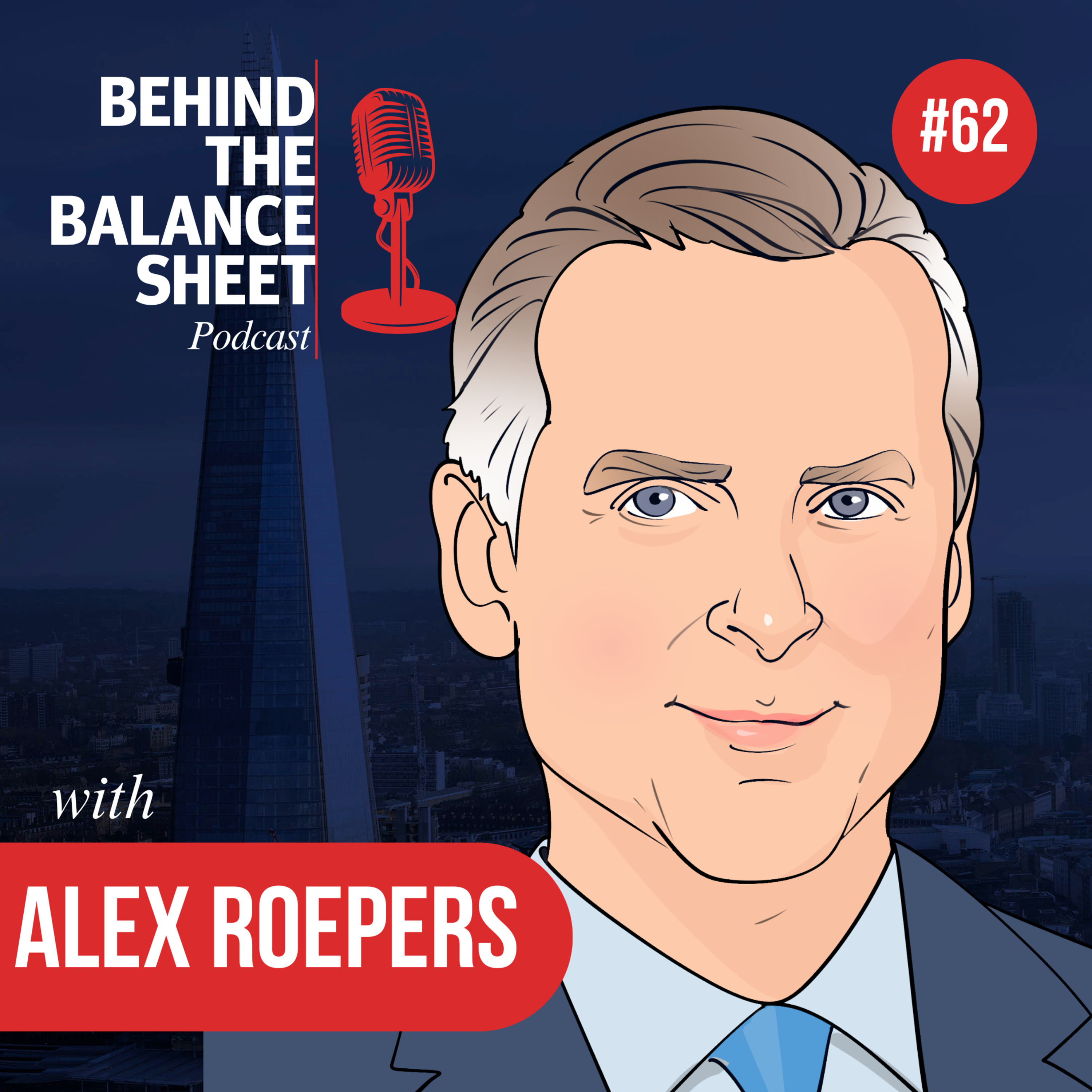 #62 - The Gentleman Activist: Alex Roepers explains how he extracts better stock performance from overlooked mid-caps 88 / 100
 #61 - Mr Common Sense - Rich Pzena on how to build an $80bn deep value firm, survive 60% underperformance and buy stocks on under 10x normalised earnings. 96 / 100
 #60 - The Plumber Returns - James Aitken on Japan, Kevin Warsh, gold, AI and inflation.85 / 100
 #59 The "Permabear" - Jeremy Grantham on why he expects a market crash, navigating bubbles and giving away $1bn
 #58 The Chart Guy - $4tn CIO Michael Cembalest on markets, AI and the impending rout in US Treasuries