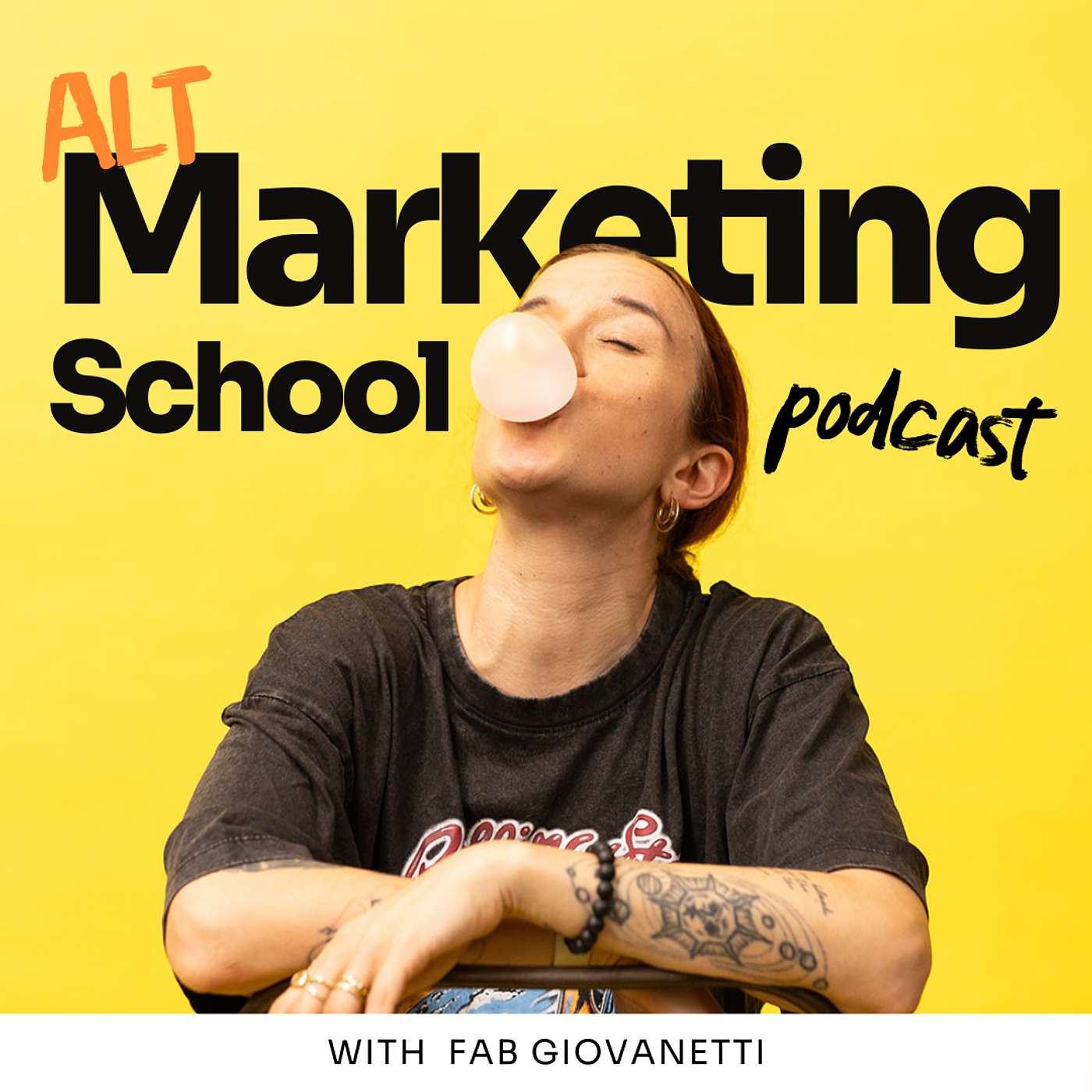
Alt Marketing School · 2026-06-14 · 12 min
Key moments - from our scoring
Substance score
46 / 100
Five dimensions, 20 points each
Alex Thompson transitioned from freelance copywriter to running an email marketing agency about a year ago, and has learned hard lessons about scaling that most agencies struggle with. The core problem isn't hiring - it's how founders hand off client relationships. Many agencies lose clients during scaling because founders disappear after the sale, making clients feel abandoned. Instead, Thompson now makes team strengths explicit during pitching and onboarding: he introduces the full team upfront, explains why specific people are best for each role, stays heavily involved in early delivery (recording walkthroughs and leading first deliverables), and builds trust before removing himself. This approach requires dropping ego and genuinely championing your team rather than positioning yourself as the main value driver. For marketers building agencies, Thompson also emphasizes that authenticity and personality are now more defensible than ever against AI - the boring, relatable details of daily life that humans naturally communicate but AI cannot replicate become your competitive edge. The conversation covers delegation anxiety (Thompson is in therapy for perfectionism), the right timing to hire (usually 3 months before you realize you need to), and how knowing what good looks like through doing the work yourself first makes you a better manager.
Founders often disappear after the sale, and clients feel they've lost direct access to the founder they thought they hired. Alex Thompson now combats this by making team strengths explicit upfront, staying heavily involved in early onboarding and first deliverables, and using video walkthroughs to maintain relationship continuity.
The right time to hire is probably three months before you realize you need it - watch for feeling stretched too thin as your signal. Start by hiring freelance help rather than full employees, so you can test delegation without full commitment.
Embracing your weirdness, authenticity, and relatable mundanity - what AI cannot replicate is how boring, funny, or odd you naturally are. People relate more to everyday details like getting the wrong milk in your coffee than to aspirational content.
Make a point of bigging up your team as the best people for each specific role, explain why they're best suited to each job, introduce them formally when clients onboard, and stay involved in early delivery so the founder relationship doesn't vanish after the sale.
No voice notes - only written messages or bullet points. With 15 clients and a large team, voice notes created too much overhead and required listening time that didn't scale, so everything must be written out.
Our reviewer’s read on each dimension, with quotes from the episode.
The episode contains some practical advice about delegation and client onboarding, but much of it consists of familiar platitudes (embrace your weirdness, trust your team, don't disappear after the sale). The core insight - that you need to explicitly manage client expectations about who they'll work with and warm up the transition - is useful but relatively straightforward. The conversation is padded with personal asides and rapid-fire questions that don't substantially advance thinking.
There is no point in building a team of people to help you if you don't accept or trust their help.
when you start to feel like maybe it's time that you should hire, the right time was probably three months before that.
The core themes - perfectionism holding back founders, the need to delegate, and managing client expectations during scaling - are well-trodden territory in agency and founder content. The specific tactic of doing warm introductions and positioning team members as specialists is practical but not novel. The advice to know what 'good looks like' before delegating is sensible but not a fresh insight.
embracing your weirdness and embracing your uniqueness, especially at the moment where it's so easy for people to pump out content of all descriptions, thanks to AI.
So it's really making sure that you drop the ego and really, really stand behind your team and big them up as these are the people, these are the best people for the job.
Alex Thompson is a relevant practitioner - he runs an email marketing agency and recently made the transition from freelancer to agency founder (about a year ago). He has hands-on operational experience to draw from. However, he's not a standout hire: the agency appears small (team of 5 plus freelancers, 15 clients), and there's no indication of significant scale, industry recognition, or exceptional results. He's a credible mid-level operator but not a marquee guest.
I run an email marketing agency called On the Cusp. I used to be a freelance copywriter and then moved to the agency model about a year ago now.
We've got like 15 clients. There's other stuff going on. Team of five, five free freelance team as well.
The episode lacks concrete data, metrics, and dollar figures. Alex mentions losing 'a few clients' due to expectation mismanagement but provides no numbers. He references his team size (5 employees, freelancers, 15 clients) but no revenue, growth rates, or performance data. The examples given are anecdotal rather than evidenced (e.g., 'some of my clients make a joke saying that my team write better emails' offers no real proof of outcomes).
So we found out this out the hard way. So when we, when I built the team, we lost a few clients because they weren't getting enough Alex time in their eyes
We've got like 15 clients. There's other stuff going on. Team of five, five free freelance team as well.
Fab asks reasonable open-ended questions and does attempt light follow-ups ('That leads me to a final follow-up'), but the conversation is largely soft-serve. Fab doesn't push back, probe numbers, or challenge Alex's claims. The rapid-fire section at the end is playful but low-substance. There's little evidence of sharp questioning or productive tension that would draw out deeper insights about the claimed 'real reasons' agencies can't scale.
What do you think is one of the unconventional skills for marketers that actually matter more than we think? And why?
That leads me to a final follow-up before I give you a little quick fire because you kind of I can you kind of led me to it basically.
Computed from the transcript - who did the talking, and the words that came up most.
Meet Alex, our full speakers line up in a room of 100+ fellow marketing professionals on November 13th in London. Get your ticket here: click In this episode, Alex Thompson shares unconventional marketing skills, the importance of embracing your uniqueness, and lessons learned from transitioning to an agency. Discover practical tips on delegation, building client relationships, and boosting confidence in marketing. ABOUT OUR TEACHER Alex Thompson is the founder of On The Kusp, the email marketing & launch agency behind your favourite creators & entrepreneurs (Daniel Priestley, Lea Turner, Lauren Jumps, Alice Liveing, Richard Moore, Andrew & Pete)! Alex has recently made the move from freelancer to agency owner (and has the grey hairs to prove it). Connect on Linkedin: click Connect on Instagram: click BECOME A SMARTER MARKETER Get weekly lessons in your inbox for £0:
Transcribed and scored by The B2B Podcast Index.
Fab: Hello Rebels and welcome back to Alt Marketing School. It's Fabia, founder, headteacher, and marketing fairy godmother at Alt Marketing School. I'm very excited today to bring us a little spicy conversation and chat to get to know one of the incredible speakers. They're gonna join us for the Business of Marketing Festival.
Alex Thompson: Hello, it's good to be here, it's good to be here. Fab: some questions for you. ⁓ What do you think is one of the unconventional skills for marketers ⁓ that actually matter more than we think? ⁓ And why?
Please let me know what comes to mind with that. And also I would love you to introduce yourself to our lovely rebels. Alex Thompson: Hi, so if you're not sure who I am, my name's Alex Thompson. I run an email marketing agency called On the Cusp.
I used to be a freelance copywriter and then moved to the agency model about a year ago now. So unconventional marketing skill, I think matters. People have always said this, but I think it's more important than ever now. that's embracing your weirdness and embracing your uniqueness, especially at the moment where it's so easy for people to pump out content of all descriptions, thanks to AI.
What AI cannot replicate is how weird, wonderful, funny, odd or boring you are as well. Cause boring is relatable as well. People forget that as well. Like infinity pools in Bali and flying first class is not relatable for most people.
So often the more boring you are, the more relatable you tend to be and people forget that. Fab: It's the little things as well. I love that you mentioned that. I think it's that like the little things that we see the day to day that a lot of people experience too, whether it's getting, you know, the wrong milk in your coffee because you're sleep deprived, because your children didn't sleep the last night.
This is kind of obviously personal. Or ⁓ you know, unwinding by playing the Sims Four. That's one of my things. So I definitely relate to that and I love that as a little reminder, like do think about the little things that make you unique, but also that are relatable in the face of being sometimes boring or mundane as well.
You mentioned, for me, that you did a transition a year ago, almost, and ⁓ you jumped into the agency world. And I was wondering, it's gonna be plenty of the lessons that we might have learned from that, but is there one that jumps out, maybe one that was one of the harder ones to swallow as well? Alex Thompson: Yeah, 100%. It has to be the power of delegating and trusting your team.
There is no point in building a team of people to help you if you don't accept or trust their help. And so I'm a perfectionist, like not in the good way. It really hinders a lot of what I do with perfectionism. I'm literally in therapy to try and sort it out, make it easier to deal with.
And as a perfectionist. And someone like most people where you freelancing and you've been in full control of everything, then letting go and accepting help and moving away from being in control of everything. It's super hard to deal with it first, but if there's no point, like I said, in building a team, if you're not going to trust, if you're not going to trust your people. So like dip your toe in, you don't have to go full agency model first of all, and start hiring like.
hire some freelance help to support you with some of the jobs that's taken a lot of your time or you're not the best at and kind of dip your toe in the water then. And when you start to feel like maybe it's time that you should hire, the right time was probably three months before that. You just didn't realize it. And when you start to feel like maybe it's time that you should hire, the right time was probably three months before that.
You just didn't realize it. Yeah. So yeah, that's what I would say is number one tip. Fab: That's actually a great reminder.
And I love that. And I think and it's also they're just gonna follow up on that. Is also not beating yourself up for that realization because it happens to most of us to realize, ⁓ yeah, I should have done this maybe kind of a couple of months ago. I think it's just that good reality check that sometimes we are ambitious, as you say, we might be perfectionists.
Putting my hand up there too. ⁓ or high achievers and so we want to do more and it might be that that realization comes when we are stretching ourselves a bit too thin. So maybe somebody can learn to ask the questions to themselves a bit before, right? Alex Thompson: Yeah, it's definitely, and it's also like, kicked myself for doing everything by myself for so long.
I thought, God, I wish I'd done this a year ago. But actually by doing everything yourself, that means when you come to accept help, you know what good looks like. And if something goes wrong, you can jump in and fix it as well. So actually the doing it yourself part is important to know what good looks like.
if all shit hits the fan, you can at least jump in and sort it. But it's not having to do that yourself forever. Fab: That leads me to a final follow-up before I give you a little quick fire because you kind of I can you kind of led me to it basically. ⁓ I'm thinking about what we're going to be talking about on your panel, which is going to be about pitching, pitching with confidence and what that means.
And it's just that almost that initial part of our relationship with clients and with working with people from trying to present ourselves and what we have in mind for the work together all the way to that kind of onboarding stage. So in that part of the relationship, let's call it, the pitching and/or that kind of initial stage. Can you think of maybe a direct way, maybe an indirect way, that learning to delegate or actually letting go some things has helped you build in more space, whether it is to be more confident, whether it is to take on more of that, or maybe you actually delegated some of that.
I'm kind of wondering if there's anything out of what you've learned from this that has helped you in your opinion with the pitching and that initial stage of client relationship. Alex Thompson: So you need to make it clear to the client what bits you were going to be involved in. So we found out this out the hard way. So when we, when I built the team, we lost a few clients because they weren't getting enough Alex time in their eyes, because that's what they thought they'd signed up up to.
So that's something I'm really clear now. When new clients come on, I really make a point of bigging the team up to show that these are the best writers. That's why they do the writing. This person is the best strategist who you're going to be working with.
I'll be there at the beginning to help things get set up. And I'm there, of course, if you have any wider questions, but these are the people you'll be working with because these are the best people for the job. So it's really making sure that you drop the ego and really, really stand behind your team and big them up as these are the people, these are the best people for the job. And that's why you'll be working with them.
That's something I wish I'd a lot earlier and it's something I really make a point of doing now. We do a big introduction post when they first come in and the whole team say hello, I introduce them to the full team. Then introduce some of the people who are going to be working on the project. And then I'm around a lot at the start to do a lot of the settling in and making sure they understand what the roadmap looks like, what they're going to be getting, when things will start.
I'll often do a lot of the early delivery in terms of When we've got the first emails or the first piece of work to show them, I'll be the one to record the video, walking them through things. So they kind of, it carries that relationship on and it's not a, clients hate what people call a, what's the horrible name for it? It's like something in twist that people call it, where they feel like you've made the sale and then suddenly it's right, here's the team and you've got nothing to do with the founder anymore.
I never want it to be like that. And I can't claim. that when we double in size eventually that I'll know what's going on with every single email of every single client. But I will have an overview of who's there, what's going on.
So it's really important that you say to me that I have, especially at the beginning, making sure it's all up and running. And then when the results start coming in, that's when the clients have full trust in the team. And to be honest, some of them don't care about me anymore. Some of my clients make a joke saying that my team write better emails for them than I used to, which is the ultimate ultimate compliment, but yeah.
That's what I do is I kind of don't disappear when the sales done, make sure the transition solid, but then also really make a point even during the sales process, but especially early on board and really, really big the team up. Fab: Within that is also I think a strength in realizing and getting to know obviously what your strengths are where you can stand out in those specific touch points that you have so that it feels hardfelt again, it feels that you are still there within the spaces that you really want to be.
And as you say, it hopefully also comes easier because of the things that you are good at or the things that come easy to you for you to show up and still bring that Alex to it as well. Thank you for that. I mean there's gonna be more obviously chat about confidence and about pitching, but not today. You gotta join us on November the 13th if you want that.
I'm gonna finish off with a rapid quick fire. Are you ready, Alex? Okay, I'm gonna give you two options and you tell me which one and you tell us a quick why. Alex Thompson: Yeah, I'm ready.
Fab: My favorite, I always start with this one: memes versus gifts. Alex Thompson: Gifts because memes, this is like email wise, memes is more read and more context, whereas you can use a gift to emphasize the point that you've just made in a slightly nuanced way. Fab: Obsessed with that. Maybe that's why I love gifts as well.
I don't know. DMs versus emails. Alex Thompson: email every time. we're talking about pitching, I'm more likely to DM someone and try and get a conversation going on the DMs rather than email them.
Email feels a bit formal for that. I'm not trying to cold email. ⁓ but yeah, in general, email, cause that's my business. ⁓ Fab: Mm-hmm.
Mm, mm. Very, very true. I got two more. Notion or Google Docs or something else.
I'll give you that. Alex Thompson: Yeah. Google docs. I've tried with notion.
I've tried again and I've just tried for a third time and I'm about to give up on it. we're moving everything staying in Google docs. can track amends and you might be able to do that notion, but I just, like the simplicity of, of, of G docs notion just. Yeah.
I can't get up. Can't get on with it. Fab: Probably the most contentious one to finish us off voice notes versus messages. Alex Thompson: So I had to make a no voice note rule in the agency, which I felt really bougie for doing.
But some of the freelance team was sending me like a seven minute voice note to say one thing. And I was, and because I'm so busy now, had to make, I felt like such a dick messaging everyone saying no more voice. If you send me a voice note, I'm not going to listen to it. You have to put it in a message.
And if there's a few points, they have to be in bullet points or I'm not, I'm not reading a big long message because We've got like 15 clients. There's other stuff going on. Team of five, five free freelance team as well. If everyone's sending me voice notes for everything and I lose track.
So yeah, definitely not voice notes. I send voice notes to my fiance and my mom. Apart from that, everything else in a message. Fab: Love that.
I love that. That that is a separation of obsessed. Alex, thank you so much for joining us. I wanna remind you that if you want to join us and hear more about Alex and from Alex, as well as other incredible speakers on November the 13th, come and join us for the business of marketing, is an all-day festival for marketing rebels.
Alex Thompson: Yeah. Fab: Really the marketers that are there showing up as themselves, whether it's a small agency, independent agency, a freelancer, or consultants, or maybe portfolio careers that are trying to make their mark and they don't have to do it alone. That's the whole idea. We want to give you some of the tools, the confidence, and also bring a bit of fun together at Canva.
Alex, if people want to say hi to you, where should they go before we nod off? Alex Thompson: place is LinkedIn. We search Alex Thompson Copywriter or Alex Thompson Email Marketing. I'd hope that I pop up near the top.
So yeah, LinkedIn. Fab: Thank you so much as always don't forget to be kind to yourself and others and never stop learning because practice makes progress. And until next time, class is dismissed.
Other episodes covering the same guests and topics, from across The B2B Podcast Index.
 EP 294 - Make Connections, Not Small Talk: A No-BS Networking Playbook for Marketers39 / 100
 EP 293 - Want to Do Charity Work as a Marketer? Start Here55 / 100
 EP 292 - How to Get Cited in AI Search (Not Just Ranked)85 / 100
 EP 291 - No More Burnout Marketing: Boundaries, Pricing, and Profit at a Slower Pace 75 / 100
 EP 290 - How AI Is Changing SEO: The Answer May Surprise You83 / 100
