Alt Marketing School · 2026-05-17 · 7 min
Key moments - from our scoring
Substance score
42 / 100
Five dimensions, 20 points each
The social media landscape has fundamentally shifted - people are no longer opening TikTok and Instagram for information, but for entertainment and dopamine hits. The "Entertain or Die" report makes clear that traditional product-focused posts get scrolled past because they don't match user intent. Brands must now compete not just against competitors but against Netflix, full-time creators, and cultural moments happening in real-time. Fab uses Apple as the exemplar: their "Shot on iPhone" campaign succeeded by centering human stories and transformation rather than camera specs. Similarly, ON Running sells aspiration and identity - a disciplined, elevated version of yourself - by packaging fitness culture as entertainment their audience already craves. KitKat demonstrates humor as a core brand operating system, not a tactical add-on, using fast cultural riffs and shareable micro-entertainment. The bigger implication: entertainment is becoming the brand operating system itself, shifting companies from campaign-focused thinking to building connected entertainment ecosystems with in-house studios, episodic content, and dedicated entertainment leadership roles. For B2B and direct-to-consumer operators, the takeaway is clear - pick one platform, define how you'll entertain (through stories, humor, character, behind-the-scenes, or personality-driven tutorials), and build consistency around that choice rather than spreading thinly across five channels.
People open social media for entertainment and dopamine hits, not product information. Traditional feature-focused posts don't match user intent and get scrolled past because audiences are competing for attention from Netflix, full-time creators, and cultural moments - not brand messaging.
Apple led with human transformation and stories rather than camera specs, making the product a supporting cast while the creator, craft, and human story became the stars. The message wasn't about the camera hardware but what humans can create with a phone in their pocket.
KitKat treats humor as a core operating system with clear rules, formats, and boundaries built into a repeatable playbook the whole team can execute, focusing on fast cultural riffs and shareable micro-entertainment rather than one-off jokes.
Brands are shifting from running individual campaigns to building connected entertainment ecosystems with in-house studios, episodic content, and dedicated entertainment leadership roles, meaning consistency and connection matter more than one viral post.
ON Running sells aspiration and identity - a disciplined, elevated version of yourself - by packaging fitness culture and training arcs that their audience already loves, branded and handed back as entertainment they want to consume.
Our reviewer’s read on each dimension, with quotes from the episode.
The episode unpacks a real shift in social media strategy - entertainment as primary rather than secondary - and provides some actionable frameworks (Apple's storytelling approach, ON Running's identity packaging, KitKat's humor playbook). However, much of the content is surface-level popularization of the underlying report rather than deep original analysis. The 'aspiration, infrastructure' framework is borrowed directly from the source material, and several points (lead with transformation, not features) are standard marketing wisdom reframed.
The job of social has changed. Most people are opening in TikTok or Instagram to communicate. They're open in it for a little bit of dopamine snack.
stop leading with the feature and go back to leading with the transformation in a way that is engaging
The core insight - social is entertainment-first, not sales-first - is becoming mainstream industry consensus by 2024, not contrarian. The frameworks used (Apple's human-centric storytelling, identity-based marketing) are well-established. The host applies these competently to KitKat and ON Running but doesn't develop counterintuitive angles or challenge the 'entertain or die' premise itself. The framing feels like polished popularization rather than fresh thinking.
entertainment is not the side dish anymore. It's the all bloody main course.
if your content only works on people already want to buy from you, you might be too late for your own party
This is a solo host episode with no guest interview. The host (Fab) is a marketing educator/course creator, not a practitioner who has scaled social strategy at a major brand or across multiple companies. No operators, brand leaders, or case study principals are present to validate claims with lived experience.
Hello marketing ramone, welcome back to All Marketing School. It's Fab here, founder, head teacher and resident hype woman.
The episode names specific brands (Apple, ON Running, KitKat, Netflix) and references actual campaigns ('Shots on iPhone'), which is good. However, there are almost no concrete metrics, timelines, budget figures, or quantified results. Claims about ON Running's effectiveness and KitKat's strategy are descriptive, not evidenced. The underlying 'Entertain or Die' report is cited but not unpacked with specific data points or numbers.
Shots on iPhone became such a staple before everyone turned to big series events on social media
KitKat has made humor part of the decision making process
This is a monologue, not a dialogue, so conversational craft is limited to host quality and structure rather than dynamic back-and-forth. The host is energetic and uses good frameworks (aspiration/infrastructure, leading with transformation) but doesn't challenge her own assumptions, explore pushback, or drill into nuance. The closing invitation ('finish this sentence') is engaging but doesn't create real dialogue. Heavy on enthusiasm and accessibility, light on intellectual rigor or productive disagreement.
Here's what entertain or die is really saying in fab terms.
If you're sat there going cool fab, but I'm not Apple. Perfect.
Computed from the transcript - who did the talking, and the words that came up most.
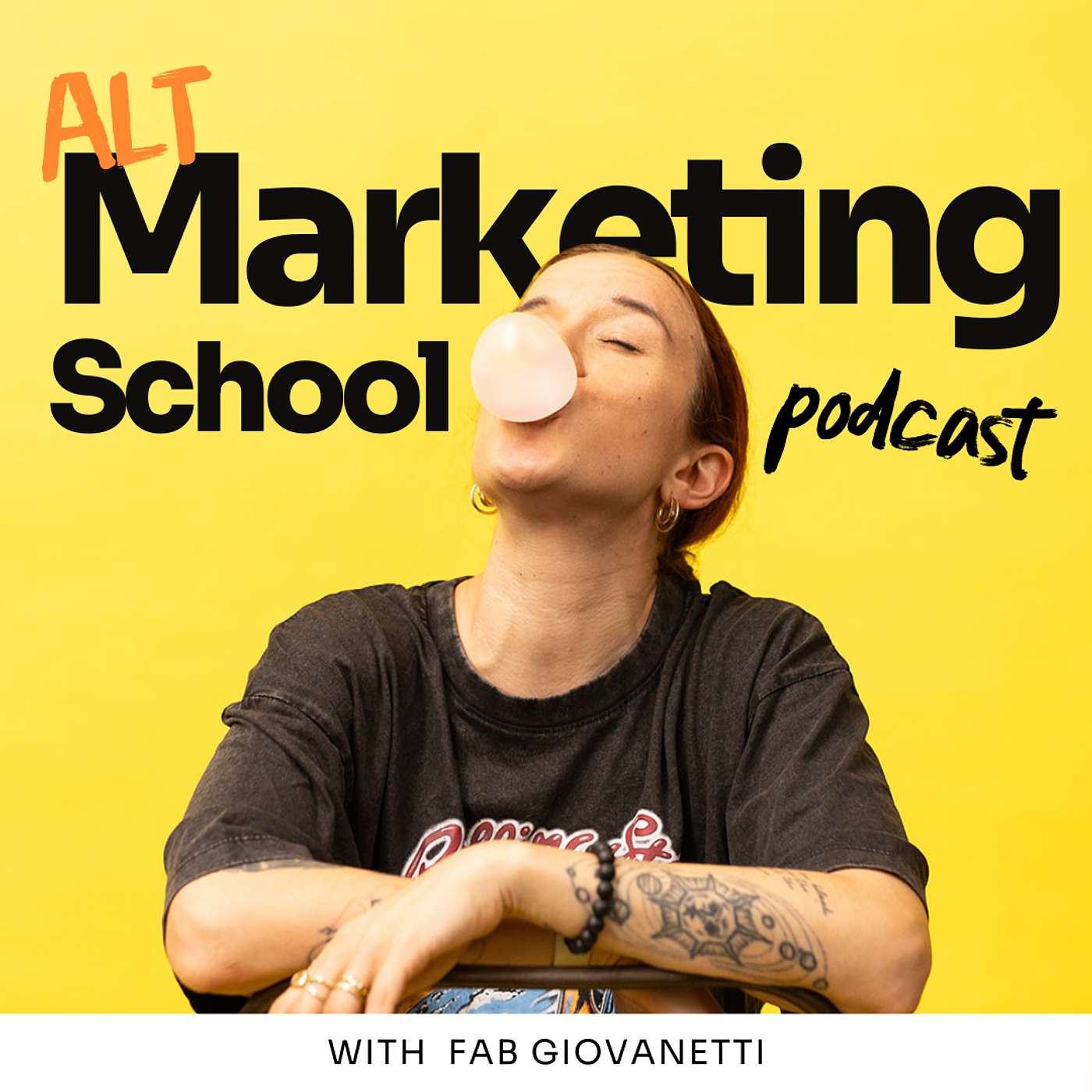
In this bonus solo episode, Fab unpacks Entertain or Die 3.0 (Small World x Tracksuit) and what it means for brands trying to grow on social. You’ll hear why you’re not just competing with competitors anymore, you’re competing with memes, creators, and Netflix trailers. BECOME A SMARTER MARKETER Get weekly lessons in your inbox for £0:
Transcribed and scored by The B2B Podcast Index.
Fab: If your marketing still reads like a leaflet from 2014, the algorithm is swiping way past you. Because entertainment is not the side dish anymore. It's the all bloody main course. Hello marketing ramone, welcome back to All Marketing School.
It's Fab here, founder, head teacher and resident hype woman. And as always, we're keeping up with marketing, so you don't have to. You're welcome. ⁓ And today I'm unpacking a juicy little number from Small World and Track Suit.
called, entertain or die. Quite ominous I know. So yeah, the title is dramatic and no, they are not wrong. Because it turns out, shock and horror, that people aren't opening social to be informed anymore.
This report talks us through why social is all about being entertained. In fact, Traxity is arguing that if your content only works on people already want to buy from you, you might be too late for your own party. In the next 10 minutes, I will talk you through what the actual shift is and why it matters now. The one company that is basically a media company in a total knack.
Why KitKat's humor is a growth engine and how entertainment is becoming the core of all top brands for its own data. May today's class begin. Here's what entertain or die is really saying in fab terms. The job of social has changed.
Most people are an open in TikTok or Instagram to communicate. They're open in it for a little bit of dopamine snack. And when that's the game, your brand isn't just up against your competitors, you are up against creators who do this full time, meme that moves at the speed of light, Netflix trailers and little snippets, and that one girl that is doing a seven-part storytime about her hexes new situationship. So this kind of here's our product, please buy post gets swiped fast, faster than a bad hinge profile.
Not because the fact that your product is bad or even your messaging is off, but it's because that's not what your audience is coming here for. User intent is huge and I generally believe that your real job right now is earning attention before you even ask for something. So Apple might be one of the greatest example to point because Apple historically didn't market like a tech company, even looking at their 1984 ad. They always marketed like a cultural storyteller that wore a little turtleneck.
aligns incredibly well with the trick that is talked about in the report as well, because people are entertained by human stories and not technical specifications. So Apple makes the product a supporting cast. The stars are the creator, the craft and the story. And that's why shots on iPhone became such a staple before everyone turned to big series events on social media.
So if you spent five minutes in your explore feed recently, you will know exactly what I'm talking about with this. Think about it. The message of their shot on iPhone campaign was not about look at our camera. It was about look at what humans can make with this thing in their pocket.
And if you're sat there going cool fab, but I'm not Apple. Perfect. Because you don't need to be. The takeaway isn't make a cinematic short film, even if lot of phones allow you to do that these days.
Is stop leading with the feature and go back to leading with the transformation in a way that is engaging. So what does someone become when they use what you sell? build that story in a way that is engaging and is going through a storytelling arc as well. If you're salivating for another example, then on running is a masterclass in selling identity as well.
Because they're not just talking about shoes, but they're selling a different version of you that reflects who you are, but it gives a bit of a level up. That version that trains, maybe shows off at 6am, that is disciplined, slightly unhinged and looking intimidating in a very hot way. The report basically calls on strategy, aspiration, infrastructure, which I really love. which is a fancy McKinsey-coded way of saying they turn performance into a story you actually want to be in.
And if you're still not sure what I'm talking about, this is how it works. Fitness culture is already entertainment, which is a big bonus. And people are obsessed with training arcs, very roughly of them, personal milestones, resilient stories, and glow ups, because we all love a glow up. So ON doesn't have to invent entertainment at all, which is great.
They can just package what their audience already loves and hand them back, branded, which is amazing devastatingly effective, if you ask me. And now we get into humor. Because most brands use humor like light seasoning, a little dash, a random meme there. I panicked, make this funny please, to the social intern.
But KitKat has made humor part of the decision making process. It's the equivalent of me seasoning any dish. Flamers need to buck a punch on what even is the point, right? Their board frames Kit Kat as a brand is built long-term relevance through micro entertainment.
short jokes, fast cultural riffs, bi-size visuals. The stuff that travels gets screen-shotted and lives in the group chat. So not everything has to be a documentary. Sometimes you win by being quick, familiar and culturally fluent and tapping into what's already happening and building a story around it.
bar, and that's a chunky bar, if humor is part of your brand, it needs purpose. Just to add more layers to it, I know. you want to think about things like formats or rules or boundaries, and this can be built through a repeatable playbook that the whole team can run with. and now I'm getting to the juiciest part because this is the bit that made me sit up, the espresso in hand and think like, huh, because entertain or die makes a bigger statement.
The entertainment is becoming your brand operating system, ⁓ which means brands ⁓ quietly shifting from run the campaign to worlds, content marketing to connected entertainment ecosystems, Which is why you might be seeing in-house studios, episodic series style content, documentary called a storytelling, whole leadership roles dedicated to entertainment, which is wild. because is not built on one borough post, but consistency and connection is. So here's my question to you, Marketing Can you pick one platform, not five, not a bit of everything, just one?
and then try and finish this sentence for me. We entertain through as the stories, as a humor, as a character, behind the scenes, hot takes, tutorials with personality, you decide. All right, marketing rebels, that's a wrap on today. Make sure that you finish that sentence for me.
And as a reminder, if you want the report is called, Entertain on Dime by Small World and Track Suit. Go and read it and see what you can learn from it. But if you don't have the time to read this or any other reports, there I say that every single month inside of our all access pass, we have a round table called, What's New in Marketing. A 30 minute live session where we talk about what's happening, what's new and what's hot.
Because... you shouldn't be worrying about that. So we do the hard work for you. You can find out more or join us at the All Access Pass by going to allmarketingschool.
com slash community. And before I leave, don't forget to subscribe so that we can break down the juicy insights that you don't have to dig through 47 page PDFs on a Tuesday night. But until next time, classes dismissed.
 EP 294 - Make Connections, Not Small Talk: A No-BS Networking Playbook for Marketers39 / 100
 EP 293 - Want to Do Charity Work as a Marketer? Start Here55 / 100
 EP 292 - How to Get Cited in AI Search (Not Just Ranked)85 / 100
 EP 291 - No More Burnout Marketing: Boundaries, Pricing, and Profit at a Slower Pace 75 / 100
 EP 290 - How AI Is Changing SEO: The Answer May Surprise You83 / 100