
Agency Leadership Podcast · 2026-06-18 · 17 min
As AI commoditizes content creation and outreach, agencies that prioritize authentic human connection gain competitive advantage. Chip and Ginny explore practical ways to leverage people skills: using critical thinking and probing questions to uncover real client pain points beyond surface-level problems, conducting effective one-on-one meetings where team members walk through decisions rather than submitting documents, and demonstrating expertise through genuine conversation rather than relying on AI-generated insights. They emphasize that in-person interactions - where body language is readable and authenticity cannot be faked - strengthen client relationships and create reservoirs of goodwill that buffer against inevitable rough patches. Video content also builds trust in ways written content no longer can, given widespread AI-generated text. Practical tactics include sending handwritten notes to podcast guests and business contacts, hosting in-person strategy sessions (potentially tax-deductible under the Augusta Rule), and budgeting for regular team gatherings. The episode argues that one-to-one meetings have become more valuable than ever precisely because they cannot be automated, and that agency leaders who invest in human-centered leadership - reading client needs directly, maintaining focused attention on team members, and creating time for unmediated conversation - will differentiate themselves in an era where everyone else is defaulting to AI shortcuts.
By prioritizing authentic human interactions - in-person meetings, video communication, and genuine conversation - that demonstrate unique expertise and build trust. AI-generated content is now so common that people distrust impersonal outreach, making real human connection a competitive advantage.
Have team members walk you through their decisions and problems they need solved, rather than requiring you to review decks and documents. This focuses your attention, speeds up decision-making, and lets them demonstrate their own critical thinking.
In-person interactions cannot be faked by technology or AI, and body language and authentic connection are readable in ways video calls cannot achieve. As so much communication becomes digital and AI-generated, in-person time stands out and strengthens relationships.
The Augusta Rule allows you to deduct certain in-home business entertainment expenses from taxes, such as hosting strategy meetings in your home. You must consult an accountant and follow proper procedures to document it as a legitimate business expense.
After having real conversations with clients to understand their needs, take the transcript and ask AI to poke holes in your thinking or identify what you're missing. This uses AI as a tool for refinement after you've already demonstrated your expertise through direct human engagement.
Computed from the transcript - who did the talking, and the words that came up most.
You’re using AI to handle more of the work that your team used to do. That's exactly why the human side of the business has become a competitive advantage. In this episode, Chip and Gini make the case that as AI slop floods everyone's inbox and feeds, the bar for genuine human interaction has dropped so low that clearing it will make you stand out. Demonstrating real experience and expertise in conversation - not just in content - is where agencies will win. That starts with having actual conversations. Chip argues that meetings have become more valuable, not less, because you can't fake a real-time interaction the way you can a written deliverable. And Gini adds that it extends to one-on-one meetings with your team, which can be used to get the specific decisions needed from you. Written content is increasingly hard to trust, and Chip admits even he can't reliably tell his own writing from AI output. Video helps close that gap for now. So does the handwritten note, which Chip still sends to podcast guests when he can track down an address. He jokes that the illegibility is proof of authenticity. In person beats everything.
Transcribed and scored by The B2B Podcast Index.
Speaker A: You're listening to the Agency Leadership Podcast on the FIR Podcast Network. Each week we bring you actionable ideas to help PR and marketing agencies grow and thrive. Hello and welcome to another episode of the Agency Leadership Podcast. I'm Chip Griffin.
Speaker B: And I'm Ginny Dietrich.
Speaker A: And Ginny, I think we're people people. We're a m. People person. So that makes us people, people, people, people, people. Just keep saying the word people. But in all seriousness, uh, the age of AI, everything seems to be impersonal. So that opens the door to be more friendly to actual people, to be more personable. And so I think we can talk about how we can set ourselves apart as agencies, as leaders in this age where the tech seems to do almost everything for us.
Speaker B: Yeah. You know, it's funny that this conversation is happening right now because I am m coming to this conversation straight from our, um, bi monthly learning session internally. And one of the things that we talked about today was how to use our critical thinking skills, but also how to use, um, questioning and probing with new business prospects and with clients to be able to uncover the real problems of what they're, the real pain points of what they're facing versus just the surface level. I have a measurement problem, kinds of things. Um, and it's definitely not something that you can rely on AI for. You have to actually use your people skills to be able to do that kind of work. And that's what we spent about an hour going through internally today.
Speaker A: Yeah, I mean, there's so many more opportunities now to leverage the human connection piece with your clients, with your prospects, with your team, because so much of what they're seeing is AI slop, is technology driven. And whether that's the pitches that we get in our inbox and you sit there and you're like, I know AI generated this and sent it to me and all that. And so trying to find ways where you can break through and make a human relatable interaction with somebody and provide real human insight in those conversations gives you the opportunity to do things that, you know, a couple years ago nobody would have paid attention. Now they do.
Speaker B: Right? Right. Yeah. You know, one of the things I always talk about is, especially with content, and I think this applies here as well, is demonstrating your experience and expertise, because nobody else can do that. And I think as you're thinking about those human relations and the people skills and actually interacting with actual human beings where you can demonstrate experience and expertise is really what's going to set you apart in all of those conversations. Because nobody else your experience or expertise, um, you know, they may have some of the similar experience and they may have similar expertise, but nobody does it exactly the same way that you do. And I think being able to demonstrate that in your conversations is where you will win every time.
Speaker A: Well, I think the key is having actual conversations fair.
Speaker B: Start there.
Speaker A: I was talking with, uh, a leader today who said, look, I just, I don't even have time to read half the stuff that comes in, even for my direct reports. And so for me, the best way to interact with all my direct reports is through actual conversations, either in person or by video call, because that's the only way I have an opportunity to focus on it. And so I know that we all are of the mindset, geez, we don't want to be meeting to death and all of that, but I would argue that in the age of AI, meetings are even more valuable than they were before. But because you can't fake this kind of interaction, right? If you're engaging with somebody on Zoom or teams, I mean, sure, you could have one of those AI apps that the kids are apparently using to interview these days where it puts the answers up on the screen or whatever, I don't know. But the reality is nobody's really doing that that I know of in the agency and client world. So it's reasonable to assume that you are actually being yourself when you are communicating with a client prospect or team member and so take advantage of those opportunities. Don't say, well, this could have been an email. Well, yeah, it probably could have, but people are going to think that was generated by AI. So you know, don't meeting yourself to death, but certainly be more open to meetings than you might have been five years ago.
Speaker B: And I would add to that that I think the, the person you mentioned a few minutes ago, I think that's exactly right. You know, at ah, I mean, you know, as my agency grows and as we get bigger and, and like the amount of stuff that comes at me every day, uh, is impossible to keep up with. And the meetings, especially the one to one meetings that I have with my team that are most effective are the ones that they say I need this decision, this decision and this decision. And then they walk me through so that I'm not having to review decks, I'm not having to review documents. They walk me through what they're doing, they walk me through their problem solving and they walk me through the decisions that they need for me to be able to move forward. Otherwise it's going to sit on my to do list for two or three weeks when they can use a one to one really effectively that way. So I think you're absolutely right. You don't necessarily have to have more meetings, you just need to use them more effectively.
Speaker A: Right. And I mean, even, even before the age of AI, I always told all my direct reports, use those one on one meetings to just get every answer you need from me. It's the, it's the best. You've got me focused.
Speaker B: Yep.
Speaker A: Take advantage of that. Don't walk away saying, geez, I should have asked him this. If you can get the answer, get the answer. And I think we can do that. But it's also your opportunity to show that you've actually got the knowledge yourself in these conversations. You're not relying on AI to spoon feed it all to you. Because let's face it, we've all come to distrust the content we see from almost everybody and say, well, jeez, is that really theirs or did that come from AI? And people are trying to say, oh, I can identify the AI. You can't. I guarantee you can't. I can't tell the difference between my writing and AI writing unless I do a forensic analysis and go back to figure out who wrote the first draft or something. And I think that, I mean, honestly, I think that the people who have the toughest time with that are the people who, you know, were prolific writers before because prolific writers tended to write in a certain way, which is what the LLMs all trained on. So, you know, those of us who are professional writers, we used a lot of, uh, em dashes that taught the LLMs. Use em m dashes.
Speaker B: Yep.
Speaker A: Now you use an em dash, you must be using AI. Baloney, baloney.
Speaker B: I still use an em dash and I will die on that hill because I am not, not going to stop.
Speaker A: No. And, and so, but, but, and, and that's the human style that we used to be able to express in writing. I think it's becoming increasingly difficult to truly express yourself in written form, um, in, in a way that is fully trusted by folks. And so I think the, you know, for now at least, there is also an opportunity to do more video in your content creation. Because while yes, you can fake AI and, and that's getting really good, to be honest with you, the avatars you can create and I could create it as if this show was me talking and nobody would be any the wiser.
Speaker B: Yep.
Speaker A: It's still rare that that's happening today. M. So for now you have that opportunity to make that human person to person connection through video. And so I'm encouraging everybody to do more video. Maybe not instead of the written, but at least in conjunction with it, because it helps to show that you're putting these thoughts and ide is into your own voice and not just, you know, generating something with Claude or ChatGPT and shipping it without a thought.
Speaker B: Yeah. And in person, if you can do in person, I would recommend that. Like, yeah, like, I mean, absolutely.
Speaker A: Because you really can't fake it in person.
Speaker B: At least half of them.
Speaker A: We don't have convincing holograms out there that someone can't tell is a hologram. Not yet.
Speaker B: Not yet. I am very much, uh, looking forward to that, but not yet.
Speaker A: Well, I mean, I do believe that the world needs more of us out there physically. We could take the Chip and Ginny show on the road. We could, without having to leave anywhere. Just have the AI do it all for us.
Speaker B: I love it. We'll just be like Princess Leia and we'll beam in. I love it. Let's do it. I think that's fantastic.
Speaker A: Uh, yes. But I think there are other ways that you can make those personal connections. One of the things that I've done for a number of years now is I've done handwritten notes to people on a weekly basis. Um, not everybody every week, obviously, but
Speaker B: I've never gotten a handwritten note from you.
Speaker A: I think you did, like, at the very start of this show, I think I believe I did, but I would
Speaker B: have to go back, and I think you might be right. Okay.
Speaker A: Pretty sure that you did. I try not to overdo it because at some point it gets cheapened. But generally speaking, when I have a podcast guest on, for example, I send them a handwritten note after, um, the episode goes out, uh, assuming I have their address. I mean, that's obviously a challenge in some cases. And it gets a little creepy when you start asking people for their addresses sometimes. So you gotta. It's not as easy as it once was. And sending something to a business address doesn't necessarily get there anymore. Um, but when you can get an address to send. Send them a personal handwritten note, it stands out today because nobody gets any mail. Nobody sees things that aren't electronic. And even though in my case, nobody can read my handwriting, but they still know that I put the thought into it.
Speaker B: That's right.
Speaker A: And the fact that they can't read it tells them it's real. Right. Because if I paid one of the services. Because you can pay services that Will type it out? Yeah, well no, we'll do a fake handwritten thing but it's computer generated so it's fully legible. There's no way anybody would pay for what I send. I mean it's just, I mean I can't read half of what I write. And I try, I do try, but I just have horrible, horrible penmanship.
Speaker B: Yeah, I think that you're right. Any way that we can create the human to human interaction and lots, there are lots of tools available today that make it easy for us. That's going to be, that is going to set us apart. And like I said to my team earlier today, the more time you can spend with a client or with a prospect really understanding their business, the way that they operate day to day, their pain points, the businesses pain points, those are the kinds of conversations that are going to make you smarter. And if you use AI, you take that transcript and you dump it in there and say these are the kinds of things I'm thinking about. Can you poke some holes in it or tell me what I'm missing? For sure you could do that. But do that after the conversation so that you, you understand, you can demonstrate your experience and your expertise and really have that human to human interaction.
Speaker A: Well, and, and leaning into something you said before, look for those opportunities where you can get together with people in person.
Speaker B: Yep.
Speaker A: And so again I think the value of that has been elevated. It's always been been important and useful to meet with clients, prospects, team members in person. But I think it's even more valuable today because as we talked about, you can't fake that kind of interaction. Technology isn't doing it for you, but it also allows you to elevate yourself over other people they may be interacting with. Whether that's a prospect looking at different firms or whether that's an employee who's like well I feel disconnected because we're remote. I mean we talk about the importance of if you're running a remote agency, which many of you are, you need to have regular in person get togethers and you need to have budget to get people to travel. If they're not all local, you still need to bring them in. Because those human interactions that you have by getting together, meeting in person, sharing a meal, sharing a coffee, those are all things that allow you to strengthen the connection and really set yourself apart in the age of AI.
Speaker B: Yeah, absolutely. I mean uh, and I think you said something really, really important which is set the budget. So as you're budgeting, granted, I know not everybody Budgets every year. But you should be doing that as you're doing that, set some budget aside for these kinds of things. And I will tell you, and certainly I am not an accountant. I am not a, uh, finance professional, but in many cases, you can even if you host that in your home, something like that in your home, not have people stay there, but host, like, strategy planning meetings or things like that in your home. You can deduct some of that from your taxes. So you can. There are ways that you can do it so it's not actually costing you money on top of, like, it's something that's deductible. So, you know, talk to your account accountant about that. But there are some things that you can do to offset some of those costs, too.
Speaker A: Yeah. M. You're talking about the Augusta rule. So when you talk with your accountant, ask about the Augusta Rule. It is. That is potentially useful. But please, dear God, do talk to your accountant before you do this, because I've talked with some folks. They see someone online say, oh, you should use the Augusta Rule, and they're like, oh, cool, well, I'll just do. No, there's actual proper steps that you have to go through to prove that it's a legitimate expense to prove the amount and all of that kind of stuff. So please do make sure that. Because that is one of the more complicated areas of tax law. And so you really want to make sure that you're getting that one correct.
Speaker B: Yeah, just. They don't think I'm whack you for advice to take our advice to look into it. Do not take our advice to just implement it.
Speaker A: Right. But regardless of how you go about getting together in person, the important thing, at least for this episode, is that you do it, because that does. It strengthens that human connection which pays all sorts of dividends. I mean, even with clients getting together in person, it helps you. You can read body language in ways that you can't do even on a video call. You can strengthen the relationship so that when you hit that inevitable rough patch somewhere down the road, and we all rough patches with our clients at one point or another, it gives you that oftentimes reservoir of goodwill that you can draw on, because you made that human connection. And you're not just, you know, the other end of a contract. You are someone that they've gotten to know. And so we want to try to find as many ways as possible to. To have that relationship with everybody that we work with at every level. Vendors, clients, prospects, team members.
Speaker B: Yep.
Speaker A: Whatever it may Be.
Speaker B: Yep. Yeah. I mean, my newsletter that's going out in a couple of days talks about how Ocean Spray was one of my very first clients as a young whippersnapper working at Fleischmann Hilliard. And there, my day to day contact, uh, there became one of my closest friends. She's one of my closest friends today, even though we haven't worked together in 20 years. And the reason being is that we got together in person all the time. We traveled together. We were, you know, sort of in the the ranks together, working through all sorts of issues and challenges and, you know, building. We built a real friendship. And you can't do that on, um, on Zoom. You just can't.
Speaker A: Right. And I know we all want to be more efficient in all of that, and that's all fine and good. And I am a huge believer in using the technology, whether it's AI or otherwise.
Speaker B: Absolutely.
Speaker A: To make yourself more efficient. But you can't do that at the expense of losing that human touch. Right.
Speaker B: Totally. People skills, people skills, people skills.
Speaker A: They are more important today than they have ever been, and that is common throughout history. As one thing becomes dominant, the antidote to it, if you will, or the opposite piece of it often becomes equally valuable because everybody else is ignoring it. So find those places where you can stand out. You can be a little bit different. And many m. People went into the agency world because they were people, people, people. It sounds so stupid.
Speaker B: People, people, people pleasers, people.
Speaker A: Because you're a people person. M. I don't know.
Speaker B: I don't know either.
Speaker A: I feel like I've taken this off the rails, as I usually do, so. So maybe this is a good point to draw ourselves to a close here. Before people, we are all people.
Speaker B: People, people, people.
Speaker A: Makes me think of that old song, what is it? The Purple, um, People Eater or something like that. Yes.
Speaker B: That's exactly what I was thinking of at the beginning.
Speaker A: Yep. Yeah. Which, if I could remember it, I wouldn't sing it anyway because we'd probably get a copyright strike, so. Or maybe not. I don't know. I don't know how that stuff works. On that note, uh, I'm definitely craning off the rails here, so we will draw this episode to a close. Thanks, uh, for listening. I'm Chip Griffin.
Speaker B: I'm Jenny Dietrich.
Speaker A: And it depends you've been listening to the Agency Leadership Podcast. For more information or past episodes, just visit agencyleadershippodcast.com.
Other episodes covering the same guests and topics, from across The B2B Podcast Index.
 S8E2 - When AI does the thinking, how do young people learn to be critical thinkers? The urgent warning for those under 25.Digitally Curious · on Critical thinking skills99 / 100
 Your Employees Stop Thinking The Moment They Feel UnsafePeople Managing People · on Critical thinking skills88 / 100
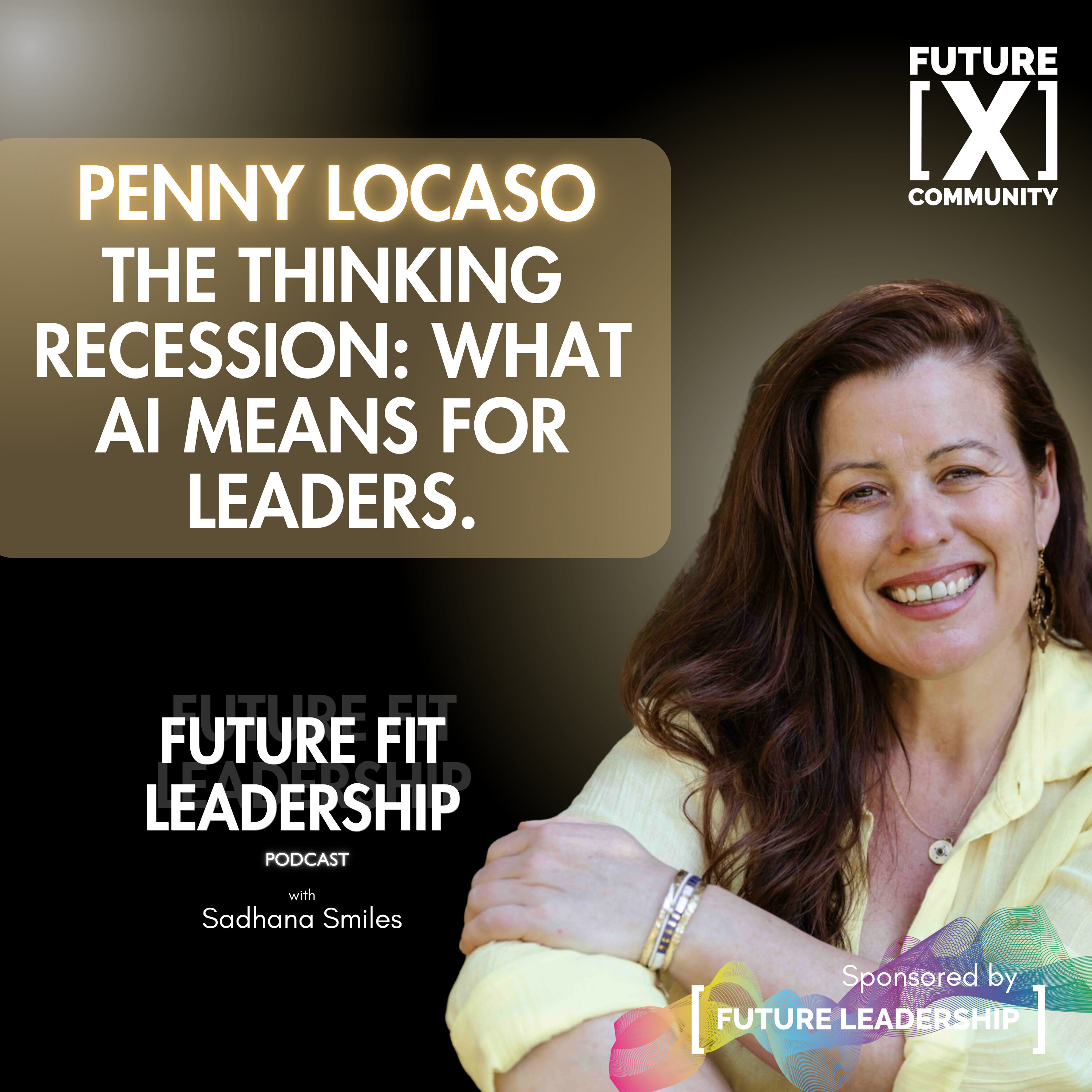 The Thinking Recession: Is AI Creating Better Productivity or Worse Leaders? | Penny LocasoFuture Fit Leadership · on Critical thinking skills85 / 100
 #307 - #1 Magic Coach to YouTube Strategist for Red Bull; 0 to 300K on IG in 6 Months | Oscar OwenThe Max Tornow Podcast · on AI-generated content detection74 / 100
 How Sales Reps Can Use the Reciprocity Principle to Close More DealsSales Leadership with Fexingo · on Handwritten notes72 / 100
 AI "Tells" & What They're Costing UsSmall Business Casual · on AI-generated content detection67 / 100How can agency owners hold themselves accountable?78 / 100Is your agency easy to work with?Using AI to extend your agency’s PESO Model expertiseWhat to do when a client “fires” your agencyWhat the Agency AI Survey results mean for PR and marketing firms