
Agency Intelligence: The Insurance Podcast Network · 2026-07-01 · 32 min
Key moments - from our scoring
Substance score
29 / 100
Five dimensions, 20 points each
Angela Trimble and Janet Payne of TrustPoint Insurance discuss what it means to be featured on Rough Notes magazine's cover, sharing their unconventional path from college roommates to business partners running a three-location agency across rural Kansas. The duo emphasizes complementary strengths - Janet's analytical policy expertise and claims tenacity versus Angela's HR acumen, innovation mindset, and technology leadership - as the foundation of their successful partnership. TrustPoint's 22-person team serves 70% commercial work including municipalities, schools, water districts, and oil-and-gas clients alongside personal lines, farm/ag, crop, life, and Medicare divisions. A significant focus emerges around their early adoption of technology infrastructure: VoIP systems, AI-powered bots built specifically for their workflow, virtual employees, mobile apps, and intake forms that structure customer requests. Janet, notably one of the few female farm agents in the industry with an 11-year elevator background, discusses claims documentation advantages. Both leaders frame technology spending as long-term investment essential to carrier integration and future workforce adaptation, with forms adoption positioned as critical infrastructure for agentic bot communication within 12 - 24 months industry-wide.
TrustPoint Insurance operates three locations in Burlington, Emporia, and Garnett, Kansas, with approximately 22 staff members total.
TrustPoint uses VoIP systems, AI-powered bots built for their specific workflow, virtual employees, mobile apps for customer requests, and intake forms on their website to automate tasks and structure customer information.
Janet handles policy analysis, claims, data management, and agricultural accounts due to her farm background; Angela focuses on sales, marketing, HR, employee management, and technology innovation.
They met as college roommates who initially moved in together to split rent - not as close friends - then reconnected 17 years later when Janet, working at the agency, recruited Angela to manage the operation after she'd been managing a medical office with 15 physicians and 50 staff.
TrustPoint serves rural water districts, museums, libraries, schools, cities, counties, townships, and oil-and-gas operations across multiple counties in Kansas.
Our reviewer’s read on each dimension, with quotes from the episode.
The episode is overwhelmingly a celebratory profile with biographical anecdotes; the most substantive segment on technology stays at a surface level (bots, forms, virtual employees) without actionable mechanics or non-obvious claims a smart operator couldn't already derive from headline coverage of insurtech trends.
you have to be using technology or you're just going to be behind
if, if, if there's one place you can start, it's by starting with forms
No contrarian or first-principles thinking appears; the partnership-as-opposites thesis is common business wisdom recycled without new framing, and the technology commentary is generic boosterism ('the world's going that way') rather than a distinctive argument.
the genius and the in. The key to this is that we're literally opposites of one another
you have to be using technology or you're just going to be behind
Both guests are genuine practitioners with unusually distinctive backgrounds - one ran a 15-physician/50-staff medical office before pivoting to insurance, the other has an 11-year grain elevator career and is a rare female farm/crop writer - but the conversation operates at a scale (22-person rural agency) and depth that limits the practitioner value extracted.
I was managing a medical office. So I had 15, uh, physicians and 50 staff.
after, um, I got out of school, I went to work. My dad owned a grain elevator, and so I worked for him for 11 years.
A handful of real numbers exist - 22 staff, 3 locations, 15 physicians and 50 staff managed, 11 years at a grain elevator, a 17-year personal gap - but these are all biographical details rather than operational evidence; no revenue, technology ROI, growth rates, loss ratios, or client data appear anywhere.
our agency is... consists of, um, three physical locations... staff approximately 22 people
there was probably about a 17 year gap between when we lived together and when I got her to move back here
The host repeatedly derails into extended personal anecdotes (his wife, low humidity, beer with Travis, the woman who hung up on him), asks leading questions that largely answer themselves, and never presses for specifics, timelines, or dollar figures on any claim; the rapid-fire closing segment is purely ceremonial with no substance.
I always tell my team, um, we stand shoulder to shoulder, but if the cops come in or the government comes in because we didn't pay the taxes, we're the ones that have to step up.
I was just talking with my wife and I don't think this has to do with everybody, but I was just talking to her. It's been nice out, uh, very low humidity.
Computed from the transcript - who did the talking, and the words that came up most.
In this episode of Front Cover: A Rough Notes Podcast on the Agency Intelligence Podcast Network, Jason Cass sits down with Angela Trimble & Janet Payne, Co-owners of TrustPoint Insurance the agency featured on the July 2026 front cover of Rough Notes Magazine.
Transcribed and scored by The B2B Podcast Index.
Speaker A: Hey, this is Dave with Rough Notes magazine. We're all about helping agents and brokers thrive, and we're impressed with what you're doing. Can we feature you and your team on our front cover? Tell me the thought you first had when you found out that you were going to be on the COVID of Rough Notes magazine. Janet?
Speaker B: Um, my first thought was I was very excited and, um, very honored. And. And then the last thought was nervous.
Speaker A: I bet. I bet Angela,
Speaker C: um, happy, ultimately. Right. Um, after you get over the shock that you get chosen for such an honor. And I would say humble, just very humbling. Um, it's just, ah, an amazing opportunity.
Speaker A: So how did you guys. How did you guys, ah, release it to your staff and your team because you did they understand the importance, like sometimes we do as agency owners, Um,
Speaker C: I think that they tried to understand. I think it just sets on a different level. You know, when you're an owner, it just. You run in that kind um, of arena and you know what those things mean. So after we explained to the staff like, you know, the magnitude of it and what it is and what a great honor it was, they were pretty excited.
Speaker A: Yeah, I bet. I bet you they were. And at the end of the day, it has to do with them. Right? You guys, you're just. Absolutely, yeah. You get credit for starting it and being the one. I always tell my team, um, we stand shoulder to shoulder, but if the cops come in or the government comes in because we didn't pay the taxes, we're the ones that have to step up. But other than that, everybody else is even in here, you know.
Speaker C: Right, Absolutely.
Speaker A: I hope that never happens. But, you know. Right, yeah, yeah. So tell me a little bit, uh, there in Burlington. Right? That's, uh, Burlington, Kansas. Burlington, 2500 people. Tell me what your agency looks like. Give, uh, me so that they can relate the listeners.
Speaker B: So our agency is. Consists of, um, three physical locations. Um, we have, uh, Burlington is where we originated. And we've expanded into the Emporia, Kansas area and Garnett, Kansas area. And we, um, staff approximately 22 people. And we focus on. We have different departments. We have commercial lines, personal lines, Farm, Ag, Crop, uh, Life, Medicare, and then we also have a real estate division in our Burlington branch.
Speaker A: Right. So not doing much. Not doing much. Um, and then, uh, say about 70% commercial. And you guys are in the oil and gas. But I believe, and I've known this for a while from Angela, that you guys do municipalities and stuff like that, that schools and cities. What does that look like.
Speaker C: Yeah, absolutely. So you know, it's your, um. Yeah, your rural water districts, museums, libraries, schools, cities, counties, townships. So. Yeah.
Speaker A: Wow.
Speaker B: Okay.
Speaker A: How did you guys get. How did you get into that? Angela and Jen, I'm curious.
Speaker C: Well, well, the agency that pre. Um. Go ahead, Janet.
Speaker A: Go ahead, Janet.
Speaker B: Yeah, the agency that um, originated in the Burlington location. Um, they um, had originally, uh, the, uh. Just local that like county, city, school. But. And so we've maintained that and continued to service it over the years and since then expanded that division. So now we have other counties, cities and school districts throughout. Throughout, um, our region.
Speaker A: So. So also so that everybody understands you rough notes, listeners. They are uh, very similar to Travis and I. But you. But they don't know what Travis and I is.
Speaker C: Are.
Speaker A: Are basically. So Janet is handling the books. Um, very. I'm assuming probably more of the cautious one. I only say that because like that's in my own brain. But then Angela is doing more of the sales and marketing. I mean, I bet you guys probably overlap. But as far as the main things is. Am I correct? Is that how it goes?
Speaker C: Absolutely, yeah.
Speaker A: And. And you guys were friends, uh, even when I believe it was in college. And if I'm correct from my notes, you guys weren't like best of friends roommates. It was, hey, I need to split the rent with somebody roommate. Is that right?
Speaker C: Exactly. That's how it started. A long time ago. Yeah.
Speaker A: A long time ago. That's only like 10 years. Five years maybe.
Speaker C: Yeah.
Speaker A: Maybe seven.
Speaker C: Just a quick minute.
Speaker A: Yeah. And so then. And Janet, so. So you were working at the agency and you reached out to Angela, right. What was the reason why you did that? Why'd you reach out to her?
Speaker B: So when we were roommates, we did run in different circles. Um, ah, a friend of that, um, common colleague, you might say. Uh, I played ah, softball with new Angela and said she was looking for roommate as well. And so, uh, yes, we didn't know each other at all. Moved in together and um, she had her circle, I had mine. But one of the things I did notice about her when we lived together is her work ethic. Um, she uh, at that time, um, going to college and managing multiple jobs, putting yourself through school. Um, like I said, we grew up a little bit differently. So that was very impressive to me. Where I um, probably wouldn't have had to work so many different jobs. My parents uh, provided that for, for me. So um, I really appreciated that drive and initiative with her. And then over the years we stayed in contact. There was probably about a 17 year gap between when we lived together and when I got her to move back here.
Speaker A: Oh, wow.
Speaker B: Uh, when I started in the agency here, it was a mom and pop organization. And um, unfortunately one of the owners passed away about uh, two and a half years after I started. And so they sold out to a larger conglomerate, um, uh, that had several branches. And at the time they needed a manager. And I told them I was, I was a producer at the time and I didn't want to manage people, but I had the perfect candidate for them. I knew Angela, uh, had just had a child and uh, hopefully I could convince her to move back to the rural small town, um, because of her. Because without the child church, I don't know that she would have came back. She wanted to bring him up in a rural community. And I said, you can, uh, come back here and manage our agency, um, because I'll let her tell you what she was doing at the time.
Speaker A: Yeah, Angela.
Speaker C: Um, I was managing a medical office. So I had 15, uh, physicians and 50 staff. And so I was in a much larger city. Um, but yeah, things change when you have a child and priorities, uh, change. So to come back to a small town. And I had family here, so moving back to Burlington, it fit.
Speaker A: Yeah. Especially when you're trying to raise kids and stuff like that. That's always a m. Nice feeling as well.
Speaker C: Absolutely.
Speaker A: I'm going to ask you the same thing, Angela, but I'll start with you, Janet. What is. What does Angela do better than you?
Speaker B: Uh, uh, lots of things. Um, so I think, um, her ability to be so innovative. Innovative and um, always constantly looking for change and how can we be better Technology. Absolutely. Is, um, one of her strong suits. And I would say the number one strong suits that she has that I don't is her, um, HR background and dealing with people. Um, it's huge in any organization. And she is, you know, when I, I never got the privilege of working underneath her, I originally just witnessed her work ethic. But when she did come here, she was not only my manager, but she was my um, account, uh, manager on commercial accounts. So I got to work with her as a producer as well.
Speaker A: Gotcha.
Speaker B: And so, um, I knew if I was going to go into business with anyone, it would be her because of her, um, traits and experiences that, you know, that she had the qualities she had that I didn't, that I lacked.
Speaker A: Angela, how about you? What's uh, what do you. What does she do better than you?
Speaker C: Well, again, like Janet said, she does a Lot of things better than I do. Um, I would say in the industry, um, hands down, um, I would put Janet up against anybody when it comes to reading policies, claims, um, knowing coverages. She, uh, just very smart on that. Math is like her second language. Um, and so it's got to make sense to her. That's how she works. Her and our brains are totally different on how we look at things logically. And so, I mean, she, she won't give up. I mean, she just does not give up when it comes to anything that she feels should make sense. And you know, in our industry, it's tough because some things don't make sense. And, um, she'll just, she'll just fight to the end. Like they, they got to prove why they're not going to handle a claim or why they're not going to pay a claim. And we literally, the. I think the first awareness to that is one time she had an adjuster who finally said, fine, uh, I'll pay it. Just can we get off the call? Because you wouldn't give up. So that tenacity is huge.
Speaker A: You know, I. Go ahead, Janet.
Speaker B: No, um, I am very analytical and I like data. Um, so I guess I could have been like an accountant or attorney or something.
Speaker A: Well, thank God you're in insurance because it's a lot more fun. Uh, it truly is now. You know, I was just talking with my wife and I don't think this has to do with everybody, but I was just talking to her. It's been nice out, uh, very low humidity. You guys get a little bit of the weather before we do. It's probably been pretty nice there. Um, and I was talking to her about the fact that like so many people, I listen to the founders podcast. I'm really not a podcaster, but if anybody out there is, like, hey, I kind of like podcast. Don't listen to the founders podcast, especially if you're a business owner. It's really phenomenal. And one of the things that I've noticed about all of the founders, like the high level founders, is they wanted to do things, things on their own. They didn't want to give up control. And I really find that hard to, to really bring in because I take it personally.
Speaker B: Right.
Speaker A: Because Travis and I are unbelievable partners. I wouldn't want to do it without someone like Travis. Travis not trying to paint any of you two. It seems like Travis would be more Janet, I would be more Angela.
Speaker B: Right.
Speaker A: And, and for you, uh, uh, Rough Notes listeners, they know Travis and all of us, we've hung out many, many times. We probably had more beers than we probably should with one another. But that, uh. But. But. But we learned a lot. And so.
Speaker C: But the thing is, is that networking, Jason. Networking.
Speaker A: Uh, that's the best way to say it. Networking. Yeah. Networking with water is just not as fun. So. So. So the thing about it is, is that I really see that, like, I couldn't have it any other way. And I think one of the things that makes it work, and I think a lot of times when people get with situations where the partnership doesn't work, um, I would say maybe it's me. If I asked 10 people, should they be with a partner or not, uh, in business, eight of them would probably say no. It just seems to me that people are like, hey, I want to. I think the genius and the in. The key to this is that we're literally opposites of one another. And I think that's where the partnerships have a problem. Right. If you're both, like, Angela problem. If you're both like, Janet problem. Right. But it's like, it just seems like I know if I don't want to deal with something, that is probably something Travis loves to do. You know what I mean? And he's probably really good at it. And. And do you guys find that to be kind of similar with you two?
Speaker C: Yes, absolutely. Absolutely. 100%.
Speaker A: I bet you there's a lot of people listening to this that if you have a great partner that you wouldn't do, it's probably very similar. And if you've had a partnership where it didn't work out, you were probably very s. You were probably very similar as you two. You know, those. I. I really. I was just talking with Andrea about that because it's just a really unique thing. It really, truly is. Um, so I just thought that that was, uh, pretty good. Who handles the tough. The hard, uh, employee conversations? Angela or Janet?
Speaker C: That would be me.
Speaker A: I. I'm. I'm figuring. I was figuring you. Yes, yes, yes. Um, and now here is. Uh, when it comes to. You said that you mentioned that you did, like, farm and ag and stuff. Do you have somebody who specifically does that or do one, or do you handle that as well? Angela or Janet?
Speaker B: So, well, that would be. Yeah, Angela.
Speaker A: Go ahead.
Speaker C: Angela said that would be Janet. Serena. She actually grew up, uh.
Speaker A: Oh, wow.
Speaker C: On a farm. And, you know, Janet, I'll let you talk a little bit about that.
Speaker B: Yeah. So we do have an ag division. And, uh, when I started here, I think that the owners thought That I would, um, take over a lot of the crop and do that. Because not only did I grow up on a farm, but after, um, I got out of school, I went to work. My dad owned a grain elevator, and so I worked for him for 11 years. And I actually had my straight grain license, inspection license. And, um, dealt a lot with the, um, you know, the government on, uh, different things, commodity payments and stuff. So when I came here, I did like writing farm, um, crop was a little bit different. I still, um, we still do that within the agency. But, um, I did write some grain elevators and some larger, like commercial ag as well as farms. So, yeah, that was kind of my background.
Speaker A: First of all, having farm agents today is a very rare thing. You don't run into a lot of them. And then am I correct that by saying, being a female farm writer, I don't know if I've ever met another agent who is a farm writer that writes, that rates farm.
Speaker C: Uh.
Speaker A: Am I right about that, Janet?
Speaker B: Yeah, it does take a different personality because farmers can, um, be a little bit more challenging sometimes to deal with as far as, um, uh, in their network. And, um, they. I did develop a comfortability with them, uh, in fact, over the years here locally, um, because of working at the elevator. They nicknamed me Doc. And we. We just kind of had that relationship. So I, uh, think that was it. They knew I knew what I was talking about, and they knew I knew their. The industry. So it was beneficial.
Speaker A: Blazed right through it, just like powerful women do. Get out of my way. Barrier. I'm coming right through Glass ceiling. What you know?
Speaker B: Yeah.
Speaker A: All right, so let's talk about something that's big right now, always has been, but technology, um, I know that is something that you guys have always been, um, you ladies have always been the forefront on. And tell me about how you utilize technology in your agency. And it's a big importance to you guys, is it my correct, Angela?
Speaker C: Yeah, it's huge for us. It's huge for me. I totally geek out on technology. I love it. Um, you know, Jason, we, you know, have gone to even conferences, you know, with you, seen you there, whatever. Tech, I mean, it's important. It's where, you know, it's where the nation's going. It's where the world's going. So we look at that like, um, you have to be using technology or you're just going to be behind. And every single day it almost is like one of those things, like, we've got to stay up on this, um, you know, newer Generations. A lot of times they're not going to be walking through a door. Um, they want to be able to reach you via tech. Right. Is it social media, is it ah, mobile apps, so on and so forth. So you know we have a lot of the common things that a lot of agencies do. Um, there are some agencies that don't and I understand their reasoning behind it. But you know a VoIP system, um, you know we use AI inside our agency. We um, use bots inside our agency. You know on our software, um, we just find that very user, uh, friendly. Um, you know we have the um, what?
Speaker B: Virtual employees even.
Speaker A: Which I, I know that's not technology, but it is, it really truly is. I know that sounds weird, but it is.
Speaker C: Yeah, you know it's kind of your bots.
Speaker A: Real quick excited. What is that bots? What is some AI? Can you give me some examples?
Speaker C: So the bots that we did create, um, you know we helped build them with a company and so they, we actually were like, okay, we want it to this task that a licensed insurance agent shouldn't have to do. And um, so that it automated a lot of things that we wanted specifically for our agency. And so it was a build. I mean it took a while to make the build, um, but once you did it and it saved time for your customers and for your staff, it was a win, win. So yeah, we firmly believe in using automations and bot was one of them.
Speaker A: And you've been using virtual employees? 7, 8. I mean I can't even remember. You've been using them for a long time.
Speaker C: Long time. Yeah, yeah, easy.
Speaker B: Mhm. Yes.
Speaker A: And they are so huge. They're so huge.
Speaker B: Yeah.
Speaker A: I mean what the saying is is 60% of what we do on a daily basis doesn't require a license. But yeah, we have 80 to 90% of everything we do we give to a licensed person. And I just, you know, every year that goes by I think this is becoming more and more and more important and, and I think that even uh, when we're talking about the workforce, the future workforce of an agency is bots, is agentic bots, you know, and some of the stuff. So it's just really awesome that you guys are already ahead of that curve and then obviously Janet, you understand the importance of it, but also being a numbers person, that, that inflates the, the budget, you know, that inflates what, hey, what we were, what we were spending and, and as an industry we spend so little on technology. If you try to compare yourself against other agencies you would be like well we're overspending but really everybody else is underspending, you know. So what are your thoughts on that Janet?
Speaker B: Um, so I do look at that and you're correct are we are way over budget on technology. But I feel like um, that uh, with the industry and because I deal with carrier relationships and I know the importance of staying up with the technology to be able to communicate, quote the efficiencies with carriers that we um, have to do a lot of it. And I even had like marketing reps, you know, talk about some of them that aren't staying up with that. My concern for the future would be um, you know, are some of those going to be obsolete? Because carriers are putting more and more back on the agencies to do a lot of things um, that they used to provide. Whether it's even just mailing out policies or whatever. Everything's digital, you know, quoting ourselves everything. So I am, I uh, know that right now um, we may not be seeing as much of the return on investments. I think in the future we will um. So I am excited about uh, when she brings a lot of that to me. I um, know that it is a big cost but I try to look at it more long term and then just in that specific year.
Speaker A: Yeah, no, I understand. I, it is, it's, it's an absolutely giant thing. One of the thing I want to say also that I saw in the notes is that you guys um, have form intake. Am I right about that? Things that come into the agency. I didn't. Okay. I was, I was scared to ask that and you'd be like no, uh, but you know, so things that, so you guys are receiving changes and other things. Everything's going into a form. So it's in structured and it's. And then it's dispersed amongst where it goes.
Speaker B: Right, right. Yep.
Speaker C: And yep. Mobile app as well. You know, so our clients can reach us anytime so they can put those requests in there as well. But yeah, we do have intake forms on our website too. Mhm.
Speaker A: I don't think that people realize and I will make the prediction and that's why I think that you guys are, you don't realize how, how great you are in the catbird seat here. In the near future, within 12 to 24 months, every agency will be collecting things in a form. It's, it's not an if, ands, buts about it. That's where, why when I saw that in um, my notes I was like wow. They have no idea. Because one of the things we don't really think about is we don't think about how we're going to talk to AI, how we're going to talk to agentic bots. You're not going to be able just to like take the information down on an auto change and then sit there and talk into it or, or, or type it into a prompt. That's not how it's going to work. It's going to work on the fact that here's the fields, here's the data. The bot takes those fields, goes to the agencies or agent or the um, the carrier website and puts that information in there. Like, I cannot explain it. And all the rough notes listeners. If, if, if there's one place you can start, it's by starting with forms, you know, being able that if somebody calls in, here's what we send out, here's what we do. And then, you know, even for us, it even works on the producer side because I have producers who somebody calls in for a personal lines policy, but yet they're a commercial producer. They don't necessarily know the questions to ask. They can open up the form and just fill the damn form out. It's that simple. And then everybody has the information they need. I, I cannot, I, I, I promise you, come back in two years. Rough notes listeners. 80% of businesses will be putting things in form because you'll be forced to. It's because that's how you're going to talk to our future workforce. So also if you're talking with virtual employees, it's something that's very helpful and getting that information in there. So yeah, you guys are way ahead of the curve on that. Janet?
Speaker B: Yeah, not only has that improved our efficiencies, but, um, I will tell you that, uh, the documentation part, as far as um, what's attached to the accounts and being able to, so you know, when we talked about Angela is the one who deals with difficult employees, um, it's interesting and people may be surprised, uh, because of what they know about me so far. But when it comes to claims or um, you know, something that there may be claims issue or a customer that's unhappy for some reason that does get sent to me, I deal with that. And uh, for me it has been since we've started becoming so more automated and everything's digital and with those intake forms going and researching what's been done, how was it done, what time was it done, um, and what was requested has been so much easier, um, to build that portfolio of, of, you know, data that transaction.
Speaker A: Yes, you said that at the beginning you love the data, so that's why when I started talking about the forms, Ms. Payne hopped right on that. Okay, so we're gonna. We're gonna wrap this up. We're gonna do a little rapid fire. It's not exactly like a rapid fire. It's cast rapid fire style. Um, so we will. We're going to start with Angela. Um, and I want you to give me Burlington, Kansas in three words.
Speaker C: Um, loyal, um, hometown, and um, safe.
Speaker A: Okay. Love that. Janet,
Speaker B: same question.
Speaker A: Yeah.
Speaker B: In the Burlington, I, um, would say, um, it's close knit. Uh, as far as like the community. Um, uh, and with that, I would say it's a very supportive community. Um, and that has to do a lot with like, loyal.
Speaker A: Janet, first job ever.
Speaker B: First job ever is at a. Um. Ah, I made stuffed animals. I put squeakers in toys with a hot glue gun.
Speaker A: Wow. Never heard that one. Ever said put squeakers and toys. Angela, first job.
Speaker C: Yeah. Uh, fireworks stand.
Speaker A: Firework stand. Okay, I'm glad I asked that question. Chiefs fan. Who's the biggest one?
Speaker B: Angela.
Speaker C: Oh, um, yeah,
Speaker A: I would have guessed, but I had no reasoning for that. I really, truly didn't. Janet, you're also a Chiefs fan, I assume.
Speaker B: I am. It's just that Angela is a lot more into it. She's got. She's a way more that competitive edge. I mean, she's gets really into it. You would think she is actually on the team.
Speaker A: Commercial lines or personal lines? Janet Marshall. Uh, Angela, same.
Speaker C: Commercial.
Speaker A: Commercial. You said personal though, Janet.
Speaker B: Right.
Speaker A: Didn't you? Or did you?
Speaker C: Commercial. No, she said m. Commercial.
Speaker A: Yeah, me too. Pays a lot better and you deal with smarter people. I'm, um, not trying to be mean. I'm just trying to be real. Walk in. Client or mobile app? Client. Who's more loyal?
Speaker C: Angela, walk in.
Speaker A: Get it?
Speaker B: Agree. Walk in.
Speaker A: Yeah. Okay. Um, Bots. Uh, this is, this is on here, but I think we may know. Bots and a virtual assistant. Is that a gimmick or a game changer?
Speaker C: Game changer.
Speaker A: Mhm. Yeah. You too, Janet. You feel the same way?
Speaker B: Um, I'll have to just go defer to Angela's answer.
Speaker A: Okay. Yeah, it is. It is a game changer. And I could, I can, I can see it.
Speaker B: The benefits of both, but yes.
Speaker A: I can't explain it how. How. How great they, uh, have been. Okay, so I think this might have been in the notes, but G. Uh, Game show night or topgolf? What's the best team event O.
Speaker B: Game show that's tough.
Speaker A: Oh really, Janet?
Speaker B: Yeah. I think that people was more competitive.
Speaker A: Really?
Speaker B: Oh yeah, yeah.
Speaker A: Okay. And then adding I will ending on one thing. What? And this is a wild one, one carrier habit that drives you nuts. Give me one of those carrier. You know, they're still our partners. We're not bad mouthing them. But there's things about us that drive them nuts once we. One thing, Angela, about a carrier that drives you nuts.
Speaker C: You know what? I was just working on that. We'll get that to you this week.
Speaker B: Yes.
Speaker A: Angela. You knocked that out of the park, sister. Janet.
Speaker B: So, uh, for me it is only communicating via email and not being able, not picking up the phone and being able to talk to someone. Um, I know that there's still carriers out there that we can do that, but they're far and few between. I think there's so much um, I, I'm all for automation and emails or you know, just for speed. But when we need to pick up, get a hold of an underwriter, I want to be able to talk to
Speaker A: one and probably with something that's the most important to you guys. Uh, I know that you guys have kids, but you also have grandkids. Um, you know, um, I just got to tell you, it's Claude. It's not me, But Claude said two grandmothers running a 10 state age operation. I thought that was really funny when I said that because I'm thinking like, I'm thinking like that they're not grandmother. Well, I guess they are grandmothers, but you sure as the heck don't look and act like grandmothers. That's why I thought it was funny when Claude said that. So I thought it was great. But hey, no, thank you. And once again, congratulations. I'm gonna end it by. I'll start with Angela, then we'll go to Janet. Just kind of any kind of wrap up that you want say um, about this great honor or anything. Uh, Angela, go ahead.
Speaker C: Yeah, um, again, Rough Notes is amazing. Um, I think that they see the independent agent and that's huge. Um, so I can't tell them how much it means to me and, and just the time that they spent with us and, and even like you know, who they work with and, and um, represent is huge and so I just can't even thank Rough Notes enough for this honor and choosing us. And it's not taken lightly. Um, my, our staff, um, was honored. We're still honored, um, and excited actually. Very excited.
Speaker A: Janet.
Speaker B: Yeah, um, pretty much what Angela said. I mean it was a Great honor. And working with them has been amazing, uh, as far as what they are capturing and the stories that they tell. And, um, I get, you know, every month a copy of the rough notes sitting on my desk, as does every staff member. And you know, um, to get the opportunity and to be looked at the way that some of the other people who have in agencies have been on the COVID is truly, I mean, an honor and just so feels so rewarding and feel blessed to be even in a position that we're able to work with everyone at this level.
Speaker A: Yes, well, you should feel honored. It's somewhere around 242, 50. I don't know exactly that of people that have been on the front cover. And so you figure we have 40,000 agencies, but over the last 20 years that they've done this, you could only, you can only imagine how many agencies have come and gone and didn't get that opportunity. So it is, it is really, really awesome. Um, I always feel honored. Not because I get to do this podcast, but because most the people that win, I know. And I, and I love the fact that tells me that I'm hanging out with the right people to know some people like yourself. So that's been fantastic. So I do once again congratulate to you guys. And um, and, and, and you know, I hate actually that saying. We just say guys, don't we? All the time, you guys. And sometimes. I'll tell you what. I know, I'll tell you what though. Um, I'm probably two years into it. I'm calling some places over in St. Louis. I finally get this business that I really want to talk. I get the lady owner on the phone and I said, I just really like to talk to you guys and come over and see you. And she said, well, we're a woman owned business and there's no guys here. And she hung up on me. And I, and so, and so in my brain, whether that's a butthead or not, that was her choice, right? But like every time I say you guys and I'm speaking to women, it's still like burned into my brain like 24 years later, you know? And guess what? I still say it. So anyways, ladies, once again, thank you very much. I think that you. This is great. It's an honor. It just shows that Dave and his team do know what's going on out there because they chose people like yourself. Um, and one of the greatest things, it's not all the stuff that we talked about. What I love about most of the front cover winners. And those people who grace that cover is. Is you're the example that independent agents need so that when somebody drives by, they just don't point and say, yeah, that's where my grandma and grandpa used to have their. Their insurance. Right. That when people are meeting and doing business like yourself, they walk away understanding how great the independent agent is. And so thank you on behalf of the agents for that. Okay. All right. Thank you very much. And so all you Rough Notes listeners, you know, we're going from the physical page to the digital stream, and that's what this was, the front cover. Uh, a Rough Notes magazine podcast. We will see you later.
Other episodes covering the same guests and topics, from across The B2B Podcast Index.
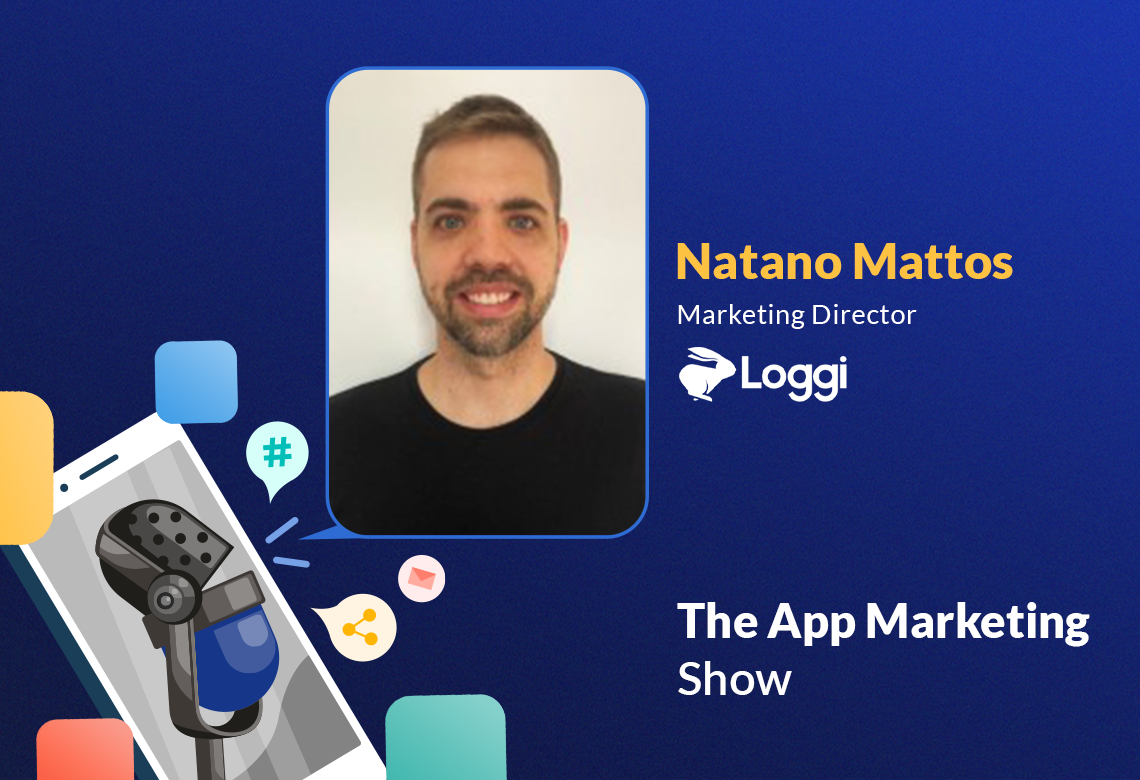 Driving App Growth and User Engagement with Natano Mattos of LoggiThe App Marketing Show · on Mobile app75 / 100
 How To Travel The World While Building An Empire w/ Neel ParekhThe Authority Project · on VoIP systems70 / 100
 How a Solo Dev Hit 10K MRR Selling Only via a Mobile AppThe Indie Hacker Podcast with Fexingo · on Mobile app
 [Greatest Hits] Head Of Marketing @ MediBuddy: Ashish Bajaj- Balancing Growth & ValuesHow I Grew This: Real Stories of Digital Growth · on Mobile app


