Adventures in Machine Learning · 2024-12-19 · 55 min
Key moments - from our scoring
Substance score
55 / 100
Five dimensions, 20 points each
The commoditization of AI has made machine learning capabilities accessible to most developers through managed cloud services rather than requiring custom algorithm development. Peter Elger and Eóin Shanaghy explore this shift in their 'AI as a Service' book, advocating for a pragmatic engineering approach to AI implementation. Rather than building deep learning models from scratch using TensorFlow or PyTorch, they demonstrate how developers can use AWS services like Rekognition, Comprehend, Textract, Lex, and Polly through serverless Lambda functions to deliver real business value. The authors deliberately chose JavaScript as their implementation language to make AI accessible to web developers and full-stack engineers - not just Python data scientists. They discuss how confidence scores returned by these services require business stakeholder input to determine appropriate thresholds for automated processing versus human review, emphasizing that interpretation of results is a business analysis decision, not purely technical. Real-world examples include building KYC document verification systems using text extraction, handling multi-cloud scenarios for specialized services, and minimal privilege security patterns with AWS IAM. The serverless architecture forces good security practices through fine-grained access controls for individual functions.
TensorFlow and PyTorch let you build custom deep learning models from scratch, but this requires managing data, training, deployment, and maintenance - a massive undertaking. AWS managed services like Rekognition and Comprehend provide pre-trained models via APIs, letting you skip all that infrastructure and focus on calling APIs and interpreting results for your business problem.
No. If you're using managed AWS AI services through APIs, you can use any programming language - JavaScript, Ruby, or anything else. Python's math libraries matter when building custom models, but when outsourcing to services, the language choice depends on your existing tech stack.
Involve business stakeholders to understand the cost of errors in your domain. A marketing message sent to 5% wrong recipients might be acceptable, but automated contract review requires a much higher confidence threshold. Thresholds should route uncertain results to human review queues based on business impact.
For general-purpose scenarios, managed services work well, but for specialized needs (like custom crop monitoring in agricultural IoT), you may need to collaborate on building custom solutions - though waiting a few months might bring new service releases that eliminate the need to build.
Use AWS IAM with minimal privilege principles: grant each Lambda function only the specific permissions it needs for specific resources. This fine-grained control is easier with serverless than monolithic apps, plus manage API gateway boundaries with rate limiting, quotas, and DDoS prevention.
Our reviewer’s read on each dimension, with quotes from the episode.
The episode covers practical implementation advice (using managed ML services, serverless architectures, cost considerations) that would help operators avoid low-level ML work. However, much of the content is exploratory rather than densely packed - the hosts spend considerable time on philosophy, ergonomics, and book promotion that dilute substance. The core ML-as-a-service material (APIs, SageMaker, Lambda for inference) is useful but not novel; many of these frameworks and services are already well documented.
you don't necessarily need to understand how the algorithms work, but you need do need to be able to interpret the results
the aim was to take some of the knowledge that we have of AI machine learning...to realize that that commoditization is happening, and the technology and the techniques and now within the range of most developers
The core thesis - that developers can use managed AI services instead of building models from scratch - is sensible but well-established by 2020. The guest's example of custom models for agricultural IoT (grass growth recognition) is specific, but the broader frameworks (API-first, then custom models via SageMaker) are standard AWS positioning. The philosophical tangent on AI's societal impact is generic and poorly explored. No contrarian or first-principles arguments emerge.
everything commoditizes...the technology and the techniques and now within the range of most developers
AI is no longer the domain of guys with PhDs. It's well within the scope of any developer who can call an API
Peter Elger and Eóin Shanaghy are AWS consultants with a published book and demonstrable project experience (KYC document recognition, agricultural IoT models). They have substantial practitioner credibility and have clearly shipped systems. However, they are not marquee operator names (no Stripe/Airbnb/Figma-level figures) and the episode does not establish the scale or revenue impact of their work. They speak as experienced engineers rather than as founders who built major products.
we had a client that was needed to do some some work in the KYC space...we actually had to go build using an open source ocr live
we collaborated with them building a custom machine learning model which we then employed sage Maker to deploy
The episode includes some concrete examples (KYC document extraction, grass-growth measurement via custom models, chest X-ray batch processing) and specific AWS service names (Rekognition, Comprehend, SageMaker, Lambda). However, specificity is sparse: no revenue figures, no customer sizes, no performance baselines, and many claims lack quantified support. The X-ray example mentions '90 seconds to process hundreds of thousands of images' but provides no context on cost, accuracy, or comparison. Long stretches veer into vague advice ('it depends,' 'be aware of costs').
I took an open source X like computer aided diagnostics algorithm...I was able to run two thousand concurrent instances of it in a couple of seconds and go through hundreds of thousands of X rays
previously, you know, Lambda had certain restrictions around deployable unit size and memory size. But now, for the last couple of weeks we've been able to deploy ten gigabyte Docker images to Lando
The host asks reasonable follow-up questions ('how do I go about getting the expertise?' 'how do you keep the cost down?') and occasionally probes deeper ('are there other concerns with this for security outside of just how serviles works?'). However, most follow-ups are soft and exploratory rather than challenging. The hosts allow generic claims to pass unchallenged (e.g., 'everything commoditizes'), and the conversation frequently devolves into tangential discussions (ergonomics, philosophy, book promotion) without the host redirecting back to substance. No productive disagreement or skepticism surfaces.
how do I go about getting the expertise to be able to interpret the results
are there any other concerns with this for security outside of just how serviles works
Computed from the transcript - who did the talking, and the words that came up most.
Peter Elger and Eóin Shanaghy join Charles Max Wood to dive into what Artificial Intelligence and Machine Learning related services are available for people to use. Peter and Eóin are experts in AWS and explain what is provided in its services, but easily extrapolate to other clouds. If you're trying to implement Artificial Intelligence algorithms, you may want to use or modify an algorithm already built and provided to you. Links fourTheorem Twitter: Eóin Shanaghy Twitter: Peter Elger Picks Charles- The Eye of the World: Book One of The Wheel of Time by Robert Jordan Charles - Changemakers With Jamie Atkinson Charles- Podcast Domination Show by Luis Diaz Charles- Buzzcast Charles- Podcast Talent Coach Eóin- IKEA | IDÅSEN Desk sit/stand, black/dark gray63x31 1/2 " Eóin- Kinesis | Freestyle2 Split- Adjustable Keyboard for PC Peter- The Wolfram Physics Project Peter- PBS Space Time Peter- Youtube Channel | 3Blue1Brown Peter- Cracking the Code Become a supporter of this podcast: .
Transcribed and scored by The B2B Podcast Index.
Hey everybody, and welcome back to another episode of Adventures in Machine Learning. I'm here with Owen Shaannahee and Peter Elger. You guys are the authors of the AI as a Service book from Many and yeah, just chatting with you briefly, it sounds like you're also AWS consultants, so you know kind of what their raft of services are, and yeah, you're experts in helping people set up AI systems that live in the cloud, which is really really interesting and using kind of the pre built systems that they provide you.
Because yeah, I'm not a math whiz that can invent this stuff, and it sounds like you're not either, So yeah, real quick, before we get going too far, how do people connect with you all if they have questions once we're done talking. Yeah, sure, you can get us on LinkedIn or Twitter, or you can you can mail us directly. We're always open. We have some open source up on GitHub as well, so you can you can come and take a look at that and message this there as well.
Very cool. We'll put links to all that in the show notes if you want to just drop it in the chat. That's how we get that in there. And yeah, let's let's go ahead and talk about AI as a service, because yeah, this sounds like kind of my AI implementation is, Oh, somebody else has built this and I'm just gonna like look smart by using it.
So what's out there? Let's just start there. What's out there and available for people to use. Yeah, so there's there's a ton of services.
So I suppose the rationale for writing the books. Both myself and Owen have been in the software field for more years than we care to remember, and we've both been very excited by the rise of AI technology. But not every not everybody gets to work on self driving cars or write train you know, image recognition algorithms. But what's I was doing all that stuff last week.
Yeah, but what's become What became very clear at the time we started writing this book, which was in twenty seventeen. When we first started writing it was that the one constant in our industry, and there aren't many consonants, but one of the constants is the force of commoditization. Right, everything commoditizes. If you've been and developer for long enough, you'll have seen this.
And AI was starting to commoditize then, and is commoditizing further now. So really for us, the aim was to take some of the knowledge that we have of AI machine learning. We've both worked on various different AI projects in the past, not to the self driving car level, but to realize that that that commoditization is happening, and the technology and the techniques and now within the range of most developers. So we want to provide an engineering guide for those folks as to how they can get started with these AI systems and apply them to their work to solve, you knowusiness problems and problems in the day to day work.
Over the course of writing the book, the scope and range of AI services available from Amazon, because that's what we focus on, has grown just in the three years since we started writing the book, so we have to include some more more in there. And maybe you want to talk a bit about the range of services that are available today. Yeah, sure, I mean I kind of echo what Peter said and also say, you know, if you're interested in getting into machine learning, and let's face a lot of people are, because it's it's just a buzzword and you go googling around for tutorials, a lot of what you'll see is kind of Python tutorials and using TensorFlow or PyTorch some machine learning framework, and you know, it helps you get up and running with deep learning, which is really interesting and really cool and we all like playing with kind of deep technical toys, but when you actually have to do something real with it, you know, you actually have to figure out how to manage your data, how to run your algorithms, how to deploy that and maintain it, and then suddenly you've got a massive a set of tasks on hand.
So yeah, what we really wanted to do is say, okay, that's really a lot a lot of that kind of field of expertise, you know, learning doing Python machine learning, with those deep learning frameworks. It's really you know, it has its place in a lot of innovation and a lot of academic academia, but for a lot of business users, there are a lot of you know, your ninety percent of developers just want to figure out how they can actually make hook this into their systems. So it's about like, you know, what can you use off the shelf without having to go writing assembly code?
You know, because that's that's what it's kind of like. When you're when you're fine tuning deep learning models. You know, you're down at the at the debts that ninety percent of people don't necessarily want to be doing, and you know it's not going to be efficient cost efficient to do it that way. At the same time, you know, companies like Amazon and Google, Microsoft, they've got access to massive volumes of data to train and find tune algorithms, and that's what you know, that's what they used to build things like Alexa, and then they give it to you as a service in terms of lex or poly or AWS, transcribed services for doing chatbots, for doing speech recognition, speech synthesus, and then you know, there's many or other services besides.
So you can look at forecasts for predictive analytics, personalized for recommendations, and then you've got recognition for recognizing features of images, features of videos. There's a huge amount of cool stuff you can do there. So I'd recommend for people playing with the machine learning it doesn't necessarily have to be about getting a GPU machine and spending quite a lot of money, you know, figuring out how to train deep learning algorithms. There's a lot of there's a lot that you can learn, a lot you can dream very quickly by playing around with some of those AWS.
Services makes sense, and it sounds, it sounds really interesting just to dive into some of these. I will also point out that, you know, and it's not it's not necessarily calling anything out on AWS or anything, but I've over the last few years been invited out to several Microsoft events, right, and they talk about cognitive services and they offer I know that that I've heard them talk about some of the things that you mentioned. I think Google Cloud platform and Oracle Cloud also offers some of these same services.
So wherever your stuff lives, there's probably some form of this that you can go look at and see what they have to offer. And I've also seen people do multi cloud or cross cloud stuff, right, So if you find oh, well, you know, they don't have the predictive modeling at one Cloud, but they have it over at Amazon, you can actually push your data across the internet Amazon, let them do what they're good at, and then push it back. And so it's great to just see all of this innovation in this space and go, Okay, I don't have to go invent this.
I have to kind of have a cursory or maybe I'm wrong you know, maybe you do need to have a deeper knowledge of the algorithms, but I kind of have to know how it works and what I want out of it, but I don't have to be an expert. Yeah, so you're just and you're you're right, okay, But there's a couple of points to follow up on there, right. So first of all, yeah, most of the cloud providers have very similar services into image recognition, natural language comprehension, and so on.
Right, if something like I say, if one provider is specifically ahead in the particular area and you need that, then a hybrid cloud approach is fine. I would just say, just be wary of data transfer costs if you're doing high volume, high scale. Makes sure, right, Yeah, but if you know, if if you have the money to spend on it, and you're making money from from the solution you're providing. Then you know, that's just a business right.
The other thing, Yeah, you're right about understanding You don't necessarily to understand all the gubbins underneath. Sorry, that's a European term for your American listeners. You don't necessarily need to understand how the algorithms work, but you need do need to be able to interpret the results. So by that I need For example, let's take a natural language comprehension.
Let's say we're doing something like sentiment analysis. So we feed some text in to machine learning AI algorithm through an API call, we get a response back, and typically you're going to get a response back that says it's positive, negative, or mixed or whatever sentiment. But it's all the key thing it's going to return to you as well is a confidence level on each of those results. So your job as an implementer of these types of systems is to understand the confidence level that you score that you get back and interpret that specifically for your domain.
So by that, I mean if you don't if you just want it to be generally positive sentiment, and then you can say, well, if it's an eighty percent score, that's final, go with it. If it's more mission critical, then you might need to tighten that up. It might need to be much higher positive score before you're prepared to take a you know, to allow it to be processed automatically. And how do you handle with the mixedent and stuff.
Are you going to have some kind of qu system where you punch stuff that is not you know, below your confidence intol that the human is then going to look at. So it's all about understanding and interpreting the results that are coming back and making sure that you're making the appropriate decisions for the particular business demand that you're solving the problem for. Now, that makes sense. So I guess my question there because I really appreciate you.
First of all, you're clarifying these points. How do I go about getting the expertise to be able to interpret the results because it seems like some of these algorithms it's barely straightforward, right, it'll give you a yes or no, or it'll give you something really really clear. But yeah, you're talking about sentiment analysis and yeah it's eighty percent or seventy percent. You know, how do I know what's good enough?
Is a trial and error? Is there some education I can? I think it's get somewhere. It's more about involving the business stakeholders in those decisions.
Right, So it's like, okay, well we are going this is what we' we're going to get back if we you know, if we put the confidence level at ninety nine percent, then that means we're going to get a whole bunch that need to go for human processing, right, because it's not. But if we drop the level down, there's going to be x human processing involved. But what's the upshot of an error? Right?
So if the upshot of an error is, well, we send a message, a marketing message out and it might go to five percent of the wrong people. Probably not not a big dealing, right. But if if that's then some kind of contract checking or something like that, then there are deeper business ramifications if you get a wrong interpretation. So it's really it's really a business analysis decision rather than a than a technical decision.
I would say most of the time. I gotcha, that makes sense. That makes a lot of sense. Now, the people that I'm trying to talk to on this show are mostly implementers, right, so they're they're going, Okay, how do I build my fee?
Right? And you kind of get things started in your book with building a servilist image recognition system. And so I'm a little curious if we can just, you know, for the next ten minutes or so, just talk about Okay, let's say that this is something people want to build. There, maybe there's some other algorithm or system that they want to hook in on a serverlest type of system.
How do they go about doing that? Like, how do they go about finding all of the pieces and then putting them all together to make this work? Sure, well they could they could win a copy of the book. I know you have some codes to give away there.
Right, Yeah, yeah, we're going to do a contest. All announce it at the end. Yeah sure. So.
Really, I suppose the other thread to what we do as a company and as developers is we're big believes in service. And again that is the you know, the march of commoditization is everyone's going to go to service. So to get started with with serversts, and there's a lot of great tutorials around that, you know, there's a bunch of books around you can you can you can learn, but really the key thing is if you can understand how to call an API at the fundamental level, if you can call an API, and you can understand how to use the framework.
So we would do something like the Servilist framework. Y I love the Servilist framework. Yeah, it's it's awesome easy, Yeah, exactly right. If you can do that, you understand a bit of YAMO, you can understand how to use the service framework and you can make API calls, you can get started.
It's kind of that simple, and most developers would be able to do that, right. Yeah. One thing I'd point out here is that, unlike a lot of machine learning books, we deliberately decided to use JavaScript as a language for the book. And this is kind of against the Well I'm glad it's appreciated because, you know, it was a surprise that a lot of people that a machine learning book would would use JavaScript, because Python just seems to be, you know, the lingua franca of machine learning if you like.
But you know, at the same time, there's a lot of web developers out there. For machine learning developers or data scientists, they're probably going to choose a different path anyway. So this is more about like web application developers, no jazz developers, people who are familiar with you know, full stack developers, making it accessible to people like that, essentially like myself and Peter, because that's our bread and butter for the last decade. So that's why we chose JavaScript, and you know, it was I think it was really vindicated in terms of you know, it it's gotten good feedback from the users and it also hasn't made any difference in terms of any negative difference in terms of the applications we were able to build.
The AWSSDK works equally as well in JavaScript as it does with photo three and by them. If you're not going to be doing any of the data analytics yourself, if you're using a managed service, it really doesn't matter which language you're using for your back end. Yeah. I was actually going to point that out and ask right that exact question, because yeah, I mean, I don't I'm not proficient with Python.
I'm sure I could pick it up. I've been programming for fifteen years, right, But the reason that I see a lot of people using Python is because it has all these algorithms, and you know, it has the math libraries and stuff that are built in, and they're pretty fast, and so at the end of the day it gets all this work done. But if I'm outsourcing that to a service, then yeah, why can't I write the glue code and whatever programming language I want? Yeah, I mean, like with regard to Python, I mean, both both myself and know and do a favorite ofcoding in Python as well, and I kind of like Python, And you're right, it does have those very efficient math libraries, which are great for science and machine learning if you're doing it the kind of lower level.
Right, But the whole point of this book is to say you don't need to do it at the low level if you want to get business results the stuff. Therefore, you can just call it. And my preferred language just happens to be no JS and JavaScript. Right, Yeah, Yeah, I grew up doing Ruby and Ruby on rails, but JavaScript's kind of the next thingguage I would reach for.
I was going to joke, you know what, I'm going to go ahead and the glue code in Eiffel or something. You can if you want. That was who was that? But it's something you write that book, and we introduced the concept of class invariants and all of that kind of good language.
Yeah. So yeah, but I think most most of the time, the fact of it is, we end up processing Jason more often than not in these applications, and that's where we spent, you know, eighty percent of our time as developers, if we're going to be honest about it. So why not JavaScript? You know, it's definitely the best language for processing Jason.
Yeah, Well, just about any language that I've ever even looked at has well put together Jason library. So I think you're pretty safe there. So you set up the server lists and then you just I can't remember exactly how AWS authorizes all this stuff, but you essentially, Yeah, you just get your authorization for of the AI systems or the machine learning systems, and then you just make the API calls. And that's the permission model for each service is very if you're familiar with permissions for buckets so on, it's very similar permission model.
All you do in your service yamal code is to make sure you give the appropriate permissions for the LAMBA function to call the API in the same way you would with any other service, and off you go. Now, one other thing that I'm curious about is do you put the data processing in that same servillis function or do you wind up having a separate process for that. I suppose the answer is it depends. Sorry, you guys really are consultant tantcha.
Yeah, yeah, it depends on your application, right, and the volumes of day stuff that you're trying to work with. You can certainly so I guess some of the APIs need to work in a can work in a crest response way, so you all something like recognition on an image. So your point essentially what you're doing if you're uploading an image to a bucket, you're pointing recognition at that image, and then you know almost immediately you're going to get a return back with your comfort on a set of labels on it, let's say, right, So that can be done in line for other things.
Let's say you have a larger document that you want to do some n LP analysis on. Then typically what you're going to do is your lamber function will trigger a more batch type API within a ws so comprehend with which is the Natural Language service will be triggered and then you would basically wait for responses. So you might pull another API that says, okay, it's going to tell you how I'm processing, I'm processing, I'm processing, and then eventually it's going to finish and then you take your results.
Yeah, that makes sense. That makes a lot of sense. How do you go about Well, let me back up, because I guess I guess the other thing is is you could use something like a patche spark, or you could pull together some other data pipeline. Right, and then and then you have the cleaned up data and then you can just hand it off, right, and then from there it triggers like we're talking about.
Yeah, like if you've got a kind of core system with Sparkle or something like that, then you can certainly employ a land around the edges, yeah, orchestration and and or you know, interfacing to these uh, these these API jobs. Yeah, absolutely, So how do you go about making sure that this stuff is secure? I mean some of the some of this is going to be like securing your serverlest function like you would do on any service function, right, But are there any other concerns with this for security outside of just how serviles works?
I think generally with this model we're using a WS with services like this kind of forces you into a more restricted, minimal privilege kind of pattern anyway, And you know, certainly with i AM with identity Access management and a WS, you can you could you can allow star for in terms of you know, wildcard actions on wildcard resources, but that's clearly not the best practice, and mineral privileges is the better practice. As a lot of people doing anything on a WUS will know.
What it means is that you get very finely great access for each function, for each service it's trying to access. And because you're we're you know, we're advocating for a servers pattern. Anyway, every deployable service with its set of LANDA functions has a very clear, minimal set of privileges for an very specific set of resources, which makes it much easier than trying to deploy you know, a monolithic application, which you know has has certain benefits for some people, but at the same time, trying to trying to get find great security and access control is much more difficult.
Whereas you know, when you when everything is deployed as tiny fragments, really you've you've got much more control. And then you just need to think about expose the security at the boundary. You know, if it's if you have a SaaS application with an API gateway at the front, then you need to start controlling web traffic, which is you know, it's it's on a set of concerns but not unique to this use case. You know, you need to be taking.
About quotas and rate limiting and dedas prevention authorization, API keys potentially. Been there, done that, Yeah, and then it makes sense right as far as this is a tiny. Right, it's a serveralist application. So it's just a tiny bit of JavaScript as very well defined needs and so yeah, I'll just go turn those on and not turn on the rest of them in my permissions.
Yeah, so what have you built with this stuff? Good question? A fair bit. Actually, we've done some fairly interesting stuff.
Actually we had to re engineer something with recognition that was quite an interesting case. So as we were starting to write this book, recognition wasn't available, and we had a client that was needed to do some some work in the KYC space, So it was a need to kind of scan. Back up just for a second. So I have the I don't know if I'm a safe benefit, but I work for a company that is in the financial space.
And so if you don't know what KYC is, KYC is know your customer, and it's effectively I had to go through all this training and I'm a developer, right, so I don't even have to do KYC, but it's effectively use your tools and techniques to know who your customer is, what their business is, and understand what they're doing to prevent things like money laundering and stuff like that. Right, So ninety nine percent of the people you're going to talk to and do the KYC work on. You're going to find out that they're exactly what they say they are, but they want to make sure that they are exactly what they say they are exactly.
Yeah, sorry, thanks for that, Chelse. Anyway, what we were this particular piece of the work was to recognize information from various documents like utility bills and so on. Now, when we started that, so comprehend was available, but what wasn't available was was TExtract So we actually had to go build using an open source ocr live go and automate the scale of the document, pick out, do some math to pick out the bits and pieces in the document that looked the right the right shape, and feed those through our own recognizer to extract the required information.
Then about six months after we did that, Amazon released text tracts. So what we could have what took us, you know, a good six weeks to put together, could have been done in a few days. Oh wow, that's just an. Example of you know, if you if you haven't got a burning need, if you wait maybe maybe three months, you might find that what you need is going to be released anyway, Right, that's interesting, Maybe you want to talk about the some of the IoT architect stuff.
You guys work on projects, Yeah. We do, lucky one of the interesting ones. So there's a there's not always another level down. So that I suppose the question is, and we get to ask it quite a lot, is what happens when the minor services don't fit use case exactly.
And you know that's that's not an uncommon occurrence. You know, these things are designed for general purpose image recognition, you know, recognizing faces and photographs for example. But we do have a customer who had a varuous book kind of agricultural IoT application where they had cameras in out in the field measuring grass growth, and for that purpose, we collaborated with them building a custom machine learning model which we then employed sage Maker to deploy. So sage Makers and AWS service that allows you to deploy custom models or actually you can you can go to the marketplace and pick a pre trained model as well.
In this case it was it was it was a train model that was trained on a kind of on premise infrastructure, so it was trained on a bunch of GPU machines. But then when it comes to deploying it, you know, you don't necessarily need that bunch of GPU instances and you don't want to be maintaining it or swapping out discs on it, or you know, manage capacity, so that there's a couple of ways you can do that, and the first way we approached it was to use sage Maker, and sage Maker allows you to just take that model, upload it to an S three bucket, and then when you need an endpoint, you can just bring up a sage Maker endpoint, so you get HDDP endpoint that you can just you can post an image to and it'll give you back an inference result, so it'll give you back in measurement results.
So that was that was really nice, and to be honest, it's that was a that was a really interesting project to work on and we were able to get that up and running and you know, a week or two. Actually it was very straightforward to do. But I think it's actually even easier these days because one of the channel one of the things we would have liked to have done at the time was just use a lambda to run that machine learning inference because it's you know what, it's nice to play with these cool toys like Sage Maker and these machine learning services.
My favorite way to de play any kind of code is with a Lander function because there's so little you have to do, and you can also scale it really instantly and really really horizontally. So at the time, you know, Lambda had certain restrictions around deployable unit size and memory size. But now, for the last couple of weeks we've been able to deploy ten gigabyte Docker images to Lando. So wow, that's awesome.
Exactly right, I mean, this is I mean, I keep describing that as a game changer, but for applications like this, it really is because doesn't do GPU yet. Lander doesn't do GPU yet, but you don't for inference, like when you're just uploading an image or a document and you're trying to get a score from it, and LaMDA's perfectly fine, and previously, you know, you might have been constrained by the image the two hundred and fifteen megabyte deployable code size. Well, if you can deploy ten gigaby container, then you can run it locally developed, locally uploaded as an AMBNA function, and you can you know, we get access to ten gigs a RAM as well, so there's all of a sudden, there's a huge amount you can do without even touching any of the machine learning specify services.
Right, So why is it ten gig? Is that just all of the I guess all of the numbers you need that after having trained it to store all that, or is it something else that? Okay? Yeah, for images, so if you're deploying a zip code, is a zip it's still two hundred and fifty megabytes, right, But if now you can just do Docker build.
So for people who are used to using container tools and container images, you can do Docker build. They give you the tools to run those container or image based landers locally as well, if you upload them to your container of buls Street to ECR and then you can run them from Lambda. And you know, the runtime model is obviously very different to using Kubernetes or something else where you're running typically something long running and it's responding to requests multiple requests concurrently, when with Lambda you're going to respond to single events.
Every container just serves a single event at a time. But the fact that you can deploy ten gigabouts m just you know, it's rare. I would be I normally struggle to come up with a way to fill that ten gigabytes. But the fact that you can go up to one or two gigabytes is makes a real difference because you could some of these Python libraries especially are really heavy.
You know, you can get up to have a gigabyte pretty quickly. And I spent too much time in the past trying to you know, stirt down. Yeah, no, I misunderstood. I thought I thought you said you had to play the ten gig image and I was like, like, wow, what do you have to put in there in order to need that?
But yeah, I haven't built many models that are that size, but you know, some people have. I think some of the examples I've seen if people have done you know, close to ten gigabytes and they run you know, in under a second, which is I don't know how they do it actually, But I have done an example where I've I've got I took some I took an open source X like computer aided diagnostics algorithm that from it up for scanning chest X rays and the image size was about two and a half gigs.
But I was able to run two thousand concurrent instances of it in a couple of seconds and go through hundreds of thousands of X rays and get the results and pull those images from S three and get the results into Dynamo dB. And it was all done in under a couple of minutes. I think it was ninety seconds or something to process a record set that was hundreds of thousands of images. And you know, the beauty of that is, the beauty of that is yet there's nothing there before you run it.
Two minutes later it's all done and you still don't have anything running. So I mean that's great from a cost point of view and a flexibility point of view, But as a developer, it means that as you're iterating on that container image, you don't have to wait for clusters to scale up and scale down. You know, you have immediate feedback on how well you're coded performing. So if you need to run hundreds of cycles in order to optimize your algorithm, that saves you a huge amount of time and developer time.
Is you know it's costly. Yep, yeah, yeah. I've had this discussion with people before where yeah, they're like, well, you know, we'll just throw more infrastructure at it, and then somebody goes, well, that's going to cost us several thousand more dollars and then somebody else points out, well, we go through that paying a developer for a week, right, and this is saving us three developers, so you know, it's easily worth the cost. And so yeah, and yeah, I love the example.
It's like it's like just it's amazing when you really think about it, right, and what you would have had to do before something like this. Yeah, we're really bad at considering that part of the equation intuitively, Yeah, at including developer time, because we kind of love to be busy and we love to be solving hard technical problems. That's kind of an instinct we need to kind of fight against, yep. As if we can free ourselves up, then we can get rid of a lot of the firefight headaches that we typically managed to create for ourselves.
Yeah. Well, the other end of that is also that, at least in my case, I like tinkering with this stuff, right, and so it's like, oh, this would take me three weeks to do the other way, and it sounds like fun, right, But from the business standpoint, yeah, it's it's much better to have pay me to spend my time working on the other problems that can't be solved in a minute on WS. Yeah, exactly. I'm sure the point is to focus on delivering, you know, delivering the solution for the business.
Right right. So I guess the other thing that I'm wondering about is that I know that at least Amazon they charge you for traffic, like for bandwidth, they charge you for storage, and they charge you for compute. You know, like how many processors and RAM and all that stuff you have on your resources. So we were talking about how cheap it is compared to developer time, But how do you keep the cost down when you're putting something like this together?
Right? Are there things that you can do to make it so that you can run as efficiently as possible? Yeah, I mean there are. It's I suppose the other thing to be aware of is that when you're using these machine learning APIs, there's a there's a cost for using those those right, So you're build the Model's a bit like Lander in the sense that you know, for Laander you're build for I think you're build at the millisecond interval for for usage, whereas each each influence you're build for each influence.
So if you call an image recognition, you'll build for that influence it looks, you know, and for things like Comprehend you're build, I think it's it's per per core, but also per volume of data processed as well. So you know, it's fine when you're doing it at small scale, if you're just running a few a few inference jobs. It's not going to be a huge cost just to keep an oil nose if you're starting to process these things at scale, because the costs will add up at scale. Right, But even so, you're not managing your own infrastructure, so and so typically the.
Pretty good, right. Yeah, it's sorry to cut across your chairs, but yeah, it's something to be aware of. Understand the building model before you get too deep into it, for sure. But just as we as we just said, you know, compare it to your your total cost of ownership and your developer time and what's the alternative.
You know, if you're going to build, if you're going to try and save money building your own customer infrastructure, you know you've got to take all the costs into account. But you know, Peter's right, it's it's built for units. So some of these APIs can get seemingly very expensive if your data volumes and request volumes are really large. So at that point it's worthwhile kind of taking a step back looking at your cost comparison and talking to your talking to a WUS about you know, how to how to keep that as well as possible, because you know, if you're doing a Twitter scale image recognition using as service, then all of a sudden you're into, you know something, you get the average credit card on Amazon isn't gonna isn't gonna.
Handle Yeah, yeah, that makes sense. But at the same time, what I find is when you get to Twitter scale, the other thing is is that your concerns change, right, and so you're going to probably be focused on some things that are a little bit different from you know, what your AWS built is, unless it's just way higher than you expected. It to be. Yeah, absolutely, I suppose the thing is just be cautious not to have stuff running away in the background.
But you don't turn off right right, Yeah, now, you know, typically that's going to happen with with with virtual instances or whatever, where you just get to turn stuff off. But if you lamage this employments pulling stuff fromn sty bucket, it's constantly processing it. You know, just just be coaches of those kinds of things. Yeah, yeah, always put building building alerts in place so you at least you know cost overruns do happen, and typically you know that they happen.
You know, if you're using a WUS extensively, they happen from time to time. But the question is can you can you spot them early enough so that they don't make it really any kind of substantial difference. So if you're spotting them at the end of the day as opposed to at the end of the month, that's that's a massive difference. So yeah, that there's a bit of groundwork to put in place there, but it's just good common sense to to have those building alerts in place because you know, we're we kind of have a fairly good understanding of the building model from many of the services, but you know, there's a there's a huge amount of variation in there, and keeping it all in your head is quite difficult.
So everybody needs a you know, I suppose an alarm bell that they can they can see going off and that they can you know, review things pretty quickly and scale things stand as necessary. I turned my video off because it's starting to get choppy and I think it's my internet connection here, so. Should we do the same. Yeah, that'll probably help.
We're just about done anyway way, So if you wanted to just kind of wrap all this up and pull all these ideas together, I kind of have a vague idea of how to do it. But you guys have been talking about this stuff and considering this stuff a lot longer than I have. So what's kind of the core message here? What's the what's the core idea and how do we pull all this stuff together for the listener?
Yeah? I guess. So the core message is that AI is no longer the domain of guys with PhDs. It's well within the scope of any developer who can call an API.
So really, to be effective with it, we treat it as it's now an engineering problem. Right, It's no longer a research problem, so it's more about application of the technology. And the quickest way to get up speed and start applying this technology to business problems you might have is to start at the kind of service level, So make API calls. If that doesn't quite solve your problem, there's a middle ground.
A lot of these services can be cross trained. So that's a really important point, is that you don't have to go from well, comprehend doesn't solve my problem, therefore I need to go and employ a team of data scientists to solve my problem. There is a middle ground of actually cross training existing services to fit your specific domain. So start at the kind of high make service core level, look across training, and then if that still doesn't solve your problem, then you need to go back to services like sage Maker, where you train your own own your own models.
But it's all about looking at the business challenge, fitting a service or services to that problem, and then understanding and interpreting the results. Great. Yeah, that makes sense, and it makes it sound so much more approachable than yeah, kind of the PhD level stuff that I think a lot of people really do kind of put machine learning into because it really wasn't that long ago where it was in that domain. Yeah, absolutely, But you know, exponential technology growth and all of that, right, and I think over the coming years we're just going to see more and more commoditization of AI and more and more growth in the kind of range and capability of these services.
So you know, as a piece of career advice, i'd really advise people to just get up to speed with some of these services because the chances are sooner or later you're going to need to apply them. Yeah, that makes sense. One other thing that just came to mind while you were talking about that, you know, with a commoditization of things like machine learning or AI. And it really came out when you said the exponential growth of technology.
And it seems like, at least over the last few years, society at large has really scrambled to try and keep apace with how we think about technology. And you know, with this exponential growth, it's just going to get harder and harder to do that. So how do we how do we keep on top of what machine learning is capable of? And how do we start thinking about some of the problems that might be posed by some of the capabilities that are out there that may or may not have positive or negative repercussions for our society.
And I know I'm getting into philosophy now instead of technology, but I mean, that's that's curious what your take is. It's a huge question, right, It really is a huge question. And you're right, there are wide societal implications for this technology, right, and it's you know, there have always been societal implications from technology. Right, if you go right back to the Industrial Revolution and you know the loode put out of work by the you know, the new million machines or whatever it was, right, So that continues now in the past, of course, what's what's happened is that the new technology has created new jobs, just in a different shape and allowed people to kind of move across.
I think this time it's a bit different, Right, You're starting to replace Previously, you're replacing a lot of manual labor. Now you're you're replacing kind of intellectual labor, white collar type workers. Right, So I think that's a that's a different context, and it's a it's a hard context to grapple with. And honestly, if you want to get deep into politics and so on, I don't think that our current our current economic models and ways of organizing society are actually fit to cope with the change right now.
Right, And it's interesting to talk about too, because we don't we don't actually know where this is going to take us per se, Right, I mean you even look at what the internet did you know, and we're twenty five years past sort of the wide adoption of the internet, and nobody could have predicted where it was going to go with social media, with the kinds of devices we're connecting with, and then how people use it and how that affects our society. I mean, I see people that I've known for years and years and years fighting with other people that I've known for years and years and years, or with me for expressing an opinion on Twitter or Facebook that I never would have dreamed that they would have been treating each other the way that they are, or that we'd be having the kinds of conversations about the kinds of things we're having conversations about because of the advances in technology.
And that's just over twenty twenty five years. You know, I think this is going to come upon us a whole lot more quickly, and I don't think anybody really knows what it's all going to mean and what it's going to lead us to. You know, it may wind up being a breakthrough in an area that nobody's really even thinking about using technology like machine learning on right now, and that changes everything for everybody in meaningful ways. Yeah, No, I think so.
I think it's very hard to you know, we can probably see one or two years out. But if you wind forward ten years, the way that technology is growing, it is difficult to see. You know, ultimately we have our reptilian brains, right, and we still have the you know, each of us has this kind of emotional, reactive way of dealing with things, and as a society, I think we struggle to deal with these kinds of huge, kind of sea changes. Just look at something like climate change for example, right, a present threat to humanity, but something that we don't seem to be able to deal with.
And maybe that's because we're more tuned to deal with immediate threats rather than kind of thinking strategy about threats to us. And I think it's probably similar with AI. All I can say is that the change is going to come. I don't think there's any ice to stop it.
And the reason I say that is because you know, the ability to automate intelligence, and intelligence itself is the key value is so valuable to our societies that we're just not going to stop, right. And even if the open societies were to try and put a limit on the technology, there are other societies that are perhaps not quite so democratic that would pursue the technology anyway. So I don't. Pandora's boxes open.
You can't stop it. What you can try and do is adjust the trajectory and flight to the benefit of all. But how you do that, I'm afraid it's probably a little above my pay grade. No, I agree, and it's it's really interesting just from that standpoint.
Yeah, you know, we try and influence the trajectory to the best outcome, but the reality is is that, yeah, these kinds of technical technological changes, I mean, even down to you know, you brought up the Industrial Revolution, nobody really understood what it was going to mean until after it was over. And so we can try and steer the ship. We don't actually know what the entire landscape looks like ahead of us, and if we turn what we're going to be headed towards, So you know, we kind of hope for the best.
I think most people who are working on this are working on it because they see the potential, and I think they're working on it for the good of humanity, or at least for the good of the industry or the good of the company they work for. But at the end of the day, yeah, it's it's going to have some far reaching implications and it's it's always interesting to dive into. But yeah, that's we don't we don't really have time to go much deeper on this, but it's all it's always so fascinating just to see where people are at.
Is why did we come back in a couple of years and we can review. Hey there we go. All right, yeah, all right, well let's go ahead and get into picks. Now.
I don't know if you had a chance to listen to the other episodes, but picks are essentially shout out. It's about things that you're enjoying, or things that are making your life better or stuff like that. Right, So we've had people pick like TV shows and movies that they've enjoyed, or activities that they enjoy doing. Some people actually pick technology stuff because they're excited about it.
So it really can be anything you want. And I'll go ahead and go first just so that we can so you can get an idea of what I'm talking about. Here. One pick I have and I think I've picked this a few times just because I've been listening to this book series since like September, and it's a book.
It's a book series that I listened to when I was in high school or not listen to actually read them in high school. And I've been listening to him on audible now and it's The Wheel of Time by Robert Jordan and Brandon Sanderson, and I'm on like the last next to last book. So I had to throw in Brandon Sanderson because he had to co write those last three books because Robert Jordan passed away. But yeah, I've really really enjoyed these books, just fantasy novels in general.
And sorry if I sound funning. I have a little bit of a cold. It's actually leagering stuff from COVID nineteen so anyway, but oh well, I'm I think I'm over it. It's just yeah, I still have a little bit of the congestion, so anyway, but yeah, so I've been really really enjoying that.
I've also picked up a few podcasts that I've really enjoyed. They're about podcasting, and so I'm just going to throw them out. I don't know how interesting they are going to be to most people, but just to put it out there so people can find them. I think my favorite one, honestly is Change Makers with Jamie Atkinson and Ginas Suzanne and that's just a terrific, terrific show.
They kind of get into the business of podcasting a bunch and I enjoy that. Another one I actually appeared on this show, it's the Podcast Domination Show with Lewis Diaz. And then Podcast Talent Coach is another one that's Eric Johnson. I interviewed all of those folks actually for my Podcast Growth Summit December.
But their shows are just terrific and so if you're interested in podcasting, those are some to check out out for sure. And then the last one I'm also going to throw out there for podcasters is the Buzzcast and that's put out by buzz Sprout, which is one of the hosting companies you can host your podcast on. I think most of the technology folks have a passing familiarity with Justin Jackson, and so they wind up going with Transistorm, which is another great solution for hosting your podcasts.
And I think they have a podcast too, but I haven't actually listened to it, but I know the guy's over at buzz Sprout. They do a great job and their show they really dive into some of the podcasting stuff and the way that they look at podcasting is very in line with what the way I look at podcasting, so I'm going to pick them. Actually, I should also mention that their CTO or director of engineering, I can't remember exactly what is Tom ROSSI was a panelist briefly on Ruby Rogues because their systems built on Ruby on Rails.
So anyway, but yeah, I'll put links to all of those in the chats. They wind up in the show notes, and yeah, if you have any questions about podcasting and how it can help your career, I'm also just going to throw out that I am putting together some coaching for career career planning. Typically I'm looking at more senior folks, but if you want help planning your career and then building it up using podcasting and a few other tools that I'm putting together, then you can go to devchat, dot tv, slash next Level.
And honestly, it's not going to be a sales call. What it really is going to be is just me asking you questions about where you want to end up and then kind of getting a feel for how we can get you there, so you know, because I don't actually have a product to sell there yet. So anyway, those are my picks. We'll put all those in the show notes, like I said, And Peter, why don't you go ahead and throw out some picks for us?
Yeah? Sure, Okay. So I've recently been pretty fascinated with the Wolfram Physics project. I don't know if you're aware of that.
So yeah, cool stuff, super cool. So my background is actually physics. I did physics of my major, and I worked in fusion research for a number of years. Sorry, but you know, I stopped being in physics, you know, a long time ago, and have been in engineering and software ever since.
But it always struck me that there was, you know, to get another layer down in physics was what was needed, and I hadn't seen any kind of really fresh thinking in it until I came across the wolfarmd Physics project, which is Stephen Wolfram of mathematic fame, whose view is that the universe itself is computational and that all of the things interesting around us are emergent complexity from very basic computational processes, and he claims that they're at the point of kind of deriving things like special relativity and quantum mechanics or areas of quantum mechanics at least from these low level kind of computational simulations.
So I'm actually fascinated by that and I'm definitely worth checking out. My second pick is going to be physics as well. I'm a big fan of the PBS Space Time channel. If you haven't seen it, it's kind of physics in the universe explained it in a really kind of interesting and way that the kind of layman can pick up.
So it covers everything from kind of warp drives down to quantum mechanics and stuff like that, so endlessly fascinating. My last two really quickly, three Blue, one Brown, if you haven't seen that channel explains concepts in maths, AI data science really really well with really good, really good animation. And then my final one is one letter Center. I play guitar, and you know what, I haven't played guitar for a number of years, and then when COVID hit, I picked my guitar up again and I picked up this channel a guy called Troy Grady.
It's called Cracking the Code. It's fascinating and he actually goes in and looks in an incredible detail at the actual mechanics of playing guitar. So it's really helped me improve my playing during COVID. So there's my picks.
Awesome. Oh and do you have some picks first? Yeah, I do. Actually, what I've got is a couple of kind of working from home ergonomics picks, because you know a lot of people are probably may still be kind of figuring out their home working from home set up.
And about a year ago, I ended up in hospital with a back spasm and I realized that kind of sitting sitting down all the time isn't that great for me. So right after that happened, you know, I was getting some physiotherapy and stuff, and I also decided to try it to sit down desk. So on the recommendation of another fourth year and guy Greg, I got the Ikea Iison sits down desk. So this is a motorized it's really rugged stable motorized desk and I've used it for almost a year now and I found that it's made a massive difference, and you know, I just I just felt better in general, and just I feel like I don't end up with kind of hip tension or any back problem.
Since I definitely recommend that one. It's a bit of an investment, you know, especially if you're if you're paying for your own one. It's about six hundred dollars five hundred euros, but you know, it connects with Bluetooth to your phone and can can measure how long you're standing up for if you're into that sort of thing, I definitely recommend that one. The other one I have is last week, actually i've kind of in the spirit of making kind of radic improvements to my work setup, I changed my keyboard.
I found that I ended up with kind of risk tension as well. I don't know if it's RSI or some kind of carpet carpet tunnel, but I do get fatigue from using either my laptop keyboard or just a standard keyboard. So last week I took delivery of the Kinesis free Freestyle to keyboard. I think a lot of people might be from this one, but it's a it's a split keyboard, and it also I also got the extension pack that allows me to tilt each half of the split keyboard up to fifteen degrees.
I think it is so I'm still getting used to it. So half of my emails are full typos at the moment, but I think it's definitely it's definitely much more comfortable to use, and so I'm pretty happy with that. Yeah, makes sense. I'm going to just pile on that a little bit because I ran into that same problem for a while.
I actually wound up with a giant cyst on my left wrist just from all over the moving my arm around right. It didn't hurt. The doctor said that it wasn't dangerous unless it didn't go away. But I was also having pain, actual pain in my forearms and wrists and hands, and then I would have numbness when I woke up in the morning in my hands, and it kind of freaked me out.
And what I found is just the three dollars foam keyboard bumper that goes in front of your keyboard to push your wrists up, and then wearing wrist braces at night solved a lot of that for me. When I went to the doctor, he also gave me a set of exercises that I could do just with like a can of soup right in my hand and then just move it around certain ways and exercise or stretch it certain ways. Really helps. So if you're experiencing any of that stuff, I highly recommend to go to the doctor because a lot of the stuff that they're going to give you is not invasive, it doesn't require surgery.
They're not going to recommend that, and you can actually just go and solve a lot of that with some pretty inexpensive and easy to do routines. So yeah, anyway, and I love my stand ESK, but I'm gonna let yours stand. I'll pick that on another show. Okay, Yeah, I'm interested to know, but yeah, I'm really happy.
With this good deal. All right. Well, once again, if people want to connect with you guys on the internet, where do they find you? You can find me on Twitter.
I'm O N S so e O I N s all right, Peter. You can find me on Twitter at palja p E L. G eer awesome, and we'll make sure that those wind up in the show notes too, so people just click through and follow you. Thanks again for coming.
This has been really terrific, and it's been a little bit different flavor I think than a lot of the other shows were actually digging into like the deep bowels of how these algorithms and stuff work. But at the same time, I feel like this makes it really approachable for people, because it's like I don't have to be a genius to get into this. I can just go implement something interesting or fun or something for work, and at the end of the day, I can use the skills I have and then I can go deeper as I need to.
Yeah, I hope hopefully your audience find it interesting. You know, it's it's it's for us. It's it's been fascinating to write the book. It's always hard work, right, but ultimately we really enjoy doing it, you know, and if it helps people to move their careers forward and get on with this technology, then then so much the better.
Yeah. Absolutely, all right, Well thanks again. We're going to wrap it up and until next time, folks, max out.
Other episodes covering the same guests and topics, from across The B2B Podcast Index.
 #188 - Why AI Can't Replace Qualitative Research with Sam Ladner of WorkdayAwkward Silences · on Sentiment analysis95 / 100
 The Rise of Dark AI and the Cost of Getting It WrongMarketing Spark · on Sentiment analysis88 / 100
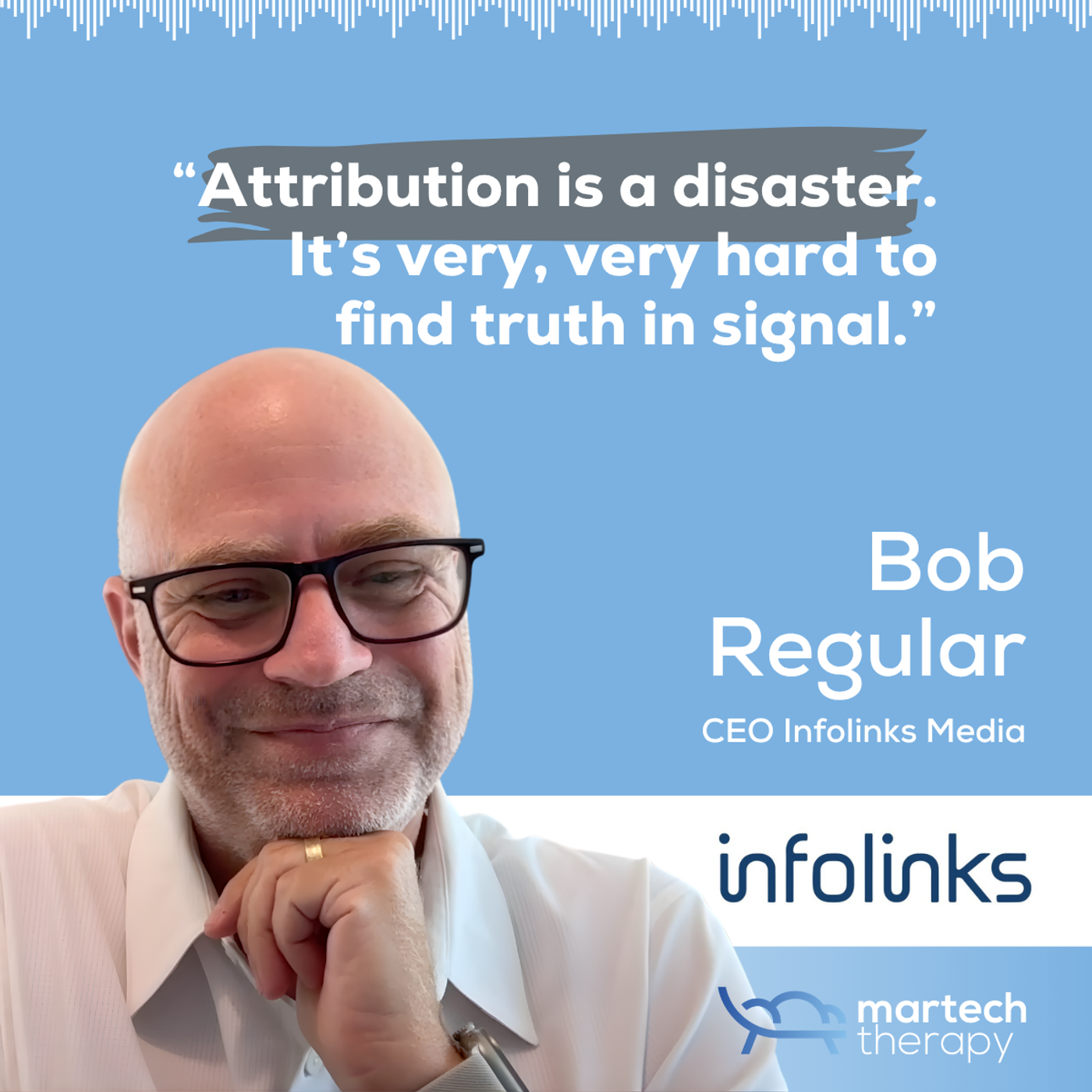 Adtech, AI, and the illusion of speed with Infolinks CEO Bob RegularCouch Confidentials by Martech Therapy · on Sentiment analysis85 / 100
 Micro-Changes in Guest Experience for Macro Revenues | with Danica SmithGAIN Momentum · on Sentiment analysis79 / 100
 Scaling AI Without Losing the Human Customer Experience with Brooke SellasMaking a Marketer · on Natural Language Processing (NLP)77 / 100
 AI at work: Inside the new era of hedge fund research and tradingHedge Fund Huddle · on Natural Language Processing (NLP)75 / 100
 Why Authenticity Beats Algorithms: The New Rules of Digital Marketing - ML 18573 / 100Integrating Business Needs and Technical Skills in Effective Model Serving Deployments - ML 18476 / 100Navigating Common Pitfalls in Data Science: Lessons from Pierpaolo Hipolito - ML 18362 / 100Cows, Camels, and the Human Brain - ML 18275 / 100A/B Testing with ML ft. Michael Berk - ML 18180 / 100