22 Minutes in Lending · 2026-01-12 · 19 min
Key moments - from our scoring
Substance score
56 / 100
Five dimensions, 20 points each
Credit unions face a critical juncture as they navigate deposit flight to fintech competitors, regulatory pressures around stablecoin adoption, and the recurring impact of government shutdowns on their member base. Tony Hernandez examines how institutions like SoFi are capturing Gen Z deposits through cryptocurrency offerings, with 62% of SoFi customers expressing interest in storing crypto at regulated entities - a dynamic that threatens traditional credit union liquidity if members defect to non-bank alternatives. The discussion covers practical responses credit unions deployed during extended shutdowns: zero-interest loans, guaranteed pay advances, payment skips, and CD penalty waivers. For federal workers and veterans - a core credit union demographic - financial instability from shutdown cycles increasingly affects mortgage qualification and military readiness. Hernandez emphasizes that credit unions must modernize beyond mobile apps, adopt stablecoin infrastructure quickly, and maintain robust small credit union ecosystems through organizations like DCUC. The conversation also surfaces emerging risks: AI-driven lending speed advantages that credit unions cannot match with traditional timelines, post-quantum computing threats to encryption, and accelerating industry consolidation. Policy solutions discussed include CDFI fund restoration and NCUA central liquidity facility extensions embedded in the National Defense Authorization Act to shore up small institutions.
62% of SoFi's customer base has indicated their desire to store crypto at a regulated bank entity like SoFi, according to CEO Anthony Noto.
Credit unions offered zero-interest guaranteed pay advances for employees with direct deposit, allowed payment skips to defer obligations, restructured loans, and permitted CD withdrawals without penalties.
The biggest threat is generational wealth transfer - an $84 trillion transfer already underway - flowing to non-bank cryptocurrency providers rather than credit unions as Gen Z and millennials adopt stablecoins and leave traditional banking relationships.
Lenders deny mortgage applications because retiring military members lack proof of subsequent employment income, and the Defense Finance and Accounting Service doesn't disburse retirement pay for the first six weeks after separation.
AI-powered lenders can disburse funds to borrowers' accounts the same day, whereas credit unions require the standard three-week approval timeline, creating a competitive disadvantage in fast-closing scenarios like home renovation financing.
Our reviewer’s read on each dimension, with quotes from the episode.
The episode contains some substantive points about stablecoin threats to credit union deposits, government shutdown member support strategies, and emerging tech risks (AI, post-quantum computing), but substantial portions are soft anecdotes, repetitive framing, and general-interest commentary rather than novel actionable insights. The core concerns (deposit flight to fintech, liquidity pressures, regulatory gaps) are discussed at surface level without deep analysis or surprising data.
there's an $84 trillion, uh, generational wealth transfer that's already in progress today
I do think there's a crisis, a potential crisis looming on the horizon as more people pick this up or, or Gen Z goes, I don't, I don't need a credit union
The stablecoin and deposit disintermediation concerns are well-trodden industry talking points by 2023. The government shutdown/military angle and veteran education gaps add some thematic specificity, but the framing is largely conventional wisdom without contrarian takes or first-principles thinking. Post-quantum computing risk is mentioned but not meaningfully explored.
there's an $84 trillion, uh, generational wealth transfer
if credit unions don't get there soon and start built, you know, building this, uh, the stable coin, they're going to see a drain on deposits going elsewhere
Tony Hernandez appears to hold or have held a relevant policy/advocacy role (discussion of NDAA amendments, DCUC board membership with military background), giving him some practitioner credibility. However, the transcript does not clearly establish his current operational role or scale of impact - he speaks primarily as a voice in policy/advocacy rather than as someone running a major credit union or fintech at scale. His framing is thoughtful but not clearly backed by direct operational evidence.
We have two, uh, two amendments in the, in this year's National Defense Authorization act
We have a seven member board of directors and two of those directors, including the chair, are from small credit unions
The episode relies heavily on generalizations and anecdotes (Steak and Shake kiosk, kitchen remodel fintech speed, Jennifer the realtor's mortgage advice) rather than hard data. The $84 trillion figure and SoFi's 62% customer interest in crypto custody are cited but lack context. No loan volumes, membership data, default rates, timelines, or documented case studies support the claims about liquidity crises or deposit flight risks.
62% of, of his customer base today. Right. Has indicated their desire to be able to, you know, store crypto at a regulated bank entity like SoFi
I was at a Steak and Shake, uh, in Indianapolis, uh, last May. But when you got done ordering on the kiosk like you do at McDonald's and then you total it up, it asks you do you want to pay credit or debit or do you want to pay in crypto?
Host asks open-ended questions and attempts follow-ups on stablecoin risks and government shutdown impacts, but rarely pushes back, challenges claims, or dig into specifics when the guest speaks vaguely. Questions are topical but soft; the host does not productively challenge the guest's crisis predictions or ask for evidence. The conversation flows but lacks the sharp, probing quality that would elevate it.
Do you think that's real? Is that something to also emphasize?
do you think it's the risk is like, you know, 12 months away, 24 months away and what do the credit unions need to be doing?
Computed from the transcript - who did the talking, and the words that came up most.
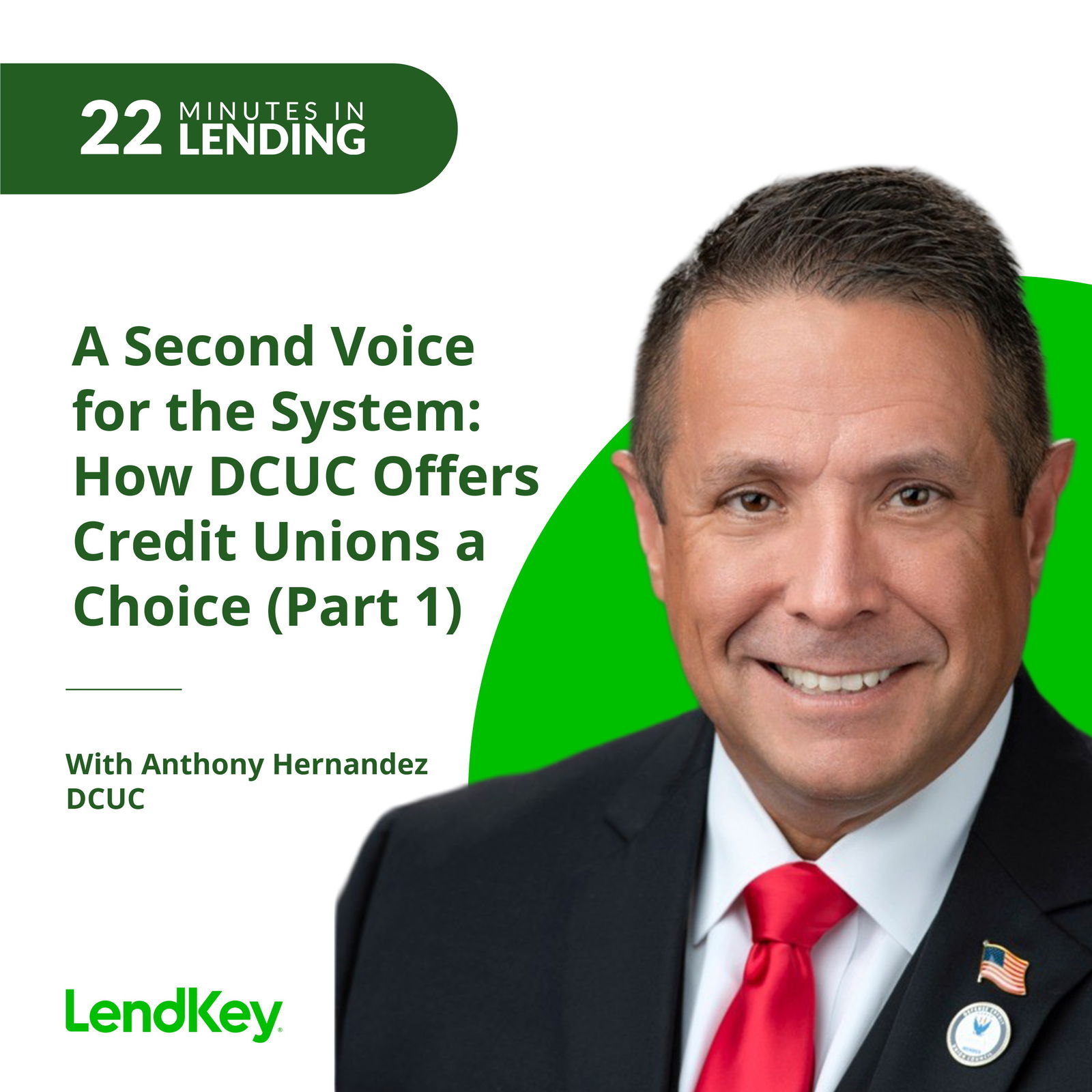
In the second part of our conversation with Defense Credit Union Council (DCUC) president and CEO, Tony Hernandez, we explore what the future holds for credit unions in an ecosystem dominated by crypto, governed by unpredictable legislators, and disrupted by increasingly savvy innovators. Highlights: 00.30: Tony discusses the Genius Act, Stablecoin, and his concerns that modern financial innovations could simply bypass the credit union system. 03.36: The liquidity risks presented by the $84T generational wealth transfer if it happens within crypto or more modernized financial systems that credit unions haven't yet adopted. 05.33: Lessons learned from the latest (and longest) government shutdown, and how credit unions and any federally-employed members should prepare for the next one. 13.19: How DCUC is working to support smaller credit unions and ensure their survival, growth, and integration into the legislative conversation. 15.04: What the future holds for the credit union system and where DCUC can play a role in shaping it. Links:
Transcribed and scored by The B2B Podcast Index.
Speaker A: Welcome back to 22 Minutes in Lending. I'm your host, Vince Pasion, continuing my conversation with Tony Hernandez. In this episode, we'll discuss how credit unions step up during government shutdowns, the unique challenges faced by feral workers and veterans, and what the future holds for the industry, including technology trends and consolidation. Let's dive in.
Speaker B: And I always encourage my airmen. Much as I love them and wanted to stay in the military, I wanted them to have that choice when they got out. Um, but I don't want to saddle them with too much debt or not being able to get it, because if they have a dream, they're going to go find the money. And I'd rather they find the money with a trusted institution that's looking out for them than going to get a loan from somebody right outside the gate that doesn't have their best interest.
Speaker C: Welcome to 22 Minutes in Lending, your go to podcast for insights on all things lending from lending practices, regulatory updates, how to enhance lending efforts, and more. In each episode, Vince Pasillon connects with industry leaders to discuss the latest trends and happenings around the lending industry. Let's dive in to the latest in lending.
Speaker A: So you've gone broad and recently I saw the erode on the Genius act, right? So big, big, big discussion around stablecoin right now across the entire industry. Not credit unions, but also banking. Does this somehow disintermediate? What, what happens with things like deposits? What impact will it have? So, so from, from your seat, what's the biggest safety and soundness blind spot for policymakers when they think about the Genius act and about stablecoin?
Speaker B: I think it's where, I guess. Let me back up a bit. You know, there's, there's an $84 trillion, uh, generational wealth transfer that's already in progress today. And your traditional banking accounts and debit card and ATM card and all that stuff, you know, may not be around Gen Z. And the millennials will definitely pick up stablecoin. And I think the biggest threat to credit unions are outside of, you know, the one for 1 or 100%, uh, you know, covering, you know, the dollar for dollar coverage of the Stable coin within the banks and the credit unions. I think the biggest thing is when they go to these other providers out there that are not a bank and aren't a credit union, you know, uh, because that's, uh, it's going to be who can get top of wallet for these new Gen Z transfers and then all that $84 trillion that's spread across all these bank Communities and investment, uh, investment houses, um, that money's going out the door, you know, and I think the biggest danger for credit unions is still being stuck in the 1990s thinking, you know, your mobile app, your mobile app is the latest cutting edge technology. Mhm.
Speaker A: Right.
Speaker B: Um, I was at a Steak and Shake, uh, in Indianapolis, uh, last May. But when you got done ordering on the kiosk like you do at McDonald's and then you total it up, it asks you do you want to pay credit or debit or do you want to pay in crypto? So it's already here, you know. Uh, yeah.
Speaker A: Now so far I, I got to watch Anthony Noto, the CEO at SoFi at a conference and he said, you know, because they announced their coin and they announced being able to basically uh, hold crypto and he said 62% of, of his customer base today. Right. Has indicated their desire to be able to, you know, store crypto at a regulated bank entity like SoFi. Um, and for him, from his perspective, it's great, right, because he sits back, they don't get any interest on it. Right. To basically hold the float. And I think that's really what, what most of the folks that are out there doing. The question really is how many of these are going to be. Everybody's issuing a coin, right? You know, Fiserv's got a coin, right? You know, everybody wants to have a coin and it'll be the wild wild west for a while until finally it settles down. But Tony, do you see and are you concerned about um, as, as, as we see a movement away from sort of fiat currency, the dollar into think cryptocurrencies like stablecoin. And do you, do you, are you concerned about what happens to credit unions from a deposit perspective? Uh, I mean, because I hear the chairman of the NCAO happen to talk about this all the time and it sounds like cranes are doing some things right. I mean they are getting. I see, I hear more and more credence talking about stablecoin all the time. Uh, but uh, do you think it's the risk is like, you know, 12 months away, 24 months away and what do the credit unions need to be doing? And from a supervisor advisor perspective, what do you expect from the regulators?
Speaker B: Well, I think for the regulator, if it was a perfect system and all those deposits were just, you're going to stay at the credit union and convert to stablecoin and you have some regulatory pressures on that. Whether if there's a run on the credit union or something, doesn't I think the biggest danger to credit unions is liquidity because as generational wealth, you know, um, transfers happen, that money is going to leave the credit union. And now what right now? And now, you know, they still got, they still got to meet, um, their liquidity, uh, you know, levels and they still have to uh, get that money back. And I do think a lot of credit unions is going to hit the share, you know, the share insurance fund. And I do think there's a crisis, a potential crisis looming on the horizon as more people pick this up or, or Gen Z goes, I don't, I don't need a credit union. I got, I got Sofi or I got whoever else is doing it, you know, that, that they, that they like doing. And so if they don't, if credit unions don't get there soon and start built, you know, building this, uh, the stable coin, they're going to see a drain on deposits going elsewhere and that's going to affect their liquidity ratios.
Speaker A: Yeah, I, I agree, I agree. I think they're, it's nice to see that the NCUA is leaning into it and I think that's helping credit unions want to lean into it. And there's certainly some very interesting projects on the way within the credit union. Hopefully they'll bear some fruit shortly. So some of the government shutdown. Right. This is probably the longest government shutdown in the history of the country and it has a huge impact on the membership base that you serve. Um, so what did you hear during that period of time from your credit union members about their members and give me examples of how they might have helped. And what do we do? Get prepared for the next one because it feels like this is just yet another tool, right? Bipartisan tool that happens that's being used at the go at the, at the government level.
Speaker B: Well, you know, a lot of them did, uh, you know, they do the zero, uh, it's almost like a zero interest loan. Mhm. They, they do guaranteed pay. If you have direct deposit there, then the credit union will extend one month or one pay period's worth of pay to tide you over. And that was back when uh, you know, government shutdowns were about two weeks, maybe three weeks, you know, tops. This one went to pay two, almost three pay periods, you know, into it. Yeah, some of them did skip pays if you know, you could skip a paint, a monthly payment, all that did, it just, it just pushed the debt, you know, further down the road. But you didn't, you didn't miss anything. And then some did loan restructures. I've seen, you know, uh, we saw this back during COVID They allowed people to cash in their, uh, you know, their, their um, CDs without penalty, you know, if they needed that money. So there's a lot of things that credit unions can do during that time. Uh, and I think, you know, I don't think I. It's a safety net for the government because they don't fund any of that stuff, you know, and it's not as bad as it could be. And so you kind of buy the government a little time to get their act together. Um, but it got really close this last time because, I mean, I think, I think the administration did some things where they moved some money around. And I'm, I'm a former comptroller. I don't know that I'd be comfortable. But the fact that the president, you know, if he's signing it, then, you know, then okay. But when, you know, I just, I've never seen that before, um, which was, which was interesting. And then I know treasury did a lot of stuff, you know, moving some money around to kind of tight over. And then you had the credit unions, you know, that got to that point. Um, things that, that we're seeing in a crisis like that. And, and we have two, uh, two amendments in the, in this year's National Defense Authorization act. And that's restoring a CDFI fund, which helps with liquidity and doing these things.
Speaker A: Sure.
Speaker B: And then extending the central liquidity facility within the NCUA right to give small credit unions or, or any size credit union, you know, a little bit more liquidity so they can help their members out and help them through this, you know, and those are two things that, uh, uh, we're hoping stay in the NDAA under the, under the banking title. And we, you know, using our, like I said earlier, using our, our experience with military and veterans, saying this affects financial readiness, um, for the military. You know, uh, if, if you're on the front lines and a government shutdown happens and your, your family, uh, can't make the rent or can't pay the, uh, the electric bill, that affects your ability downrange to perform your mission. And like I always say, you know, that aircraft mechanic, you know, worried about it might not put in the, uh, oxygen bottle all the way on that jet, you know, when. Then there's a pilot flying that passes out at, you know, 60, 000ft, you know, it's just, Just not good. You know.
Speaker A: So now it's. People have Families and they got financial concerns like everyone else. Right. It's going to affect attention to their job. They're only human. And Tony, do you think that there's, is there concern in your mind that in the future, this particular population, government workers, they're viewed differently when they apply for loans because the potential instability of their income, or do you think that's real? Is that something to also emphasize?
Speaker B: I think it's real. Uh, um, I think you look at other things, emergency funds and other access to capital at the individual level. Um, but you know, military is already that way. You know, when you transition out of the military, um, you can't, you, it's not a good time to apply for a mortgage because you'll get denied because you don't have proof of another job or mother income coming in. Um, just say your Air Force retired or government retired. And even worse, the Defense Finance and Accounting Service doesn't send you any, any money for the first six weeks of your retirement. I mean, until you're retired. Yeah. And so, uh, and so, uh, you know, M. Jennifer's a realtor now and that's what she advises her client. If you're going to apply for a mortgage, do it six months before you retire, before the lender can see that you've applied for retirement, or do it after you're safely on the other side with the job. So I think if you take that example and apply it to all federal workers is going to be, I think, uh, you know, the longer, uh, uh, whichever parties in Congress uses government shutdown as a tool, it's got, it's almost become regular. You know, I remember the first government shutdown when I was a lieutenant in the B2 program and, and, and they went on this furlough and nobody knew exactly what that meant. And now you've seen over the last 10 years or 15 years, they become a lot more frequent now. They're longer and more painful. So yeah, I do see that as a danger for, uh, federal workers.
Speaker D: This is Ron Draper, CEO of Sumovil's credit union. So in 2014 we were looking for a turnkey student lending solution, one that was simple and efficient for our members to access. And eventually we chose LendKey because it just integrated seamlessly for quick member mobile access and was easy to remotely review and approve from a loan officer point of view. And I should know because I'm that loan officer. I still recommend Len Key to people whenever I get the chance because after almost a decade it continues to offer consistent product and service delivery both to Our membership and to our staff.
Speaker A: Hey Tony, I want to go back to something you're talking about. Some of the gaps and the challenges that federal uh, workers and you know, obviously m, um, veterans, uh, would see in funding. And one of the things we've been looking at is on the education lending side, you know, what are the unique challenges for veteran students? And we're hearing things like, well, even with the GI Bill, there are gaps in funding for them. Right. Um, there are issues they encounter because they're caps, they're family caps. They don't realize they're hitting the family cap. Um, if they're in their state school, it's covered. But if they go to private, right, they're going to run into issues there.
Speaker B: I am familiar with a lot of the challenges that come with that. Um, but it's also, it's also something ah, that you know, we talk about veteran member business lending. Some of that is getting your education to transition into a better, a, ah, better role outside the military. And you know, it all starts. I used to always encourage my airmen, um, go to school, get your community college associate degree, you know, because the Air Force will pay for that and you're, you're foolish if you're not. Get your upgrade training first. Learn how to do your job and get your badge and your training and then let's get you into school and then uh, if you can do it, go get your four year degree, um, or, or, or get your certification if you're ASE certified.
Speaker A: Right.
Speaker B: Open up your own auto parts or if you're an electrician, get, get through all the apprentice and the uh, all the licensing things you have to do and open up your own, your own business, you know, and, and I always encourage my airmen. Much as I love them and wanted to stay in the military, I wanted them to have that choice when they got out. Um, but I don't want to saddle them with it with too much debt or, or not being able to get it because if they have a dream, they're going to go find the money. And I'd rather they find the money with a, with a, a trusted institution that's looking out for them than going to, going to get a loan from somebody right outside the gate that doesn't have their best interest.
Speaker A: Yeah, we're going to spend some, we're going to clock some time on it. We, we started doing the research. There's about 50 schools where the majority of veterans go to school. And um, and I think there's a, there's certainly A. A very finite group of employers who will turn around like Raytheon and Walmart and Amazon and it runs that barbell right when you think about, you know, where veteran students wind up going after they graduate and get their degrees. So, last question. If you could launch one national initiative right now, fully funded, staffed and approved, what would it be?
Speaker B: One national initiative. Um, you know, uh, um, fully funded and uh, and staffed. Um, uh, you know, I'm going to throw a bone, you know, you know, small credit unions, I do think we need to focus on keeping them robust, you know, unhealthy. Um, I do think they have a lot of political power that never really gets fully, uh, mobilized. And so, uh, you know, how do we do that, you know, for, for the small credit unions to move that forward, you know, And I think. Well, not think we're already moving in that direction with DCUC is how do we, how do we help them out? And that was something you know, talking with, with, uh, with Sam Plester earlier was something we had it talked about, uh, in the past. And so I do think that's something that we're going to have to do just because consolidation, the pace of consolidation is going to pick up. That's something that, that we just started really about a month ago, working with a lot of small credit unions. You know, our, uh, um, we cap our dues. You know, they're, uh, they're capped at 22,500 and then it's. And it goes down and it's very, very, uh, very, uh, equal. But, um, you know, we have a seven member board of directors and two of those directors, including the chair, are from small credit unions. And that means, that means something. We get that small credit union perspective.
Speaker A: So if we did this again, this time next year, what do you think we're talking about?
Speaker B: I think we're talking. Well, there are several things. You know, the, uh. Um, I think stablecoin and everything we talked about during the stablecoin segment. Yeah, I think we're going to be seeing that, um, I think we're going to be seeing more AI and the challenges with AI and who's doing it and who's not and who's. Who's policing their AI, who's. Who's taking advantage of that and using it, you know, and I think it's going to challenge credit unions. You know, my wife and I, when we remodeled our kitchen, we didn't use a credit union, you know, to, to do the financing because, um, my contractor needed to give him a. Yeah, we've got the funds and let's, let's execute it, you know, otherwise he was going to go find somebody else that was ready. And Jennifer wanted her kitchen remodel by Thanksgiving. So I couldn't wait the normal three weeks. I went with a lender that got me the funds in my account that afternoon. And that's all AI driven. And I think the other thing we're going to be talking about even more next year is something called post quantum computing. And uh, when you use that, when you use those, ah, those post those quantum computers, you um, can start cracking encryption codes and stuff. And I think you're going to see a lot of people scrambling at the last minute, you know, to do that. So I think in the financial services industry, I think those are things we're going to be talking about. Plus there'll be the, all the mergers that are happening in our consolidation in our industry. Um, and uh, you know, I think those are the industry wide issues that uh, we'll see this time from next year.
Speaker A: Excellent. Well, Tony, look, we're going to leave it there. Thank you so much for joining us. I really appreciate your time.
Speaker B: Thanks man.
Speaker A: As always, thanks to our listeners. If you haven't yet, be sure to subscribe so you never miss an episode and I will see you back here. Our next 22 minutes in. Lenny, Tony, thanks again. Thanks.
Speaker C: Thank you for listening to the 22 minutes in lending podcast. We hope you enjoyed today's episode. You'll find links to any resources mentioned in the show notes. If you're enjoying our show, please be sure to subscribe and leave us a five star review.
 22 Minutes on The Big Beautiful Bill + Student Loans78 / 100
 22 Minutes on the Proposed 10% Credit Card Interest Rate Cap76 / 100
 The Credit Union Thread: Why Staying On Mission Matters67 / 100
 A Second Voice for the System: How DCUC Offers Credit Unions a Choice (Part 1)77 / 100
 Reimagining NACUSO