
21 in 21 · 2026-01-13 · 22 min
Key moments - from our scoring
Substance score
56 / 100
Five dimensions, 20 points each
Mark Suman brings a unique perspective shaped by his 20-year career spanning education technology (Instructure Canvas), privacy infrastructure (Mutiny Wallet), and machine learning at Apple. His early experience in backup software - where he could see customers' unencrypted files - crystallized his commitment to privacy-preserving systems. Maple AI represents this philosophy applied to generative AI: users get end-to-end encrypted conversations with AI models (currently open-source options like GPT OSS) without the data collection and profiling that ChatGPT and competitors employ. OpenSecret, the underlying platform, uses secure enclaves - hardware-based encryption in data centers - to ensure app developers and Maple itself cannot access user data. The code is open source and mathematically verifiable, addressing the trust problem. Suman argues this matters because current AI systems mirror social media's extractive model, but AI represents a far deeper privacy concern: users are "dumping their whole brain" into these systems. He positions Maple alongside Signal (messaging) and Proton (email) as privacy-first alternatives. For B2B operators, the discussion covers secure enclave architecture, open-source model deployment, and the emerging Bitcoin-AI privacy convergence.
Maple uses open-source models already trained on public datasets and doesn't modify them or use your conversations for further training. Your chat channel into the data center is encrypted, and each user gets their own private data vault via secure enclave architecture that mathematically prevents Maple and model providers from accessing content.
Local AI requires powerful hardware and runs smaller, slower models. Maple provides the same speed and model quality as cloud AI (via encrypted access to data centers) while maintaining local-level privacy - it's the middle ground between ChatGPT's full exposure and local AI's limitations.
Yes - Maple's code is open source and uses mathematical proofs from confidential computing to prove the code running on servers matches the published source, so users can inspect it themselves rather than trusting the company's claims.
Suman recommends having both: use ChatGPT for general tasks but switch to Maple when discussing sensitive topics you don't want profiled or restricted. ChatGPT builds detailed biographies of users' thinking patterns that can be used for subtle persuasion; Maple offers true freedom to ideate without surveillance.
OpenSecret is the underlying developer platform that manages private encryption keys and secure enclaves for any application. Maple AI is currently the primary proof-of-concept app built on OpenSecret; the platform is being dogfooded through Maple's growth before opening to broader developers.
Our reviewer’s read on each dimension, with quotes from the episode.
The episode delivers moderate substance with some valuable technical explanations (secure enclaves, open-source verifiability, end-to-end encryption architecture) but is padded with narrative meandering, personal anecdotes about tree forests and children's school projects, and lengthy throat-clearing. The core privacy-AI thesis is repeated multiple times rather than deepened.
Maple tries to be as close to the local AI privacy as possible. But we are trying to give people the exact same experience to get with chat GPT. And the way that we do that is through this secure enclave architecture.
And we think that is essential to the promise that we give our users, is that they can verify it themselves.
While the privacy-first AI positioning is solid, it's not particularly novel - Signal for messaging, Proton for email, and now Maple for AI follows an established pattern. The open protocols vs. proprietary AI comparison to early internet history is reasonable but well-trodden. The guest relies heavily on framing rather than contrarian insights or fresh first-principles thinking.
similar to the Signal app, what they did for messaging and what Proton did for email, where Maple is going to be that for AI.
I really see the need for us to have an entire ecosystem for AI that is open and verifiable. And I would equate it to the internet.
Mark Suman has legitimate credentials - Apple engineer working on AI/ML/privacy, co-founder of Instructure Canvas, and current CEO of Maple AI building actual deployed product. However, he's primarily a founder talking about his own company rather than an independent operator with battle-tested expertise across multiple domains. The Bitcoin wallet (Mutiny) was pivoted away from, limiting evidence of execution at scale in privacy tech.
Before Maple AI, Mark worked at Mutiny, which is a web-based self-custodial Bitcoin wallet.
he spent several years at Apple as an engineer focused on AI, machine learning, and privacy-preserving systems.
The episode lacks concrete numbers, named customer examples, adoption metrics, and specific technical benchmarks. Claims like 'we're 90% of the way there' and 'frontier models are still the best' are unsubstantiated. The guest mentions only one external developer building on OpenSecret but provides no metrics on Maple's traction, pricing, user count, or technical performance comparisons.
I think we're probably like 90% of the way there, 95% of the way.
We have one developer who's actually here in Procedure Bitcoin that is building on OpenSecret.
The host asks broad, softball questions without follow-ups or pushback. No challenge to the guest's claims about privacy trade-offs, market demand, or technical feasibility. The host gets distracted by tangents (maple trees, the host's mother's interest in fungi, naming anecdotes) that derail momentum. There's minimal clarification-seeking on technical details or business metrics that would strengthen understanding for operators.
How big vision do you want me to go here? As big as you want to go.
Well, I guess like your biggest focus right now, is it on Maple AI or is it on OpenSecret or is it focused on both?
Computed from the transcript - who did the talking, and the words that came up most.
Mark Suman, co-founder and CEO of Maple AI, a privacy-first AI chat platform known as “the Signal of AI,” joins Haley Berkoe on 21 in 21. Mark explains how Maple AI uses secure enclaves to deliver a ChatGPT-like experience while getting as close to local-AI privacy as possible, without requiring users to run models on their own machine. He also covers why verifiability is essential for trust, the importance of thought privacy, the shared ethos between Bitcoin and AI, and why AI in schools deserves more scrutiny. Maple AI: , Mark Suman:
Transcribed and scored by The B2B Podcast Index.
Mark, thank you so much for coming on the 21 and 21 show today. Yeah, excited to be here. Thank you. Yes, of course.
For those of you that don't know Mark Suman, he's the co-founder and CEO of Maple AI, a privacy first AI chat built on OpenSecret, which is a developer platform his team also created to enable encryption and end to end security for AI applications. Before Maple AI, Mark worked at Mutiny, which is a web-based self-custodial Bitcoin wallet. And prior to that, he spent several years at Apple as an engineer focused on AI, machine learning, and privacy-preserving systems. Yep, that's correct.
You've done a lot. Yeah, been working in the tech industry for, gosh, like 20 years now or so. I also did a few startups before going to Apple, largely focused on education technology. A lot of people have used our stuff in university.
we built Instructure Canvas, which is learning management platform, and then also worked on some apps that helped kids in speech therapy who had speech stutters or impediments. And then the way that I really got into privacy, though, was my first job right out of school was an online backup software where you would back up your entire computer to our cloud. And you would like all your photos, all your documents, everything. And I was helping someone.
I was on the developer side, a customer service escalated somebody to me to say, hey, can you help them restore their files? They had a catastrophic event with their computer. And I got in there and I could see all of their photos. And I was like, I feel very violating right now that I'm walking around inside these people's family photos.
And that's when I realized this is what all of our cloud infrastructure is. It's like just this database where employees can see what people are uploading to it. But something that we offer to our customers was we let them have a private encryption key if they wanted to. But only it was so hard to use that only about like five to 10% of our users actually use that and encrypted all the data away from us employees.
So that was my big eye opening moment that I've kind of kept with me my whole career so far. Wow. Yeah. I mean, it's definitely like a rabbit hole privacy that is just I mean, obviously, we're in the Bitcoin space.
That's something I know and care a lot about but ai becoming just so much everywhere it's the average person is so much more affected yeah definitely or more aware but anyways i have a bunch of questions for you um and you are kind of like i'm excited to talk to you because you're kind of like the perfect candidate of like a of the show in persidia bitcoin where you have bitcoin history you have big tech and also ai because we're really interested in the intersection of bitcoin and ai Mm-hmm.
So I'm curious. Well, first off, can you maybe just like tell our listeners a little bit more about Maple AI and OpenSecret? Yeah. How they're connected?
Sure, definitely. When we pivoted away from Mutiny Wallet, because it was a difficult space to build in, we took the privacy ethos of Mutiny, which was every user has their own private encryption key. And so when their data gets synced to our Mutiny cloud, if you will, it was like a private data vault per user. but we put the burden on the user to manage their private key.
And it was very difficult to do. We had big scary warnings on the screen, don't lose this key or you'll lose your money. And so we sought out to build a better platform. So we want to build an app developer platform that managed private keys for the users.
And we discovered secure enclaves, which are basically a way to do encryption, hardware encryption in the cloud per user. So that's really what OpenSecret is. Anybody who builds an app on our platform, each user gets their own private data vault and the app developer cannot see what that data is. So part of that is we decided to build a proof of concept that turned out to be an app that lots of people wanted.
So that's what Maple AI is. And it's effectively ChatGPT but every user has end-to-end encryption with their chats. So we can't see what you're chatting about. No AI company can see what you're chatting about.
Nothing goes back to ChatGPT, to DeepSeek, to any of them. It's really just you and an AI privately in a room chatting with each other. So interesting. I was just playing around with Maple AI a bit before this.
Yes. So I guess like your biggest focus right now, is it on Maple AI or is it on OpenSecret or is it focused on both? Yeah, it's definitely on Maple right now. We found a lot more interest in Maple.
There is definitely interest in OpenSecret, but to build out a developer ecosystem really takes a lot of resources. You need a lot of documentation, a lot of developer support. You need developer evangelists to go out there. And so we decided to kind of let that simmer.
And then Maple is actually helping us build out OpenSecret because as it grows and needs to scale, then we find things that we have to add into the OpenSecret platform. So we're basically dogfooding our own technology. And at some point in the future, as Maple really hits scale, then we can decide to open up OpenSecret to more developers. We have one developer who's actually here in Procedure Bitcoin that is building on OpenSecret.
and we might selectively open it up in the future. But for now, we're just really cooking on Maple. Okay. And how did you come up with this name, Maple?
Yeah. You know, it's kind of interesting. So first and foremost, we wanted a word that was just really like easy to say and people had a positive connotation with it, right? So, because we thought about names like secret GPT or private chat.
And while those are very descriptive of what Maple is, it's kind of off-putting to the mainstream general audience. And then when we decided to pivot off of Mutiny it was a pretty difficult time to be honest for all of us And so we took a week and we went out to a beach house And we said let just have a hack week and let see if we can build something together And that's really where Maple came from. And while we were there at this beach house, the part of the country we were in had a bunch of forests that went right up against the water.
And I started kind of, we were driving around, I was looking at these trees, just admiring these forests that I love out there. And I started thinking about species of trees and how a few of them send their roots down into the ground and communicate with each other privately. And maple is one of those species. And so what they do as a forest, if there is some kind of threat in any part of the forest, they are able to send messages to each other and share resources to help weather this harsh environment.
And so we thought those are great metaphor for us as humans trying to use AI as a companion to help us kind of make it through this life that we live in. that's so interesting also completely random but my mom has recently gone down the rabbit hole of trees really okay yes she's super into it and books and she was telling me all about it so i'm really excited to tell her so she can tell you all about fungal networks and all that stuff yeah she's very interested so i'm excited okay something i learned today from able ai is about maple trees yeah um well i love it uh so maple ai definitely fundamentally has a different approach than like, you know, big AI companies like ChatGPT.
Can you maybe tell me a little bit more about that and maybe why someone who's less educated about privacy around AI should care? Yeah, the existing AI technology that we use now, the bigger ones, ChatGPT, Grok, you name it, they are all built on the same paradigm of the cloud world that we've lived in for the last 20 years, especially social media and other SaaS, you know, and then the whole SaaS product market, which is users give their data over and then the companies monetize that user data for their own benefit.
And then either you get the AI for free or you get it for a subsidized rate. So most of these shops are not making very much money per user. You know, in fact, when they try to start to raise prices, users get mad because they don't realize that they're actually paying a lot less than they should be. So we've kind of flipped that on its head because we saw so many problems with social media where we gave over our data and we gave over our privacy and we gave over a lot of our rights and our freedoms.
And so we don't want to repeat that mistake with AI because frankly, I think that there should be, I'm hoping, I'm really hopeful for all of us that there's a line in the sand that people draw that say, we gave you our social media because we were curating the information we gave out. But as we use AI, really we're dumping our whole brain into this. And I want people to draw a line there and say, we're not going to give up our privacy of our thoughts and of our brain. And that's where Maple comes in.
And Maple lets people have their data encrypted end to end. And really, it's a place where you can think freely and not have somebody that's watching you approving or disapproving of what you ask the AI. Because we are people who just think through a lot of ideas and we're constantly throwing away ideas, right? But there's nobody in our head that's saying, hey, I'm going to flag you for a thought you had.
And I'm going to restrict your access to thought tomorrow because of what you thought about today. that should not exist within the AI environment. We need to be free to kind of ideate and settle on the right answer eventually. So right now, basically like how MapleAi, because right now you can either like use ChattrPT or something similar in the cloud that's, you know, public, or you can like download locally on your machine AI, but that's kind of like hard and difficult to do.
Is MapleAi kind of like an in-between solution or how does that work? Yeah, I mean, yeah, you kind of just drew a little spectrum there of like chat GPT is the least private and then local AI is awesome. It's but it's difficult to use and you sacrifice these models are smaller. So they're less powerful.
They're a little bit slower, that kind of stuff. Maple tries to be as close to the local AI privacy as possible. But we are trying to give people the exact same experience to get with chat GPT. And the way that we do that is through this secure enclave architecture.
And I I mean, that's like a whole other episode to dive into that technology, but it's really awesome. And it lets people have a private end-to-end encrypted experience. And the biggest part of all of this is that we make our AI verifiable. And what verifiable means is the code is open source.
The confidential computing stuff has mathematical proofs that our open source code matches what's running on the servers. So you don't have to trust us when we say we're encrypting your data and we can't see it. you can actually go look at the open source code, inspect it, and know that how your data is being handled. And we think that is essential to the promise that we give our users, is that they can verify it themselves.
Interesting. Okay, one question I have. So, I don't know a ton about how, you know, these AI models work, but roughly, like, the models kind of, like, learn via information, and that's how the data and training. So, how does private AIs work?
Do they kind of train in similar ways of something like Rock ChatGPT or is the model learning a bit different? So right now we use open source models that have been trained off of big, large data sets. And then we don't modify them at all. So we give you access.
For example, ChatGPT open sourced a model a few months ago. It's called GPT OSS. So we have that running in one of our enclaves and you chat with it and we just give you like raw access to it Basically we give it to you as if you had this laptop that was capable of running it at full speed but you don And so we encrypt you a channel into our data center to let you run it there. It's not learning from you yet.
That's something we want to build into Maple. We would love to build this concept where Maple is understanding how you chat and how you think, but do it in a way that's positive for you. So we would build it open source, of course, and then you'd be able to inspect the data that it knows about you. Whereas right now with Chat2PT, they build this whole biography.
If you use Chat2PT for like a year, they're going to write this entire biography about who Haley is, what she thinks about, and also how gullible is she and where is she gullible. And then if they ever wanted to convince you of something, they know like how to talk to you and convince you of it without you realizing it. Whereas we would want to let you see that whole biography we have on you. And as you're chatting with private AI, you know what's going on, what the relationship is.
so I guess it's kind of a roundabout way of saying not yet, it's not learning about you but that is something we really want to build in the upcoming 2026 year Interesting Well, I guess do you think that people have to make any sacrifice on like the information quality or amount of information they can get from using a private AI versus something that's bigger and getting more of your information like you're sacrificing privacy for information Yeah, that is the trade-off that we want to avoid.
Right now, people are. I think we're probably like 90% of the way there, 95% of the way. But the frontier models is what we call them. Those ones are still the best, the closed frontier models of OpenAI and Anthropic and others.
Open source has really closed the gap a lot. And then if we add this memory feature in, that also helps close the gap even more. And then I think there are things that we could do to kind of do local, like anonymize your data and then pass it over to ChatGPT to take advantage of the benefits that they get. But frankly, I think that a lot of people actually don't need the most powerful model all the time, right?
There's a lot of times where you just need something that gets you 90 to 95% of the way there. I love to make the analogy of a car. You don't need to drive a race car to work. You just need to drive a car that gets you there.
And so that's where we're at right now. But I think the only way for us to win in the privacy game is to make experience as good or better than the one that is invading your privacy. If not, people are going to choose convenience every time. Yes, yes, I know.
It's like we're all getting so used to this easy information where it's like a few years ago, it's like I actually had to put more work into learning or writing something. Good and bad. So I guess as you think about kind of like what are you thinking most right now what the future of AI generally should look like maybe in like five or so years? Oh yeah, that's a big question.
Okay, how big vision do you want me to go here? As big as you want to go. Okay, I really see the need for us to have an entire ecosystem for AI that is open and verifiable. And I would equate it to the internet.
I think that the internet originally started proprietary and it wasn't growing very much. It wasn't until we built the Internet on open protocols that it just exploded and flourished all over the world. AI needs to have a similar moment. Right now, it is proprietary.
It's closed. It's a privacy nightmare. And the problem is, is I think it could take over the world that way. And we're seeing it with like other governments that are being more oppressive and using AI in certain ways.
so I would love for us to we really need to get going on this now but have five years from now that the popular AI is all built on open protocols and open source and open ethos and privacy protecting and encrypted and it's not just AI chat that's the current incarnation of it it's going to be inside the car that you're riding in, it's the robot that's in your house, it is the wearable that you have on it's every single service you interact with online, like everything's putting AI inside of it.
All of those need to have some sense of verifiability within their stack so that we know where our data is routing, how it's being processed so we can avoid, you know, effectively censorship, surveillance, top-down level control over the general populace that's using AI. You seem to be using a lot of the same keywords that us and the Bitcoin. Oh, yeah. Well, I know you were in Bitcoin before, but there seems to be a lot of overlap.
And I mean, obviously, I work in like the open source space in Bitcoin. Do you see like the AI open source space kind of like growing in similar ways? Anything they can learn or collaborate with Bitcoiners in the open source space? I think so.
There seems to be this thing going on where Bitcoin and AI keep getting brought up in the same conversation, even though technically there's no overlap at all between the two technologies. But the Bitcoin and AI both have a similar need for really good privacy, right? And they will succeed the most for humanity if we have privacy built into them. And so I think that's one reason why it keeps coming up.
I forgot your question. That's okay. Similar ethos, I guess. Similar type of people who care about AI for good that also care for Bitcoin.
Yes, yeah. And really what we're seeing at Maple is, I super grateful for the Bitcoin community We part of the Bitcoin community but they have been our most early adopters and our biggest supporters And Maple would not be as far along today as it is if it weren't for the Bitcoin community who cares about privacy and shares a lot of those same values. So it's been a great spot to kind of start and build. We really feel like we're building the AI for Bitcoiners.
We're building, similar to the Signal app, what they did for messaging and what Proton did for email, where Maple is going to be that for AI. Yes, you said in your presentation the other day, Signal and ChatGPT had a baby. Was that what you said? Yeah, that was Matt O'Dell.
Oh, okay. Sorry, Matt O'Dell. He said it on a podcast recently, so I just quoted him. Okay.
That was funny. I liked it. But someone in the audience was like, I said that to you yesterday. Why don't you quote me?
Everybody's thinking it. Pretty funny, right? I guess so. Everybody's thinking it.
is there anything else that like is top of mind for you right now or any rabbit holes you've recently gone down? That's a good question. I wish I'd been thinking of that a little bit more. Rabbit holes I recently went down.
I mean, I'm thinking a lot about education. I have kids who are in school right now and AI is kind of definitely affecting that industry. And there are good and bad pieces to it, right? And so I'll start with kind of the good side, which is I have some teachers of my kids are embracing AI and giving them new assignments that are tailored to AI tools and teaching them how to use them.
So for example, my daughter came home the other day and said, hey, dad, I'm supposed to produce like a three minute, a five minute video of a short story that I wrote and I have to produce like an audio podcast with like a video element to it. And we're specifically supposed to use AI tools. So we hopped on 11 labs, we generated an audio book out of her script or out of everything that she wrote. And then we hopped into Chagikati and generated some images and stuff.
So it was pretty cool to like work with her on these cutting edge tools that I use every day for work. And so, and yes, I use ChatGPT. We don't generate images in Maple again. So we had to use that.
So I think that's really cool. There's a lot of promising stuff to happen there. I think kids need to learn how to use AI in a good way. And then the flip side of it is a lot of school districts are signing up for AI and just giving it to kids, right?
So my kids use Google Classroom and I wish they would use Canvas. But they use Google Classroom and it has AI right in front of them. And we had a lot of parents over the last few years who went to school board meetings arguing over the books that were being assigned in school, saying that the content wasn't good. But now we have AI being assigned in schools.
And I'm not really hearing a lot of people talk about, oh, which AI are you choosing? What are the biases in there? What are they going to learn from it? What are the restrictions?
And I think that's actually this, I don't know if Trojan horse is the right phrase, but that is something that really needs to get more attention. is like what AI is being sit in front of all of our kids across America. I don't know if you've ever talked to Matt Velez on the Spiral team. No, no, I haven't.
But he has four kids and he's also very much thinking about how his kids learn to use AI in a responsible way. I just think a lot of these kids that are young right now are probably going to be super geniuses. If they learn how to use AI well, responsibly, and the right tools at like a young age, hopefully. Yeah.
If they learn how to use it well, because there are some reports coming out right now that shows that their brain kind of atrophies. And so, which is good for us to learn now so we can figure out like, okay, how do we adjust the usage of AI so that they are flourishing instead of going in the wrong direction with it? And there's more studies that need to be done on that. Well, I have lots more questions, but we'll just, we have one more minute left, so I'll leave it with the final question.
If you could leave our listeners like a single thought about AI, Bitcoin, anything else, like what would it be? Okay. I guess I'll leave with the thing that I tell a lot of people, and that is I'm not here to tell people to uninstall ChatGPT. Use the best tool for the tasks that you have.
But I would encourage people to find a privacy-preserving AI that's out there. I prefer Maple, obviously. There are other ones. But download and use something like Maple and have it side by side in your toolkit of AI.
And then as you're using AI and you start to run into some kind of constraint where you're like, I don't feel totally comfortable sharing this right now with ChachiBT, hop into Maple and talk about it there and see how you feel. See what your vibe is. and we have a lot of people who tell us like I felt liberated when I went and used Maple and I was chatting in there and I finally feel like I'm free to be myself. I'm free to think.
I'm free to talk how I want to. So I just encourage people add Maple to your toolkit. You know, you can have five AI apps on your phone. Just make sure Maple is one of them.
Well, I have it. So I'm taking you up on it. Okay. If our listeners want to follow more what you're doing or Maple, where should they go?
Yeah. Try Maple.ai's website and then I'm on X and Noster X is Mark Suman and then Noster I'm Marks at Primal.net.
Check us out there. Well, thanks so much for coming on the show. I hope you enjoy the rest of your time in San Francisco. Great.
Thanks. This was a pleasure. Oh, good. Thanks.
Yeah.
Other episodes covering the same guests and topics, from across The B2B Podcast Index.
 Paul Graham On Startups, Ambition, and Great FoundersY Combinator Startup Podcast · on ChatGPT88 / 100
 The AI-Native Law Firm, with Ryan Walker of General LegalMeeting of the Minds · on ChatGPT88 / 100
 Inside the AI Hiring Pipeline: Interns, Apprentices, and Full-Time Coworkers | Vinay Gidwaney & Mike Sullivan, OneDigitalThe AI Why with Liam Lawson · on ChatGPT87 / 100
 Stop Asking What AI Can Do. Ask What Your Staff Hates to Do.Small Business Big AI · on ChatGPT84 / 100
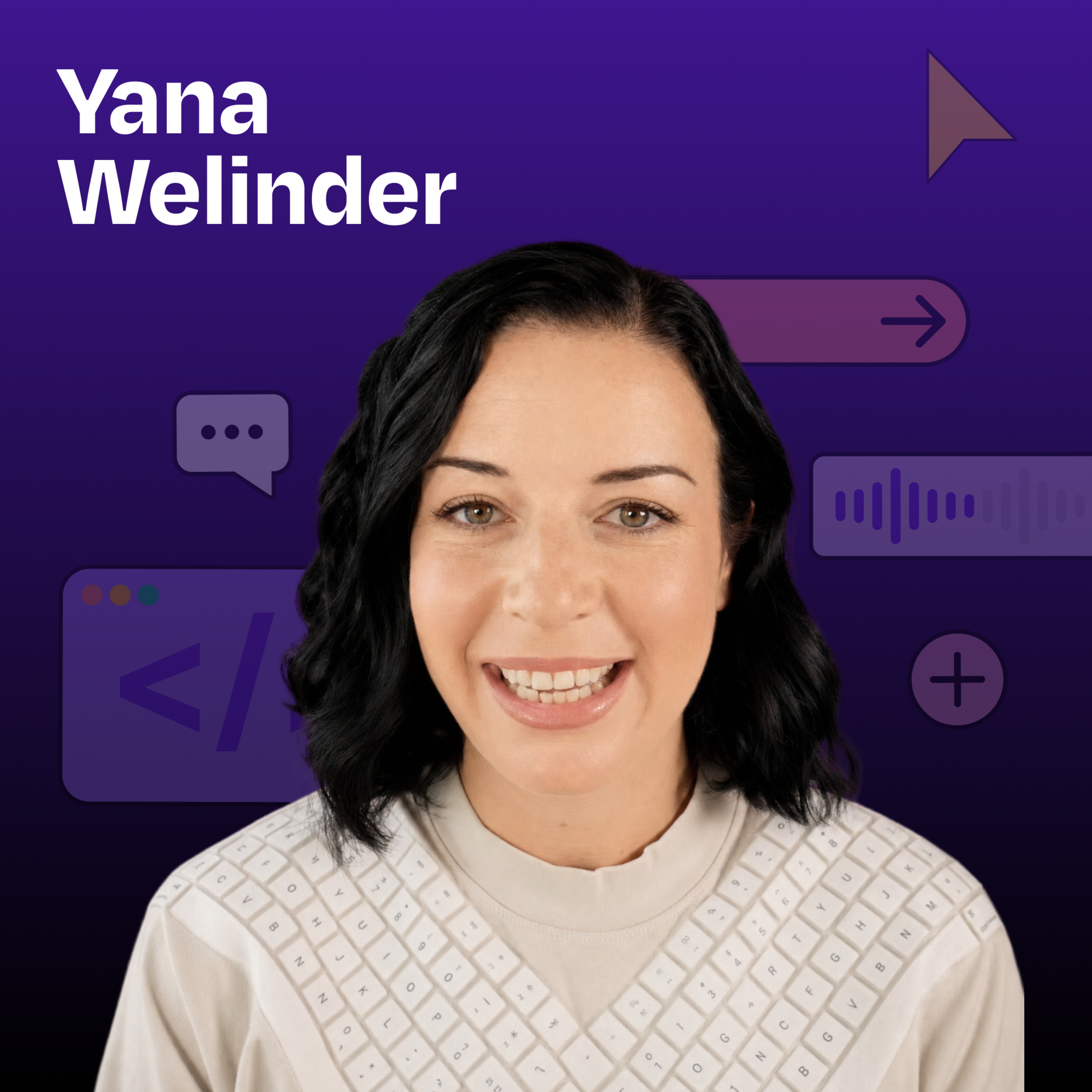 How a solo founder used Codex and ChatGPT to launch a fashion brand without engineers | Yana Welinder How I AI · on ChatGPT82 / 100
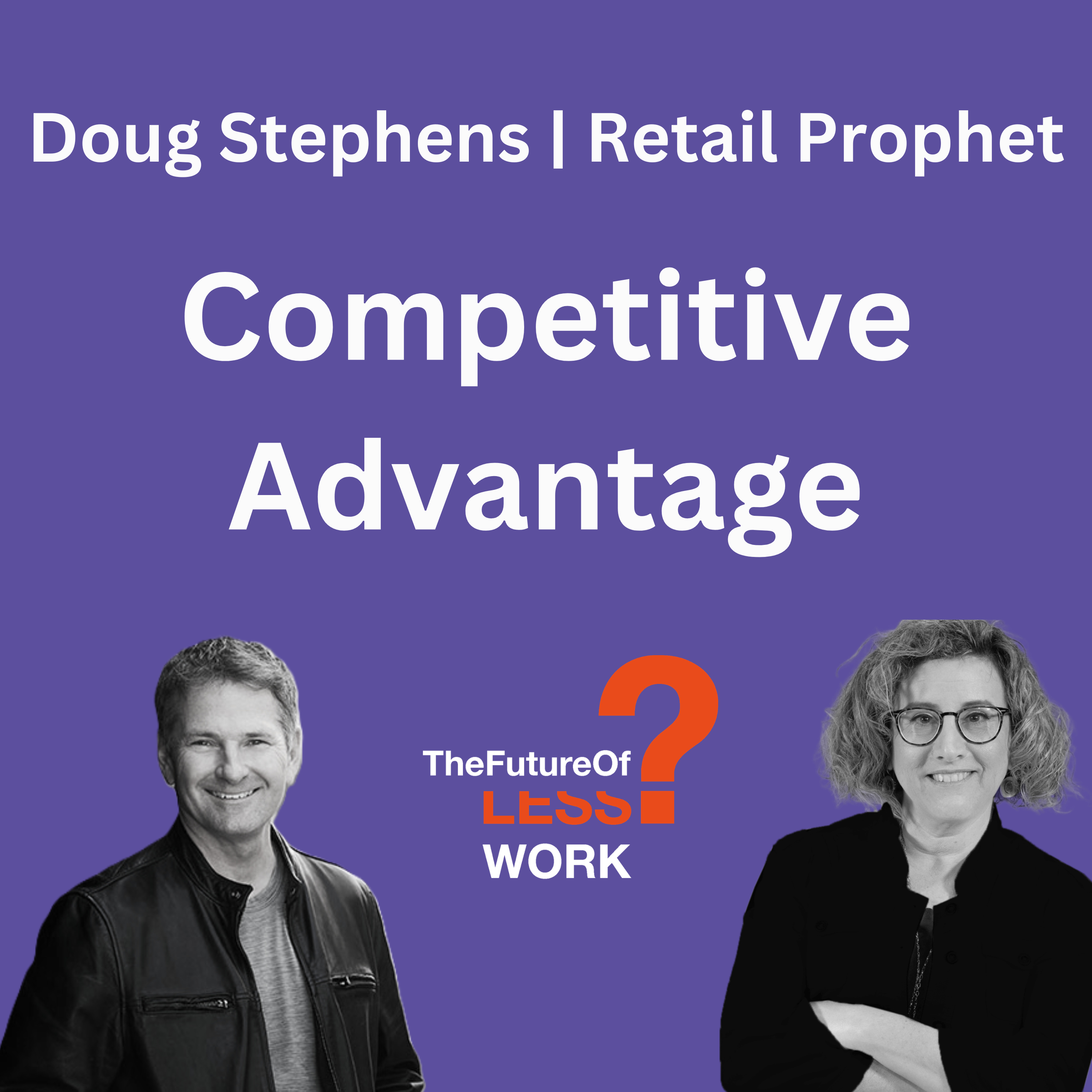 How AI Will Change Competitive Advantage with Doug StephensThe Future Of Less Work · on ChatGPT79 / 100
 21 in 21: 0xSero on Local AI, Open Models, and Benchmarking73 / 100
 21 in 21: Patrick Ball on Using Bitcoin and AI to Defend Human Rights87 / 100
 21 in 21: Calle on Cashu, Clawi, and AI Agents71 / 100
 21 in 21: Linn Bieske on Hack-Nation and Building Global AI Communities63 / 100
 21 in 21: Rainey Reitman on Transaction Denied and Financial Censorship77 / 100