Worth Following · 2026-06-28 · 9 min
Key moments - from our scoring
Substance score
27 / 100
Five dimensions, 20 points each
Adrian Stanek distinguishes between focus (narrowed attention on one thing), defocus (widened lens seeing the broader picture), and distraction (jumping between focuses). Rather than pushing constant focus, he advocates for a disciplined daily rhythm: morning journaling to commit to intentions, focused work blocks where interruptions are blocked, midday defocus time for mental reset (including activities like gaming or outdoor walks), client availability windows, and evening reflection journaling. The Voice Keeper app helps close thought loops before bed. Stanek uses gaming on a Steam Deck - deliberately choosing less demanding games like Project Zomboid - as defocus that resets his mind without drifting back to work stress. He emphasizes journaling as the foundational method that enables sustained focus without constant refocusing, warns against procrastination as ego-driven stress accumulation, and positions defocus as essential recovery rather than laziness. This structure prevents the mental backlog that causes burnout in solopreneurs, software engineers, and entrepreneurs managing multiple businesses.
Defocus is a deliberately widened mental lens where you see the broader picture and relax; distraction is jumping between multiple focuses in a chaotic way. Defocus is intentional recovery, while distraction is the negative state most people experience.
Without a journaling method, the mind constantly refocuses - loses focus, regains it, loses it again - which is exhausting and unsustainable. Journaling creates two anchor points of deliberate focus (morning commitment, evening reflection) that stabilize attention throughout the day.
Create phases: morning focus block after journaling with no interruptions, midday defocus slot for mental reset (gaming, walks, relaxation), client meeting window, afternoon focus block, and evening reflection journaling before a final defocus period to enable sleep.
Procrastination stacks unfinished work into a psychological backlog that causes unnecessary stress and eventually burnout; the problem is accumulated unworked items, not the total hours worked.
Games that are engaging enough to prevent mind-drift back to work but not as demanding as real-world stress, like Project Zomboid on a Steam Deck, work best as intentional defocus tools.
Our reviewer’s read on each dimension, with quotes from the episode.
The episode offers a few mildly interesting distinctions (defocus vs. distraction, closing thought loops before sleep) but is largely padded with well-worn productivity advice - journal morning and evening, block focus time, don't procrastinate - delivered with heavy repetition and personal anecdote. The insight-to-filler ratio is low for a 9-minute runtime.
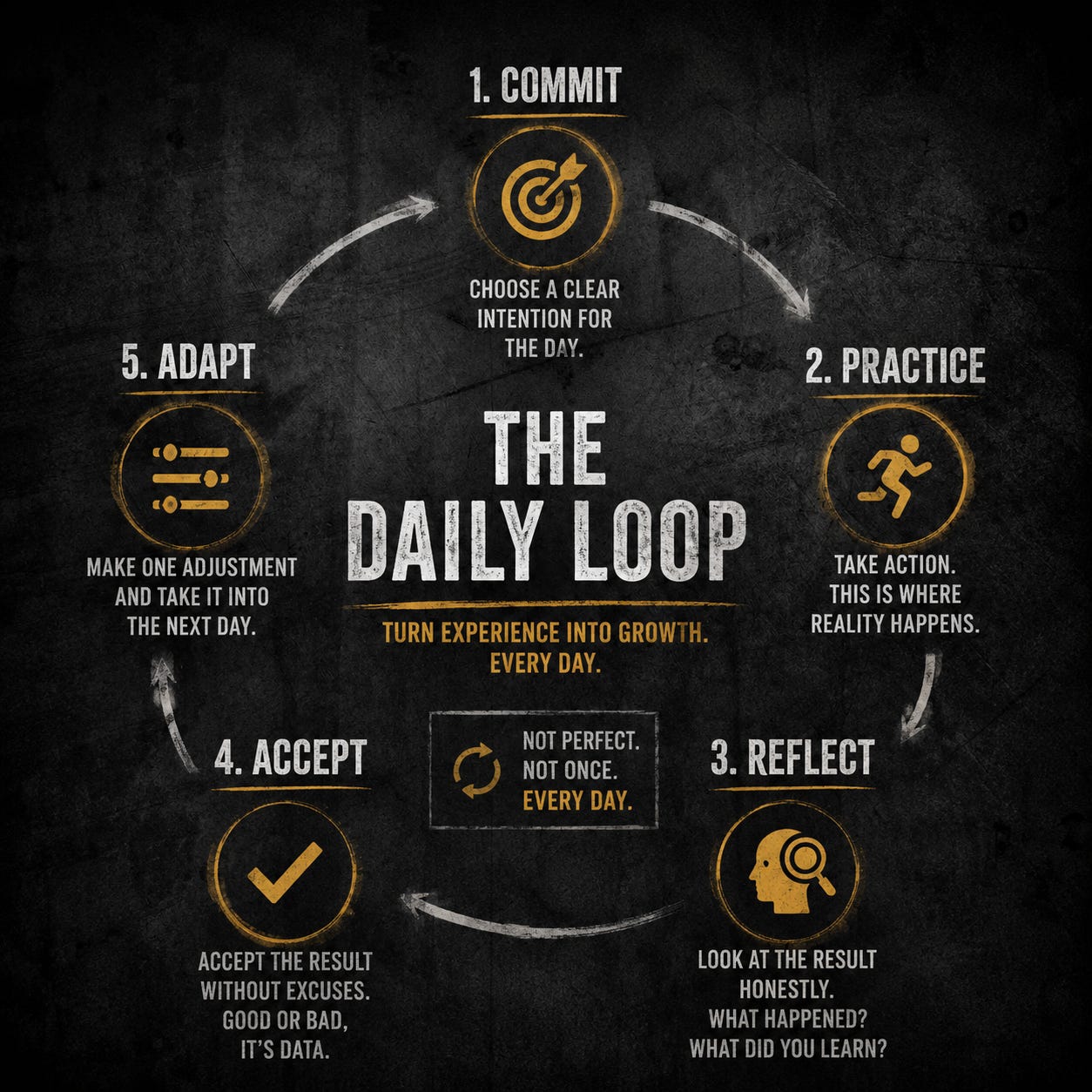
The method of journaling is in the morning to commit yourself and in the evening to sit down and reflect on what you actually have done.
Procrastination is a negative aspect
The reframing of 'the opposite of focus is distraction, not defocus' is a marginally interesting semantic distinction, but it is never developed into a rigorous or counterintuitive argument. The rest of the content - time blocking, journaling, anti-procrastination - is standard self-help territory with no first-principles reasoning or contrarian positions.
The point is the opposite of focus is not actually defocus. For us in the reality, we're talking about distraction.
Procrastination is ego's work.
This is a solo monologue by the host, who describes himself as a mentor to software engineers and solopreneurs and references building a platform called CoachBar, but provides no verifiable evidence of scale, revenue, team size, or meaningful outcomes from his work. The credential signal is thin.
I help you to self-improve as a software engineer, solopreneur, as an entrepreneur.
working on CoachBar, working on other platforms
The only concrete specifics are personal lifestyle details (Steam Deck, Project Zomboid, a claimed 40,000 - 50,000 lifetime gaming hours) and app references (Voice Keeper). There are no outcome metrics from mentees, no research citations, no business data, and no verifiable results supporting any of the productivity claims made.
I don't have a gaming PC anymore, even though I was playing more than 40,000, 50,000 hours in my life.
I play mostly games like Project Zomboid because you can die there.
This is an unstructured solo monologue with no interviewer, no probing questions, and no pushback on its own claims. The presentation visibly loses its own thread mid-sentence - literally interrupted by a deer - and the episode doubles as a Substack promotion without self-challenge or critical framing.
oh, there's a deer. You know staying focused even though I have a GoPro in my hand I still made an intentional choice semi choice to focus on their dear baby I don know I love that too Now focus again
You can take a look into my sub stack. You find more information there, how you can actually join such a mentoring
Computed from the transcript - who did the talking, and the words that came up most.
Intentional focus takes discipline, but focus isn't the default state. The real practice is being intentional across every mode: work, recreation, and deep rest. Most developers and founders grind through mental exhaustion without treating rest as a skill. That gap between knowing you need rest and actually taking it is where burnout takes root.Avoid the procrastination trap. Avoid the burnout cycle. When work, play, and rest become distinct intentional states, not a single blur - you stop mistaking exhaustion for progress.00:00 Defocus Director's Cut YouTube00:28 Part 1: Defocus04:52 End-of-Day Defocus07:26 The Practise - Stoic leadership for developers & founders. No hype.→ How to stay calm when everything's on fire→ How to think clearly when the noise gets loud → How to lead yourself - so you can lead others→ Practical Stoicism for tech, startups, and real life→ The Mirror Book - audit your own mind nightlyNew episode every Sunday. 15:00 CEST.Deeper thinking: LinkedIn: #Clarity #Discipline #Ownership #Reflection #Stoicism This is a public episode. If you'd like to discuss this with other subscribers or get access to bonus episodes, visit blog.adrianstanek.dev/subscribe
Transcribed and scored by The B2B Podcast Index.
Can you be defocused? This is a question I want to ask you because everyone is talking about, yeah, you need to focus, but can you actually not focus? The point is the opposite of focus is not actually defocus. For us in the reality, we're talking about distraction.
So we are always somehow focused for a short moment on something. We are never focused on two things at the same time and we are not really defocused much during the day. Defocus means that we don't think about a specific thing. We see the broader thing.
So our lens is actually widened. Instead of narrowing down on something, on jumping between some focuses, people in a very negative way do this with, for example, alcohol or something like that, where they actually lose focus. And this is a relief for the mind to not focus. Understanding the differences is always one of the most important things.
So in order to make something out of it, you need to understand the differences between the focus and the defocused state where you can actually relax. So when it comes to mentoring, mentees often try to convince me that they don't need to journal. They don't need to journal because, you know, they can just focus when it's necessary by themselves. In reality, that doesn't work.
Every time I ask for that, it wasn't working. It's basically the same for me. It doesn't work. So the reason why I teach journaling as an actual method is you need a method to focus.
You can't focus without a method because otherwise your mind focuses on something, loses focus, refocuses again. So you're constantly refocusing and that is extremely painful, extremely exhausting for the mind and you will suffer. The suffering is basically that you don't get the things done you need to get done. They stack up, you build up a backlog in your mind And this backlog actually hurts you because it stresses you where there is no necessity for a stressful situation.
Makes sense, right? Right. I hope so. The best thing you can do is to learn to be deliberately and intentionally in a focused state and to learn, oh, there's a deer.
You know staying focused even though I have a GoPro in my hand I still made an intentional choice semi choice to focus on their dear baby I don know I love that too Now focus again The method of journaling is in the morning to commit yourself and in the evening to sit down and reflect on what you actually have done. Those are two points of straight focus. The phase where you actually practice, it is not so much about focusing. So people think that you are focusing all day long.
This kind of thing. This is what they say you need to do. I can't focus six hours in a row on something. This is the reason why I split my day in different parts.
In the morning, for example, I have a focus phase right after journaling. No one is allowed to talk to me. I even tell that to my colleagues and they block people away from me. This is how I schedule that.
In the noon, I have a free slot of one hour. Whatever I want to do that, I do. Sometimes it's even computer playing on my Steam Deck just for relaxation. Sometimes it's going out like this.
It is for defocus. It is to reset my mind from the morning focus. And then I'm basically going into client meetings for one or two hours where my clients can speak to me and basically dump their issues onto me. Then in the afternoon, I have a focus phase again where I focus once again, which is late afternoon, actually, after official work hours because no one distracts me there.
I don't have that in the back of my mind. I can just do it. That is extremely helpful. And I would recommend the same to you to implement something like that into your life.
To have like in a phase where you're not under fire, where your mind knows there is nothing, it makes sense to put the actual hours in where you get some rest, right? In the defocus part, in the very evening, when I actually sometimes have this phase very long, where I work until 9 or 10 o'clock in the evening, very often I do my software engineering part there, working on tools, working on CoachBar, working on other platforms. I really love that because that is the time children are asleep.
I can really do my stuff in focus. But on some point, I realize if I do that for too long, let's say until midnight, I have huge issues to sleep. Sometimes I don't sleep until 4 o'clock in the morning. To prevent this, I basically put between 9 and 10 in the evening, I put my reflection phase of journaling where I dump my thoughts.
I close my thoughts. In the Voice Keeper app, there is this button close thought. The idea comes from that The thought is closed It done now right And once a thought is done I don want my subconscious mind to think about that anymore And that actually works if you practice that But right after that, you have closed the focus loop again. And after that closing, you should have a defocus.
In my opinion, defocus helps you to actually get into bed, into sleep. This last defocus can be as well, watching videos, reading something, reading philosophy, playing games. When I play games, it's only on my Steam Deck. I don't have a gaming PC anymore, even though I was playing more than 40,000, 50,000 hours in my life.
A lot, right? But this computer is now with my son. I don't want to have a gaming PC anymore because of that reason, because I don't want to sit down too much. I don't want to sit down for gaming.
Gaming, for me, and I know that many of you do the same thing, is a form of defocus for me. It's the time I spend. Of course, I enjoy it. I love it.
I play mostly games like Project Zomboid because you can die there. And there's something which actually gives me a little bit of... It sounds strange, but it is a focus to defocus. It gives me enough that my mind doesn't drift away back again to work, but it is not hard enough to even match anything I do in my life.
So my entire fatherhood, entrepreneurship, multiple businesses, is much, much more complicated and stressful ever than even the worst game can be. So there is no issue for me there. And then I actually go to bed. I train that, especially in my mentoring.
So you can take a look into my sub stack. You find more information there, how you can actually join such a mentoring, where I help you to self-improve as a software engineer, solopreneur, as an entrepreneur. When you have a stressful life, you have a career to do, and you feel stuck, these kinds of things. I was there.
I'm sometimes still there, but I have managed to find ways to actually get out of them. And this is what I do with this kind of videos. I try to help the people to understand specific aspects, why we are stuck, why we are in a dilemma. People talking about introversy, they talk about extroversy, they talk about ADHD, distractions, focus.
All these kinds of topics, for me, they are mostly like buzzwordy topics, not really topics I can do something with. when I read this, it's like, even when people talk about procrastination, that is for me the state I never want to be in I have my work state I have my recreation state I have my rest state this is a circle I don want to procrastinate at all Procrastination is a negative aspect And even though I see more and more posts where people say, you need to procrastinate in order to rest.
No, that's wrong. Procrastination leads to stress because you stack up, you pile up stuff you need to work down later. And on some point, you don't have the energy to do that anymore, not have the time to do that anymore. So never procrastinate.
So my recommendation is to commit yourself in the morning on paper, write it down, who you want to be, what you want to do, what your signal is, not your to-do, your signal towards your potential. That's a different thing. Then you practice, you just do, right? You practice, you practice, you practice.
You allow yourself to make mistakes. You allow yourself to push forward. You allow your mind to flow. You don't restrict yourself.
You just intervene in the moment. That's the stoic approach. Now I teach as well, is you allow yourself to intervene when emotions come up. But as long as they don't come up and you can work, just go and do.
And even if you have positive emotions, use them as well. Go forward, try things. And then in the evening, reflect. Put your time at best before bed where you start to reflect who you were, where you're living up to your commitments, where you're following your signals.
Who were you? And were you actually progressing towards something in your life, towards a potential, right? And that is important. You need to have those two milestones where you actually need to be focused.
And the time in between is a mix of focus, defocus, focus, defocus. And you need to learn the difference in order to understand when to apply which pattern and when to be in which state. But never, never, please never procrastinate. Procrastination is wrong.
Procrastination is ego's work. It is the reason why so many people actually burn out. It is not the amount of work you do. It is the amount of work you've piled up and you can't work down anymore because you have never intervened to actually get the things under control again.
Now, learn that, think about that, take that with you. I wish you a great day. Have a nice one, everyone. See you next time.
Goodbye.
Other episodes covering the same guests and topics, from across The B2B Podcast Index.
 How To Ascend To The Next Level In Business with Authenticity and EQ, with Natalyn Lewis, Founder and CEO of Ascend EQ!Get Authentic with Marques Ogden · on Burnout prevention75 / 100
 Bar Owner Burnout Does Not Always Look Like BurnoutThe Bar Business Podcast · on Burnout prevention65 / 100
 E194 - Lessons from Cindy Van Eeckhout: Are You Rich on Paper but Poor Inside?Surviving the Side Hustle · on Burnout prevention65 / 100
 322: Tom Morris | Learning from the Wisest PeopleBusiness Minds Coffee Chat · on Stoicism59 / 100
 The Resilience Habits Every Leader Needs with Dr. MH PelletierfoHRsight · on Burnout prevention58 / 100
 What is a business coach & when do you need one with Ian Kinnery (aka The Scale-Up Coach)SuperConnector Show · on Burnout prevention55 / 100
 Why Do I Keep Quitting?
 Know Yourself, or You Become the Problem
 Clarity Is a Practice, Not a Feeling
 Maybe Your Potential Did Not Disappear
 Monday Is Coming - Why Tech Professionals Dread Mondays