
Thoma Bravo's Behind the Deal · 2026-04-09 · 23 min
Key moments - from our scoring
Substance score
52 / 100
Five dimensions, 20 points each
The Explore platform emerged in 2019 as Thoma Bravo's second specialized fund designed to maintain focus on the middle-market software companies (sub-$100M ARR) where the firm originally built its expertise. Carl Press was tapped to lead the effort with Adam Konalski as principal and Sam Yules as SVP, forming a founding team with virtually no overlap in previous investment experience. Their early strategy centered on aggressive relationship-building at conferences - meeting 30 companies in two days in Boston, flying to London in January 2020 - combined with a willingness to do deep analytical work on businesses with poor data quality that larger competitors ignored. Exostar, their first deal, exemplified this approach: it appeared to be a money-losing business until Konalski and Yules spent 100 cumulative hours analyzing 100,000+ revenue lines to uncover a 95% gross retention rate. The team grew to 14 people across two offices and added Adam Solomon as co-head. A central theme was mentorship of junior associates through seven-hour model review calls and remote onboarding during COVID, enabling rapid learning cycles. Press emphasizes that Explore operates as a full peer within Thoma Bravo's constellation of platforms rather than a stepchild, receiving equal attention from founders Carl Toma and Orlando Bravo. The platform's sourcing philosophy prioritizes "dirty data" and contrarian opportunities that require significant work - filtering out 85% of competitors unwilling to dig deeper.
The Explore team attended early-stage conferences in 2019-2020 (Boston, London) and met companies directly without banker involvement. Exostar was a company that had become too small for Thoma Bravo's larger Discover fund but fit Explore's strategy for emerging category leaders in enterprise software. The team spent 100 cumulative hours analyzing detailed revenue data to uncover the business's true 95% gross retention rate, which wasn't obvious from surface-level financials.
Explore uses lean three-person deal teams (partner leading, VP, principal/associate) that force rapid responsibility escalation. Mentorship happened through intensive work - including seven-and-a-half-hour model review calls - that allowed junior associates like Chandler Gay to make mistakes quickly, learn directly from senior team members, and ramp expertise on subsequent deals.
Companies with messy or incomplete financial data are avoided by 85% of competitors, creating a sourcing advantage. This "bad data" strategy forces deeper diligence work (like Exostar's 100-hour revenue line analysis) that reveals true unit economics, retention, and business quality that surface-level metrics miss.
Sales cycles are extremely long, often 2-6+ years. The Explore team met some companies at 2019-2020 conferences and didn't close deals with them until 2024-2025, demonstrating that successful middle-market private equity requires sustained relationship-building and periodic check-ins with CEOs rather than banker-driven processes.
The firm deliberately ensured Explore was treated identically to flagship and Discover teams: founders Orlando Bravo and Carl Toma attend meetings, board seats, and diligence calls with the same level of engagement, and the same operational playbooks apply across platforms, eliminating any perception of being a stepchild or lesser priority.
Our reviewer’s read on each dimension, with quotes from the episode.
The episode offers modest procedural insights about building an investment platform (sourcing philosophy, mentorship structure, working with messy data) but relies heavily on anecdotal storytelling and self-congratulation. The substance-to-filler ratio is weak; long stretches focus on personal narrative and team dynamics rather than actionable frameworks or novel principles a B2B operator would learn. The Exostar deep-dive into 100-hour data analysis is the strongest concrete insight, but it's narrow and case-specific.
we like to kind of really dig into the quote, unquote, dirty stuff or, um, find deals that are perhaps a little bit contrarian and you need to squint or you need to really do the work because the data is really bad
if the data is really bad, you already eliminated 85% of the competition because they don't want to do the work to get under it
The core themes - founder-led businesses, relationship-driven sourcing, team mentorship, and staying curious about emerging tech - are standard private equity playbook material. There is no contrarian thinking or first-principles argument here. The positioning of a sub-$100M fund as differentiated is familiar middle-market PE narrative. The mention of AI/MCP Server is topical but underdeveloped and not original.
our firm gets bigger and as the funds got bigger, we wanted to stay true to the middle market, which is where Thoma Bravo really cut its teeth
a lot of these businesses are bought, not sold
The speakers are relevant practitioners - a partner (11 years at firm), principal (10 years), and SVP (8 years) at a credible mid-market PE firm - who have genuinely sourced and executed deals. However, this is an internal Thoma Bravo podcast featuring Thoma Bravo people discussing Thoma Bravo's strategy. There is no external expert or operator from a portfolio company or different industry present. The caliber is solid but narrowly self-referential.
I'm a partner at the firm. I've been with Thoma Bravo for just about 11 years
Adam Konalski. I'm a principal at Thoma Bravo, and I've been with the firm for close to 10 years
The episode includes some concrete details: Exostar as first deal, 100 hours on diligence, 100k rows of customer data, 95% gross retention discovery, Boston conference in 2019, London trip January 2020, Casepoint met at Boston conference. But large sections are vague assertions about process, philosophy, and culture without numbers, metrics, or outcomes. Portfolio performance, fund size, deployment pace, and deal criteria lack specificity. The storytelling obscures rather than illuminates quantitative realities.
we spent maybe a cumulative 100 hours over the phone with the CFO...literally going like line by line with, I think it was like 100,000 rows
this is like a 95% gross retention business. If you took a first pass at it, you would probably think it's in the high 80s, low 90s
The host (Carl Press) asks open-ended questions and allows speakers to tell their stories, but rarely pushes back, challenges assumptions, or probes gaps in logic. The conversation is collegial and surface-level, more memoir than interrogation. There are no tough questions about competitive disadvantage, failure modes, or how Explore competes with larger flagship funds. Follow-ups are soft and affirming rather than sharpening reasoning. This reads as an internal celebration rather than critical inquiry.
Maybe start guys early days. Explore memories. When we were first getting going. Adam, I remember the first conversation you and I had about this coming together but maybe why don't you give your take on it?
Exostar. Uh, you know, Carl Toma, founder of our firm, you know, joined for several meetings, diligence meetings, served on the board of Exostar, and this was a sub $100 million equity check deal. Um, so it just goes to show the, you know, the level of attention uh, that we get.
Computed from the transcript - who did the talking, and the words that came up most.
In this episode of Beyond the Deal, Thoma Bravo Partner Carl Press is joined by Adam Kinalski and Sam Yules to tell the inside story of building the Explore platform from the ground up. What started as a blank slate in 2019 has grown into a high-velocity investment platform focused on emerging enterprise software leaders. The team shares how Explore was created to stay true to Thoma Bravo’s middle-market roots, the early challenges of building a pipeline from scratch, and the lessons learned from sourcing, mentorship and long-term relationship building. From cold starts and conference room pitches to navigating deals with imperfect data, this conversation offers a candid look at what it takes to build a platform - and a team - inside the world’s largest software-focused investment firm. For more information on Thoma Bravo's Behind the Deal, visit Learn more about Thoma Bravo: Disclaimer: This podcast is for informational purposes only and does not constitute an advertisement. Views expressed are those of the individuals and not necessarily the views of Thoma Bravo or its affiliates. Thoma Bravo funds generally hold interest in the companies discussed.
Transcribed and scored by The B2B Podcast Index.
Speaker A: It is not uncommon for me to walk by Adam's office late at night when I'm leaving and he's sitting there learning about MCP Server or talking to one of our companies, or, Sam, you're calling the CEO of one of our businesses to ask about where we are on the latest agentic capabilities on a product that we know we're launching. Um, just insatiable curiosity is so critical, I think, in this job.
Speaker B: Welcome to Thoma Bravo's beyond the Deal. I'm, um, Orlando Bravo, founder and managing partner at Thoma Bravo. Last week we shared a Behind the Deal episode on Exostar, the first investment from our Explore platform. This week, we're using that story as a jumping off point for a conversation about how our Xplor platform launched. Thoma Bravo partner Carl Press, principal Adam Konalski and Senior Vice President Sam Yules come together to reflect on what it was like to build the platform from the ground up. As its founding team, they share an inside look at the early days of Explore, how the strategy took shape, and why the platform plays such an important role in the broader Thoma Bravo ecosystem. All right, guys, I'll, uh, let you take it from here.
Speaker A: Hi, and welcome to Thoma Bravo's beyond the Deal. I'm Carl Press. I'm a partner at the firm. I've been with Thoma Bravo for just about 11 years. Last week on behind the Deal, we got to talk about Exostar, which was the very first investment in the Explore platform. And so this week, I thought we'd do something a little bit different. And we take a minute to talk about the formation of the Explore platform within TV and. And how that fits in broadly within the Thoma Bravo ecosystem. And, of course, I had to bring two of my very close colleagues, uh, and partners with me in the Explore journey, Adam Konalski and Sam Yules. Guys, why don't you introduce yourselves?
Speaker C: Yeah, no problem. Hey, everyone. Adam Konalski. I'm a principal at Thoma Bravo, and I've been with the firm for close to 10 years.
Speaker A: And.
Speaker D: Hey, everyone, I'm Sam Uels. I'm a senior vice president here at Thoma Bravo. Been here almost eight years.
Speaker A: So, Adam, you and I did, uh, behind the Deal episode where we talked about our very first investment in the Explore fund, Exostar. And as we were going through it, it got us thinking about the very early days of forming the Explore platform. And so we thought we'd take a little bit of time to rewind and tell the story of Explore, which Is uh, part of a much bigger story of Thoma Bravo and how we've evolved as a firm, how opportunity gets created here, how we've kind of stayed true to our roots in the middle market. I want to go back uh, first to 2016. I joined the firm in 2015. At the time we had one fund. We didn't call it the flagship fund, it was just the fund. Uh, in late 2015 I got a call from Orlando, a very quick call on a Saturday, letting me know that we were going to launch our first new fund product outside of our core. It was something that aj Rody was going to lead and that he asked me to be AJ's number two and that was Discover. I was fortunate enough to be part of the Discover platform for the first four years. And then in 2019 as Discover was getting big, we decided let's go do it again. Let's create another platform. And the whole idea, the genesis of both Discover and Explore is as our firm gets bigger and as the funds got bigger, we wanted to stay true to the middle market, which is where Thoma Bravo really cut its teeth. Uh, in enterprise software, working with what we like to call the emerging category leaders in enterprise software. These are businesses that are 100 million of ARR or below or in some cases 50 million and below. These are often founder run businesses. They're deeply ingrained in a particular vertical. Founders with deep domain expertise. Businesses that we just absolutely love, we never wanted to get away from that discovery gave us a vehicle to do that and then eventually Explore. And I was so privileged uh, uh, to be asked to help co lead this effort in Explore, maybe start guys early days. Explore memories. When we were first getting going. Adam, I remember the first conversation you and I had about this coming together but maybe why don't you give your take on it?
Speaker C: Yeah, yeah, happy to. So I distinctly remember it was uh, morning, I think it was a Thursday morning in July 2019 when I woke up. I think it was about six in the morning and I had already received an email from Orlando Bravo that says please swing by my office first thing in the morning.
Speaker A: Perfect way to wake up immediately.
Speaker C: I was like, oh God, what did I expense? You know, like what did I do wrong? I'm gonna have to pack up my things and leave. But um, so I quickly got ready, sprinted to the office, uh, and he was already there. I think it was like 7:30 in the morning. And so I went in and um, he sat me down and you know he told me about the formation of the Explore Fund. And he gave me the full pitch as you described it. Uh, he told me that you were tapped to lead it. Um, that I was being asked to kind of be the number two, uh, to help you with that. And really, uh, pitched it like you did as a opportunity for us to go back to where we really developed our operational playbook on how to run a best in class enterprise software company. Um, where we thought the most opportunity was, uh, for the toolkit that we have. And so I, uh, just remember being super excited for the opportunity, you know, uh, uh, it was also a giant leap in responsibility. You know, I was barely a year into my seat being a senior associate, and I was asked to go effectively from like number four on the team to number two. And so it was really a sink or swim moment for me, but I wanted to do well and I wanted to crush it. Uh, and so, uh, it was a no brainer for me to kind of hop on board. Uh, and so the next task I had was to find the number three to, you know, fill out the three amigos, uh, for the fund, and.
Speaker A: Enter Samuel.
Speaker C: Enter Samuels. Uh, so I don't know, Sam, if you have any context you want to share on kind of the early Explore Fund days.
Speaker D: Yeah, I remember it being a very exciting time. A lot of change, obviously. I think what's funny is we sort of knew each other walking the halls of the firm, but had very rarely interacted. I think Carl, you and I maybe shared an Uber to a basketball game once. Uh, and Adam and I, you know, we were friendly, but I don't think we'd ever worked on anything together. And so I remember being so excited about the idea of starting something new with Entoma. Bravo. A clean slate, you know, an empty plot of land for us three to go build something incredible on. I mean, it was such an incredible opportunity, and I couldn't think of something more exciting to do early in my career. So thank you guys for taking a risk on me. Um, and it's been a fun journey ever since.
Speaker A: Yeah. And I remember, and Sam, you mentioned this before, is when we first sat down as the three of us to go through a pipeline and talk about, well, what are we gonna do? It was as blank slate as sort of blank slate gets. Now. There were some names that had become too small for the Discover Fund. Uh, and so we started talking about those. One of those was Exostar. And that really was the first deal we ultimately did and of course, launched the platform. But maybe switching to the tactical, the pipeline Building the business building. What are your sort of early thoughts on how we attack that?
Speaker D: Yeah, I have a very distinct memory in my brain of opening our folder structure where we save everything, starting a drive called Explore, and there was just nothing on it. So as blank of a slate as
Speaker A: you can imagine, that has like 50,000 folders now subfolders in it today.
Speaker D: It does. And I remember thinking, okay, so I came from infrastructure and cybersecurity, you came from apps, and you came from Discover. So there's virtually no overlap in our experience.
Speaker A: Experience, perfect.
Speaker D: So we were starting from kind of what we knew. Right. So I was going through, okay, what were all the add ons that we looked at in the companies I'd worked with, what were interesting Discover names that maybe had gotten too small for them, but were good fits for our fund and our strategy. And obviously that's how we found Exostar. And then we spent a lot of time getting on the road, which was not something I had done before. I remember, I think in our first week we were in Boston at a conference. We met with maybe 30 companies in two days. And, you know, Adam and I had the opportunity to pitch Thoma Bravo and pitch a new fund that didn't even really exist yet. So we were kind of telling people a secret. Um, and it was such a fun opportunity for us to get to bond together, sort of learn, okay, how are we going to market this? And it was such an unfair advantage. I remember going to these meetings and these companies were, you know, 20, 30 million of ARR. Meeting with Thoma Bravo, one of the largest software investment firms globally. And they were so enamored by our brand. And I think it gave us a really big advantage, frankly, because we now were able to really spend time and bring all the resources that Thoma Bravo has into smaller founder led companies that were really looking for a great partner. Um, and we could fill that role.
Speaker A: Yeah, I remember we used to joke it wasn't bringing a gun to a knife fight, it was bringing a bazooka to a knife fight. And because we were unencumbered by portfolio operations or really much of a pipeline to start with, we would take every meeting with any CEO that was willing to talk to us at every conference. I remember, uh, you know, the early conferences that we went to. You mentioned the Boston one. Uh, we ended up flying to London, I remember, in January of 2020 to go meet with. That was a very fun trip. Right before COVID and everything shut down. I, uh, remember running through the airport thinking, if we go Fast. We won't get Covid. That was our brilliant idea.
Speaker D: It worked. I don't think we're gonna get it.
Speaker C: I don't think any of us got it.
Speaker A: I think it did work. Um, and then, of course, the story of Explore is so much bigger than, obviously, just the three of us. Today we have 14 people across two offices here and in Miami. Um, we brought in Adam Solomon as the co Head of the platform. For those of you who are avid listeners of behind the Deal, the BTD faithful, as they're called. Uh, I'm sure you all know of Solomon and the interviews he's done with some of our very great companies like Intel 471 and Raptor. He came on board and has just been an extraordinary leader and partner to me and really partner to all of us, maybe. Adam. One of the themes of Thoma Bravo is opportunity for young people, which we just really hit on. All three of us got this unbelievable opportunity very early in our careers to step up and be leaders. And then mentorship. And I think so much of the story of Thoma Bravo and so much of the story of Explore is rooted in the early mentorship of our new associates who were joining a new platform within Thoma Bravo. So not only was the firm new to them, but the platform was new to the firm. And so we really needed to be great mentors. And I think the two of you guys did exceptional jobs there. Maybe hit on that a little bit.
Speaker C: Yeah, yeah. So like you said, I think a defining characteristic of Thoma Bravo more broadly is that, um, we really give young people an opportunity to step up and, and assume a lot of responsibility early on in their career. Um, and it's been a defining, I think, factor for all of Thoma Bravo, but especially the Explore Fund that we keep lean deal teams. And so typically, we only have three people on a deal team. Partner leading the deal, vp, uh, principal associate. You know, I remember distinctly that one of our first tasks, me and Sam, was to find a new associate to hire for the fund. And this was, you know, call it January, February 2020. Uh, and we were going through a cycle of interviewing a bunch of different associates, potential laterals from other firms. And, uh, you know, we went through several interview cycles with Chandler Gay, who is now a senior, uh, VP on our team. And, uh, I remember we gave him the offer in early March 2020. And the day he was supposed to start was the day that, uh, we went fully remote for Covid. And so we were like, oh, boy, okay, we're going to have to not only hire, we've hired Chandler, but now we also know we're going to have to hire, you know, more VPs, more associates, a co head of the fund. You know, how are we going to do all this in a remote setting? And I think just our culture of like being able to pick up the phone and call anyone on the team, um, you know, we got really good at zoom and screen sharing on Zoom and learning how to model together on Zoom. I remember a lot of late night model calls that lasted from six to midnight.
Speaker D: I think our record is seven and a half hours.
Speaker C: Yeah, yeah.
Speaker D: Of a single model review.
Speaker C: Yeah.
Speaker D: Because I was, I remember doing it.
Speaker A: I remember that one.
Speaker C: I remember. And so it was by brute force, you know, that a lot of this mentorship happened. But, uh, you know, I think we, we just got a lot of reps and I think the, you know, uh, by giving as much responsibility early on to, to our new recruits allowed them to make mistakes quickly, learn from those mistakes, and then ramp quickly and take on more. Because, you know, our fund, we're a high velocity fund. We look at a lot of deals. We have to know what to look for. We can't spend all of our time chasing every shiny object. Uh, and so that early training and mentorship is super important to make sure that we can function effectively and productively.
Speaker A: Yeah. One of the things that strikes me is some of the names in our pipeline today are names that we met at some of those very early conferences in like 2019 and 2020, which sort of speaks to what middle market private equity is like in 2026. The sales cycles are extremely long. You have to spend years tracking these businesses, watching them checking in with the CEO, watching their trajectory. One, uh, of the more recent platforms, for example, that we just did, uh, in early 25, so a year ago was Casepoint. We met them at that Boston conference that you referenced, which is kind of amazing. And so, you know, in a lot of respects we've evolved so much as a, as a group. We've grown. We completely deployed our first fund. We then raised a second fund, which is almost twice the size of the first fund. But the work, the sourcing, the, the activity, it, uh, feels like it hasn't changed. Which is, which is kind of special and unique and you know, you know, it's exciting.
Speaker D: I like it.
Speaker C: Yeah. I think one thing, uh, you know, I learned about our fund and what makes, you know, us special and is that, you know, part of our job is really sales and relationship building. And so we Spend a lot of time, uh, being on the road developing relationships. Um, a lot of these companies are bought, not sold. Uh, so you need to really put in the time and effort, uh, to make sure that you're going to be a good steward. Because a lot of these businesses we're looking at are founder owned businesses that, you know, take years to decide on a partner, not, not a, not a process through a banker. Um, and so that's uh, you know, something I think we've done a good job of is, is developing and cultivating those relationships.
Speaker D: Yeah. And that's what really helps to be a part of Thoma Bravo because we have all of that history of other teams that have sort of built some of those relationships for us that we can inherit, enrich, grow. And so we, you know, it helped us get a fast start to our franchise.
Speaker A: One thing I give so much credit to Orlando and the managing partners on is we never felt, and I think this was true of Discover too, in the early days. We never felt like the little brother or the stepchild or less important. I always tell, uh, CEOs and bankers and anyone who will listen, that if you just looked through the conference room window into a meeting, you wouldn't know if it's flagship presenting or Discover or Explore. The audience size isn't any different. The attention that we're getting, the scrutiny that an investment is getting is no different. Um, and I'm eternally grateful and appreciative of the managing partners setting it up that way, uh, because it makes us feel like we're another team in a much broader constellation of teams at Thoma Bravo. There's Explorers, there's Discover, there's flagship applications, flagship security infrastructure and so forth. And I just think that that setup has served us so well. Yeah, totally.
Speaker D: It really helps that we all do the same thing too. And uh, we're all focused on the same types of companies, the same metrics. So it's all very transferable in terms of, okay, what makes a great explorer deal probably makes a great flagship deal. It's just a different size. So it's very extensible for everyone as well.
Speaker A: Right.
Speaker C: Exostar. Uh, you know, Carl Toma, founder of our firm, you know, joined for several meetings, diligence meetings, served on the board of Exostar, and this was a sub $100 million equity check deal. Um, so it just goes to show the, you know, the level of attention uh, that we get.
Speaker A: Yeah, I don't think there's ever been a meeting where we've asked Carl or Orlando to join us, fly out, make a phone call on our behalf, and they haven't. I mean, pick up the phone immediately and do it for us, which is obviously, you know, again, it's. It's wielding a bazooka in the knife fight. It works 100% of the time.
Speaker C: Yeah.
Speaker A: One of the things that I think has remained true throughout our journey and explore, and most certainly true in the early days of Discover, is if we're going to win, we have to be creative, and we have to be more creative than our competitors. And I think that's one thing that we particularly pride ourselves on, is not just being sitting back and letting deals come to us. We get out on the road, we pick up the phone, we get on Zoom, and. And we're very proactive on sourcing. I think that served us extremely well. Sometimes we step into stuff that's a little too creative and then we gotta. We gotta walk that back. Yeah, but that's okay. Um, but. And I'm particularly proud of how you guys have spearheaded that sourcing initiative within our group and now have kind of imbued that philosophy across our junior team and, you know, throughout the entire team.
Speaker C: Yeah, yeah. I'd say we like to, uh. And credit to you for imbuing this sense in us, but, uh, we like to kind of really dig into the quote, unquote, dirty stuff or, um, find deals that are perhaps a little bit contrarian and you need to squint or you need to really do the work because the data is really bad. And if the data is really bad, you already eliminated 85% of the competition because they don't want to do the work to get under it just to see if there's a deal or not.
Speaker A: Have we done a deal with good data, by the way? I think that it's a criteria that
Speaker C: the data is bad in order for us to do it.
Speaker A: It's a necessary condition. Yeah.
Speaker C: But, you know, Exostar is an example. Right. Like, you know, on the surface, if you just look at the high level P and L, it was burning money, it wasn't growing all that much. Uh, and the data was, you know, extremely hard to manipulate. Uh, it was very hard to get a sense for retention, revenue quality. And so I think Sam and I spent maybe a cumulative 100 hours over the phone with the CFO, the head of finance, uh, the, you know, our accountants.
Speaker D: Yeah.
Speaker C: And just literally going like line by line with, I think it was like 100,000 rows of, like, different customers, different revenue lines, uh, you know, revenue swings, credit, uh, memos that we had to adjust out. And once we did all that work, you know, we found out, holy, holy cow, this is like a 95% gross retention business. If you took a first pass at it, you would probably think it's in the high 80s, low 90s. We knew that the fundamentally, the business model made sense, that this should be a really high quality business, that the numbers didn't seem to tell that story. And so we really had to do the work and dig in to kind of uncover that story.
Speaker D: Yeah, I just remember thinking, are all the deals going to be this hard? Because if so, this is going to be a really hard job. Um, but no. Yeah, you said it really well, Adam. I think, I think I credit you and the mentorship you gave me to sort of get through that because, you know, like we were talking about earlier, we had never done it before. Right. Everything we were doing was new. Everything we were doing was sort of setting the precedent for the next deal. And we still leverage, you know, materials analyses, thoughts from, from our very first deal on stuff we work on now. Obviously we've gotten a lot better and faster and even more creative in some, certain, in some circumstances. Um, but I totally agree. I mean, so many of our best deals are companies that were not for sale, did not have bankers involved, did not have a legitimate ERP system for us to pull information from.
Speaker A: Yeah.
Speaker D: So oftentimes we're building, uh, we're building the analyses ourselves. And that takes patience, that takes hard work, that takes a lot of help from our advisors. But, you know, I credit you in the direction you've set us on, of finding the right companies and the right setups, the right markets where, you know, we're confident we're going to find the right answer. We just have to do the work. And, um, I think it's led to some really good investments.
Speaker B: Yeah.
Speaker A: I'd say another theme at Thoma Bravo is, you know, we're never satisfied. We never sit still. You know, just when we feel like we've kind of got it, we've got this software thing figured out. We got it licked pretty good. The world changes and then it changes again. And then we have to relearn everything. And I think the two of you guys and our whole team, we share the same ethos as our broader firm. And Orlando and the managing partner set this tone. Insatiable curiosity and understanding what's next, what's coming for our businesses. Of course, right now it's AI and it is not uncommon for Me to walk by Adam's office late at night when I'm leaving and he's sitting there learning about MCP Server or talking to one of our companies, or Sam, you're calling the CEO of one of our businesses to ask about where we are on the latest, you know, agentic capabilities on a product that we know we're launching. Um, just insatiable curiosity is so critical, I think, in this job because things are always changing. We have such fierce competition and we have to stay ahead of what's happening in our industry.
Speaker C: Yeah, 100%. Yeah.
Speaker D: And we only have 14 people on our team trying to deploy all this capital. Right. So every person really needs to be creative, needs to be thinking about what sectors am I interested in, what sort of niches or categories do I want to, you know, go explore? And, and I think, you know, we all set the tone of, hey, you know, feel free to do that. Like, there's no, there's no constraints on how you should be spending your time as it comes to origination, finding new companies. I'm so proud of our associates when they find a really interesting off the run company that looks like a great opportunity for us. Um, because that's how this firm was built, that's how this fund was built, and that will continue to be our strategy.
Speaker A: And that's where the best ideas typically come from anyways.
Speaker D: Yeah, right?
Speaker C: A hundred percent.
Speaker A: Well, guys, I'm so glad we got to do this. Uh, I always joke that I feel like I have the best seat at Thoma Bravo. Um, and it's not just because I get to work in the middle market, which is exciting and dynamic, but really get to work with the two of you and our whole team. Um, it's been an absolute joy to be able to build this business within a business and to be able to do it with you guys who are really two rising stars amongst many at our firm, across all the different teams that will, you know, end up being senior leaders of your own. So thank you guys for the friendship, uh, for putting up with me, uh, when I didn't know anything. Really appreciate all the support, partnership. And I'm, um, pumped to keep doing this for a long time. I think this is just the only, the beginning.
Speaker C: So 100%, thanks so much.
Speaker D: Yeah, it's been a fun ride.
Speaker C: Let's go, let's do another podcast soon.
Speaker B: Listen to Thoma Bravo's beyond The Deal Season 4 on Spotify, Apple Podcasts, YouTube or wherever you get your podcasts.
Other episodes covering the same guests and topics, from across The B2B Podcast Index.
 How SSW turned AI into ½ their pipeline - Ulysses Maclaren, COO of SSWSaaS Stories · on MCP Server86 / 100
 Playwright With AI: How to Automate Tests Without Shipping AI Slop with Andrew KnightTestGuild Automation Podcast · on MCP Server86 / 100
 The 2026 Playbook for Leading AI-Native ProductsThe Product Manager · on MCP Server84 / 100
 Why Data-Ready Companies Are Winning at AIExperts of Experience · on MCP Server80 / 100
 The Blueprint for Agentic Security (with Raj Chopra)The neXt Curve reThink Podcast · on MCP Server75 / 100
 The Future of Online Business Investing With Mike Swigunski [Ep.216]The Opportunity Podcast · on Founder-led software businesses70 / 100
 From $1M to $2B+ in Revenue: David Ossip on Leadership and Scaling Dayforce51 / 100
 The Dayforce Deal: AI, Scale and the Future of Workforce Software67 / 100
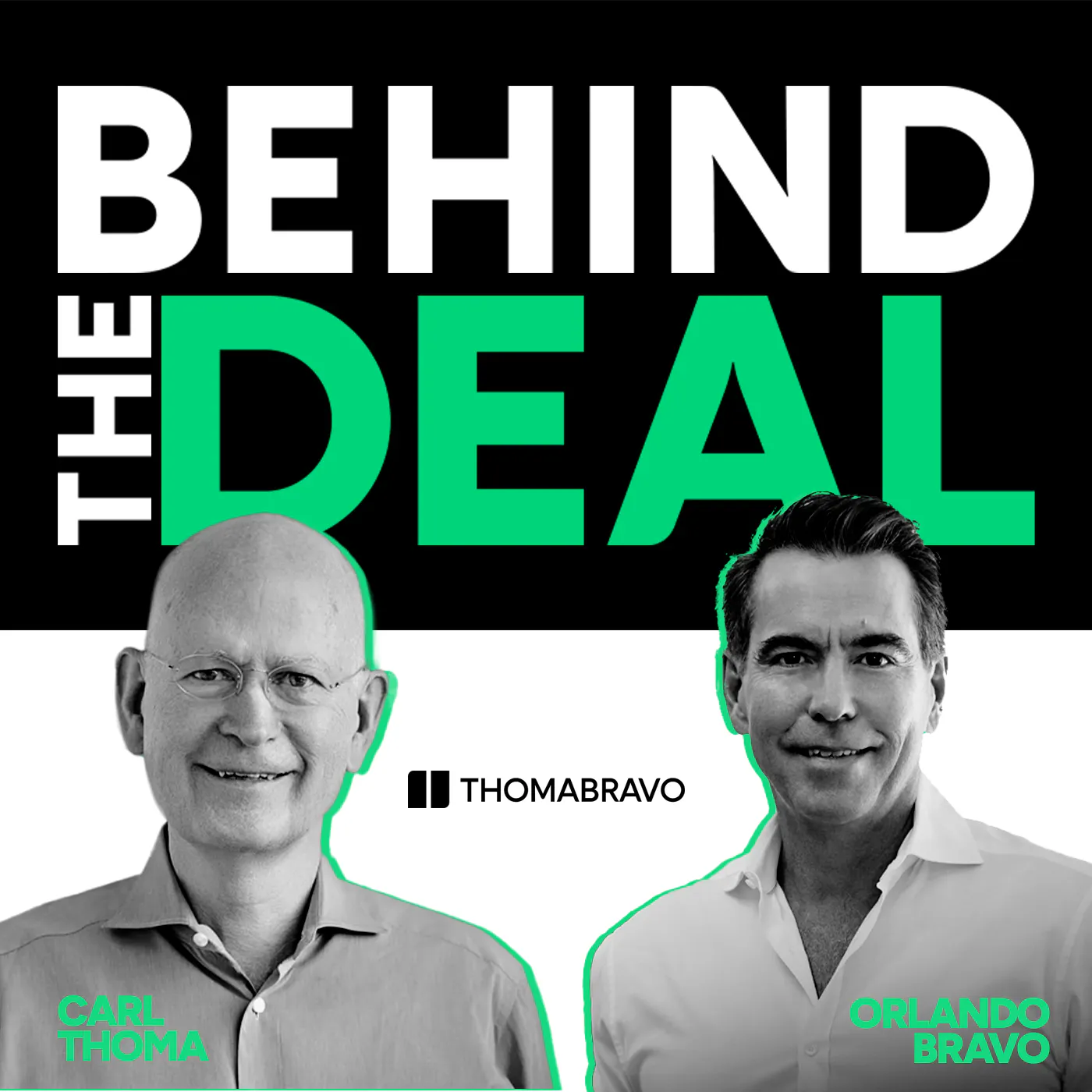 REVISITING: How Carl Thoma and Orlando Bravo Built the World’s Largest Software-Focused Investment Firm68 / 100
 Exostar: The Explore Platform's First Investment86 / 100
 The Future of Restaurants in an AI World: Hudson Smith with Olo Founder Noah Glass78 / 100