TheeDigital’s GrowthCast · 2026-05-07 · 31 min
Key moments - from our scoring
Substance score
28 / 100
Five dimensions, 20 points each
Amanda Lam draws on three decades of crime reporting experience to explain trust-building in digital environments. Her core insight: successful online presence requires genuine connection rather than polished messaging. When approaching vulnerable interview subjects as a journalist, she learned to prioritize the person's comfort over her deadline - a lesson she now applies to all her digital platforms. She emphasizes that Southern audiences quickly detect inauthenticity, forcing her to develop vulnerability as a professional skill. Carrie Roseman, VP of Operations at theDigital, adds practical web design perspective: business websites fail when they focus on what companies do rather than what customers need. The conversation covers Amanda's multi-platform approach - two podcasts (Ageless and Crime Capsule), 13+ books, social media, and a TEDx talk - and how she maintains consistency across these channels without losing authenticity. Key advice includes networking with established practitioners before pivoting careers, building social media presence before leaving a job, and recycling content across YouTube, Facebook, blogs, and Google Business profiles. Lam acknowledges the heavy lift of content creation (50+ weekly posts for Ageless) but frames it as non-negotiable for modern public-facing work. This episode benefits entrepreneurs transitioning into new fields, content creators struggling with platform consistency, and anyone trying to build audience trust before in-person interaction.
Amanda emphasizes being authentic and understanding what your audience needs rather than focusing on your own goals. She avoids disconnect between how she presents digitally versus in person by simply being herself, and recognizes that audiences quickly detect inauthenticity, particularly in the South where she built her reputation as a journalist.
People struggle to see what makes them special and 'get out of their own way.' Amanda finds that many educated, talented individuals haven't been taught the skill set of public speaking or storytelling and underestimate their own achievements - such as a 25-year-old who started and scaled a business solo without giving themselves credit for it.
Amanda intentionally shows multiple facets - podcasting, writing, media coaching, speaking - rather than focusing on one thing, believing it reflects her full identity. While she acknowledges this may not follow traditional branding advice, she argues it makes her more interesting and relatable because she's not 'just one thing.'
Take one piece of content and recycle it across multiple formats: create YouTube videos from written content, post on Facebook and Instagram, adapt blog posts, and submit press releases. Carrie Roseman emphasizes this multi-channel presence builds trust signals for both human audiences and AI algorithms that scan for brand mentions.
Start building social media business accounts before you leave, since you'll likely lose company-affiliated followings. Network with people already doing what you want to do, research platforms where your specific audience congregates, and consider investing in professional help (website, social media management) if you can afford it.
Our reviewer’s read on each dimension, with quotes from the episode.
The episode is overwhelmingly filled with generic authenticity advice and lifestyle platitudes. The few substantive moments - building social accounts before leaving a job, or AI brand mentions as authority signals - are buried in filler and surface-level chat that offers almost nothing a B2B operator doesn't already know.
being real and being authentic and giving people what they're looking for
Brand mentions are a big trust signal for AI tools that are, um, scanning content everywhere. So the more different channels that you're mentioned, the more that tells an AI bot that, hey, this is an authority in this topic
The episode recycles the same frameworks circulating everywhere - be authentic, know your audience, omnichannel presence, women supporting women - with no contrarian or first-principles thinking at any point. The 'rule of three' is a personal scheduling anecdote, not a novel framework.
being one thing online and another thing in person
you know, just being real and being authentic
Amanda is a genuine 30-year TV journalism practitioner with real experience in personal brand-building, but her expertise is squarely in lifestyle and personal media, not B2B operations at scale. Carrie holds a relevant digital marketing title but functions largely as a co-host cheerleader rather than a substantive contributor.
After, uh, 30 plus years in front of the camera at WRAL TV, an award winning NBC affiliate, she has built Stagemite Communications
She's our VP of Operations here at the Digital with over 20 years of experience in digital marketing
A handful of concrete details appear (52 interviews in year one, ~50 posts per week, Stage Mite founded 2018) but there are no business metrics, conversion data, ROI figures, or named client case studies. Most claims are asserted without evidence.
I think it was 52 women that I interviewed in the first year
with Ageless, I was doing about 50 a week
The host asks decent surface-level scene-setting questions but consistently accepts answers with affirmation rather than probing deeper or challenging any claim. There is no productive disagreement, no follow-up that surfaces new information, and multiple outright PR-plug moments go completely unchallenged.
That's a great question
This has been great. So many good nuggets in here
Computed from the transcript - who did the talking, and the words that came up most.
This episode explores the importance of trust in online and offline interactions, featuring Amanda Lam's insights from her diverse career in journalism, authorship, and media coaching. Learn how authenticity, storytelling, and strategic digital presence build trust and transform personal and professional relationships.
Transcribed and scored by The B2B Podcast Index.
Speaker A: Welcome to another episode of the Digital's Growth Cast, the podcast where we break down web design, digital marketing and business growth strategies. I'm Cheyenna Kelly, marketing communications manager here at the Digital, an award winning web design and digital marketing agency based in Raleigh, North Carolina. Joining me today is a special guest, Amanda, um, lam. After, uh, 30 plus years in front of the camera at WRAL TV, an award winning NBC affiliate, she has built Stagemite Communications as a platform encompassing podcasting, public speaking, media coaching and authorship. She also has a TEDx talk on life transformation, hosts two active podcasts, Ageless and Crime Capsule, and has published 13 plus books across murder mystery to crime, memoir and children's genres. Her Ageless brand centers on the belief that people are capable of transformation in every season of life and and shouldn't be defined by age. We also have Carrie Roseman joining the conversation today. She's our VP of Operations here at the Digital with over 20 years of experience in digital marketing. Amanda and Carrie, thanks for having me.
Speaker B: I appreciate it.
Speaker C: Thank you. Excited to be here.
Speaker A: Thanks for being here, guys. We appreciate it. So today's conversation is about something that affects, uh, every single one of us, whether you run a business or you lead a team or you host a podcast or just want to connect better with people. So today it's about trust and specifically how you build it online and with your audience before someone meets you or shakes your hand. And I've got two incredible people here to dig into this, so we're gonna unpack first a little more about your background though, Amanda. So you spent 30 years as a crime reporter. You walked up to people on their worst days of their lives, right. Sometimes. And got them to trust you enough to tell their story. So what's the first thing you learned about earning trust quickly in that type of environment?
Speaker B: That's a great question. So I came from, I'm from Philadelphia originally. And you know, they joke that you can take girl out of Philadelphia, you can't take the Philadelphia out of the girl. Yeah, uh, I've learned pretty quickly that the bravado and kind of the more aggressive hard edge attitude, if you will, from the culture that I grew up in, wasn't going to work in North Carolina. I came here in 1994. And so I had to develop different skills as a journalist in order to connect with people. And of course I was also young, so there's that as well. Just kind of that learning curve of becoming an adult and becoming who you are and want to be. And what I learned really quickly Was I had to relate to people. I had to be able to talk to people and in an authentic way. And, you know, there was no replacement for that. I mean, there was no, I'm, um, on deadline. I have to get this done. It was figuring out who people are, finding ways to relate to them, to connect with them genuinely. And I will tell you, I think that as kind as the culture is in the South, I also believe that people know how to detect, uh, inauthenticity very quickly. And so I had to really become, I guess, vulnerable in a way, and learn how to really relate to people on a level that I had never done before. And the biggest thing I learned was that I had to be willing to walk away. I had to be willing to say, I'm not going to get this interview. This person is really hurting. This person's having a difficult time. And it's okay, it's okay that I'm not getting this interview, even though my bosses are going to ask me why I didn't get the interview, because maybe down the line that person's going to call me and say, you know what? I, uh, remember our interaction as being really positive, and now I'm ready to talk. And that wasn't the reason I walked away. The reason I walked away was I wasn't willing to push people beyond a limit that they weren't comfortable with. So maybe I wouldn't have been a great reporter in a big city, but in Raleigh, North Carolina, that was kind of the way I handled myself. And it, it really seemed to work.
Speaker A: Yeah, that's a great point, too. And when you think of that from a branding perspective or a business, even individuals who struggle to connect with people or establish trust, um, what do you usually think that's missing? I know it's. The first impression is a lot too. What do you generally see?
Speaker B: I think what's, uh, missing is that people are not. They're missing the point. They're thinking about what they want, what they need, versus what is your audience need? What do they want from you? And if you are so focused on your goals and your needs, you're not really going to understand your audience. And so I take a lot of notes from people, especially younger people, who are really well angled in promoting and social media. But then I also just go with my gut a lot. And I say, you know what, I could say this, because this is over the top and this will grab people's attention, but that's not who I am. And so I have to really balance who I Am just in person, in reality, and then also who I want to be to my audience. And it's. It's an important distinction of not being one thing online and another thing in person.
Speaker A: That's a great point.
Speaker C: Um. Um, I've noticed. So I'm in a lot of meetings with business owners when we're building their new website, and a lot of times they want to, you know, just say, we do this and we do that and we do this, and we're great because of this or that. But really, you want to kind of tailor that language, that the user who's looking at your website only cares about what's in it for them? You know, I mean, they don't know you. They're not your friend. They're coming to your site because they need something, and you want to, um, you know, portray your services and talk about your company in a way that relates to them so they can see how they can benefit.
Speaker B: I would also say there's so much noise out there, right? There's so much noise online, there's so much noise on social media. And a lot of times, even news websites, now that I look at, I mean, I'll scroll and say, nope, nope, nope, nope. So to grab someone's attention, it really takes a specific type of communication that I think is rare, which is just, you know, being real and being authentic and giving people what they're looking for.
Speaker A: And with, you know, with Ageless in your books, you're now telling your own story versus when you were a reporter, you were telling other people's stories. What's kind of the difference, you think, between telling someone else's story versus telling versus telling yours in your experience and how has it been? Harder, maybe, or more challenging?
Speaker B: Yeah. So I have written several memoirs that I wrote over the years, starting back in 2007. And so a couple were about my children, and one was about my mom, who had brain cancer, and I was her caregiver. So I had that experience, outside of being a journalist, of being vulnerable and sharing. And I actually had a friend many years ago say to me, you need to take that Amanda and put that Amanda into your work. And she actually said that to me in the early 2000s, in my very first publishing, was a story that I wrote about one of my daughters. And I wrote it in an anthology. And she read that and was like, this is who you are, and you need to make that part of your work. And it was hard as a crime reporter because you couldn't smile, you couldn't laugh. You had to be really serious. But I did the best I could to try to relate to my audience. Um, now, correct. I am telling more personal stories. Ageless is about the people I'm interviewing, but then it's also about me relating my personal stories to them. Uh, I'm working on a book called My Adult Gap Year about Ageless. And it's part memoir, part excerpts from all of these amazing women that I interviewed in the first year. I think it was 52 women that I interviewed in the first year. And it is vulnerable. But I also spent so much time telling other people's really difficult stories. And I figured, you know what, if they can tell their stories to me, I can certainly share my stories. And you have to do it in a way that's, you know, really self deprecating and really honest. You know, I screwed up here. I mean, I wasn't. I didn't do the best I could have here. And a lot of my stories from a memoir perspective from childhood are really funny because I was shy, I was quiet, I was a good student, but I was a horrible athlete. And, you know, now I'm a long distance runner. But back then that seemed like the end of the world. So I have a lot of things that I kind of reveal about myself that are not very flattering. But I think they will relate. People will relate to that.
Speaker A: Yeah, I love that. And you do also, you do media training as well, right? You coach people on how to communicate their message. So what's the most common maybe mistake you see when you see people trying to tell their own story?
Speaker B: Yeah, that's a great question. I mostly help people with presentations. So speaking, public speaking, I can't tell you over the years how many events I went to and I would see somebody and, uh, my heart would go out to them because I would think, oh my gosh, if somebody had just invested in a coach for that person for two hours, this could have been a completely different situation. And these are educated people, people that have tal people that have special talent, like artists and, uh, musicians. And they just haven't been taught the skill set. And there is a skill set to public speaking. So what I like to do when somebody asks me to coach them about speaking is I research them and I go in, in my head, knowing what I think is their story and what is the most important thing and the thing that stands out. And I have them tell me what they think their story is. And then we compare notes and I say, you know what? I think you're bearing the lead I think the cool thing is that you're 25 and you started a business all by yourself, and it's now expanded and done really well, and you're not giving yourself enough credit for that. And so I do think that people have trouble getting out of their own way, seeing what it is about them that makes them special. And that's a big part of my process when I help people with speaking and is giving them the confidence to really see what makes them special.
Speaker A: That's great. Um, so kind of move into the trust on the digital side, because you do have a website, right? You have two podcasts, 13 books, social media. All of those things represent you when you're not in the room. How do you think about consistency across all these things as you're telling your story and you're presenting who you are on a digital format? And how do you make sure that the Amanda someone meets online is the same one that they meet in person?
Speaker B: Yeah, I mean, I'll answer that last part first. I don't know how any. Any other way to be other than to be myself. I'm. I'm a pretty, uh, open book. I'm not a person that I think most people who've met me say, you know, I'm. I'm the same person that they see on tv, the same person that they hear in a podcast. Of course, a podcast gives you more leeway to be more personal. I would say that I'm not necessarily consistent online with my content. And the reason is I have so many different things that I do. I used to say that about my writing. I mean, I've written four mysteries, three True Crimes, and then four memoirs. Completely different genres. Most people who are authors write in one genre. I have lots of things I do, like you mentioned, the media consulting, the writing, the podcasting, the public speaking. So I'm not focusing on one thing. And I'm sure, Carrie, you might tell me that I need to be more focused, which I get that. And every time I have, I do some kind of a workshop, I go, yes, I'm going to start focusing on this. And then the next day I'm like, but I love this, and I love this, and this is a part of who I am. So I guess what I try to present online is that is just the full picture of I'm a lot of things. I'm not one thing. I'm not just this or that. I have a lot of things that I do. And so I do a lot of posting on social media. I. I spend probably less time working on my website than I should. But mostly I spend a lot of time on social media because I feel like that's where I'm, I'm really meeting my audience.
Speaker C: And I have to say that's what makes you so interesting because you're in so many different things. We are so well rounded and.
Speaker B: Well, thank you. I'm sure I could benefit from a little bit of honing it in. Um, but you know what, at the end of the day, I am in my, you know, I don't know, second, third, fourth, fifth career at this point. And I'm not building, um, I'm not climbing a ladder. I'd like to say that I'm, you know, just building enjoyment in my life. I'm just building things out that I enjoy and that I hope bring other people some joy too. And so that's a different perspective. You know, I'm not a young person building a business.
Speaker A: Right. Well, that kind of goes into. You talk about how transformation is possible at every age, you know, with your Ageless philosophy and when you evolve as a person, as you have been doing, how do you, how do you update your story publicly without losing who people already know you to be? Or is it like a, um, blending of that?
Speaker B: I think it's a combination. So I think the people that followed me on WRAL knew me as this hard hitting news reporter, but then when they found some of my memoirs, they were like, oh, wow, there's another side to this person. And so I focused on ageless for 2024 and 2025. It's on pause right now. I'll get back to it when my book comes out next year. But you know, then people saw this whole other side. And I did have a lot of, uh, TV viewers come over to the podcast and find a different side of me. And now I'm kind of back to my roots, back to the crime reporting. And so people are like, oh, so that person still exists, you know, she's still there. So it's really just kind of showing all the different facets of my life and a big part of my transformation, and I've talked a lot about this on Ageless is getting off the treadmill. Um, I really had an intense career. I was raising kids, I was working long hours, holidays, nights, weekends, you name it. And I didn't have a lot of time to think, I didn't have a lot of time to triage, I didn't have a lot of time to engage. And so I think, or I believe that I've had this kind of nervous system reset when I retired. And it's allowed me to really engage with people in a different way and to engage in my work in a different way. And so it's a transformation that is really more personal. But I do believe other people see it. I know my friends and my family see it. Um, things that used to be really triggering, now I just go, okay, that's how it is. And so, um, I do think that the transformation for me has a lot to do with just really appreciating life and the people in my life and just the opportunity. I mean, I ran a half marathon in Brooklyn over the weekend, and every time I do something like that, I just think, I can't believe I can still do this. I'm so grateful, you know, that I can still do this.
Speaker A: It's beautiful. Love that. Um, if someone is listening right now and they know, kind of like how you knew, they're great at what they do. Um, they want to make a pivot, but they feel like their public presence, whatever it looks like, doesn't reflect that. What is the first thing you would suggest they do or focus on to start getting towards that goal?
Speaker B: Yeah, I mean, I'm sure Carrie has some insight on this as well. But for me, I started talking to people who were podcasters and said, what would you do? What would you not do? What are some mistakes you made? What are, what are some of the things that you did well? And that gave me a lot of insight. And I made a, a ton of mistakes. And I learned everything I learned on YouTube. I mean, I watched a million videos because in TV I had somebody to do all the technical stuff. I had never edited audio or video or any of the things I do now. And I'm still learning. I have a lot of hacks, but I would suggest you talk to people in the space that you want to be in. I would suggest that you look at your social accounts, not your personal ones, but look at creating some business related accounts. I would say that one of the biggest mistakes I made being with a company for so long is not building out my own social media business. Social media before I left my job. And that is really important. Create your own, whether it's Facebook or Instagram or TikTok or whatever you want to use. Create that before I started building Stage Mite in 2018, and I really didn't do a lot with it until 2024 or 2023, the end of 23. So it was there, but it was ready for me. You know, and then I would look at what platforms are the best for your audience. So I had no presence on YouTube, and I spoke with a young podcaster who was like, uh, oh, you have to be on YouTube. And I was like, oh, I don't want to hear it. I don't want to hear all this stuff, you know. And then I started doing research and I'm like, okay, this is a good place for me to be my audience, because I have a lot of listeners who are midlife. A lot of them are on Facebook. So I'm staying on Facebook. I'm also on Instagram because, you know, that's a cross section of people. Um, I haven't really gotten into the TikTok thing, and I know that's a big thing for a lot of businesses, and I haven't really explored that. I have an account. But I would say that really, if you can just begin slowly by talking to people, I mean, you can hire somebody to help you. I have people coming at me all the time time that say, I can help you do this, I can help you do that. And I'm like, well, if I were making money, that would make more sense. But you can. I mean, if that's what you feel like you need, if you don't have experience launching, I would say, yeah, invest in, in somebody to help you do that. But overall, I think the best thing is just talking to other people who are doing what you're doing and say, how did you start? How did you begin? And again, before you leave a job, start to build out whatever social media you plan to use going forward, because whatever following you have, you're going to lose that, chances are with most companies, and you can't rely on that.
Speaker C: I would just, uh, piggyback on what Amanda said, just to be visible in many different channels. So, you know, just Facebook or just a website is only going to hit a certain audience. So, you know, take your content and, and create a YouTube video. One piece of content can be recycled and put in different formats so that it works for Facebook and YouTube and your website as a blog, um, your Google business profile posting, maybe even a press release. Um, if you're a business owner, if you're an established business owner, you want to make sure that, uh, to build trust on your website, that you have case studies, testimonials, pull in your Google reviews. So, yeah, just hitting all different channels and not relying on just one, um, helps build trust for your users who are more likely to run into your content. If you're in Multiple places. But also now for AI, that's a trust signal. Brand mentions are a big trust signal for AI tools that are, um, scanning content everywhere. So the more different channels that you're mentioned, the more that tells an AI bot that, hey, this is an authority in this topic. So you're more likely to get recommended by AI. But yeah, if you're just starting out, I would absolutely listen to Amanda and go networking, Go talk to as many business owners or artists or whatever your field is and just talk to more experienced people and learn from them.
Speaker B: And I would definitely say it's worth investing in somebody to build your website. I know that we can build websites on our own these days, but a really good website, I think I did years ago and I believe that that's a really important thing to have somebody help you with that. Obviously you need to be able to update it, but just having, having a person to help you and make sure it's connecting to all of the things you're shameless.
Speaker C: Plug the digital can help you with that. We build websites for established businesses and also we can help with the ongoing digital marketing because it is a lot of work to be mentioned in all of these different channels. So if you would like some assistance with that, the digital would love to help you.
Speaker B: Yeah, I, I don't know how many posts I do now, but with Ageless, I was doing about 50 a week. And so it was a huge, it was a huge undertaking. And I dialed that back a little bit, but I still do quite a bit every single day. That's a big part of what I do is try to promote the podcast that I'm working on. And then we also do live shows. So that's another thing that we promote are, uh, our live shows. And then after the live show, we put the videos of the live show up so people can see what the live show is all about. It's not just whatever it is you're doing. It's. Okay, here's the, here's the thing. It's coming. Okay, here's the thing. It's here. Okay, here's the thing. We did it. Um, it's all of those things. And to be honest, I'm a content creator, I'm a writer, I'm a podcaster, I'm a presenter. I would love to not ever have to do any of this. It would make me so happy. Um, but I understand that it's part of the process. And so when I really stop wanting to do that, then I won't be public facing anymore. And then that changes the way things are. I mean, I've talked to people my age who are like, I would never do all that. And I'm like, well, then don't start a business, because there's no way to promote yourself or your business if you don't have a social presence.
Speaker A: And if you would never do that, then you may have to accept the fact that you may never reach your goals in the way or the scale that you're trying to. Because these are just the times that we live in, right? Um, yeah, it's not going anywhere. So I get not wanting to have to do it, but we all start somewhere, and it's definitely the direction that society is going.
Speaker B: I mean, I'm glad it's available. It's free. You know, I'm glad that social media is available. I would hate to be a young person building a business right now because I would be, like, overwhelmed. At least. Like I said, I'm kind of on the other side of the mountain. So for me, it's just gravy. It's like, oh, this is great that this exists. But, um, it's a lot of pressure. It's a lot of work, and if you can afford somebody to help you with it, that's great.
Speaker A: That kind of goes well into talking about you're on the other side of the mountain. And Also in your TEDx talk, you talk a lot about life transformation, how you went from being in front of the camera to building this new identity, um, and being an author and a speaker and all these different things. What was the hardest part of that transition for you?
Speaker B: Lack of structure. So I'd always had a 9 to 5, which was really like an 8 to 7 job. And so I could do all this other stuff on the side, but I always had an excuse. I could always say, well, I can't do that speech because I'm working. I'm going to do the best I can on this book edit, but I'm working. So whatever happens, happens. Now I'm in charge of my schedule, my time, how much energy I want to put into each different project that I'm doing. And it was a little daunting at first because I was so used to this really regimented life, and all of a sudden I was in charge of that, you know? Um, and so I. I have a rule. I call it my rule of three. I do three things a day, and if somebody asked me to fourth, you know, it's got to be a pretty big deal for me to do it. So you know, maybe I'll do like your podcast. And then I have an interview, um, after this. And then I'm, I have an event at 5:30. That's it. You know, I'm not saying I don't eat and shower and, you know, exercise, but I, I won't do more than three scheduled events in a day because I find that when I get into four, then I start losing my concentration and I'm back on the treadmill. And so I've really had to make that rule kind of hard and fast unless there's a really good reason to break it. And so I take my calendar and I have a paper calendar. I still have it in my, you know, I have a digital calendar too, but mostly it's a paper calendar. And I just say, hey, I can't do it on this day, but I could do it on this day or this day.
Speaker C: That's great. Protecting your energy. Mhm. So that you can do your best in whatever you do choose. I found that with myself, I'm also on the other side of the mountain and I also do that. But the way you described it is, is perfect.
Speaker B: I have, I've told other friends about it who have recently retired and they're like, oh my gosh, I've started employing the rule of three, you know, and I'll do this and then I'll have lunch with somebody and then I might do this volunteer work and then that's it, I'm done.
Speaker C: I like that structure. Yeah, you just, as you get, you know, over 40 or over 50, you just, I think you start cutting out a lot of the noise and stop, stop caring about things you really didn't need to care about in the first place, you know, and your energy and put your best self into things that matter.
Speaker B: I agree. I agree. And you know the old adage of, uh, everybody worrying about what everybody's thinking about you. Guess what? Nobody's thinking about you. And I don't mean you, I just mean in general. Like they're not, like if they're thinking about you, it's just a few seconds and then they move on. So saying no to things, it really doesn't bother people. They, you know, they get over it pretty quickly. They move on, you know, so I've learned to gracefully say no without excuses, not I can't do this because just, I'm sorry, I can't do that, you know, and it, it seems to work.
Speaker A: This has been great. So many good nuggets in here. Before we let you go, Amanda is There anything that you want to leave people with or a tip, a tidbit, we just like to ask before we, uh, let people go. One you could take away type thing.
Speaker B: Yeah, I mean, you know, I. Part of Ageless was really reconnecting or connecting with women my age because I have so many friends that had so much sage advice. And I thought, well, definitely the audience could benefit from that. And then I started, you know, interviewing not my friends, but lots of people who, you know, came to me or were connected with me in some way. And what I realized is it wasn't really just for women my age. It was for younger women as well. Because I feel like we stand on the shoulders of the generations who came before us, and then we have an obligation to pass that information on to the next generation of women, specifically, because I think that women, as much as we would like to believe things have changed in 2026, we still have an issue with getting women into leadership roles in every industry across the board. And so I would love young women to remember that they may not have life experience yet, but they probably have women in their lives, whether it's their mom, their grandmother, a colleague, a friend that they can go to to get some advice, to get some counsel, to get, you know, to workshop it, whatever it is. And I would say lean on that. You know, lean on that and. And try to learn from the women in your life. And I also learn from younger women because they have energy and creativity and ideas that, you know, I would have never thought of. I mean, you know, I can't tell you how many times I say to my daughter, something's going on with my phone, right? And they, like, take my phone, and they're like, mom, da, da, da. You had this on. And that's a stupid example, but, you know, there are so many things we can learn from each other. So I would say, just in general, as women really need to build each other up and to support each other and to lean on each other and learn from each other.
Speaker A: Great. That's beautiful.
Speaker C: Yeah. Well said.
Speaker A: So a few places where you can find Amanda before we let y' all go. Where to find Amanda, she has a website. Um, it's called Amandaalam author.com she also has her podcast, Ageless Opening Doors with the Mandolin and the Crime Capsule. Her latest book is Whispers on the mountain. Um, TEDx talk is available on YouTube, and you can find stage mic communications on Facebook before we wrap up here. Trust is built before you speak. Right? It shows up in how you show up your energy, your body language, your digital presence, how you communicate before you ever say a word. So we just want to thank you, Amanda, for joining us on today's episode of the Digital's Growth Cast. We hope our audience found this conversation insightful and informative. Um, and if this made you think about your own story and how you're showing up, um, on your website or on a podcast or anywhere, we'd love to hear about it. And we'd love to help you think through that process. And you can do that by visiting thedigital.com to learn more. Also, don't forget to subscribe and follow our podcast on Spotify for more conversations on business growth like this. Thank you, and thanks to our guests for joining us.
Speaker B: Thanks for having me.
Other episodes covering the same guests and topics, from across The B2B Podcast Index.
 The Trade Show Strategy Behind a Six-Figure Niche Agency (ft. Matt Aldrich w/ Pet Engine Marketing) | Episode 218The Agency Growth Podcast · on Google Business profiles90 / 100
 Posting More Won't Fix Your Med Spa Marketing StrategyKeep What You Earn · on Google Business profiles80 / 100
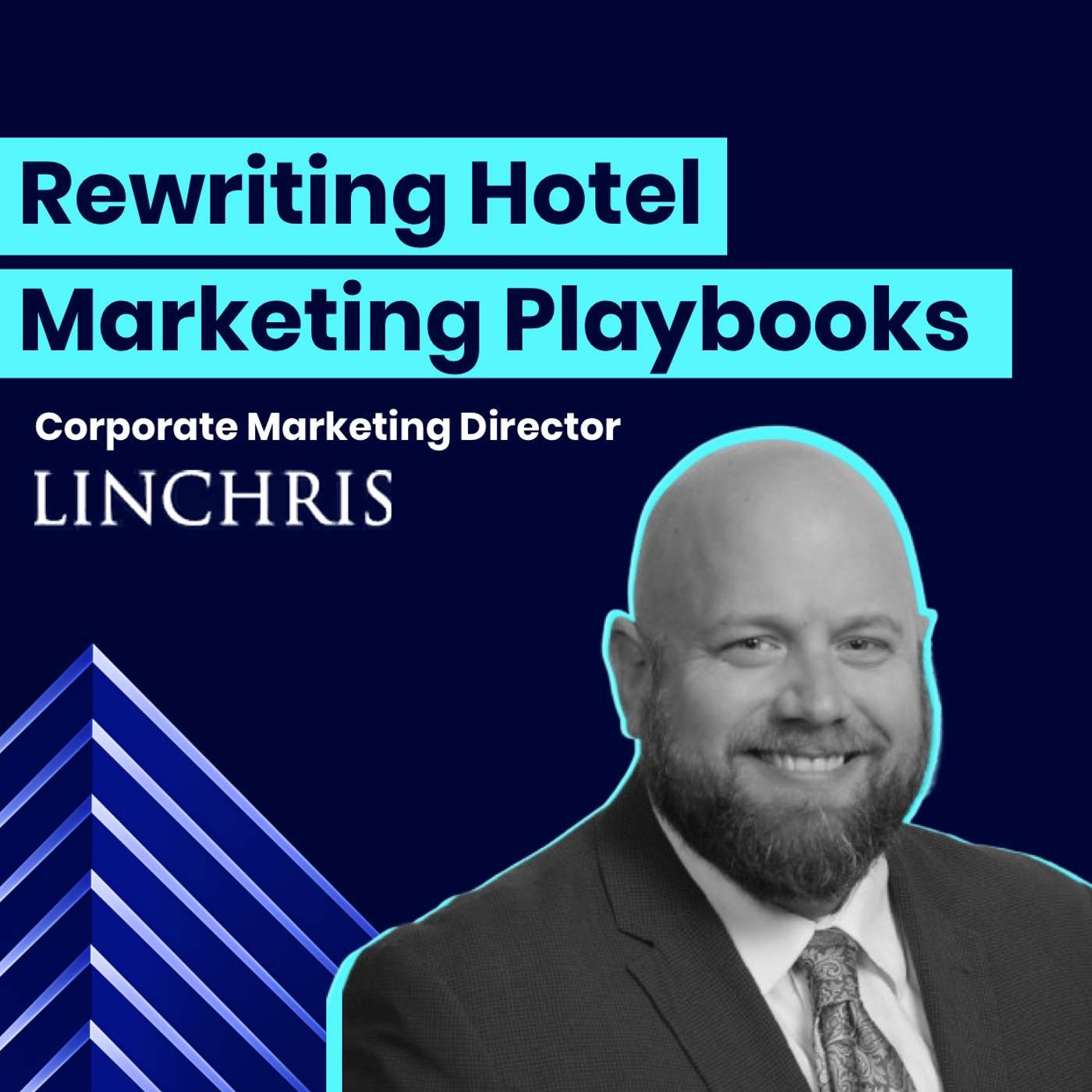 Linchris Hotel Corporation on Rewriting Hotel Marketing PlaybooksHotel Tech Insider · on Google Business profiles76 / 100
 How She Grew a Medical Practice to $30M, With Meredith HirshMarket Movers · on Google Business profiles72 / 100
 Vi Wickam on Google Ads, AI, Brand Trust and Business GrowthThe Proven Entrepreneur · on Google Business profiles69 / 100
 Productivity Expert: Stop Procrastinating on What Matters Most | Jon AcuffCraig Groeschel Leadership Podcast · on Public speaking67 / 100
 Positioning and Branding Strategies with Special Guest Javier Lozano Jr
 The Future of Digital Marketing 2026: AI and BeyondHubSpot Basics Training: Get More Leads with HubSpot!
  How Law Firms Build Digital Trust with SEO in the Age of AI
 Harnessing AI for Business Growth