
The Voice of Retail · 2026-06-26 · 31 min
Key moments - from our scoring
Substance score
39 / 100
Five dimensions, 20 points each
James B. Smith draws on a career spanning Gray Advertising, Ogilvy and Mather, Esquire, Condé Nast Traveler, and executive search to explain what makes retail leaders successful today. He argues that the three essential qualities are agility (ability to pivot with incomplete information), storytelling (motivating and inspiring both internally and externally), and courage (rallying teams around a clear direction). Smith's experience turning around Condé Nast Traveler to outperform Vogue and Vanity Fair taught him that storytelling - specifically tying authenticity to luxury goods - was the differentiator. Through Rare Placement, his executive search and placement firm, he uses soft skills assessments developed with an industrial psychologist to match candidates not just on experience but on culture fit and working style. He emphasizes that modern retail leaders should look for talent both inside and outside their industry (citing Leonard Lauder's philosophy), focus heavily on people development and succession planning as a continuous process rather than crisis management, and recognize that CEO roles now require 50-60% time on people-related activities. The conversation also addresses post-COVID leadership challenges around remote work, mentorship, and the balance between flexibility and in-person culture building.
Agility (ability to pivot with 70% information and move fast), storytelling (motivating and inspiring people internally and externally), and courage (rallying teams around a direction with conviction).
Treat it as a continuous process, not a crisis response - constantly evaluate, develop, and grow your team across multiple levels, identifying gaps proactively rather than waiting for unexpected departures.
50-60% of a CEO's day typically involves people-related activities including developing talent, problem-solving, and nurturing relationships, with the remainder split between strategy and data analytics.
No - CEOs should look for the best talent both inside and outside their industry; relying only on internal candidates or industry veterans means missing strong candidates and diverse perspectives.
First, acknowledge the emotional impact and allow yourself to process it; then craft a clear, concise personal story (2 minutes 20 seconds) about your impact and learnings before starting to network, so you have a structured narrative ready.
Our reviewer’s read on each dimension, with quotes from the episode.
The episode contains occasional useful observations (the 2:20 pitch rule, CEO spending 50-60% on people, matching soft skills rather than track record) but the majority of content is generic leadership platitudes - storytelling matters, be curious, network consistently - that most B2B operators have heard repeatedly. The signal-to-noise ratio is low given the episode's runtime.
if you can't tell your story of your career and where you had impact or what you learned in two and a half, two minutes and 20 seconds, frankly, that's the number
if you were successful at one company, doesn't mean it's going to translate to the next company
Virtually every framework offered - personal brand, storytelling, networking before you need it, succession planning as continuous - is well-worn advice recycled across thousands of leadership podcasts. There is no contrarian argument, no first-principles reasoning, and no pushback on consensus views. The 'people buy leaders not logos' line is mildly interesting but underdeveloped.
people are buying leaders, not logos
networking should be a part of what you do and giving back, whether it's speaking eng or panels or going to conferences
Smith has a genuinely credible and varied operating background - running Conde Nast Traveler to the top of the Conde Nast portfolio, owning a housewares business for 15 years, and serving as North American president of a $1.4B skincare company - which gives him real practitioner credibility. However, his current role as a boutique recruiter limits the depth of operational insight he can offer, and much of the episode draws on anecdotes rather than hard-won systematic knowledge.
we ended up becoming the number one magazine at Conde Nast. We outperformed Vogue and Vanity Fair and GQ
I became the owner operator for about 15 years
There are some named references - Ken Pilot, Leonard Lauder, a Cleveland-based CEO operating one day a week, the $1.4B skincare company - and the 2:20 pitch time is a concrete deliverable. However, most anecdotes are anonymised ('a very successful CEO,' 'she was an incredible marketing executive') and no placement success rates, compensation benchmarks, or search methodology data are ever cited.
Leonard Lauder said it so well. He's like, I want the Best talent, both in the industry and outside the industry
I've got one in the US In Cleveland. He's done an outstanding job there one day a week
The host occasionally creates productive threads - pushing on remote-work tradeoffs, raising the 'is it too late to network?' challenge, and citing a named external executive (Ken Pilot) to test the guest's claims - but most questions are leading, validating softballs ('does that resonate for you?') and the host rarely follows through when the guest gives a vague answer. No claim goes materially challenged.
Is it a bit late by then?
Do you think, uh, you know, one of my partners, Steve Dennis...does a book Leader's Leap. And one of the things he talks about is putting your ego aside...Does that resonate for you?
Computed from the transcript - who did the talking, and the words that came up most.
In this Encore episode of The Voice of Retail, I’m joined by James B. Smith, Founder and CEO of Rare Placement, for a wide-ranging conversation on modern leadership, executive search, and the future of talent in the retail industry. James brings an exceptional career journey to the mic, beginning in advertising with agencies like Grey and Ogilvy, moving into marketing leadership at Citibank, in leadership roles at Esquire and then Conde Nast Traveller - where he helped it become the top-performing title, even outpacing Vogue. His passion for growth and transformation led him to become a CEO, owner-operator, and eventually launch Rare Placement, a boutique executive search firm focused on personalized, human-centric talent solutions. In our conversation, James emphasizes the power of storytelling - not just for brands, but for leaders. He reveals that every candidate he’s placed has gone on to become a client, a testament to his laser focus on culture fit, agility, and soft skills over just resumes.
Transcribed and scored by The B2B Podcast Index.
Speaker A: Foreign. My name is Michael LeBlanc and I am your host. This podcast is produced in conjunction with Retail Council of Canada. James, welcome to the Voice of Retail podcast. How are you doing this afternoon?
Speaker B: Doing great. Thanks for having me. I appreciate it.
Speaker A: Well, it's great to have you on the mic. Where am I finding you today?
Speaker B: I'm in beautiful Toronto. Uh, it's nice and warm and, uh, I'm.
Speaker A: But not too warm, but not too.
Speaker B: On my way to New York. I know there's been hot temperatures everywhere, so you never know what you're going to get. But it's fine. I love it.
Speaker A: Fantastic. I was in New York a, uh, week and a half ago on that really, really hot day. Uh, the hottest I've ever been in that city. It was crazy. Um, so hot. Ah. And. But it was fun, you know, New York's, New York's vibing. So, uh, listen, thanks, uh, again for joining me on the mic. Dan Brisb from Retail Council, or soon to be formally from Retail Council. It's hard to say. Connected us and I thought, what a great conversation to have. So let's start. We're talking about you. Who are you and what do you do for a living and what's your background?
Speaker B: Thank you. No, I really appreciate it. First of all, I think, um, my background starts I was born in Canada, but we moved when I was very young to the New York, New Jersey area. And after I got out of school, started in New York City. And I started in the advertising agency world. I worked at some iconic, wonderful agencies. Gray Advertising, Ogilvy and Mather, wonderful brands. And then moved over to the client side at Citibank in marketing. And then I ended up, uh, at Esquire magazine in publishing. And it was a wonderful experience, a number of promotions. But I was very proud of the fact that I was able to introduce and kind of accelerate the growth of the fragrance and men's skincare category. Ended up running the magazine at a young age. Then it moved over to Conde Nast Traveler, where fortunately, through a wonderful strategy, we ended up becoming the number one magazine at Conde Nast. We outperformed Vogue and Vanity Fair and GQ and a bunch of other great titles. But I always had this desire to run my own company. So when I had an opportunity to move to Canada to run a division of a company that had been purchased from Colgate in the housewares category, I jumped. And, uh, you'll love this story. About a year and a half in, we were losing a lot of money and I Went down to the board of directors, all finance guys, and I said, gentlemen, this is the Canadian market, this is the US market and we are not the 51st state. If you want me to turn it. They, um, asked me, well, what do you want to do? And I said, sell me the company. And they did. And I became the owner operator for about 15 years. So I had a wonderful CEO experience. And then I ended up at a trade association for a year where I had a thousand percent increase in membership. So I did something right there and then got to back to the corporate world as a North American president for a skincare Wellness Company, about 1.4 billion out of Florida. And then I came back to Toronto.
Speaker A: But wait, no, I know, it just keeps going.
Speaker B: And then I got into executive search. So it was me interviewing with a large firm. And they said, what about this? And I said, look, I can, I gotta be honest, I've never had great experience as both a candidate and as a client. But then I thought to myself, what a great opportunity to pull the curtain back and really see how not just search works, but outplacement and coaching and uh, assessments. And I got the whole package. So I was able to do that for four or five years. And then I started my own firm. So that's what I have. Rare placement is a very unique, uh, firm with kind of a different approach. Um, I'm looked to essentially accelerate the growth of careers and accelerate the growth of companies. And my approach is very personalized, very much of a human centric approach. I have, I created with the help of a very successful industrial psychologist, we created a soft skills assessment that looks at preferences and we're able to identify culture, fit, agility and soft skills. So I can match you up exactly where you should be. And it's proven to be very successful. In fact, every single candidate I have placed has become a client.
Speaker A: So. And that's a big, big, uh, indicator of success, right? Matching, you know, having a, having the person that you place stick around for quite a while. Uh, so all the hard work comes up front and then B, having them kind of retain you again. I want to take you back to your media business for a little bit. Um, you know, you talked about in the magazine world, but let's just say it's in the media business how you took media properties and made them very, very successful. Now, some of that in the day would have been subscriber strategies and that changed a little bit. Some of it would have been sales strategies. What's the. It sounds like it. I Don't know if you had a formula, but you certainly had some secret sauce. And, and there's lots of folks listening who are in and around the media business. What, what was it that made you so successful? What, what was that combination of things?
Speaker B: I look back and I think, what did I do successfully? It was storytelling. It was the ability to go in and say, why, why isn't this magazine? What are we going to do to make this magazine stand out in the luxury goods market when it's very crowded, very competitive? And, um, it was about, in this case, with Truth and Travel, which was Conde Nastraveler, it was tying authenticity to the luxury goods market. And at the time it was very unique and different. And the way we went out as a team globally to tell that story worked like magic. And so I think storytelling is such a key for everything, whether it's a retailer, uh, whether it's. You're selling yourself in an interview. It's all about storytelling. It's all about your personal brand in that case, or, um, making sure that people really understand what you stand for.
Speaker A: It's often said, particularly of, uh, whether it's luxury goods or other, that people buy the story before they buy the product. Right. It's basically no question you believe in that. Does that ring true for you and for your career?
Speaker B: Yeah, no, I think it does. I think people are, you know, a lot of times when people are interviewing or in the case of using, you know, my services, a lot of times it boils down to, well, they want to make sure that I'm involved, that I'm involved every step of the way, and they're buying me. Yes, I have a great, you know, cool name, Rare. Rare Placement's a great name. But I think at the end of the day, they want to make sure that I'm providing that personalized bespoke service, and they know that I'm going to leave them and find them people that are going to really transform their business. And that's kind of what I like to do.
Speaker A: Well, let's start following up on that a little bit in the retail context. For the listeners, what are the top three qualities that you're seeing in successful retail leaders today? I'm fortunately able to talk to a lot of retail leaders and I hear things like resilience and storytelling. Uh, I hear a bit of ambition, I hear communication. What are the three things in your mind that makes their. For really successful leadership in the retail game today?
Speaker B: I think everything has become much more entrepreneurial. Meaning when you think of the skills or the traits associated with an entrepreneur that translates to almost every single industry, Retail being no exception to that rule. And I think what you're looking for is agility, um, the ability to pivot because things are not, you know, you're not gonna have data, you're not gonna have. You're gonna make decisions with 70% of the information. You still gotta move fast. Cause the world is moving so quickly. I think it is storytelling. I think the ability to motivate and inspire people both internally and externally becomes very important. And then it's courage. I mean, I think as a retailer, you've got to be able to have that just kind of desire and ability to rally the troops, to say, this is the direction we're going in and this is why and let's go. And I think that takes a lot of courage today.
Speaker A: Do you think, uh, you know, one of my partners, Steve Dennis, on the remarkable retail podcast, does a book Leader's Leap. And one of the things he talks about is putting your e go aside and in when he and I, and maybe you were in our early executive days, it was like you were supposed to or expected to have, maybe that's in your head, all the answers. And if you didn't, you were like, why do you have that job? And he said, you know, modern, modern executives don't need to have all the answers or else they're just wasting the talent of the people they hire. Does that resonate for you?
Speaker B: It does. I think that a lot of people today, you know, the best thing you can do is be human and recognize that there's no way you can have all the answers you have. You know, hopefully you have a lot of great people around you and you're using data analytics and hopefully you really have a good sense of what the consumer wants and can anticipate what they're doing or what they're going to need, what they're going to need. But at the same time, I think the best thing a, ah, CEO can say is, I don't know. And unlocking those answers with your team though, right?
Speaker A: That's kind of new. Like 10 years ago, would you, would you imagine that being the case that people, a CEO would say, listen, I don't know.
Speaker B: Well, I don't know if Jack Welch would say that at the peak of his career. But there are some things that have come full circle. And I still think great leaders have to have the ability to inspire and motivate teams. And that hasn't changed.
Speaker A: I feel like the COVID era that we went through had a couple of impacts on leadership, one of which was, uh, agility. People learned, wow, we can make decisions fast and we can be agile. And let's make sure maybe that muscle atrophied a bit. Let's. Let's make sure and exercise that muscle a little more often. I also think it was this great leap forward in leadership style. Like, do you, do you see the COVID era as that, Like, I always try to think about, you know, what we went through. Some of the results were obvious, but some were a little less obvious. Like culture changes.
Speaker B: Yeah, no, it changed everything. I think Covid accelerated every single component of. You know, I look at consumer behavior now, and I, I think everything boils down to the consumer behavior, because that really is a parallel to what I'm seeing from candidates. And it's what we're seeing, you know, with executives trying to juggle and figure out what to do going forward. But I think that that acceleration of the digital transformation is certainly part of what took place. And from a leadership standpoint, you know, there's a struggle right now. Many people want to have culture and they want to have that human connection, but at the same time, people want that balance in their lives and that freedom that they got during COVID They don't to give it back up. So there's, there's a pull between both. So you as a leader need to be able to inspire people in a remote location using technology, but you also have to rally the people to want and galvanize them to want to work as a team. And I think that human connection is still, still very, very important.
Speaker A: Let's, let's follow up on that thread a little bit. I've had lots of conversations with people who talk about how to run and operate a modern business. And there's, there's several schools of thought, particularly coming out of COVID around, you know, I need the people in the office five days a week. You typically, you hear a lot of the finance folks saying that, but others, others say, I love the flexibility of being able to hire anywhere. Um, you know, maybe I'm in a small town and I can't find a vice president of marketing here, but at the same time, they worry about, uh, adhesion to the culture. They worry about building culture. Now, I heard some retail leaders said, yes, but I'll just have more off sites. I'll have more structure that encourages, uh, collaboration. But I'm kind of going back and forth here a little bit. But for the younger executives, it's Hard for them to grow and be mentored. Where do you land on this? If you were waved a magic wand and I said, you're going to start a company today, uh, what would you do? And from your experience, what's working? Well?
Speaker B: Well, first of all, I see so many different playbooks all day long. And I can tell you that I've seen companies that are completely remote, that are successful and they've got outstanding leadership who somehow can make it work. And, uh, then I've got others that really believe that the human connection and contact is important. And you mentioned something so critical, especially for young people. How do they learn and emulate if everything's on camera, how can they learn how. What a leader does or how they do things off camera or when they're, you know, when they're in a meeting room and people don't, don't agree. And how do they get people to really kind of fight it out a little bit and make sure that that's the opportunity they provide in that environment where people can voice their opinions and maybe disagree. So I, I tend to lean towards more of a balanced approach where you're getting people together more consistently. What that number is two, three, four days a week, I don't know. But I think you're better off having those connections than doing everything remotely. That's just my own personal preference. But again, I see companies, and if I'm working with a mandate where the company and the CEO is very successful and they're all remote, I've got one in the US In Cleveland. He's done an outstanding job there one day a week and they nail it. And I've been able to recruit people all over the US and they don't have to be, uh, in that Cleveland area. They can live in Texas or California, wherever.
Speaker A: That's a big advantage. Right? Uh, being able to access. I mean, it's funny, we're heading into, you know, back 20 years ago, we were talking about a flat, a flat earth. We could hire anybody, whether they're in Paris or Bangladesh or wherever. Anyway, it's just funny the way these, these things have turned. Let's, let's get back on task a little bit. Lots of, uh, leadership changes all the time. I was reading about a couple, uh, today, and when you are retained and is one of the first questions you have for executives, what's, uh, your succession plan? What do great succession plans look like? Are they being structured properly? What's your tips about how to get succession planning right?
Speaker B: Yeah, no, it's a great Question. I think a lot of people are looking at, um, I'll give you an example. I was with somebody who on Friday of last week, we had a lunch and she's a very successful CEO and she went through her entire leadership team and then she went down one level. Not one level, two levels where we started talking about gaps. So she looks at succession planning as a constant. You're always looking at your team, you're always evaluating and developing and growing people. I think that's the right way to do it. There are people that wait until, you know, it's almost like, oh my gosh, somebody just left. We're dead and we have to make a drastic move. It's not what you want to do,
Speaker A: ideally, as a percentage of a CEO's job today. What percentages of dealing with people? You know, there's communicating, there's storytelling, there's strategy, and then there's people. And if we wrap into people thinking about succession, plan, developing people, that's got to be a. What? You know, if you put a percentage number to it, what do you know?
Speaker B: When you, when you look at business, you drill it down. For any business, it really boils down to strategy and talent. And I think if you, if you're really gifted, then you are spending a ton of time on developing and nurturing people and you're problem solving. So in any given day it could be 50%, 60% of what you're doing is people related. I think the CEOs of the future are going to be looking at data analytics in the morning and then going to a town hall to inspire people with a great speech and then getting on the phone with somebody in a different country to ensure that supply chain's working the right way. So they've got to have that cross functional abilities. And that means you're everywhere. And I think that's made the CEO job, frankly even harder.
Speaker A: Yeah, no kidding. It's definitely more, uh, complex. What are retailers getting right and maybe what they're getting not so right when they're hiring executive talent these days. Is there, you know, if you could point out to, yeah, here's some things I see that you should do less of. Uh, what would those be?
Speaker B: Well, I think first of all, CEOs I think if they rely very much on just inside talent, meaning talent from their industry and people that they know, I think that's a mistake. I think you've got to look at industry in and outside of the industry. Leonard Lauder said it so well. He's like, I want the Best talent, both in the industry and outside the industry. So I think you have to do both. Um, I think that from a talent standpoint, the one thing that I like to do with CEOs is get to know their soft skill preferences, how do they run their company, what's their leadership style? What I find is that if you can match those people up from a soft skill standpoint, and I know these are their tendencies, if somebody pivots and changes directions 15 times a day, that's not going to work for everybody. And so somebody who likes a real structured formal environment isn't going to respond well to a CEO, uh, like that. But if you can find people who love that, who have that adaptability and love that, we'll call it more of the entrepreneurial mindset. It's going to be a beautiful fit. So I think the one thing you've got to do is make sure that you're hiring based on soft skills and talents, but not based on historical data. Meaning if you were successful at one company, doesn't mean it's going to translate to the next company.
Speaker A: Interesting. Well, let's, let's take it from that side of the table, so to speak. So if you're listening to this podcast and you especially aspire to leadership roles or more senior leadership roles, what are the kind of two or three things you should be doing today? I've often had people tell me advice around you should have many very different roles in the organization. There seems to be a couple of schools of thought about how long you should stay with any one organization or even within an industry. What's best practice in your mind?
Speaker B: You know, I think there's no roadmap in terms of, there's no magic formula. You know, we used to be in retail, you wanted to be a buyer and you'd work your way up through merchandising, and that was all the CEOs. And then if you look at today, there are wonderful executives in operations, supply chain finance, hr, and they're all. If you do really well at what you do and you learn and you're really curious, I think the most important thing is curious and accelerate at, uh, what you do, be the best at what you are and continue to learn from others around you. Don't be afraid to go sit and ask other people and other departments and learn their skills and learn their functions and frankly, spend a lot of time at the consumer level too. I mean, I think for every retailer, um, at just one anecdote, you've got to spend time in the store level and know the customer. And if you don't, I think it's a huge mistake.
Speaker A: I was, uh, interviewing a great retail leader, Ken Pilot, and for a while he was, he was president of Gap Global. And he does a great number of things. And one of the things he told me about how his career has accelerated was exactly what you're saying. He was in the Macy's development program. He started as a buyer, but then, you know, they often moved him into the stores. And knowing that left hand, right hand in retail, um, you know, he said, really accelerated his career. He went to, you know, president in eight to 10 years. So obviously very skilled to begin with. So let's talk about when leaders get shook out. It happens every now and then. I was talking to a friend this morning who got a senior role, uh, in a tech company, got shook out. Uh, what should they be doing? It can be pretty jarring for you to kind of get let go. And, um, what's your advice to folks who get shook out? What should they do in the short, medium term?
Speaker B: I think short term, acknowledge that it's okay to feel a little bit freaked out and a little bit, um, you know, disjointed, and maybe you're gonna lose a little confidence and that, that happens to everybody. I don't care how good you really are, you are gonna have that, you know, kind of trust or that ability to feel a little bit, you know, shook up. And there's no sugarcoating it. Um, it's hard. But my advice, I think, with everybody is to literally get back out and start networking. But before you do that, I think the most important thing is to know your story. And, you know, people talk about their personal brand or what it is. And I always say if you can't tell your story of your career and where you had impact or what you learned in two and a half, two minutes and 20 seconds, frankly, that's the number. If it's longer than that, you're going to lose people. So it's almost like a movie trailer. And if you can get that down.
Speaker A: Yeah, even that. Even that.
Speaker B: Then you start networking and, you know, does that make sense? I mean, once you start networking with that story and you're comfortable, and even if you had a bed, a mishap at your current organization, where you left, it's okay. As long as you learned. As long as you're honest about it, that's okay.
Speaker A: Is it a bit late by then? You know, I have this, uh, I had a great conversation with some folks who said, you know, we invite people, retail leaders all the time to come to these networking dinners. And, uh, you know, we encourage them to come to conferences and meet people. But I know there's a flurry of activity. I can always sense when someone gets let go because suddenly they're posting on LinkedIn or they're liking your post. Like, suddenly there's a flurry of activity. It feels like, um, you know, it's not too late, but it feels like what you're describing should start in some way, shape or form, at some level, accept opportunities to speak at conferences and be seen as opposed to, like, suddenly jump into the market with. With no kind of, you know, with no kind of not experience. But, you know, you've been absent and suddenly I need a job, so I guess I better do this kind of stuff.
Speaker B: No, you're. You're 100% right. I think networking should be a part of what you do and giving back, whether it's speaking eng or panels or going to conferences. And I think it's all about learning and meeting other people. I love meeting people. I met somebody, frankly, who was in kind of a situation where she was displaced from her company. But when I got to know her background, I looked at her and said, I can't believe they even hired you for this because it's not your skill set. No, she wasn't set up for success, quite honestly, and she was an incredible marketing executive that I think was in a tough position. So my point, um, to everyone, is that, first of all, know what you're walking into, meaning know what success really looks like, and if it does go south, um, it's okay. But get back on the horse and really know your story and know your brand. But don't wait till that happens before you start networking with people. To your point, I think you're right. Be out there all the time.
Speaker A: Yeah. At some level. Right. I mean, if you're a CEO, you don't have infinite amounts of time, but you still have the opportunity to get out and be seen and be heard and start framing your story.
Speaker B: Right. You do. And I think that everybody. Remember, people are buying leaders, not logos. So right now, if I'm, uh, if I'm recruiting for a CEO, I'm telling them all about, you know, that leader and what makes that person unique and what you can learn and how you can grow into that individual. That is far more important than the company they represent. And now that was never the case years ago, as you know.
Speaker A: Yeah.
Speaker B: But I think that's changed. And I think that's why it's so important for the leaders to be out, um, in front of their people and networking because, let's face it, that's what you're buying.
Speaker A: Yeah, it's a little self serving for me, of course, because I like people to come on my podcast, but I'm just putting it out there a little, little self serving. What?
Speaker B: They should be out there with you and because you do, you know, obviously you're reaching so many people. What a great way to tell your story and, and get, let people in on who you really are.
Speaker A: Yeah. What, um, just a wrap on this kind of segment. Uh, what are the common mistakes that folks make as they're trying to, uh, find a new gig at the senior level? What are the things that you said, listen, you're doing? I see these things all the time. Stop doing it or do less of it. What are the common kind of mistakes?
Speaker B: Yeah, no, I think the biggest mistake most people, I mean, first of all, we don't interview all day long. So in fairness, most executives don't really know, you know, how they come across in an interview. And you get asked the proverbial, tell me about yourself or take me to your resume. And a lot of people don't have that down. So, um, I think the biggest mistake is they lead with some grandiose statement. I've got 20 years of experience doing this and I've led teams. I'm a transformational leader. Go back to the movie trailer. They want to know the story, the beginning, the middle and the end, and tell me that in a way that gets me excited to learn more about you. And I think the biggest mistake is they start learning, leading with their resume. So that's number one. And a lot of people do it, by the way, even at the highest levels.
Speaker A: Let's talk about, uh, those people who aspire to, uh, maybe later in their career, maybe earlier, boards of directors or advisory boards like you. I'm sure you're retained to go find people for both of those. Let's start with, let's call them fiduciary board of directors. What are people looking for and uh, what's your advice on how to be considered for opportunities like that? Do you need to go to, like, do the Rotman School of Board of Directors kind of program that I see all the time?
Speaker B: You know, I'm not going to say that, that people have told me they've done courses. I think at the end of the day you need to let people know you're available and that you want the work, so that's first thing, you let people know that you really want to do the work. Second, know what you bring. Every board should be diverse in terms of skills and talents. So for example, they might need a regulator, or they may need an operator, or they might need somebody that can coach the CEO or they might need somebod who specializes in retail relationships or branding or marketing. So know what your strengths are. And you know, ideally, if you advertise those strengths and you lean into those strengths, that's what people are going to resonate with when they, when they talk to you. And so it's networking, it's ensuring that people know what you really are good at and what value can bring to that board. I think that's the most important.
Speaker A: Is there something you should be doing as a candidate to prepare for that other than your full time job job? You know, I mentioned courses, but is there, you know, is there something you should do about, you know, understanding how boards work or any, any way to prepare other than being able to tell your story and know, you know, know what you can offer and frame that properly?
Speaker B: No, I think, look, I think it boils down to networking as well because you, um, know the likelihood of a board finding other, other people through their network is just as great as finding it through an executive search firm. And so you have to let people know that you're available, that you're interested. And there's a lot of CEOs that I know frankly in their roles right now that started as board members and all of a sudden, you know, the company had some challenges and they looked around the room and said, you're up. And so those board opportunities can lead to another, other full time opportunities if that's what you choose. But a lot of people that are executives that are senior and I think they're rising stars or they still have a good Runway in their career, that's the time they should be grabbing people for board work because they've got so much to offer and so much to contribute. And I don't think it needs to be all industry specific. I think it could be, um, other industries bringing different lenses to that table. It can be very helpful.
Speaker A: Should you do volunteer work first on volunteer boards? Is that, is that a good Runway to get some experience at the board level? I've done a bunch of those and they feel very different to me. Like I'm not sure you know what I mean?
Speaker B: There's no question it is a very different game. But having said that, if somebody said I'VE got the time and I have a passion for this, you know, trade association or whatever I say do it because it is good experience. And again, it's, it's. You're getting to know other people. And a lot of times when you're on a board, it's the network of those individuals on that board that becomes very attractive. Uh, and I can tell you that candidates that I placed even on first board roles, and one example, you know, she's now got multiple board roles and multiple advisory roles. And this is a publicly traded company and it was her first. So it works when you're able to convince people that you've got something to offer and then those, that network of that board and then frankly the ability to go out and say, hey, I'm already on a board. You know, once you get one, it's a little bit easier to get the second one, if that makes sense.
Speaker A: Now, is there any different advice you might have for advisory boards? Kind of, let's call them non fiduciary boards, which are becoming more common?
Speaker B: You know, I think the same thing is true when you have such talented people in the marketplace and you can offer advice and counsel. That doesn't have to be a board role. It can be, you know, an advisory role for the company. Then it could work into a board opportunity. And there's so many talented people. I just had lunch with somebody as a general counsel that, you know, she's um, kind of an interim general counsel, uh, executive. And she's so talented, but she's like, I'm ready for more because her kids are now old enough to where she can really go at it and she wants more opportunities. So there would be somebody that I wouldn't even know on my radar if I didn't have lunch with her.
Speaker A: Interesting. And it's sometimes the case that, you know, private companies don't want a board of directors, they want an advisory board. Like there's not a board fiduciary board opportunity. This is the opportunity. But in some ways you have a lot. You can, can contribute so much to, you know, enterprises just by being, ah, you know, a strong advisor. Right. Which is, you know.
Speaker B: Yeah, 100%. 100%.
Speaker A: Well, James, this has been fantastic. Uh, if people want to, um, get in touch with you and learn more about you, where do they go?
Speaker B: Well, they can go to a website, uh, which is rareplacement.com they can, they can email. Email me, which is jamesaireplacement, uh.com and they can call my cell, which is 6474-014642. I have a U.S. number. I won't give you that one right now because it's like, I carry both phones, but sometimes I only use that U.S. phone when I'm in the U.S.
Speaker A: all right, and are you active on LinkedIn? Are you a LinkedIn person?
Speaker B: Very active on LinkedIn. They can find me on LinkedIn. I publish articles, um, on a consistent basis, and I'm pretty active, but I'm not crazy. I'm not posting every day. It's literally once a month. When I'm inspired with a subject I think is relevant that I think people should read, I'll do it.
Speaker A: All right, well, it's been a fantastic conversation. Thanks for carving out some time to chat with me here on the Voice Retail podcast. Really enjoyed it, and I wish you, uh, you and all your, your, your clients continued success.
Speaker B: Thank you so much. I appreciate it.
Speaker A: Thanks for tuning into this episode of the Voice of Retail. If you haven't already, follow on your favorite podcast platform. So new episodes will land automatically each week. And be sure and check out my other retail industry media properties, the Remarkable Retail Podcast with Steve Dennis and the Global E Commerce Leaders Podcast. I'm, um, your host, Michael Blanc, senior retail adviser, keynote speaker. If you want more content or chat, follow me on LinkedIn. Safe travels, everyone.
Speaker B: Sam.
Other episodes covering the same guests and topics, from across The B2B Podcast Index.
 Episode 71: Rebecca Gooch on Succession Planning and the Family Enterprise BoomFamily Business Audiocast · on succession planning84 / 100
 How ESOPs Help Family Business Owners Exit Without Losing Their Legacy | The Family Biz Show Ep. 40The Family Biz Show · on succession planning84 / 100
 Episode 103: 1 Family, 4 Generations, 100 Years: The Sprague Pest Solutions Story with Ross TrelevenFamily Business Today · on succession planning81 / 100
 Why So Many Successful Advisors Feel Stuck - Best of ReplayThe Diamond Podcast for Financial Advisors · on succession planning80 / 100
 The Man Who's Never Lost a Deal in 12 Years (Here's How) | Justin FarmerThe Accounting Leads Now Podcast · on succession planning76 / 100
 Beyond Numbers: Business Leadership for CFOs Part 2Informed Decisions · on succession planning74 / 100
 Carl Boutet, Retail Futurist and author of “The Flip: Staying Human in an Algorithmic World,” on his new book, AI, Asia Retail Innovation and the Next Era of Retail
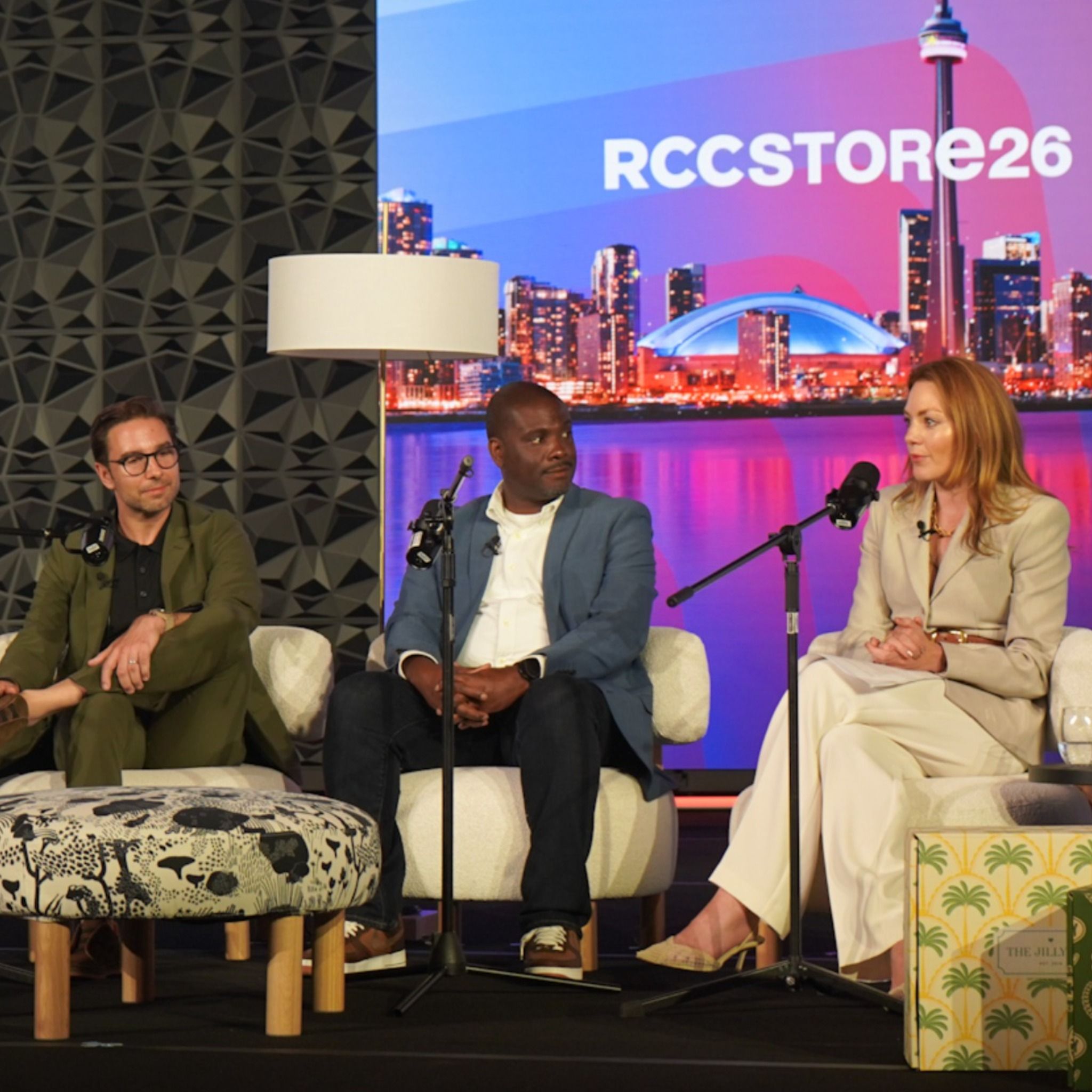 Julia Freeman, CEO of The Jilly Box, David Brownstein, President of Browns Shoes, and Selwyn Crittendon, CEO of IKEA Canada, Live on Stage at STORE 2026
 Going Global in Uncertain Times with Matthew Merrilees , CEO North America, Global-e and Co-Host Jim Okamura from the Global eCommerce Leaders Forum
 Retail’s AI Reckoning: Jackie Swanson, Managing Partner at Gartner Consulting on Winning the Agentic Future
 Deb Craven, President of Longo’s, on 70 Years of Retail Excellence and being named Retail Council of Canada’s Distinguished Retailer of the Year for 2026