
The Venture Capital Podcast with Fexingo · 2026-07-30 · 8 min
Key moments - from our scoring
Substance score
24 / 100
Five dimensions, 20 points each
Simile's explosive fundraising round - $200 million led by Sequoia and Lightspeed - has put synthetic user platforms at the center of VC attention. Synthetic users are AI-generated personas that mimic real human behavior (clicking, scrolling, filling forms, making decisions) at scale, allowing developers to stress-test products without recruiting real testers or exposing privacy-sensitive data. The appeal is clear: faster iteration, lower costs, and the ability to simulate edge cases like angry customer service interactions for AI agents. However, the episode raises critical questions about fidelity - whether synthetic behavior trained on anonymized real sessions truly captures human nuance - and regulatory risk, particularly around bias in regulated industries like fintech and healthcare. Simile started with gaming (Roblox, Epic) but is now expanding across e-commerce, fintech, and healthcare, charging subscription fees based on interaction volume. While competitors like Synthetic Users and UserHub exist, Simile has captured the most mindshare. For B2B operators, the episode frames synthetic user testing as infrastructure play, analogous to picks-and-shovels betting, with potential for rapid exits (IPO in 12-18 months or acquisition by Microsoft or Google) if revenue growth accelerates.
Synthetic users are AI-generated personas that mimic real human behavior (clicking, scrolling, filling forms, making purchases) at scale. Unlike traditional user testing that recruits real humans, synthetic users allow developers to test apps, websites, and AI agents cheaply and without privacy concerns, though with potential gaps in capturing emotional or subjective responses.
Simile raised $200 million in a Series B round at a $2 billion valuation, just five months after a $100 million Series A - doubling their valuation in under half a year. The round was led by Sequoia and Lightspeed.
The primary risks are fidelity gaps (synthetic behavior may not capture real emotional or subjective responses), bias replication (if training data contains historical biases, those carry into synthetic personas), and regulatory exposure in sectors like fintech and healthcare where AI decisions carry compliance implications.
Synthetic user testing started in gaming (Roblox, Epic) but is expanding to fintech, e-commerce, healthcare, and any company with digital products requiring scale testing, particularly those deploying AI agents that need edge-case simulation.
Simile charges a subscription based on the volume of synthetic interactions, so customers pay more as they scale testing - a recurring revenue model that aligns customer growth with platform usage.
Our reviewer’s read on each dimension, with quotes from the episode.
The episode is a brief news-commentary skim: a handful of concrete data points float in a sea of surface-level observations and obvious connective tissue. There is almost nothing a smart B2B operator could act on or hadn't already inferred from a headline.
Yeah, the line between real and synthetic is blurring fast.
you can help us keep going at buymeacoffee.com/fexingo
The episode recycles the most worn VC narrative frameworks without offering any first-principles or contrarian angle; 'picks and shovels' is perhaps the most overused metaphor in tech investing commentary.
Synthetic user testing is a classic example of a 'picks and shovels' play - you're betting on the infrastructure, not on any single product.
synthetic users might eventually become a standard part of every software development lifecycle, like unit tests.
There are no guests whatsoever - the episode is a scripted dialogue between two apparent AI hosts (Lucas and Luna) who have no disclosed practitioner credentials, operator experience, or domain authority. No one here has 'done the thing.'
Lucas: Thanks, Luna. Luna: Thanks, Lucas.
Luna: For someone who hasn't encountered this term - what exactly is a synthetic user? Is it like a digital twin?
The episode does include a small set of real-seeming numbers (fundraising figures, named investors, named early customers, stock moves), which lift it above pure abstraction, but none of the claims are substantiated with sources, revenue data, growth rates, or customer counts.
$200 million at a $2 billion valuation, just five months after a $100 million Series A
The $200 million round was led by Sequoia and Lightspeed
The dialogue is visibly scripted call-and-response; Luna's 'challenges' are immediately and smoothly dissolved by Lucas with no real tension or follow-through. Questions are pre-loaded softballs that exist only to introduce the next talking point.
What about the competitive landscape? Are there other startups in this space, or is Simile the clear leader?
But isn't there a risk that synthetic users don't reflect real user behavior?
Computed from the transcript - who did the talking, and the words that came up most.
In this episode, Lucas and Luna dive into the explosive growth of synthetic user startups, using Simile's remarkable $200M raise at a $2B valuation - just five months after a $100M Series A - as a case study. They explore what synthetic users are, why VCs are betting big on these AI-generated digital personas for product testing, and the potential pitfalls around validity and ethics. The conversation touches on the broader trend of AI slop detection and how startups like Simile are reshaping the way companies test apps, games, and AI agents. A look at the numbers, the hype, and the real-world implications for the venture capital landscape. #SyntheticUsers #Simile #VentureCapital #StartupFunding #AI #ProductTesting #DigitalPersonas #TechTrends #Business #Technology #FexingoBusiness #BusinessPodcast #VCBets #AIStartups #SimileStartup #FundingRound #SeriesA #Unicorn #Valuation Keep every episode free: buymeacoffee.com/fexingo
Transcribed and scored by The B2B Podcast Index.
Lucas: So Luna, synthetic users - the idea that you can test your product with thousands of ai generated digital personas instead of real humans - just got a massive vote of confidence from venture capitalists. Luna: You're talking about Simile, right? The startup that raised $200 million at a $2 billion valuation, just five months after a $100 million Series A. Lucas: Exactly.
That is an astonishing pace - doubling valuation in under half a year. And it signals that the market for synthetic user platforms is white-hot right now. Luna: For someone who hasn't encountered this term - what exactly is a synthetic user? Is it like a digital twin?
Lucas: Close, but more specific. Synthetic users are ai generated personas that mimic real human behavior - clicking, scrolling, filling forms, even making purchase decisions. Developers use them to test apps, websites, games, and AI agents at massive scale, without the cost or privacy concerns of recruiting real testers. Luna: So basically, instead of paying for a user testing service or running a beta, you spin up a thousand fake users and watch what they do.
That could save a lot of time and money. Lucas: Right. And the timing is interesting. Today, LinkedIn added a button to report ai generated 'slop' - that term for low-quality AI content.
There's a growing need to distinguish good AI from bad, and synthetic user platforms could help build better AI systems by stress-testing them before launch. Luna: But isn't there a risk that synthetic users don't reflect real user behavior? I mean, if you're training on synthetic data, you might get a false sense of confidence. Lucas: That's the big open question.
Simile claims their models are trained on anonymized real user sessions, so the behavior is statistically representative. But there's always a gap - especially for emotional or subjective responses. Still, VCs seem to believe the scale benefits outweigh the fidelity risks, at least for initial testing. Luna: What about the competitive landscape?
Are there other startups in this space, or is Simile the clear leader? Lucas: There are a few - Synthetic Users, UserHub, some open-source projects. But Simile's rapid fundraising suggests they've captured the most mindshare. The $200 million round was led by Sequoia and Lightspeed, so heavy hitters.
They're likely using the capital to expand their platform and hire sales teams. Luna: And the broader trend - synthetic content, ai generated everything - is clearly accelerating. Just look at the Spotify announcement today: 'User notes' for adding memories to songs. That's user-generated, but ai generated content is everywhere.
Lucas: Yeah, the line between real and synthetic is blurring fast. For VCs, investing in synthetic user startups is a bet that testing will become fully automated. If you can simulate a million users overnight, why wait for a gradual rollout? Luna: But what about the ethical concerns?
If synthetic users are used to test, say, an AI agent that makes loan decisions, could they inadvertently bake in biases? Lucas: Absolutely. If the training data for synthetic users has historical biases, those will carry over. Simile says they have bias detection built in, but it's an area where regulators will likely pay attention.
The same way the SEC looks at algorithmic trading, there might be scrutiny on synthetic testing in regulated industries. Luna: So it's a double-edged sword: faster development but potential for hidden flaws. If you're building or investing in this space, staying informed is critical. Lucas: You know, if today's episode gave you a clearer picture of synthetic user startups and why VCs are piling in - the kind of insight you can use - this show stays ad-free because of listener support.
If that's useful to you, you can help us keep going at buymeacoffee.com/fexingo. Luna: Yeah, it's a small gesture that really adds up. And we appreciate everyone who chips in.
Lucas: Now, back to Simile's valuation. At $2 billion, they're already a unicorn. The question is whether they can grow into that multiple. They'll need to prove that synthetic users aren't just a novelty but a core part of engineering workflows.
Luna: One thing that works in their favor: the shift toward AI agents. Companies are deploying more autonomous software than ever, and testing those agents requires complex scenarios. Lucas: Exactly. If you have a customer service AI, you want to simulate thousands of angry customers to see how it handles.
Synthetic users can generate those edge cases efficiently. Luna: But there's also the macro environment. Tech stocks have been mixed - META down 10% in the last five days, NVIDIA down 6% - but AI infrastructure spending isn't slowing down. So VCs are still putting money into ai enabled tools like Simile.
Lucas: Right, and that's a key point. Even as some high-flying names cool off, the demand for practical AI applications remains strong. Synthetic user testing is a classic example of a 'picks and shovels' play - you're betting on the infrastructure, not on any single product. Luna: Who are Simile's typical customers?
Are they mostly gaming companies, or is it broader? Lucas: It started in gaming - Roblox and Epic were early adopters - but now it's expanding to fintech, e-commerce, and healthcare. Any company with a digital product that needs to be tested at scale. Luna: And the pricing model?
Is it per synthetic user, per test run? Lucas: Simile charges a subscription based on the volume of synthetic interactions. So the more you test, the more you pay. It's a recurring revenue model that scales with usage - which VCs love.
Luna: Given the speed of their fundraising, I wonder if they'll go public soon. Or would they stay private longer? Lucas: At a $2 billion valuation, an IPO in the next 12 to 18 months is plausible if they can show strong revenue growth. But they might also attract acquisition interest from bigger tech companies looking to add testing capabilities - think Microsoft or Google.
Luna: Speaking of Microsoft, their stock is up nearly 20% in five days. That could give them the appetite for a deal. Lucas: Brilliant point. But for now, Simile seems focused on building independent.
The $200 million gives them plenty of runway to dominate the synthetic user space before any exit. Luna: One last thought: synthetic users might eventually become a standard part of every software development lifecycle, like unit tests. Lucas: Exactly. And if that happens, Simile could be the platform that defines the category.
But they'll have to overcome skepticism about validity and bias. It's a fascinating space to watch. Luna: Agreed. And for our listeners, if you're working on a product, might be worth giving synthetic users a try - or at least understanding how they could change the way you test.
Lucas: That's a great takeaway. Thanks, Luna. Luna: Thanks, Lucas.
Other episodes covering the same guests and topics, from across The B2B Podcast Index.
 Why AI Pilots Fail: How to Escape AI Pilot Purgatory and Scale Enterprise AI with Ronnie Kwesi ColemanUsing AI at Work · on AI agents92 / 100
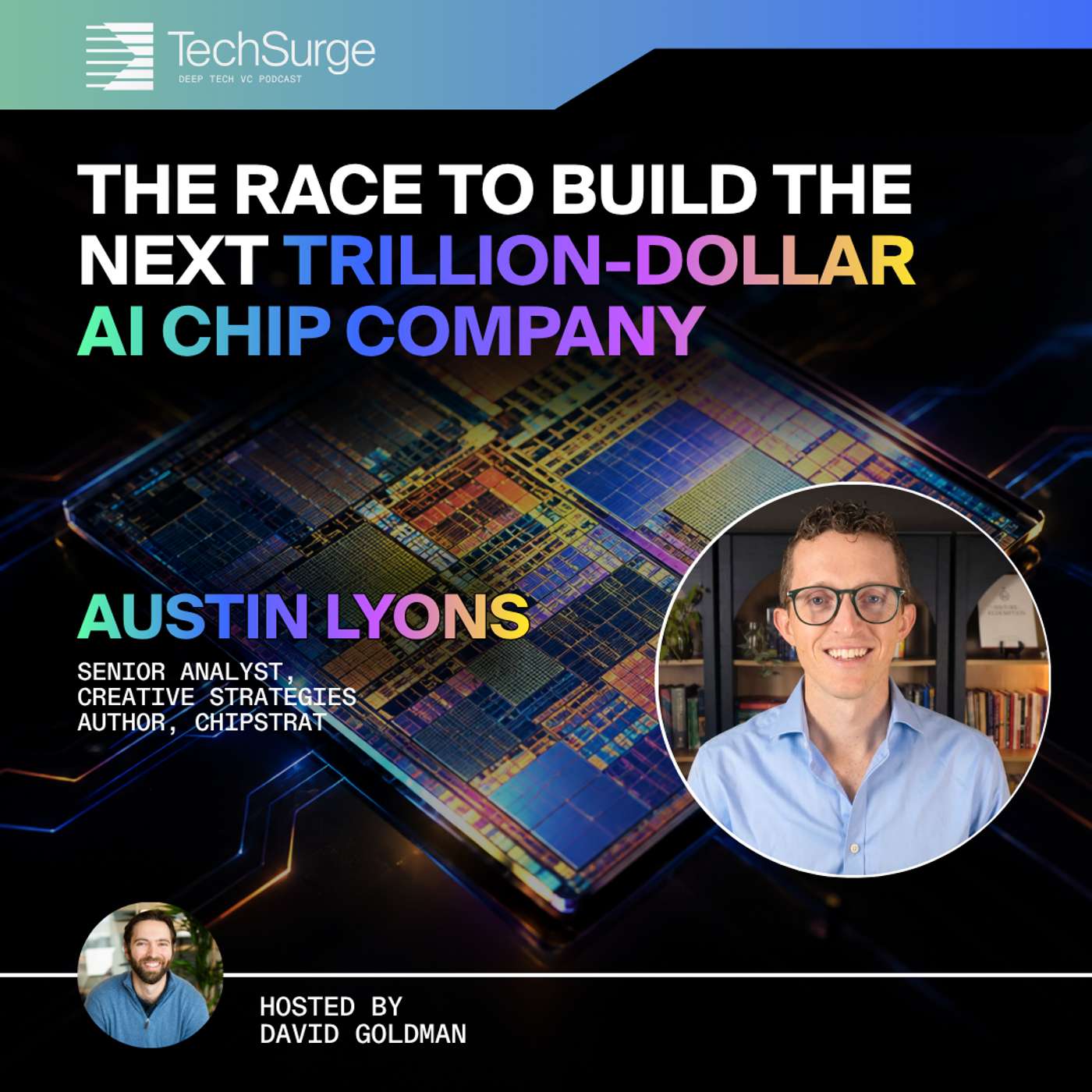 The Race to Build the Next Trillion-Dollar AI Chip CompanyTechSurge: Deep Tech Podcast · on Venture capital90 / 100
 PMs Are Fintech: How Column is Rethinking Property Management BankingThe Profitable Property Management Podcast · on AI agents89 / 100
 Inside an AI-powered personal dashboard | Matthew TiemannPossible · on AI agents83 / 100
 90% of AI prototypes never reach production (w/ Temporal's Samar Abbas) | AI BasicsThis Week in Startups · on AI agents81 / 100
 From Billable Hours to Business Outcomes: How AI Is Rewriting the Rules of IT ConsultingEvolving the Enterprise · on AI agents78 / 100
 How VCs Are Pricing Startup Burn Rate in 202652 / 100Why VCs Are Underwriting Startup Supply Chain ResilienceHow VCs Are Pricing Startup Exits in 2026How VCs Are Valuing Startup Community in 2026How VCs Are Pricing Startup Adaptability in 2026