The Tech That Connects Us · 2022-07-27 · 41 min
Key moments - from our scoring
Substance score
48 / 100
Five dimensions, 20 points each
John Spiegel traces his unlikely path from Cold War history studies to becoming a networking pioneer and now a security evangelist at Axis Security. After pioneering software-defined networking and SD-WAN deployments at Columbia Sportswear - where he transformed infrastructure from legacy MPLS to cloud-enabled point-of-sale systems - Spiegel now confronts a fundamental truth: despite decades of security spending, breach rates haven't improved. His core argument centers on the flawed architectural assumption of trust embedded in traditional WAN design. Zero Trust, championed by pioneers like John Kinderbrug, represents the most important security paradigm shift since the firewall, replacing implicit trust with continuous verification and least-privilege access. Spiegel contrasts SASE (which includes SD-WAN) with Security Service Edge (which doesn't), positioning SSE as the future since SD-WAN's interconnected trust models enable lateral movement for attackers. The solution involves building "islands" of security around branch locations with zero-trust outbound connections to SaaS applications and remote workers, enforcing adaptive trust, continuous endpoint scanning, and immediate severing of connections when conditions change. Leadership in this space requires coaching and servant leadership rather than command-and-control approaches.
SASE includes SD-WAN as a transport layer, while Security Service Edge does not. Spiegel argues SSE is the future because SD-WAN's trusted interconnections enable lateral movement for attackers, whereas SSE focuses on Zero Trust, private access, CASB, DLP, and secure web gateway without the inherent trust assumptions built into SD-WAN.
Because it challenges the fundamental flawed assumption that some network segments should be trusted while others are untrusted. Computers operate on silicon and zeros/ones, not trust, so every connection and user should be continuously verified with least-privilege access and adaptive trust rather than implicit trust in network architecture.
Instead of building large interconnected networks between branches and data centers based on implicit trust, companies should build isolated security perimeters around branch locations with outbound zero-trust connections to SaaS applications and remote workers, constantly scanning for changes in endpoint security and user status.
Columbia needed cloud-delivered point-of-sale systems to support rapid retail expansion from 7 to 150+ stores, but their legacy MPLS and slow WAN infrastructure couldn't support it. SD-WAN with layer 7 application focus reduced store infrastructure from a full rack to three devices and enabled cloud-delivered systems, though Spiegel now recognizes this created the trust-based vulnerabilities he seeks to eliminate.
While Internet connectivity is inexpensive and enables SaaS productivity, it gives attackers the same ubiquitous access as legitimate users. Organizations must be right every single time - preventing misconfigurations, exposed S3 buckets, and undeprovisioned user accounts - whereas adversaries only need to succeed once, making Zero Trust and continuous verification essential.
Our reviewer’s read on each dimension, with quotes from the episode.
The episode has useful technical moments - the lateral-movement risk of SD WAN interconnections, the 'islands' framing for future branch architecture, and the SASE vs SSE distinction - but they are buried under an extended career autobiography, generic leadership platitudes, a quickfire personal-interests round, and a diversity anecdote. Substantive density per minute is low.
the fact that you can get into a network and then jump onto an interconnection, whether that's MPLS or SD wan, means you have lateral movement, means you can move around uh, the enterprise and um, that's a problem
we keep pouring investment into, into security and what are we getting?
The self-aware 'right the wrongs of my career' framing and the 'building islands instead of interconnected networks' concept are genuinely fresh angles from a practitioner. However, most of the rest - zero trust evangelism, servant leadership, DevOps silos collapsing - is thoroughly recycled industry consensus.
I've spent my career building these artifacts of of trust. And to me, that was completely wrong. I should have gone a different way
I think the future about branch connectivity is not going to be about interconnections between a branch and a location. It's going to be about building islands
Spiegel has genuine practitioner credibility - he was effectively customer zero for an SD WAN startup and oversaw a real infrastructure transformation at Columbia Sportswear at measurable scale. His current field CTO role is vendor-side evangelism rather than operating at scale, which limits the ceiling.
became basically customer number one for them. Um and had really a lot of input into the product
we went from a full rack of equipment down to about three devices. So um, pretty dramatic change
The Columbia Sportswear era supplies real numbers - store count growth from 7 to 150, rack reduction to 3 devices, 10x Internet vs MPLS cost differential - but the strategic security content is almost entirely abstract, with no customer data, breach statistics, or measurable outcomes from the current vendor role.
when I started there they had maybe seven retail um, stores. Uh, and over the 2000 and tens that grew from seven to 70 and then 70 to 150
the cost per megabit of an Internet line versus an MPLS line, it's significant 10x
The hosts are recruiters, not security operators, and it shows: questions are uniformly broad and generic, there is zero pushback on any claim, and a substantial portion of the episode is devoted to personal-interest softballs entirely irrelevant to a B2B audience. No interesting thread is ever pulled.
What does leadership mean in the digital age?
How will automation and DevOps continue to drive change in cloud environments?
Computed from the transcript - who did the talking, and the words that came up most.
Joining us on the last (for now) episode of The Tech That Connects Us is John Spiegel, CTO at Axis Security. A keen cyclist who changed gear from leading the rollout of Cloud infrastructure role at Columbia Sportwear, to kicking the A out of SASE as Field CTO for SSE Platform vendor Axis Security. Enjoy!
Transcribed and scored by The B2B Podcast Index.
Speaker A: Welcome to the Tech that Connects Us, a podcast dedicated to the stories of leaders in the technology industries that bring us closer together. Specifically, content and media, satellite and new space, connectivity, and cybersecurity. Your hosts are, uh, me, John Clifton, Laurie Scott and Will Trenchard, the founders of Newco, a specialist global recruitment and executive search firm focused on these exact industries. We love being a part of them and we're excited to share these stories with you.
Speaker B: Welcome to the Tech that Connects Us. Your hosts today are, uh, me, Jake Sparks, heading up the cybersecurity division here at, uh, nuca, uh, alongside my esteemed colleague Harry Baldwin. And we're delighted today to be joined by Jon Spiegel.
Speaker C: Well, thank you, thank you for having me on your show.
Speaker B: Very good to see you. Uh, John led a large team of engineers overseeing the global rollout of infrastructure as a service cloud transformation for major retailer Columbia Sportswear, before joining SSE platform vendor Access as strategy and field cto. Uh, he's also a fellow podcaster and the co host of the security service Edge Forum. Welcome to the show, John.
Speaker C: Thank you. Excited to be here.
Speaker B: Great to have you. Great to have you. Uh, to get the story started, we'd like to go back to the beginning. How and when did you get into the security industry?
Speaker C: It wasn't really involved in the security industry itself. Um, I grew up, um, my father was in the military. So, um, I moved around a lot as a young kid. And, um, unlike a lot of other kids in school, um, who were. I was a big nerd. I read a lot of books, uh, ran track cross country, did a lot of sports out outdoors activities, um, but, uh, I was always interested in history and politics. So when kids were reading stuff, Stephen King was very popular at the time. I was reading, uh, William Manchester's American Caesar or Arms of the Corrupt, these big, huge volumes, and just really loved it. And as a result, um, I started, uh, looking into, you know, where did I want to go to school and what did I want to learn. And it quickly realized that politics and history was, was kind of my area of focus. So, um, ended up going to the University of Oregon. Go Ducks. And, um, at the time it was in the midst of the Cold War, kind of the height of it. If you, uh, you know, think back to the days of Ronald Reagan, Margaret Thatcher, uh, the Iron lady. And, um, did a lot of research on, on that, um, and wanted to get into the diplomatic corps was kind of one of my, one of my areas of focus. Um, had an opportunity to spend a week in Russia, or what at the time was Soviet Union, uh, during the Gorbachev period. Wow. Uh, and then as part of my schooling, took, uh, a year and ended, uh, up living in Eastern Europe, in Hungary, uh, in southern, southern area of Hungary for a year. Fortunately for me, it was 1989 and that's when the world changed. So I had this opportunity to kind of see, you know, these changes taking place in these countries that, you know, had been in a sense fossilized politically. And, um, this explosion of, uh, people wanting to have an influence in their, in their lives and their outcomes and their futures for their children. And it taught me a lot about culture, um, that good culture, you know, breeds good success. Bad culture, uh, leads to rapid decline. So, um, these were lessons I've kind of taken to heart. Uh, but unfortunately that time passed and the need for someone well versed in Central European history, particularly Cold War, wasn't so great. So, um, I ended up working at the state legislature here in Oregon for a while, but thought about getting into politics quickly. Learned that feast or famine, you either had great success or you're going from job to job to job. And that really wasn't a conducive lifestyle for me. So ended up taking some time as a ski bum to uh, enjoy the Great Mountains here in the Pacific Northwest. Uh, but long story short, um, I realized I needed a job that was constantly changing, constantly challenging. Me, um, could leverage my background, uh, in politics, but also this interest in technology as well. So, um, ended up, uh, working for a small IT firm here in Portland that um, had a contract to work with a lot of companies across the United States. So I spent uh, several years, uh, crisscrossing the United States, uh, you know, uh, basically going from paper plant to box plants. It was a paper products company, um, really good experience. But what that led me to was, um, I really started to. As part of these upgrades, I noticed there were these guys that would go into these closets and they'd uh, start working on these devices that had blinky lights on them. And I was like, oh, what is that? Started asking questions around it, figured um, out that was the network team. And um, that ignited another passion in me and fell uh, into networking really hard, um, went all the, all in on the Cisco training and um, had some really good success there with some other opportunities, uh, that we had at that firm. But, uh, it really led me into this role that I ended up with at Columbia. So, uh, that's kind of how I got started. It was really about. I enjoyed the constant Change and the constant challenges of technology. So, yeah, that's kind of how I got my start. So it wasn't really about cybersecurity. It was more about networking.
Speaker B: Interesting, interesting. And the one led to the other. I guess there's an emphasis now on both those elements. With your current role.
Speaker C: Exactly, exactly. My current role. Really. I call it the intersection between networking and security. Um, for a long time these were reviewed as separate departments. You had your security team that focused on firewalls, identity, um, endpoint detection, uh, those sorts of things. Then your networking team that was, hey, let's make sure these packets flow through the network as fast as they can, um, and help the business. So, you know, one wanted to go fast, the other one wants to slow it down. Um, and now we're in this world where uh, they really need to come together.
Speaker D: Yeah.
Speaker B: Uh, fascinating. Thank you, thank you so much. Questions around the past. Now. What made you want, um, to move from an operational leadership role for a retailer, uh, in this case, uh, Columbia Sportswear, into a strategy and field CTO position for a vendor like Axif?
Speaker C: Um, it really came as a result of I had this incredible opportunity, um, in the mid 2010s, um, I got, let's call it, disillusioned with networking. Um, for far too long. Uh, what I was doing just seemed like I was doing the same thing over and over again. And I was leveraging these technologies, um, from the 90s, you know, M MPLs, VPNs, uh, wide, uh, area networking, switching, wireless, so on and so forth and just kind of putting them together in slightly new ways, um, but not really changing things. And I was looking at my peers next to me on the platform team and they're, you know, deep into cloud, deep into virtualization, deep into, you know, this new storage technology coming out and uh, this convergence that was happening on the platform side. Meanwhile networking, it's still the same thing I was doing from the 90s. It's about moving packets from point A to point B. Um, and as a result I fell into this opportunity, um, with this movement called software defined networking. Uh, at the time was a company called Nicira that came out that kind of was at the forefront of this, uh, bringing what in the past was connecting a box to a box to a box wrapped in sheet metal, um, and bringing a software approach so you know, networking could actually scale and do some different things. Got involved with them. They got purchased by VMware, uh, that became NSX. Um, and uh, we were one of the first, I guess you would Say pioneers out there deploying NSX in an enterprise sense. Um, and as a result I had an opportunity to meet with that team, um, and had um, some speaking opportunities at VM World, at Interop and a few other um, uh, major conferences. Uh, but the point is I met with these people and they're like look, you're really good at kind of taking these concepts that are really challenging and boiling down into a simple um, uh easy to understand statement. Ah, as well as um, very colorful speaker. And um, they said you would be really good on the other side. And uh, at the time um, that was just not possible. My family situation was such that I couldn't really take that risk. Um, but uh, an opportunity came up uh, in the 2021 space for me to do that. So finally that's kind of when I made that change. But it was really these, these folks that kind of took me aside and said you really need to consider doing this. So um, that's kind of how it happened.
Speaker B: Interesting. You clearly developed those string to your bows during the role at uh, Columbia. Fascinating. What convinced you? So in a nutshell, what convinced you that SD1 was the way forwards for Columbia?
Speaker C: Um, really was about uh. So I was involved in this uh software defined uh movements and um. The challenge with that particular product, it was focused on the data center. Making changes to a data center is very difficult application. Um, owners don't like change. They don't like the infrastructure to change underneath them. Um, they get concerned when you start to talk about security because now you're talking about slowing things down. And as a result uh, rolling this technology out was. Was difficult. There was a lot of. Of labor, uh associated with, a lot of politics associated with it. And um, I realized that uh. You know that was great but really our value at Columbia was the company was moving to a um. From a wholesale to a direct consumer model. And that meant this incredible growth of brick and mortar stores. When I started there they had maybe seven retail um, stores. Uh, and over the 2000 and tens that grew from seven to 70 and then 70 to 150, so on and so forth. So there's this rapid growth and um, as a result the point of sale system that we were using was the same point of sale system that we had in the 90s. Uh, it was probably developed around the same time that uh, the Seattle bands were singing about team spirit and uh, some kid called Jeremy. Um, that was the legacy of that. Exactly. That was the legacy that we were working with. And the company realized it needed to change we changed our model of business. We need a better point of sale system and the focus was on a cloud delivered mechanism that didn't work with the infrastructure we had. We had this again. 90s legacy technology, MPLS, slow Ah Wan, private Wan, Internet was a secondary citizen. Um and I realized we needed to make a change. At the time there wasn't another option to go to. Uh, and then I heard about SD WAN and interestingly enough um, some of my contacts in the software defined space knew people on the SD WAN space. Uh, they put me in contact with most of the major startups and so I started meeting with them and um, ended up working with one that um, was focused on layer 7 so application layer and um, their focus also was making things simple. So we um, I worked with them, became basically customer number one for them. Um and had really a lot of input into the product and the product that with the outcome was really a culmination of my team's needs, Columbia's needs and also you know, what the industry really needed in terms of uh, taking things to the next step. So that's kind of how I got involved with, in with it uh, had some great results in terms of pivoting infrastructure away from this, you know, sheet metal boxes down to really it became like three to three devices at a store. So we went from a full rack of equipment down to about three devices. So um, pretty dramatic change.
Speaker B: Yeah, yeah. Fascinating transformation. Thank you. Um, so we've heard about John's career and progression and look back at the past which brings us to the present.
Speaker D: Thanks very much Jake. Yeah, thank you very much. M. Thank you. Thanks very much John. A couple of bits about the present here. It's great to see that conferences are back and we were all at RSAC recently. I'd love to hear what your takeaways
Speaker C: were from the show rsa. It was great to be back and see people. Um, I think my last conference that I was at was in 2019. It was a Gartner conference. Um, and uh, I was super excited about going to rsa. I had enough of zoom, wanted to see people in person. Um, it was great to be back. Um, you know major topics that we uh, focused in on and um, as part of one of my jobs here at my current role is this host, co host of the SSC forum. So as a result I finally got, I think, let me, let me step back. The most amazing thing was to meet people that I worked with. Truthfully, um, the interview process that I went through to get my Job was all on Zoom. Uh, the first few months I worked with the company, all on Zoom. I, uh, did not meet a face to face person for almost two and a half months. And um, that was a result of a speaking engagement that I had here in Portland where a few of my coworkers showed up. And I was like, I know you, I've seen you in person. It was an amazing, it was an amazing thing. Uh, and then I got, as a result to meet, um, the majority of the other folks that I interact with. Uh, but the cool thing was I got to meet my co host on the SCC forum, Jay Tilson, uh, in person. He's a Brit as well. Um, and that was incredible because we just bonded like two peas in a pod. Um, so meeting people, seeing people again, I think was the majority of, uh, takeaway for me. But the other side of it is, um, on the security side, the same thing is true. We just keep pouring money into security and the results are the same. Are we getting better? I don't know. You read the news. Ah, and someone gets hacked. I even had um, my air conditioned guy who was out here maybe a year ago. Um, I got a notice from them that they got ransomware. Come on. Uh, you know, we keep pouring investment into, into security and what are we getting? Um, and um, that's for me, the area we need to focus in on. How to, how can we improve the security space and not do it in a way that's just throwing money and throwing technology into, into a fire that, uh, just keeps consuming it.
Speaker D: Yeah.
Speaker C: Interesting.
Speaker D: Yeah, fascinating. Thanks for that. And kind of related to that. Given that the Internet obviously is the network now. What challenges does this create?
Speaker C: Oh my.
Speaker B: Um,
Speaker C: the Internet really is the future for, uh, connectivity. And um, it's good and bad about it. The good is that you have this ubiquitous connectivity out there that for the most part is inexpensive. If you think about the cost per megabit of an Internet line versus an MPLS line, it's significant 10x. Um, and um, as a result, it's enabling this incredible amount of productivity from companies, uh, you know, with SaaS applications. What's the value of a SaaS application? It's, it, um, no longer has to do the care and feeding for a system. You don't have to do the patching, the upgrades, the constant maintenance. You don't have to, you know, if a new feature comes out, it can come out right away as opposed to waiting six months. You know, when is the best time to upgrade the application? Um, that's hugely important. And the ability to access that, um, from almost anywhere is amazing. Um, but on the other hand, we, um, have this challenge of if, you know, businesses can get to any application at any time, anywhere. The same thing is true for the bad cyber actors. They can easily get into your network. Um, maybe because you misconfigured everything or something, or maybe you left an S3 bucket open, or maybe you didn't, uh, uh, do enough on the identity side and turned down that user that, uh, recently exited at the company. Um, you have to be right just about every time. Um, and that's a huge challenge. Um, what I'm excited about is this rise of this concept called zero Trust. And I know there's a lot of marketing around it. Uh, you know, zero Trust, next Generation, 0 Trust, 2.0, 3.0, so on and so forth. Uh, it's almost been abused, but it's probably, in my mind the most important thing that has happened since, I don't know, the advent of the firewall, if you want to call it that. Um, but the, the firewall really kind of if, if you kind of. We had an opportunity to interview, interview John Kinderbug, uh, a few days ago, and if you have the opportunity to interview him, just do it. Because he's an amazing guy. He was one of the fathers of, uh, zero Trust. And his whole journey started because he started working on a pix firewall and he did not like the concept that there was one side that was untrusted and one side that was, I'm, uh, sorry. One side trusted, one side was untrusted. And he was like, come on. This, uh, is a computer. A computer is not a human. You know, we built a society, um, built on trust. You know, we trust one another. That, uh, you know, when you pay for something, you trust that person. Uh, every interaction you do is built on this concept of trust. Computers don't understand trust. They are built of silicon, rare metals, and they think in zeros and ones. Trust is not a concept for them. Um, so, uh, that kind of started, sparked him on this journey of zero trust. Uh, and if you think about how WANs are built and what I did with SD WAN, what I did in my past, uh, building out these networks, these global networks for Columbia Sportswear and others, um, again, I'm inserting trust into that network. That connection between a branch and a data center or a branch and a branch is based on trust. I shouldn't be trusting that. And, um, I've spent my career building these artifacts of of trust. And to me, that was completely wrong. I should have gone a different way. And I think the future about branch connectivity is not going to be about interconnections between a branch and a location. It's going to be about building islands. So islands, essentially, companies are going to be, um, building these islands, and the connections going out are going to be these almost, you could say, zero trust connections out to a SaaS application, or, um, it's a remote worker, uh, those sorts of things. And it's going to be based on this concept of zero trust or adaptive trust. The least amount of privilege, um, possible and constantly scanning and understanding. Did something change on the back end? Did the user get deprovisioned? Um, did they turn off their firewall? Is their endpoint protection still on? And if one of those things happens, um, sever the connection, take them off the network, those, uh, types of things. I think that's really the future, and that's really what gets me excited about Access security and our atmosc platform every morning, is that opportunity to, in a sense, right the wrongs of what I did to get here. Uh, so now I have to kind of reverse all the things I did, but also, um, evangelize that concept because a lot of people, it will take them time to really think about it and go, you know, that's not the right approach. I need to be building these islands instead of this massive networks, uh, that we did in the past.
Speaker D: Fascinating. Yeah, no, I appreciate that. And that kind of leads us on nicely as well, to kind of. I'm sure it's something that I'm keen to understand, but I'm sure our listeners are as well. What's the difference between SASE and Security Service Edge?
Speaker C: Ah, uh, SASE and Security Service Edge. Um, the really, the main difference between the two is really simple. One includes SD WAN and one does not. Um, I was quoted in an article in Tech Republic. Uh, you know, it's time to kick the A out of sase. Um, it's kind of a strange concept for me because, you know, I was one of those pioneers, uh, out there tooting the horn about SD WAN for many, many years, uh, to the point where one of the Gartner analysts called me Mr. S.D. wan, and now I'm on this other side. Um, but it harkens back a conversation I had with some other, uh, gardener analysts when we were talking about SD wan. Um, they said to me, look, at some point SD Wanch is going to go into the background. It's going to be transport uh, at the time I was on the SD WAN bug because that was my thing. Um, for me it got the results that I needed it to get me. Uh, but now uh, it's one of these tools that uh, basically is one of the problems because um, these interconnections, these trusted interconnections are what is causing so much havoc on enterprises these days in the form of ransomware and so on and so forth. The fact that you can get into a network and then jump onto an interconnection, whether that's MPLS or SD wan, means you have lateral movement, means you can move around uh, the enterprise and um, that's a problem. So what is the difference? One has SD wan, one does not. Um, I think the future really is about the security service edge because um, that's where we need to be. If you think about it includes zero trust, private access, CASB, um, as well, you know, to control your SaaS, your SaaS assets, DLP, so you know where your data is. Because data now is no longer behind the Cast Limit Data Center. It's spread in every corner of the world and it will continue to be that way. So DLP is important. And then of course um, the swig, which protects your Internet, uh, access and browsing and so on and so forth. And long term I think that's probably where CASB goes. But um, those are the important elements, um, for the future. The other side of it is as well. With this distributed workforce, you can't put an SD WAN connection at everyone's home. It's just cost prohibitive. So the future is about software, Software, um, uh, development software on the client. And that speed of rapid innovation in software is much quicker than uh, you would see in a hardware situation where a lot of the uh, SASE players are in these days.
Speaker D: Fantastic. Yeah, I very much appreciate that. Um, and on to you Jake. That leads us nicely to the future.
Speaker B: Uh, thank you so much. Uh, John, what does leadership mean in the digital age?
Speaker C: Um, leadership is, you have to evolve in this digital age. Um, for so long, you know, at least when I was going to school, it was this command and control concept where you had your leadership. They would provide, here's the objective, uh, and almost give you guidance down to, you know, you need to get to here, uh, this way. Um, that was kind of the past. And when I came up, you know, through the ranks, uh, that was still being taught. The future isn't so much that the future is about being a coach or um, the concept of servant leadership where you can Gather a team together. Um, and, um, you know, when I had the opportunity to lead at Columbia, um, I had an incredible amount of engineers that, um, all had different points of view. Uh, and allowing them, giving them guidance, you know, here's where we need to go. Um, help me get there. What do you think is the best way? Offering course corrections in a very gentle manner, uh, but allowing them to be adults and succeed. Uh, that's really where leadership needs to go. You need to be a coach. You can't coach from a perspective of, I'm going to tell you how to get to A, to B to C to so on and so forth. You basically need to set the goal and then, um, help them achieve that goal, help them to be successful. Um, and that's a hard lesson to learn. When I first started, I, you know, ran the network team. I still wanted to retain my networking skills. I still wanted to spend time on the routers, I still wanted to fix things. Um, one of my engineers took me aside and says, look, I really appreciate what you're trying to do, but you're not helping. You need to back away. You need to be thinking, uh, you know, three, four, five months in advance. Um, and you need to be helping us get resources so we can be successful. And I really took that to heart. Uh, and from that day really started to think about how could I not so much help myself, but help the person on my team to be successful. And that's really where leadership needs to be, is, is thinking about the collective team as a whole and not worry about yourself.
Speaker B: Great. And that's, that's great candor from, from the engineer, of course, but as well as a leader, to be able to be, to have the humility to listen to that and really implement that into how you develop the team. Interesting. Very interesting. Thank you. Uh, how will automation and DevOps continue to drive change in cloud environments?
Speaker C: Um, it's almost essential because, you know, in the past you had these tech silos, let's call it that, you had your networking team, you had your platform team, you maybe had a storage team, uh, and your legacy as 400 team, your operations team, your developers. And there were walls between all of those folks. And, um, to get something done. Uh, it was an act of Congress, essentially, uh, to get all these people working together. Um, that has changed the development of cloud, um, has propelled that in a different direction. It required folks to, at, uh, least on the infrastructure side, which, you know, where is my experience to start to understand if you're a platform person, you need to understand networking. If you're a networking person you need to understand uh, the platform side of the equation as well as operations which can be, you know, better or for worse can be another impediment to progress within an organization. Um, so you see this, these collapsing of these silos and that's going to continue uh, as we move forward, um, within my team, uh, when I was at Columbia we saw that coming and started trying to develop uh, the team to be less siloed and more uh, cross um technologies. So if you had a networking person, uh, you didn't let the networking people sit together. At the time, uh, we actually cross pollinated and brought in the platform people so they would talk um, and bond together. We also developed an automation team that was focused on building out um, what we called at the time the Columbia Cloud. Um, because we knew that automation was critically important for us to get um, out of um, the problems of keeping the lights on and all the work that was involved in that so we could move faster as a team. Um, but there were some challenges with that as well because uh, you know, what platform do you choose to build your automation on top of? Uh, at the time the platform that had been built was um, bespoke and it was primarily a platform team. Uh, the networking team couldn't really access it. So that was a pivot we had to make. So we moved to an ansible model, um, not only for the platform team but also for the networking team. And that brought people together. We had some great talent on the team that had uh, you know, some visions uh, for the future, uh, and could bring people together as well. So we had great success with this. So it's it, that area is going to continue, it's going to continue to grow. Um, if you're a person going into IT infrastructure, um, don't focus on one area. You know, make sure that you get involved with the networking team, make sure you get involved with the platform team. Make sure to learn the basics of programming because that's critical to your success. Um, and then spend time on the culture side. Uh, go and read uh, the Phoenix project. It's follow on the Unicorn project. Um, go look for books in the space on leadership and culture. Learn how to work with people because at the end of the day um, that'll be your metric for success. Can I work successfully on a team and be more about we than I?
Speaker B: Great. That's inspiring stuff. Thank you, thank you. Um, very interesting to get your thoughts on past, present and future. Uh, next section is Something I think we all agree is vitally important. And that's diversity.
Speaker D: Yes. What do you see as the major root causes of a lack of diversity in the engineering professions? Um,
Speaker C: it tends to be, unfortunately, and I'll say it, it's a Caucasian, uh, male dominated area. And that's wrong. It's completely incorrect, um, that it is that way. Uh, as a hiring manager in my past life, um, it was always, I always had interest in finding folks with a different viewpoint, um, of a different gender. And when I had an opportunity to hire those folks, I did. And I had this, this uh, incredible experience where um, we lost one of our key resources that was supporting our retail, um, stores. And it was, he was a, I guess you would say a senior engineer. And um, as I thought about the replacement for that, my first inclination was to go replace it with a senior engineer. And then I took a step back, maybe I did a bike ride and had a great thought. Um, and um, I ended up going to my leadership, uh, and then eventually to our CIO and said look, this is what we've done in the past. We've always gone out and hired the same sort of person or the same sort of skill set. Let's do this a little differently. Let's take this senior level role and split it in two. We'll end up with two entry level folks. Um, but we have a good team and the team that we've built is very much about mentorship and about bringing people together. And let's go out and hire two people. And he's like, all right, let's do it. The numbers work, I'm okay with that. Go forth. And so I did, um, I ended up going through several interviews. But um, the two people I ended up just like focused on was first a lady who um, had very limited networking experience. Uh, she was in midst of taking a ccna, Cisco, CCNA certification class at one of the community colleges. But she had that desire. You know, when we went through the interviews I could see the spark going off in her head. It just wasn't igniting because she just didn't have the opportunity or the time to, you know, the chair time to really understand the technology. And then, um, I also had an interview with another gentleman who just recently left, uh, the military. Uh, he was in the Air Force, he had some networking experience, but he was doing the same thing. He was going through the CCNA training. So I'm like, let's, let's just hire these people. We have the team, they have the experience. We can Bring them on board, we can mentor them. And I did that. Uh, one happened to be an Asian American, the other one was African American. Uh, so I got some. Not only did I get the female that I wanted, always wanted to hire, uh, but I also got, you know, this, this great, this great character that I got, uh, uh, from the gentleman that I hired. And um, no less than three or four months later, uh, they had been training, they had, you know, um, going through their ccna. Uh, we got them focused on doing SD WAN upgrades, right? Turns out they're doing an SD WAN upgrade. And they're uh, on a call with one of our ccie, uh, Style Network engineers. And he goes, hey, that what you're doing is wrong. He's like. And the two, the lady and the gentleman were like, nope, this is right. No, you're wrong. Don't do it that way. And they're like, no, we're going to do it this way. Turns out they were right. He was wrong. And uh, at that point I'm like, this is successful. Both, um, of those resources have left the organization. Uh, one is working at Amazon currently and the other one is an automation specialist at um, um, what is it? Um, one of the major networking vendors. So, uh, they both had great success.
Speaker B: Awesome.
Speaker D: Right? Right, yeah. That's a fantastic story and it's a topic we could discuss for hours and there's lots of complex aspects of it and uh, it's important that we keep discussing it. Um, but onto some other bits. I'm sure our listeners would love to learn a bit more about you and we're a curious bunch. I'd be great to hear what your perfect weekend would be.
Speaker C: Uh, I think my perfect weekend, you know, think about this for a second. Probably my perfect weekend would be in Central Oregon. It would start off with the uh, skiing Mount Bachelor, uh, in the morning, uh, and then in the afternoon it would probably involve some biking if I still have some energy left. Uh, probably some uh, some mountain biking out on Phil's Trails. And then in the evening, probably beer, uh, and pizza with my family. That would probably be the perfect uh, day for me.
Speaker D: Yeah, definitely. That's one of the stronger ones we've definitely heard. Yeah, definitely. Um, now onto a ah, quick fire round. It's just, ah, no clues here. You just need to think on your feet. Um, five or six questions here. Um, so triumphed in lockdown or failed in lockdown?
Speaker C: A little bit of both. Um, I actually, as a result of the lockdown, um, I had to step away from My job at Columbia Sportswear. So, uh, my wife was working at Columbia. I was working at Columbia. She was doing Covid response. I was building out the infrastructure to respond to Covid. Uh, and the two didn't really work very well because we, uh, had two kids that came home and were spending their times here online schooling, which didn't work very well. Uh, so in some ways I succeeded because I got more work, life balance out of my life. Uh, but in some ways, you know, I feel like I left my team, uh, in their time of need. So I would say it's somewhere in the middle.
Speaker D: Nice. Yeah, definitely. This is a good one. Mountain peaks or bright white beach?
Speaker C: I would say mountain peaks.
Speaker D: Strong. A glass of wine or a pint of beer?
Speaker C: Oh, beer. Every time. IPAs. Northwest IPAs. Everyone knows you for that.
Speaker D: Very nice. And what's your favorite game or sport to watch and play?
Speaker C: That one evolves. Um, I, uh, I'm a. My family grew up in Wisconsin, so I'm a Green Bay Packer fan. So every Sunday, if you give me the opportunity, um, and that'll be my major gripe as well. I can't watch every game because of the way the NFL distributes their. Their games. Uh, but that is probably the sport that I enjoy the most. Uh, watching. Um, although I can say I'm. It's Tour de France, so I'm watching that as well right now.
Speaker B: Beautiful scenery.
Speaker C: Yeah, major, major passion for me. And then, um, I've gotten a little bit into soccer as well, so.
Speaker D: Nice. Glad to hear. And one thing I must ask, after we spoke at the beginning, if you had to keep one, your mountain bike or your road bike, which one? On what you'd be paying.
Speaker C: It's. That's a hard question. Um, it's probably the road bike. It's. It's the one I have the greatest passion for. Um, I love the. I love being outdoors. I love the mountain bike, the gravel bike. Uh, but, you know, my best thinking, you know, it honestly comes on the road bike. It just allows me to get out there. You. You kind of, um, get into a flow. Whether that's climbing a mountain or. Or going downhill or just on the flats. There's a bit of flow that you get into, and, uh, some of the thoughts that you have or challenges you're working out, um, that's when you get the solutions is out on the road.
Speaker D: M. Yeah, definitely. Absolutely. Yeah. And thank you. Great. To get more insight on you. I'm passing to Jake for our final question.
Speaker B: Excellent. So our final Question is always the same. What one piece of advice would you give to someone entering the industry?
Speaker C: Um, one piece of advice and I think I kind of, I said this earlier. Um, you know, if you're getting into networking, spend a lot of time understanding all the concepts, go through the Cisco training. Uh, it really, from a networking perspective is the best training, uh, out there and just dive into it. Uh, but also know that you can't just do networking without thinking about security. And that for me is, you know, I said it earlier in this discussion, um, that's the, that's the, I guess I would say the failure that I'm trying to rectify right now is how do you insert security into networking? So, uh, know that the future is really about not building these complex interconnected networks based on trust. The future is about building islands, um, that are using adaptive security techniques. Um, that, that would be my piece of advice. So spend the time getting the basics, but also know that security is paramount and important. And really, in my opinion, over the next five years, uh, we're going to see this massive shift in how we do networking and it's going to be based on, you know, the zero trust, adapt to trust, whatever you want to call it, solutions, um, that are out there.
Speaker B: Fascinating. Thank you. Thank you so much for all these insights. It's been very educational and lots to unpack there. Thank you, John. Great to have you on the show.
Speaker C: Likewise. Thank you.
Speaker B: Take care.
Speaker D: Thank you.
Speaker A: Thank you for listening to, um, our podcast. If you enjoyed the show, please do subscribe and give us a rating. It really helps these stories to be found and enjoyed by more people. For more information about Newco, we can be found at www.neuco-group.com. you've been listening to the Tech that Connects Us SA.
Other episodes covering the same guests and topics, from across The B2B Podcast Index.
 How GTT Rebuilt Global Security For The AI EraWhat's Up with Tech? · on Zero trust architecture91 / 100
 The Evolution of Modern GRC ft. James Huang, Head of GRC @ GongSecurity & GRC Decoded · on Zero trust architecture86 / 100
 Edge AI Security: Why Secure-by-Design Engineering MattersEmbedded Insiders · on Zero trust architecture79 / 100
 AI and Cybersecurity in SMBs: Insights from Bruno LecoqSecuring the Realm · on Zero trust architecture79 / 100
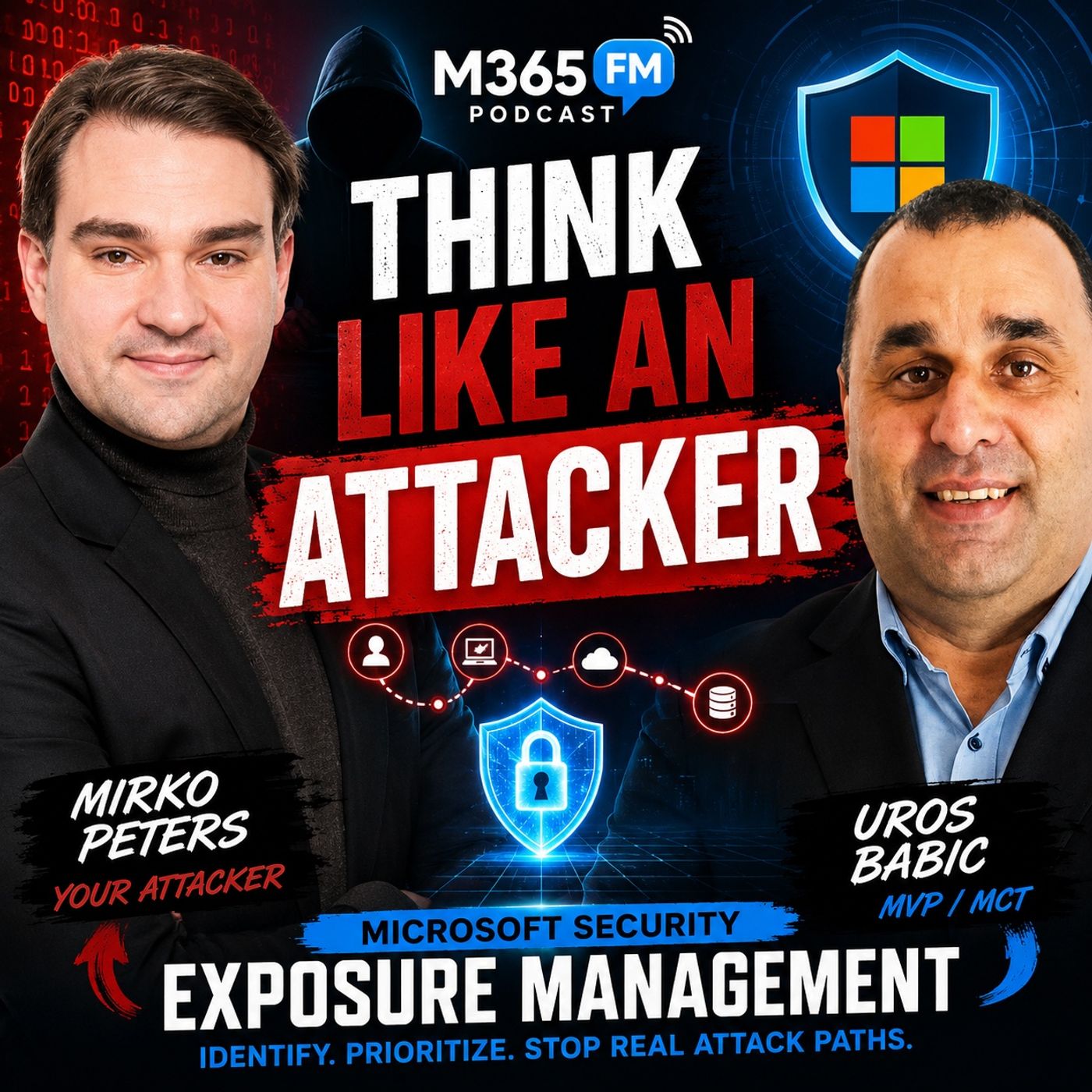 Think Like an Attacker: Microsoft Security Exposure Management with Uros Babic [MVP-MCT]M365.FM · on Zero trust architecture78 / 100
 Harish Peri (Okta): When the Thing Accessing Your Systems Has a BrainThe Road to Accountable AI · on Zero trust architecture77 / 100Remote Production, weekends on the coast and the talk of IBC- Episode 76 - Mark Johns, Chief Executive Officer at Switch Media From stargazing to Silicon Valley, the Future of Optical Communications is in Great Hands - Episode 75 - Tina Ghataore, Chief Commercial Officer at MynaricExploring the future of live production - Episode 74 - Serge Van Herck, CEO at EVSMaking content flow like water-Episode 73, Srini Co-Founder and CRO of Amagi DIY police scanners, radio failures and natural disasters all lead to satellite innovation! - Episode 72 - Declan Ganley, CEO at Rivada Networks