
The Startup CEO Show · 2026-02-16 · 52 min
Key moments - from our scoring
Substance score
43 / 100
Five dimensions, 20 points each
Jerry Colonna, the renowned executive coach to startup CEOs, joins Mark McLeod for this final episode of The Startup CEO Show to explore the inner journey of founders and the role of authenticity in leadership. The conversation cuts through the pervasive bravado in startup culture - where founders habitually claim they're "crushing it" despite the mathematical reality that most startups fail. Colonna distinguishes between vulnerability and honesty as frames for leadership, arguing that rebranding the conversation from "being vulnerable" to "being honest" shifts how founders approach their challenges. He uses a concrete example of a $100M revenue, 30% YoY growth CEO who experiences rising anxiety precisely because things are working well, stemming from internalized "shoulds" about what a CEO's job should look like (wartime, in-the-weeds management) rather than from actual business problems. Colonna emphasizes that much of this dysfunction traces to the echo chamber effect and comparison culture in venture ecosystems. The discussion also covers his own 12-year bootstrap coaching business, Reboot, which deliberately stayed small (13 people) rather than scaling via venture capital - a choice driven by protecting his ability to do meaningful work. Both hosts reflect on the tension between ambition and contentment, purpose and impact, ultimately advocating for founders to define success on their own terms rather than through external markers like IPOs or acquisition multiples.
Look at objective metrics: revenue, growth rate, profitability, team performance. If those are strong but you feel anxious because peers are doing something different or you're not in "wartime mode," you're caught comparing the 100% you know about yourself to the 10% you think you know about competitors - that's the echo chamber.
Honesty reframes the conversation from "I should hide my weakness" to "I should tell the truth about what's actually happening." The word vulnerability still carries a connotation that you're exposing a weakness; honesty is simply being authentic about your real state - which paradoxically feels less risky once leaders internalize it.
Yes. Colonna and Mark both argue there's nothing wrong with running a business that serves your lifestyle, generates good income, and creates meaning for employees and customers. Most of the tech industry never reaches the contentment stage because of the "should" that success requires an exit or IPO.
He deliberately kept Reboot small (13 people) and bootstrap it, turning down venture capital, so he could stay connected to direct client work and meaningful relationships rather than scaling into thousands of coaches at the cost of his personal engagement.
Through Buddhist practice and radical self-inquiry, he asks himself: What am I really worried about? Often what surfaces as financial anxiety is actually a proxy for deeper concerns about the state of the world or his personal values - and once he identifies the real root, he can respond to it authentically.
Our reviewer’s read on each dimension, with quotes from the episode.
There are a handful of genuinely useful ideas - the reboot equation, the vulnerability-to-honesty reframe, and the CEO case study about anxiety when things are going well - but they are buried under extended Buddhist philosophy tangents, a Seymour Hersh documentary detour, and long stretches of the host promoting his own mastermind product. The insight-per-minute ratio is low for a B2B operator audience.
the bullshit spinning stops here. You're all not crushing it
practical skills plus what I refer to as radical self inquiry plus peer sharing. Equal goals, enhanced leadership, and greater resilience
The reframe of vulnerability as honesty is a crisp, genuinely useful reframe, and the observation that a CEO's anxiety rises when the company runs smoothly because of ecosystem 'shoulds' is a fresh clinical vignette. However, the broader content - hustle culture critique, Buddhist concepts, burnout causing founders to sell, compounding metaphors - is well-worn startup-coaching territory.
as soon as you change the framing from vulnerability to honesty, people start doing what you just did, which is start typing notes
she's comparing herself to her peers in the ecosystem, which is also known as the echo chamber
Jerry Colonna is a legitimate, high-credibility practitioner - a former VC who built a real coaching firm over 14 years and works with actual startup CEOs at scale. He is not a career podcast guest. However, the conversation fails to fully mine his practitioner depth; he spends considerable time on philosophical tangents rather than delivering the hard-won operational wisdom his credential implies.
when I started doing boot camps 14 years ago, on the first night I would get up like a good preacher or minister
I've got a business I've been running for. It'll soon be 12 years. I earn a really good living
The standout specific is the anonymised CEO client doing $100M revenue, 30-40% YoY growth, profitable after eight years - a concrete, believable example. Beyond that, data is sparse; Warren Buffett's GEICO history is slightly muddled, and most claims about founder psychology are asserted without evidence or named examples.
They'll do 100 million in, um, revenue. They're growing 30, 40% year over year. They will be profitable this year
Warren Buffett started buying geico in the 1940s
The host repeatedly pivots away from Jerry to narrate his own journey, his mastermind product, his Tulum retreat, and his personal equation - sometimes for minutes at a time. Questions are often soft or self-referential ('Tell us about poetry'), and there is no meaningful pushback or challenge to any of Colonna's claims. The mid-episode ad for the host's own product further undermines credibility.
I brought 19 of them down to Tulum, uh, in November. Wonderful. For a retreat
I, uh, yeah, I've been really, really pleased with the reception
Computed from the transcript - who did the talking, and the words that came up most.
Join a community of ambitious CEOs who are looking to build market-leading companies without sacrificing health and happiness. Check out: What if the fastest way to scale your startup is to stop pretending you’re “crushing it”? In this episode of The Startup CEO Show, I sit down with Jerry Colonna, legendary CEO coach, former VC, and author of Reboot, for a raw conversation about the founder’s inner journey: the anxiety, the bravado, the “should,” and the quiet suffering that often hides behind high growth. Jerry challenges the startup ecosystem’s obsession with spinning a story and reframes “vulnerability” as something simpler and harder: honesty. We unpack why founders feel pressured to perform, how hustle culture disconnects leaders from clarity and compassion, and why building a company is often a personal development journey disguised as a business. We also explore meditation, purpose, equanimity, and why poetry can cut through the monkey mind when nothing else will. If you’re a founder, CEO, or investor who wants to build something big without burning out, this is one of those conversations that sticks with you.
Transcribed and scored by The B2B Podcast Index.
Speaker A: She's an extraordinary CEO. Uh, the company is working. Everything is working. And this entire construct is leading to a completely new kind of anxiety, which is there must be doing something wrong. Why? Because everyone tells her that a CEO's job should be wartime and in the weeds and doing this and doing. She's like, jer, what am I doing wrong? The company is grow. You're profitable, 100 million in revenue. But that should is in her mind. And she's comparing herself to her peers in the ecosystem, which is also known as the echo chamber.
Speaker B: Welcome to the Startup CEO Show. I'm, um, your host, Mark McLeod. This is a special episode for me. A. It's the last episode of the Startup CEO Show. Stay tuned for a new, different podcast in the future. But also this is a really special guest for me, Jerry Colonna, the coach to startup CEOs, the guy who inspired me to be a coach. Amazing conversation. We went into the founder journey. Quite a philosophical discussion, as you would expect. Jerry's, uh, a Buddhist. I'm a Buddhist. If these kinds of topics and kind of more thinking about the inner journey and self exploration, self awareness, radical self inquiry, as, as Jerry calls it, if that is of interest to you, you're going to love this episode. And I want to thank everyone for tuning in to the Startup CEO show over the last two years. I really enjoyed it and as I stay tuned for a new podcast soon. Jerry, welcome to the Startup CEO Show. It is a true pleasure to have you here. How are you doing today?
Speaker A: I'm doing well. Uh, thank you for having me. Uh, it's a nice, bright, sunny day today. That feels good.
Speaker B: You know, I try not to be starstruck. I've learned through working with people that we're all the same. We're all born naked and crying. We all die and we all want to love and be loved. But, you know, throughout my career, I've been starstruck. And I remember back when I was a vc, uh, I co invested with Fred, Fred Wilson. And I did zero diligence on the deal. My diligence was, oh, Fred's leading it. And it was a total zero. But I did it because it was Fred, you know, so I put him on a pedestal.
Speaker A: I had to give him shit.
Speaker B: I don't even remember. I blocked it. It was just like a total. It was just a disaster.
Speaker A: Bad memory.
Speaker B: Yeah. And so, but I put him on a pedestal and didn't do my job and didn't do my limited partners of service as a result. And I, you know, um, newer to coaching than you and you were a very strong influence, although you had no clue in me becoming a coach. And so you're kind of a star for me and so it's a true honor.
Speaker A: What a sweet and kind thing to say. And uh, hopefully by the end of this conversation, if not sooner, um, any star struck mist will have disappeared as the reality of two human beings come together.
Speaker B: Yes, that's right. And so, you know, I threw out some questions in advance and kind of the first one really could be the entire discussion which is really about the founder inner journey and maybe just getting your take on that and uh, maybe I'll give some context for where I thought we could go. Like there's so much bravado in the startup world, right? You catch up with someone and you ask how they're doing and they're like, yeah, we're crushing it. You catch up with a vc, how's your portfolio? We're crushing it. Which is mathematically impossible because most startups fail, right? And so we're busy putting on this brave face. Whereas you know, your work and my work is really about getting people to be vulnerable. Right. And like the only way out is through face your fears, like face everything. Like admit that you're scared and you know, you uh, are famous for making people cry. That could be a thing we talk about. But I don't know, just I'm going to throw it over to you to maybe riff on what I've just said and the inner journey. Maybe, uh, you know, the last thing I'll say is like for, I think building a startup, especially a high growth startup, is a personal development journey in the form of a company like you cannot help but transform. And there's a huge, huge inner component to that. So maybe let's see where that conversation takes us.
Speaker A: Yeah, so there's a couple of things occur to me. Uh, the first is a slight nuance and build on the first thing he said which was that uh, how the startup world and the venture world is filled with bravado. I would argue much of adulthood is held with bravado.
Speaker B: It's true.
Speaker A: I think we socialize children to bullshit their way through feelings. And I uh, think that there is a particular noxious version of this kind of delusion in the startup venture world in the ecosystem. Um, that stems in part from the over identification of ego with the entity. And so um, when I started doing boot camps 14 years ago, on the first night I would get up like a good preacher or minister and I would preach and I would sit there and I would say, the bullshit spinning stops here. You're all not crushing it. Um, the reason that that took hold was that, um, we train, just as we train children, not to actually confront and deal with their true emotions. We train entrepreneurs to spin. We train people to spin. And so, um, this. This propensity to. To be inauthentic, if you will, to pretend, um, is something that's built into the system. Now, why is this so important? Well, um, first of all, you know, you made a second point about vulnerability. And I tend to be less, uh, mindful or less focused on using the word vulnerability. I prefer a different word. The word I prefer is honest. And the challenge with being honest in the context in which we were just talking about is that it can feel vulnerable. But as soon as you change the framing from vulnerability to honesty, people start doing what you just did, which is start typing notes. It's like, oh, right, wait. Because what we're sending is a message that you should be dishonest. You should actually mask how you're really feeling. You should mask how the company is really doing. You should pretend your way to leadership. You should pretend your way to adulthood. And as soon as I lay it out that way, all of a sudden, the falsity of this construct falls away, and you start to see, okay, what are we doing? It's like a kabuki theater that we're all playing. We're all playing games here. And the result is twofold. One, um, companies are misled. Employees are misled. And I use that term in both its meanings. They're lied to and they're poorly led. And the second thing is that that inner sense of unease gets worse. See, when we walk around being inauthentic, being dishonest with how we are really struggling, our capacity, um, to deal with that inner journey is undermined because we do not have the capacity to say, I need help, or this isn't working, or, I don't know what to do, or maybe I'm not right for this job. All of those messages not well handled lead to, uh, just a miserable experience. And I'll shut up after closing with this. No one launches a startup with the intent of being miserable.
Speaker B: Right?
Speaker A: We do it because we want liberation, we want freedom. We had this inner passion that we want to give voice to. We don't want to report to somebody. We want to be, uh, in charge of our own destiny. But nobody says, I'm going to do this so that I could be miserable. But then we take on this pattern and then they call you or they call me and they get on the phone and the first thing they do is cry because they're in so much pain. So this is a long winded way of saying be honest. That is the first step on an authentic inner journey that allows you to grow regardless of whether or not the company succeeds.
Speaker B: Yeah man, so much to unpack there. This episode is brought to you by Limitless. Limitless is an exclusive community of VC backed CEOs who want to scale the themselves and their companies without limits. The biggest outcomes in the startup world are founder led, meta, uh, Amazon, Shopify, Airbnb, Canva, uh, Nvidia, uh, behind every one of these companies is a founding CEO who didn't just scale their business, they scaled themselves. They added one zero at a time and today run companies with billions of dollars in revenue each. That's the goal of Limitless. To give you the tools, strategies, mindset and community to lead at the highest level without sacrificing your health, relationships or purpose. Through group calls, an elite peer network, a proprietary AI coaching bot, members only library and in person experiences, Limitless gives its members everything they need to keep scaling themselves and their companies for as long as they want. Go to Limitless CEO to learn more. What's coming up for me right away is a word that I'm always on the lookout for, which is should I should be doing this, I should be doing what my competitor does, I should be doing what my investors, other CEOs do. And this word should implies external expectations. And then often we actually just create them. They haven't actually been explicitly stated to us. Sometimes we just think, you know, we compare the 100% we know about ourselves to the 10% we think we know about our competitor and come up with all these expectations and we're miserable. I think where some of it, that's where some of this hustle culture comes from, right. I think the root of it at the end of the day is fear. Right? Like I just, I just need to move faster than everyone else. And now in San Francisco there's this trend that's come from China. Nine, nine, six. I work 9am to 9pm Six days a week. Like it's total. And um, yeah, I'm wondering if that's a pattern you see showing up a lot. Like I make, I make my clients kind of put a dollar in a theoretical jar every time they use the word should, I'm like always calling them up.
Speaker A: Well, uh, what occurs to me is I was actually just in a Session today with a client. Um, she's an extraordinary CEO. Doesn't always know it, but she is an extraordinary CEO. And um, we got to having this interesting conversation because, um, you may recognize this. The company is working. Everything is working. You know, we're working together now for about three or four years. Um, she's been running the business. She found, co founded the business I think about eight, nine years ago. They'll do 100 million in, um, revenue. They're growing 30, 40% year over year. They will be profitable this year. And a funny, disorienting thing is starting to happen, which is that her anxiety is starting to go down because her need to constantly be in the weeds is disappearing because she's created a senior leadership team that for the most part is working. And this entire construct is leading to a completely new kind of anxiety, which is, I must be doing something wrong. Why? Because everyone tells her that a CEO's job should be war time and in the weeds and doing this and doing. And she's like, jer, what am I doing wrong? It's like, wait, wait, the company has grown. You're profitable. A hundred million in revenue, 8m. Eight years in. Right. You're a former CFO. I mean, you can appreciate what she has put together. Yeah, okay.
Speaker B: Yeah.
Speaker A: And, uh, she gets to go home and, and take care of her family the way she wants to. And she's turning her attention to bigger strategic issues like M and A transactions and uh, transactions that will double or triple the size of the business. And I said, it's working, but that should, is in her mind. And she's comparing herself to her peers in the ecosystem, which is also known as the echo chamber. Right. Um, it's like, no, no, no, no, no, no, no. This is. And one of the things that was really critically important was we took off the table the goal of going public. And I said to her two years ago, forget about going public. Just focus on the performance of the business and whatever outcome is going to need to happen will happen. It will take care of itself. And you know what's going to happen? Somewhere in some billion, multi billion dollar company is going to come along and say, that would be a nice company to have. And then everybody gets to go home happy, which is the whole point of it.
Speaker B: All right, I hear about 100 million about to be profitable, 30% growth, I think about the 2 trillion of dry powder in the private equity market. And like a sponsor is going to be all over that. It's like. Right,
Speaker A: exactly, exactly. If, if they Want to sell. By the way, there's nothing wrong with just running a really kick ass business and making a good salary and building a business that has meaning for other people. There's nothing wrong.
Speaker B: I notice. You know, I began my career, I'm a CPA by training. So I began my career work and I never was at big four, I was always with owner managed businesses. And so I went from this dynamic of like these owner operators for whom the business served them. It was a vehicle to give them for sure they worked hard, especially in the beginning. But over time it became this vehicle that served their lifestyle. It gave me dividends. It was a thing and like it, it worked for me versus me working for it.
Speaker A: Right.
Speaker B: Whereas I feel like in the tech world we almost never get there. Even though like we're on the top of Maslow's hierarchy. Right. Like we should be fully self actualized but to your point we're just like self flagellating all the time.
Speaker A: Right. Well that's, that's another one of the shirts. Right. The should it do. It's like your company's not successful unless I don't know, salesforce buys you or you're public. Uh, you know, look, I've got a business I've been running for. It'll soon be 12 years. I earn a really good living. Um, over the years, 60, 65 people have worked with or through reboot all these years.
Speaker B: It's amazing.
Speaker A: We've made some wonderful impact on the world. I do work that is deeply meaningful to me. Um, I just turned 62 when I'm 70. 72, I'll hang it all up, it'll be done. I mean I feel so blessed. You know, I get to work with people. I adore doing work that has meaning that I'm well compensated and I get to just have an impact.
Speaker B: Mhm.
Speaker A: So to me that's enough.
Speaker B: I love it truly. I mean you've made it. Right. And I feel uh, this was something I was actually struggling with myself in the last year. You know, my business is much simpler. You're looking at it. This is the entirety of my company except for my wife helps me with scheduling. But you know, I was thinking of launching ah, ah. A mastermind community to complement what I'm doing and I have ultimately decided to do it. Um, but the. I had a struggle for a while because I was like why am I complicating my life? Like I've kind of made it like I have these really rich one on one CEO relationships. Like I'm super specialized. I only coach CEO, like on my one on one. I only coach CEOs who've raised venture PE, so they have these expectations and, um, multi year, deep relationships. I literally love these people. And like, to your point, I don't have a big firm like you, but I make a great living. I have lots of time, uh, for practice, for reading. I live in nature. Like, this is good, you know, and. But I struggled with that notion of kind of, um, Yeah, I guess reconciling kind of purpose and impact, um, but not being attached and just be like, I'm doing it because it's. I think it's why I'm here. I'm. This is my dharma. It's not for. To your point earlier. Hey, to your. For your CEO. Right. It's not about going public. You just keep serving your clients. You keep putting one foot in front of the other, good things will happen. This is sort of just the same thing, you know, But I, But I genuinely struggled with it for much of last year.
Speaker A: Yeah. Well, the business that you're describing yourself as running now is the business that I ran in the first 14 years of my career as a coach, um, before I launched Reboot or co. Co Founded. Reboot. Um, you know, and, and to be clear, we, we launched the business not with the intent of raising venture money and going public, although that was, you know, certainly raising capital was available to me, uh, as an option. And in those years, I watched, you know, other firms raise a bunch of money, big valuations, go out and have thousands of coaches, and we're 13 people. 13. It's a happy little band that, you know, we get together and we rock music. And what I like about working together as a collaborative group right now is, um, I learn from my colleagues. We challenge each other, we grow in different ways. And that too is something that adds to the experience of running the business. Yes. Do I feel like I've made it? I wixed a little bit when you said that phrase, because I don't know what it meant, but the way I took it in was I feel blessed. I mean, I feel like I, I said that I was teaching at Barcelona last week and I said this to the students. I feel like I am doing the thing for which God breathed life into my body.
Speaker B: I believe that.
Speaker A: And that feels like a blessing to be able to say that. Um, and to be able to, you know, if I were to grow this business, if I had made that decision a decade ago, I'd be further removed from the work that gives me Meaning that's, That's not. That's not for me. That's not what I want, you know,
Speaker B: and that's why I say you've made it right. You know, you. Because you're not, uh, striving for something that is not here today, right? When people think for. For years, I think when people have thought of coaching for startup CEOs, they think of you. And therefore, uh, you know, you've just been, like, living in your zone of genius, having these deep, rich relationships for a long time, and then you've built a little family around you. Like, you get to this mix. Most of it. You can do it from home. You go to these retreats. Like, it's great.
Speaker A: I get to write books. I get to have deep, meaningful conversations with people. Uh, for some reason, God gave me a gift of being able to put words together in such a way that people listen. That creates a sense of moral obligation to say things that had meaning, to comment upon the inequities and to speak about the ways in which we have moral and ethical responsibilities, those of us who have power. Um, you know what it comes down to, Mark. And you know the story. I'm sure when I walked away from being a VC myself with my former partner Fred, I walked away because I was not living the life that I was supposed to live. No matter how skilled I was, it was disconnected from who I really am. And now, 30 years later, I get to live every day connected to how I'm supposed to be. Now, uh, to be clear, there. There are plenty of times where I wake up with anxiety or I worry about, you know, will I have enough money in retirement. I mean, crazy thoughts, but almost always those are, uh, proxy anxieties for the state of the world or, you know, some other deep concern that I carry. And I feel skilled in my ability to cut through my own bullshit, my own delusions, and get right to, okay, what are you really worried about, Jerry? What are you really considering to that? And almost always I can get to it and find a way to respond to them in a way that feels healthy for me.
Speaker B: I was walking in the minus, whatever it is, degree temperature here in Canada day and just thinking about our call. And, uh, I was going to go there later, but maybe you've opened the door, if you don't mind. You know, I've certainly listened to many conversations with you and read, uh, your first book. Uh, the f. The second book is in the On Deck circle. I freak my wife out because I'm constantly buying books and like, not reading them at the same pace in any event. Um, and, you know, you have this long standing, uh, Buddhist practice and just something that part of it is. It's actually. This is a feature, not a bug. Because you have this eloquence and this way of speaking that is heavy. And, uh, you have, you know, you have this, um, history that you've shared that hasn't all been sunshine and roses, but it's shaped you. It's m. Who you are. Right. And you're open about it. And I just wonder, like, with this deep practice, like, do you find, like, do you ever escape dukkha? Do you escape suffering and just. You live, enjoy. Do you ever become lighter? Ever? Yeah. Okay, good.
Speaker A: Oh, yeah, sure. And I also don't always take myself so seriously. This is my podcast voice. Okay. Um, but does one ever. Does one. Let's change your question. Does one ever escape dukkha? And it's a great question. Um, my teacher, Sharon Salzberg and I are having a series of conversations for my podcast on the end of Suffering. And, you know, I have been accused of being heady. Um, I do gravitate. I find myself, um, moving towards suffering almost like a first responder would. And I think. I think that may be part of what you're picking up. Um, I don't find it heavy. I find meaningful, thoughtful, real, honest conversations enlivening. You know, yesterday, um, there's a group of men that we first convened shortly after George Floyd's murder. Uh, unlike me, they were all men of color, and we had been gathering together. We call ourselves warriors. We have been gathering together for six years now. And in the last nine months, our calls have been infrequent. People have gotten engaged. I became a grandpa. You know, things have sort of pulled us. Yeah, yeah. Ask me, you know, how I have this famous question. How have I been complicit? Creating. Okay, my new favorite question is, ask me about my granddaughter. Um,
Speaker B: I love it.
Speaker A: Um, but yesterday, um, and we're speaking just after a couple of days after the murder of Alex Preddy, um, in Minneapolis. And yesterday, one of the group texted the full group and said, I'm really. I'm really having a hard time. And so the bat signal went up and we all gathered and we were in pain together. Nobody fixed. Nobody had the answers. Nobody was sitting there saying, okay, you should do this, and I'm going to do this. It was like men of meaning and consequence came in an honest expression of their suffering. And at the end of the call, we all felt A little lighter. So yeah, maybe I, I'm heavy because I feel heavy because there's a gravitas to the world right now. Uh, there's a gravity about what we have to contend with.
Speaker B: Do you think the world is heavier now or is it just that we have CNN and X and we have the ability to see everything that's wrong in the world before 8am but I would argue like, I don't know, in like the Crusades, there's been times where like people are being murdered, probably with similar relative frequency. We just didn't know because we didn't have media.
Speaker A: Um, I think that the capacity for human beings to hurt each other has always been and will always be part of the human experience. And I, um, think it's a both situation. Mark, to your question, I think that the um, immediacy, you know, look, I'm so fucking old. I remember when social media got into. That's how old I am. Okay?
Speaker B: I'm not far behind you.
Speaker A: Um, look, I mean, and there are times when I say, what the hell have me wrought? Okay? Um, and the rise of social media, in whatever form you want to pick on, exacerbates the constancy of suffering, just the way the rise of cable news, um, exacerbates the constancy of that suffering. But oddly, one of the things that I have found comforting of late is a recognize, um, the history of this. So for example, I just recently watched via Netflix, a documentary called Undercover. And it's a documentary about the life of Seymour Hersh, the journalist who was the first to uh, reveal the My Lai massacre in Vietnam in the 1960s. He was also the first to break the news about Abu Ghraib and uh, the torture that US soldiers were doing, uh, in Iraq. And um, it was a reminder that we have always battled these darker forces. Uh, you're skilled and sophisticated enough to understand that, that Carl Jung comment. The closer to the light we get, the deeper the shadow. We are constantly battling between light and shadow. And the shadow that we're talking about is not just a malignant evil that walks the earth. It's the shadow. It's the evil that lies within all of us. It's our capacity for violence. You know, my teacher, the man to whom I can often feel starstruck is Parker Palmer, you know, the Quaker Rayer. And he is, uh, wisely taught that violence is what we do when we don't know what to do with suffering. Uh, violence is what we do when we don't know what to do with suffering. And so the more suffering that we have in the world, the more violence we have in the world. And the more violence we have in the world, the more we have suffering. And the truth that the Buddha woke up to all those years ago was that it's the truth of suffering. Life is filled with suffering. But he also taught the truth of the end of suffering. Right. That's the third noble truth, the dukkha. And that the pathway, put simply, is love and compassion. What are we supposed to do with suffering so that we don't do violence? We're supposed to meet it with compassion. We're supposed to go into suffering armed with compassion and love and thereby alleviate that suffering and my suffering as well, right?
Speaker B: Yeah. I mean, when you receive violence in whatever form, to realize, well, that person is suffering. Right. That is compassion, as opposed to. Then react and then strike them, be it verbally or physically. Right. Whatever the nature of it is like that, that takes practice. But, uh, yeah, that's what the world needs. I. It's like the Dalai Lama said, right? If everyone meditated, there would be no war in a generation.
Speaker A: I once had a friend, she's a committed practitioner now, but back then, 15, 16 years ago, she said to me, you Buddhist, all you do is sit around and meditate. What do you think's going to happen? Everybody's going to be happy? And I said, yeah, I think everybody will be happy.
Speaker B: Yep. How about that?
Speaker A: And that's what happened.
Speaker B: Was she a New Yorker? I was just picturing, like, a thick.
Speaker A: Actually, you're right. She was born in New York, so,
Speaker B: yeah, there we go.
Speaker A: Yeah.
Speaker B: I, um, I mentioned earlier this, uh, mastermind that I'm launching. It's called Limitless. Got the swag. Nothing else but just the. The swag. But I would love your. Your reaction to the premise behind it, uh, because it. What you've talked about here, where you were going with meditation, made me think of it. So the whole idea, basically, like most of most founders are, we're doing this wrong. Right? The Hustle. Sleep when I die. Sacrifice. Sleep. Sacrifice. Exercise. Never present.
Speaker A: Sacrifice your relationship.
Speaker B: Absolutely. And then, you know, I've personally sold over a billion dollars worth of startups, and the number one reason why founders came to me, it's different if someone comes in like, like, hey, I want to buy you. But when a founder chooses to sell, the pattern I've seen is they. They just burnt out. They can't go on any longer, and they can't separate themselves from their company. Uh, and then, of course, all of their Net worth is tied up in these illiquid, uh, shares. And anyway, it kind of struck me last year that there's a better way that. Which is the opposite of the default state, which is, like, if you actually prioritize physical health, mental health, and spiritual health, that gives you more energy, clarity, and inspiration that you then direct towards unlocking your business. All right? And so that's the whole thing that I'm trying to achieve. And getting folks to, you know, sleep is the first thing that we sacrifice. And then we say, well, I can't go to the gym because I don't have energy. Even though going to the gym gives you energy. If I ask people, you know, they might a lot of founders eat something in, like, their fourth zoom meeting of the day. And if I were to ask them an hour later, hey, what did you have for lunch? They're like, I don't know. And then, you know, if you think about a CEO's job, ultimately, it's to make decisions. Every day you're making decisions, some big, some small. And how do you make decisions when it's like a jumbo and a constant, you know, the monkey mind. Right? And then, of course, what are we trying to do? We're trying to create, right? It's a. You're literally creating. You're building a company, you're building a product, a team, a culture. And it's really hard to create when you're stressed. Whereas when you actually give space for intuition to show up, um, the insights, they just. They're effortless. Right? The problem that you might have been struggling with is just instantly solved anyway. So I'm just trying to create a movement of founders who are thinking about this differently, you know, completely differently. And I brought 19 of them down to Tulum, uh, in November. Wonderful. For a retreat. And what was amazing was, um, how receptive they were to spiritual concepts, actually. Um, but that they needed permission to do this, to. To act, to, you know, to realize, like, meditation, it's. It's actually strategic. Like, I can actually tie it back to. There's lots of reasons to meditate in and of themselves, but I could actually be selfish. And, like, if I meditate, I'll be a better CEO because I'll actually be able to, well, pay attention and marshal all of my resources and make really informed decisions and be really present with you when I'm with you, like, versus, you know, fight or flight all over the place. Like, anyway, I'll stop rambling, but, like, when you talked about meditation, you made me think about this. So this is, this is what I'm doing with the mastermind.
Speaker A: I think you're doing good work in creating the containers for people to be able to see the benefits and to experience the benefits. It doesn't surprise me that they feel like they need permission to do that. Um, you know, this links back to how we raise children. Right. Uh, you know, and I focus on that partially because as a grandpa I'm, I'm very connected to my children and we're in children. But what I'm very interested in what are the messages we learn as children. And part of the reason that I think folks, this goes back to what we're saying before about the shuts. If folks think that uh, that somehow, you know, my language used to be, I want you bored at 4 o' clock on Friday afternoon, quitting early, you know, um, and I want you not dreading Monday morning on Sunday night. Right. I want you looking forward to coming into the office and being creative. And all the things that you've talked about are essential elements in provoking that creativity. You know. So I think it's good work that you're doing. Yeah.
Speaker B: I, uh, yeah, I've been really, really pleased with the reception. Do you think venture capitalists resist this message, that of balance, of sustainable balance that you, you just mentioned and that, that I'm talking about?
Speaker A: I think that there is uh, there are multi stages to it. I think um, there are plenty of extremely successful, financially successful people who live in remarkable balance. Uh, this is all pure projection because they don't know anything about him. But I often think of Warren Buffet. Warren Buffett doesn't strike me as someone who spends a shit ton of time worrying about the shoulds.
Speaker B: Nope.
Speaker A: Um, he doesn't even eat well. He's got his morning drive through in McDonald's. But somehow he still manages to live life. And you know, if you want an example of someone who has grown wealthy because he didn't start off that way, um, as an example, there's, there's something to it. And I guarantee you he doesn't work.996 Absolutely not. I, uh, guarantee you that he's thoughtful.996 maybe even 997 but I have this image of him as just chuckling at the knuckleheads who think that the only path to that kind of success is, you know, self annihilation and burnout. I mean, just right. You know, it's, it's like people who are truly powerful don't need to assert their power. People who are Truly lit in their gravitas, don't need to tell you that they live in a romance. Profit to us, they just are. And that to me is the epitome of uh, a role for a capitalist structure. Uh, I think. Now that said, there is a certain part of the capitalist system that needs you to stay on your toes and to be really insecure and worry about things for sure. But I don't think it's like some nefarious hand of people who control everything and say, okay, let's make sure their park stays nervous.
Speaker B: Right?
Speaker A: Uh, right. I just, it's just part of the system and part of growing up to use language that I like to use, part of growing up is learning how to be and stand back from the systems that would pull you in and make you be somebody then who you really are.
Speaker B: I love that you brought Warren Buffett up because I think it was either Warren or Charlie Munger who, who said that the most powerful force in the universe is compounding. And you know, when we compound year after year, that's how magical companies get built. But if you burn out along the way, the compounding stops. And that's been some of my message to VCs. Like I know that you're chasing the crazy growth, I know that your fund relies on power law outcomes. But like burnout stops magic from happening, stops market leading generational companies from being built and like you're contributing to it. So basically don't.
Speaker A: Well again if you look at uh, where motivation is, you know, you have these financial incentives for built it to IRR rate of return. And IRR has two components. The absolute dollar return measured against time. And so to maximize IRR means maximum return in the shortest amount of time. That thinking undermines what we were just saying about compound. Um, it's that kind of thinking. I mean Warren Buffett started buying geico in the 1940s. I think, you know, we anticipated soldiers coming back from the war and veterans needing insurance. Right. Or no, that's usaa. I think GEICO is the government. Right. He anticipated the more government employees grow. You know, that's compounding. And that was very wise investing. But that doesn't produce the returns that say a limited partner in a venture fund is used to.
Speaker B: Gay, I'm curious, so your practices, do you, and obviously meditation is an important part of your life. Do you bring that to your CEOs, do you encourage them to, to take an inner practice as well?
Speaker A: It used to. We don't so much anymore. Um, uh, I think that um, what happened. First of all, when I first started as a coach, nobody was meditating. So, um, uh, now it's common enough that they actually tend to bring it to me and they will bring questions to me about it, but it's not something that, um, I build into sessions or something like that. It is, of course, it has always been part of the retreats that we run. Um, or if I do a team off site, there's little exercises. They don't realize that I'm getting them to meditate. I call, call it something else, but that's fine. Um, by any means necessary. You know, it brings into the state. But, um, I think what's more interesting right now is that there's a tremendous curiosity about deepening a level of consciousness, whether it's through psychedelics or through meditative states or just simply bringing a sharper awareness of what is going on inside in that inner journey. And I find there's much more welcoming exploration of that than it was, say, 25 years ago when I first started.
Speaker B: I agree with that. Yep. I've had several CEOs talk to me about psychedelic experiences, insights that have come from them. Be more open to. Yeah. Thinking about consciousness. Like, when I was at this Tulum retreat, uh, on the first day, I was kind of like, hey, I don't want to be woo, woo, but. And then I'd say what I had to say. And on the first night, one of the CEOs who I've known for a while called me out and he's like, mark, stop holding back. We can handle it. And so on the second day, I unleashed and everyone. I thought I'd scare everyone off, but they were, they were totally embracing it. And you know the thing I told them, like, again, we're chasing these. First of all, like, everyone has these role models. Like, I. I used to be, um, Shopify, cfo. And so I was with Toby back when they fit above. Like, they were all in one office above a Starbucks. And now they're 10,000 people. And so Toby illustrates what we all have, which is limitless potential. Anyone can become anything. And everyone who we admire was once no one. Right? And, um, we tap into this infinite spirit, this infinite capability. Right? And this is the nature of spirituality, obviously. It's. It's infinite. Right? And I talk about to my CEOs about, like, that word inspiration, right? What is it like, you know, you see, I, uh, don't know, virtual use virtuoso cellist, delivering a performance, or like, I don't know, LeBron James just like, crushing it. And what do you say? You say they're inspired. What is that word? It's in spirit. I am connected to spirit. And like, that's where I'm trying to get my CEOs versus right now. They're completely. They're closing the door to spirit. They're in fight or flight. Their sympathetic nervous system's jacked. They can't think straight. They're using coffee, taking sleeping pills, you know, on their laptop until they crash, rinse and repeat. So it's like the total opposite. I don't know what got me onto that rant and where I was going anyway.
Speaker A: Well, you were asking. You had asked me about my experience working with folks and whether or not they'd been coming to me with meditation. And then you were connecting it back to your own experience in that way, and you were sharing the experience of whether or not you bring out the fullness of you. I love the fact that the retreat participate called you out on the way in which you might have been living. Living in your own land of shoulds. I shouldn't be bringing this forward. So good for you. Thank. Good for that.
Speaker B: Yeah. Well said. I, um, I'm wondering, You've been coaching CEOs for a long time now. Are there. And, you know, CEOs come in all shapes and forms, but are there certain kind of traits or patterns you see in the CEOs that are able to kind of keep scaling year after year and keep growing faster than their companies?
Speaker A: I think, you know. Well, I'll answer it this way. Um, there's many, ah, years ago, I hit upon what I refer to as the reboot equation. So mentally picture this equation. Practical skills plus what I refer to as radical self inquiry plus peer sharing. Equal goals, enhanced leadership, and greater resilience. So the top three working together equals the bottom two. And what I often say is that what typically prompts someone to openly reach out for help is the wish to be more effective at what they're doing. But in that first conversation, I'm sure you experienced this as well. What happens is the suffering and the struggles start to come forward. And what gets revealed is the wish for a greater resilience. Or as I said in my second book, Reunion, actually I said in the first book, rebuild, what they're really looking for is equanimity. They're looking to feel at peace. And so I think that if we were to, uh, diagnose a reverse engineer, um, those who are most successful, it's those who'd manage to understand that the process of being honest about the things that they're struggling with. The process of being honest, even if it feels vulnerable. And sharing that with colleagues, peers, uh, in the business, uh, coaches enables one to do the radical something quick work that's so essential in their inner journey, which then makes doing the pragmatic and practical work of building a company just a little bit easier so that I then emerge a better leader and most importantly, less likely to be suffering in this process. And what I have found is those who do those first three things, practical skills, radical self inquiry, and Sharon honestly are the ones who have the greatest staying power, who grow, uh, and really enjoy themselves and have a blast regardless of what the struggle with the company is.
Speaker B: I love that on, uh, equanimity, something I've shared with with my uh, CEOs. It's like all living things seek balance except for humans. And it's not limited to ambitious humans. Like I think even I'm going to completely stereotype here. But like just the regular human who has a job that they hate, comes home and just binge watches Netflix and is unconscious and doesn't sleep and rinse and repeat. And obviously the ambitious founder is just like, how do I cram more into the day? How do I complete, completely ignore what my body's telling me and just keep grinding, Right? And whereas like, like I say, every other living thing just seeks homeostasis and balance. And anyway, I think what humans need to remember is we're not separate from nature, we're not above it, we are part of it. We came from the soil, we will go back to the soil. We are nature.
Speaker A: Swell put. And I like the linkage between homeostasis and equinox.
Speaker B: Yeah, yeah. Um, I, uh, I also have an equation emerging for me. I'm like beta testing here with you. So you, you have a reboot equation. I have a limit. I'm um, now calling it a limitless equation. I, I didn't even come up with that ah, nomenclature before. But anyway, it's sort of like this, which is like I'm trying to get my CEOs to design their role and company and lives around energy. Like again, takes energy to create. So rather than thinking of energy as this thing that uh, I can just abuse, we're actually trying to solve for it. What that means in practical terms inside the company is we need to design the role in your company around your superpower. So you're spending more and more time in flow and then, um, where again, it's effortless and therefore it's energy gaining, not energy draining. So that's kind of the first part. Second is, uh, you talk about radical self, uh, inquiry. I talk about self awareness, like getting you to go through just an explicit learning loop literally every day. What went well, what didn't, what can I learn? What changes do I need to make for tomorrow? Like, can you get 1% better every day? And then can you direct all of this energy that you've created and all of this knowledge into the single biggest driver of, uh, valuation? Because again, I only work with the venture backed companies, which is unlocking revenue growth. Right. Kind of. All else being equal, the single biggest driver of valuation is the rate of revenue growth. And then that rate of revenue growth is the magnet that attracts investors, ambitious talent, customers looking for the safe market leader and then ultimately the buyer who scared shitless of you. What do you think about that as a simplification of things?
Speaker A: I think it summarizes well, uh, the work that every CEO has to do and I think, uh, the work that you're offering in that regard.
Speaker B: Tell us about poetry, why you're drawn to poetry. And do you think we should be reading more poetry?
Speaker A: Oh, absolutely. I think All Heart has a way to speak to our heart and has a way to cut through the clutter in the monkey mind and the noise. Um, poetry in particular works well for me because the poet forces himself to use sparse language, to speak succinctly, um, and sparingly. And the result is an intensity around the words, um, and I find it particularly useful. Um, it's like a, you know, a good quote that just cuts through the bullshit that we have and enables us to remember the things that really matter.
Speaker B: I love it. Well, Jerry, thank you so much for making time to come on the show. It's just, it's been a true pleasure for me.
Speaker A: Thank you. You're welcome. Mark, thank you for reaching out and, uh, good luck with Limitless.
Speaker B: Thank you. All right, you be ready.
Speaker A: Take care.
Speaker B: Hey, thanks for listening to the Startup CEO show. If you'd like to connect with me, be sure to visit my website at markmcloud me or follow me on LinkedIn @the markmcleod or Twitter arkmcleod. And if you want to tune in again next week, be sure to subscribe on YouTube, Spotify, Apple, or wherever you get your podcasts. We'll see you next time.
Other episodes covering the same guests and topics, from across The B2B Podcast Index.
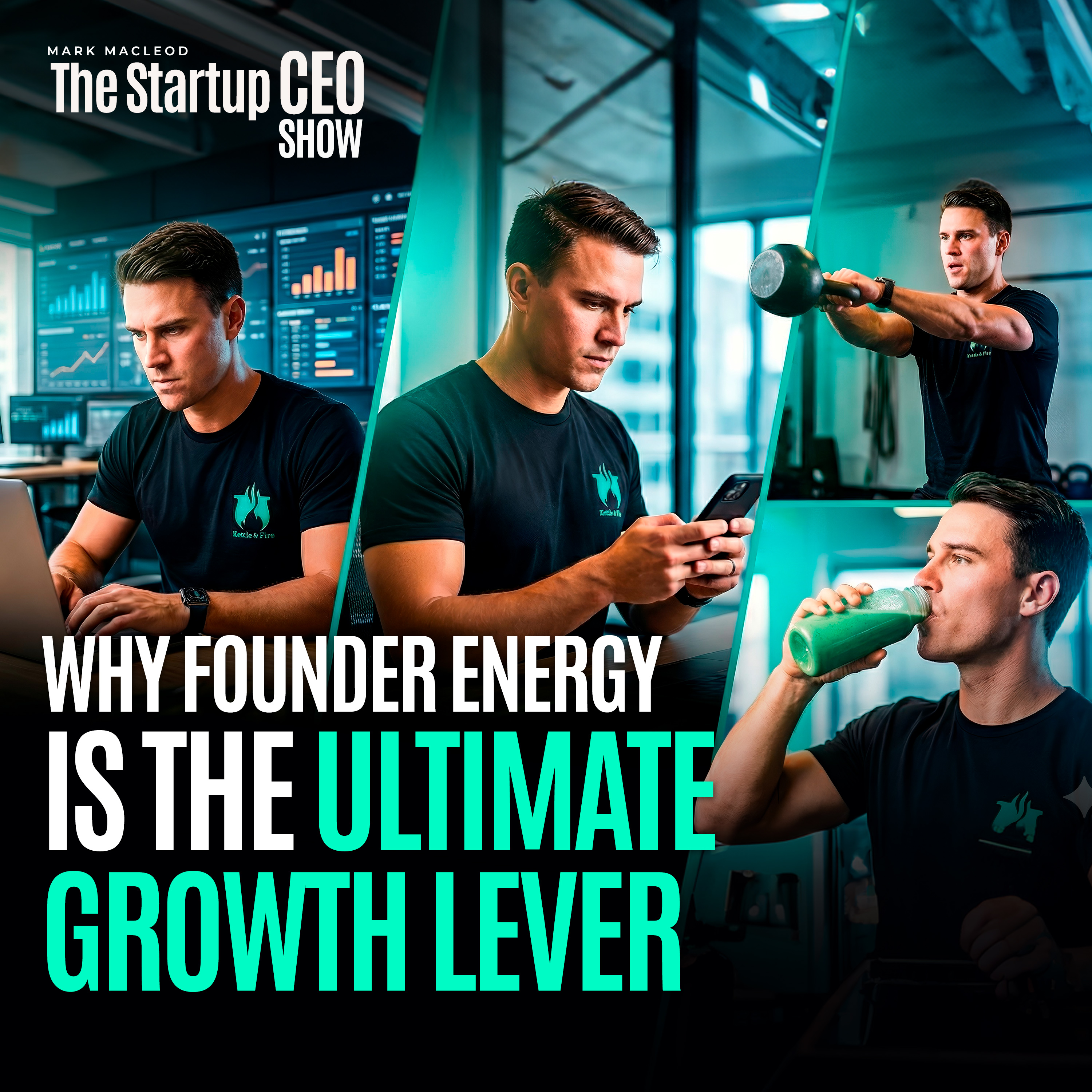 Why Founder Energy Is the Ultimate Growth Lever
 1600 People, Virtual First: Scaling Without Chaos
 300 Coffees, 12 Years, One Big Exit
 Why Creativity + Data Is the New CEO Superpower
 The Backup That Built a Business: Inside Rewind with Mike Potter

