
The Richie Norton Show · 2025-03-13 · 20 min
Key moments - from our scoring
Substance score
26 / 100
Five dimensions, 20 points each
Richie Norton examines the surprising history behind modern time management practices, revealing how they emerged from Frederick Winslow Taylor's scientific management principles during the second industrial revolution in the 1870s-1880s. Taylor, an industrial engineer at steel mills, introduced time study methods - using stopwatches to measure and eliminate "waste motion" in worker productivity - which became the foundation for industrial efficiency movements. Norton argues this historical context is critical: time management was never designed to give workers control over their time, but rather to allow managers to control workers' schedules, breaks, vacation, and output through calculated observation and reward systems. He positions this as a foundational misunderstanding that persists today, explaining why traditional time management hasn't delivered on its seductive promise of having "more time." The episode then pivots to Norton's anti-time management framework, emphasizing living from your values rather than toward them, and finding joy throughout your day rather than deferring it until goals are achieved - making it essential listening for founders and operators questioning inherited assumptions about productivity and work structure.
Taylor observed that workers were not working their machines or themselves as hard as they could, resulting in high labor costs for companies. He introduced time study - timing workers with a stopwatch and counting motions - to determine the "one best way" to work and eliminate waste time and waste motion in industrial operations.
Time management is a system designed to control workers' time on behalf of managers and companies through observation and reward structures; anti-time management means living from your values and designing your life to do things you like and want to do, with joy integrated throughout rather than deferred to the end.
Rapid technological change (railroads, telegraph, electricity, phones) between 1870 and 1914 brought masses of people from farms to cities and immigrants to the U.S. seeking economic opportunity, creating high labor demand and cost pressures that motivated factory owners to measure and control worker output more precisely.
Collecting dots is gathering experiences and information; connecting dots is making meaning and aligning them with your goals; correcting dots is changing direction if you're not in alignment with your values - a cyclical process for living from your values rather than endlessly toward them.
Decidedly choosing to be a person who does things you like and want to do inherently crowds out distractions and forces you to find more effective, efficient, and effectual ways to work, enabling joy throughout the day rather than only at the end.
Our reviewer’s read on each dimension, with quotes from the episode.
The episode contains one mildly interesting reframe - that time management was designed to control workers, not free them - but the surrounding 20 minutes are overwhelmed by book promotion, personal anecdotes, and motivational platitudes that offer nothing actionable to a B2B operator. The historical Taylorism content is superficial and quickly abandoned for self-help filler.
Time management does not mean you have control over your time. Time management means your time is being controlled by someone else.
No one's more productive than a procrastinator with an impending deadline.
The anti-time-management thesis has a contrarian surface but is not developed with any rigour or first-principles argument; it's a branding concept for a book rather than a genuinely fresh intellectual contribution. The 'collect, connect, correct the dots' riff and the Dickens quote are recycled self-help tropes.
Time management was deliberately designed by industry so a, uh, manager at work could control you and your time, what you do, where and when.
Goals from experience are, uh, tasks. Goals outside experience are, uh, growth.
This is a solo book-promotion episode by a self-help/productivity author; there is no practitioner guest who has operated or scaled a B2B business. Richie Norton is explicitly a 'thought leader' and career podcaster, the exact profile this index penalises.
Hey, yo, Richie Norton here. Thanks for listening in. This podcast is designed to help you quit your job because that's what your mom wants you to do.
This is Richie Norton, best selling author of the Power of Starting Something Stupid and Anti Time Management.
The episode does cite specific historical facts - Taylor's 1875 apprenticeship, Midvale Steel, the Model T in 1908 - but these are generic textbook details, not business metrics, case studies, or named examples relevant to B2B operators. The core productivity and management claims are entirely unsubstantiated.
1875, Frederick W. Taylor passed the entrance exams to Harvard
by 1886, you could be on the east coast eating an orange that was grown all the way from across the country in Los Angeles
This is an unstructured solo monologue with no guest, no interview craft, and no probing questions; the host frequently repeats himself, uses filler extensively, and pivots mid-episode to unrelated personal trauma without analytical purpose. There is nothing resembling productive disagreement or sharp follow-up.
I'm gonna make it very, I want to say interesting, and it definitely might be entertaining, but what it mostly is is useful.
We have a son that passed away. My wife's brother passed away at, uh, 21 years old.
Computed from the transcript - who did the talking, and the words that came up most.
I'm so excited to share this special 20 min episode stack as a highlight with a powerful message. I'm publishing this curation to help you make the most of your time. The episode features segments from the episode 097 and 98 all about how to effectively manage your time. ====== Time management was never designed to give you freedom. Time management was designed to control you...not for you to control your time. Stop managing time. Start prioritizing attention. Read while you listen! There are many sources and quotes on this podcast. Richie Norton included a bonus chapter for you to review additional sources cited and/or for context for your research and bibliographic enjoyment. You can read along and follow the sources by grabbing the bonus chapter to Richie's new book Anti-Time Management at This podcast is a keystone, flagship, deep dive into the history of Frederick Winslow Taylor, the Founder of Scientific Management, Time Management, Time and Motion Study and more. The historical nature of this content is intentionally shared through the lens of 21st century social and technological shifts.
Transcribed and scored by The B2B Podcast Index.
Speaker A: Foreign. Hey, yo, Richie Norton here. Thanks for listening in. This podcast is designed to help you quit your job because that's what your mom wants you to do. I promise. Or at least own your time in your life so you can be happy. You ready? Let's do this thing. In addition to being a highlight show, this is a very special podcast. Because it's a podcast stack. This is something I invented where I interview an expert, then I go deep into their material with things they may or may not have talked about, uh, on the show based on the work they've done. And then I do a solo cast with my take on it. So it goes from podcast after cast to solo cast. So you're going to get a full highlight stack right now. Love you. What's up, everybody? Richie Norton here. I'm going to share with you some things I've been studying and working on for years. And this coincides, of course, with my new book, Anti Time Management. If you don't already have it, make sure you jump on Amazon or Barnes and Noble or wherever books are sold and grab it. I want to talk to you about something that you may not have ever learned about. Something that your companies sure, probably aren't talking about. Unless you are getting very specific about certain things involving time management. I'm going to give you, um, I'm trying to say exactly how to say this. I'm going to give you the history of time management like you've never heard it before. And I'll tell you this, as I went deep into it, I was really shocked, surprised, and amazed. Grab my book, Anti Time Management. But I'm gonna tell you right now, this part, or at least most of what I'm, uh, about to share with you, is not included in the book. The reason it's not included is because it's deeply historical and to me, very interesting. But to you it might just be a bunch of information on this podcast. However, I'm gonna make it very, I want to say interesting, and it definitely might be entertaining, but what it mostly is is useful. Useful to you in understanding who you are, what you do, and why. Because many of the ways you've been taught to manage your time, to set your goals and do the things that you do are based on the history of what I'm, um, about to tell you. Grab Anti Time Management, the book, and know that what I'm about to share with you here helps you understand where Anti Time Management came from because it's necessary now, since the social landscape has changed, and because time management the way we think of it at least hasn't lived up to its promises. Here's a brief, short introduction to anti time management and why anti time management. And then I'm going to get into someone who's going to become known to you. Frederick Winslow Taylor. Freddie Taylor, Fred Taylor, also known as the father of scientific management, which also back in the day was known as Taylorism. So first, why anti time management? Look, time management is a seductive promise. It sounds like you'll have more time if you apply the principles of time management. And nothing could be further from the truth. Uh, think about this. Look, you don't have more time under time management. The word management means control. Time management means time control. However, this is the key. This is, this is the key. Whose time is being controlled by who and when is what matters to time Tippers. Time management does not mean you have control over your time. Time management means your time is being controlled by someone else. Let me make this crystal clear. Let me be crystal clear. I don't know how clear crystal is, but let's go there. Time management has nothing to do with you controlling your own time. Time management means you don't have control of your time period. Time management was deliberately. The history of time management. Time management was deliberately designed by industry so a, uh, manager at work could control you and your time, what you do, where and when. Welcome to your. No pun intended. Well actually there is a pun intended, but welcome to your run of the mill job. Look, today let's not just talk about the industrial revolution. Post industrial revolution. Let's not just talk about like the efficiency movement. Let's not just talk about what's happening today. Knowledge, uh, workers. I mean let's not even talk about what I'm calling post management, where we're in an area where things are decentralized. Let's, let's talk about the fact that your vacation time, if you have a quote unquote run of the mill job, the hours you work, your breaks, when you retire or not, and where and when you do your work, even if it's from home, is a carefully calculated factor of time management and often paired with a reward system of titles, roles, bonuses, employee of the month to enforce it. 1875, Frederick W. Taylor passed the entrance exams to Harvard, but he didn't graduate. He had headaches, he had bad eyesight and decided that he'd have to pursue another path. Instead of becoming a wealthy lawyer like his father, his eyesight improved and he became an apprentice in a shop to learn the trades of pattern Maker and machinist. It was 1875 in Philadelphia, Pennsylvania, and it was the second industrial revolution, sometimes called the technological revolution. It was in full swing. People and ideas moved faster than ever. This was the invention, the advent, the adoption of so many technologies. Things were changing and looking different in a way that people had never imagined. Things that today we take for granted. But this is when the, the railroad, the telegraph, water and gas supply, sewage systems were expanding beyond just a few, uh, of those early adoptive cities. Soon enough, the distribution of electrical power and telephones would be introduced. Trains would transport materials and products for buildings and consumption in hordes. We take these things for granted today, but back then, this was monumental. It was changing lives. People would purchase mass produce groceries for the first time. Okay, uh, by 1884, just to give you some context, Mark Twain would publish the Adventures of huckleberry finn. By 1886, you could be on the east coast eating an orange that was grown all the way from across the country in Los Angeles. Think about that. Think about that as a new thing. The first airplane, the first airplane flight by the Wright brothers would come in 1903. And Henry Ford would introduce the Model T in 1908. So look at between 1870 and 1914, more rapid, widespread change and connectivity happened faster than the world had ever known. It was a new wave of globalization. Along with this flurry of manufacturing and production. This change in the world also came with, you got to think about this. A flurry of people looking for work and a new life. People flocked from farmlands to the cities, and masses immigrated to the United States to improve their economic play infrastructure. You got to think about this. Think, think of this happening for real. The infrastructure, the housing, they were inadequate to meet demand. And in many cases, dwellings became overcrowded and unsanitary. Fred had a revelation at the factory as he watched his co workers work. What was the revelation? This is, uh, a, this isn't a religious thing, guys. This is the revelation. You ready? People weren't working. That's what he saw. Fred recognized that workmen were not working their machines or themselves nearly as hard as they could, and that this resulted in high labor costs for the company. When he became a foreman, he expected more output from the workmen in order to determine how much work should properly be expected. He began to study and analyze the productivity of both the men and the machines. End quote. Fred introduced what's what's called time study. And anyone who has worked in, uh, with six sigma and lean principles or they've worked with I don't know how to do things more, uh, productively. They'll learn things about Taylor and Taylorism and time study back then. These weren't things yet, so this was the origin of it. And all these things, my friends, aren't necessarily inherently good or bad. They were solutions to problems. And remember, like I said earlier, every solution creates another problem. Okay, here we go. So Fred introduced time study at Minvale, uh, Steel to create efficiency through close observation to eliminate waste time and waste motion in industrial operations. In fact, management history records that, quote, the profession of time study was founded on the success of this project, which also formed the basis of Taylor's subsequent theories of management science. End quote. It was very efficient. In other words, Fred learned that if he could stand over someone with a stopwatch, big picture this because you can probably picture something similar happening in your work today, okay? Fred learned that if he could just stand over someone with a stopwatch while they were working and time them over and over and over again, guess what? He could then count the number of emotions they were making to accomplish a task. With this information and through this scientific process, he believed a manager could tell an employee the quote. Uh, this is what he called it. One best way. End quote. One best way. Remember that to work. Time management is a seductive promise, has great branding that is not fulfilling the promise it makes. Time management has no empathy. I've brought back the ghost of management on this podcast, let's call it the Ghost of management Past in the hopes that you'll see its shadow in management in the present and that you'll bring your own light in management future. It's your time. I've brought back the ghost of management Past in the hopes that you'll see its shadow in management present and your own light in management future. It's your time to lead. As Charles Dickens said, mankind was my business. The common welfare was my business. Charity, mercy, forbearance, benevolence were all my business. The dealings of my trade were but a, uh, drop of water in the comprehensive ocean of my business. End quote. Hey, you. Yes, I'm talking to you. Thank you. It's your time to lead your business. It's your time to lead your personal life. It's your time to lead your family. It's your time. In the greater oceans of your life. It's your time to lead with, as Charles Dickens said, charity, mercy, forbearance and benevolence. Leading with empathy, but also not confusing means with ends and turning habits, strengths, goals, turning these means, these tools into ends unto themselves. Goals from experience are, uh, tasks. Goals outside experience are, uh, growth. You have time for that. Make time. Create time. Don't take time. Every project you do should have both cash flow and time flow. It's been said that there are three eras of management. Execution, expertise, and empathy. Now, on to the aftercast. Oh, hey, what's up? This is Richie Norton, best selling author of the Power of Starting Something Stupid and Anti Time Management. You know, I have a confession to make. I don't always like everything that I do, even though I've designed my life in a way to try and do everything that I like and want to do. The only way to be able to design your life to do the things you like and want to do is by understanding what you're good at that you don't like doing. Oh, it's a crazy thing. But let me tell you this just real quick. Listen, listen, listen, listen, listen, listen. Life's insane, and I am totally okay binging the latest K drama with my wife, Natalie. It's our favorite thing to do, and we feel no guilt about it. We're totally okay hanging out and taking our time. Because there's something you have to understand in our lives, finding joy either in work or in life, or finding joy in work when our life is hard. And finding joy in our life when work is hard is hard is not necessarily a, uh, science. Even though people might tell you to take more vitamin D3 and things like that. It's an art, you know? We have a son that passed away. My wife's brother passed away at, uh, 21 years old. We've had three foster kids come and go, which brought us so much like, love when they were with us. And it wrecked us when they left. My wife, Natalie, she had a stroke and lost her memory. It came back like, she's good. We, uh, have a son that got hit by a car. When he was hit, he was unrecognizable by people who knew him. It was that bad. He's okay now. Things are good. He looks at the world like he beat the car instead of the car having run him over. Life's crazy. There's three things I want you to understand. There's looking back. There's connect the dots. We know that between the things that have happened, what we're doing and looking for where we want to go. But there's something that comes before it and something that comes after it. First, we spend our time collecting dots. The things we see, the things we like. A million tabs Open on our phone and our computer, all the emails we collect. Then we connect the dots when the things we're trying to do or the meaning we're trying to make. And then we correct the dots. If we're not in alignment with what we want, we change. So if you bake a cake without sugar, you can't expect it to be sweet unless you're doing some kind of keto thing or something like that. I get it, I get it. I get. The idea is if you're trying to create, uh, a life where you are timing your values instead of valuing your time, that's like baking a cake without sugar and expecting it to be sweet. How can you expect your life to be lived on value if you're waiting till your mortgage is paid off or your kids are out of the house, or you have more time, or you have more education, or you have more experience? How can you expect to have a life that is sweet if you've never included the sweetness in. From the beginning, you want to live from your values, not endlessly toward it. Live from the job of the goal, the dream. The job of your dreams is to set you free. Don't turn your dreams into jobs. So as far as collecting, connecting and correcting the dots, if you found yourself in a position where work is drudgery, but you want to find joy in your life, you won't find it in. You won't find joy in, in doing more work, because the joy isn't necessarily at the end of the work. It must be included throughout the day. And it might not be work that you're doing, it's the fun things that you're doing. I don't have time for that, really. No one's more productive than a procrastinator with an impending deadline. When you decidedly say, I am this person that does the things that I like and want to do, you inherently crowd out distractions. You find ways to get your work done in a more effective, efficient, and effectual way. And then you're able to create more experiences from the joyful living by creating sort of a castle, your dreams and then your work, whether you like it or not. It's better if you like it, but even if you don't supports or protects your castle as an economic and strategic moat for you to continue. Thanks so much for being here. I hope you had as much fun as I did learning from these experiences, from these stories, from these principles. I hope that you take it and make room and space in your life to create the person that you want to be. Remember, once you decide who you want to be, you'll know what to do.
Other episodes covering the same guests and topics, from across The B2B Podcast Index.
 The Science Behind Great LeadershipExecutive Edge Podcast · on Six Sigma91 / 100
 What Big Companies Do To Ensure Profitability with Ravinder Nottra [CPD Available]Dentists Who Invest Podcast · on Six Sigma80 / 100
 Why Your AI Strategy Is Failing (And What to Do About It) | AI for the C-Suite EP 66AI For the C Suite with Chad Harvey™ · on Taylorism80 / 100
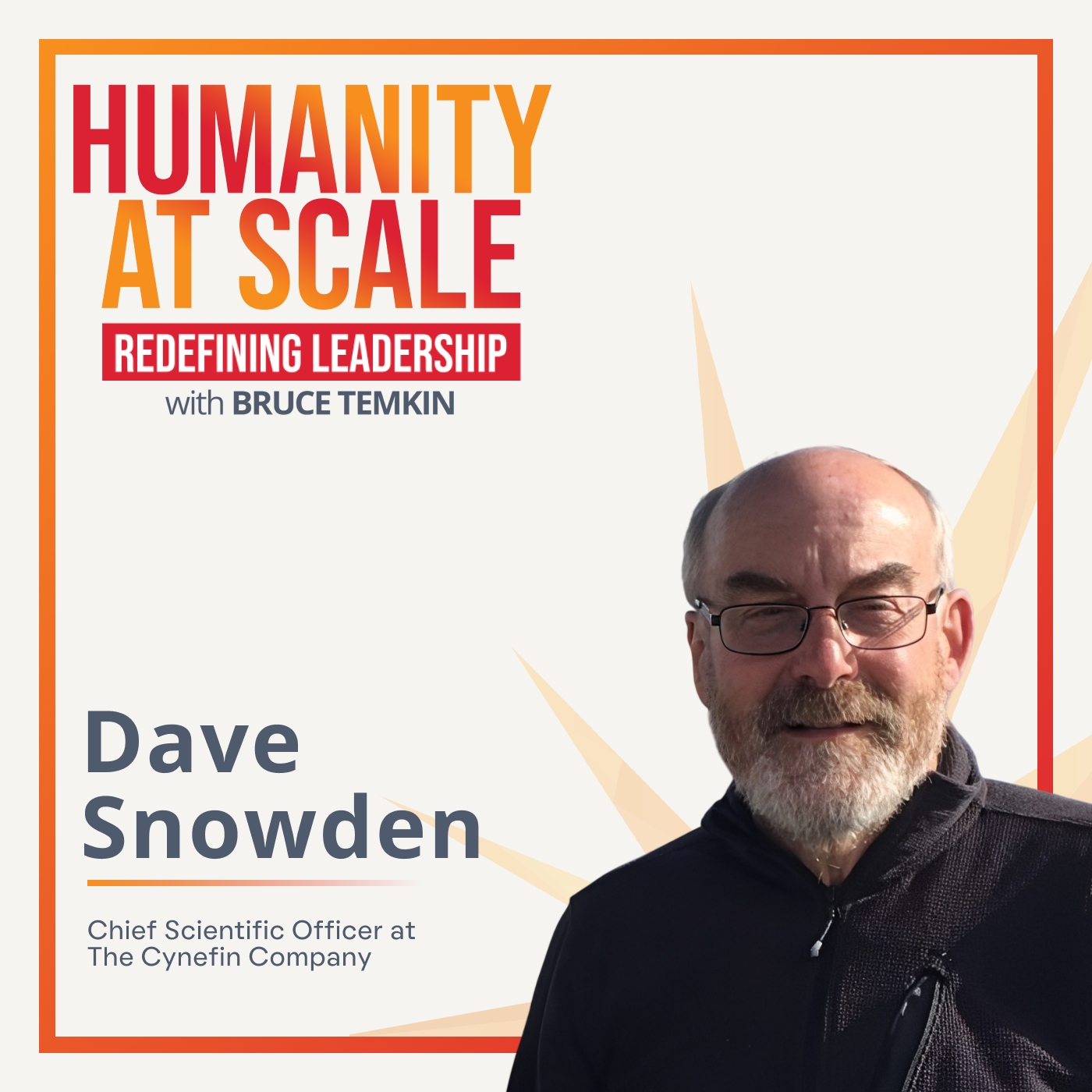 Sense-Making Through Uncertainty: Stories, Signals, and Swarms with Dave SnowdenHumanity At Scale: Redefining Leadership · on Six Sigma76 / 100
 Private Equity Value Creation with Mary Rachide and Bob HundBest But Never Final: Private Equity's Pursuit of Excellence · on Six Sigma69 / 100
 Supercharged Manufacturing: Where Operational Excellence Meets Industrial IntelligenceThe DataProphet Download · on Six Sigma61 / 100RECAP: Michael Bungay Stanier - How to Begin | 147RECAP: Whitney Johnson - Smart Growth Book & Exclusive Insights | 146RECAP: How to Make a Physical Product - Prouduct: The Product Creation Framework | 145RECAP: Pattern Recognition and Discernment: How to Make Your Best Year with a Creative Ecosystem | 144RECAP: Laura Wieck - The BodyMind Method©: Personal Growth Turned on its Head | 143