The RetailWire Podcast · 2026-06-03 · 29 min
Key moments - from our scoring
Substance score
42 / 100
Five dimensions, 20 points each
Maria Zaratovic, General Manager for Consumer Industries at Intel, makes a compelling case that retailers must fundamentally rethink their approach to AI implementation. Rather than starting with use cases and bolting solutions onto existing systems - a common but structurally limiting approach - organizations should build AI as a core capability from the ground up. Zaratovic unpacks why this distinction matters: retailers who layer AI projects onto legacy infrastructure risk becoming less competitive as better-positioned competitors rebuild systems with AI-native data flows and real-time decision loops. The conversation covers concrete production deployments already delivering results: self-checkout with computer vision and loss prevention, pick-and-pack accuracy in BOPIS workflows, and interactive kiosks with multimodal AI. Zaratovic identifies three retail technology trends to watch - agentic commerce, supply chain optimization, and edge AI - while emphasizing that the real barrier to scaling AI isn't the technology itself but organizational culture. She argues that successful retailers shift from functional silos to platform teams focused on operational outcomes rather than model metrics, onboard AI like a new hire employee with training and trust-building, and ensure decisions move closer to operations. The episode is essential for retail executives planning 2026 investments, offering strategic questions around data competitive advantage and operational scale, plus frameworks for balancing experimentation with governance.
Starting with a use case is common but risky long-term because it isolates solutions, limits scale, and leaves legacy infrastructure unchanged; instead, retailers should decide whether AI will be incremental projects or a core capability redesigned into data flows, decision loops, and operations from the foundation.
Self-checkout with computer vision detecting fake scans and item switching, pick-and-pack verification in buy-online-pickup-in-store workflows, and interactive kiosks with multimodal AI for order accuracy and voice interaction are all in production deployment at scale across retail partners.
Agentic commerce (AI shopping agents on third-party platforms), supply chain optimization with AI agents, and AI workloads at the edge and device level (moving compute from cloud to store hardware for cost efficiency and real-time decision-making).
Models deployed without operational impact, measurement focused on deployment count rather than business KPIs, slow insight-to-action cycles, and high process variance across locations are signs that AI is becoming a patch on legacy systems rather than driving operational transformation.
Change leadership is critical - retail executives must be honest about the opportunity for learning and growth, create safe spaces for employees to experiment with AI tools, empower teams to use AI to work better and spend time differently, and ensure every person gets hands-on experience before organizational conversations about AI strategy.
Our reviewer’s read on each dimension, with quotes from the episode.
The episode contains a handful of non-trivial observations - particularly the reframing of AI from use-case patching to foundational capability, and the compressed trend-cycle argument - but is heavily padded with broad change-management platitudes and repetitive points about data readiness and pilot purgatory that add little for a sophisticated B2B operator.
what use case can we solve? To what operational capability do we actually need to build
stores are shifting from being a node or an endpoint to be much more in an active compute environment
The guest offers a couple of freshly worded framings (the 30-chairs analogy, the AI-as-new-hire onboarding metaphor, the use-case-to-capability question reframe) but the underlying thesis - AI must be structural, not bolt-on; change management is hard; data pipelines must precede models - is thoroughly standard enterprise AI discourse with no meaningfully contrarian or first-principles argument.
you can have 30 chairs in the room, you arrange those 30 chairs in a different way, it's still 30 chairs in a room
imagine AI as a new hire employee on the first day, you introduce them around, you provide the organizational info
Maria Zaratovic holds a legitimate senior role (GM of Consumer Industries at Intel) with genuine cross-ecosystem visibility in retail technology, but she speaks from the chipmaker/vendor layer rather than as an operator who has deployed and owned AI outcomes inside a retail P&L, which meaningfully caps the practitioner depth she can offer.
I'm the general manager for consumer industries at intel, where my organization is focused on the development and expansion of advanced computing solutions across retail hospitality venues and retail banking
in my experience I've worked in retail, cloud and now computing solutions
A handful of industry-level statistics are cited (5.4T retail sales for 2025, 800M daily platform users, 80% brick-and-mortar share, 100K+ Intel edge deployments), but there are no named retailer case studies, no before/after outcome metrics from specific deployments, and the self-checkout and pick-and-pack examples remain entirely generic without naming a single brand, partner, or measured result.
retail sales are like 5.4 trillion for 2025 and we know that some of these platforms are receiving like 800 million daily users
intel has more than 45 years of delivering embedded and edge technology with more than 4,000 ecosystem partners. And this totals over 100,000 edge deployments across the globe
The host structures the conversation competently and introduces one unscripted topic (employee resistance to AI), but she never challenges a single claim, never probes for specific outcome numbers when the guest gestures at 'measurable results,' and closes with a request for 'one takeaway' - a quintessential softball that signals a PR chat rather than a rigorous interview.
So finally, Maria M. To close up, can you share one takeaway for our listeners to take away to their teams to then action?
Many of the solutions intel works with aren't always visible to customers. Can you share a concrete example where Intel's technology made a real difference
Computed from the transcript - who did the talking, and the words that came up most.
This session explores what it actually means to make AI a core operational capability in retail. From decision-making at the edge to organizational agility, we unpack why the next competitive advantage won’t come from more tools - but from how businesses are fundamentally designed to operate with AI. Retail is moving faster. Most operating models aren’t. Retailers are experimenting with AI across the business. But in many cases, the way decisions are made hasn’t changed! By RetailWire, the retail industry’s premier news and discussion platform, delivering daily insights, expert analysis, and real-world perspectives from top retail leaders through its BrainTrust community. To stay ahead of the latest trends shaping retail, visit RetailWire and join a global network of retail decision-makers: For partnerships, interviews, and media opportunities, talk to us! contact@retailwire.com linkedin.com/company/retailwire/ Hosted by Simplecast, an AdsWizz company. See pcm.adswizz.com for information about our collection and use of personal data for advertising.
Transcribed and scored by The B2B Podcast Index.
Speaker A: Foreign. Welcome back to another episode of the RetailWire podcast. At UH RetailWire, we spent 24 years bringing the industry together to shape retail's future. And today is no exception. We're going to be focusing on what it takes to make AI a core part of your business. I'm excited to be joined by Maria Zaratovic from Intel, who's right at the center of this across the retail ecosystem. Mario, it's great to have you with us.
Speaker B: Thank you, Lavina. I'm happy to be here. So thank you so much. I'm the general manager for consumer industries at intel, where my organization is focused on the development and expansion of advanced computing solutions across retail hospitality venues and retail banking. We work across ecosystem partners to define new solutions that apply emerging technologies and AI in practical ways to create meaningful customer and business impact. Um, I have bring a unique vantage point being that in my experience I've worked in retail, cloud and now computing solutions, which allows me to participate in the transformative change that's taking place in the industry. I find most joy helping organizations right now navigate these technology shifts by aligning people, process and platforms to drive measurable outcomes. Um, one last piece. I'm really excited. This year I was named a rethink retail 2026 top retail expert in the community. And I just continue to actively, um, engage in the greater community, um, working on problems that we are trying to solve to deliver better experiences. So again, thank you for having me on the show.
Speaker A: Thank you. People, processes and platforms. I'm really excited to get into that. So let's start with something that we were talking about earlier when you said AI should be treated as a capability, not a feature. What does that actually look like inside a retail organization day to day?
Speaker B: Yeah, I think we're starting to see pieces emerge in terms of what might this look like inside an organization, given that it's still early days and I think organizations are trying to feel it out, but really organizations trust machine driven recommendations. This is big. This is about trusting the output and letting it move into a workflow and move to action versus merely looking at the insight and then making a decision around it. Um, organizations figure out how to measure, um, outcomes in new ways but still focus very much on the business. It's not about measuring how many projects you have with AI, but truly how do you continue to evolve. I think also you would see, um, rewarding outcomes, not experiments. Culturally ready organizations reward teams for achieving improved outcomes with AI and these outcomes are based on the business, not focused on the experiment. So I think Those are some of the things that are going to come to the surface when we see organizations truly embrace AI in the organization.
Speaker A: So most retailers still start with a use case and then go shopping for a solution. Why is that a risky approach? And when, when uh, it comes to AI and M, what what are the paths? Do you recommend they, they, they use otherwise?
Speaker B: Yeah, absolutely. So I get asked this question all the time. So I'm going to say starting with a use case is common. It's not wrong to do so. It comes from how retailers have historically delivered new experiences in tech. It directly ties to solving a problem in the business. Um, it fits within the solution environment, it reduces perceived risk and aligns to organizational ownership. So easily you can go problem statement solution and ROI in an org. So this approach though does have some implications long term in that the solution that you find for this use case could be done in isolation which will limit um, long term scale and the contribution into the organization's data readiness. Long term it's risky because AI is completely new territory when you continue to layer on new solutions in your existing environment. The approach to AI is similar to a feature with which um, the underlying operating system remains unchanged, it remains static so leading to longer term missed opportunities for transformation. So thus over time if you continue to kind of layer in these solutions to these use case problems, AI becomes this glue to patch existing process. And the primary risk isn't the short term performance or gains but it's about falling behind structurally. Long term. When your competitors are uh, rebuilding their systems with AI as a capability, they're designing data flows for speed, efficiency, redundancy, um, reducing latency and tightening that decision loop to enable real time decisions. Because ultimately at the end of this this is about decision ownership, this is about decision dexterity that you need in your organization. And organizations that take that use case approach may find that longer term um, it's going to become more expensive to um, bring in new AI use cases, it's going to be less efficient and there's still going to be probably a lot of manual process still involved. So one thing to be considering as an alternative to this is truly deciding your organizational approach. And this is kind of a strategic decision around will AI ah be a series of projects incrementally layered or are you going to hit it as a core capability, building it to the foundation so the decision will shape your competitiveness, your organizational culture, infrastructure and long term creation. So this is where I'd say you know, be cautious over investing in Bistoke pilots and under Investing in repeatable platforms can be a challenge and can impact the long game for the organization. So what I would say is maybe the critical question to be asked is what can we um, what use case can we solve? To what operational capability do we actually need to build build? And by reframing that it may help um, the conversations and opening up perspective
Speaker A: from Intel's vantage point across hardware, edge and software partners. Where are you seeing AI genuinely change retail outcomes today and where is it still mostly just hype?
Speaker B: Um, I'll give a couple examples particularly where we're focused today. Um, checkout is the backbone of any type of retail organization and so whether it's point, point of sale, self checkout or even checkout at a kiosk, um, across these devices, computer vision is already very much a part of that type of workflow. And so for self checkout you also have layered in loss prevention capabilities, detecting fake scans, item switching, uh, real time data at the edge, um, and all doing that running within the existing kind of design of the device with the power, thermals and form factor constraints of store hardware. So this is not experimental, this is in deployment, it's in production. And we work across a number of pause OEMs and ISVs and they're all creating measurable results, speeding up that transaction that is improving the experience, reducing, shrink. All of those things tie back to the P and L. So um, that's a really good example of where we're seeing it in production and at scale and driving improvements. Um, we've been working with our partners in the ecosystem to provide benchmark frameworks so that our partners can help um, make better decisions in terms of moving something from a proof of concept into deployment without guessing exactly what might be the performance or cost of that type of um experience within a retail store. Um, and for us again what we hear when talking with retailers, that works because you have a clear owner within the operations, you have a bounded problem using high quality data. And really there's a strong tolerance for this edge based inferencing without cloud dependency. And so it runs very well within a physical store. Um, something that I would say um, maybe um, under the radar also is pick and pack in store. So again these would be examples for QSR or buy online pickup store where someone is making a purchase ahead of time. But we know that um, you know, video, um, data is being used to ensure that the pick pack is accurate, helping to verify items. Um, and then this helps to bring down any type of dispute or reduce refunds or customer service. Friction. And again these types of use cases are rolling out um, in production, in deployment at scale.
Speaker A: I saw that intel has recently looked at uh, the top retail technology trends with an AI lens. Which two or three trends do you think our listeners should be playing the most closest attention to in the next sort of 18 to 12, 24 months?
Speaker B: Yeah and it's interesting, you know I think for a long time we've always Talked about this 18, 24 month window and I feel nowadays um, there's breaking news on the daily. And so I would say those types of loops or whatever frequency makes sense for your business but it's probably shorter. It's probably going to be a 3 to 6 month interval, a 6 to 9, a 9 to 12 even starts to feel long. And so in January we released the retail 2026 um, 10 trends in retail Technology report in partnership with Coresight Research. And so three areas that um, we talked about that I think are super interesting to watch. The first one would be um, agentic commerce. So E commerce has changed fundamentally with announcements that were made last year by AI tool platforms for agentic commerce in um, cooperation with a number of name brands that people would recognize. And I think their pose is such a great opportunity. More than half the consumers um, have communicated, yes, they will use chatbots, they will frequent, um, you know, using these tools for holiday shopping, whatever it may be. And it represents such a huge opportunity given retail sales are like 5.4 trillion for 2025 and we know that some of these platforms are receiving like 800 million daily users. So I think some brands are very eager to say what is this channel going to look like? Um, but already if you look at the headlines, there's already been key learnings and pivots within brands around these platforms. The other two trends I would say are supply chain optimization. We've heard a lot about this. But again it's an area where optimization is ripe within the business and can improve in terms of delivery forecast outcomes. And you have major suppliers within this space, um, that are already announcing their release of agents and AI within their tool set. And then lastly AI at the edge and at the device. And this one for my organization is really important. So as more devices come into the store and particularly there are more AI workloads that are going to be utilized, um, compute starts to change within these devices. And um, when we look at you know, some self checkout or a kiosk or retail media screens, you combine all of those things, their requirements and also cloud computing costs. It necessitates some of the migration of that compute from the cloud to the edge and to the device. And so the biggest piece here is stores are shifting from being a node or an endpoint to be much more in an active compute environment. And that starts to shift our thinking around it.
Speaker A: Agentic commerce was such a huge talk at nrf. Were you there?
Speaker B: Yes, yes it was. It's pretty exciting to see it. We're all watching it unfold in real time and new challenges are arising. Being that we were in a mode of kind of your traditional website app. Ah. And search and so it'll be interesting to see how it unfolds.
Speaker A: Yeah, so much is going to, uh, so much has to do with the context now and storytelling and other elements that drive, uh, to be discovered in that space. So. Exactly. Interesting. Uh, when a retailer just adds, uh, AI on top of an old operating model, what are the sort of warning signs that it's not actually creating a real business value?
Speaker B: I think some highlights would be models that are deployed are without any type of operational impact. Um, it's about, you know, measurement is about the model's deployed, how many have we deployed rather than what was the model actually meant to do and inform and improve the business? I think in the stable or mature organizations, it, the focus is still going to be an operational KPI, not a specific AI measure. Um, I think that um, the slow insight to action cycles are going to change. So again we're going to see less delay between actually gathering an insight and taking the next action. Those two things are going to start to get condensed significantly. That's a great improvement to have in the business. Um, and then I think as a, you know, having this technology that is being scaled across an organization, I think where there's been high process variants. So if we think in retail all the way down to regions into stores, processes may vary and results may vary. I think that we're going to see some of those loops tighten again and that process variance is going to start to be minimized across all locations where it matters and therefore improve business as a whole.
Speaker A: You've talked about the human side of AI transformation being the hardest part. What cultural or behavioral shifts separate the retailers who actually scale AI from those who get stuck in the pilots?
Speaker B: Yeah, I think, um, again as organizations start to truly rethink AI within their business, we're going to see shifts such as foundational AI within an organization is going to move from a functional silo to platform teams. What do I mean by that? So ownership is really going to Move from, well, who built this or who built this model to who owns the outcome. And so this kind of breaks um, legacy thinking around ownership within a team. And for those of us who have delivered new experiences, there's always kind of been this healthy tension between you have one team or an engineering team who has delivered the new experience and shipped the code. Is that the definition I've done or is the definition of done is that it's used by customers and it drives the results that we expected? Is that the definition? And so I think with AI it's going to be more pronounced that it's less about the functional silo and much more about the platform end to end experience that was delivered. Did it improve? Uh, I think hand in hand with that, teams are going to have to start to think about the system, not the project. So I delivered the project, but rather, um, the tooling, the guardrails, the standards, um, the business teams are going to move faster. When we think much more about the system as a whole, whole and how these things now get integrated in versus just the delivery of that one project decisions are going to get moved closer to the operations. Again, it's end to end. It's not just the technologists or the model builders, but also those in operations or the business that have to be working end to end to ensure that the organization's culturally ready, um, to trust those outcomes or those machine, uh, driven recommendations and enough to change the workflows. Otherwise you're not going to reap the benefit, um, you know, within the org. Now, one thing that I'd like to say that we didn't talk about, and maybe I'll pause on this for a moment because I get asked when we think about um, AI and bringing AI into the organization, particularly for those of us that have to go solve these challenges in the business, you know, traditionally what we do is we identify the problem like we talked about. You go search for solutions, you purchase that solution, you bring that solution in house and then you have this expected outcome and this result that we can all talk to because that's what we work towards. But I think for AI, we need to shift our mindset on that. So imagine AI as a new hire employee on the first day, you introduce them around, you provide the organizational info, maybe assign them a buddy for questions and you know, send them to training. And then over time you give them more information, more projects, review their work, offer coaching when necessarily and you gradually increase the responsibility until they're fully capable and you trust them and the results and they're off and running and delivering in the org. So that's what we need to wrap our minds around. That is what AI in the organization. AI is about an evolving capability that adds agility in your organization. And so once we start thinking of it like that, where we have to onboard, we have to give information, we have to train, we have to trust, build trust, that's going to completely kind of shift, um, our thinking around, um, how we operate in the organization.
Speaker A: I might go a little bit off topic here, but it's related because I think a lot of employees would see AI as a threat. And it's a conversation I had yesterday. Um, how, what advice do you have for retailers who are facing the challenge of trying to get their teams on board to kind of trust AI and to get on board with it so that they can then go on to seeing the results after months?
Speaker B: Yeah, I think, um, if ever there was a time for change leaders or change leadership, that time is now. And I think it's really hard. Um, as an employer, you're also dealing with the headlines that are being written, and some of those headlines are being written to grab the attention when really maybe those headlines are, um, a result of something else or other pieces in the business. So change leadership is critical. So knowing your organization, where it is today, um, and where you're trying to take it and what is required to do that, you've got to bring employees along. Some organizations that I know that are challenged on this are where even at the executive level, they're coming forward to their employees very honestly about the opportunity ahead, but the opportunity for everyone to learn and just kind of opening it up in a safe space where people can start to use the technology, where they can learn from it, they can talk to each other, they can figure out what's next and even have some, uh, be empowered to say, how can I use this to do things better that I'm doing today, spend my time in new ways. So what I would encourage is change readiness. Change leadership is key. Having a real plan around that and figuring out what does your organization need culturally to bring people along? Um, and most of that is I find we're talking about it, but we actually haven't done it yet. So every single person needs to get their hands in there in different tools and play around and understand what are the capabilities and what it means for them. So that when we have conversations at an organizational level, they have some meaning, some substance to them.
Speaker A: So if you were sitting in a retail boardroom planning for 20, 26. What are the, uh, one or two strategic AI questions you'd insist they answer before funding? Another sort of proof of concept.
Speaker B: Um, two that come to mind for me. What competitive advantage does this investment generate in terms of data? Because my point is, if the data isn't there, AI won't deliver. Right. AI has to be fed by data. So if the data pipelines aren't there, you're really not going to get or yield the benefit that you could have. Uh, and frankly, if it has not been thought of, it needs to be thought of. Um, the second one would be how will this investment change decisions or operations at scale? So if it doesn't change how the business runs, it won't change the outcomes. And I liken this to you can have 30 chairs in the room, you arrange those 30 chairs in a different way, it's still 30 chairs in a room. The outcome doesn't change. So we need to think bigger and we need to be able to determine not just the project and its result, but how does this change our operations at scale, help us have that decision, dexterity, help us to move faster.
Speaker A: Many of the solutions intel works with aren't always visible to customers. Can you share a concrete example where Intel's technology made a real difference to a customer, customer experience and um, for store operations, Absolutely.
Speaker B: So yes, I often get, ah, intel, why are you here? This is a retail conversation. But for us, even though we are really far removed from that end customer or brand who is working through maybe a system integrator or a software provider or a cloud provider, hardware provider, all of these others, we're still in there because we're the processor, the compute behind that. So intel has more than 45 years of delivering embedded and edge technology with more than 4,000 ecosystem partners. And this totals over 100,000 edge deployments across the globe in about every industry. And so for us, being that the data says 80% of retail sales are still within a brick and mortar store, this is a significant opportun. We talk about helping improve the customer experience at the edge and with AI. So, you know, examples, again, point of, um, point of sale. This is where we help, um, improve the backbone of that store where so much data goes into it. It's a critical piece of serving that customer in a physical store where you want them to walk out happy with bags and hands. And so we work with our partners on fascinating, accurate, secure, ringing, um, but bringing in new technology so that maybe it's a multimodal, uh, data form factor that is taking different types of data input to improve the speed of transaction, improve the relevancy of information that is given at time of transaction. Again to improve the speed of that and the ease frankly of checking out. So you know, that's an example. Interactive kiosks, again, designing for multimodal workloads, computer vision, voice interaction, generative AI. All of these capabilities improve order accuracy, um, directional sound, hands free experience through voice, improve the actual experience within that environment and the overall customer experience. These are the things that we're really excited to be able to work with our ecosystem partners to continue to deliver.
Speaker A: How should retailers think about balancing experimentation with UM AI against the governance, risk and accountability questions that come with scaling it across the business?
Speaker B: This is a tough one. And so I have three thoughts here. The first one is design for adaptability. Think modular. So this is no different than we've all been doing. So when cloud computing came into play, we had to start to shift our mindset on software from monolithic into modular. And, and this allows for the ability to operate on one portion without disturbing the rest of the entire environment. So this is the same thing. Decoupling models from infrastructure, supporting multiple workloads on the same platform and then designing for governance that helps be consistent across that platform. The second is um expect models as they come into the workplace to move faster than portions of the business. Right. So this isn't about a one time transformation. Hey, we're bringing it as a capability. It's a one time transformation and we keep running. No, this is about the ongoing evolution of the experience and the ability to have that evolution in real time happen. It's that decision dexterity again. It's that flexibility at a model layer and then standardization at a platform layer. And so that's really kind of that third piece is flexibility belongs with the M model and workload layer. The ability to introduce new foundational models, fine tune variants, task specific models without touching every other system. Right. Having the freedom to change as you need. Um, standardizing at platform and governance layer, common APIs, deployment patterns, monitoring security controls and compliance and a risk framework that can be applied from how we go forward from a compliance and governance. Here's the challenge. Um, there are new regulations that will probably differ by country, by state and they're going to increasingly potentially differ. So putting time against governance, putting time against your framework and how you create that flexibility, um, is really critical as a part of, part of this effort.
Speaker A: So for a retailer that feels late to the game with AI, um, what are the most realistic high impact first steps they should take in the next. I know we talked about the, the time frames being a lot smaller, but let's say six to 12 months. Yeah.
Speaker B: I think the biggest thing, and this is one of the hardest pieces is that strategic decision, um, amongst organization leadership around um, how are we going to look at AI? Is it a set of projects or is it a foundational capability? And this choice again will determine strategy, culture, infrastructure and long term value creation within the organization. So remember, bringing this technology in helps to compound value over time. Right. Long game decision, dexterity. So maybe you know, um, asking themselves which are the 5 to 10 decisions our retail systems should, um, AI materially improve every day, um, and then again shifting from what use case can we solve to what operational capability do we need to build. This again helps to reframe the conversation and open up perspective.
Speaker A: Brilliant. So finally, Maria M. To close up, can you share one takeaway for our listeners to take away to their teams to then action?
Speaker B: Yeah, I think um, it's coming to terms that retail is at this inflection point and there are exciting things ahead and there's um, change of leadership ahead and there's great innovation ahead. So AI is no longer a question of if but when your organization will use it to operate efficiently. So deciding if AI will be core capability, if it's going to be a strategic choice, embracing the change management and data operations to deliver amazing experiences and truly capitalizing on this moment to meet the evolving shopper expectations and attract especially the next generation of shoppers who have very much grown up in a digital world and have very different expectations to engage with the brand.
Speaker A: Brilliant. I think that's a really good note to end on. Thank you so much for joining us and for all those uh, points of wisdom for our um, retail audience. So thank you so much Maria.
Speaker B: Thank you Levina for having me.
Other episodes covering the same guests and topics, from across The B2B Podcast Index.
 Why Agents Will Buy, But Marketing Must Stay HumanMarketing Trends · on Agentic commerce91 / 100
 Pickle Robot is on a mission to automate global supply chains with AI and RoboticsThe Robot Industry Podcast · on Supply chain optimization82 / 100
 Why Card-Linked Installments is a Better Form of BNPL With Nandan Sheth, CEO of SplititFintech One-On-One · on Agentic commerce81 / 100
 The emerging world of machine customers - Interview with Katja ForbesPunk CX · on Agentic commerce81 / 100
 Vertical SaaS Is Automating Independent Dry CleanersVertical SaaS with Fexingo · on Point of sale systems81 / 100
 Athos Commerce CMO Gary Lombardo on why only 14% of shoppers see one consistent brandThe Agile Brand with Greg Kihlström® · on Agentic commerce80 / 100
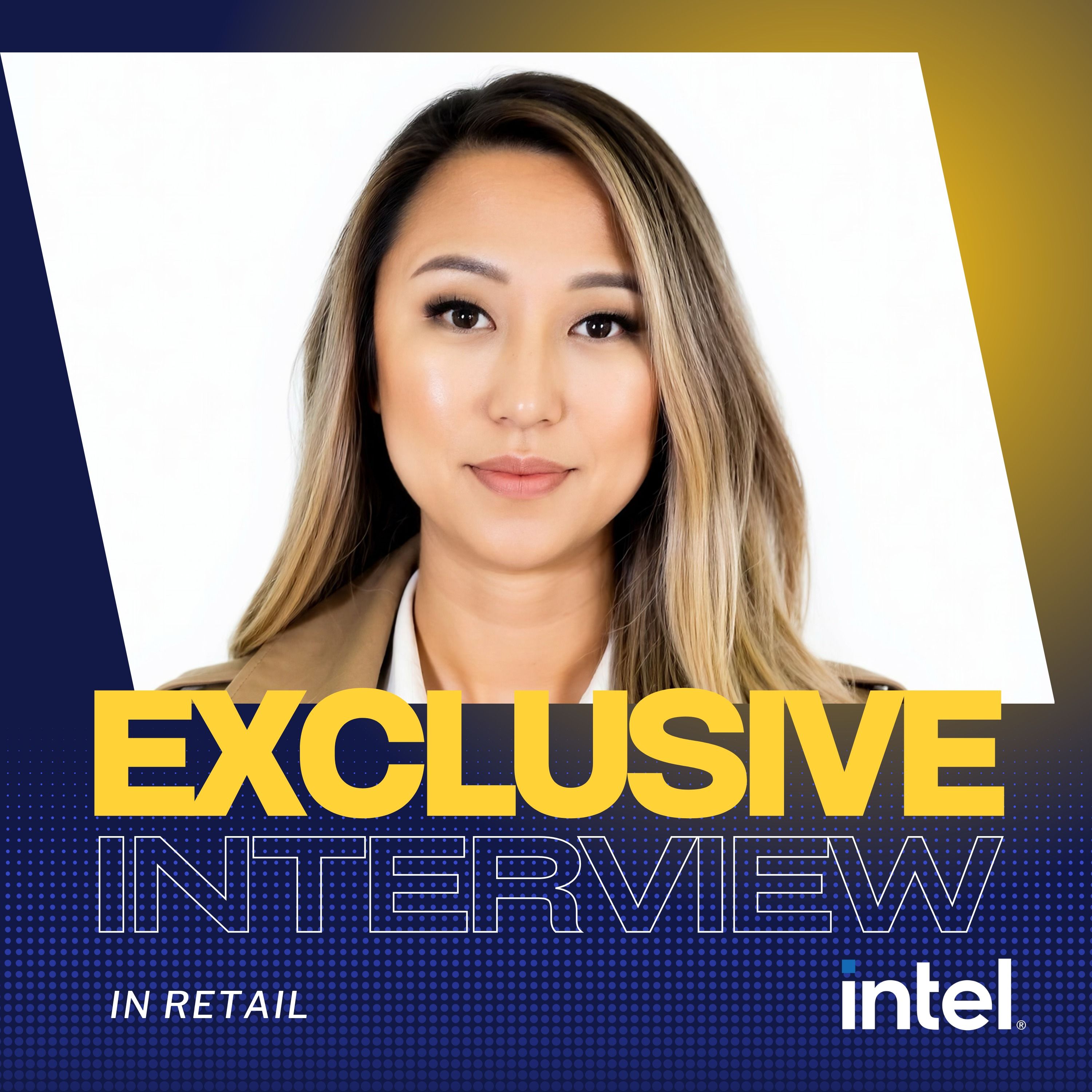 AI as a Foundation, not as a Feature in Retail
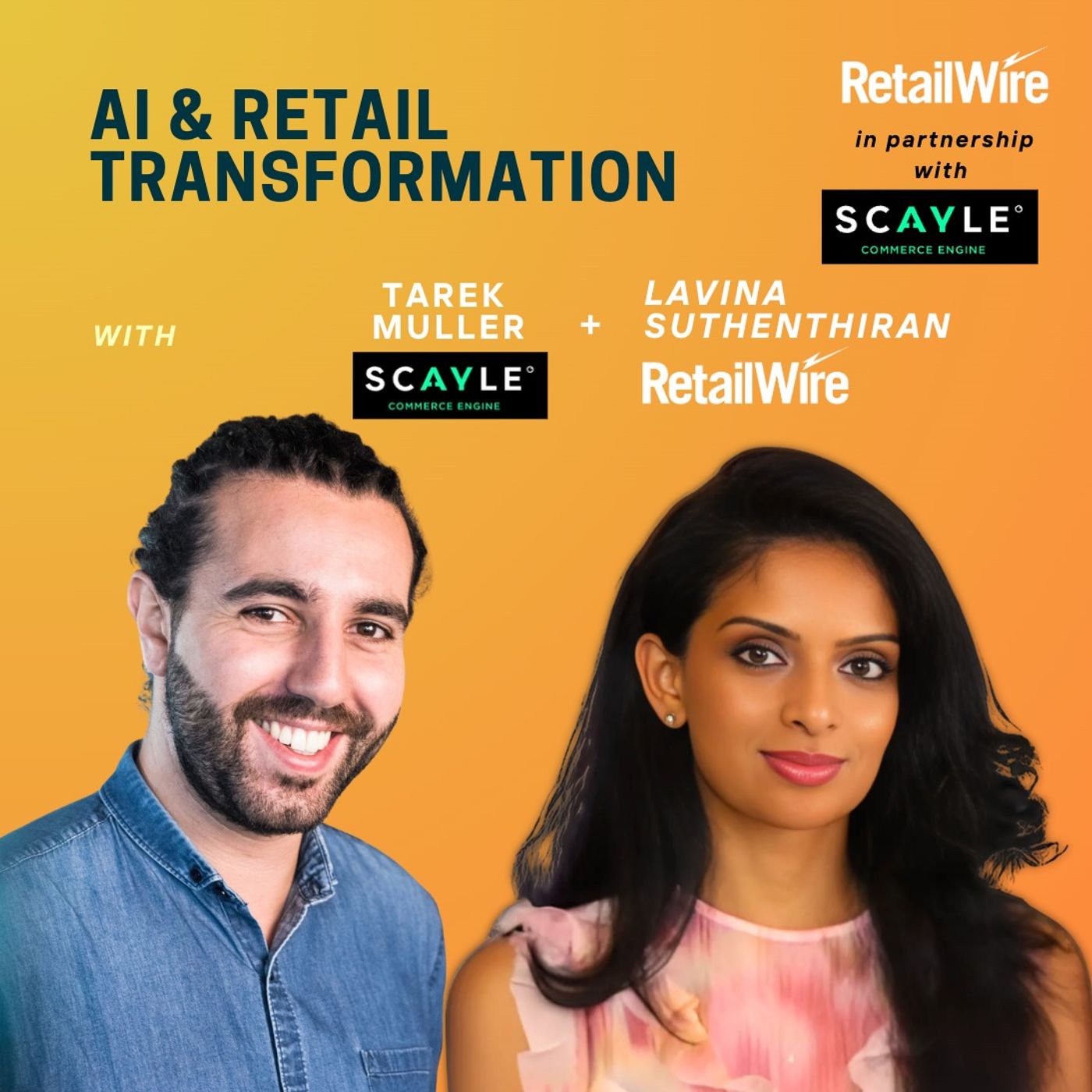 The Future of AI in Retail: Discovery to Checkout
 Inside the 2025 Holiday Shopper's Mind
 The Future of Responsible Retail
 Driving Retail Growth Through Category Management and Private Label Synergy