
The Polestar Podcast · 2026-02-12 · 36 min
Key moments - from our scoring
Substance score
52 / 100
Five dimensions, 20 points each
This quarterly market update examines the disconnect between alarming headlines and unexpectedly strong 2025 market returns. The S&P 500 gained 18%, the Nasdaq 20%, Canadian TSX surged 29% driven by materials and financials, while gold soared 60-65% to $5,000 per ounce and silver climbed 140%. Keith Allen, portfolio manager, dissects the drivers: robust corporate earnings, stabilized interest rates, favorable US tax policy under Trump, and strong consumer spending. He distinguishes between real market-moving events (tariffs in April, geopolitical tensions in the Middle East and Venezuela, US-Iran tensions) and noise that merely felt scary but didn't materially impact portfolios. A key insight: the stock market, economy, and world events are disconnected entities that shouldn't be conflated. Allen emphasizes the critical importance of style discipline and avoiding style drift - resisting the temptation to chase hot assets like gold despite its spectacular performance. He advocates for maintaining strategic asset allocation bands (e.g., 5-8% in precious metals) rather than tactical tilts, arguing this framework has sustained performance through market cycles.
Strong corporate earnings, stabilized interest rates, favorable US tax policy under the Trump administration, and robust consumer spending drove equities higher, while geopolitical events and tariffs proved real but didn't materially impact long-term market trajectories.
Limited supply, safe-haven demand amid geopolitical uncertainty, a weakening US dollar, and contagion effects (people buying gold because others did) pushed gold from $4,000 to $5,000 per ounce and silver up 140%, though valuations are now stretched.
Portfolio managers should separate real events from economic impact, maintain disciplined asset allocation bands, and avoid style drift - resisting the urge to chase returns or overweight hot assets in reaction to headlines.
The stock market, economy, and world events are separate entities with different underlying fundamentals; they aren't directly correlated, which is why strong portfolio returns can persist despite alarming news cycles.
Velo Wealth typically maintains 5-8% in precious metals as part of a diversified portfolio, adjusted within bands based on individual client risk appetite and financial planning needs, rather than based on price predictions.
Our reviewer’s read on each dimension, with quotes from the episode.
The episode covers standard market performance metrics and basic portfolio management principles (rebalancing, diversification, asset allocation bands) that are widely discussed in financial advisory contexts. While the discussion of separating stock market performance from broader economy/geopolitical events has some merit, most insights are routine - expected dividend from a wealth management quarterly update rather than novel wisdom. The transcript lacks specific investment theses, contrarian analysis, or uncommon frameworks that would surprise informed operators.
you kind of need to separate like the economy and the stock market. Like the stock market is different than like the economy and the economy is really different than like current events
style drift is. It's very easy to get caught up in what's going on and like deviate from your style as a portfolio manager
The episode recycles well-known investment wisdom: stay diversified, don't chase returns, rebalance regularly, separate emotion from portfolio decisions. The analysis of 2025 market drivers (tech dominance, precious metals strength, geopolitical noise) is descriptive rather than original. The framework of 'separate the stock market from the economy from world events' is presented as insight but lacks depth or surprising conclusions. No contrarian claims or first-principles reasoning distinguishes this from standard wealth management talking points.
it's basically saying diversification still matters
don't be like, oh my gosh, like, I got 25% last year and I didn't get that this year
Keith Allen is identified as a portfolio manager at Velo Wealth with stated responsibility for managing client portfolios. He demonstrates operational knowledge of portfolio construction, rebalancing mechanics, and asset allocation bands. However, the transcript provides no information about AUM, track record details, previous roles at larger firms, or credentials that would establish him as a standout practitioner. He appears competent but his seniority and scope of impact remain unclear; he functions as an internal expert rather than an external authority figure with demonstrable scale.
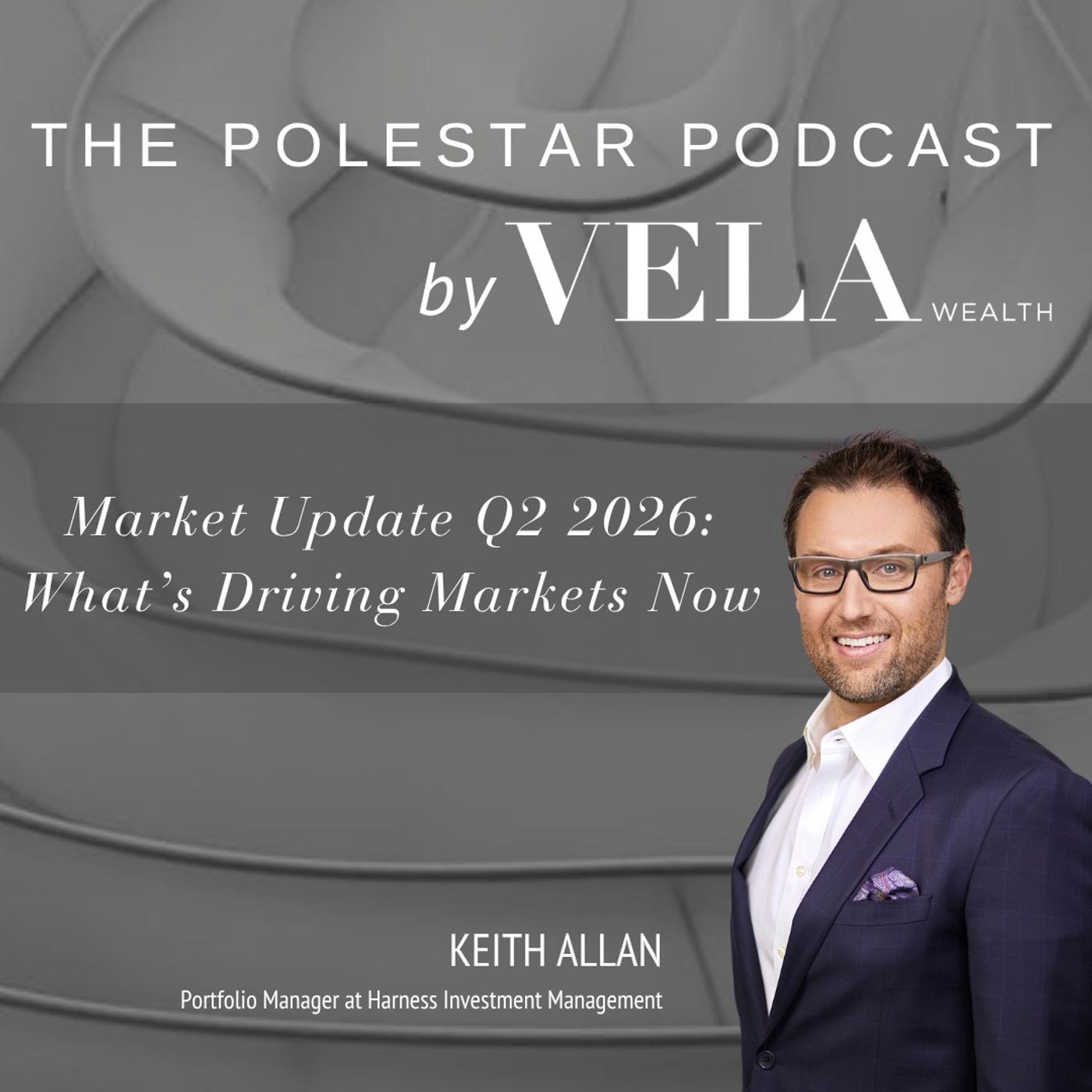
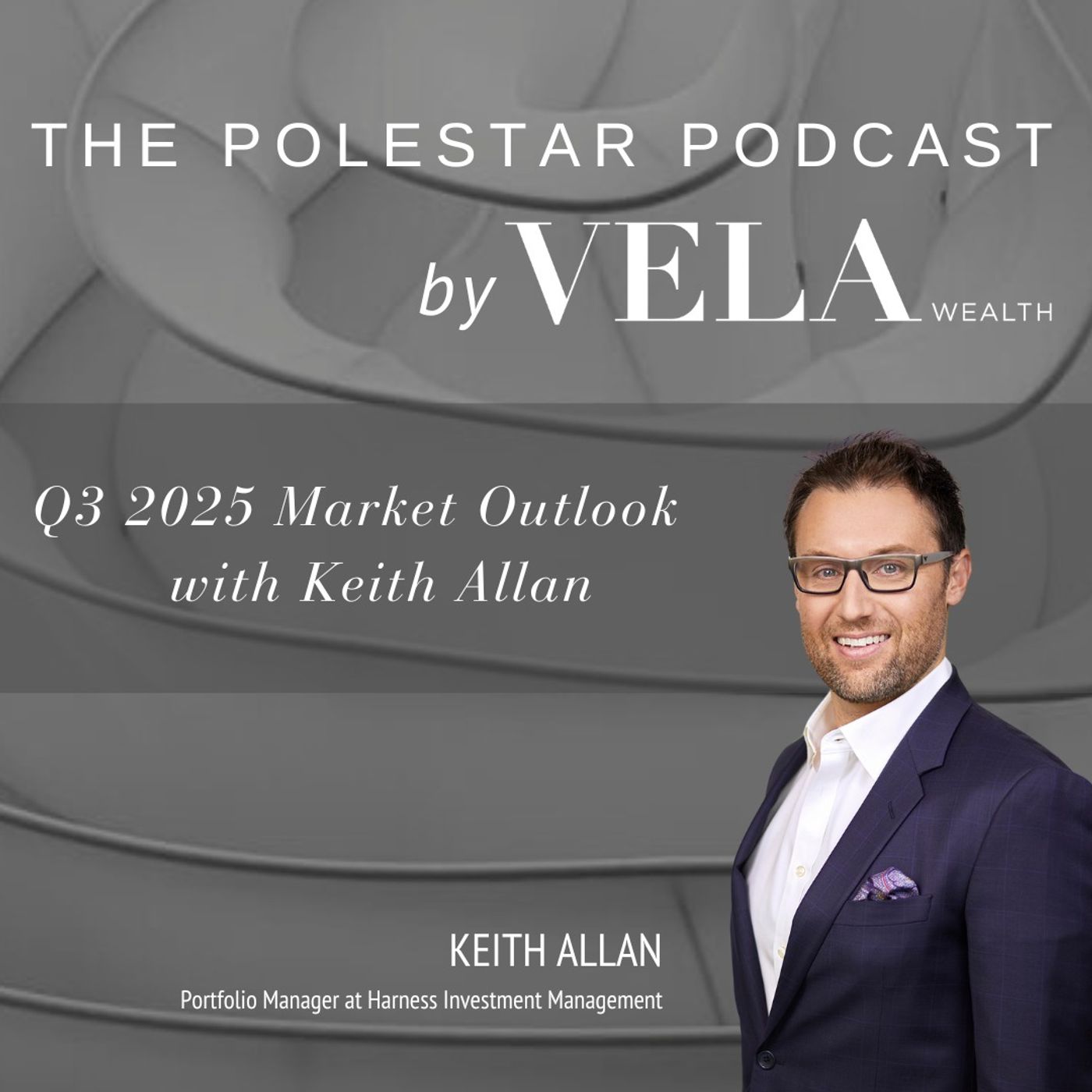
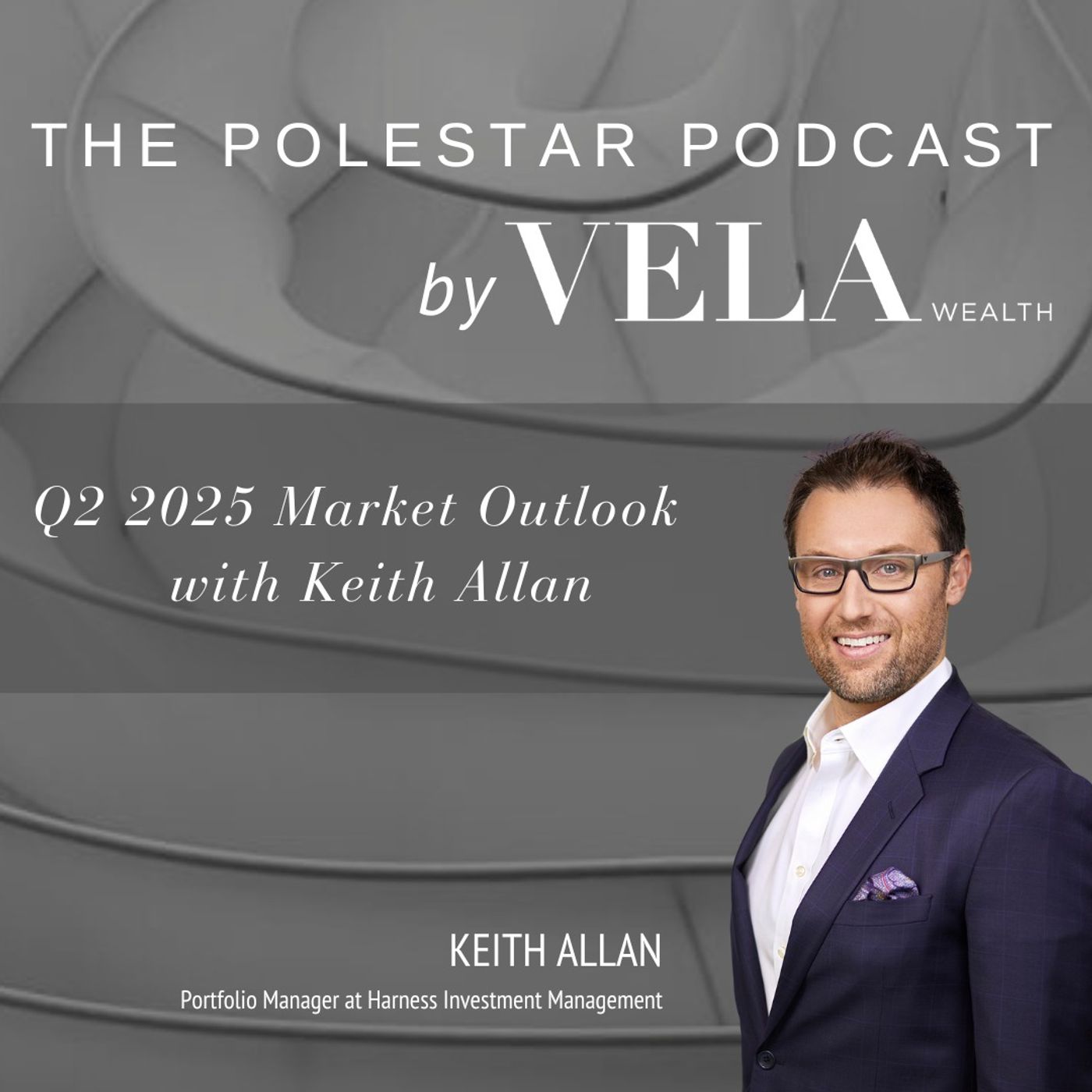
I'm Keith Allen, portfolio manager
we've been in existence now...six, seven years
The episode opens with broad market numbers (S&P 500 +18%, TSX +29%, gold +60-65%, silver +140%) and gold reaching $5,000/oz, which are real data points. However, specificity drops significantly thereafter. The portfolio management discussion relies on generic ranges ('5 to 8% commodities,' 'equities 65-70%' for growth investors) without naming specific holdings, client profiles, or concrete returns achieved. No dollar amounts, company examples beyond Royal Bank and Microsoft, or detailed case studies illustrate the principles discussed. The conversation remains at an abstraction level typical of advisory disclaimers.
The U.S. s&P 500 posted its third straight year of double digit returns at nearly 18%. The Nasdaq Composite also beat expectations at up 20%
something like gold or commodities...should make up somewhere between, you know, 5 to 8% of the portfolio
The host Kevin asks structured follow-up questions that logically progress the conversation (intro→2025 drivers→real vs. noise events→portfolio implications→Canada outlook). However, questioning lacks edge or productive pressure. When Keith makes claims - gold is 'stretched' but he won't predict its price, past prediction was wrong but lessons remain unclear - the host does not press for detail or accountability. The exchange feels cordial and collaborative rather than adversarial; challenging follow-ups are absent. The host occasionally validates rather than probe ('Yeah, I think that's fair'), missing opportunities to stress-test assertions.
Now if we look at it from your level as a portfolio manager versus the investor level, which is I want to make sure that I'm diversified
Yeah. And I think that's, it's incredibly important
Computed from the transcript - who did the talking, and the words that came up most.
Episode Highlights 2025 felt volatile - yet most major markets finished strongly positive. Canada’s TSX surged, powered by banks, energy, and precious metals. The 2025 April tariff sell-off: what felt alarming vs. what truly mattered. Why disciplined diversification outperformed emotional reactions. What the investment team is watching as 2026 begins. About the Guest - Keith Allan Keith Allan is a Portfolio Manager with Harness Investment Management. Harness has engaged in a strategic partnership with VELA Wealth and provides discretionary portfolio management for many of VELA’s clients. With more than 15 years of buy-side investment management experience, Keith brings a wealth of knowledge and experience to provide insight and guidance to clients regarding their investment portfolios. At Harness, Keith is responsible for developing and maintaining investment portfolios for VELA clients. To learn more, please visit Harness Investment Management team page . About the Host - Kevin Parton Kevin Parton, CFP professional, specializes in personal and business financial planning, tax reduction, and estate planning.
Transcribed and scored by The B2B Podcast Index.
Speaker A: Foreign. Compelling guests, valuable insights and time well spent. Well hello and welcome back to the polestar podcast by Velo Wealth. I'm Kevin Parton, partner at Velo wealth and current host of the episode today. This is our quarterly market Update and our first of 2026, which means we are going to reflect back on what happened 2025. So welcome to today's podcast where we're going to break down what happened in the markets in 2025, the year that felt like a roller coaster but ended with surprisingly strong returns across most major asset classes. Now, if you remember the narrative headlines, 2025 was packed tariff shockwaves that reverberated through equities, geopolitical flare ups in the Middle east and Venezuela, uncertainty around central bank policy, and repeated questions about the strength of the US Dollar and inflation dynamics. And yet markets ignored the doom and gloom and finished significantly higher. I'm just going to go through a quick list here. The U.S. s&P 500 posted its third straight year of double digit returns at nearly 18%. The Nasdaq Composite also beat expectations at up 20%. The Dow Jones Industrial Average wasn't left behind, up roughly 13%. The S& P TSX Composite index in Canada delivered one of its best years ever at about 29% growth, driven by banks, materials and precious metals, and then across other major asset groups. Gold was one of the standout performers at roughly 60 to 65% for the year, its strongest annual showing since 1979. Silver hit record highs and climbed well over 140% in 2025. Bitcoin and broader crypto assets, by contrast, struggled, finishing the year down 7 to 8%. And bonds and fixed income also posted positive returns as yields fell and rate cut bets grew, reminding us that diversification still matters. And while headlines were dominated by trade tensions, tariffs and global conflicts, portfolios that stayed diversified and avoided emotional reactions generally ended up rewarded, including in early 2026 so far, where many of our client portfolios are already up an additional 2 and a half to 4% to start the year. So what really drove markets in 2025 and what lessons can we carry into 2026? That is what we're going to explore today with portfolio manager Keith Allen. Keith, welcome back to the podcast.
Speaker B: Well, thank you, Kevin. That's, uh, quite the intro there. You've pretty much covered everything. I don't even know if I need to stay on.
Speaker A: Well, no. Now we most certainly want to get into it, but definitely want to start because when we had this, we recorded this episode last Year at the beginning of 2025, we were looking out the front window at what could possibly happen, what sort of expectations might have been. And then there was no shortage obviously of things that came up over the course of the year that could cause panic or market uncertainty or investor uncertainty. And so it's just interesting to reflect back on everything that happened, Hindsight, uh, being 2020, the results that came up and what do we learn from that. So I want to start with the big picture. Looking back at 2025, we saw strong year end returns across most major asset classes and equities, bonds and even precious metals, despite constant negative headlines. So from your perspective, what were the biggest forces that actually drove the markets higher last year?
Speaker B: Yeah, well, I think, I think it's the sort of the similar themes to what we saw in 2024, but kind of just more pronounced. And you know, on the US Side, if we want to take a look, sort of primarily on the North American markets, you know, on the US side, largely driven by tech, kind of again, sort of the same old theme, right? Like the big players of the industry really dominated the headlines. Um, and to your point in the intro there in Canada, largely driven by precious metals, materials and financials. And those sectors were the primary driving forces behind, well, certainly equity markets, but a lot of it is just robust corporate earnings, especially in those sectors. Um, a stabilized interest rate environment, you know, a sort of a more favorable tax environment, especially in the United States with Trump kind of putting his foot down and making his presence known there in his first year of his second term. And just a general overall, you know, consumer driven marketplace where we're seeing people, you know, spending a little more and just being more out there and just generally like driving the economy to new heights. And you know, I think I got a few, few notes here that I've, I've written down. We, uh, saw the S and P. You touched upon it in your, in your introduction there. It was up over 17%. Started the year at 5900, closed the year at 6900. Some pretty significant growth there. Like, uh, I said stabilized interest rate environment. Uh, in Canada we saw the tsx, like you said, you know, returns in the mid to mid to high 20s, which we haven't seen anything like that in the Canadian Marketplace. Gold reaching $5,000 an ounce, which, you know, I went on record saying here that I'd be shocked if it went higher. And I think that was when it was close to $4,000 an ounce. Well, it gained another thousand dollars and, and it's, it's, it's really, it's, it's quite, it's quite mind boggling. But you know, when you have those sectors in Canada, the materials and the precious metals that make up such a large component of the index, you know, you're going to see some, some pretty impactful returns. Um, you know, and that's not to say that that financials and even energy did quite well. Those sectors performed quite nicely too. So um, it's been a very, you know, there's been some very strong tailwinds and it's been a very, you know, investors that stayed invested and you know, didn't pull their money from the market. Especially when we had that kind of mid April sell off. If you remember correctly, the markets did kind of sell off there in April and the beginning of spring, beginning of Q2, things were looking a little dire. But if you stayed invested, you rode the course, you stayed committed to your, to your portfolio and you were rewarded. And we saw a lot of investors handsomely rewarded in their portfolios.
Speaker A: Yeah, well, I mean that's some valid points. One of the other things that I looked up, I didn't include in the intro was that there are other, uh, global markets, stock markets, emerging markets, uh, the Japanese, uh, index equities across the board seem to have gone up. Absolutely. Even outside of the US which is kind of historically or for many years kind of the benchmark of equity performance. And something you had brought up there, which was really interesting and a question I have. What really mattered in 2025 as it relates to what was driving the market versus what just felt scary. That moment in April. I think this is when there was the tariffs being rolled out for the first time. The reality of them setting in, we saw a real big pullback upwards of sort of 15 or 20% and then the markets continued to perform strongly after that. What were some of the things if you were to split the year into two buckets, let's say events that truly moved markets and made a difference over the course of the year and then events that might have just felt scary as there were many of those what stood out over the course of the year as sort of market moving events and then just noise that people could effectively have ignored and they'd be better off for it.
Speaker B: Yeah, so a couple things there just sort of touch upon the first part of your statement in terms of like yeah, international equities absolutely performed really, really well. And a lot of that was driven by the outflow of capital from the US with the Weakening US dollar. There's less demand for foreign investors and international investors to deploy their capital in the United States, just given what is going on. And so we see that that money flow elsewhere and a lot of that was flowing into international equities, hence that asset class performing as well as it did. Now to the second part of your question. What sort of feel versus real and like what, what, what did we feel was happening and what actually in actuality was happening? Yeah, I think there's a few things. So, so number one, like, the tariffs were absolutely real and I think they called it Liberation Day in April when the tariffs got implemented and they had that great big monstrous bill that they passed. I forget the acronym that they used, um, in Congress in the United States. But like, all those things were actual real events that we saw in real time that were taking place. And, and those absolutely impact the market. And then the geopolitical tensions you referred to, those are real events. Like, this isn't make believe, although I'm sure some days it feels like it's make believe and like this is a movie we're living in. But those, those events are real, right? Like, like the United States effectively taking the leader from Venezuela and bringing them, um, here to North America to stand trial and effectively taking over the supply of oil in Venezuela. That's real. What's going on in the Middle east is, continues to be real. The fact that the United States and Iran are going sort of head to head, that's real. So these, these, all these events are real. But I think the biggest thing is the, the impact to uh, which they will have on capital markets maybe hasn't been to the extent that people anticipated. Where we see these geopolitical events and we think it's almost that doomsday mentality where it's like, oh my God, like the world is literally coming to an end. And then we wake up the next day and it's like, well, no, it's, it's not coming to an end. It's, it's, you know, business as usual. Even though in like, our hearts we know it's not business as usual. These are pretty like monumental events and we don't even need to look overseas to see those. Like, we can look right here in North America and like some of the stuff that's going down in the Midwest in the United States right now and like some of the craziness that we're seeing unfold and it's, it's like for us to think like, oh my gosh, like, how can the economy and like just the world as we know it be humming along when, when all these crazy things are happening. So I've talked about it a bit before where you kind of need to separate like the economy and the stock market. Like the stock market is different than like the economy and the economy is really different than like current events and the world events. Like they're almost separate entities and you kind of got to look at each one in its own little niche and like how it's performing based on the underlying fundamentals that are aligned with that particular bucket or niche, if you will. And I think that's what we're seeing here is like, as much as we think everything's tied and it's like the old shoulder bones connected to the elbow bones, connected to the knee bones connected to the ankle bone. It's actually not. And I think that's the biggest thing that people are seeing.
Speaker A: Yeah. Then things are disconnected. And so looking back on the year, and I think this stands true for most years, recognizing that in hindsight, like you said, there are these things that are happening in the world and people are very much being impacted by them. But to not react inside your portfolio, otherwise you end up maybe sitting on the sidelines or making emotion based decisions that in an amazing year, like last year was for capital markets, you miss out on that. Now if we look at it from your level as the portfolio manager versus the investor level, which is I want to make sure that I'm diversified and that I'm staying the course. How do these geopolitical events or go to even changes in precious metal, like fluctuations in asset classes, how does that inform your decision? Like, what are you and your team talking about on a weekly basis as these events occurring and how does that change maybe how you view portfolio construction?
Speaker B: Yeah. So like, it's a really good question. So I think the biggest thing is, uh, I've kind of mentioned it before, is like style drift. And when you talk about behavioral finance and just sort of like the theory of finances, like style drift is. It's very easy to get caught up in what's going on and like deviate from your style as a portfolio manager, as an investment counseling firm. And hey, look, this is the latest fad or this is like what's going on? And gold's $5,000 an ounce. Oh my gosh, like we got to tilt our clients portfolios to have 20% gold because like, hey, we got to keep up with the Joneses. Right. And the, the minute you start doing that or you deviate from your style and suffer from what's known as style drift. I think it's a slippery slope, and it's a slope you can go down, and you can really go down a rabbit hole trying to chase returns and chase style. And just to ensure that you tell your clients, like, oh, yeah, gold's $5,000 an ounce. Guess what? We put 25% of your portfolio in gold. Well, the reality is that's never been our philosophy, and we've never. We've never suffered from that. We've never tried to chase returns for our clients. Philosophically, we have a style that we adhere to. And one of our biggest attributes that we have as an investment firm is that, fundamentally speaking, our style has proven to withhold itself in bear markets, bull markets. The cyclicality of markets has allowed us to perform quite nicely. I think the biggest thing is having trust in yourself, having trust in how you go about your business, how you communicate with clients, and how you build portfolios. And absolutely, when markets are humming along, uh, the way they are, we're going to take profits, we're going to see where we can build on certain areas and add in areas that are maybe we see undervalued and areas that are overvalued. We'll absolutely look to trim those positions. You know, we'll look to maybe tilt one asset class over another if we feel there's still room for it to grow. But again, we're not drastically deviating from what we do for our clients because that's what's allowed us to perform as well as we have in, you know, the six, seven years that we've been in existence now, and hopefully for many more.
Speaker A: Right. Which is perfect. It's good to know that there's frameworks for decision making that you apply to what goes in the portfolio. And so everything is. Is quite strategic when you look at it through that lens, from what goes in each part of the portfolio to what the asset mix is within a portfolio, and then down to the investor level, which is not letting emotions dictate how much goes in or out of that portfolio, uh, outside of what it makes sense for your plan. Something. I mean, just, uh, sort of tapping into this conversation around commodities or gold and silver. We talked about at the beginning of the year, and you said that you had a prediction that it couldn't go much higher than 4,000, and it's broken 5,000. We'll circle back to that in a second. What is it at this point that you think is causing such strong performance within gold and Silver as an example. What's caused that? Why has it continued to trend that way? And how are you feeling about it now at the beginning of this year compared to last year? But knowing how much higher those prices could go.
Speaker B: Uh, look, yeah, absolutely. I came on here, I think it was just under $4,000 in an OUN and or maybe right around $4,000 an ounce. And I didn't see it going much higher. In fact, I thought we would see a sell off and have it come down to closer to $3,000 an ounce or $3,500 an ounce somewhere in that ballpark. And here we are today and I checked this morning and it was back up over $5,000 an ounce even after the sell off. I thought maybe it was about 10 days ago, two weeks ago where we saw it drop quite considerably there. So there's a few things and I think it's important that we, yeah, we just reiterate or go over again why people love gold so much. So gold in itself is tangible. You can touch it, you can feel it, you can hold it, you can put it in your vault, you can look at it and you can do all the things that you know. Uh, you can do that with cash too, you can do with money. But you know, a lot of currency is now electronic. It's moving via electronic means. So it's not as. Yes, in theory it's tangible, but gold is like a hard asset. And people like that, they just do. It holds its value. It's a store of value. It's the oldest form or medium of exchange on the planet. Going back to hundreds of years ago. People used gold to barter and to trade. And it was the original form of currency. There's a limited supply of it. There's only so much gold in the world. You can't print more gold. You can go mine more gold and there's more gold to be had. But there is in reality a limited supply of it. So I talked about it being a hedge of inflation. Uh, store of value. Yeah. So those are the main reasons why people love it so much, is because it's because of the uniqueness of it, because of the limited supply of it. Because if the world does go to hell in a handbasket, it's always, people are always going to want gold. And so people get caught up in it. It's a bit of a contagion effect because like, similar, and I'm not comparing gold and bitcoin at all, but similar to bitcoin, it starts to go up a Little bit. People want to buy because they think it's going to go up more and then it goes up more and then people buy more of it. And then, you know, it just, it's like, oh, have you got goal? You tell your next door neighbor or your colleague or your classmate or your friend, like, oh, I got into gold. Did you get into gold and the next person's buying gold and you just see the price continue to go up and up and up. And I think especially with all the uncertainty and volatility we're seeing and in capital markets and in the world, people have that flock to safety, right? Like they, they want that Safe Haven asset which gold has proven to be. And so the demand for it goes up. And when the demand goes up on something and there's a limited supply of it, it's like economics 101 that the price is going to go up. So that's kind of where we're at. I think a lot of it has to do with the softening of the US dollar. A lot of it has to do with the, like you talked about the geopolitical tensions and what's going on in the world and all the uncertainty in the world and, and everything like that. So people want to have that Safe Haven asset. But I think a lot of it is sense of contagion and just kind of just, you know, the flow of money and the flow of the asset in itself. You know, I've talked about sort of what, uh, how I see gold. I absolutely think it should be part of someone's portfolio. I don't think it should be 50% of someone's portfolio. I think the price, you know, it is stretched. In valuation, you can use all the technical analysis you want to sort of say what the fair value is. At the end of the day, the fair value for an ounce of gold is what someone's willing to pay for it. So it's kind of like real estate, like whatever. See, if someone asks you, what's your house worth? Well, it's worth what everyone's willing to pay for it. So what's an ounce of gold worth? Well, it's worth what anyone's going to pay for it. There's no, there's no fair market value where you can use like discounted, uh, cash flow analysis to discount like the future cash flows that gold's going to yield, because there is no yield to it. So it's really arbitrary in that sense. Now, do I think it's stretched? Yeah, I do think it's stretched. But Am I going to predict that it's going to be $4,000 an ounce by the end of 2026? No, I already made that mistake once. I'm not going to try and predict the price again. But I think for those reasons, that's why people like it so much and that's why it's, uh, done as well as it has.
Speaker A: Yeah, I think that's fair. I mean, tends to be the case historically, when there's uncertainty, go to the asset that stores its value and can be converted to any currency in any country. Well, this sort of brings me to the next point, and I realize that I talk a lot about diversification in a portfolio or rebalancing, and it seems second nature to us because we do it every day, but that might not always be second nature to people. So I want to start first with when you're making an assessment, as you did at the beginning of last year, about where you think gold's going to go, how much of that is that? You just saying, hey, this is what I think is going to happen versus how much does that inform what percentage of a portfolio holds gold in it? M We will start there. When you are having that sentiment towards gold going up or down in value, does that change the fundamentals of. As a investment firm, we think X percent should go into gold, or do you keep those two separate? We think fundamentally this is how much should go in there and in my opinion, in a separate arena.
Speaker B: Yeah, uh, the latter, not the former. When we build out our portfolios or we look at asset allocation diversification for our clients, you know, every client is different. Right. So if you're a client, you know how much we have in equities or fixed income or commodities, cash, alternative assets, private equity, like, that's going to differ than maybe what I have for the next person, just based on their appetite and their capacity to take risk in their portfolio. Because, you know, certain asset classes have more volatility, more risk associated with them than others. So. But typically, like, we're going to look like the ends of the spectrum or the two extremes aren't going to be that vastly different for our clients, because for the most part, we, we don't have clients that are super uber, like, hey, like risk taking, I want to throw it all on black. And we also don't have clients that are, hey, like, I think the world's coming to an end tomorrow. I want to put cash under m my pillow. So most of our clients are somewhere in between. So typically, when we build out our Portfolios and our asset allocation, you know, we'll have bands or variances that will hold like something like gold or I kind of group gold and silver together. So precious metals or commodities, like, hey, that should make up somewhere between, you know, 5 to 8% of the portfolio. And again, depending on the client's appetite for risk or where the client is, you know, it might be 8%, it might be 5%, but it's going to be in that band. And similar to the equities and the fixed income and everything else. And we know collectively as a team how much commodities should make up of a portfolio. Like it's not appropriate for us to say, like we think commodities should make up 35% of your portfolio because that's again philosophically not how we manage money. Like commodities should not make up 35% of your portfolio. It's just the way we see the market and the way we see wealth and the way we work with uh, the planning and the overall balance sheet, family balance sheet review for our clients and the insurance and, and everything. Like it doesn't make sense for us to have 35% of our, our clients portfolios in gold and silver and other precious metals or you know, wheat or other commodities. But um, again it is going to vary from client to client. So there's a little bit of elasticity there from our perspective in terms of how an asset class should be built out. But yeah, typically what we'll do is we'll discuss internally where we see commodities making up the portfolio for our clients or uh, what role they have in making up the portfolio for our clients.
Speaker A: Perfect. And I think that's, I mean it's really key to tap into that, that there's sort of decisions being made around what percentages of a portfolio go into different asset classes. Because by and large, and historically that's where a lot of returns come from is in the asset allocation or where that money goes. And making sure that that's done strategically, not ad hoc. There's a reason for it. Um, and it's based on the individual investor and their comfort level, but also informed, again like by a team that you have understanding how the markets are all moving and working and that number can fluctuate. But something else that's really important and last year was a really great example of that is rebalancing. And so uh, having a proper asset allocation and then making sure that over the course of the year those buckets, gold or commodities as an example, if that's grossly outperforming the U.S. equity market or the Canadian equity market. What are you looking at within the portfolio and how frequently do you take a look at it to make sure that a portfolio that starts the year with a certain asset allocation doesn't get too far off so that it gets rebalanced? And what are the implications of it getting too far off? Like, why does not rebalancing have a negative impact on a portfolio?
Speaker B: Again, it comes down to, um, performance attribution and where our returns are driven from. And a lot of it is stock selection, right? Like picking the right stocks and holding the right weights of those stocks and how they correlate with one another and how they work together cohesively to build out the portfolio. And we could spend a whole hour talking about, uh, asset correlation and all this statistics, statistical analysis that goes between assets working together and, and you know, what assets to hold where, um. But the reality is like, yes, absolutely, we have to ensure that we don't deviate from our, our optimal bands that we have put in place for our assets. But there's, you know, sort of going back to my previous point, for every client that's going to differ, right, A little bit. So a client that might be targeted as a growth investor, where we're targeting equities to hold, you know, 65 to 70%, whereas someone that's more of a balanced investor, maybe that target equity band is 60 to 64% or 58 to 62% or someone that's, that's deemed moderate growth, somewhere between balanced and growth, they're 63 to 67%. So you know, when we do rebalance and when we do shuffle the portfolio, we're looking at all these things. We're looking at where does the client fit in, in their, again, their appetite, their capacity for risk, the type of investor that they are. And what are those bands associated with that classification? And you know, are. We have. We exceeded those bands. So example, you know, using equities as an example, we saw the equity market perform quite well this year, right? So every client, regardless of whether they were deemed a conservative investor or a moderate growth or balanced or whatever, everyone had exceeded their band on the equity component. So naturally we're going to look at and be like, hey, look, everyone's overweight equities right now, regardless of what type of investor they are. So we need to trim that back and we need to deploy, you know, some of the profits we're going to take, deploy it elsewhere. Now does that mean we're going to put it into fixed income? Yeah, Maybe a little bit. But, you know, if fixed income's in line with what they should be, then maybe we'll throw it in alternatives. But we don't want to get too high on the alternative scale because, you know, by the same token, like with gold and private equity and other asset classes performing well, maybe that band is now. So, hey, are we going to hold a little cash, uh, on the sidelines and have some dry powder already? So if things do sell off, we can maybe buy things that are undervalued or we deem undervalued that are going to produce some pretty impactful returns for our clients. So all these things are considered when we rebalance, and we effectively rebalance every week, our algorithms look at our clients portfolios, they see overweight positions. If Microsoft or Royal bank or whatever has done really well, and it's outside the band for that particular stock. So if Royal Bank's supposed to be 5% in the equity allocation, okay, maybe we trim a little bit of Royal, and then we'll put the profits into, uh, another name that's a little underweight. But in terms of the old, the asset class itself, you know, maybe like right now we actually have a little higher cash for our clients than we normally would. And that's simply because equities did really, really well. The other asset classes did pretty well too. So, hey, maybe we'll keep a little cash on the sidelines. Not a lot. If we're, if our cash weights 2 to 5%, you know, we might be at the upper band of that right now. We might be sort of 4 to 5% for most clients on cash. And that way, if there is, uh, something that's enticing to us to add to the portfolio, we know that all our clients have a little more cash than they otherwise would. So we can step in and buy that position or add to that asset class. But, you know, so that's kind of how we look at it. Um, and we just want to ensure that we're always aligned with the IPS the client has set out and how that particular client, what their appetite is to have their portfolio, have risky assets within their portfolio.
Speaker A: Yeah. And for all of those reasons, it's important to have the right people on your team to make sure that those decisions are being made and you understand what's going on. And the results of that, uh, were evident in our clients portfolio returns in 2025. Uh, I just want to do a little quick summary then of what happened in 2025, and then we'll jump into just what's going on in Canada to start off the year. Some very quick summary expectations perhaps, or assumptions maybe going forward and then we can leave it for today. So in 2025 felt pretty volatile, but most major assets finished positive, often strong. Precious metals stood out. Crypto struggled. Fixed income quietly rallied. We saw real good equity market growth across the board. Uh, tariffs, geopolitics and rate narratives drove headlines. But again, markets focused on fundamentals and liquidity and that's what you and the team did within the portfolios. So ultimately, as tends to be the case, and we like to circle back on this, a diversified and disciplined approach will help portfolios finish strong, and ours did going into 2026 with Momentum. Now that we're in 2026, I want to ask a couple questions about Canada. How 2025 ended so strong and then what things look like out the front window. So again, TSX had one of its strongest years in decades, maybe longer, and now we're entering 2026 with solid momentum. What structural drivers helped Canada in 2025 that made it stand out so far? And what should investors or what are you watching out for looking out the front window this year, that could really matter.
Speaker B: Yeah. So I think first and foremost it's important to realize that yes, 2025 was an exceptionally strong year in Canada in the Canadian equity market. No argument from anyone there. Uh, I think it's really important though, from an investor's perspective to realize, like, not every year is going to be like that. Like, it was a great year and, and I, I sure hope people stayed invested in the market and they took advantage of those returns and that they, they got some pretty meaningful growth in their portfolio. But, you know, to expect that or have that expectation that year over year that 2026 is going to show returns in Canadian equities north of 25% or whatever they were, that would be unrealistic. So I think, number one, my advice, or what I would say is like, set expectations, set realistic expectations for yourself and your portfolio and what you're hoping to accomplish by investing. And that means like, hey, like, if you're able to get, you know, double digit returns, that's still a good year. Right. So don't be like, oh my gosh, like, I got 25% last year and I didn't get that this year. Number two is unless you were 100% invested in the Canadian equities, you wouldn't have gotten 25% of your portfolio. Well, you might have, but probably not. Like, so my hope is that people are diversified enough to say, like, yeah, they had a portion of their portfolio invested in Canadian equities, but, like, they were still diversified. So they had some fixed income, they had some commodities, they had some US equities, they had some international equities, maybe they had some private assets. And the correlation of those asset classes and how they work together. Maybe you didn't achieve 25% return last year, but you still got some pretty impactful return. But what you've done is you've hedged your portfolio. So if there is Canadian equities, again, using them as an example, sell off a bit or don't have as strong a year, your portfolio is still going to do really, really well because you've diversified properly. You have assets that are correlated nicely that are going to work together to give you the optimal return that you're looking for. So I think it's important to stay the course. Don't drift from the style that you or your advisor, your portfolio manager, has set out. Uh, ensure that you're diversified. Ensure your asset allocation is aligned with the bands or the variances that you set out in your investment policy statement. Uh, allow yourself to get outside your comfort zone. If you've strictly always been Canadian equities, allow yourself to bring in other asset classes to your portfolio. Be open minded to new ideas and new suggestions as you look to pivot away from certain areas. And we call it anchoring bias. A lot of people have anchoring bias. You get anchored to a position or you get fixated on something that's done really, really well, ultimately that can be detrimental to you and your portfolio over time. Kind of back to my previous point. Be open to new suggestions, new ideas, ways to sort of round out your portfolio nicely, whether it's real assets or, um, other areas where you think you can diversify. But yeah, I think that, you know, like we talked about at the beginning, Kevin, that the catalyst for the Canadian market was precious metals, materials, energy and financials. Those are going to consistently drive the Canadian marketplace. And if those sectors continue to do well, if the price of oil continues to be strong and the price of gold continues to be strong and the price of silver continues to be strong, the Canadian equity market as a whole is going to do very, very well. But what I can say with almost 100% certainty is that it's not going to always be the case. It might do well the first half of this year, it might do well the whole year, but at some point that clock is going to strike midnight and kind of Goes back to what we were discussing in terms of having the proper diversification, having the proper plan in place, ensure your portfolio is hedged, ensure that you've got all the other things. Um, your overall family balance sheet is rounded out nicely. So if there is a sell off or if gold does drop again, or if the price of oil drops or, you know, all of a sudden we see like more tariffs hit Canada or. I mean, I'm just spitballing ideas here, but you want to ensure that you're insulated against these external market forces so you can continue to build your wealth over time. Like slow and steady. Right. Compounding return. All the, like the not so exciting stuff that we talk about with our clients, like that's what we want to stress and that's what really want to, we really want to emphasize when we have our meetings and our review meetings with our clients.
Speaker A: Yeah. And I think that's, it's incredibly important. When I got into this business 16 years ago now, I remember looking at charts of annual returns based on different market segments or equity classes. And it's rare that, you know, Canada had a strong year last year. It's rare that the same economy will have, or the market will have a banner year two years in a row or lead the pack. So it's that like, don't chase returns. Have a diversified approach because what worked well this year might not work next year. And the only way you can make sure you get consistency within your returns is to stay diversified. So you're holding a little bit of, uh, of the assets that are going to perform well in any given year. And that's kind of a lot of what you talked about. Real quick, just to wrap up now that we're a month and change into this year, what, uh, do things look like out the front window for the rest of this quarter and this year? Are there any sort of standout things that are happening that might pivot, change the direction of the market that you can see?
Speaker B: Well, obviously continuing to monitor just global events. Right. Just like what's going on in the world. And I know, I don't want to contradict myself because I know earlier in the podcast I did mention how you kind of got to look at each bucket individually and not necessarily always group them together. That said, there is still that effect where one does slightly affect the other and there is still the continuity of all of them working together. But you know, it is, they are sort of each onto their own, but we are obviously looking globally what is going on in the world every Day and understanding and trying to wrap our head around what's going to happen next and how does this affect our clients portfolios? I think it looks like we're in a pretty stable interest rate environment. No sign for interest rate cuts, nor is there a sign for any interest rate increases on the horizon. So I think we can look at the interest rate environment as being pretty stable here, at least for the foreseeable future. We did rebalance our clients portfolios at the end of December quite significantly, where we did take a lot of profit off the table from some of the names that performed really nicely. And I said this to your previous question. We did increase our cash waiting for all of our clients where it's probably at the upper end of the band right now. And I personally, um, I'm comfortable with having some more cash on hand right now, just given the current climate. I mean, we did see the market sell off a bit there. We've sound bounced back. I mean, I know today was another strong day, so just having a little cash on the sidelines right now is not the worst thing in my opinion. But yeah, we're just, we're always looking for opportunity areas. We can be better areas where we can build the portfolio, where we can get impactful returns. I mean, undervalued positions we like that are undervalued, can we add to those positions? And subsequently, even if it's a position or a name that we really like that's deemed as being overvalued, are we going to get out of that position? Not because we don't like the name or we don't like the asset, but because it's like too rich and we've set out, what we set out to accomplish, we've now accomplished. So maybe it doesn't make sense to hold that anymore. So, you know, we're always monitoring, we're always looking at the portfolios where we're meeting two, three times a week to discuss what we're doing. You know, we have a great team behind us in terms of building out the portfolio. So I think we're in a really good place. And uh, our clients have, you know, really benefited from the work we've done with them. So I'm. Yeah, at this particular point, nothing imminent, but we're always looking to do. Paying attention.
Speaker A: Yeah. And that's what I've noticed again, after years in this business and working with you, what, uh, your portfolio looks like and how it's managed does make a huge, huge difference. And of course, how your portfolio fits into your personal financial plan matters as well. Yes. And so your assets or tools in your tool belt. And having the right tools is always important, but you got to first be clear about what you're trying to build before you know exactly how you want to build it. And so that's what I want to be able to do for the people we work with and share some information. So thank you, Keith, for being here, for sharing a lot of what happens behind the scenes, and for doing such an awesome job in 2025 with managing our clients portfolios.
Speaker B: Yeah, thanks. Thank you again for having me. Kevin.
Other episodes covering the same guests and topics, from across The B2B Podcast Index.
 Here's How To Design A Portfolio That Beats 99.5% Of Other Investors with Dr James Martin [CPD Available]Dentists Who Invest Podcast · on S&P 50071 / 100
 Running On Empty, Running Blind - Hypernormal Investing Report May 15thIn the Company of Mavericks · on S&P 50070 / 100
 S04 E14: IPOs, executives and volatility: Equity trends to look out forProsperity at Work · on S&P 50057 / 100
 Becky Quick: Warren Buffett's Biggest Lessons, CNBC, and Finding Purpose Through AdversityThe Master Investor Podcast with Wilfred Frost · on S&P 50056 / 100
 How to Retire in 10 Years or Less!The Personal Finance Podcast · on S&P 50054 / 100
 Guacamole, Money and MarketsThe Investopedia Express with Caleb Silver · on S&P 50052 / 100
 Market Update Q2 2026: What’s Driving Markets Now59 / 100
 Q3 2025 Market Outlook with Keith Allan
 Building Memories: Nicole Smith’s Journey with Flytographer
 Q2 2025 Market Outlook with Keith Allan
 The Evolution of Consumerism & Effecting Meaningful Change with Stewart Irvine