
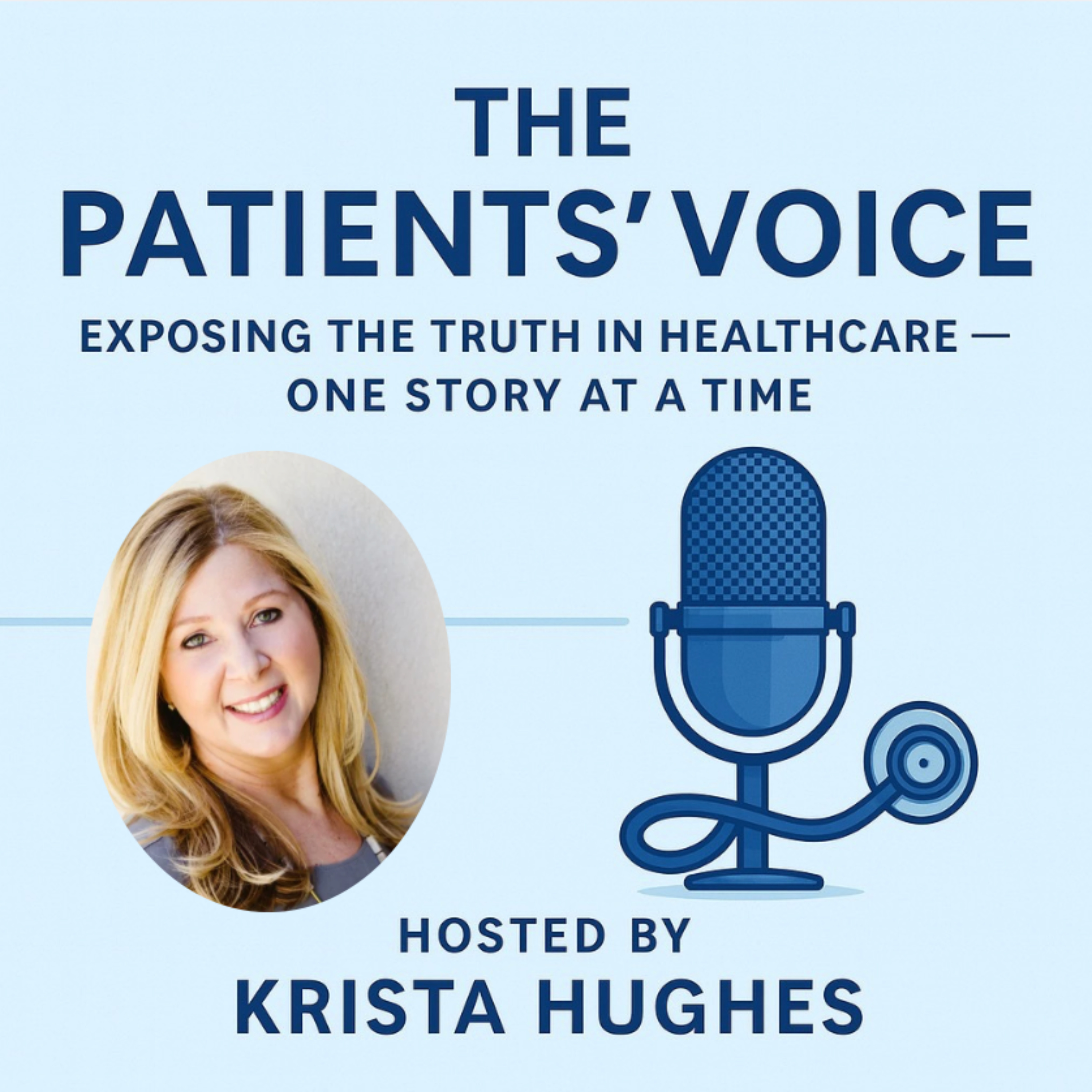
The Patients’ Voice: Exposing the Truth in Healthcare · 2025-09-29 · 11 min
Key moments - from our scoring
Substance score
34 / 100
Five dimensions, 20 points each
Diagnostic errors represent one of the most serious patient safety problems in modern healthcare, yet remain poorly understood by patients themselves. Krista Hughes, founder and CEO of Hughes Advocacy, breaks down the Leapfrog Group's official definition - covering delayed, wrong, or missed diagnoses, plus failures to communicate accurate diagnoses to patients - and illustrates each category with concrete clinical examples. A client initially misdiagnosed with a pulmonary issue was actually in atrial fibrillation with a non-functioning pacemaker; another patient had a transient ischemic attack (TIA) misclassified as a stroke warning when it was actually a full stroke, leading to a preventable second stroke. The data is sobering: the Society to Improve Diagnosis in Medicine reports that most people will experience at least one diagnostic error in their lifetime, while the U.S. National Academy of Medicine estimates 795,000 Americans die or become permanently disabled annually from diagnostic errors. The "big three" error categories - vascular events, infections, and cancer - account for 75% of serious harm. Hughes emphasizes that patient advocacy, education, and self-advocacy are critical tools for preventing these errors before they cause irreversible damage.
A diagnostic error occurs when either a delayed, wrong, or missed diagnosis is received, or when an accurate diagnosis was available but not effectively communicated to the patient or family.
A wrong diagnosis occurs when the original diagnosis is incorrect and the true cause is discovered later (e.g., thinking a heart problem is a lung problem), while a missed diagnosis is when a patient's medical issue is never properly explained (e.g., misclassifying a stroke as a TIA).
According to the U.S. National Academy of Medicine and BMJ Quality and Safety Report, an estimated 795,000 Americans die or are permanently disabled by diagnostic error each year.
The "big three" are vascular events, infections, and cancer, which together account for 75% of serious harm from diagnostic errors, and include conditions like stroke, sepsis, pneumonia, DVT, and lung cancer.
A second opinion from a different specialist can catch misdiagnoses that the first doctor missed; Hughes's client was nearly sent to a pulmonologist for a lung problem when the real issue was a heart condition only identified by a second cardiologist.
Our reviewer’s read on each dimension, with quotes from the episode.
The episode provides basic educational content about diagnostic error definitions and categories with real patient examples, but relies heavily on straightforward categorization (delayed, wrong, missed diagnoses) and publicly available statistics without layering novel operational insights. The structure is educational but predictable: define term, provide examples, cite statistics, urge vigilance.
It is an event where one or both of the following of occurred. One, you got a delayed, wrong or missed diagnosis or number two, you got a diagnosis that was not communicated to you the patient.
Per the Society to Improve Diagnosis in Medicine, they stated that diagnostic error is one of the most important patient safety problems in healthcare today and inflicts the most harm.
The episode recycles standard patient advocacy frameworks and commonly cited statistics from established organizations (Leapfrog, National Academy of Medicine, SIDM) without introducing fresh angles or counterintuitive thinking about why diagnostic errors persist or how systems might prevent them differently. The categorization of error types is definitional rather than original.
The Leapfrog group agreed on the following definition of a diagnostic error.
According to the U.S. national Academy of Medicine, the BMJ Quality and Safety Report reported an estimated 795,000Americans die or are permanently disabled by diagnostic error each year
No guest expert appears in this episode; the speaker is the host (a board-certified patient advocate) delivering the content herself. While she has relevant credentials and real client experience, the absence of external expert practitioners, physicians, hospital administrators, or healthcare system operators means there is no guest caliber to assess beyond the host's own authority.
I am your host, Krista Hughes, the founder and CEO of Hughes Advocacy in which I'm a board certified patient advocate.
As a patient advocate, I try to prevent these errors from happening to my clients.
The episode includes specific patient case examples (afib/pacemaker misdiagnosis, TIA/stroke misdiagnosis) and concrete statistics (795,000 Americans, 75% of serious harm from three diagnostic error types), but lacks system-level data, timelines, or granular metrics about diagnostic error rates by setting, specialty, or remediation success. Evidence is illustrative rather than comprehensive.
he was given a wrong diagnosis. It was not his lungs, it was his heart. He was in afib and his pacemaker had not been working for three years.
an estimated 795,000Americans die or are permanently disabled by diagnostic error each year
This is a monologue with no meaningful dialogue or questioning; Speaker B provides only brief interjections and appears to be a production artifact or scripted co-voice rather than a real guest in conversation. There are no follow-up questions, probing, disagreement, or dynamic exchange. The host delivers information in lecture format without engagement or tension.
Speaker B: I promise once we get our basic
Speaker B: And it's something that I see the
Computed from the transcript - who did the talking, and the words that came up most.
This is part 2 of a 2-part series that I am doing to educate, empower, and inform you as the patient. As I stated in Part 1, this may be boring. But knowing this foundational information is instrumental in saving your life. In this episode, I will focus on diagnostic errors. They are on the rise at an alarming rate. BMJ Quality and Safety reported that an estimated 795,000 Americans will die or are permanently disabled by diagnostic error each year. It is a healthcare crisis that no one is talking about, but you should be aware.Resources Mentioned in this Episode:Website - YouTube - YouTube Channel Instagram - @hughes.advocacy LinkedIn - Hughes Advocacy Facebook - Hughes Advocacy Leapfrog group - Leapfrog Group SIDM - What is a Diagnostic Error BMJ report - Report Highlights Public Health Impact of Serious Harms From Diagnostic Error in U.S. Improving Diagnosis in Care - Improving Diagnosis U.S. national academy of medicine - Improving Diagnosis in Healthcare I hope you enjoyed this episode and will continue returning to a place where your voice always matters! I would love it if you could rate, review, share, and
Transcribed and scored by The B2B Podcast Index.
Speaker A: Foreign. Hey friends. Welcome to the podcast the Patient's Voice. Does it matter? This is a place where your voice will always matter to me. Health care is complicated so I wanted to create a safe space where we will discuss tips, hot topics, provide you with resources, have, um, guest speakers who are experts in the healthcare industry or share real patient stories in hopes to help you navigate any healthcare setting. I want to focus on you, the patient and discuss issues that matter to you in an open and transparent way. I am your host, Krista Hughes, the founder and CEO of Hughes Advocacy in which I'm a board certified patient advocate. I have a passion for patients. Let's be the change together. Welcome everyone. This is part two of a two part series series on the basics of healthcare.
Speaker B: I promise once we get our basic
Speaker A: understanding out of the way, I uh, will move on to topics that are
Speaker B: important to you, share real life patient
Speaker A: testimonies and hopefully hear from you on being a guest. So again, just bear with me because remember, knowledge is power. The topic today is diagnostic errors.
Speaker B: And it's something that I see the
Speaker A: most of as an advocate. In my humble opinion, diagnostic errors are the worst I have ever seen and getting alarmingly worse.
Speaker B: So what is a diagnostic error?
Speaker A: The Leapfrog group agreed on the following definition of a diagnostic error. It is an event where one or both of the following of occurred. One, you got a delayed, wrong or missed diagnosis or number two, you got a diagnosis that was not communicated to you the patient. An accurate diagnosis was available but was not effectively communicated to the patient or family.
Speaker B: Now let me explain a little bit
Speaker A: more and give you, um, a few real patient examples of each. So first of all, there's the delayed diagnosis. This is when you should have received your diagnosis earlier. For example, a cancer diagnosis is the most common. A delayed cancer diagnosis could cause your cancer to spread. Then there's a wrong diagnosis and it occurs when your original diagnosis is incorrect and the true cause is discovered later.
Speaker B: For example, I had a client that
Speaker A: contacted me stating he needed help seeing a, uh, pulmonologist because he was having trouble breathing. And after further investigation and I was asking him some questions, I, uh, said,
Speaker B: do you think it might be your heart?
Speaker A: And he said nope.
Speaker B: His cardiologist said it was his lungs. So I convinced him to get a second opinion from a different cardiologist. Before we saw a pulmonologist, we discovered that he was given a wrong diagnosis. It was not his lungs, it was his heart. He was in afib and his pacemaker had not been working for three years. This is a wrong diagnosis. Then there's a misdiagnosis and it's when a patient's medical issue is never explained. For example, I, uh, had a patient that failed and went to see his neurologist and had, you know, testing done and the doctor reported that he had had a tia, not to worry about it because it was not a stroke. Then the patient had a second stroke. We were told by a different neurologist that his first stroke was not a tia. In fact, it was a stroke. It was a missed diagnosis. His second stroke could have been prevented, just as in part one. I would like to share references and, and some statistics with you for you to be aware of the seriousness of this public health problem. Per the Society to Improve Diagnosis in Medicine, they stated that diagnostic error is one of the most important patient safety problems in healthcare today and inflicts the most harm. They also stated that it is likely that most of us will experience at least one diagnostic error in our lifetime and sometimes with devastating consequences. You know, improving diagnosis is a health care is a moral, professional and public health imperative. According to the U.S. national Academy of Medicine, the BMJ Quality and Safety Report reported an estimated 795,000Americans die or are permanently disabled by diagnostic error each year, confirming the pressing nature of the public health problem. You know, the top three diagnostic errors, they call them the big three, are vascular events, infections and cancer. Those three account for 75% of serious harm. Other frequent diagnostic errors are stroke, sepsis, pneumonia, venous thrombosis, like a dvt, a blood clot, and lung cancer. As a patient advocate, I try to prevent these errors from happening to my clients. I'm hoping that each episode will provide you with tips, tricks, resources to educate and empower you. Because I want to prevent you or your loved one from having a patient safety error. Remember talked about it last in the last episode, Patient safety is harm, which includes preventable medical errors and diagnostic errors. Now that the basics are out of the way, we can get to topics that can help you be your own advocate. Next episode is something that I have been asked to speak on by so many people. It's one of the most frustrating topics that I deal with as an advocate, and that is your HIPAA rights. I, uh, hope you come back in two weeks to learn more. There are resources available for this episode in which I've referenced in the narrative section. And as always, remember, I have a passion for patience. Let's be the change together.
Speaker A: That brings us to the end of this episode. As always, thank you so much friends for listening to the patient's voice? Does it matter if you enjoyed the show? Make sure you follow, rate or review me on Apple Podcast, Spotify or Google Podcast and always reach out to me
Speaker B: if you need assistance navigating the system. If you have topics that you would
Speaker A: like to know more about or to
Speaker B: be a guest on the show, be
Speaker A: sure to come back next time for a discussion on understanding your hipaa. Right. Until then, this is Christa Hughes, and don't forget I, uh, have a passion for patience.
Speaker B: Let's be the change together.
 Medical Gaslighting43 / 100Diagnostic Safety - A Public Health Crisis48 / 100Why Is No-One Accountable In Healthcare?42 / 100Cancer Misdiagnosis60 / 100Sepsis61 / 100