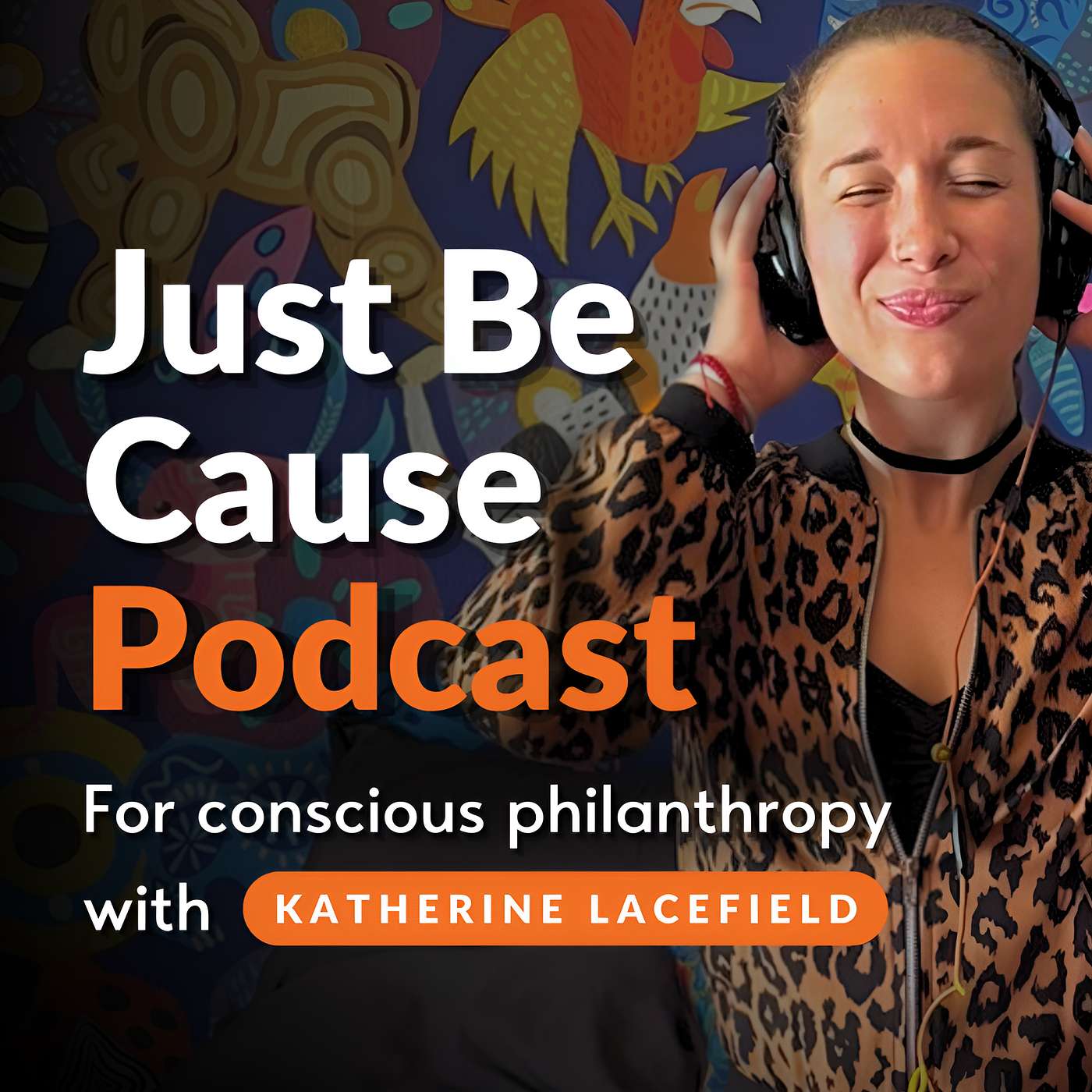
Hosted by Katherine Lacefield
★5.0on Apple Podcasts · 11 recent reviews
Check out our website: Welcome to the Just Be Cause Podcast, a beacon of inspiration in the nonprofit space dedicated to exploring the intricate tapestry of causes that shape our world - from the animal kingdom to our environment, and ultimately, to us.
44 episodes · publishes fortnightly · latest 2026-04-02 · ~41 min/episode
Rank
#1947
Substance
67.0
/ 100
Breakdown
Scored 2026-07
Updated monthly
General rank
#112 of 271
Across the index
#1947 of 6181
Substance
Top 31%
outscores 69% of the index
The Just Be Cause Podcast ranks #1947 on The B2B Podcast Index with a substance score of 67.0 out of 100, scored across 1 recent episode. It scores highest on guest caliber and insight density. Rachel Locke has real practitioner credentials - co-founded a global network, lived in a conflict zone in northern Uganda, and co-edited a multi-year research volume - and Jaila Sutherland brings legitimate multilateral policy expertise from the Stanley Center; neither is a career podcast guest, but they operate at a mid-senior level rather than at the top of the field, and the depth they reach in this format is constrained by the host's frequent interruptions.
Averaged across 1 recently scored episode, with cited evidence.
The guests surface genuinely useful framing - multilateral systems ignoring urban violence, criminal justice approaches reinforcing structural harm cycles, defunded peace mediators in Nigeria driving uptick in inter-community violence - but the episode is heavily diluted by the host's extended tangents about cat videos, her travels through Honduras, pesticide analogies, and animal shelter anecdotes that consume large portions of the runtime.
“the multilateral system tends to focus on violence that is uh, has the potential to be state destructive...violence that is considered more internal, whether that's uh, high levels of gender based violence or interpersonal violence, um, tends to be treated more as a criminal justice issue”
“because those individuals are no longer receiving assistance...literally to travel to the places they need to go to...we have seen an uptick in uh, inter community violence in many places”
The framing of identity-based urban violence as a gap in the multilateral system is a legitimate and underexplored lens, and the point about criminal justice responses being harm-reinforcing rather than harm-reducing is thoughtful; however, most of the episode recycles common nonprofit-sector talking points (silos bad, prevention cheaper than response, media biases toward negativity) without advancing genuinely counterintuitive arguments.
“what you do when you just think about it as a criminal justice problem, quote unquote, is you don't acknowledge and recognize those kind of historical antecedents...the way that criminal justice um, solutions are pursued are actually harm reinforcing”
“we intentionally are not trying to over oversimplify this conversation...we risk doing the wrong things when we oversimplify”
Rachel Locke has real practitioner credentials - co-founded a global network, lived in a conflict zone in northern Uganda, and co-edited a multi-year research volume - and Jaila Sutherland brings legitimate multilateral policy expertise from the Stanley Center; neither is a career podcast guest, but they operate at a mid-senior level rather than at the top of the field, and the depth they reach in this format is constrained by the host's frequent interruptions.
“I lived in northern Uganda for a few years in um, a conflict zone”
“we actually convened over a couple of years a group of people we called our reference group, who are leaders across the world who are focused on different forms of violence”
There are some concrete anchors - Peace in Our Cities launched September 2019, ~30 cities and 50+ organizations in the network, the Grenfell Tower and Nigeria peace-committee examples, reference to the 2015 SDGs, and USAID elimination framed as costing millions of lives - but critical claims are left unquantified (no city-specific homicide reduction figures, no sourced mortality data for USAID cuts, no dollar amounts for funding contractions), limiting the actionability of what is presented.
“in the US in the past couple years cities have reduced their violence levels, their lethal violence levels to rates sometimes never seen in the um, recent history. Or in decades, huge reductions”
“already in the year now, since, since USAID was eliminated, millions of people have died as a direct result. And we have studies and documentation”
The host asks one genuinely useful follow-up (what was the multilateral focus on if not urban violence?) but routinely answers her own questions before guests can respond, delivers lengthy personal monologues about pesticides, cat videos, Honduras travel, and animal shelter policy, and never challenges or pushes back on a single claim made by the guests, resulting in a PR-friendly conversation rather than a probing interview.
“I kind of see it as like when we're trying to, I work a lot in the environmental space around with have an organization working on pesticides when they throw the same pesticides onto the same problem, it ends up causing much more problems”
“I'll make a comparison to a completely other aspect in an animal rights perspective. Faunalytics and I had an episode on this”
First period on the Index - history builds from here.
1 scored on substance · 44 tracked in total.
An excellent podcast which highlights the needs and solutions for the purpose sector
- ballislifelbj6
Uplifting, real, and full of heart! Katherine brings such genuine energy to Just Be Cause - every episode feels like a soulful conversation with a wise friend. Inspiring and refreshing!
- IrinaSheh
Add this badge to your site - it links back here and updates automatically as you rank.

<a href="https://index.fame.so/show/the-just-be-cause-podcast" target="_blank" rel="noopener">
  <img src="https://index.fame.so/badge/the-just-be-cause-podcast/badge.svg" alt="Ranked #112 on The B2B Podcast Index" width="360" height="136" />
</a>Track The Just Be Cause Podcast's rank
Get an email whenever this show moves up or down the Index. Monthly at most, no spam.
Companies, products and tools that come up most across this show's episodes.
The themes that come up most across this show's episodes.

CareTalk: Healthcare. Unfiltered.
CareTalk: Healthcare. Unfiltered.

Money Code
Stablecon

Reshaping Workflows with Dell Pro Precision and NVIDIA RTX PRO GPUs
Dell Technologies AI Factory with NVIDIA

The RAG Podcast
Sean Anderson

Outthinkers
Outthinker
Business Scholarship Podcast
Andrew Jennings
Podcasts that dig into the same topics.


