The Jess Larsen Show on Innovation & Leadership · 2026-06-25 · 43 min
Key moments - from our scoring
Substance score
59 / 100
Five dimensions, 20 points each
Daniel Eberhard's path to building KOHO reveals how a founder with deep roots in rural British Columbia leveraged a mission-driven approach to challenge Canada's oligopolistic banking system. Growing up in Windermere with limited resources but strong community support instilled in him a belief in agency and responsibility - principles that later motivated him to tackle financial inequality when he discovered that 30-50% of wealth is eroded through poor financial products. After selling a wind energy company to Algonquin for $50 million, Eberhard applied rigorous customer validation techniques, testing messaging via Facebook ads for just $400 to prove demand existed before approaching institutional partners. His breakthrough came in 2015 when he orchestrated simultaneous deals with Visa, People's Trust (for deposit holding), and capital partners - successfully using conditional negotiations to overcome each party's reluctance to move first. KOHO launched in 2017 with a cashback prepaid card, adopting a Costco-style model that trades card margins for cross-selling higher-value financial products. The episode dissects product-market fit as a continuum of improving cohorts rather than a binary threshold, explains the team's high-velocity product approach (accepting a 70% kill rate), and covers the critical 2017 moment when Eberhard presented his team with an ultimatum: secure $8 million by relocating to Toronto or attempt to bridge with another $1 million in Vancouver. Eleven of thirteen employees agreed within hours, demonstrating the commitment that enabled KOHO to scale to 2 million customers and $400 million in funding while pursuing a full banking license.
Daniel Eberhard stacked conditional commitments, telling each party that their agreement was contingent on securing the others - this avoided the typical dynamic where no party wants to move first. He also borrowed credibility through early investors and capital partners who could make introductions, and luck played a significant role in finding the right receptive person at each organization.
KOHO launched with a prepaid card requiring signatures on transactions (a step backward from existing chip technology), but the hook was a fundamentally different cost structure that enabled cashback on every transaction - this cashback wedge compensated for the weak core product and drove recurring usage and cross-sell opportunities.
Rather than treating PMF as a binary yes/no, Eberhard views it as a continuum of improving cohorts - measuring week-over-week improvements in repeat behavior and using the Sean Ellis survey metric (if >40% of users say they'd be "very upset" if the product disappeared, you're approaching PMF). He also tracks usage velocity and increasing transaction values as signals.
With only a few weeks of cash remaining, Eberhard presented the team with two options: raise another $1 million to bridge (leading nowhere), or relocate to Toronto for an $8 million Series A. Eleven of thirteen employees agreed to move within hours despite personal complications like children in school, demonstrating the team commitment that enabled subsequent scaling.
Eberhard built a fake-door funnel with increasing friction (name, email, address) and ran small Facebook ad tests ($20 each, $400 total across 20 tests) to determine customer acquisition cost, then modeled it with statistical confidence intervals to show investors a 95% probability of sub-$5 CAC - this rigor convinced early investors despite the CAC being inaccurate in hindsight.
Our reviewer’s read on each dimension, with quotes from the episode.
The episode has meaningful insight bursts - fake-door demand validation, cohort-based PMF framing, and the fundraising round framework - but these are separated by lengthy biographical narrative and platitudinal filler about mindset and morning routines that dilutes the overall density.
we basically fake door vaporware. And then, um, to have people think that they were signing up for a bank account. And then we like just steadily increased the friction
product market fit is actually a series of cohorts which gets better every incremental period
A handful of genuinely fresh framings - pace layering applied to knowledge, companies as 'homogenization of average people with below average incentives,' Costco-for-fintech - but the episode also recycles the Eisenhower matrix, Sean Ellis score, Ryan Holiday, and well-worn fundraising tropes.
these companies look impenetrable from afar, but the truth is they are often filled with like some homogenization of average people by definition, with like below average incentives
media information amortizes to zero in 24 hours if you read about physics or psychology or economics or history
Eberhard is the real deal - actual founder-CEO who built KOHO to 2M customers and $400M raised against a genuine structural oligopoly - and he speaks from lived operational experience rather than abstracted thought-leadership, losing a point only for some vagueness when pressed on specifics.
we launched in 2017, um, grindy, super scrappy, 10, $25,000 checks for a while to kind of get a few seed rounds together. And now 2 million accounts raised, 400 million bucks
we had 340 people. Um, I learned so much as an operator in that
The episode is reasonably well-evidenced with named deal partners, specific dollar amounts, round sizes, employee counts, and growth percentages; it loses marks because several key claims (CAC, margins, fraud timelines) are stated loosely and the host often accepts 'you're in the ballpark' without pressing for precision.
we took 20 tests of 20 bucks each was $400, ran those tests, pick the three winners, put $200 behind each of them
our business grew 70% in a month
The host arrives prepared with specific facts and asks some genuinely useful chronological questions, but never challenges a claim, lets soft answers stand unchallenged, and lapses into sycophancy and name-dropping that kills momentum rather than deepening the conversation.
Can you talk about being in Vancouver three weeks from being out of cash and uh, getting an ultimatum
Like, who did you even know to call at Visa? Like, who did you know to call it at, ah, People's Fest? Like, how did you even, like, literally get that first meeting?
Computed from the transcript - who did the talking, and the words that came up most.
In this episode of The Jess Larsen Show on Innovation & Leadership, Jess sits down with Dan Eberhard, Founder & CEO of Koho, one of Canada’s most exciting fintech companies. Dan shares how Koho grew from a scrappy idea challenging Canada’s powerful banking system into a company with 2 million customers, hundreds of millions raised, and a real shot at building the next great bank in Canada. Dan opens up about his unconventional path from growing up in a small mountain town in British Columbia to building wind farms, selling his first company, and eventually launching Koho after seeing how much wealth traditional financial products were extracting from everyday Canadians. Jess and Dan dive into the realities of building a fintech company in a market dominated by major banks, including the early grind of raising money, convincing partners like Visa and People’s Trust, nearly running out of cash, and moving the company to Toronto after an investor ultimatum. Dan also breaks down how Koho thinks about product-market fit, customer behavior, fundraising, leadership, and building through chaos.
Transcribed and scored by The B2B Podcast Index.
Speaker A: Welcome to the Jess Larson show on innovation leadership. Uh, very excited on this episode to have Dan Eberhardt. He's founder and CEO at Coho, which if you don't know, is taking over the Canadian fintech world. Uh, Dan, thanks for doing this.
Speaker B: Thanks for having me.
Speaker A: So Dan, last numbers I heard, um, online, uh, valuation 800 million. I know that's a bit old now. Um, uh, I think 2 million customers, uh, about 220 employees which have uh, the incredible additional stat of about a million dollars revenue per full time employees. So I think around 220 million in revenue. How am I doing on the stats?
Speaker B: Yeah, you're in the ballpark.
Speaker A: Okay. So, um, can you talk about how you grew up in what was my 10 year old dream of living in Vermeer, British Columbia as a skier, snowboarder back in those days, wishing you guys were. How do you go from like a kid in the interior BC in the lush Kootenays, where everyone should want to go snowboard to 2 million customers against essentially like an oligopoly, like people who didn't grow up in Canada, like the two of us maybe don't understand like the absolute like death grip that those big banks have on Canada. Um, can you talk to us about like some of the major insights of 2 million customers?
Speaker B: Yeah, um, there's a lot in between those two things. Um, but yeah, look, I was very lucky to grow up in a very small town, um, uh, called Windermere. Invermere was the big town near us and that had like 3,000 people. Um, and the further you away you get from that stuff, the more you realize how idyllic and incredible it is. But it's, it's a small little mountain town with a lake and skiing and all the stuff that one could hope for. Um, you know, I, uh, I think, uh, so I'll connect a few of these dots, but the, the, I think kind of one of the salient things that happened was my dad passed away when I was 2 and then it was up when we lived in Australia at the time and then we moved back to Canada. Um, and I had a mom who uh, worked a lot, you know, to give us the life that we had. And that resulted in me having a lot of like free time as a kid and probably a lot of independence as a kid just because she was out working, you know, and cooking and doing what she needed to do. Um, so in that sense it was like, you know, an incredible place to grow up and have a playground and also, um, the Community really supported us. Like we played a lot of sports and all that kind of stuff. And so we relied on the community a lot to like get to sporting events and uh, you know, um, uh, to, to go have like a sense of normalcy. Um, and it always felt very normal. You know, as I got older, um, and I ended up the. The quick story is I out of university. I, um, partially because I had this independence or this, this, what I guess would be called agency in hindsight. I was going and I was interviewing at companies to you know, uh, leaving university and I found it pretty terrifying that some middle manager at Husky Oil was going to be deterministic in my career. And like, and I think one of the things that uh, was instilled in me is just um, like a strong sense of responsibility to my community and like to make things better. Um, and so over time I've got a little like in looking back I think that was the direction and what that means is how I kind of synthesize this now is I may or may not win in terms of the adventure in terms of like the venture that I build. But I can like the variable of whether I'm proud of the work. Uh, seems like I have perfect control over it. And if you put like a two by two of like works or not and proud of it or not, you definitely can control the proud of it component. Um, and so I ended cutting another way, starting a wind energy company. Um, that was a very small kind of solar city for wind. Like put out milk and cookies in every town in southern Saskatchewan mostly, uh, got laughed out of the room. Eventually got into industrial scale window our farm development, built $50 million worth of wind farms and kind of sold that company in 24 months. Um, should say there's two of us. I was the, my friend was the CEO, I was the VP, um came into capital and then uh, when I had. We didn't grow up with a lot of money obviously. And then when I kind of started thinking about what to do with this money, I realized that these are super asymmetric decisions. If you get into a great financial product versus a not good one, it's 30 to 50% more wealth. Um, and so the, the like acute version of this is I looked at my mom's investment portfolio and how hard she'd worked and she, like the vast majority of Canadians, was in a position where 30 to 50% of her wealth was going to be eroded. And to me that just seemed like so disconnected for how much wealth was being extracted. Um, and the way that I think about this now is like, whatever a life of agency is to somebody, if you don't have financial stability, it's very difficult to have agency. Uh, and you can just do the math on that, right? And so that's like the bottoms up, the top down is. To your point, Canadian banks are like 50% more profitable than their U.S. equivalents. And it's like that money comes from somewhere. You know, um, half this country lives paycheck to paycheck of 30 people making 100k a year are living paycheck to paycheck. So the idea that we can afford this, you know, the banks are printing record profits. Well, I mean, um, a lot of Canadians are struggling, and it just so to me, coming back to this whole model of, like, being useful at scale. And that's what started Cohome. So we, um, yeah, now we have, we launched in 2017, um, grindy, super scrappy, 10, $25,000 checks for a while to kind of get a few seed rounds together. And now 2 million accounts raised, 400 million bucks. Um, certainly, uh, yeah, you know, got a real shot at building the next great bank in this country. We're also very late stage to get a bank license, which takes about five years in this country. And so we're knocking on the door to wrap that process up as well.
Speaker A: Okay, so can we talk about this? Let's talk about this chronologically. So is this kind of like 2014, 2015? And, um, is this about the time that you're like, thinking through, like, hey, Fintech can't hold deposits and you start looking at people's trust in MasterCard? Was that later or tell me what the chronology there.
Speaker B: Yeah, 2015 was this kind of view. I describe it in the team as like three chapters. And I would say 2015 to 2017 was like, is this legal? Like, are we allowed to do this and are we crazy and that kind of stuff? Um, so, yeah, 2015, we get partnerships with People's Trust, who holds the deposits. We get a deal with Visa, who gives us the card structure. And then you need a third party, which is called the processor and capital. And so all those things kind of came together in 2015. Um, can we talk about that?
Speaker A: Because I think. Oh, sorry, before we move on, can we talk about this? Like, hey, yes, you've done 50 million of renewable projects. You sold it to the public company, Algonquin. Congrats, you've got some credibility there. But also, you know, the Canadian mindset of like, well, the big banks have A grip on everything. Like, there's not a huge amount of like people falling all over themselves to get fintechs unlimited amounts of money.
Speaker B: Right? Yeah.
Speaker A: Um, so talk about, talk about getting people's trust at the time. Talk about getting Visa, like this startup, the grind, the, like the skepticism, what you had to overcome to get that done.
Speaker B: Yeah, it's an important question. So first of all, I would just say like two things. When we launched the wind energy company, um, we couldn't get calls from anybody. People were largely ignoring us, as they maybe should have. Um, but the program that we ended up participating in and winning and frankly out competing a bunch of much bigger companies in, um, if those folks were, if the big companies were paying attention, they should have smoked us. Um, like there's no reason that two kids should have won $50 million worth of wind farms with like no money. And uh, and so the thing that I kind of crock from that is these companies look impenetrable from afar, but the truth is they are often filled with like some homogenization of average people by definition, with like below average incentives. And so from afar they look very, they look very sort of challenging. You get up close and they are like deeply flawed businesses, um, who have an incredible, who have an incredible amount of momentum and inertia. Um, so that was it. But then the other part of this was. Second part of this is like, I think that what we did well, which we recognized is exactly what you're saying. It's like, do people care about this? And why would users care? And so the thing that we did, which I think was smart, and this still lives on the Internet somewhere. Um, I wrote a post called how we used 1k to raise 1 million. And basically that first thing was like, I can believe in this all I want. And if I ask my friends, I'll be like, yeah, my bank is annoying. And that's fine. What we actually did, I think better than most was we went and just like objectively de risk that question. So we built a website, we built a funnel, and we like basically fake door vaporware. And then, um, to have people think that they were signing up for a bank account. And then we like just steadily increased the friction and be like, okay, we got your name, would you give us your email, would you give us your address, so on and so forth. And then the thing that we did was we um, basically took 20 tests of 20 bucks each was $400, ran those tests, pick the three winners, put $200 behind each of them, and then Just determined, um, how much it was going to cost us to pay somebody, like in the form of a meta ad, um, to get somebody to join the funnel. Because I think the narrative was like, hey, I have all the same concerns you do. It's going to take us a long time to build this business if people don't care if they're really happy with their bank. Let's all save some time. Um, and then we built like a stat sig calculator and we then shopped that in the investment round, which is to say, hey, Look, I am 95% sure our CAC is going to be less than $5. And here's like, the math that proves that formula. Now, it turned out to be wildly wrong at the time, but I think our rigor and the idea that we were being real about the risks in the business, um, versus some people tend to pretend there's like, no risks and it's just going to be a home run. It's like, this is really hard and it takes a long time. Um, but I think that maturity and that kind of discip showed well, and that helped us raise our first million bucks.
Speaker A: Yeah, you know, you think about entrepreneurship and how much of it is about influence and sales and, you know, getting people to come to a new conclusion. Right. Um, let's talk about, let's talk about people's first. Let's talk about Visa. What, what did that, what did that sound like at the time? What were their concerns?
Speaker B: Like, who are you? You know? Um, it was, uh. But so I think that. And the way that it all came together was nobody wanted to be the first one over the line. But I think everybody kind of, um, uh, believed in so far as, like, we. There was a one week period where we raised our million bucks, we signed our deal with Visa, and we signed our deal with People's Trust on the same week because it was all three shepherding at the same time. You know what I mean? And so basically what I had to do is push all these things forward and then say, look, uh, yeah, like, let's just make it conditional upon me getting these other two things done. And I just had that conversation with all three of them over and over again until all three were over the line. Because, no, like, Visa doesn't want to be the first one over. Capital isn't going to come in if you don't have a deal with Visa and people's truck. You know what I mean? And so, um, it was a function of, like, shuffling them together incrementally.
Speaker A: Yeah. You know, um, and for people don't know, like, you know, Americans or other folks, like, isn't people's trust like 25 billion or something? Does that sound right?
Speaker B: Yeah.
Speaker A: The parent company. Yeah. So, um, and this is. Sometimes I feel like this gets lost in the, like, retrospectives, but this is the part that, like, founders today are so interested in as they're trying to start a new product line, start a new company. Like, who did you even know to call at Visa? Like, who did you know to call it at, ah, People's Fest? Like, how did you even, like, literally get that first meeting?
Speaker B: Yeah.
Speaker A: Um, and if you don't remember, that's okay. I know it's a while back.
Speaker B: Yeah. Like. Yeah, no, I. I don't. I don't remember. But what you are effectively doing is borrowing credibility in these scenarios. Right. So for me, it was like, um, a function of the capital that was coming in. And if there was capital coming in from credible entrepreneurs and, you know, um, those entrepreneurs would. Could help. And so those kind of. Yeah. Uh, they helped get the doors open. You know, the thing that I think happens in hindsight is we tend to have, like, a deterministic view. But the truth is, luck is, like, a huge factor. You know what I mean? If the wrong person was at Visa, they might. They might have just not been interested or, you know, if these other, like, global macro conditions hadn't lined up where there was, like, starting. I don't. There's like, simple bank, which sold the BBVA as, like, kind of a failure in 2014 for 120 million bucks. So there was some precedent for these kind of model. You know, there's just, like, a ton of factors that are out of our control that, um, matter in scenarios like this. I think luck is, like, super underrated.
Speaker A: Yeah. You know, um, I think some of my favorite things that I've heard you say before or that I'm interested in is like, I love that you love the Pareto Principle. I love that you're thinking about, like, the psychology and inside of your team. I, uh, love that you love the. As far as I know you're a fan of the book, the obstacle is the way the Ryan Holiday book. Um, uh, but one of the intellectual things I would love to talk about is product market fit. I mean, one of my favorite things is when I get founders on here, you know, grown giant companies like you, um, everybody defines it a little bit differently. How do you define product market fit?
Speaker B: There's so many ways. Um, I think kind of the Elite, the, I think actually the best model. And the thing that I think folks think about product market fit sort of wrong is they think of it as like this binary hurdle rate. And product market fit is actually a series of cohorts which gets better every incremental period. Right. And if you actually think of it as a continuum, that's a much more useful way to think about product market fit. And so rather than saying like pre or post pmf, it's like, no, your cohort's getting better every week. We're big cohort nerds here. And then you can extrapolate that into if we keep up this rate of improvement, this business looks like Y and Z time. Right. There is things that we do when we are trying to assess because we are a very high velocity product organization. And therefore by definition you're going to have like, if you have a 30 hit rate, that's awesome, which means you got 70% kill rate or hiatus, like, you know, and you have like real product float features and not to, to manage in that respect. So the, the two things that matter most to uh, us are repeat behavior are the people who, coming in and using it, doing it again. So whether that's remittance or crypto or these other kinds of things. And then there is a quantitative score which is called the Sean Ellis Product Market Fit. And basically you survey your users and say, if we took this away, how upset would you be? And if greater than 40% of them say very upset, that means that you're in the right ballpark. So, um, limitations to that, like it doesn't really work with commodities like crypto where you have an easy replacement cost, you know, or if you're like, if it's trivial to trade crypto with us versus Coinbase, that will impact your replacement structure versus like a novel product of rent reporting or that kind of stuff. Um, so there's limitations to all of them.
Speaker A: Yeah, I love that. But I mean, I also love kind of like the, the scorecard approach of the vapor. Like can you get people to actually, can you get people to actually fill it out when, when they're not just telling their friend, oh yeah, it's a great idea. Of course I'll, I'll sign up if you build it, you know.
Speaker B: Um, yeah, exactly.
Speaker A: Let's talk, let's talk about the cohorts back there. My understanding, I want you to correct me, is that um, it was, it was a, you know, the product evolution was different back there back then and it was much more about budgeting, analytics, and the prepaid cards, or had you moved towards the spending accounts or help me understand what the product looked like? Kind of 2017 public product launch?
Speaker B: Yeah, really crappy. We had, uh, it was, uh, it was a prepaid card. We were supposed to be tech forward. You had to sign for every transaction. And as, uh, as you know, we've had chip technology in Canada for like a decade, so it was actually like a negative experience from a technology perspective. Um, and then. But the whole hook was like, we can do this with a fundamentally different cost structure. Because of that cost structure, we can give everybody cash back on every transaction. And that this was always kind of the thesis was we were going to play the long game and go for the core account with the idea that we can build a great core account with it, which is a much more valuable core account, and then we can be there when you get your third, fourth, fifth, sixth financial product. And that has largely borne out. Um, so if you think about it, when we started, we were like a pretty mediocre product for a very small percentage of the population. And now we're like a pretty good product for a pretty meaningful percentage of the population. And that as you kind of expand your utility, you take pressure off cac, all that other kinds of stuff. Um, but that said. So when we launched, that was exactly. Yeah, go ahead.
Speaker A: Well, I. Sorry to interrupt. It's one of the fun things about doing the show is, like, I get to see, like, commonalities across so many of you ultra high performers, but then I also get to find, like, the unique story that nobody else had. You know, that's kind of like my favorite thing about doing 1100 episodes. But one of the things in common is, like, my friend Alex Bean, who's been on the show, I don't know, three, four times, uh, like, he made that exact same discovery. They built Divi and sold it to Bill.com for two and a half billion. And like, that cash back thing was just such an unlock for them. And, uh, they got a punch way above their weight in the way they harnessed it. And so it's very interesting. Like, as I've studied you a little bit now we're getting to talk to, like, here's some of your parallels that you guys ran in different countries, you know, I assume without referencing each other.
Speaker B: Yeah, no, look, I mean, I think the whole story of tech in general is reducing the cost structure and then translating those benefits back to users at scale. Right. And so for us, it's like, if you think about a bank which pays 400 bucks to acquire a user and then has a really like a 10x higher cost structure. Their, um, options to monetize somebody who makes $50,000 a year and has two grand in their savings account are like really limited. Right. And so for us it's like we don't have any of that, so we'll just give you cash back and that will create the wedge. And even today we run our card product is like kind of, it's like slightly margin positive. It's like an 8% margin product. It's all about the cross sell and the broader ecosystem. And we're happy to do that and we'll keep doing it and we'll keep making it better. This is Costco for financial services.
Speaker A: You know, I love it. Well, and you know, it's so exciting that you guys have built hundreds of millions of dollars and revenue of a couple hundred million dollars. Plus. Let's talk about some of the tough times. Can you talk about, I mean, I know you're back in Vancouver now, but can you talk about being in Vancouver three weeks from being out of cash and uh, getting an ultimatum, getting an ultimatum of if you want our money, you need to move Toronto. And what was going through your head at this time? Yeah, is it, is this 2017? 2018. When was that?
Speaker B: Yeah, it was 2017. Yeah, we had a few cohorts, um, we had, yeah, very little cash left in the bank. And to the point of these cohorts and product market fit, it was like part of what was happening is like, yeah, we didn't have a lot of money, but like the people would come in and then they'd spend 80 bucks and they'd spend 100 bucks. You know what I mean? And so we had this behavior which was product market fit, which was recurring and increasing usage. We got this call from investors and they said, hey, we'll do your Series A, but you got to move to Toronto. And you know, there are some team changes and stuff like that that were attached. And it was, uh, tough, um, because it was honestly one of the most incredible experiences of my career because I went and sat down with the team and we were like 13 misfits hanging out in Toronto, in Vancouver, uh, and grinding. And I said, hey, look, like door number one, I can probably scrape together another million bucks. But it's kind, it's like, what do we, it's kind of a bridge to nowhere, you know, we need a lot more than that. Door number two, there's 8 million bucks. But it means we Got to move to Toronto. And I think of the 13 people, I want to say, nine agreed to move in the meeting, like, within the hour. And then by that night, 11 head. These are people, you know, if you think about your own life, they have cats and dogs and kids in school and all. You know what I mean? All the complexity that makes up a life. And so I honestly thought they were going to tell me to kick rocks, and they were just like, uh, yeah, let's do it. And it was, um, really special. So every year we have a Camp Coho where we fly the whole company in somewhere. We call it Camp Coho because of Those original Toronto 13, where we got a guy's Airbnb and a girl's Airbnb and we all just live beside each other and. And, like, jammed for a month while everybody kind of found their feet. And it's like an ode to those folks that we call it that, um. Yeah, so that we almost died. Um, but the team delivered, and we certainly wouldn't be here if those folks wouldn't have said yes. So, um. It's pretty incredible.
Speaker A: Yeah. Uh, I didn't know all those details. That's, um. Yeah, it's interesting how sometimes those get glossed over, but yet it's like, I feel like that's, like the heart of the story is, like, that level of commitment to the vision that, like, you know, like, if I called my wife today and said, hey, we need to move to Toronto, there would be, like, a lot of questions. Like, my kids are in high school. We've got. You know what I mean? Like, that's a speed company.
Speaker B: Like, what, are you crazy? Yeah, totally. And you'd be right to get those questions, you know?
Speaker A: Yeah. Um, and the truth is, it would take me a day or two and then we probably would, but it's like, can we get nine of our staff to do it as well? Ah, to me, that's a whole nother level of. Do you know what I mean? People who do not have the same equity upside, necessarily, or these kind of things.
Speaker B: Right.
Speaker A: Um, so let's talk about product market fit and cohorts and pivots. Um, talk to us about the mentality, the signals that helped you to transition from maybe more of a budgeting app to a primary spending account. Or maybe I'm framing that wrong.
Speaker B: Yeah, I wouldn't frame it that way. I think this was kind of always the end state. Um, one of the things that we helped people do as a product of this was help people save money. Um, because I think a lot of saving is actually like a deeply unrewarding choice. Right. Um, and so just giving people some tools to psychologically make it better. So we have like roundups and vaults and goals and different things that just manage, uh, the psychology of saving. Um, and, and as a result of that, people say way more like 10x more on coho than they do in their traditional accounts. When you just. And it's, it's the same idea with dieting. It's just like get the bad food out of your fridge and you know, and so this is the same idea which is like feed your savings goals first and then make your spending decisions, post savings commitments. It's really simple. Um, but that was what we could do at the time that didn't cost us any money with stuff that we could build and that users found useful. Um, and it remains useful today. They still have a lot of adoption, those features. But it was always kind of the game was we were trying to be pretty ambitious in terms of, like we said we were going for the throat, which is like the primary relationship. You know, we didn't want to be a vertical fintech that only owns one part of your life. Like we're going full stack from a regulatory cost of capital perspective and from a utility perspective.
Speaker A: Yeah. When you think about getting from there to, um, my understanding is about 2019 you surpassed 100,000 users, raised another 25 million. Is my timing right on that?
Speaker B: Yep, yep.
Speaker A: When you think about maybe one of your biggest insights from getting from like, you know, we got our 8 million move to Toronto to growing, you know, that, that rapid expansion to the first 100,000 users and now raising your next 25, what's maybe one of your biggest takeaways from that time or something you couldn't have learned if you hadn't lived that time yourself.
Speaker B: You know, one of the. So one of the things that was surprising to me is how much that signal, because for me this is just one linear line. But one of the things that was like surprising to me is like people would come in post 25 million and then they'd assume that all the decisions that we had made had been like explicitly decided. And I was like, no, you know, at the time, you're growing 3x a year or whatever. And so, and even today we say this and uh, we, that I use a. I swear when I say it, but let's call it the chaos cycle, which is like, I say this to folks all the time when they're joining, which is like, hey, every time I ask somebody at Coho what Coho was like six months ago, they'll be like, oh, it's chaotic, but like, now we got it under control, you know what I mean? And it's like, if I ask you six months from now, you look back on today and be like, oh, that was chaotic, but like, now we got it under control, you know what I mean? And so one of the things that I really had to unwind in, folks, was like, we are, you are here to build something. Everybody's here to build something. This is how you get context. Like, it's my job to impart our, uh, context delivery mechanism to you. It's your job to go get context because you are here not just to build something, but also to build the culture and to build the way in which we operate. And so many people would come in intuitively thinking that it's a finished product. At Coho, it's like, no, we're operating at 60% efficiency. Most of the decisions that you're encountering weren't even explicit decisions that were made. They were just like, implicit keep the trains running decisions. You know what I mean? Um, and so giving people permission to look at the broader ecosystem of Coho with, with like fresh eyes and push on it, um, took us a while to figure out, um, and, and what that meant for middle management and their expectations of people. And watching that through the Org, like, there's so many second and third order consequences to that.
Speaker A: Yeah, no kidding. Um, can I ask for you as the leader? What's a framework? You know, when you're, like you said, you know, tripling the company each year, staying ahead of it, being like, having confidence, you're heading the right direction, like just handling the sheer volume of change. Any frameworks or anything you tell yourself at that time, or insight for another founder going through that.
Speaker B: Yeah, so the simple prioritization framework is I use an Eisenhower matrix. I use it every day, which is your listeners are probably familiar with it, but high value, low value, urgent, not urgent. And all my tasks just go into that. The reality is a huge part of a founder is figuring out the systems. And frankly, anybody having a great career is figuring out the systems that make it more likely that you are in the right frame of mind. So instead of like, like, my expectation is like, 1/3 of days are really tough, 1/30 days are okay, and 1/3 of days are great. And if I'm on there somewhere in that distribution, like, I can live with that, you know, but I have like, um, so, uh, there's two poems on my wall. One is called the Feet by a guy named Khalil Gibrani, which is a beautiful poem. And then I have if by Robert Kipling. I have a bunch of reminders in my life I listen to that's Life by Frank Sinatra. Most mornings I go for a 10 minute walk. Most mornings it's just like what. There's systems that make it more likely that I'm in the right frame of mind to stay on my front foot with the inevitable problems that emerged in a business. Like this whole business is just solving problems and the day you run out of problems is the day your business is either like boring or dead, you know. So having just like the right mindset to survive and, and, and try and get better every day for 10 years is um, and took me a long kind of to figure this out. I've used therapists, I've used coaches, I've used friends. Like there, there's no kind of one answer. But um, I do think you have to have like a lot of self awareness if you want to stay in this game for a long time.
Speaker A: Yeah, well, thinking about things that are not boring, um, can you talk about. Well, I don't want. I'm going to reference the uh, the obstacle of the way here. Ryan Holiday, um, Covid and like the catastrophe it is for so many people and yet for you it becomes this opportunity to work with the government and for people to be able to, you know, for Canadians to be able to, um, and help me understand was it what were the payments they could receive or how did that work with Coho?
Speaker B: Yeah, so we had these CERB payments where the government was giving $2,000 stipends to Canadians. And this was such a classic Canadian thing. Our business grew 70% in a month, um, which was just like, you know, a lot of things went sideways and um, unfortunately Canadians were understanding. Like everybody knew it was pretty strange times. Um, but you know, and so we started growing very quickly in Covid, um, because we just made it easier for folks to get these payments. Very first of all, the government said no non banks are allowed to do this. So we had to like do this workaround and stuff like that so only the banks could distribute these payments. Very quickly we saw there was a massive amount of fraud um, on these things. And so we put in a bunch of controls and then like 18 months later the government's like, oh, there's a bunch of fraud. It was like, yeah, you like, you know, you made, you like ruled us out and made it Very difficult for us to offer these things. And then we were literally, we recognized the fraud in like four weeks and it, you know, and the banks did it in like 18 months. And so it was just such a classic Canadian thing where we rely on this oligopoly to distribute this funds in these technically archaic ways. Um, and the result was like a lot of people. Because the primary use case for Serb fraud was people would do, take over your identity, they'd have your sin number from some black market and they'd apply on Serbia on your behalf. And it was like really destructive to a lot of people. Um, so it was very, it typifies the sort of Canadian experience of building a fintech and there's many more examples of that kind of stuff that we can share.
Speaker A: Can I, Yeah. Can I ask you the like, okay, the sky is falling, the news won't stop. Just fire hosing us with the worst news. Um, where was the spark of like, oh, there's opportunity in here. We could do that using the, that we're not a bank. Like how did that come about? Where did that come from?
Speaker B: You know what was really wonderful about it is it wasn't like this is a business opportunity. It was like, oh, people are in a pinch and like we can, we can help. You know, um, we have like a role to play as a, as a financial entity, um, at the time. And so it was much more like, it was amazing to see. I wish I could somehow bottle that and have our team think like that all the time because it is fundamentally like the mission of what we set out to just compressed into this like 30 day period. Um, and so, but it was like, it was amazing to just see like the lateral thinking in folks because it was much more just first principles. It's like there's this money. How do we people need it? How do we get it to them? What role can we play? And so we partnered with like non major FIs and built some flows to make it easier and like, um, yeah, and so it was just, it was just like very first principles and like some of the better product thinking we've done because it was just couched purely from a, like, how do we solve this pain point for users and work backwards? Um, yeah, it was, it was honestly like, I, I know that it was obviously very complex for a bunch of reasons. It was incredibly rewarding and like incredibly fun from like a business perspective.
Speaker A: Yeah, let's, let's jump forward to kind of the 20, 21 and 22 time frame. Um, you guys achieved like One of the largest fintech raises in Canadian history. Uh, money exchange you got, you raised 210 million in a series D. Um, what's kind of, what's that next jump? What's one of the biggest insights from that jump? You know from the raising the 25 million to raising the 210?
Speaker B: Yeah, um, I think it was just the sequentially de. Risking the business so it was like starting to bear fruit that we really did have a working cross sell engine. You can broadly think about the structure of seed rounds is underwriting the founder. Series A is underwriting product market fit. Series B and C is generally underwriting unit economics, distribution, those kinds of things. And then series D and beyond is underwriting the actual business on a like true end to end P and L basis. That's like a crude view. Um, but that is what it was. We had the, we had the product engine working, we had the cross sell engine working. The economics, user economics were starting to like show a lot of strength. Um, and so it was much more a question of scaling these things. Um, and that's when you typically do need that kind of capital to put all these pieces to work. I should also say that like you know, that was Zerp and uh, we managed to, we've managed to navigate it pretty well because we've grown quickly but like, you know we're trading at 85 discounts relative to those valuations, you know. And so like you got to do a lot of growing to, to manage into that. We had 340 people. Um, I learned so much as an operator in that uh, and, and would have done a lot of things differently. Um, including in like I had board members who'd be, who gave me the heuristic of doubling your engineering team every year. And, and then those same board members a month later were like why is our burn so high? You know, post interest cycle? And you're just. It really was like a, Ah, oh, like I'm gonna make the decision. You know, uh, there are, there are no adults in the room, um, so to speak. And so it was, it was, it was wild. It was wild. And we did two layoffs and we took medicine and um, uh, yeah, but, but learned more in that period. Thank you. Than any other part of my career.
Speaker A: Yeah. Well, this next question I want to pertain to both that raise and like you know, post fintech winter when a lot of Your competitors lost 50 to 80% market share and you guys are able to raise again at a hit, a flat valuation without that insane discount, you know I think it was the next one, maybe another 86 million or something. Um, let's talk about fundraising. This is the endless fascination to both founders and fund managers of whom a lot listen to the show. Um, when you think about the actual, in the actual meeting and um, the psychology and the dance of the like trying um, to get them intrigued, not over talking. Uh, let's assume you had the right intro and you're in the meet, you're in the room with somebody who knows what you're here to pitch them and they're willing to take the meeting. Like that's a good start. Right? Um, talk to me about some of the principles or, or techniques that you think about for effective fundraising. Like let's say, hey, we've got something great, I have a warm intro now it's the actual meeting.
Speaker B: Yeah. Um, so let's, let's like look, I mean I think there's a bunch of things that go into that, uh, meaning part of like the thing that matters ultimately is that you create optionality. Like this won't be a surprise. I, I actually think investors, and not so much investors, but investors, investment structures are like, if you're actually trying to build non consensus bets, VC is like very backwards in terms of how it's set up. Right. Um, because what you're trying like take Coho's a non consensus bet, it's a consumer market, it's a higher capital expenditure company, it's in Canada, you know what I mean? And so the idea that you're going to have some principle or some entry point into this company and then your story is going to get bottled up and then that's going to get um, sold into some investment committee with all these other folks around the table, uh, and that they're then going to underwrite it is like, is hard to think that that is a good decision infrastructure to make non consensus bets. It's much easier for these folks to like do the equivalent of buying IBM as the quote goes. But it's like you just buy an AI company off a deck and write a $500 million valuation. No one's going to call you an idiot, but if you invest in this Canadian fintech, people are going to call you nitty. So um, that's so like I just, I, I'm, I'm like a little bit,
Speaker A: uh,
Speaker B: you know, I just think that VCs have like structural challenges in terms of how they approach this stuff. Um, that said, uh, the best thing you can do is just like have optionality and so the Best way to have optionality is to make sure that you run a decent cash flow business like it. The idea that there are certain businesses which are very capex and that's fine and that's a very specific type of investor. But like we, in all of our future fundraises we will be in a position where we don't have to take the money. And so then it's just like it completely changes the dynamic, you know, um, and so I, I just think like people worry too much about the specifics of the mechanics when it's really just like markets work. If you build a wonderful business, capital will find you if you want it to, you know what I mean? And that's like the best thing that you can do versus some of these tips and tricks. That said, it is a numbers game. I've had hundreds of no's in my career. They suck, they're painful. I've gotten better at it over time. Um, it kind of comes with the territory. So there, you know, um, although the only kind of good invest for those meetings, the only good kind of investing advice that I have seen is if you want money, ask for advice. If you want advice, ask for money. Um, and I actually think that's very true. And a founder that I really like and admire his playbook for some of these folks is like, and this is all stage dependent but if the person normally writes a million dollar check and uh, it's just an angel or a high net worth, be like listen, write a $50,000 check, I'll get you info rights. Here's what I'm going to do in six months and then in six months I'm going to call you and you can tell me whether or not you want to invest. But that takes all of the pressure off the situation um, and just comes in with a completely different dynamic because instead of underwriting some 90 minute meeting, they're underwriting your execution track record which is like obviously much higher signal, you know.
Speaker A: Wow, I love that. Well, I've only got about three more hours of questions and since you don't have that much time we might have to do like a follow up, like maybe I'll come to Toronto and we'll do like an intro person episode, like do like a mini doc on the company and do it in person. Okay.
Speaker B: Yeah, yeah.
Speaker A: So um, you get interviewed a lot. We obviously went through a lot of the story and we missed so many great things like um, you know, the Canadian, the Canada Post option and possible physical location. I mean there's so Many details we did cover. Right. Um, but I want you to maybe as we close up here, think about, um, remember good to great with Jim Collins, where there's this principle of like, hey, the fox has many strategies, but the hedgehog has one. Right. That works every time. Um, when you think about one of your core beliefs or your core philosophies that you would attribute your success to, what's one that comes to mind?
Speaker B: Reading. Um.
Speaker A: Tell me.
Speaker B: M. Reading a lot. Uh, there's a concept called pace layering, which is actually used in information systems. But I actually think it's a good proxy for knowledge. But it's basically. It's a circle chart. And basically a crude way to think about it is like media information amortizes to zero in 24 hours if you read about physics or psychology or economics or history. Um, these have applications in thousands and thousands of decision windows. Like it's. It's not hyperbolic to say they're like multiple orders of magnitude more useful of information. Um, so, um, yeah, I just think all the people that I admire and that consistently make high quality decisions, which is a career, is the sum of your decisions and your effort. Right. Um. Uh, read a lot. And I don't think there's a shortcut. I think you just got to do it. Um, um, my directional. First of all, I can share it with you. I publish my reading list. Um, I really like short books, uh, because I think they, they pack more punch. But I don't read business books. I think most of them are. Should be blog posts. Uh, but I do think reading about history and economics and whatever makes you curious or fantasy or sci fi, whatever, but just read a lot. Um, yeah.
Speaker A: Give us a couple things.
Speaker B: It is like a secret weapon. Sure. Um, Will and Ariel Durant wrote a book called the Lessons of History. Uh, these people deserve the Nobel prize. They did get a Pulitzer Prize. Of two people in the 70s who wanted to give everybody an education, they wrote 131000 page books. Tombs. I have like 30 copies of it. It's this book right here. Um, and then they condensed all those learnings down into this hundred page book. It took me like a month to read because it sent me down so many rabbit holes. Um, so that book is incredible. Um, Booker T. Washington wrote a book called up from Slavery, uh, which is like a Dover Thrift edition. This is like a $7 book. Um, he's an incredible entrepreneur, an incredible order, lots of obviously social implications for what we're doing. Obstacle is the way is one and then the other short Book that I recommend a lot is John d. Rockefeller wrote 38 letters to his Son. Um, um, and this is just like one of the greatest businesses. I think it's actually called Letters to My Son. I can, I can check. But, um, he wrote 38 letters to his son. And this is like him just writing letters openly. And you don't have to agree with everything he says. Like, he's obviously a semi controversial figure, but he's incredibly prolific and the way that he thought about these things and if nothing else, how it increases your awareness of how people think. Um, these, these short books are so incredible. And then the only other one that I recommend, which is technically a bigger book, but it's called Great Thinkers by a man named Alain de Patton, who writes these incredible. But it's basically, he took the greatest philosophers, economists, artists, whatever, and he writes like these beautiful two to four page articles on all of them. And so this is how I've discovered Albert Camus and Marx and many like Paul Sartre. All, all these folks who I'm probably mispronouncing through this book. Um, yeah, because, uh, specifically Albert Camu, the, The Absurdist Man. I think it's called the Absurdist Man. Um, is. Oh, uh, no, sis. The Sisyph and whatever, something like that. But that's also the short book that changed my worldview a lot. Um, yeah, I love it.
Speaker A: Anything you want to leave people with today?
Speaker B: No, man. Um, thank, uh, you for having me. This was a lot of fun. Hopefully we get to do a part two. Um, I'll share my book list with you if you're. If your listeners are interested. Maybe we can share it in the show notes. Uh, but happy to chat. Uh, and people can find me on LinkedIn if they want to reach out. That's where I do most of my writing. I love it.
Speaker A: Okay, thanks everyone for listening. Bye now.
Other episodes covering the same guests and topics, from across The B2B Podcast Index.
 Understanding Your True LTV and Company Value | Prof. Daniel McCarthyD2C Diaries · on Cohort analysis96 / 100
 Three Money Stories You Need To Tell | Rich MironovProductized Podcast · on Product-market fit83 / 100
 He sold his $10M business to bet on a side app - then grew it to $20M ARR. | Andrew Antos, Co-Founder & CEO of WithinA Product Market Fit Show · on Product-market fit82 / 100
 Navigating AI Risks with Trevor Horwitz from TrustNetB2B Automation Spotlight · on Product-market fit79 / 100
 What I Wish I’d Known About Sales With Tom HappeB2B Sales Playbook · on Product-market fit79 / 100
 III. Building a Sales Org - Jacco van der KooijSaaShimi · on Product-market fit78 / 100
 Why do 75% of Exits Fail? | Michael Winn, Co-Founder & Partner at Chartered Wealth Partners
 Ethereum Co-Founder's Sovereign AI Future | Anthony Di Iorio, CEO & Founder of Decentral
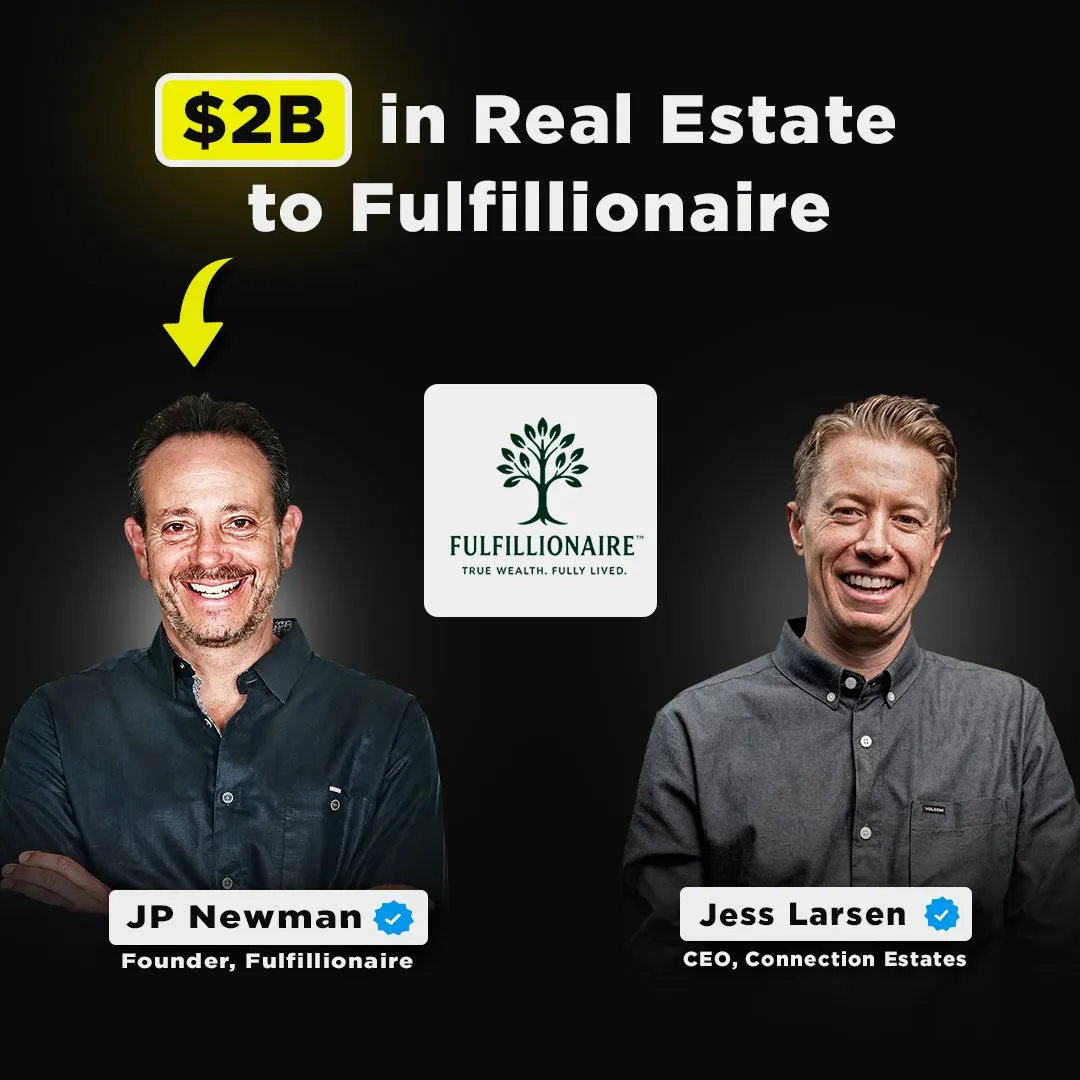 $2.5B in Real Estate to Fulfillionaire | Thrive CEO JP Newman
 Raising $200M & Building AI for Drug Discovery | BenchSci Co-founder and CEO, Liran Belenzon
 Why the Rich are Moving to the Cayman Islands? | Daniel Altneu & Co-hosted with Holly Parker