The DIVI Crypto Podcast · 2022-12-28 · 26 min
Key moments - from our scoring
Substance score
41 / 100
Five dimensions, 20 points each
1GCX is a centralized exchange trading cryptocurrencies, carbon offsets, and commodities, built on the premise that blockchain can streamline the inefficient intermediaries plaguing traditional finance. Michael Wilson traces his family's adoption of Bitcoin from the 2008 Nakamoto whitepaper through their defense contracting days in 2016, when clients began requesting BTC payments. The real thrust of the conversation centers on carbon offsets as legitimate financial assets - not punitive taxes, but tools to finance land-based projects. Wilson breaks down the mechanics: producing a carbon offset requires actual work (tree planting, grassland rehabilitation, water management), which gets serialized and traded on markets. He notes that 60% of Russell 1000 companies already voluntarily report emissions under Scope 1, 2, and 3 frameworks, with European giants like Pepsi, Heineken, and Nestlé already ahead of U.S. peers. The SEC is pushing mandatory emissions disclosure, which Wilson views not as punishment but as an opportunity to create new financing mechanisms - imagine a farmer buying cheap degraded land, committing to generate carbon offsets over 10 years to repay lenders while restoring it to arable condition. Blockchain's role is automating verification and trading of these credits, reducing the current bloated supply chain of project developers, certifiers, verifiers, brokers, and buyers.
Carbon offsets represent one ton of carbon sequestered from the atmosphere, created through specific environmental projects like tree planting or grassland rehabilitation. The offset receives a serial number, gets verified, and is sold on the market as a tradeable asset - the work must be physically done, not invented.
They provide a dual benefit: companies can add natural asset capital to their balance sheets (required by regulators like the SEC for public disclosures) while financing land-based projects, and the assets appreciate based on supply and demand, creating profitable holdings.
The CFTC regulates reactively based on historical precedent and past malfeasance, while the SEC takes a more proactive approach, assuming problems exist and trying to prevent them preemptively - this distinction affects whether assets like Bitcoin are classified as commodities (CFTC) or securities (SEC).
Blockchain automates verification, certification, and trading of carbon credits, potentially eliminating the current bulky supply chain of project developers, certifiers, verifiers, brokers, and intermediaries, reducing friction and creating direct market access.
Yes - a landowner can purchase degraded land at low cost, commit to generating carbon offsets over 10 years through restoration work, and use those projected offset revenues as collateral or repayment for loans, converting unusable land into productive assets.
Our reviewer’s read on each dimension, with quotes from the episode.
A handful of genuinely useful concepts appear - scope 1/2/3 emissions, carbon offsets as balance-sheet assets, carbon sequestration mechanics - but they're surrounded by lengthy personal backstory, vague philosophical asides, and repetitive setup. The ideas-per-minute ratio is low for a 26-minute episode.
60% of Russell 1000 companies. Um, the top thousand public companies, they already report their emissions.
to drill a barrel of oil, it costs approximately half a ton of carbon just to do the drilling
The framing of carbon offsets as productive financial assets for land-financing - rather than a regulatory penalty - is a moderately fresh angle for a crypto podcast audience. However, the crypto regulation and Bitcoin-as-commodity takes are entirely standard, and the closing philosophical musing is generic crypto-Twitter fare.
instead of thinking about it like a punishment, we can look at it as an opportunity to promote uh, healthy environmental works
you could buy a cheap piece of land and work with your lender and say I'm going to create this many carbon offsets over the next 10 years and this is going to pay, you know, XYZ for my loan
Michael Wilson is a genuine practitioner - COO of a live exchange operating across crypto and voluntary carbon markets - with real domain crossover experience. However, 1GCX is a small, obscure operation, there is no evidence of meaningful scale, and some claims (e.g. oil drilling carbon cost) are stated without sourcing that would signal deep technical expertise.
we're a centralized exchange and we trade cryptocurrencies, we trade carbon offsets and commodities
I've lived on a ranch almost my entire life
The episode does better than average on named specifics - 60% Russell 1000 stat, scope 1/2/3 definitions, named companies like Pepsi, Heineken, and Nestle - but many quantitative claims are asserted without sourcing, timelines are fuzzy ('10 or 12 years'), and dollar figures are essentially absent.
60% of Russell 1000 companies right now are voluntarily um, uh, listing their emissions
We're talking big companies, Pepsi, Heineken, Nestle, et cetera
The host asks broad, open-ended questions and responds to detailed answers with 'Wow. Very interesting' or 'Great explanation' - adding no follow-up pressure. A Bill Gates farmland claim is raised and then immediately abandoned with an admission it might be fake news, and the FTX/SBF reference is clumsy and underdeveloped.
that could have been just a random fake news article that I got on my Twitter feed
Wow. Very interesting and residential wise
Computed from the transcript - who did the talking, and the words that came up most.
On this episode of the DIVI Crypto Podcast our host Steve McGarry is joined by Michael Wilson, the Founder and President of 1GCX. The two start the show talking about how Michael was introduced into the Crypto and Web3 space, and how working in information security led them down the path of financial interest into bitcoin in crypto. Michael goes into detail about 1GCX and what their mission is about while involving tokenized commodities such as carbon offsets. Steve asks Michael to explain their “Net Zero Economy’, and the two dive deeper into the purchasing of carbon offsets and what that could mean for our relationship to our environment. 1GCX is the world's greenest digital asset exchange for retail and institutional investing. Their mission is to empower the digital and sustainable revolution, improving the flow of both capital and financial assets to best build and expand energy, environmental, and financial markets. - Website - - LinkedIn - - Twitter @1gcxglobal - - DIVI is creating the world's first closed-loop, vertically-integrated cryptocurrency ecosystem.
Transcribed and scored by The B2B Podcast Index.
Speaker A: Foreign.
Speaker B: What is up, guys? Welcome back to another episode of, uh, the Divi Crypto Podcast. And today I am joined by Michael, the president and coo, uh, of one gcx. How's it going, Michael?
Speaker A: It's going well. Thanks for having me.
Speaker B: Yeah, yeah. Joining all the way from Dubai, I'm excited to, uh, dig in to everything that is one gcx. But let's talk first about your background. What got you into this whole Web3 movement?
Speaker A: I mean, we got to take it all the way back to 2008. Um, my brother and our CTO RA, he actually read, uh, the Nakamoto white paper, uh, when it was first released. And we took a read and thought, this is really cool. And actually, our father sent it to us. And he's always been kind of into new tech plays and new technologies and really likes to be on the cutting edge. And so he sent it to my brother. My brother sent it to me. We passed it around, the whole family. Uh, we all gave it a read and thought, man, this could be really cool. And then, uh, launched in 2009, and we didn't buy any Bitcoin in the beginning. We didn't use it at all, um, until about 2011. And then 2011, we were like, this is just the coolest thing ever. You can transact without, uh, anybody in between you. You can go anywhere on the Internet and do this. And so that's really what kicked it off, was just kind of this personal sovereignty, freedom movement of Bitcoin back in the day. And, um, from about 2011 through 2016, we didn't give it up, um, per se. We just didn't think much about it. Uh, and then in 2016, uh, we got into defense, uh, contracting and security work information, uh, security. So some of our customers, they said, hey, can we pay you in bitcoin? And we're like, sure, let's do it. Uh, and that really launched our, um, financial interests for Bitcoin. And from there, we just really dug into the technology of blockchain and DLT and what was going on in the cryptocurrency space. And as you know, 2017, 2019, it was just. Everything started to blow up and get really big. And we really wanted to support the Web three, um, sovereign financial movements that were going on.
Speaker B: Yeah, Yeah. I mean, I, uh, Having gone through, you know, 13, 14 and then 1718, and now what's going on, it. It really. It feels different than when it was in 17 and 18. I wondered if you'd feel the same way, uh, Because I've asked a lot of people about it and people all kind of feel differently about where we're at as a whole industry wide. But it's, it's so funny how it was. It started as crypto. Everybody was just saying, you know, you're in the crypto space. And it's moved to web 3 is the, uh, the terminology now that everybody's using. And I think it's so funny how these words get thrown around. And you having been around for so long, you've seen it kind of move from this, this hacker payment option to like this whole revolution. And I think it's, it's really fun to talk to builders about what, what you've created. But, um, you know, why, why did you choose to, to, to start one gcx? And, and what is it? And kind of give us a high level.
Speaker A: Yeah, well, we'll start with the what is it? Question first. Um, you know, we're a centralized exchange and we trade cryptocurrencies, we trade carbon offsets and commodities. And we kind of, our mission is to bring together the um, different kind of nascent markets like cryptocurrency, like um, tokenized commodities, like carbon, um, offsets, and bring them together into people that are interested in doing their own kind of personal due diligence in terms of what are assets, how can we use them to our advantage and how do they affect our relationship with the broader economy. And so really got into this, uh, that is building one GCX from seeing how there are so many intermediaries within finance. You know, it's a very big, it's a very bulky system and there are a lot of inefficiencies, there's a lot of friction. And you know, you're a layperson. We don't have a say in what goes on at the currency level. Right. We don't get to say what goes on at the treasury or the Federal Reserve or central banks. Um, and so to see that we could kind of take a little bit of control over how it is we perceive value from things like money and how we transact and what kind of assets we can build, not just cryptocurrency as a, as a commodity, which we can talk about shortly, but carbon assets. And I've lived on a ranch almost my entire life, although I did grow up a little bit in Dallas, Texas as well. So I kind of have this interesting perspective on the environment and how we interact with it and what it means to ensure that our relationship with our environment is a healthy one so that it's benefiting us. And I think uh, the financial system for the past 100 years, our industrial systems for the last hundred years have really kind of taken a, I don't like to use the word extractive toll. Right. But the consequences of the way that we interacted with currencies and money and with uh, our environment through the industrial revolution, I think we didn't think about how we should internalize the negative externalities of that industry, you know, externalities meaning the consequences from whatever it is that we're doing. So for instance, you know, you pump some oil, you put it in a car, you burn the fuel, you have uh, outputs negative externalities such as pollution. Right. And I think it's really interesting to me to be able to work with all these different assets and envision just a much better, much, uh, simpler is not the word I'd use but ah, more efficient and less friction systems.
Speaker B: Mhm. And I think a common thing in this space. There's a really great debate, um, between Eric Voorhees and um, sbf. Actually current, current time talking about it is sort of relevant, but the, the debate was around like regulation and how these things are going to be regulated. So I'd love to get your kind of hot take on, on this because it's, there's in the U.S. you know, you have the SEC that's doing securities and then you have the uh, what's the name of the one? Yeah, cftc. So commodities securities. So in your take, how, how do we do this, you know, in a, in a, a responsible way where we're allowing for some sort of regulation. You guys are super airtight with how you're doing things. And I'd love to get your perspective on how these things should be viewed because you're dealing with these uh, carbon credits and you're dealing with cryptocurrencies. So how do you view it?
Speaker A: Yeah, well, first of all, luckily the CFTC has ruled that Bitcoin is a commodity. Right. So it's not a security. And I think if you look at what is a security, it's a financial tool or an asset backed by the value of something else. Right. And so it gets really tricky to determine if something is a security or a commodity. So let's step back just for a second and say, what is the role of government regulation? The role of government regulation is to protect the consumer. That's it. It's not to push adoption, it's not to steer a market, although that happens significantly. Um, it's Consumer protection. And so if something's going to be classified as a commodity or security. If you look at the way that the SEC and the CFTC regulate, one tries to um, regulate before things happen, whereas the other regulates, um, from a historical precedent. The CFTC is the latter. They look at events that happen and say, here's what happened during this event. How can we prevent malfeasance and fraud from taking place in the future? Um, whereas the SEC seems to take a more, uh, I say proactive role. Although proactive makes it seem like a positive thing. Um, I think the CFTC likes to uh, assume problems are going to be there and then try and uh, intermediate before they happen. And so this has a lot of consequences within the market. And this is why, you know, speaking of Sam, he's talked a lot with the sec and his, his stance personally seemed really unclear, but he seemed to be in favor of working with the SEC over the cftc. Um, I have some thoughts as to why that may be, but I don't actually know his motives behind it. But I think it's safe to say that cryptocurrency as a whole, I like to view it as a commodity just right off the bat. And then there are case by case specific currencies that could be classified as securities. And if they are, then the SEC can and has the authority to step in and regulate after that.
Speaker B: Got it, Got it. Yeah. It's such a top of mind subject right now. I mean everybody's kind of trying to come up with ideas and figure out how all this plays out with the third largest exchange going down in a big flame. So I think there's so much to be discussed there. But going back to one gcx, I want to talk about the uh, you know, the whole carbon concept and, and how you guys are approaching it because I've heard rumors, I've heard all sorts of kind of crazy things about how these, these credits work. But uh, I'd love to get it from you, an expert as to how, how these work and what they are for people listening in. And then on top of that, what the net zero economy is that you guys are referring to.
Speaker A: Yes. So the carbon markets are, they're actually very interesting. So carbon, we do carbon as an asset, 100%. Right. It's something that you can produce through quote, unquote, thin air. And I'll get into why I say quote unquote, thin air in a moment and you can uh, put that value on your balance sheet. And so let's just take A look at oil for a moment. To drill a barrel of oil, it costs approximately half a ton of carbon just to do the drilling, right?
Speaker B: Mhm.
Speaker A: And so, uh, for every two barrels of oil now, one carbon, one carbon offset, which is a standardized, uh, one ton of carbon sequestered from the atmosphere can, uh, be attached to that barrel of oil as a financial transaction. And now we have two products, and the price of that package goes up. So an increase in the price and volume of products, um, within an economy in which the money supply stays, uh, the same, increases velocity. All right? And velocity, to me as an economist, is how we determine or is not the way, obviously, but it is one great way to determine how well an economy is doing. So, uh, you know, a lot of people like to talk about GDP and gnp and those are important markers and metrics, but, uh, velocity is really the most important one because if you don't increase money supply and you have an increase in price and an increase in volume, uh, of transactions, that means people are spending. Everyone's perception of what's going on in the economy is usually quite positive. Okay, so that's one part of the conversation right there. On the other side, changing balance sheets to reflect natural asset capital has been proposed really for the last 10 or 12 years. But recently, uh, world governments are kind of seeing the value of putting natural asset capital on balance sheets. That would include the ability to farm land, the oil that's under the ground, minerals, rare earth minerals, rock, um, soil, water, etc. So we're quantifying the value of land. I wouldn't say more strictly, but more broadly. Right. So if you go to the middle of Texas and you're in the desert, you know, it may look like this is just a piece of trash land. It's just a piece of piece of dirt. There's no soil, there's no production, no one's even mining on it right now. Is there any extra value to that land? Right, and there is, there's minerals under there. There could be oil and gas, um, the ability to produce, say, carbon offsets, uh, or farm, uh, food production in the future, that can be quantified, uh, as well. And so we have this shift economically to incorporating natural asset capital into our balance sheets. And so companies can do this, um, quite easily today through carbon offsets. Now you say, why would you want to do that? Well, there are multiple reasons. Top three primarily though, are that regulators worldwide, and it's coming to the states at a different pace, but it's already happening. Um, are Proposing regulations on carbon usage. Right. And so from the, from the front side of this it seems like we'll now have to pay to have uh, an extra asset on our books to take care of a problem that may or may not be as big as they are promoting. And so that's kind of a big question for people is like what the heck is net zero and why is it that every single government is pushing for this and um, talking about climate change and all these sorts of issues. And I can't speak to why a lot of these leaders are so adamant about the climate change topic within carbon, um, and all these sorts of things. I have a slightly different position than I think a lot of the world leaders do. But I still look at carbon um, offsets as an asset. So the SEC has been proposing that public uh, companies have to list their emissions. And so what's going to happen is uh, public companies, uh, people think about Exxon and things, but even Black and Decker or any public company, uh, on the Russell 1000 basically they're going to have to show what their emissions are. And so all these frameworks are being worked out kind uh, of as we speak. And after the proposals go through for uh, disclosing, excuse me, disclosing their emissions, the next step will be to um, regulate how much emissions can go in and out of that entity. And this is where my view on what's happening is very different. I don't think that companies should be penalized for um, their production. I think that that's an inappropriate way to do anything in an economy. Punishment is usually never the best way for large institutions. But um, instead of thinking about it like a punishment, we can look at it as an opportunity to promote uh, healthy environmental works, you know. Yes, Right now it's under the kind of guise of carbon itself. Right. But everything on earth is made out of carbon. I don't think it's the poison that they all try and act like it is. But I think that the frameworks around carbon uh, carbon office says specifically are going to bring about other um, assets that we can produce through productive works on the land to create more value for um, our economy. I know it's all very long winded so that what I'm trying to really get down to is carbon, ah, offsets. Work has to be done to make a carbon offset, um, come to creation. Right? So you have project developers, you have uh, certifiers, verifiers, broker dealers, um, and buyers and sellers. Right. So it's a fairly large mechanism from creation to completion. Right. Well, that entire time value is being produced and attained through that entire chain. And so in the future I don't think we're going to have a lot of the middle individuals I mentioned there. I believe it should just be mostly project developers figuring out how to certify without um, uh, too many certifier verifiers getting in the way, you know, and then getting that product to the market, which would be those buyers and sellers, um, and traders. So in a project development for a nature based solution, we're looking at someone who is assessing a piece of land. They're saying, I can plant this many trees, I can uh, rehabilitate grassland, I can ensure proper water irrigation. They can do all these steps to enhance the uh, carbon sequestration ability of that piece of land. Right. And so when you look at, and that pretty much always results in a positive impact, uh, in our environment specifically. So, you know, trees are a perfect example. They give us oxygen, but they take in carbon and they convert it to wood. Right. Some trees. So uh, that's obviously a positive thing, uh, that can take place. And so these projects, you know, a lot of people think that carbon offsets, they're worthless, they don't mean anything, nothing happens, they're just made up. And it's like. Well, the concept, yes, has been created, it was made up. But physical work has to be done for that carbon to be sequestered. And once it's sequestered, um, it's represented as a serial number and that serial number is verified and then sold on the market. So getting into blockchain and DLT and these types of technologies, it seems like a, ah, great marriage between the two where we can account for these inputs and outputs of carbon at the moment, which I think will transition to other um, environmental assets. But we'll stay with carbon for a moment here. We'll um, be able to track our carbon input output and by doing so we can improve our relationship with our environment through these projects to create better farmlands, to create better solutions on desertified land and develop technologies that are improving our environmental health, which has a direct impact on our health. You know, cleaner air, better water, better food. That's good for everybody.
Speaker B: Great explanation. And that actually helps me a lot understand how this, how this works. There's like a whole supply chain coming from the production, um, and that's really, really fascinating. And I, I've read about like Bill Gates and some of these big philanthropists buying up tracks of farmland and all of that with the intention around something around carbon offsets. At least from what I understood. Uh, that could have been just a random fake news article that I got
Speaker A: on my Twitter feed.
Speaker B: But I, I'm curious as to uh, because I really like this topic of, of the offsets and that companies should be incentivized to you know, add these to their sheets and be able to show like hey, we're being responsible by adding these onto our balance sheet and we're going to keep producing for the economy but we're also going to be adding these on and, and offsetting. So from uh, from your perspective where we're at today, how many businesses and companies are you seeing adopt this where they're you know, doing the full Bill Gates model and just vacuuming up as much as possible? Or are people still skeptical or are they actually getting involved in, in buying these carbon offsets?
Speaker A: Well, yes to everything. It's, it's ah, it's 60% of Russell 1000 companies. Um, the top thousand public companies, they already report their emissions. Um, scope one, two and three. Scope one, two and three emissions are the carbon uh, input outputs. Uh, scope one would be like direct um, production. So like drilling oil would be scope one. The uh, transportation and use um, in production of that product would be scope two. And then scope three would be the kind of half um, life or life length of the usage of that say tool. So um, which is actually very hard to calculate and we could talk more about that. But the scope one and two is pretty easy to calculate. And 60% of Russell 1000 companies right now are voluntarily um, uh, listing their emissions. So 60% is pretty good. And so the SEC said well maybe in the next few years we should have everyone report what their emissions are. Public companies, that is the interesting thing is Europe is they're further ahead in this agenda for carbon. They've been talking about this for a decade, uh, heavily and a lot of those public operations over there already list their emissions and have offset their emissions. We're talking big companies, Pepsi, Heineken, Nestle, et cetera. A lot of these very large conglomerates, they're already doing this. And I think the reason that they were so quick to adopt this is because they saw the value of having an extra asset on the books and having a way for them to finance land based projects. You know that's, that's another thing I didn't mention is like it's great that, that we can hold this asset on our books now. Right? So whether you're pro or anti, um, net zero or Climate change or any of these things, just the basic financial asset of having another asset on your books, um, that's going to stay uh, uh, profitable is great. Right. And so based on supply and demand and, and if you look at carbon offsets as a, as a financial tool for financing land based projects, it's also another beautiful thing. So it's like if individuals want to purchase a piece of land and it's, it's, it's uh, unavailable right now, they can't farm anything on it. Right. Well what they could do is you could buy a cheap piece of land and work with your lender and say I'm going to create this many carbon offsets over the next 10 years and this is going to pay, you know, XYZ for my loan and then it will be turned into arable land. This gives us a whole nother avenue for financing land projects and I think that that is really cool.
Speaker B: Wow. Very interesting and residential wise because I've always been fascinated by know, land buyers, um, doing things like buying up a piece of land and then repermitting it and then selling it for like 10 times what they paid for it. You know, just that simple fact that they could just change what it was used for and sell it to somebody that could use it for that. There's just so much brilliant creativity that goes into stuff like this and I really appreciate the, the details that come out of it. And even as simple as going to your lender and saying like, hey, this is, this is an alternate use for, for the land that I'm going to do. Not like a parking lot or a campsite or something like that. It's actually a really uh, really cool and financially savvy way of approaching investing in land. So that kind of takes us to the, to the finale here. We've talked a lot about the zero emissions and um, I love the detail that you went into. I'm sure everybody listening really enjoyed understanding it from a high level and really simplifying it down. But what are you excited about? You've been in this space for a long time. You read the original white paper back in the day. You've seen all the comes and goes, the Mount Goxes, um, the FDXs. Um, what do you get excited about when you get up in the morning? What gets you just so hyped?
Speaker A: You mentioned creativity there at the end and I think that's really what drives me. What we're doing at one jsx. It drives me internally. I love the creative aspect of business and I love working in finance has been pretty transformative because, you know, I don't think people truly understand what money is. You know, it's like money or the dollar is shorthand for value, and value is shorthand for energy. And energy is shorthand for like our human psychic will, um, driving us towards this mass conscious vision that we have. And I think people's consciousness is expanding. Their creativity is kind of coming out and saying, wow, I can use carbon for a different purpose other than a punishment. Right. It's not just a tax on the public. It's not that at all. It's a way to creatively finance projects to do, uh, good works on the land. And my wallet. I think that's really cool. And I think the whole entire crypto movement is. It inspires me every single day because there are arguments philosophically, uh, going on on Twitter in all these different spaces and podcasts all around the world where people get to, um, put their ideas into the public space. We get to beat them up and debate them for as long as we can and tear them apart and put them back together and say, okay, let's work together and build a brighter future. And I think that, that no matter what, is what, uh, this whole thing's all about.
Speaker B: Awesome. Well, where can people go and learn more about 1GCX?
Speaker A: Uh, I'd say the best route is 1GCX.com. Uh, we also have a Twitter 1GCX Global. Um, we're starting to get a little more active on Twitter and, uh, our website, we're constantly updating and updating the exchange. So, uh, keep an eye out for all the updates.
Speaker B: Right on. Sounds good. Well, wherever you guys are listening on itunes or Spotify, the links that Michael mentioned will be in the show notes. But thanks so much for coming on and sharing everything that is, uh, zero emissions.
Speaker A: Thank you.
Other episodes covering the same guests and topics, from across The B2B Podcast Index.
 How DuPont Gets Strategic About Its Carbon FootprintC-Suite Perspectives · on Scope 1, 2, and 3 emissions86 / 100
 Why Enterprise Buyers Now Require a Vendor Carbon Footprint AuditB2B SaaS Talks with Fexingo · on Scope 1, 2, and 3 emissions83 / 100
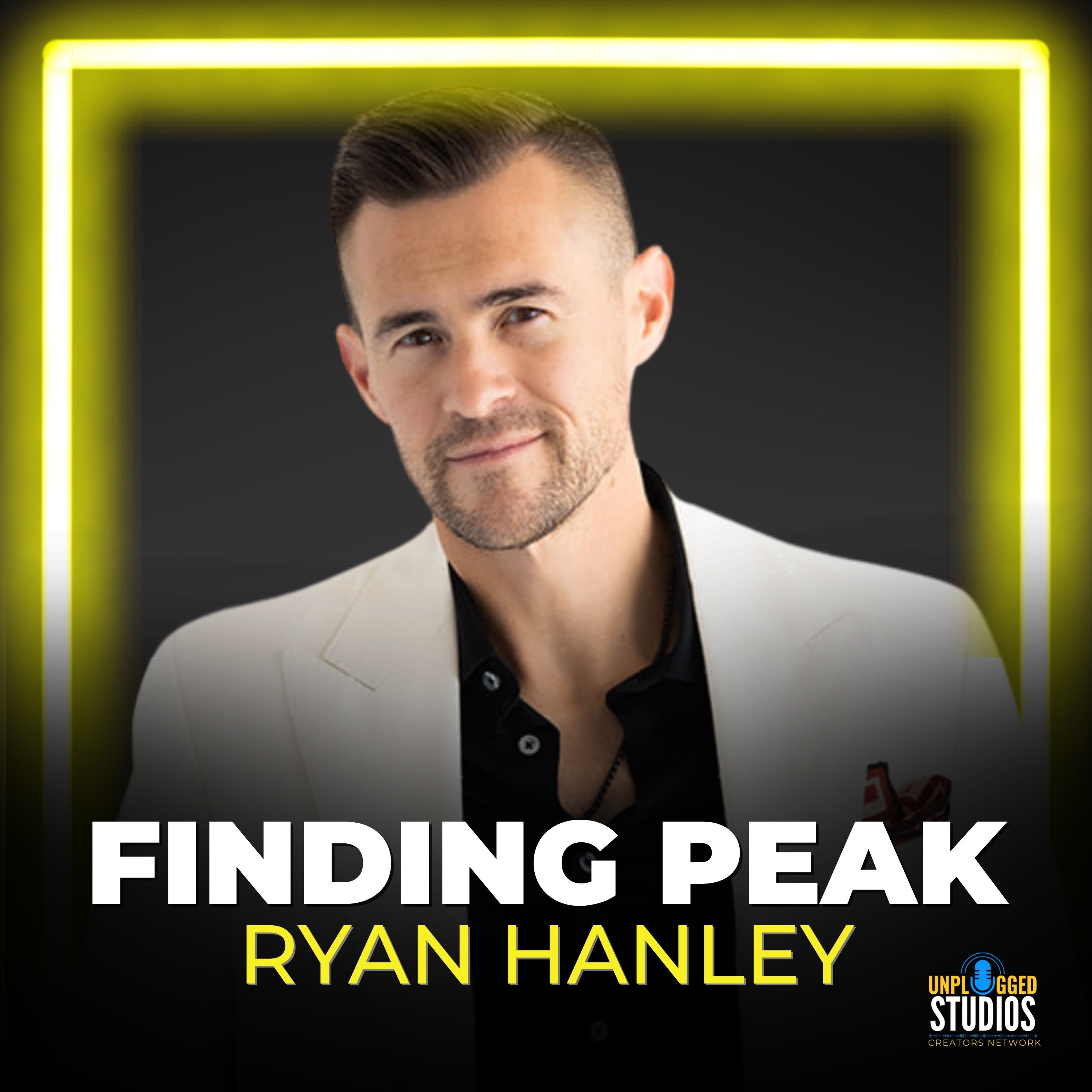 The Autonomous Digital Economy Is HereFinding Peak w/ Ryan Hanley · on Bitcoin82 / 100
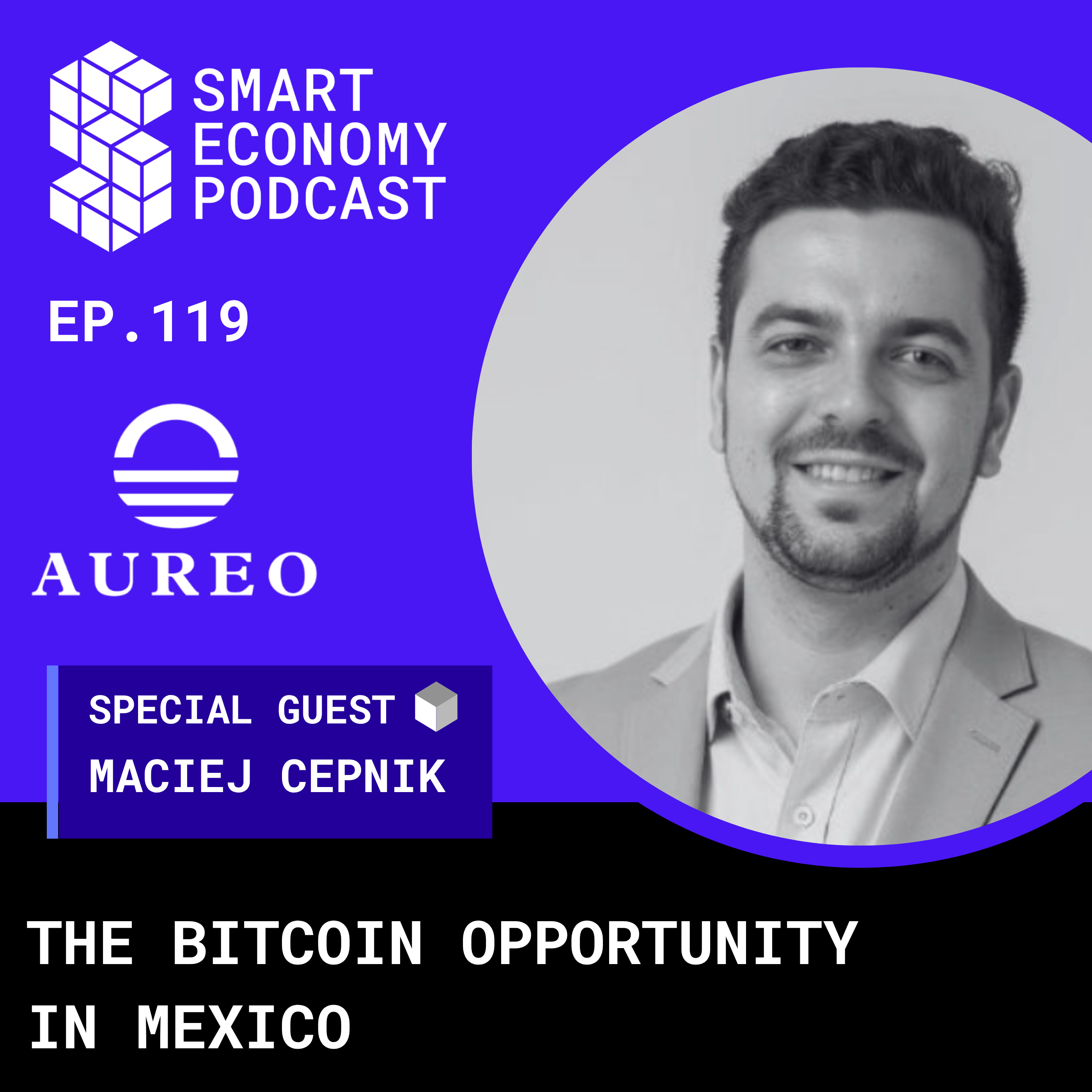 The Bitcoin Opportunity in Mexico with Maciej Cepnik of AureoThe Smart Economy Podcast · on Bitcoin80 / 100
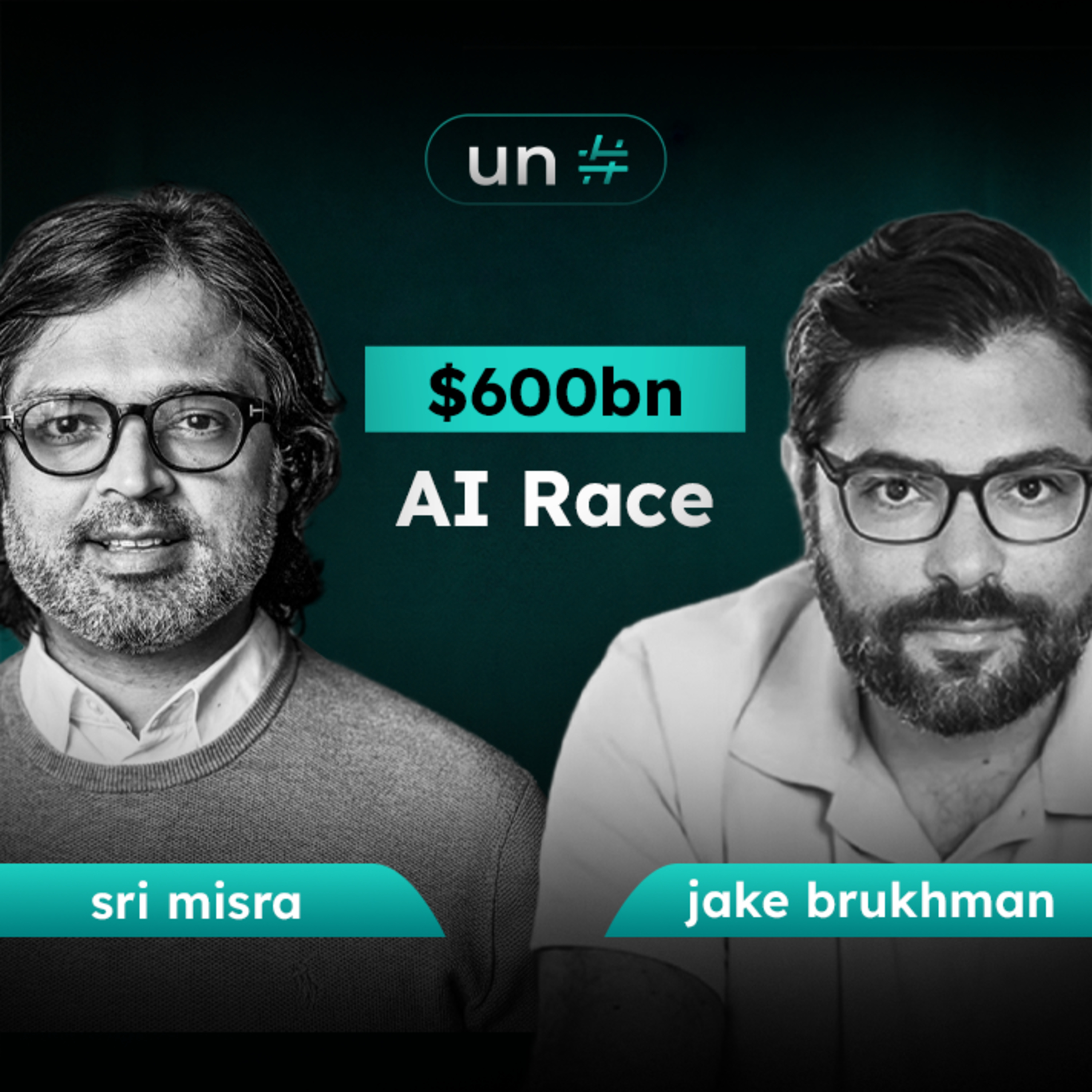 Jake Brukhman (CoinFund) on Anthropic Fable 5, Agents & Asymmetry in AI the un# podcast · on Bitcoin79 / 100
 Crypto Wealth Management, Institutional Adoption & Digital Assets (Ep. 143)The Truth About Wealth · on Bitcoin75 / 100
 The Future of Security and Messaging with Matthew WisniewskiBringing Web2 to Web3 and the Future of Decentralized Storage with Jonathan Victor
 Bringing Machines Into the Future of Web3 with Leonard Dorlochter
 The Blockchain Singularity of the Future with Dom WilliamsStanding Out In Crypto Today with Arsenal NFT Owner - Scott Kapun