The Crisis in Education Podcast · 2026-05-05 · 46 min
Key moments - from our scoring
Substance score
49 / 100
Five dimensions, 20 points each
Dr. Clay Cook brings a behavioral and systems perspective to education's fundamental challenges. Rather than targeting students directly, Cook emphasizes that real change requires addressing adult capacity and behavior through implementation science - a framework borrowed from healthcare that bridges the gap between what works in research and what actually happens in classrooms. The episode explores why school leaders and teachers are set up to fail: they're deployed without adequate internships, rehearsal, or feedback; pre-service training programs don't teach basic behavior principles or reading science; and competing academic and social-emotional priorities overwhelm their plates without integration. Host Dr. Pauley and Cook discuss how behavioral leadership - measured by the behavior of followers, not just results - should form the foundation of principal and superintendent preparation. They argue that current teacher evaluation systems are ineffective theater that wastes 4-6 weeks of leader time annually. The conversation covers implementation science frameworks (outer and inner settings), the epistemology of university-based teacher prep programs, and why the behavioral paradigm faces resistance due to historical misunderstandings (confusing applied behavior analysis with mere reward systems). The episode offers concrete solutions: embed simulations into leadership prep, focus on quick wins to build buy-in for behavioral methods, and reframe language to make antecedent strategies and preventative approaches more palatable to skeptics.
Adults are overwhelmed with too many competing, fragmented priorities that aren't integrated; they lack foundational preparation in behavior principles and leadership skills; and they're deployed to implement changes without adequate rehearsal, feedback, or support systems - creating siloed, fragmented implementation that prevents quality support from reaching students.
Implementation science, originated in healthcare, bridges the science-to-practice gap by identifying why effective treatments and practices don't translate into everyday practice; it focuses on adult-facing work, systems of care for adults, data collection on adult behavior (the cause) rather than just student data (the effect), and designing causal pathways to support successful implementation.
Prep programs should embed simulations with rehearsal and feedback to build fluency before leaders face real consequences; teach foundational behavior principles as a base knowledge; focus on behavioral leadership (measured by follower behavior, not just results); and provide practical training in how to integrate academic and social-emotional supports rather than theory alone.
Historical misrepresentation by critics like Alfie Kohn reduced applied behavior analysis to simplistic carrots-and-sticks thinking; the field did a poor job explaining that behavior science encompasses antecedent strategies, proactive prevention, and creating inherently engaging instruction - not just extrinsic rewards - so language reframing and demonstrating quick wins helps overcome this resistance.
Current teacher evaluation systems consume 4-6 weeks of principal time annually with a process teachers hate; there is limited research supporting their efficacy; they waste leadership capacity on what Dr. Pauley calls a 'dog and pony show' rather than deliberate coaching and simple processes with actual impact on student outcomes.
Our reviewer’s read on each dimension, with quotes from the episode.
There are a handful of genuinely useful frameworks - adult data as 'cause data' versus student data as 'effect data,' the outer/inner setting distinction, and the 'light switch' model of culture enabling implementation - but these are buried under lengthy mutual admiration, host monologues, and repetitive restatements of the same behavioral principles across the episode.
the adult data is the cause data, the student data is the effect data when we're trying to design a quality educational experience
those things. And we've shown the sweet spot is what we consider positive culture and climate indicators for the adults that doesn't drive implementation. Plus strategic implementation, leadership behaviors. Both of those need to be in place
The 'flavor of the month' critique of PBIS abandonment due to absent adult fidelity metrics is a useful angle, and starting PBIS implementation with arrival time rather than the whole school is a concrete counter-prescription, but the bulk of the conversation recycles well-known behavioral science tenets and standard ed-reform talking points without offering genuinely contrarian or first-principles arguments.
schools are perpetually in this flavor of the month type of uh, cycle
don't start with the whole school, right? We got to get people a taste
Dr. Cook is a legitimate practitioner-researcher - former professor at three R1 universities, trained under Roy Mayer, worked at Boys Town under Pat Friman, secured $20M grants, published 100+ peer-reviewed articles, and now leads product and implementation at a scaled ed-tech company - giving him genuine credibility on implementation science applied to schools.
I've been a professor at the University of Minnesota. Was my last uh, uh, stand I was at the University of Washington in Seattle and Louisiana State University
I worked at Boystown in Omaha, Nebraska with Pat Freiman
A handful of concrete specifics appear - 792 suspensions down to 67 in one year, 40% classroom behavior management training statistic, 140 Character Strong employees, named frameworks like check-in check-out and class pass intervention - but many causal claims and prescriptions are asserted without supporting data or citations, and the host's statistics are self-reported rather than sourced.
792 suspensions down to 67 in one year
40% of educators have been trained in even classroom behavior management
The host frequently out-talks the guest, answers his own questions, inserts lengthy personal anecdotes (MMA coaching, fighter training), and rarely follows up with probing challenges; the conversation functions more as two aligned colleagues validating each other than as an interview designed to extract the guest's deepest thinking.
Man, I spent my whole career doing that, man. That's what all what I'm doing. That's what you're doing as well
brother, I mean you just said it so well. Uh, obviously we think along the same lines
Computed from the transcript - who did the talking, and the words that came up most.
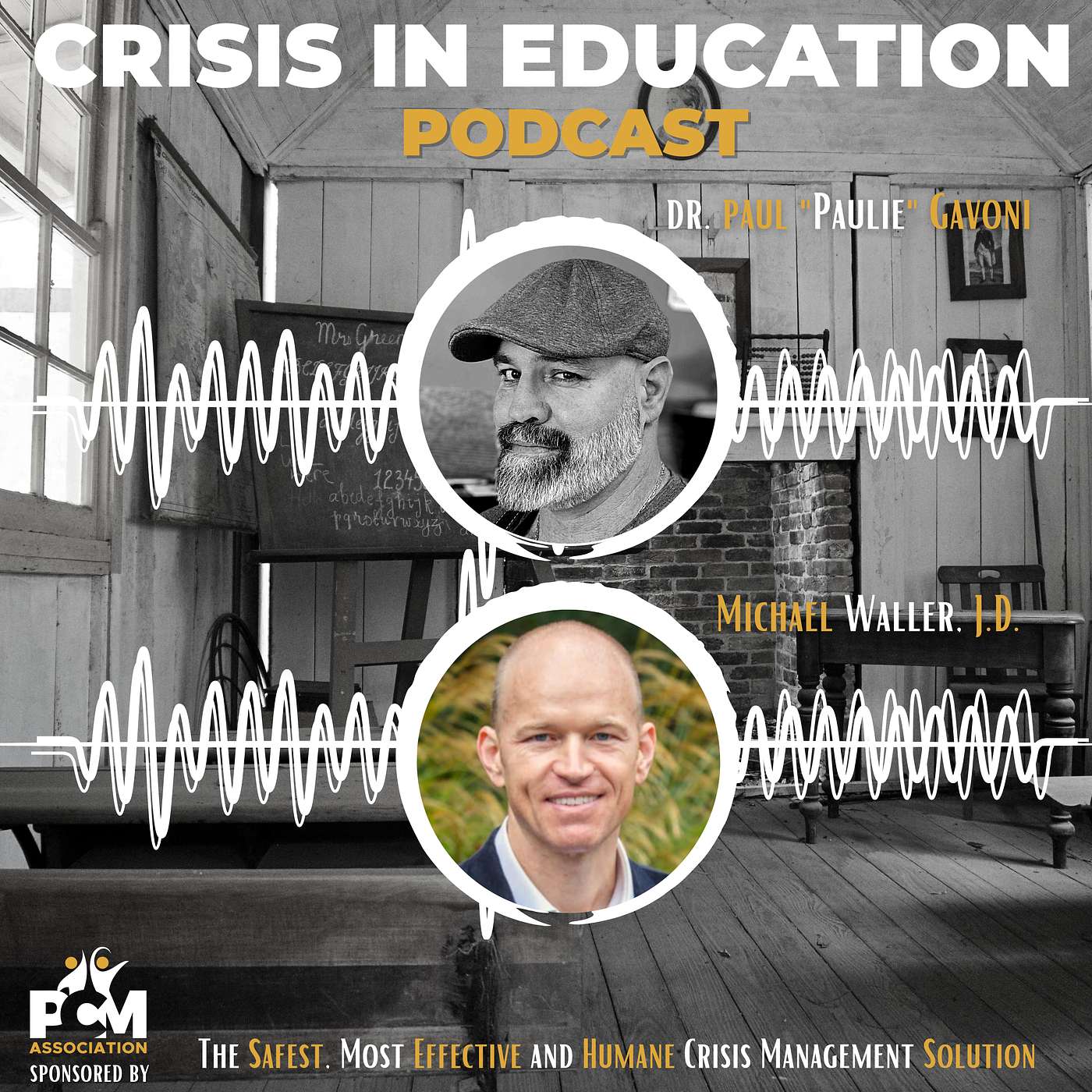
Send us Fan Mail Most conversations about student behavior stay at the surface - focusing on what students are doing without fully understanding why it’s happening or how to change it in a meaningful way. That approach leads to frustration, inconsistency, and outcomes that don’t hold up over time. In this episode of Crisis in Education , Dr. Paul “Paulie” Gavoni sits down with Dr. Clay Cook of Character Strong to unpack what it really takes to move from intention to implementation in schools. Drawing on his background as a former paraprofessional, researcher, and leader in implementation science, Clay shares practical insights on why so many well-designed initiatives fail - and what educators can do differently. The conversation digs into the gap between knowing and doing, the importance of building systems that support adult behavior, and how schools can create environments where effective practices are not just introduced, but sustained. If you’ve ever wondered why two schools can have the same training and completely different outcomes, this episode gives you a clear, behaviorally grounded answer.
Transcribed and scored by The B2B Podcast Index.
Speaker A: Parenting and caregiving can be incredibly rewarding and sometimes downright tough. That's why PCMA created the Parenting and Caregiver Bundle, two interactive courses grounded in the practical application of the science of behavior. You'll learn evidence based strategies to strengthen positive behaviors, build strong relationships and respond calmly when challenges arise. Through engaging real world activities, you'll gain tools that help you parent with confidence and create a more peaceful, cooperative home. Learn to parent with science, not stress. Click on the link below to get started today.
Speaker B: Uh, welcome to the Crisis in Education
Speaker A: podcast where behavior science meets education. I'm um, your host Dr. Pauli, exploring avenues for change and growth alongside my guest.
Speaker B: Join us as we work towards turning crises into opportunities. All right, welcome back to the Crisis in Education podcast. I'm your host Dr. Pauley and I'm here with Dr. Clay Cook. How you doing today C.L. clay?
Speaker C: I'm doing awesome man. Time spent with you is always a good time. Ah, spent my perspective well.
Speaker B: Clay and I actually consulting uh, on a same project out in Hawaii with uh, my colleague Anika and uh, got to know him man. And man did he present a whole bunch of great information. So it's been pretty cool. So I said let me get him on the podcast because he's got a lot to offer people. But let me just give you a little bit about his background. Uh, he's an implementation scientist, he's a psychologist. He's actually a former paraprofessional. I freaking love that. I know about you man. Humble beginnings. That's awesome. Uh, and middle school math teacher. Um, you're the chief development officer at Character Strong and uh, you spent 15 years partnering with school systems across the country. Uh, and you've done a whole bunch more I think you said, you know, you've gotten huge grants, like 20 million dollar grants. You got like a hundred plus peer reviewed articles. I mean when you, when you came out man, you were just like dumping information like this and folks that are behavior. So listening to this, it was all sound and behavior principles. So I, I really love what uh, he's brought to the table. He's been featured in New York Times Times Magazine. That's cool. That's a new one for me. NPR M at Utopia. I've been in that one. Uh, so very cool brother. Um, glad to have you on board man. It's always good to get people so a little bit about your background, you know, but there's a little bit more to your background I think is very interesting and maybe just share a little bit about because I know like, you know, you had a little bit of challeng, you kind of got in here and I think it's inspiring, man. Maybe you can share just a little bit about it and then uh, we'll get into some of the work.
Speaker C: Yeah, um, my background. I appreciate the invitation. Tell a little bit of story. We all got a story. What motivated us to get interested in the things we're trying to solve in this world. And mine is my own kind of lived experience. I was struggling in school, was an alternative education in high school because of poor choices I was making, like really poor choices, um, won't get into the types of poor choices I was making, but pretty significant poor choice. And you start to realize sports was the thing that kept me in, um, education. I was able to play community, ah, college basketball, walk on and play at a four year university. And that really plugged me in. But then, you know, you get educated and you start to understand why what was going on with me. My dad's a high school dropout. He's 50% Native American from the Osage tribe in Oklahoma. My grandma moved from Oklahoma to California. Her struggles turned into my dad's struggles. My dad's struggles, uh, turned into my brother and my struggles. And so, you know, um, we grew up in a household with one book. Education wasn't even important and we struggled. Uh, two of my best friends are dead, um, due to drug overdose one and suicide the other. And you start to like, what's going on and you start to realize, wow, schools, uh, need to be an access point. And so I got really motivated on how kind of schools can be transformational in the lives of young people. Um, and that just lit a spark to go into education, eventually become a professor, uh, across three different universities and not only like, um, try to deliver supports, but understand how can we get way more effective at increasing young people's access to really quality stuff in the places where they naturally show up and exist.
Speaker B: Yeah man, you're talking my language, man. And um, you know, uh, I think some of the most successful people have come out of the, some of the most challenging circumstances because I call it like gives you a bounce, you know. And I think that is if you have some people supporting, there's got to be something that helps you to kind of get over that hump. But it really helps you to build resilience. And uh, I think once you've experienced kind of like that kind of thing, like me, I want to go on and just help people, man. You know, I don't I want to take what I've learned and, you know, give it over to other people to empower them to better help themselves and others. And it feels like you're doing exactly the same thing in, in your own way. So, uh, I think, you know, the world is a little bit of a better place because Clay Coke's around, man, and because of your experiences. Tough, uh, stuff there, brother. But I'm glad. But, um, all right, so let's talk about a little bit. You know, we were talking offline, of course, we talked over in Hawaii and stuff like that. But what's going on right now in education, you know, because there's a standard approach that we're using and clearly things can be a lot better. I mean, that's, you know, the, the name of this podcast is Crisis in Education. I truly believe that we are in crisis and we've been in crisis for a number of years. And unfortunately, I almost feel like it's going to have to hit rock bottom before we actually make some massive changes, because I think there's going to be some systematic changes. Right, but how are we doing business right now? And why is that a problem?
Speaker C: Yeah, the problem I've been motivated to try to solve, um, has been around implementation. Uh, implementation in my view, in a very simple way, is adult facing work. And if you look at the adults, the adults are overwhelmed. They're struggling with too many competing priorities, vying for the same kind of time and energy. Uh, they say things like their plates are too full, which means they're not going to implement the good stuff that kids need. And ultimately we're trying to do whole child work in schools where we're taking care of kids academic needs. We're trying to increase the types of behavior supports and enable kids to plug in and be positive co contributors through their schools. We're also trying to attend to kids social, emotional and mental health needs. And unfortunately, in doing that type of work, uh, we're not integrating. It's siloed, it's fragmented, the adults are confused, things feel disconnected and how they're all coming together. And ultimately the students aren't accessing the quality things that they need, uh, from a prevention foundational standpoint, or if kids have more intensive needs, they're not accessing quality and intensive supports. And so I fell into this field of implementation science, which is largely born out of health care, where we have all these effective kind of treatments and ways of providing care to people. And that's not translating into everyday, everyday practice. And so it's bridging the science to practice gap, where we have what works, but that doesn't reflect what's happening and what's occurring in everyday schools. And so implementation science really started to, like, help me frame. Wow. We have, um, a process to use. There's, um, uh, systems of care that we got to put in place for the adults. There's data that we got to gather to spur improvement. And most of the data is adult data. And if you look at schools, there tons of student data, but minimal to no adult data. And the adult data is the cause data, the student data is the effect data when we're trying to design a quality educational experience. And so those are the problems. It's really implementation problems, but it's largely due to siloed, fragmented implementation that's overwhelming the capacity of leaders and educators and ultimately resulting in lackluster implementation. And kids aren't receiving quality support.
Speaker B: Well, uh, you know how much I agree with that, and I love. I didn't know much about implementation science. Uh, shout out to, uh, somebody I'm working with James, superintendent, uh, uh, James Solstice. He's actually implementation scientist. So I got to spend some time with him and see things through his lens. And I've got to hear you speak, Clay. And I'm like, all right, man. You know, because I'm a behavior scientist, you know, and so there's some pretty good alignment there, uh, you know, especially around, like, you know, systems and measurement, feedback and adults. Because if we're going to get the best out of the adults, we got to get the best out of the students. And certainly not. I mean, the other piece of data that we. A piece of data that we do have on, uh, adults. And there's actually two pieces of it is one is that they collect data, uh, you know, through evaluations, and they're terrible evaluations. There's no. To my knowledge, there's limited or no research that supports the efficacy of evaluations, unless I think there's something like, in Washington. But there's got big money tied into it, right? And so this time I wrote an article on it. Not a journal article, a lot of, like, LinkedIn article writing, um, that's taking about, you know, four to six weeks of, uh, a, uh, school leader's year to do this dog and pony show that ultimately teachers hate. They hate it. And it's ultimately hurting our learners.
Speaker A: Right?
Speaker B: Like, what are we doing with this stuff? And I want to replace it all with deliberate coaching and simple processes that actually have some sort of impact. So you and I are so much on the same lens. We got to change adult behavior, right? And if we're going to change student behavior and get the outcomes that we want. So my question to you is, why is adult behavior this way? As it stands, what your, what's your perspective on it? Because I've got a litany of things.
Speaker C: Let's take a quick break.
Speaker A: If you work across schools or treatment facilities and you want an environment characterized by students or clients behaving well and meeting their goals, you need everyday behavior tools. These tools are so powerful and generalizable that you can train anybody anywhere in them. Here is the best part. The entire instructor training is online. If you are interested in becoming an everyday behavior tools trainer to improve behavior in your organization while also generating more income for yourself, go to crisisintervention.com yeah,
Speaker C: I mean, um, we're, this is the human centered design work that we have to engage in. And when you take a human, they're coming in with prior experiences based on their training, their own lived experiences, and that's forming kind of a professional identity. That identity then says what I should and shouldn't do some of this work. People say it's not my job. Because of that, what's created, there's, there's policies that put pressure. Obviously in education, things are lopsided towards academics, as they should be there, we're there to teach. But how then does the integration of social, emotional and behavioral supports. People's plates are already full with academics and this stuff is coming in sideways. Um, and it creates this conundrum, um, for the adults where sometimes their beliefs aren't aligned, their value systems aren't necessarily aligned with the work based on their prior experiences, the things that they're comfortable with based on their prior previous training. These things fit outside of their, their comfort zone and their current professional habits. And so we're, we're asking people to change their behavior within the same amount of time they spend with, which is a response effort type of phenomenon. So it's like multifactorial. But you know that from an implementation, we got to think kind of organizationally. It's called the outer setting. In an implementation, which is the district, what's happening there as a leadership, policy and infrastructure standpoint is going to impact what schools do. Then there's school. It's called the inner setting. The inner setting is where the implementers are and the students are. That's most proximal and that has the greatest influence. But sometimes our principal leaders have no understanding of how to integrate behavior supports. And they view themselves only as instructional leaders. Yet this other work's coming in and they feel pressure and they are outmatched. And an outmatched leader is going to really have a, uh, hard time leading it within that organizational context. And then we got the implementers take a teacher, and that teacher has their own belief systems, their own current levels of competencies. And so we got to, uh, like address those kind of multiple factors if we're going to ultimately get to behavior change. That's the stuff I liked about how you all do the performance engineering approach, where you do kind of. It's backwards design, really, intentional backwards design thinking about what I call preconditions. These things that have to, like, alignment with value. Students then go into the implementers, then go into the people who support the implementers, but then going up to higher level leaders who are positioned to support. And that's, that's the work we have to distill and make super concrete and then measure our execution of that kind of causal pathway. Really, it's a causal pathway that we need to get in place.
Speaker B: Yeah, I agree with it, man. And, um, what I would say, I've actually created prep courses, uh, across. I think it's like five different states for, uh, the certification exams for school leaders. So I had to go in ahead, uh, unpack all the standards, and there's lots of good stuff in there, like systems leadership theory, instructional leadership theory. Right. But it's all theory, uh, everything. What they're missing is the foundation of leadership. And that is, first of all, the measure of a leader can be found in the behavior of the followers. Because we don't want to measure it just by results because there's lots of different ways to get results. And Clay, I know you've been in this game for a long time. I'm sure you've been in schools and districts where you saw ways that were somewhat, you know, coercive, nefarious. Right. In Georgia, they were actually cheating to get results on, you know, giving the students the answers to the test. So we have to look at the behavior of the people that are under the people with positional authority.
Speaker C: Right.
Speaker B: In leadership positions. Um, so I think that is like a real critical piece that people. What we're looking at is behavioral leadership, everybody. Like you said, we want to change student behavior, but it's really about adult behavior. So we need more behavioral leaders. This is, you know, a big focus of mine. I want to go back to the root cause. Right? Because even in my work and Even our discussions right now, now that I think that the school districts and the schools, because I think school leadership might be one of the most challenging leadership positions in the nation. Wrote an article on that one. They're, uh, dealt a very difficult hand in the form of teachers being dropped into the schools unprepared to meet the demands. And that's what you're leaning say, well, why? Well, you have out of field teachers that got to pass a certification, you know, course to get in there. They don't get any real internship, no rehearsal feedback. So they're learning on the job at the expense of their mental health, at the expense of their students. Right. And, uh, the same thing with leaders, because I've taught at the leadership level. Right. Uh, and it's like they're just getting theory how, you know, I can't tell my. For those of you who don't know, and Clay, I think, you know that I'm a. I'm a former fighter and I'm a, you know, professional MMA coach of UFC fighters, world champions. I can't give my fighters theory and expect they're going to be able to perform, you know, in the ringer cage. Right.
Speaker C: Oh, my gosh, that'd be painful. Learning experience.
Speaker B: Yeah, man. Then I'm evaluating. I'm screaming all the things that they need to do more or less or differently, and they're like, the hell with this. I'm going to leave. And half of our, you know, half the educators are leaving inside of five years, you know, and something, probably another quarter. And I don't have data to support this. I'm just throwing this out. Are probably quitting on the job at times. You know what I mean? They're still there, but they're just doing enough to get by because it's so challenging. So now I'm like, well, why is this happening? I'm going to teach your prep courses, brother. You know, I mean, I know there's research to support that. We are not preparing these guys, leaders, teachers, and they're learning and nobody's looking at them and they're banking. And I think there's ways to change this, like through simulations. I think we have to tomorrow, yesterday, we should embed simulations into coursework so educators, leaders get lots of rehearsal and feedback safely so they experience the consequences of their behavior. You can gamify it, you can build fluency with it, all this stuff. But everybody's looking at the schools and blaming them. Nobody's going up to the scale and saying, well, how are you prepping these Guys, and let's shine a light on the good schools that are making a difference. But also then say, well your other schools are going to need to put these components into your program as well. As you mentioned, of course there's also bad policy out there. Right. So we need it all the way. But I think fundamentally from my lens, people need to understand the basic principles of human behavior.
Speaker C: I hear you on that one. And I mean, you know, I've been a professor at the University of Minnesota. Was my last uh, uh, stand I was at the University of Washington in Seattle and Louisiana State University. Few of our leaders and teachers are being prepped. And even just behavior principles and understanding that kids are going to come to school and behave. What are you going to do to structure to get the behaviors that result in engagement and learning? And it's, it is uh, there's different. We can get even deeper. Okay, then why is that? Why are those kids, the philosophies of people that are running uh, pre, uh service training programs for teachers don't believe in certain things. And they're often the ones in the power positions to create the course content. And then we send our educators out there without the skills of the day to day realities of what they're going to experience. And so it is, it is like um, it gets to this epistemology of the people who are in the power positions designing the course content. And we fought that battle a long time saying we're sending our people out not even knowing how to like teach kids the science of reading, like how to teach kids to read how to promote behavior, uh, success by basic behavior principles. But I do believe the science of human behavior should be just a foundational knowledge base from which everybody is able to extract from and apply in their day to day work. Whether you're a leader, you're a teacher in a classroom, you're a counselor supporting um, that being said there as you know being trained behaviorally, there's lots of people who react or resist a behavioral paradigm. And so it's like helping, making that more palatable versus often people kind of work against it. They don't want it in because they'll say things like it's reductionistic. And um, so that's been the challenge. How do we get more people to embrace a behavioral methodology and paradigm?
Speaker B: I have, I have solution for that brother, because I've done it man. You know, for me it's like the quick wins, you know, get, get people do. So don't tell them you're using behavior paradigm right get something that people can do that's low response effort, that produces visible and valued outcomes valuable to them.
Speaker A: Right.
Speaker B: Uh, and then say, you know, by the way, we use this methodology, we can do this again. Do you want to do it again? You know, there's a. We've done. My field has done a piss poor job of actually explaining, uh, what the, uh, you know, what the science is. Right. People think it's about like carrots and, and uh, you know, whips or whatever. Carrots and. Is that what they say? Whips and carrots? Sticks.
Speaker C: Yeah.
Speaker B: I say whips. We're like, what are you talking about?
Speaker C: I knew what you meant.
Speaker B: Thank you, brother. Uh, yeah, but they think it's about that stuff. Not understanding that we don't, you know, we, uh, your behaviors under a constant stream of reinforcement as we behavior. We want learning be to be the ultimate reinforcer. Engaging with your students, cooperating, feeling good about all that stuff. We don't want to have to have lots of what they term extrinsic reinforcers. Right. Socially mediated reinforcers to get behavior. But in the absence of that of learning be engaging. And we want teachers to be able to produce these lessons and give instruction that is highly engaging because that's the ultimate fight against behavior. But we're not giving it to them. So I think we just need to produce outcomes and then say, here's how we did it. We can redo it. Right. Because we just haven't done a good job marketing it. There's been people like Daniel Pink and Alfie Cohen have written about behaviorism in a way that, you know, reduces it down to carrots and sticks. Right. So that's why people think it's just like reduction approach, not understanding. Like, no, it's so much more than that. But if I just shine a behavior light on it, I, uh, understand why. Right. They, their belief and their viewpoints and their behavior shaped by their own history. So we got to reshape it by getting them in touch with some powerful positive reinforcement, in my opinion.
Speaker C: Yeah. And even things like, you know, antecedent strategies. The language that maps onto what people will endorse is pro. We got to get way more proactive and preventative. And it's like, oh, yeah, yeah. There's a whole wealth of understanding of like from an antecedent perspective, uh, how do we make something that's unskillful less likely and something that's really skillful and effective more likely through different techniques. And it's just, it is a language piece where we have to help others realize that there is a science to pull from here. And it doesn't create kind of. It's. It's where we're at everywhere. I think nowadays with language that can shut people down to a particular helpful approach just by using a word that conjures up misunderstanding. And, you know, uh, you know that I worked at Boystown in Omaha, Nebraska with Pat Freiman, and this was. His whole thing was like, we gotta get behavioral methodology, we gotta scale it, and we gotta be careful with the language in order to enable that to happen, or else we don't disseminate and increase the reach of this kind of scientific knowledge base.
Speaker B: Man, I spent my whole career doing that, man. That's what all what I'm doing. That's what you're doing as well, because I can see when you pop stuff out, I can see that you clearly understand behavior principles as well. I mean, in fact, the fact that you worked under with Pat Fryman, you know, Pat's a legend, has done a lot of great work, uh, in the field. So, uh, and I agree 100% with him on that. You know, like, we have to make things accessible to people. We have to speak their language. It doesn't matter what we say. The behavioral principles are all going to be the same. Right? Doesn't matter. We don't have to call it antecedent. We can say the thing that comes before. You know, I call it when we're using it from obm, like, hey, things that get behavior going, you know, let's get it going the right way. And how are we going to maintain it? You know, let's not say consequences, because that conjures up a whole thing of punishment.
Speaker A: Right.
Speaker B: Let's not even use the word punishment. We know, but something is punishing or not, and that punishment is not a value. It's just something that, you know, decreases the future occurrence of behavior. Sometimes punishment can be good. Hey, don't do this. You're going to get the wrong answer. Do that, you know, and they do that and they get in touch. Reinforcement. There's nothing wrong with that. It's part of teaching. Right, but let's not use those words because why fight somebody's history with it? Right? Let's just get them in touch with naturally occurring positive reinforcement history.
Speaker C: Yeah, that's a great way to frame that, because that's what you're doing. You're essentially fighting all the historical, historical things that they've been exposed to today. And that's probably a losing battle. So, like, shift the language in the, like, the behavioral principle is to be. It's underlying it all because that's what's driving human behavior. It's gonna be there.
Speaker B: It's gonna be, man, I've seen so many times people in my field go to correct people. But it's not that I'm like, oh God, you don't. You have to learn how to apply the principles yourself. Right? Uh, you need to learn how to establish yourself as a positive reinforcement for people. You want to do that, Find out what's important to them, right? Find out what they value, Help them behave well enough, long enough that they produce those valued outcomes. And guess what? They're going to want you more. Right? We don't have to call that pairing.
Speaker A: Right?
Speaker B: Let's just say that they're going to like you more, that you have a good relationship with that you have good rapport with them. You know what I'm saying? Man, why do we got to say all that other stuff? It just is happening regardless. The behavior principles are always working, you know?
Speaker C: Yeah, yeah, yeah, yeah. I do believe, um, that there, I want to also offer hope because I feel like I was a pessimist around the pre service. I think there is hope. It's just like this skillful strategy to get this because 40% of educators have been trained in even classroom behavior management. And so then it's like 60% are coming out and then the systems have to like. So then it's like, how do we increase that number? So more and more of our workforce is coming out with the, the practices and the skills to prevent behavior, respond to behavior, teach to behavior, uh, and, and sustain behaviors that create, add up collectively to a culture and climate of a school that feels safe and where kids feel like they belong and stuff. But that it's like there is hope. It's just we can't avoid the pre service part. And then I think there is the in service part where we can even. I, uh, mean, that's the work you do. It's more of the in service now we got to try to clean up some of the gaps in people's skill sets as we go in to partner with school systems. And so it's like the both of those really are at the root for why we see what's going on. And they do offer kind of pathways to address, uh, what I believe is fragmented, siloed implementation where we're not doing whole child work. Kids have unmet needs, and those unmet, um, needs are showing up in behavior and performance issues.
Speaker B: Yeah, Man, I. I agree. That absolutely is happening. And it's, you know, it's. It's also hurting our. Just our teachers. You know, I don't know what's more important than educators. You know, they're the backbone of our nation. Uh, we're going to reduce poverty, you know, reduce welfare, you know, reduce incarceration, improve quality of life. You know, we got to educate people. We got to give them an opportunity to be successful, which means, I think, that teachers need to be the stars of the show. I hear people say, do it for the kids. I'm like, you can't make it about the kids without making about the adults. Right? That's what's important to, uh. And we, you know, just too often, we're not. Man, they're not respected. They're being, you know, they got to come early, stay late, and listen. They do got to get the job done. And I do think that. I don't love that they have to do that. But because they're not being trained to fluency and key skills, they end up having to put in extra effort, Right? Because the job does have to get done. But I think that's going back to, like, higher education in their prep courses. You know, how we're teaching them is not good. Uh, you already said, you know, what we're teaching them is not good. But like you said, also, there is hope. I've helped, and I'm sure that you have as well. I've turned around failing schools. I work with principals, go to C to an A in one year, 792 suspensions down to 67 in one year. And it was not easy, but it's a systematic approach to it. But what I learned pretty quickly is that you gotta. You gotta not pull stuff out there. You gotta sustain it, because you need a system to sustain it. And then you gotta shine a light on it, right? Because when you shine a light on it, then other administrators, like, I want that, and the district leaders, like, I want that, right? Then you gotta be able to unpack the system and show them. Because if you do this on sound behavioral principles, it's replicable, right? Because it's a methodology to it. Right. And you can apply that framework in other areas. And I've seen PBIS get kind of dumped on. Uh, I'd like to hear what you feel about this, because I've had Rob Horner on and a couple other people on it. Um, I love the framework of pbis. There's not going to. Well, there's going to be a Little bit of a button here. I think it's a great framework. Right. Why? All it is, is like, you know, making sure we identify expectations for kids. Right. Who would argue with that? Right. Making sure that we get kids to follow those expectations. Using positive means as much as possible. Using data to see if it's working or not. And if it's not working, you know, using that to make some changes. Right. That's fundamentally, I think, what it's about in building relationships along the way. Right. If we just took out stuff. But I think that it's been bastardized or the idea of it in. In two ways. One is that people think it's a token economy. And that drives me nuts. Right. I think token have. I think it's ruined school sometimes because it's become so much of the focus and you're missing the fundamental principles and people think that, uh, that you're, you know, that we don't actually correct behavior. I'm not even gonna say the P word here.
Speaker A: Right.
Speaker B: The punishment word.
Speaker A: Right.
Speaker B: Because also PBS doesn't like that word as well. And I, And I get it because that's. It has a different connotation. Right. But in the places and I was a PBIS district trainer and coach, and it was very weak in the areas I was. I don't want to overgeneralize that. But it's also not big in the literature. And how do we correct behavior? It's one of the reasons I wrote one of my books. Quick responses.
Speaker C: Yeah.
Speaker B: We have to equip teachers with the ability to correct behavior because it won't just go away. And so if they don't learn how to correct it appropriately, if they don't understand, like if you don't have a lot more positive reinforcement coming in, here's what positive reinforcement is, here's what it's not. And you start correcting behavior, it's going to get worse for you.
Speaker A: Teacher.
Speaker B: Right. It's not going to improve the behavior.
Speaker A: Right.
Speaker B: But they need to have that toolbox and be able to use it succinctly along with the toolbox with all the antecedent strategies, the prevention, the positive reinforcement, all those things. And they're not provided that because I. And I think they're afraid that people are going to go right to the toolbox. Right. Because we know that punishing can be really reinforcing because you get the immediate impact of it. Right. But if we help teachers understand that and we come back to what you started off, the beginning, and we shape that behavior. Right. They Understand. Right. This is how we get changed. That's how I got changed. With very like tier one approaches to doing it, but they had to do both. What do you think about that?
Speaker C: Well, I'll go back a little bit. Yeah. One, I agree wholeheartedly. Um, my initial experience when I was going through my doctoral training was with Roy Mayer. And he doesn't get a lot of credit for, uh, he's a behavior analyst. He developed what's called constructive discipline, uh, back in the day. And the constructive discipline is in many ways what modern day PBIS was built upon. Upon. And he often doesn't get a lot of credit.
Speaker B: I never heard of it. Let's get him on here in one day. Brother. You do still. Are you still in touch?
Speaker C: Yeah, yeah. I, um, Yeah, I would reach out to him. Roy's, uh, older. Um, okay. But he was doing this work in the 70s and showed evidence of, um, the effectiveness on how we have a teaching focused approach, but we have the corrective discipline methodology because he was fighting against the mortal. More. You just double down on a, uh, disciplinary approach without teaching methodology and reinforcement. And it's just about discipline. But obviously discipline should be learning focused. That's. Everything's built on learning.
Speaker B: This one is about teaching. Right.
Speaker C: Everything's learning. And so that's. I, I agree with you. Uh, first of all, I think every school should be grounded in PBIS methodology on the planet with some additional features. Um, and you can optimize the effects. We have to establish very clear expectations for what it looks like. If you want to build a school culture and community culture is behavior, collective behavior, then we got to be clear on the behavioral norms. But we should teach that and we should model it. Then we got a cue, prompt and re. Uh, and remind kids when they are expected to do it. Then we need to actively supervise and we got to be prepared to give feedback. But it is on the, the, the discipline side is where there's. I see missed opportunities. I also see in PBIS work you can be high on the tiered fidelity inventory, but if you go into a classroom, you don't really see any existence of the PBIS methodology happening in that environment. And they start the wrong spot, like high for that. But in classrooms you're not actually seeing those practices being implemented with fidelity. Fidelity. And so there are some pieces that being someone who's a PBIS proponent, I've never been in the inner circle of that world. And there's been a lots of money from a researcher, lots of earmarked legislative money. Over the year that has built that infrastructure. But it's like also recognizing where that methodology needs to improve and um, where it's lacking.
Speaker B: It shaped a little bit. It's got to be shaped a little bit. It's shaping right? Yeah, we definitely did do it. One thing is things needs to be shaped is they built it backwards. It's literally why we. And they built it too broad. That's why Anika and I wrote quick wins and that is don't start with the whole school, right? We got to get people a taste, right. They gotta, they gotta believe that this stuff is worth. They gotta have the self efficacy to do it, right. They have the response efficacy. If I do, it's gonna produce the outcome. And everybody values outcome. You know, I mean they value behavioral outcomes, they want behavioral improvements, but they gotta have that stuff. So we're like don't, don't put it in the whole school. Start with arrival time, for example. You know, I mean they're coming in, shape that up, then people are going to get by and like this stuff works. But coming back to what you were saying, I love. And we need to, because we talked about the performance alignment map and engineering with end in mind. You need to start with that, end the result. Right. And we need to go from the students to the teacher. Start in the classrooms.
Speaker C: Yeah.
Speaker B: And then broaden it out. Right. With, uh, teachers it could be just let's shape up when the kids come into the classroom. Right. Let's get that process going. Because the behavioral principles are all the same now. We're going to set expectations here throughout the day, but let's give them a little taste, right. And so they can see that it works. Now they're going to get buy in. I think that's the way to go. That's one of the things that I think needs to happen. The other thing is, and you said this very clearly, uh, I love hearing this right? When you say, well, you know, we got to make sure we train them and we set expectations, we got to give them feedback. I'm like, that's exactly right. And we need to use those same principles with the adults because we can't come in and set them in one training, expect it's going to go. They need regular coaching to ensure that those behaviors generalize. Right. That's the whole thing. I know that PBS comes with a coaching component, but they need to be coaching local performance management, meaning at the school level. School administrators got to be part of this process, but they fundamentally need to understand behavior principles. They Think it's just about pbs. But the principles that they would use to coach teachers and anybody else with the associated behaviors of PBS are the same ones that you would use to coach instructional behaviors, right? It's the same thing to get the best out of behavior. So, you know, it's kind of coming full circle here is what I'm saying is like, people need to understand behavior, right? How do you.
Speaker C: Yeah, yeah. Oh, yeah. And it's an organizational model that can work in any context. And that's where if you apply those same general principles of any organization, like character strong, we have 140 employees. We got to be clear on the behavioral norms and expectations for our adults. We have to teach model, model. We got to cue those things. We got to actively supervise and we got to give feedback when people struggle to do those things. We got to create a learning experience. And it's like that methodology works for any human. And we just got it. Like, if you understand the principles behind it all, all of it makes sense. There's almost nothing to argue against. It's like then saying, no, we shouldn't establish behavior norms, then what's the opposite of having no behavioral norms? Free for all. Nobody's gonna be down with that.
Speaker B: Thank you, man. Amen.
Speaker C: Teach those things. What's the opposite of teaching? Just assuming that's not what we want to go all in on.
Speaker B: And the other thing is that, uh, with pbs, and again, it was very well intended. I really like. I think there's a lot of good intention. I think most of the PBS is just fine, just gonna be shaped right. There are some things that need to be fixed with it. The things that we're saying right now would be big. Um, but the other thing is that. And I get why they're doing it right? They want 80% buy in. But here's the problem with that. And I frame everything. You've heard me talk about the four hats, right? The leading hat. The leading hat is a motivating operation as a value and behavior altering effect. Some people are better than that than others, right? It's like, how do I engage people? If you got the wrong person up there speaking to the staff, they're like, well, I don't want this. Right? People need to see what's in it with them. They need to have somebody that's going to deliver. Because why would you not want this? Right? If you understood it well enough. And the people who don't want it either don't understand it well enough and. Or when it was being implemented, it wasn't being implemented well enough. Because if it doesn't seem like it's working and it's requiring effort, it's not producing the outcomes, then people are like I don't want pbis. And it gets paired with that and they think it's a token economy.
Speaker A: Right.
Speaker B: That's what they think it's because it's misused.
Speaker C: Well it's uh, treating like creating SeaWorld. I've heard it like what are we like feeding orcas here and, and stuff like that, like just reducing it down. But I could see if it's not implemented well and how we're rolling it out and showing that yes, if it kind of feels like that to people, then they blame the methodology is not working. And that's one of the problems of schools that get stuck in a flavor of the month where they rapidly adopt, implement with weak fidelity, abandon and go to the next new shiny thing. And that's one of the problems too we have to solve for, for in education is we never. But if we had adult metrics on um, behavior we would know first are the adults following through with the things in the way it's defined and shown to be effective. And that's. Then we wouldn't abandon things that we're not yet implementing well and we. Because the data communicate that. And too often we only have student data. Hey, the student outcomes aren't. I don't like this thing. Let's blame the thing. And then we get, get stuck and schools are perpetually in this flavor of the month type of uh, cycle.
Speaker B: Absolutely. I use the same exact terms. And I want to say that when we talk about adults, we got to remember we're not every. Everything falls on the back of the teachers. What we have need to realize that if teacher not doing something, there's a reason we got to go up that performance chain.
Speaker C: Right.
Speaker B: So it's not just what the teacher's doing. It's what's happening outside that classroom to support that teacher. How are they being trained? Right. How are they being coached along the way? What's the system for managing them? Right. And I think that uh, a very important measure that we don't. And I think it should be part of school grades personally. And I know it can be biased. I'd like to know how you felt about this. But I think social validity is extremely important because it's not just about getting results. I want to know how people feel about the way they're getting results. And I think that gives people voice and choice and it reduces the likelihood that you're going to get this coercive approaches to managing their behavior. Because we need leadership, school leadership, to model for the classroom leaders, what it should look like outside of that. And I don't think that data should go directly to the school leader in this case. Like, we want it from. We want it from the students to the school leader. Right. We want it from the teachers to their coach, you know, goes around them. And it should never be used to like punish them. It should be only not to show them that they're not measuring up. It should be used to help them grow. But we need to find out how people are feeling about the way things are going around there. And I don't mean at the end of the year, Clay. That's to what PBS has that maybe twice a year. And they've done good with putting that in there. I think like at least four times a year, each quarter. And I think we need to have some sort of outlets regularly in between that short surveys, especially in turnaround schools, you can't wait a month to find out how people are feeling. Right. I want to give them voice and choice and look for patterns and maybe people have good ideas about things where I can tell them, like, hey, here's why we can't do this. So we keep people engaged, you know. But what do you think about the idea of social validity and being part of a school grade?
Speaker C: Well, we've done the science on it, and then, uh, we could. The word I use is preconditions. It's like a light switch of whether people want to engage in the leadership behaviors like training, coaching. So climate indicators are these kind of social validity indicators of how people feel. Lots of educators don't feel valued and appreciated for who they are and what they're doing. Now I go to into a training experience and I don't feel valued and appreciated. I don't even want to engage with that, that implementation support. Or if a coach comes to me and I'm think I have one foot out of this school system because I'm looking for the next new thing. I'm not going to be embracing the coaching methodology to think about, oh, this is an opportunity for me to professionally get better in this organization. So those things. And we've shown the sweet spot is what we consider positive culture and climate indicators for the adults that doesn't drive implementation. Plus strategic implementation, leadership behaviors. Both of those need to be in place to get to successful implementation. This one over here, the positive culture is like a light switch that turns on people's receptivity to the implementation leadership behaviors. But implementation leadership behaviors by a top toxic person in a negative school culture and climate where people don't feel well doesn't go any well because people aren't responding that their behaviors aren't reinforcing to the, the, the folks who are ultimately interfacing with kids and are the ones creating access to quality experiences that uh,
Speaker B: brother, I mean you just said it so well. Uh, obviously we think along the same lines and that, that needs to go all the way up the chain, right to district leader and the district leader stuff like, you know, principles that should go around. District leaders should go to state leadership, right? I need to know like if, if the superintendent's coercive, you know what I mean, if they're in after whatever, we need to know that stuff. But they need to be shaped. So it kind of creates this kind of positive accountability loop that we need to ultimately because you said, man, you, you got to have the conditions for success. People need to feel safe, right? Psychologically safe. They need to feel like they have voice and choice, cooperative. A lot of the values that are aligned with trauma informed care, which by the way, those values are the principles of trauma informed care, which I would argue are values. Um, I say it's the way shit should be. Like why wouldn't everybody feel, need to feel safe, right? Why wouldn't we want to empower everybody? Why wouldn't we give respect and choice? Everybody? Of course those are the conditions that we need for everybody, not just people who have been traumatized. Uh, but for, for if we're going to have success with all people, adults included. So uh, brother, we are so aligned with so many things. Man, I'm so glad to be like doing some stuff with you. Listen, tell people a little bit about Character Strong, uh, what it is, what your company does, right? And if they want to reach out, do you find out more about you, uh, where would they go?
Speaker C: Yeah, I mean, Character Strong. We've been an organization committed to try to translate evidence based practice. One way in which we do that is we design multi tiered solutions. You could call them products, but like tier one curriculum that is low burden, high impact, uh, for teachers to implement, to teach kids like emotion regulation and coping skills, executive functioning skills like organizational skills, time management skills, impulse control skills, as well as kind of social and relationship skills. We also have tier 2 and tier 3 products. So a uh, menu of interventions from which schools can select, select from and implement. Some of them are performance based behavior supports like Check in, check out, class pass intervention, behavioral contract systems and and then we have small group skill building kids who need more focused skill building to acquire skills to meet the challenges and demands from the environment. And at tier three we have like function based behavior support planning, guiding people through that and then individualized mental health supports for kids who are struggling with anxiety, depression, trauma or executive functioning needs. The other thing we do is more of um professional services. We provide high quality professional development and mainly implementation consultation around multi tiered system of support. Kind of like big framework integration of supports across academics behavior social emotional. We work with district leaders down to school leaders around MTSs more broadly speaking to ensure that there's a well designed system that doesn't overwhelm the capacity of educators. Creates clarity, competence and consistency throughout the system.
Speaker B: Well, uh, you uh, you presented us, uh, you're sharing resources out there in the school district that we're working with, with state, um, and it's probably the greatest collection of resources I've ever seen. It's pretty amazing man what you've done put together man. So well done. Uh, Clay, thanks for coming on man. And uh, did you say where people can contact you if they need to?
Speaker C: Yeah, you can check us out. Look at Character Strong on the Internet you'll find us. We have all kinds of free resources and tools. So yeah, we're mainly a bunch of former educators who are just trying to make a difference in the world. And it's been an interesting ride to go from a university professor and some of the colleagues who help co found uh, Character Shang and try to scale the reach of evidence based practice. And you know, I just want to end with saying the work that I've seen you do and lead is, is nothing short of amazing. I mean the, the way in which you can get people to understand how do we apply behavior principles and then backwards design to create that coherence on a like a throughline strategy is some of the best kind of work. Uh, I've been uh, been able to be kind of in the audience taking it in alongside of some of that and then obviously we're partnering but it's, it's some of the coolest work I've seen that can offer value to school systems.
Speaker B: Well brother, thanks man. Coming from a guy like you man, it's a huge compliment. Great uh, to have you on, uh, I'm going to get you on again next year man. See how things are going brother. Thanks a lot man.
Speaker C: All right, thanks Polly.
Speaker A: Traditionally, many crisis management systems have taken a. What's wrong with you? Approach that begins as a person escalates when addressing behavioral issues. PCM as a trauma informed approach rooted in applied behavior analysis, shifts this perspective from what's wrong with you to what happened to you by having a complete picture of a person's situation in life, past and present. This approach is fundamental to applied behavior analysis and therefore PCM as it seeks to determine the root causes of behavior based on both the current environment and the individual's history as a means of individualizing education, treatment, and support. For more about PCM, check out CrisisIntervention.
Other episodes covering the same guests and topics, from across The B2B Podcast Index.
 The Teacher’s Champion: What Educators Actually Need (But Rarely Get) with Wynette Richardson
 Your Teacher Evaluation System Isn’t Working - And You Know It with Matt McCrea
 From Clinics to Classrooms: Making Behavior Consultation Work in Schools with Dr. Neelima Duncan
 Beyond Restraints: Designing Environments That Prevent Harm
 Keeping Kids in School - and Out of the System