
The B2B Podcast · 2026-07-31 · 8 min
Key moments - from our scoring
Substance score
30 / 100
Five dimensions, 20 points each
The medical device industry is experiencing significant transformation driven by two converging forces: the expansion of minimally invasive procedures and the growing adoption of remote patient monitoring devices. Casey McDorman, global product manager for Wired Technologies at Alleima, explains how minimally invasive procedures like catheterization now demand integrated sensor modules that capture real-time parameters - blood flow, pressure, and temperature - to improve navigation and patient safety. Meanwhile, remote patient monitoring spans smartwatches tracking vital signs to clinical-grade devices like continuous glucose monitors, which have demonstrated strong evidence for keeping patients out of hospitals while reducing healthcare costs. Device manufacturers face mounting pressure to deliver end-to-end solutions combining hardware, software, and services rather than standalone devices, forcing OEMs to add more functionality without increasing device footprint. Temperature sensing in cardiac ablation procedures exemplifies this trend: thermocouples integrated into ablation tools prevent tissue damage and ensure effective lesion creation. Alleima emphasizes that achieving this sensor integration requires specialist processes, tight tolerances, robust quality control, and material science expertise - making early partnership with suppliers critical to avoid production complications and ensure device reliability at scale.
Minimally invasive procedures requiring real-time navigation and safety monitoring, and the expanding adoption of remote patient monitoring devices including wearables and clinical-grade monitors like continuous glucose monitors.
Thermocouples integrated into ablation tools allow clinicians to monitor temperature in real-time to prevent tissue overheating damage in RF ablation and confirm sufficiently low temperatures in cryoablation, ensuring both safety and procedural effectiveness.
Buyers increasingly demand end-to-end offerings combining devices, software, and services - including analytics, clinical dashboards, and EHR integration - making standalone hardware commoditized and forcing manufacturers to add functionality to differentiate.
Sensor integration requires specialist processes, very tight tolerances, robust quality control, careful material selection, optimized coatings, and balance between biocompatibility, durability, flexibility, and signal integrity - complexity that demands early supplier partnerships to avoid production failures.
Strong evidence shows that remote monitoring tools help keep patients out of hospitals and improve outcomes like glycemic control while reducing healthcare costs, making them beneficial for both patient care and government health budgets.
Our reviewer’s read on each dimension, with quotes from the episode.
The episode is a short, high-level overview with only a handful of concrete clinical insights; most of the content recaps well-known MedTech macro trends without adding novel operational depth. The ablation thermocouple example is the lone moment of genuine specificity.
Thermocouples, um, can even be used in non thermal pulse field ablation as the process can still create heat through ablation stacking.
There's strong evidence that these tools help keep patients out of the hospital.
The episode recycles standard MedTech industry talking points - miniaturisation, remote patient monitoring, wearables, bundled device-plus-software models - without offering a contrarian angle or first-principles reasoning. Nothing here would surprise a practitioner already in the space.
buyers place more emphasis on end to end offerings. Device plus software plus services rather than standalone hardware.
The direction of travel is clear. Everybody wants more data.
Casey McDorman is a genuine domain practitioner (global product manager for a materials supplier) with evident clinical application knowledge, but the episode is clearly brand-sponsored content, limiting the candour and depth one would expect from an independent expert. The role is mid-seniority, not a C-suite decision-maker or founder.
In radio frequency ablation, monitoring temperature helps prevent overheating, which can damage the tissue beyond the intended area. In cryoablasion, temperature feedback is just as critical.
OEMs are increasingly looking for guidewire technologies that do more than just get you there.
A few clinical use-case examples are named (CGM, cardiac ablation thermocouples, RF vs. cryo vs. pulse-field ablation), but there are zero market data points, customer names, timelines, or dollar figures anywhere in the episode. All business claims remain purely abstract.
A great example of a remote patient monitoring device is continuous glucose monitoring, or CGM for people with diabetes
Thermocouples are essential in cardiac ablation because temperature directly relates to procedure effectiveness and safety.
The host's questions are almost entirely leading or pre-answered, culminating in a literally scripted setup ('you're going to tell me…'); there is zero pushback, no probing follow-up, and the episode functions as a vendor advertorial rather than an interview. Conversational craft is nearly absent.
you're going to tell me that developing these devices with increased functionality, whether it's for remote patient monitoring or minimally invasive treatments, must exponentially increase manufacturing complexity. Am m I right?
And I suppose that this is where integrating sensing into guide wires comes in.
Computed from the transcript - who did the talking, and the words that came up most.
Medical devices are becoming smaller, smarter and more connected as original equipment manufacturers (OEMs) add sensing capabilities to products used in minimally invasive treatment and remote patient monitoring. These trends are increasing demand for components capable of collecting reliable data without enlarging a device or compromising its mechanical performance. In guidewire-based procedures, integrated sensors can measure blood flow, pressure or temperature at the treatment site, helping clinicians navigate and make decisions in real time. In episode eight of the Advancing the Future of MedTech with Alleima podcast series, Cacie McDorman, global product manager for wire technologies at Alleima, discusses the forces driving sensor integration and the engineering demands facing manufacturers.
Transcribed and scored by The B2B Podcast Index.
Speaker A: Foreign.
Speaker B: Hello and welcome to Advancing the Future of Medtech with Alema. Uh, my name is Alison Benson and I'm one of the editors here at Global Data. In this episode, we explore how advances in the design, development and manufacturing of sensor integration and precision medical components are shaping the next generation of medical devices. Across the medical technology industry, device manufacturers are developing smaller, uh, smarter and more connected solutions for applications such as biosensing, monitoring, neurostimulation and minimally invasive therapies. These innovations place increasing demands on materials performance, miniaturization, precision processing, and manufacturing reliability. To help us better understand these trends and the role of advanced materials in future medical devices, I'm joined Today by Casey McDorman, global product manager for Wired Technologies within Alema. Casey brings deep expertise in material science and medical technology applications. Casey, welcome. Let's begin with the broader market trends you are seeing in medical device development today.
Speaker A: There are really two big forces driving sensor integration in healthcare right now. First, we're seeing rapidly expanding use cases for minimally invasive procedures. These procedures are generally safer and less traumatic for patients than open surgery, but also demand very precise navigation inside the body. Sometimes that means a guide wire based catheter delicately threading through vessels to reach a target site without damaging the surrounding tissue. If you can capture parameters like blood flow, pressure or temperature right where the procedure is happening, clinicians can often make better decisions in real time and improve patient safety. This is exactly what newer sensor modules are enabling. Second, there's a rising demand for remote patient monitoring devices.
Speaker B: Okay, so you have minimally invasive procedures on the one hand and the expansion of the use of remote patient monitoring devices on the other. Let's take a minute to talk about those devices and what they're being used for.
Speaker A: Of course, remote patient monitoring spans devices from everyday wearables like smartwatches, which track things such as heart rate activity, sleep patterns and blood pressure through disease specific devices used under clinical supervision. A great example of a remote patient monitoring device is continuous glucose monitoring, or CGM for people with diabetes, which can help patients and providers improve. Glycemic control, oxygen saturation and heart rate monitoring are other common use cases. There's strong evidence that these tools help keep patients out of the hospital. So as analytics and data infrastructure keep improving, we expect this demand to continue climbing.
Speaker B: And so it seems like it's a win win for patients and healthcare systems.
Speaker A: Yes, absolutely. Patients are more comfortable using these tools and physicians are seeing benefits not just in outcomes, but also in healthcare costs, which is a major pressure on government budgets. Globally, we're also seeing buyers place more emphasis on end to end offerings. Device plus software plus services rather than standalone hardware. That will favor manufacturers that can bundle sensors with analytics, clinical dashboards and integration into electronic health records. It also puts pressure on, ah, more commoditized device categories where differentiation is mostly in price.
Speaker B: Yes, that makes sense. So the smarter the technology available, the more functionality OEMs need to add to stand out, to be able to compete as expectations rise.
Speaker A: That's right. There's a constant push to add more functionality, more without increasing the footprint. For example, a, uh, wearable manufacturer may want to add a new sensing capability, such as another physiological marker, without making the end product itself larger. The direction of travel is clear. Everybody wants more data.
Speaker B: Yes, and more real time data flowing into care pathways can only be of benefit to the patient. Okay, so that's remote monitoring. Now let's turn to minimally invasive procedures. What's happening there in terms of sensor integration?
Speaker A: In minimally invasive procedures, we're seeing devices such as guide wires evolve from being purely mechanical tools which are designed for flexibility and torque, into platforms for functional capability. OEMs are increasingly looking for guidewire technologies that do more than just get you there. They want the wire itself to help inform what's happening in the vessel and at the treatment site.
Speaker B: And I suppose that this is where integrating sensing into guide wires comes in.
Speaker A: Absolutely. Such sensors can be designed to capture parameters such as blood flow, pressure and temperature. And those signals can support both navigation and therapy. The key trend is that functionality is becoming integral to advanced guidewire design. Companies want capabilities that extend beyond traditional mechanical properties, and the more functionality a wire has, the fewer tools needed in a procedure, which also benefits patient care.
Speaker B: Okay, so sounds like progress. Um, actually it would be interesting if you have any examples.
Speaker A: Sure. Temperature sensing is an excellent example. Thermocouples are essential in cardiac ablation because temperature directly relates to procedure effectiveness and safety. In radio frequency ablation, monitoring temperature helps prevent overheating, which can damage the tissue beyond the intended area. In cryoablasion, temperature feedback is just as critical. Clinicians need to confirm that sufficiently low temperatures are being achieved to create effective lesions while still protecting the surrounding structures. So having accurate, reliable sensing integrated into the tools clinicians already use can be a real step change in procedural control and safety. Thermocouples, um, can even be used in non thermal pulse field ablation as the process can still create heat through ablation stacking.
Speaker B: Okay, excellent. Well, thank you, Casey. You've given us a lot to digest. Now, of course, you're going to tell me that developing these devices with increased functionality, whether it's for remote patient monitoring or minimally invasive treatments, must exponentially increase manufacturing complexity. Am m I right?
Speaker A: You're spot on, Allison. When you start integrating sensor modules into guide wires for transcatheter procedures or into small wearable devices, there's a lot to consider. Material selection becomes critical, as do coatings and surface performance. Selecting the optimal surface solution is crucial for achieving superior performance in your medical device. This process requires a delicate balance between engineering chemistry and functionality, which presents a challenge even for the most seasoned design teams. You're balancing requirements like biocompatibility, durability, flexibility and signal integrity. These aren't just standard manufacturing steps.
Speaker B: Okay, so what you're saying, Casey, is integrating sensor modules into guidewires as a complex business demanding specialist processes. Would you mind just going into that a bit more?
Speaker A: Sure. When we want to integrate sensors into medical devices, we need specialist processes and very tight tolerances, as well as robust quality control to ensure consistency when manufacturing at scale. So, yes, functionality adds complexity. And that's why it's important for OEMs to partner with experts like Lama early in the design process. It's vital to avoid undesirable outcomes in later stages of medical device production. By making informed decisions from the start, you can ensure the highest quality and reliability for your end product.
Speaker B: Amazing. Thank you so much, Casey. It's been a real pleasure speaking to you today. Thank you. And I know we'll be back soon to discuss the materials aspect in more detail, so we really look forward to that.
Speaker A: Yes, absolutely. Me too.
Speaker B: And listeners, to find out more about Alema on this page you will see a number of white papers and articles featuring its medical units and how it partners with its customers early, uh, in the design phase and in the development of complex wire based solutions. The Swedish company has been supporting leading OEMs at the forefront of various breakthrough innovations in the medical devices industry. Thank you so much. Until next time.
Other episodes covering the same guests and topics, from across The B2B Podcast Index.
 EP 542 What If Chronic Disease Was Optional? - with Brett SmithThe ShiftShapers Podcast · on Continuous glucose monitoring (CGM)80 / 100
 The Brain as a Metabolic Monitor: Casey Halpern, MD, of SynchNeuro on Predicting Blood Sugar from Behind the EarStartUp Health NOW Podcast · on Continuous glucose monitoring (CGM)76 / 100
 Inside the Rural Health Transformation Program w/ Dr. Tim Ferris, InterSystemsHealth Care Rounds · on Remote patient monitoring75 / 100
 Niterra VenturesImpacTV · on Remote patient monitoring74 / 100
 Transforming Health Tech Go-to-Market: How Bonfire Analytics Drives Sales EfficiencyProduct in Healthtech · on Remote patient monitoring65 / 100
 The Rural Health Transformation Fund: What States Are Funding in 2026Value Based Care Advisory (VBCA) Podcast · on Remote patient monitoring64 / 100
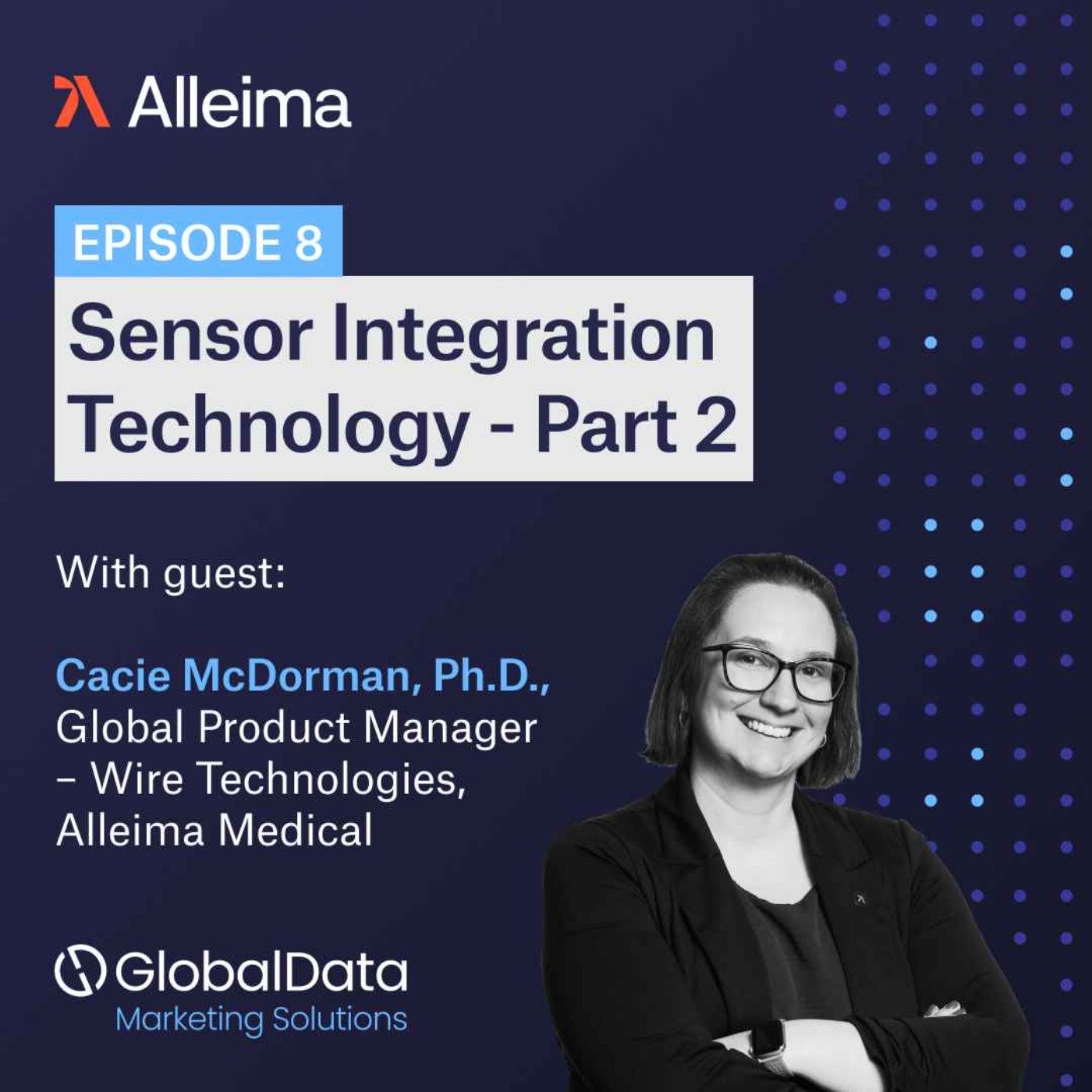 Sensor Integration Technology - Part 2 - Advancing the Future of MedTech with Alleima - Ep855 / 100
 Flexible instruments for minimally invasive treatment - what OEMs need to know58 / 100
 How Price Variation Impacts Employers70 / 100
 The Future of Tech - Key Themes for 2026 and Beyond82 / 100
 The Future of Aerospace and Defense - Key Themes for 2026 and Beyond