The Art of Succession · 2026-06-16 · 49 min
Key moments - from our scoring
Substance score
25 / 100
Five dimensions, 20 points each
Barry Young shares GW CPAs' succession planning journey during their second year running the Art of Succession podcast, which has grown to 48 episodes and expanded across YouTube, audio, and shorts. The episode covers strategic infrastructure changes - splitting the podcast into its own YouTube channel, launching a companion "Beyond the Owner" series focused on scaling beyond the founder, and restructuring the company's content strategy to eventually include multiple personalities and a full media operation. Young also recounts significant staff transitions: losing a tax reviewer to private accounting and, more painfully, the tax manager with 30+ years tenure who took another CPA firm offer. Rather than panic, Young frames these departures through his succession lens, emphasizing redundancy, the ship metaphor (the company is bigger than any individual), and AI's transformative impact on professional services. He advocates proactive positioning for AI-assisted tax preparation, arguing that accountants must shift from transactional volume to deeper client relationships and that the accounting profession itself will survive and evolve - founded 500 years before tax preparation existed. The episode offers practical lessons for business owners on building companies independent of key personnel, managing unexpected leadership gaps, and preparing teams for industry disruption.
The tax manager with 30+ years of experience resigned just before the strategic planning session in Rehoboth Beach, Delaware, creating an unexpected leadership gap that the team had to address immediately during the three-day offsite with their iOS implementer.
Young is embracing AI-assisted tax preparation and plans to fundamentally shift the business model from transactional tax volume to deeper client relationships, while recruiting and mentoring team members optimistic about the profession's 20+ year future rather than focusing on near-term retirement.
The ship metaphor separates the company (the ship with a mission) from any individual team member or leader - the captain sets direction, but the ship continues regardless of any one person, emphasizing that building a company requires redundancy and cannot depend on any single employee.
Young separated the Art of Succession podcast into its own dedicated YouTube channel focused on successor interviews, launched a companion "Beyond the Owner" series on the company channel about scaling without the founder, and plans to eventually hire co-hosts, editors, and videographers to build a full media company.
She appreciated the opportunity and enjoyed part-time work over two years, but her current life interests and career goals led her to decide she did not want to return to full-time public accounting at that time.
Our reviewer’s read on each dimension, with quotes from the episode.
The episode is almost entirely a personal business journal update - travel recaps, staff turnover narrative, and podcast logistics - with only sporadic actionable observations about role redundancy, balance sheet principles, or AI-driven pricing changes. Insight density is low because the substantive claims are buried under significant narrative filler and are surface-level when they do appear.
It is important when you are building a company building beyond the owner, that you have redundancy in roles, that you don't become too dependent on any one person
I've been traveling like crazy. So April 16th packed up the family and we headed to Nashville for Exit Planning summit
The episode leans almost entirely on recycled frameworks - EOS/Traction, E-Myth 'work on not in your business,' standard succession planning vocabulary, and generic AI-disruption commentary. The Ron Baker point about principles versus experiences is mildly interesting but explicitly attributed and not developed into anything novel.
AI is going to fundamentally change how we work. It is not going to change the need for accounting
the captain is not the ship. And again, that's talking about the distinct roles, uh, within the company
This is a solo monologue episode with no guest whatsoever; the host is a co-owner of a small regional CPA firm sharing a personal quarterly business update. While he has genuine practitioner experience, there is no guest credential to evaluate, and the host's own authority is limited in scale and breadth.
My name is Barry Young and this is the Art of Succession Podcast
I bought into GW CPAs to provide for my family
There are named specifics - Go High Level, Carbon CRM, EOS Traction organizer, Exit Planning Summit, Luca Pacioli, mandatory retirement at 64, five-year partner retirement horizon - but virtually all specificity is logistical and personal rather than performance data, revenue figures, or case-study evidence a B2B operator could benchmark against.
we will run a company with a strong balance sheet. We will not be leveraged
She is somebody who's had over 30 years experience with our company
This is an uninterrupted solo monologue with no interviewer, no questions, no follow-ups, and no pushback possible by design; conversational craft as a dimension essentially cannot exist in this format, and the stream-of-consciousness delivery adds no compensating structure or Socratic discipline.
This is our quarterly update for the succession plan here at GW
Hopefully I didn't overshare. I've enjoyed sharing this update this second quarter update with you
Computed from the transcript - who did the talking, and the words that came up most.
This GPT has already supported hundreds of multi-generational businesses through complex transitions, and I’ve translated that experience into a free Custom GPT available on our website. Explore it here: - Want to be a guest on our podcast? Apply and share your expertise with our audience at - Welcome to The Art of Succession Podcast. Host Barrett Young, CPA , a Tax and Marketing Partner at GWCPA , shares the firm's Quarter Two 2026 update and an inside look at their own succession journey. In this episode, Barrett discusses podcast growth, strategic planning, team changes, and the launch of the Beyond the Owner YouTube channel. He reflects on leadership transitions, the impact of AI on the accounting profession, developing future leaders, and building a long-term vision for the firm as it prepares for continued growth and succession. Barrett is not just leading the firm through change; he is working to build a company that can grow beyond any one person. In this update, he shares how GWCPA is responding to key team departures, strengthening internal systems, and capturing knowledge through processes and custom GPTs.
Transcribed and scored by The B2B Podcast Index.
- · Speaker 1 The Friday before we went to strategic planning, our tax manager submitted her resignation. She is somebody who's had over 30 years experience with our company. She is somebody that I had relied on heavily and that was a hit. I have a lot of people in the profession who are looking at it next ten years of what AI is going to do, and their first response is, I'm glad I'm retiring within the next ten years.
I've got a team that I care about, and I need to usher them into this new world with confidence and with reassurance that we would get the ship through it together. You're going to have to change how we price our services. We are going to have to change what services we sell. We are going to have to build deeper relationships with clients.
That is how we are going to face AI and what it's going to do to all professional services. - · Speaker 2 As you've been listening to this guest, you're probably starting to ask your questions. How do I apply this to our own situation, our own succession story at the company that I'm working in now at GWC. We have built a custom GPT that you can find linked down in the description below on our website.
We have loaded this GPT up with all of our knowledge about public accounting and tax preparation around succession planning. We've also included the insights from the guests from the past two years of interviews at the Art of succession. You can find all of that at the custom GPT use at any time of day. Start to apply it to your situation.
Ask it the questions that are keeping you awake at night. I want to thank you for listening so far and let's get back to the episode. - · Speaker 3 Welcome to the Art of succession podcast with Barrett Young. Join us as we explore the strategies, stories and insights that shape the journey of leadership transitions and business success.
No matter where you find yourself along the journey, this is the podcast where you'll find the tools to make it happen. - · Speaker 1 My name is Barry Young and this is the Art of. - · Speaker 2 Succession. - · Speaker 1 Podcast.
It is the end of our second year of the podcast. This is our quarterly update for the succession plan here at GW, and I started this last June as a chance to share our own succession journey. A chance to update the listeners on how we are doing through the same things that we talk about every single episode on this podcast. So we do this every quarter.
This is also the end of the second year of running the Art of succession podcast, so we launched the podcast in July of 2024. We've now had 48 episodes with guests and going strong. Been enjoying the journey. I have definitely seen growth over the past year.
That's been encouraging just to hear some of the feedback from the listeners and then also obviously see numbers go up as well. One of the things we did, you know, we brought on new editors slightly into last fall. So just into season three, the new editors have been pushing the podcast out through shorts. They've been focusing on about three shorts per episode, going out there and helping with discovery.
And then one of the changes we also made earlier this year is our YouTube episodes were split into two episodes already anyways, and they went ahead and they started alternating weeks with the release of those episodes. So you can get the full episode in audio format through RSS feed, through transistor, through any of your normal audio interfaces. But if you are watching on the YouTube channel every Tuesday, now we have the episode come out. So part one on first and third Tuesday of the month, and then part two on the second and fourth Tuesday of the month.
So we've been working through that. Got guests lined up for the year that has been successful. I'm excited to bring you the guests that we have for the fall season five of the Artists succession. And yeah, we're going to keep on rolling.
One of the other changes that we did. I just launched in May. We have split the Art of succession YouTube channel from the company YouTube channel, and we actually relaunched the company YouTube channel with brand new series of videos. One of the things that I was worried about as I launched YouTube about two and a half years ago, was, who is our target audience?
Who are we speaking to? You know, in the succession journey, there are a lot of audiences. We could be speaking to peers and strategic partners within the space. We could be speaking to buyers of businesses, buyers who are interested in understanding what goes into stepping into this role.
That's what this podcast primarily speaks to. And then we could also have a podcast that focuses on sellers prepping your business for sale. What goes into the process of finding a successor or marketing your business. Kind of the whole value acceleration methodology, the work that we do as CPAs.
Certified exit planning advisors. And so in March or April of this year. I went ahead and made the call and separated the podcast on YouTube from our company podcast. It now has its own tag at Art of succession, and it's continuing on as a YouTube channel focused on the podcast exclusively.
In May launched a new video series R at GW CPAs username. Currently, the name of that channel is Beyond the owner, and it's this idea of growing the business beyond your own capacity, growing the business beyond your own exertion within the business. And it's that bottleneck idea that you know what's got you to this point as a business owner is also probably what's holding you back from scaling beyond the owner, beyond your own 60, 70, 80 hours a week that you are able to go to dedicate to that business.
And so beyond the owner is a YouTube channel that is focused on getting business owners to work on their business, rather than in their business. We've got some exciting things that are going to be happening over there. I'll be talking about those later on in the episode, but the art of succession is unleashed. The Art of succession is its own podcast channel on YouTube, and will continue forward as interviews with primarily buyers who stepped into the shoes of somebody else, sharing all of the mistakes, the successes, the joys that they've encountered along the way.
And we're going to continue to bring you two of those interviews every month moving forward. One of the things that I would like to see. Probably not season five, but a year from now, possibly even a little bit further out, is I would really like to bring in a co-host on this podcast, somebody else within my company who is hungry about asking these questions of business owners. I've got someone in mind.
I just waiting for a few things to clear up in her professional life. Um, and get her ready for that. But you know, I have to step beyond the owner as well. And part of the succession journey here at GW is building a structure, building a pipeline, building a framework for marketing that is not limited to me as the Rainmaker and taps into other people within the company.
And so that's one of the ideas behind launching a new YouTube channel Beyond the Owner, um, separating the podcast from the efforts that we are doing for the company towards our target market over there, and I would really like to see us grow eventually into a full fledged media company with 2 or 3 personalities with on staff, video editors, videographers, um, content writers. Just as I continue to scale this thing moving forward. So that's long term vision. Right now we're just splitting the YouTube channel, splitting the podcast off from the company channel so that we have a clear focus on the Art of succession podcast.
Our target listener for the Art of succession is and where I trust you probably are. If you're listening to this, that potential successor, that employee who's currently working in the business and examining, do they want to step up into ownership? You know, maybe you're waiting for a parent to retire and you're starting to evaluate. Do you have what it takes to lead this company?
Do you have what it takes to be what this company needs for its next phase of development? So I'm having a blast hosting these interviews. I hope you guys have enjoyed season four with the fantastic guests that we've had on here, and I'm excited to continue to bring those to you moving forward. Spring quarter for 2026.
Wow. We had a lot going on. So tax season, we rolled right through that. Um, we're still working on taxes.
We spread out taxes and beyond the March 15th and April 15th deadlines. So we are working on those through the spring and the summer to get those off filed. I have been traveling like crazy. So April 16th packed up the family and we headed to Nashville for Exit Planning summit.
Um, that was my second time attending. That took the family out there a couple days early just to visit Nashville. Never been in the area before and then Sunday through Tuesday enjoyed exit planning summit. I had one of my teammates there.
She had just become a CPA. Finished the designation the week before. I've been a CPA now since last October, so I was much more comfortable at exit Planning Summit. Have now understanding the framework, now understanding the language.
And we had a fantastic time in Nashville and then drove back on Wednesday in May, headed down to Greenville, um, in the beginning of the middle of the month for three days of Rivals. Um, Summit Travel is my network of CPAs that I've been a member of for - · Speaker 1 15 years, and I used to go down there every October for deeper weekend. They have Sunset Deeper Weekend in October and replaced it with a smaller venue, a smaller summit of only members of the community. So there were about 30 of us or so in a classroom for two and a half days, listening to instruction and talking with each other, working through issues that we have as business owners, as accounting firm and tax firm owners.
Um, much smaller than the 130 something members that Deeper Weekend had grown to and honestly, much more enjoyable. It was kind of like a return to what deeper Weekend was ten years ago before it grew. Um, the concept this year that we were talking about was alignment. So alignment with your team, alignment with your customers and alignment with yourself.
And I think that this was really helpful because I started to see and and I shared this with the group. - · Speaker 1 My role as Barrett Young, the CPA, the professional who's in this career path, even, um, the professional who bought into GW CPAs to provide for my family is separate and distinct from my role as a partner at GW, CPA, one of two, and as the future leader of this company as my partner, um, moves into retirement in the next couple of years. And so being aligned with that role is necessary and requires sometimes that I do things that are not for my own benefit, but more for the benefit of the company.
I think we all know this. As business owners, you will learn this as you step into that role. Sometimes you have to make decisions that are for the best for the company rather than the best for you personally. - · Speaker 1 And that's also part of moving beyond the owner.
Separating yourself from this is a great job. This provides a piggy bank that I can pull from anytime that I need to. That forces a business owner to say if this is what we want, if this is what we want, to grow this company, if this is what I want to do to scale beyond myself, it's going to require me to reinvest back into the company. It's going to require me to suffer personal pain short term for long term gain, and align that role within the company with my own personal vision for my career and for my future.
So really enjoyed that. I drove back from that. My wife joined me on that one. We also celebrated our 21st wedding anniversary while we were down there.
Drove back with me on Saturday from Greenville and I had about a day and a half. And then Monday morning we drove out to, uh, I drove out to Delaware for GW's strategic planning. So we started this three years ago. That was the first time we'd ever really done an overnight off site for strategic planning, and we decided we wanted to do that with the entire team currently every three years.
And so we were due. So we headed to Rehoboth Beach, Delaware. Um, and - · Speaker 1 we had ten in attendance. Um, and we got to focus on we walked through our iOS implementer, came out there with us, and she walked us through the Vision Traction organizer.
I was called to share the ten year vision and the three year goals of the company. Um, and then we work through a number of issues and got a lot of alignment within the company to come back and hit the ground running the Friday before we left for strategic planning. - · Speaker 1 All right. Let me back up a little bit.
I've been talking with our tax reviewer for the past year or so. This is somebody who is working in private accounting and had left public and had been coming back to us during tax season to help us out, reviewing tax returns. I'd been in talks with her over the past year to figure out if she wanted to come back to public accounting, step into the tax partner role here full time. Um, I knew she would be a huge help for us in the company to take on that role and move forward, uh, focused on the tax so that I can focus on marketing.
I can focus on my role in the company as the visionary and build the company beyond my own capacity. She let us know beginning of May that she had been given it a lot of thoughts. She appreciated the offer and the opportunity, and she enjoyed coming back to work with us part time over the past two years. But where her life and interest and career is currently, um, she's not looking to come back into public accounting.
So, um, that was a hit. I'm always thankful for clarity. I'm always thankful when somebody knows how they want to move forward, and I was prepared to move forward and deal with it. I was actually looking forward to stepping back into the tax review or role next tax season.
I did not want to rush into finding a new finding a replacement for her too soon, and knew she was going to give us through the end of June to help us finish off the projects that we've currently got open. Um, and I was ready to move into that role and and move forward. I mean, we do what we got to do as business owners. Two weeks later, the Friday before we went to strategic planning, nominated or our tax manager submitted her resignation.
And so that was the Friday before we were leaving for strategic planning on Monday. Um, she is somebody who's had over 30 years experience with our company. She is somebody that I had relied on heavily. Um, very adept reviewer, very thorough.
Great with the team and great with accountability. Um, and she had received an offer from another CPA firm, and she's nearing retirement and needed to go maximize her earning years. Um, before retirement, and that was a hit. Like I said, much loved by the team.
We, - · Speaker 1 um, she was not invited, did not join us at strategic planning. She gave us two weeks notice. One of those weeks was fully taken up by the rest of the team being at strategic planning. So we really only had a couple of days at the end of May, um, to catch up and get everything, find out where everything was in process.
Um, and the team spent almost the entire morning on Tuesday with our iOS implementer on day one, clearing the air, getting this out in the open and talking through it. Um, we are moving forward. Um, it hurt painfully, um, personally and professionally for a number of us who really enjoyed working with her. But this happens in a company and.
- · Speaker 1 we adapt and we overcome. And so Sam is also stepping into the role that she has left. Um, wants me to continue to focus on, um, exit planning, wants me to continue focusing on building our KPA line of services. I will continue on in the tax review role that the pre that the other, um, reviewer is leaving behind.
Um, but we're working through it for this tax season. We've got about or just a little bit more than half of our tax returns still open and needing to get filed by September 15th. And we are working through it. Um.
- · Speaker 1 It is important when you are building a company building beyond the owner, that you have redundancy in roles, that you don't become too dependent on any one person because life changes and something terrible can happen to a person, or their situation might change and they need to take a job somewhere else to better suit what they are looking for in their career. Um, and this is this is what happens. I mean, Sam and I are the only two who are going down with the ship as owners, and we have been very clear at G.
W. that there is no splitting the company. There is no, um, divorce in this partnership. But GW is more than the people who make up GW.
We are, uh, I shared at Strategic planning the concept of a ship. GW is a ship, and my job as the captain is to say we are sailing that way. We are sailing west, and I have the charts, I have the tools, I have the training, I have the reports from other ships that have come from that direction or that have gone that direction prior. It is our job to recruit people to join the ship.
It is our job to enable them to do their job to the best of their ability. And it is the crew's job to wake up every day. Trust the captain and do their work as best they can. Um, the captain is not the ship.
And again, that's talking about the distinct roles, uh, within the company. I have a role on this ship, and this ship needs to continue forward regardless of how I feel any given day, regardless of, you know, how I get beat up or how I celebrate my wins. The ship has a mission, and we are all on the mission moving forward. And the the ship is not any one crew person either.
And so the ship continues forward. So we had to work through that strategic planning. That was definitely an unexpected blow. - · Speaker 1 I mean, just personally when I did the alignment exercise the week, the week before that, that tax manager was somebody that I thought was probably one of the most aligned team members that we had.
So it was a surprise for sure. Um, but we will continue forward and we will serve our customers and we will reinvent. This is a chance for our company to, um, continue to explore what AI assisted tax preparation looks like in the future. You know, I was thinking about it.
I don't hold any ill will towards either of these ladies. They both have to do what they have to do for their company. I've certainly made similar choices myself in my own career. I have a lot of people in the profession who are looking out at the next ten years of what AI, AI is going to do every time we talk about this, and their first response is, I'm glad I'm retiring within the next ten years.
And if that is your response, good for you. I mean, do what you got to do. You don't have to learn a new system necessarily if you plan on retiring under that timeline. I rather warn you, retirements a long time and you are going to be thrust into an AI adjusted world whether you like it or not.
I believe that the people who are going to be proactive about AI, even if they only have 2 or 3 years left in their career, are going to be better adapted when it is when they encountered at the doctor's office, when they encounter it, the next time they try to buy or sell a home, when they are fully retired and have been removed from the business world for 15 years, and then are now having to deal with a lot of the same things that they escaped from. But if you've got ten years ahead of you and you don't want to shift for AI, maximize what you can.
While you can get it, the world is going to be fundamentally different. We are going to have to change how we price our services. We are going to have to change what services we sell. We are going to have to build deeper relationships with clients where before it was more could be more transactional, and now it needs to be something completely different.
We're still figuring that out, but if you want to maximize the transactional work and just push out as much volume as you can over the next ten years to get your retirement, that's a reasonable approach. Probably wouldn't make a lot of sense to completely destroy your business model if you have no eye towards succession, no eye towards the next generation, and what they're going to have to do within your business for you to completely change everything at this point, you know, for the last four years of your career.
So in the same way, I am invested in AI because I don't have a ten year horizon, I have a 20 plus year horizon. Like I said, I'm 42 years old. I've got another 40 years plus in me. I've got kids that are entering their 20s and they need guidance on what the world is going to look like.
Um, and I've got a team that I care about, and I need to usher them into this new world with confidence and with reassurance that we will get the ship through it together. And so that's what my focus is on. Um, and that's why I'm embracing, uh, the shift in the, the business model, the shift in the profession the AI is bringing. Just, um, before we move on from that, just one encouragement.
Um, one thing I just have to celebrate, I'm so proud of her is I have a team member who has passed two sections of the exam currently. When this airs, we are waiting for her third score, and she's studying for her fourth section. Taking it at the beginning of July. And this is somebody who, a year ago, wasn't sure that she had what it took to become a CPA, had what it took to even take and pass these exams.
And now she's passed her first two on her first two tries. Um, so that's why I do what I do. That's why I face this uncertainty with confidence. Because there are other people looking to me, um, for guidance.
There are other people looking to me to say, is this a career worth pursuing? Is this a career worth entering? I've got other people that I'm talking to that are lateral or moving into accounting right now from other professions. Um, that is not something that you do.
If accounting is on the chopping block, that's not something that you do. If the future of this profession is hopeless. Um, but it's it's just encouraging because you can surround yourself with the people who are optimistic and say, you know, AI might completely decimate this profession, but I'm going to be one of the people who are left standing and who identify what accounting will look like for the next 500 years. You know, I used to say it when I started my company, we didn't do taxes at all.
I named my company the Green Abacus because I didn't want to deal with taxes. I was strictly accounting, you know. Luca. - · Speaker 1 Luc.
Luca. Pachi. I'm blanking on his name right now. The father of modern accounting wrote his summa mathematica 500 years ago.
And that gave us double entry accounting debits and credits a lot of the foundational stuff. Luca Pacioli. That sounds like a that sounds like a hippie name. Uh, something along those lines 500 years ago.
The US tax code is only 100 years old. Accounting predated our role as tax preparers by 400 years. AI is going to fundamentally change how we work. It is not going to change the need for accounting.
That accounting might look completely different. That accounting might be a 10th of the size of the profession that is today. That accounting might need all of us to become multidisciplinary ones. Uh, working in psychology, working in economics, working in finance might be all sorts of things, you know, you know, uh, - · Speaker 1 working as with a minor in marketing, for example.
But accounting is going to persist and accounting is going to continue forward. And that's one of the things that I'm going to stake my career on and stake the future of my team as they follow me into this uncertain future, So willing to do that, and willing and excited to see people who are on board with us in that, uh, towards that future. So that's what our strategic planning was about. You know, my biggest part of that was sharing the ten year vision of the company.
Ten years is a long way off when we're talking about how formative, how transformative AI is going to be. And what I settled on, because through conversations with others and just through the books that I've read and how I've looked back on my own life over the past ten years, is I can't say for certain our company is going to look like this in 2036. But what I shared with the team is I shared ten principles for 20 the next ten years that are going to govern how we make decisions, how we move forward as a company.
I'm going to do a separate video on those ten principles for our other channel. You can find those linked up above in the description to talk through what those principles were, but in the face of uncertainty. Principles are flexible. Principles can adapt to certain delivery.
Methods can adapt to the. The technology that we are using at a given time. But a principle says I'm going. To make a decision today that is going to determine my future decisions.
And that's the benefit of a principle, um, limiting our options, limiting our focus and saying these things will remain, these things will persist. And this is the direction we're going to go in. Another thing I like about principles, Ron Baker shares it in one of his books. He says principles are also transferable across companies.
So if you share in the trenches business experience, this is what I did to take my company from here to there. There's not a lot of gain to be gleaned from that. Yes, hearing other experience experiences is very helpful to get some perspective, to get some context. But unless your situation mirrors that exactly, those results are not, uh, cannot be duplicated.
A principal, though, can be transferred from one business to another. So for an example, our first principle is we will run a company with a strong balance sheet. We will not be leveraged. Companies have to be more reactive than proactive.
And so we are focusing on paying down debt, deleveraging our balance sheet for the next ten years so that we can make decisions as necessary and be proactive. That is a principle that you can take from one company to another company. Be cash heavy, be asset heavy. Do not be overleveraged as a company.
That is a principle that can transfer to any company. There are companies that will take the opposite principle and they will be super leveraged. They will be over leveraged. There are companies that are comfortable with with risk and are comfortable with easy borrowing.
And they make decisions that way, you know. Think of startups. Startups are not strong balance sheet companies because they are recycling everything invested and more back into the growth of that company. That is a principle that is transferable from one startup to another startup.
So that's how I shared the vision. Again, you can find that link in the description to watch the entire video with our eight principles for the next ten years, if you're interested in that. - · Speaker 1 Another thing you shared with the team for the past 80 years. GW well, probably for about the past 4045 years, GW has had a partner succession model, um, that says mandatory retirement at 64 partners, and we have always had another partner in the pipeline.
When one retires, we've always had a replacement there to take their place. And about a year ago, Sam and I were stressed about this. She's coming up five years away from her retirement. And so we were trying to figure out who's the next CPA in Maryland.
We need a CPA to be a partner. Um, who's the next CPA that's going to step into that pipeline, that's going to have a 2 to 3 year onramp to becoming a partner, and then have already started paying in for the remaining 2 to 3 years before she retires, uh, five years from now. This was adding stress to her. This was adding stress to me.
And we had a conversation about it. And we also decided that with iOS and where our company is right now with moving away from a Siloed model. Moving towards a beyond the owner type model into a LS model with a leadership team. Um, not necessarily CPA's all the way up the leadership team that we were going to be comfortable - · Speaker 1 with changing the partner model in the future.
This is not to say that nobody else will become a partner within this company, but it is to say that that is not our priority right now. We are going to take the next three years to figure out what the partnership model looks like. Figure out what the qualifications for a partner are, and make sure that we get the right person in place for the succession of GW. Um, right now, - · Speaker 1 we're not going to have somebody in that spot five years from now when Sam retires.
And so I will be 100% owner of the company. And I've got from from here forward 18 years to figure that out. From the time she retires, I'll still have about 13 years to figure out how to grow, how to scale the company, and how to pass the company off to the next generation again. Hopefully somebody on my team, um, would qualify for that, would see the vision of the company and would want to step into that role.
But we are not putting any pressure for the near future on anybody coming in here, finding the right CPA and putting somebody into that spot just to have a partner. Um, this is subject to change. This is where our mind is at right now. Um, my mind is on what would ownership and a CPA firm in a new, adaptable future look like.
And so one of the things that we are considering is profit sharing. We are considering sharing profit with the leadership team. What would that look like? possibly in the future.
Even if we grow to a size where it makes sense, even an employee stock option plan, Esop, or a leadership run company. There are lots of possibilities out there in the future, but we are not going to be limited by the traditional CPA firm. Silo model of immediate succession. As one partner exits, another partner comes in and takes over their clients takes over their workload.
We've already shifted our client load away from that, shifting the work to the entire team. And so there's not a immediate need to bring in a CPA to take over Sam's clients so that Sam can retire. So we shared that with the team at the Strategic Planning, and we are moving forward right now for the next quarter. It is all hands on deck.
Like I said, we have lost two high level tax reviewers and that work is as it does in a company coming back to me and Sam to get it out the door. Um, to train our team, to elevate our team. I'm really excited, like I said about my one, um, staff person who's halfway through the CPA exam currently, I reassured her, even though her manager had, uh, left. I'm working with her on moving into review with the rest of this summer.
I'm excited to get her into that. Um, I hope that she leans into tax. Um, she's got a mind for it. She asks her really good questions.
Um, so going to be working with her on that. And then we are working on systematizing our knowledge and trying to capture that as best as possible in SOPs and then also internal custom, - · Speaker 1 internal custom processes to pass that knowledge through to the rest of the team and then looking at hiring, possibly in the fall, a new intern to come in and train them up for next tax season as well. - · Speaker 1 Um, I've also got a trip uh, I talked about at the end of last quarter's update.
I've got a trip with my pastor to visit one of our missionaries. We are going to Pretoria, South Africa at the end of July. I'm keeping that on the calendar. Um, - · Speaker 1 against my, uh, every knee jerk reaction that I have, I'm keeping that on the calendar, and we're going to work through that as it comes.
And we have other vacations, other plans throughout the team that we're going to continue to work around and adapt as we get tax returns out the door and work through a - · Speaker 1 now much busier summer than anticipated. As far as the marketing goes, um, you know, I talked about Beyond the owner, the new YouTube channel. Um, one of the things that we are doing over there, we oh, I am working on systematizing our marketing. I'm working on formalizing a pipeline that anybody can take and walk a new prospect through, uh, through the sales process.
Um, we are adapting and using a new CRM system, putting that in place right now. Go high level. Um, we have tried with carbon for the past nine months or so since we onboarded with them, but carbon is much more suited towards project management for existing customers. It doesn't have the tracking and the analytics capabilities of a true sales CRM.
And so I'm in the process of putting that in place and testing that with our marketing team. Part of moving into the tax roll is that I'm going to be leaning more on the marketing team and also possibly bringing somebody internal to handle the execution, the day to day operations of the marketing role within the company. - · Speaker 1 This is part of what excites me about stepping into that role is to bring somebody in who's trained in marketing that can do the research, can get everything set up, can hand me a series of bullet points for a video and say, step in front of the camera and do this, and then I can hit stop and hand it to them and they can execute with it.
I do a lot of that behind the scenes tinkering. In my current capacity as marketing partner. And so, um, passing that off to somebody else to figure out all the all the specifics and to do the editing and to do the posting. I'm really excited about that.
Moving forward, I am working, uh, this month, actually, we are launching a brand new webinar series on the Beyond the Owner channel. Um, I have a local CPA up the road from here. He's a financial advisor, owns his own branch of Edward Jones, and we have recorded a series of monthly webinars that we're going to be launching this summer. Um, the two of us talking back and forth 30 minute episodes, um, about what it takes to retire, what a business owner needs to be aware of in order to retire.
And then we are also launching a business owners workshop in September that is going to be probably, uh, in Buie nearby town, near by city, just outside of the about halfway between Annapolis and DC. Bringing that summit, bringing that workshop to business owners who are interested, who are thinking about it or have a lot of questions about it. Going to have, um, myself as the CPA valuation analyst, Josh as the financial advisor. And then we're going to probably bring in an attorney and possibly an M&A banker, um, 1 or 2 other roles into that summit to, um, present answer questions and give business owners a lot of information that they can move forward with.
We're also hoping to host a panel of business owners who have sold through various means, whether it's private equity, internal acquisition, um, partner succession, something along those lines so that we can hear from the panel. And I hope to be facilitating that panel in September. So we're excited about that. The webinar series that we've just launched this month on the Beyond the owner channel, is called The Residual.
And that's the idea of, you know, what remains after the event. Um, and I'm excited to bring that to you. You can find that on the other channel over there. I've got 50 other ideas I'm working on.
Um, just trying to make sure that they're all focused, that they're all pointing in the right direction. That's part of systematizing it into a single CRM and then also leaning on the marketing team, uh, leaning on our partners over at PEF to make sure that I'm not just throwing stuff against the wall and hoping that it sticks, that we are making decisions that are leading to, um, better relationships with our existing clients, new relationships with new clients as we help them solve the the big problems, the big uncertainties that they have as they look out towards the future.
One of the things that I'm working on internally, as far as marketing goes, is what is the roadmap of being a customer of GW, CPA? You know, we've been an accounting company. We've been a tax company for 80 years. What does a client look like who's been a client of GWS for three years.
What are their distinctives? What can they rely on? What has their three years investment with us gotten them? Other than timely filed tax returns and financial statements provided to the bank?
What is a client who's been with us for 20 years look like? What is a client who's been with us for 40 years look like? What does that roadmap that we can say when you come in the door, we're going to do a lot of work in that first year. That is foundational work that gets you to, uh, gets de-risk.
Your company clarifies what the succession planning is, clarifies what your goals are before we start to do any kind of tax planning, before we start to take any kind of action, that's year one. We have to build a foundation and then year two and then year three. What do those look like? So that we get you into a 90 day sprint rhythm through the value acceleration methodology, so that you know your company is going to end up somewhere.
I'm just thinking about it. You know, we've never been in this position purposefully before. We've always handled succession as it comes up, usually finding out after the fact that a client has sold their business. But if somebody has been a client of ours for 30 years and they get to the end of their career and they don't have a business that can transfer, they don't have a business they can sell.
Barring any kind of weird, like their entire industry exploded or there's something going on there that has to rush it through through a sale, barring anything like that. What is a company who's been with us for 30 years look like? That's what I'm working on for as far as the roadmap. And then working backwards from that to say, what is a client who wants that?
See, in our marketing, what is the pipeline look like to get them to know, like and trust working with us so they can move forward with confidence, knowing we're not just going to be preparing a tax return. We're not just going to be doing your financial statements. When you come to GW, you are signing up for specific markers, specific achievements, specific things that we stand behind and say, this is what a company looks like when it's been a client of ours, and that is how we are going to move forward.
That is how we are going to face AI and what it's going to do to all professional services. So that's what I'm working on. That's where my mind is at as I'm taking these trips, as I'm reading, charting that out, figuring out what that looks like and then sharing that with the team. That was the other thing that came out of strategic planning is I don't do enough to share with the team where my own head is at.
I process a lot of stuff internally and then I make decisions based off of that analysis. I don't share the steps in that analysis very well, and I just do things into the team that have not been in my head for the prior couple of months. It just looks like I throw things out there and hope that they stick. So bringing the team along through that decision process, through that processing, it's going to help them see what their role is in this exit planning world in this value acceleration methodology.
And it's going to give them confidence that when they're having a conversation with a client, this is the direction we want that conversation to go. And this is a conversation that they can have. This isn't something that they just wait for Barrett and Sam to step in the room. They should be asking questions about like the client's goals, the clients will, the clients trust, how the client is stepping back from the day to day and solving the issues within their company, and what that looks like for the future of our clients.
So I'm going to be working on that as well. Including some business development work, some marketing training. Within the company over the next couple of months. So I'm excited by that.
Work to teach and share this with more people. I just need to remember to do it. And I also just need encouragement to do it because sometimes it can feel like bothering them. And I'm taking their time away from the taxes and the payroll and the accounting that they really need to get done.
So this strategic retreat last month was very helpful. Sharing the vision, hearing the feedback, seeing their eyes light up and just having them on board currently with where the vision is at was very encouraging and very helpful to me as a business owner trying to step into this role of being the leader within the company over the next couple of years. So he's going to wrap up this episode. I've enjoyed sharing the second quarter update.
Hopefully I didn't overshare. I've enjoyed sharing this update this second quarter update with you. I'm going to continue these as we go. And again, thank you for listening to the Art of succession.
I'm thrilled with the growth of the podcast. I'm thrilled just to see the downloads and the comments and the feedback that I'm getting, mostly shared offline from people who've listened and said, I really enjoyed this episode. It really helped me process a few things for myself, so we're going to keep moving forward with it. I've got another dozen guests lined up for you for season five, moving into the fall and end of 26.
And yeah, I'm just thankful for you for being along for the ride. And I want to thank you for listening to the artists succession, and we will see you on the next one.
Other episodes covering the same guests and topics, from across The B2B Podcast Index.
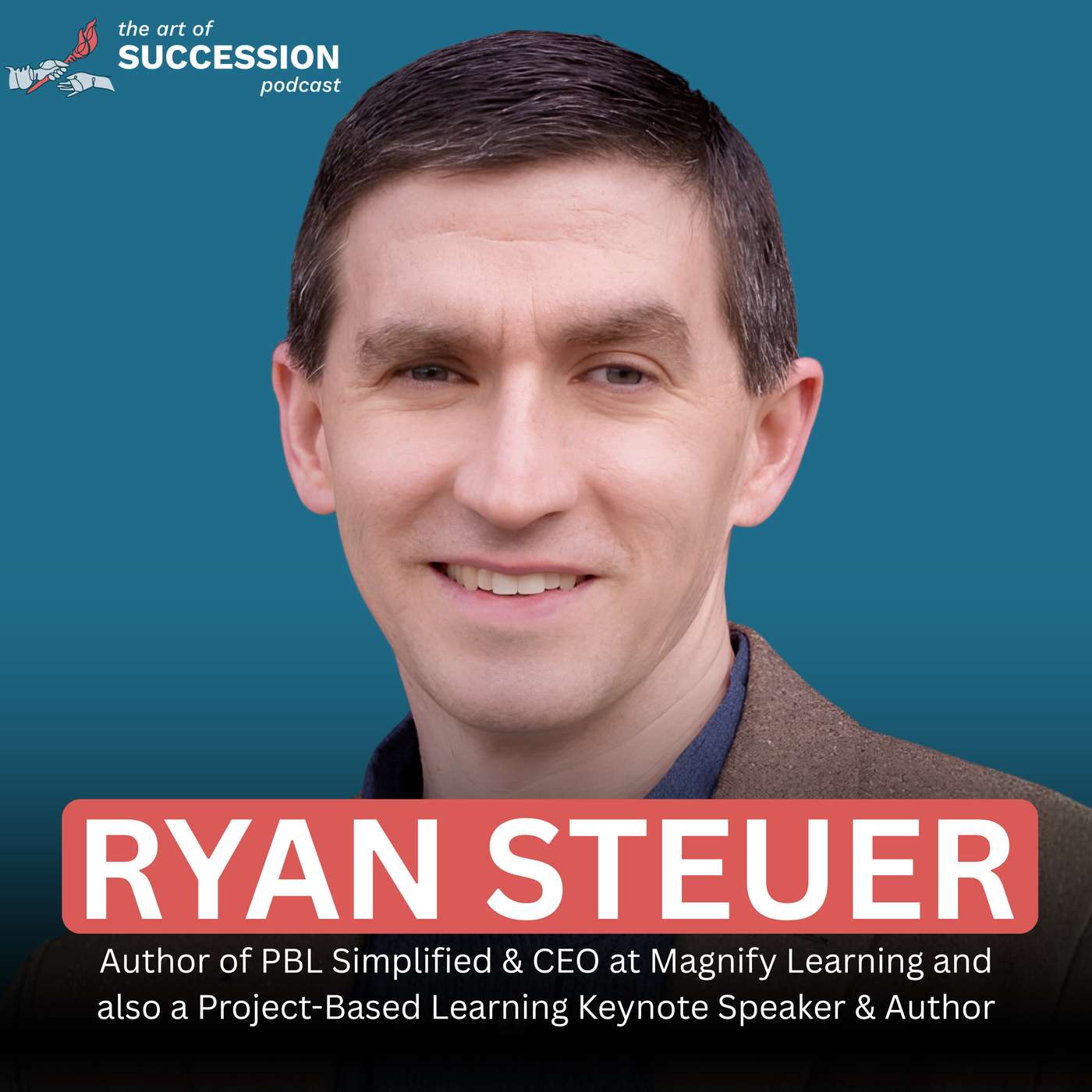 How Education Founders Build Succession Plans that Scale Impact Beyond Themselves With Ryan Steuer87 / 100
 Leadership Succession Models for Founders to Scale Impact and Sell Without Chaos with Bob Labbe76 / 100
 Succession Planning Secrets for CPAs to Buy into Partnerships with Confidence - Albert Butler CPA MBA75 / 100
 Succession Planning for CPA Firm Leaders to Future-Proof a 125-Year Legacy - Rebekah Olson, CPA75 / 100
 Succession Strategies for First-Time Business Buyers to Exit Profitably with Jennifer Fizer75 / 100