The Alternative Data Podcast · 2026-05-25 · 48 min
Key moments - from our scoring
Substance score
45 / 100
Five dimensions, 20 points each
Nico Smuts traces a distinctive career path that bridges traditional fundamental investing and modern alternative data science. Beginning as a financials-focused analyst at 361 Capital in South Africa analyzing banks and insurers, he identified an important inflection point: discovering public government data unavailable to institutional investors that could predict real estate company earnings weeks in advance. This recognition prompted his decision to pursue a Master's at Imperial College focused on Python, machine learning, and alternative data. After roles at 91 (formerly Investec Asset Management) applying quantum-fundamental approaches and Google Trends for political risk analysis, he joined Citadel as a senior data scientist. Throughout, Smuts emphasizes how the alternative data edge has evolved - from immediate signal extraction to handling increasingly messy, unstructured datasets like social media and community forums. His Imperial thesis analyzing Telegram sentiment and message volumes in crypto communities exemplifies the shift toward extracting insights from noisy sources where retail investors congregate. Operators seeking to understand how traditional investment analysis evolves with data science, alternative data sourcing beyond standard vendors, or building technical infrastructure for messy datasets will find concrete insights here.
Publicly available government data used by real estate practitioners but not financial services, which provided an accurate read on earnings approximately three weeks before public disclosure.
Positive sentiment lagged price movements by hours and was not predictive; negative sentiment was coincident with price drops but not forward-looking, while message volumes and specific keywords proved more useful signals.
Early advantages came from simply discovering new data sources, then shifted to denoising messy datasets like credit card data, then to engineering infrastructure to manage large datasets at scale, and now to analytical capability to extract insights from large unstructured data that others haven't found.
He wanted technical skills in Python and machine learning to analyze alternative data sources at scale and operate at the intersection of data science and investment research rather than being limited to traditional analyst roles.
Social media and prediction markets for both equities and macro use cases, as well as focused forums where influential participants congregate, particularly where AI and LLMs can extract insights from unstructured data.
Our reviewer’s read on each dimension, with quotes from the episode.
There are genuine nuggets - particularly the phased evolution of alt-data alpha and the Telegram sentiment research finding - but they're surrounded by lengthy biographical small-talk, visa discussions, and South Africa anecdotes that add no operational value. The insight-to-filler ratio is poor for a 48-minute runtime.
in the early days, I think especially that example I mentioned where I found a data set, you simply use the insight and you can immediately harvest it. For alpha, that went away relatively quickly
the sentiment itself was not predictive. Positive sentiment lagged the price by a few hours and so it's really of no use. Um, negative sentiment was coincident with the price.
The Telegram crypto sentiment findings (sentiment lagged, message volume more predictive) are a genuinely specific research observation, and the framing of AI as enabling scrape maintenance at broader scale is fresh. But most of the episode recycles well-worn takes about AI, social media data, and junior talent concerns.
Positive sentiment lagged the price by a few hours and so it's really of no use. Um, negative sentiment was coincident with the price. So the moment the price drops, negative sentiment spikes.
if agents are able to touch it then you're probably also able to analyze it more systematically. So that's sort of a dual one
Nico Smuts is a genuine practitioner who went from fundamental equity long-short to senior data scientist at Citadel, with real independent research on Telegram crypto data along the way. However, the non-compete structurally prevents him from discussing the most valuable five years of his career, severely limiting the depth he can offer.
I was approached by a recruiter on behalf of Citadel and made um, an offer to join the team there
I mined that data set, um, extracted about a million messages over uh, nine months and did some analysis on that
There are some concrete data points - a million Telegram messages over nine months, Europe-to-US-east-coast container costs doubling, ICE launching a futures market, three-year history threshold - but the Citadel constraint forces vagueness on the most interesting material, and many claims about AI and social media are left at the assertion level.
the cost of sending a container from Europe to US east coast has doubled
I extracted about a million messages over uh, nine months and did some analysis on that
The host occasionally shows craft - asking whether Nico backed the Telegram research with his own money is a sharp follow-up, and he probes the three-year history claim - but large swaths of the episode are consumed by biographical chat, visa logistics, and in-jokes that eat time without generating insight. Vague answers about AI and social media go largely unchallenged.
I think it's a great innovation. I'm beginning to see why you, why you wound up at Citadel
Are you worried that there are huge things uh, moves being made in AI and you're not currently seeing them happen
Computed from the transcript - who did the talking, and the words that came up most.
In this episode I speak to Nico Smuts, a senior data scientist formerly of Citadel now on gardening leave. In our conversation, Nico and I discuss his evolution from a long-short investor in South Africa to a Citadel senior data scientist in London, via an interesting project at Imperial University using Telegram data to find alpha on crypto. We also discuss the impact of AI on hiring and organizations and how the alternative data space has evolved. DISCLAIMER This podcast is an edited recording of an interview with Nico Smuts recorded in May 2026. The views and opinions expressed in this interview are those of Nico Smuts and Mark Fleming-Williams and do not necessarily reflect the official policy or position of either CFM or any of its affiliates. The information provided herein is general information only and does not constitute investment or other advice. Any statements regarding market events, future events or other similar statements constitute only subjective views, are based upon expectations or beliefs, involve inherent risks and uncertainties and should therefore not be relied on.
Transcribed and scored by The B2B Podcast Index.
Speaker A: Foreign.
Speaker B: Welcome to the Alternative Data Podcast. Welcome to the Alternative Data Podcast. Powered by cfm. I'm Mark Fleming Williams. In this episode I speak to Nico Smuts, a uh, senior data scientist, formerly of Citadel, now on gardening leave. In our conversation, Nico and I discuss his evolution from a long, short investor in South Africa to a Citadel senior data scientist in London via an interesting project at Imperial University using Telegram data to find alpha on crypto. We also discussed the impact of AI on hiring and organizations and how the alternative data space has evolved. So in this episode I am delighted to be joined by Nico Smuts. Welcome Nico.
Speaker A: Great to be here Nico.
Speaker B: Uh, you are, as your LinkedIn says, an investment and data science leader and ex Citadel and you're currently enjoying a non compete period. Um, is that, how does one, how does one enjoy a non compete these days?
Speaker A: Um, I think it's one of the perks of our industry, as frustrating as it is not to be able to work for 18 months as is the case for me. Um, it's an opportunity to explore more widely and I've been spending time with family, doing some hiking, getting involved in teaching. So really, um, no lack of opportunities to spend my time and.
Speaker B: Very nice. You're London based, Have you, have you been uh, have you been in London for all the non compete or you've been moving around?
Speaker A: Uh, mostly in London, I've got some family in South Africa, um, so I spent some time there. But yeah, mostly in London and as things look today, a beautiful place to be.
Speaker B: Yeah, South African weather we're having at the moment. Yeah, um, jolly good. Well, excellent Nico then, um, we have touched on your, your South Africanness. Why don't we go back? I mean you're, to sum you up then, you're. Would you say you're ah, a data scientist, um, with a kind of investment, alternative data specialty, is that.
Speaker A: I would say so. But um, I started off as a fundamental investor so that's where my roots lie and I will always be a hybrid between the two.
Speaker B: Perfect, perfect. Excellent. So let's go back and go back to where you're from, um, which uh, scholars of accents might appreciate is uh, is from the south of the African continent. Um, so Nico, um, you, uh, well you, you studied at Imperial. Where, where are you from?
Speaker A: Are you from? From uh, born and raised in Cape Town, uh, did my undergraduate in Stellenbosch, which is in the beautiful wine region just outside of Cape Town. And, and um, did postgraduate studies here in the uk.
Speaker B: And is London an obvious thing, uh, from your background do you think?
Speaker A: I would say I'm not the first South African to have taken that route. I think especially if you're in finance and investment, the size of the industry in South Africa, even though it's quite dynamic, it's a fun place to work and especially in equity, long, short, there's a lot of very attractive characteristics about the South African market. But um, you know, if you're ambitious and you want to especially operate in a field that requires a, ah, lot of technology and scale, then London and New York really are the obvious places to go.
Speaker B: Yeah. Uh, is it, is it easy uh, like visa wise to come, is it easier to come to London than New York for uh, old imperial reasons?
Speaker A: Uh, no, I'd say the uk. Um, I know there's been a lot in the press about immigration but the immigration system is still relatively easy, easy to navigate as a uh, as an experienced um, individual that's got some work experience.
Speaker B: Yeah, yeah, okay, totally good. Um, okay, so you do uh, Imperial, you come out and you join Towers Watson, um, in South Africa, um, and then you come back to London in September 2010 um, and you join Capital Generation Partners and as associate Portfolio manager. So investment is very much on your horizon. I often start by asking where does alternative data come into your background?
Speaker A: I'm going to um, clarify one thing which is Imperial actually came quite a bit later and it ties in nicely to your question about where alternative data came into my um, into my professional life. So um, I did as I mentioned, undergraduate in Stellenbosch. Straight after that I worked at Towers Watson where I was an investment consultant. Gave me a really good overview of the investment industry and it became clear to me that I would rather be an operator than an advisor. And I was particularly intrigued by equity long short hedge funds. I then went to Cambridge, did a postgraduate degree there, um, in finance and then following that moved to Capital, uh, Generation Partners which is a family office. And then really where my, I'd say my, where the rubber hit the road in my investment career was when I joined 361, a small uh, but fast growing hedge fund in South Africa as an analyst doing equity long short which was, was always the dream.
Speaker B: There we go. Okay. And so what was your, what was your focus, markets wise?
Speaker A: I was a financials focused analyst. So banks, insurers, real estate, um, as a qualified actuary. That's kind of the curse of the actuary. If you're an actuary and you move into investment research, you're always going to be given the financial sector which Is um, it's very technical and it really draws on that technical background. So it was a great place to establish um, that skill set. Um, and it was a uh, lot of fun in the South African market because Management Access is so good. There are a lot of high quality listed companies, but not that many investment managers competing for Management Access. One of the great things is I got to spend a lot of time with senior management at all the companies that I covered and um, developed that real fundamental skill set.
Speaker B: And were you looking at your um, were you looking across at the fellow market participants and trying to outthink them? And so the kind of investment makeup of what the investors in South Africa look like would you were thinking hard about them or were you just looking at the companies and uh, just trying to do analysis on them?
Speaker A: Yeah, it was very much focused on the companies. Um, the role was really building financial models, picking stocks, building long and short portfolios and trading around those. Um, at the time this was a good 10 years ago, there were fewer international participants, but they were often the smart money. They often knew things we didn't know. So um, that gave me a sense that there's more to this than uh, meets the eye for a local investor.
Speaker B: And that's not a very comfortable position to be in.
Speaker A: Yeah, absolutely.
Speaker B: You started thinking, how can I get to be one of those guys who know and not in my current seat where I'm, where I'm potentially being taken advantage of.
Speaker A: Yeah, exactly. And I think the local fund managers have done extremely well. There's a lot of alpha in that market because it is uh, less competitive. Um, but yeah, ultimately I think the moment that made me realize that I want to pivot and shift my focus was I was covering a real estate company and I found a data source, an alternative data source, which I didn't know that was what it was. But it was data from an unusual place that had an incredibly accurate read on earnings and a good three weeks before the print, I could essentially nail the number. And that was a real eye opener. And I thought there's got to be more of these. And if you can find enough of these opportunities, if that thesis is correct, then the way alpha gets generated and equity long short is going to change.
Speaker B: Was this a local alternative data provider in South Africa?
Speaker A: It wasn't an alternative data provider. It was basically uh, uh, uh, artisanal scrape.
Speaker B: Okay. And it was just. So it was just. And they were, do they come to your office? Like how did they, how did you discover them?
Speaker A: So this was actually uh, Publicly available government data that was used by real estate practitioners but not by the financial services industry. So it was uncovering a new data source with no vendor or at least the vendor that sold it to us. Didn't realize that this was a financial um, services use case.
Speaker B: And did you, what do you just, just while we're in South Africa, what do you see? Uh, maybe even up to the present day, what do you see as the um, is, is there still a kind of old school, who you know aspect which is, which would you know, being based on the ground might give somebody an edge uh today in South Africa because it hasn't been kind of, I don't know, modernized and discovered and matured as much as some other market. Or is it really still today about the data you can get will give you such an edge that really you're, I don't know in the UK it feels a little bit like there's a lot of these kind of relationship guys managing money, um, who are, you know, they're very good at relationships but they've got zero edge now. I don't know. Um, is that uh, familiar for South Africa these days?
Speaker A: Yeah, I think it's a bit of both. So like every market there's an old school component. There are wealth managers in particular and some fund managers that really rely heavily on relationships and performance might not be stellar but um, the South African market, it's a very well regulated market. So um, reporting, disclosure, auditing standards, those are all pretty high. And so the who, you know, is not going to be that helpful. Um, the reason it was less competitive was simply because there were fewer market participants and it took longer for when a news event happens or when new information starts hitting the market, there was a longer window to monetize that edge. And as more international players enter the market as they become more data savvy, that window to monetize has shrunk a little bit. Um, but yeah, I would say it's now, I would imagine significantly more competitive than it was. And uh, I was covering the stock exchange as well at the time as essentially a fintech company. And I remember they were installing these co located servers for the high frequency traders at the time. And it was clear that the international funds, the market makers, um, the high frequency traders were clearly entering the market and that affected the, I uh, think the banks more than the active fund managers. But that trend was very, very clearly underway 10 years ago already.
Speaker B: I saw the Johannesburg exchange at Trade Tech this year, um, and this month, maybe last month this month and I saw, um, and also I think the biggest South African broker was there as well. And they said um, when I, uh, when I told them my company then they said oh yeah, and they knew the South African who works for my company. Are South Africans who work in, you know, west, like American, European hedge funds. Are they kind of celebrities back home? Like do they, do they all know who you are, do you think?
Speaker A: I think, I think celebrity is a bit generous. I think it's simply a small community and um, the expats do stay in touch. So um, yeah, you generally, if there's a South African working at a company, it doesn't take long to find them.
Speaker B: Do you know the South African who works at cfm?
Speaker A: I do not, I'm afraid.
Speaker B: Okay, well you need to, I'll introduce you.
Speaker A: Um, I'm sure you'll get wonderful.
Speaker B: So excellent. So out of Africa, um, you, you come to London November 2018. So you've had this realization that there's a whole um, kind of alternative data thing going on and that you want to be at the center uh, of intelligence rather than watching uh, them from the outside. So um, what's 91? Uh, and can you describe that move?
Speaker A: So that's where Imperial fits in. That was my bridge into this world and I was looking at this alternative data which didn't quite, at least I didn't know it was alternative data. But I thought these data sources going to play a much bigger role in my life as an analyst and I wanted to have the tools to be able to analyze these and incorporate them into my process at scale. And that's what precipitated this decision to go back to Imperial. Um, I did some computer science in my undergrad but it was C, which is really not very good for data science. And so during this year at Imperial I focused on Python, machine learning, um, alternative data, ah, AI, autonomous robotics and just all of the new things that have come up um, since I finished my undergrad and that have really enabled this revolution in data and um, data science at scale. So graduating from Imperial I took those new skills and at 91 the mandate was I was the first data scientist on the team and essentially I had to build quite a, quite a lot of infrastructure. Luckily I had help from engineers and
Speaker B: M just quickly because I'm intrigued. So we're in November 2018 when you joined 91.
Speaker A: That's right.
Speaker B: Do you see Imperial as um, the key bridge to make the move to London possible or do you think you could have done it uh, from the South African market, straight into the London market.
Speaker A: I would have been able to make the move I think, but I would have been limited to a large companies that could sponsor my visa. So I sponsored my own visa, um, uh, which where Imperial really helped. And secondly the roles available to me would most likely have been analyst roles because that's what my career so far had been. And I really wanted to be at that intersection of data science and um, investment research.
Speaker B: Okay, and what is 91?
Speaker A: 921 is essentially a long only fund manager, um, ironically with South African roots. So uh, ah, um, it started as a South African manager, it expanded to the UK and um, it's now an international business.
Speaker B: Is that 1991, is that like a Mandela thing?
Speaker A: The firm was founded in 1991. It used to be called Investec Asset Management and when it spun out it rebranded.
Speaker B: And is 1991 a key date in South African history?
Speaker A: Exactly. Great memory. That's bang on. Yeah, yeah.
Speaker B: Okay, cool. Um, okay, lovely. So um, you join. It's long only. Um, how are you using alternative data there?
Speaker A: So the mandate really was um, more quantum mental than alternative data. So the team there had the foresight to 10 years before I joined to start recording a lot of their fundamental views alongside the quant models that go into the quantum mental process. And I thought this is a fantastic data set because it really opens up so many opportunities for building a foundation for internal alpha capture, improving the quantum enthalpy process understanding. When do you trust the machines? When do you trust the human judgment under which market conditions do the different parts of the process, process add value? So it was more quantum mental than um, alternative data. But I did do some alternative data work there, especially in quantifying political risk using Google Trends and that kind of thing.
Speaker B: Google Trends is quite hard to work
Speaker A: with, isn't is, it's pretty clunky but at the time not that many people were using it and I think um, it was really doing um, a lot of the work that prediction markets now do. Yeah.
Speaker B: Okay, okay, interesting. Um, okay, so you're so you're long only, um, but you're itching for the, itching for the, for the kind of long, short hedge fund world again are you 100%?
Speaker A: And um, you know when I graduated from Imperial I had this, this idea in fact before I even went that you know, fund managers, especially hedge funds will need more of this hybrid skill set. Um, and when I graduated the industry had not yet caught up I think and so there weren't that many of these roles available. And then during my time at 91, it became evident that more and more firms were starting to look for this talent. And um, I was approached by a recruiter on behalf of Citadel and made um, an offer to join the team there.
Speaker B: Fine, great. Okay. So, um, and then uh, the, the less we say about Citadel, I'm afraid for listeners, the better. Um, because, uh, because you're in non compete and, and obviously etc. Etc. Um, you were there for, you were there for five years. Let's talk more broadly about the data space. Um, where do you see, um, so in all of your experience, uh, how do you see uh, the data space having evolved since you first encountered um, it.
Speaker A: That's a good question. And I think you are probably um, in a very good position to tell me if this observation makes sense. Um, in the early days, I think especially that example I mentioned where I found a data set, you simply use the insight and you can immediately harvest it. For alpha, that went away relatively quickly as um, more teams in the industry started using altdata. Then I think the value started shifting to extracting insights from Messier data sets, denoising, normalizing, tagging. There was a lot of value in that. And if you think about the early credit card data sets, you know, you had to work pretty hard to get the insights out of them. And as the vendors became more sophisticated, I think that has gone away as well as easy Alpha. After that, as the explosion of data just continued, firms that had the engineering capabilities and the infrastructure to manage large quantities of data and ingest them fast and maintain all of these pipelines, that was a competitive advantage. And of course with AI now it's much easier to make, maintain large complex data pipelines and infrastructures. So these are all the phases that I think came and went. And where we are now is actually really exciting because the analytical edge, the ability to find something in the data, especially large messy data sets that others have not yet found, that's where the real edge is. And um, that's where data scientists want to operate. So we as data scientists get to spend less time on the sort of exploratory work or the pipelines or the mechanics of the data process and more on the analysis and the insight.
Speaker B: So what kind of, so you mentioned that you were talking about kind of uh, extracting hard to get data out of, out of, or insights out of credit card data back when credit card data was newer. Um, what kind of data are you picturing when you're talking about big, messy, unstructured, um, Data sets. Now
Speaker A: I think social media is an interesting one because it is among the biggest and among the most m unstructured and AI and LLMs have made it possible to extract interest from there in a way that is much uh, more accessible than before. So I think social media and general online activity will continue to be quite meaningful. Um, and then the other one that seems to come up constantly is prediction markets, which we'll see where that goes. But I think that's a very exciting, um, component of the altdata universe because not only can you use it as an altdata source, but you can also use it as a way to express views generated through other altdata sets.
Speaker B: Only when there's enough liquidity to uh, to justify investing there. Is that what you mean?
Speaker A: Absolutely, yes.
Speaker B: So that's quite some way away in the future.
Speaker A: Yes. And I think at this stage it's more informational, um, than a venue for expressing views. But, um, I think we might get there. It's on that exponential growth path. So I'm very curious to see where it goes.
Speaker B: And you think social media is interesting for um, an equities use case or a macro use case?
Speaker A: Ah, both.
Speaker B: Okay, um, and are we talking Twitter?
Speaker A: Um, Twitter is a good one but you know, there are so many, um, areas where you can find users congregating and um, essentially generating some sort of digital exhaust that you can use as an input in your process. Um, I think my own research before I joined, um, went back into the hedge fund industry. I did some work on signal data. So apologies. Not signal Telegram, which is um, the messenger app, Russian one, isn't it? Correct, correct. Um, so this was when I was at Imperial. This is where all the crypto investors would congregate. So there were groups of tens of thousands of crypto investors exchanging views and ideas. So I mined that data set, um, extracted about a million messages over uh, nine months and did some analysis on that. And that was really interesting because at the time I think that was much more valuable than Twitter, uh, and some other data sources because that is where the users and the influencers that would have a meaningful influence on the price. Many of them congregated there on Twitter as well. But the signal to noise ratio, I think if you can get a focused forum, is higher.
Speaker B: So it's kind of like uh, um, Reddit, WallStreetBets, but for crypto.
Speaker A: Exactly. It was like Wall street bets, uh, five years before and you had to learn the lingo. My little NLP algorithm had to learn what, uh, Lambo and Moon and Fudmun.
Speaker B: And do you um, were you uh, say it sounds like you weren't a crypto, um, native individual?
Speaker A: No, no, this was more, you know, as a student I wanted to do research on alternative data and financial markets. But uh, when you don't have access to Bloomberg and you don't have access to any of the uh, high quality financial data, Crypto is a fantastic market to research because everything is free, everything's on the blockchain so you can get tick level data if you want. So that was really nice um, for doing this high frequency analysis where I looked at the sentiment and message volumes, etc. Per hour and with the price moves per hour as well.
Speaker B: I think it's a great innovation. I'm beginning to see why you, why you wound up at Citadel. Um, uh, because you were a student at that time at Imperial, so you weren't running anyone else's money. Did you, did you put your own money into this? Did you back yourself with what you discovered?
Speaker A: So yes, uh, that's always the test, isn't it? Do you put your money where your mouth is? Uh, so, um, there was a lot of momentum and I think the interesting thing from that analysis was the sentiment itself was not predictive. Positive sentiment lagged the price by a few hours and so it's really of no use. Um, negative sentiment was coincident with the price. So the moment the price drops, negative sentiment spikes. So again it's not forward looking but it is interesting how responsive it is. But there were other metrics like message volumes and um, keywords and so on that gave you a better read. But by the time I finished this thesis and had it published and um, and presented it and I could take a breather and decide, all right, am I going to now implement this, the crypto market was in free fall and there weren't really any mechanisms to short the market. So if you have a, a tool that just keeps giving you a negative signal in a market that you can't short, it's really not that valuable. So um, had I run it for another year or two, perhaps it would have turned positive. But uh, by that time I'd switch it off.
Speaker B: Interesting. Are, ah, you still keeping an eye on the crypto market and have you got more, I don't know, developed ways of monitoring it now?
Speaker A: Uh, sadly no. I'm not as involved in the crypto market as I was during that period.
Speaker B: Okay. Um, and so social media you see as being. But so I mean social media has always been important in uh, alternative data when it's, it's always striking to me how many um, companies, uh, Eagle Alpha itself originally started in 2012, um, based, focused on extracting insights from Twitter, um, and sasam, which still exists today in France. And there's another one and they all started off doing this in, in 2012 using Twitter. So the data, ah, the social media data, uh, kind of remains the same. But what you're saying is that AI essentially is creating more value for it.
Speaker A: I think you've nailed it. That's exactly the change that I think is happening because it allows you to extract more precise insights from the same really large, really messy data set.
Speaker B: Um, are there any other data sets which you think have gone through a similar kind of renaissance or, uh, yeah, or revolution?
Speaker A: Um, scrapes is another interesting one because scrapes have the ability to be really powerful and some of them can be really targeted. You know, you might set up a scrape for just one company, but at some point your technical debt, you know, the cost of maintaining all of these scrapes becomes prohibitive and you need to start being quite selective about what do you scrape and what don't you scrape. And uh, AI is making it easier to maintain these very large um, collections of scrapes. So now you can be a little bit broader in terms of the net you cast when doing scrapes.
Speaker B: How, how important is history in your, in your world? Like how long, how much history do you need before something starts being worth looking at?
Speaker A: Yeah, this is where I think discretionary investors are fortunate in that depending on the data set, depending on the use case, depending on the context, you can get away with a shorter history. So you know, three ish years might, might be enough to, to get a sense of a data set, especially if it's something that you use for directional read rather than um, trying to nail a number. But you know, I'm very much aware that in your more systematic applications that I assume you very much spend uh, more time on the history is really important and ideally you want.
Speaker B: Three years is still substantial. It's not like six months later you're doing work with it. Um, three years is still a long time.
Speaker A: Yes. So it's something that you have to manage that trade off and think, uh, there's alpha decay. The longer you wait for this history to build up, the more likely it is that by the time you start using the data set some of the alpha has been competed away. So yeah, that's part of the fun. Right? Applying that judgment to decide are you going to take a Punt on something with a short history.
Speaker B: Um, I mean the trouble with scraping, it seems to me, is that um, it takes three years before you know if you've got anything, before you know if you're pointing your hoover in the right direction or not. Um, how do you know what to point it at?
Speaker A: Yeah, this is where I think the, the interaction between the data scientists and the domain experts is so valuable. And that's one of the reasons why I think discretionary fund managers were relatively early in adopting alternative data. Because knowing exactly what investors care about for a given stock and what might move the price is extremely valuable in working with the data science team and then pointing to. Pointing that hoover, as you were saying.
Speaker B: So I'm afraid, I'm afraid I realize, Nico, I think we're losing our American listeners, by the way, using London slang here. Vacuum cleaner.
Speaker A: Vacuum cleaner, yes.
Speaker B: Um, so, yeah, so that's. So you think scraping always comes from a kind of discretionary use case because discretionaries need to understand really closely what a human would look at. Whereas a quants approach is, you know, here's an interesting pile of data, let's see what we can do with it. Let's, let's torture it to death. Whereas um, it's a different, it's a different approach, I suppose. Makes sense.
Speaker A: Exactly.
Speaker B: Um, and other types of proprietary data. I mean have you, have you. Do you think proprietary data is incredibly important for the future? Um, or do you think, uh, the competition will remain, um, in the kind of commoditized data in a way, or the data that anyone can buy? Um, and if you do think proprietary data is very important, then what would you be thinking to create your own somehow?
Speaker A: How do you define proprietary data?
Speaker B: Are these data that only you own?
Speaker A: I see. So going Back to the 91 example, they had proprietary data which was extremely valuable because they had this really clean history of their own trading, um, trading and research process. And that becomes only more valuable over time as the history grows and as you get to understand how it drives your alpha uh, machine. So a lot of companies are sitting on huge amounts of internal proprietary data which previously may have been more difficult to harvest because a lot of it is in the form of emails or meeting minutes or, or um, memos. And that kind of insight can be, can be quite valuable. So yes, I think proprietary data, uh, uh, is very high on the list because it also generally has slow or no alpha decay because you're the only one looking at it.
Speaker B: Yeah, yeah. I mean, ah, it's an interesting riddle, isn't it, um, I saw on stage a large long only and because they were long only they were saying that one of their great strengths was um, that they had uh, wonderful interviews with CEOs so they've going back many years m. And so they could use that as a kind of their own, as their own source of information. And uh, yeah, it's that kind of thing. So that's great. If you've already got it and you can find it internally. What about.
Speaker A: Exactly. That's a brilliant example.
Speaker B: Have you got a, have you got any idea like if you had to start today and you start thinking right, I need to. I if referred to the future and I haven't got any. I mean scraping is one. Can you. Are there any others that spring to mind that you could do to try and get proprietary data?
Speaker A: I think structuring your internal processes in a way that makes it easier for you to then harvest that data down the line is really valuable. And I think that sort of touches on how business uh, structures and research processes are changing with AI because ultimately you want agents to be able to touch all the key parts of your process. And if agents are able to touch it then you're probably also able to analyze it more systematically. So that's sort of a dual one I think if you have a very structured process. Interesting.
Speaker B: Um, so AI obviously. Enough said. Um, what, uh, so Nico, I got a question. You, you left citadel in um, June 2025. You're 11 months into a non compete. Are you worried that there are huge things uh, moves being made in AI and you're not currently seeing them happen and when you arrive at the next place you're going to be out of, out of the loop.
Speaker A: So yes, that is a valid concern. But I think the dynamics are slightly different in that as an individual that is not tied to a company that needs to have every new tool pass InfoSec, as in information security testing, to make sure that you know, it is uh, safe and compliant to be used inside the company's ecosystem. I'm actually able to move pretty fast and I've rebuilt my tech stack multiple times during this period. So it's been a real blessing to be a free agent as these new tools are rolling out and I'm able to essentially use all of them. Um, now of course you can always do that in your private capacity if you're working um, at a company that hasn't adopted those tools yet. But, but it's certainly been something that's been top of mind for me, um, during this time off to continue playing with the latest technology and especially the last six months have just been incredible.
Speaker B: Nice.
Speaker A: The speed of progress. I think Claude code was one of those big moments that just put the afterburners on.
Speaker B: How do you keep up to date with everything?
Speaker A: Um, I, uh, attend uh, conferences, I stay in touch with um, colleagues in the industry and you know, I still have my Bloomberg. So yeah, it's uh, it takes a little bit more effort. You know, all the information doesn't flow across your desk automatically, but um, yeah, very much still staying in the loop.
Speaker B: And so what do you think from you've, you've been keeping up with it? How do you think, where do you think we are in the kind of AI race? How, where is the cutting edge of uh, like integrating AI into a hedge fund for example? Where, what, what, what does a hedge fund need to be thinking about right now of how they're using AI?
Speaker A: Designing your processes to be accessible by agents is, is going to be extremely helpful. And thinking AI first. I know that's such a cliche, um, and I was uh, I was a little bit more skeptical until recently when I started with the latest generation of tools, um, seeing just the impact that it has. So I think embracing it and viewing each team member as an orchestrator and a manager of agents, um, it changes the focus. Right. Our roles now are more about choosing good questions to ask and then structuring the problem in a way that you can delegate the solution or the bulk of the implementation of that solution to a team of agents. That leads to a shift in focus that I think with the right tooling you can move so much faster.
Speaker B: It strikes me that um, a skill which is not talked about so often is ah, the skill of shaping a company and shaping a team and shaping processes and shaping these things. Everyone says I'm a data scientist, I'm a quant researcher, I'm a, I'm a whatever. But actually nobody says, but actually I spend 40% of my time trying to think about the best way to shape this process to uh, you know, I mean it's, and there's so much in common with, with uh, everybody who's struggling with these, with these, with these um, issues. And it's not the data science they're doing, it's the kind of company shaping they're doing. So it's, it's, it seems to me. But anyway, with that backdrop, do you think AI is increasing that is making everyone think as a company shaper, uh, more than their day job, everyone more than Ever before? Or do you think AI is just the latest in a long, long run of technologies which has made everyone think about how they're going to integrate it into their, into their processes?
Speaker A: Uh, I think you've hit the nail on the head. We all have a, um, potentially infinite army of, uh, very eager, very enthusiastic, very smart interns who may lack a little bit of judgment. And so if we want to maximize our productivity, we need to lean on this resource, but always be that filter. Be the architect, be the, um, the coach that keeps them on track.
Speaker B: I, um, I saw, I was, I was moderating a panel this week, and it was supposed to be about intraday data, and all the slido questions became to be about, um, juniors and AI and hiring and, you know, what future and all this stuff. It just.
Speaker A: Yeah, no, no, I was there. I remember it. That was a fascinating panel.
Speaker B: Oh, yeah, of course, Nikki, it was funny. But, um, what did, uh, I mean, what's, what's your view on this?
Speaker A: Do you.
Speaker B: How do you see it all playing out? Clearly, clearly the crowd want to know about this. I've learned my lesson. So, um, how do you see it playing out in terms of juniors? Um, a future for juniors? Uh, or do we only need juniors and no seniors? Uh, because the juniors can do all the work with AI. How do you see that dynamic?
Speaker A: That's such a tough one because you're right, if you, um, lean on the technology too much, you create a super lean workforce and you don't need to develop as much junior talent, then you could paint yourself into a corner in 10 or 20 years. But, um, that's also a very long time and that's sort of not what many people are optimizing for today. So, um, yeah, on a related note, I was speaking at a student conference recently. It's essentially just giving students some advice on how to enter the finance industry. And so many of the questions were about this exact same theme, which is from the other side of the table. How do I, as a newcomer in the industry, position myself to succeed in a world where AI does a lot of the grunt work? And it's a tough one because you want to be good at using AI, delegating and using its capabilities to make yourself as productive as you can be? But if you do that during the formative years of your career and your studies, then you may not develop that foundational skill set that allows you to sense, check the output in the first place. So I think, at least as a junior in the industry, I would certainly focus on Understanding the core principles and the basics really well. That hasn't changed. Even though it's easier to hide behind or use as a crutch AI tools to make up for weak technical fundamentals, I think that foundation still needs to be really strong. But, um, coupled with that, as you were saying, the communication skills, the ability to work with others and do the things that AI can't do, um, there will continue to be value there. And as you were saying, picking good problems and structuring, um, them and thinking about where do we direct our limited resources as a business rather than how can I know, accelerate the speed at which I write code by hand.
Speaker B: Nice. Okay, um, you've recently become a board member at, ah, NY Shex, is it? Or nyshex. Um, tell me about that.
Speaker A: Yeah, so Nyshex is the New York Shipping Exchange. It is a company that I invested in, uh, a few years ago. It's a private company. And, um, they recently asked me to join their board, which I did in April. And uh, it's a really interesting, uh, company because it started off as a shipping technology company, but more recently started, um, pivot pitching, or rather developing data products. And um, they now have something called the NIFI Index, NYSHEX Freight Index, which, uh, tracks the cost of container shipping across various key trade lanes.
Speaker B: Any particular trade lanes front of mind at the moment?
Speaker A: So, uh, I was actually looking at it. You can find it on Bloomberg. And so the cost of container freight is extremely volatile. And interestingly this year the different routes have. Some routes are flat, some of the, some of their routes, um, from Asia. But the cost of sending a container from Europe to US east coast has doubled. So it's very volatile. And that route seems to be the one that's been most affected.
Speaker B: Interesting. How much history does the data have?
Speaker A: I, uh, think it's about three years. So it's a relatively new, um, data set. And um, it's still being developed.
Speaker B: And why did you see such potential?
Speaker A: So initially, when I read up more about the shipping industry, especially containerized freight is, it is almost fully otc, or at least five years ago it was. And so it's a very concentrated market. There's a handful of really large players and a lot of the contracts are bespoke. And so fulfillment rates were fairly low. If you have a handshake deal to send a container, um, along a given route at a given date, um, historically, if prices rise, there's an uh, economic incentive for the carrier to rebook that capacity at a higher rate. And the shipper is left hanging or vice versa, if the price falls, then the shipper may rebook a cheaper rate elsewhere. And so initially what attracted me to Nyshex was they standardized shipping contracts that you could essentially use like futures and sell them on if you don't use the capacity. And that gives all the players in industry more visibility and more stability in their contracts. And then the real I think moment where this company um, became exceptionally interesting is the Intercontinental Exchange took a stake in the business and worked with Nicex to develop this NIFI index. And as of last month the Intercontinental Exchange launched a futures market. So there's now a derivatives market for container shipping that for the first time allows the shippers and the carriers to hedge their risk. Which you know, if you are exposed to something with more annualized volatility than Bitcoin, then uh, you know there's quite a strong incentive to, to hedge some of that risk.
Speaker B: Nice. Very cool. Um, are you, so you're on um, a non compete at the moment. Do you know what your, do you have something at the other end in your mind or is it uh, or not yet?
Speaker A: Uh yeah. The plan is to re enter the industry when the don't compete is up. Okay.
Speaker B: Um. Have you heard about Kazumping in the non compete world?
Speaker A: Yes, I, I have heard about it. Um, so that, that, that is a
Speaker B: concept you're aware of?
Speaker A: It's a, it's a concept I'm aware of. It's a concept from the UK real estate market, isn't it?
Speaker B: It is, it is absolutely. It's just like the Hoover. We are dominating with our, with our, our London London lingo today. But no, the idea being that non competes now um, are long non competes are um, very ah, very um, the closer you get to your non compete the higher your value potentially. And so uh, buy sides are emerging out of the blue and, and offering more money to, to grab people just towards the, the end of their non compete. So anyway, that, that, that concept uh, hangs in the air laid there by means. And um, Nico, ah, your next role. Um, I wish you the best of luck and um, and yeah, hope it all goes extremely well.
Speaker A: Great, thanks Mark. Thank. You.
Other episodes covering the same guests and topics, from across The B2B Podcast Index.
 Image Generation and Visual Intelligence with Black Forest LabsPractical AI · on Machine Learning86 / 100
 Microsoft Fabric: The Platform That Turns Data into Competitive AdvantageLeading IT - APAC Insights · on Machine Learning85 / 100
 How B2B Marketers Use Predictive Lead Scoring for Enterprise SalesB2B Marketing with Fexingo · on Machine Learning85 / 100
 Navigating AI Risks with Trevor Horwitz from TrustNetB2B Automation Spotlight · on Machine Learning79 / 100
 The Robot Is Waiting on Your Data.AI Proving Ground Podcast · on Machine Learning78 / 100
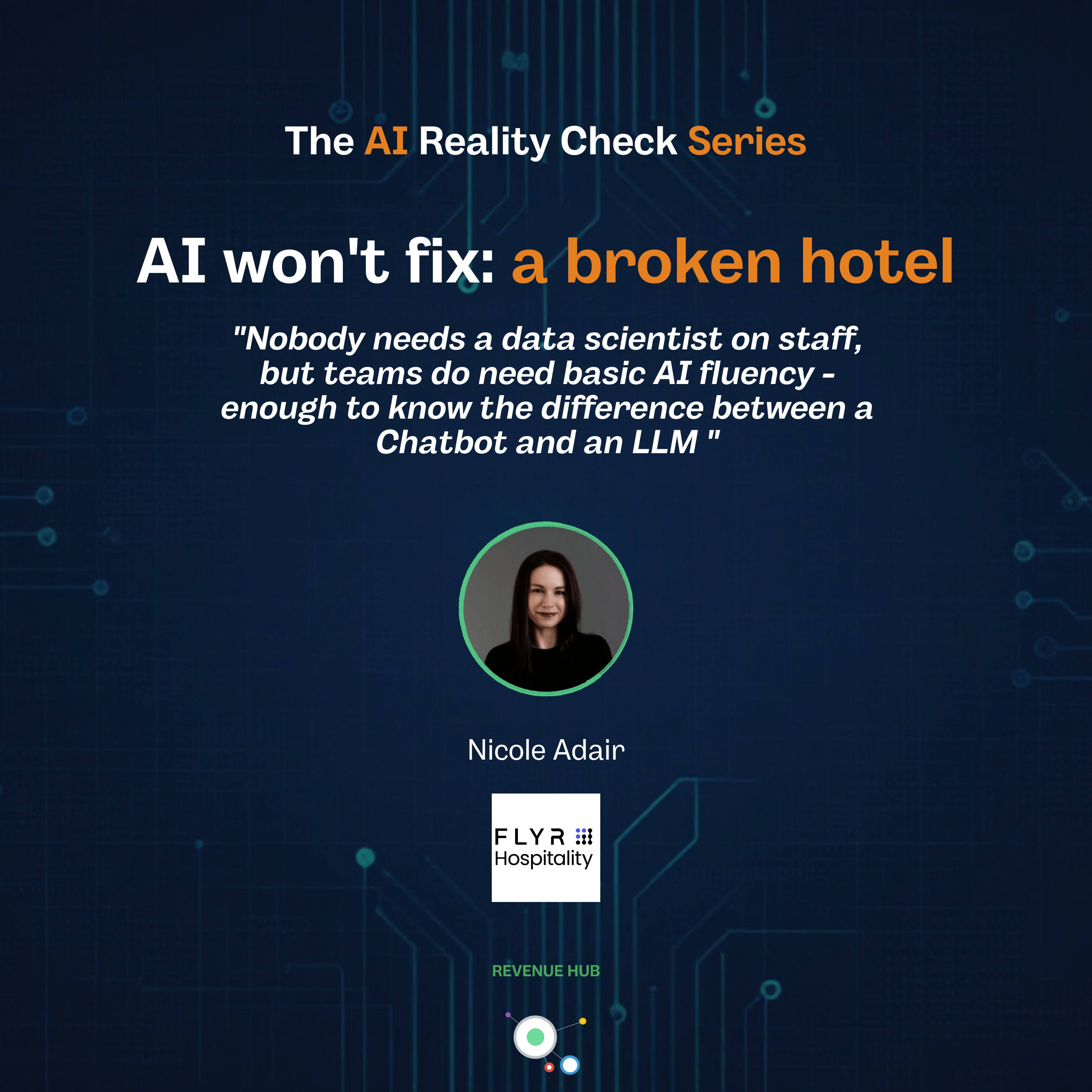 Wanting to Adopt AI Is Not a Problem But Lack of AI Fluency in Commercial Teams IsRevenue Hub · on Machine Learning77 / 100
 The Vadim Khidekel Episode
 The Brickroad Episode
 The Yipit Data Episode
 The Zach Zboralske Episode
 The Christina Qi Episode