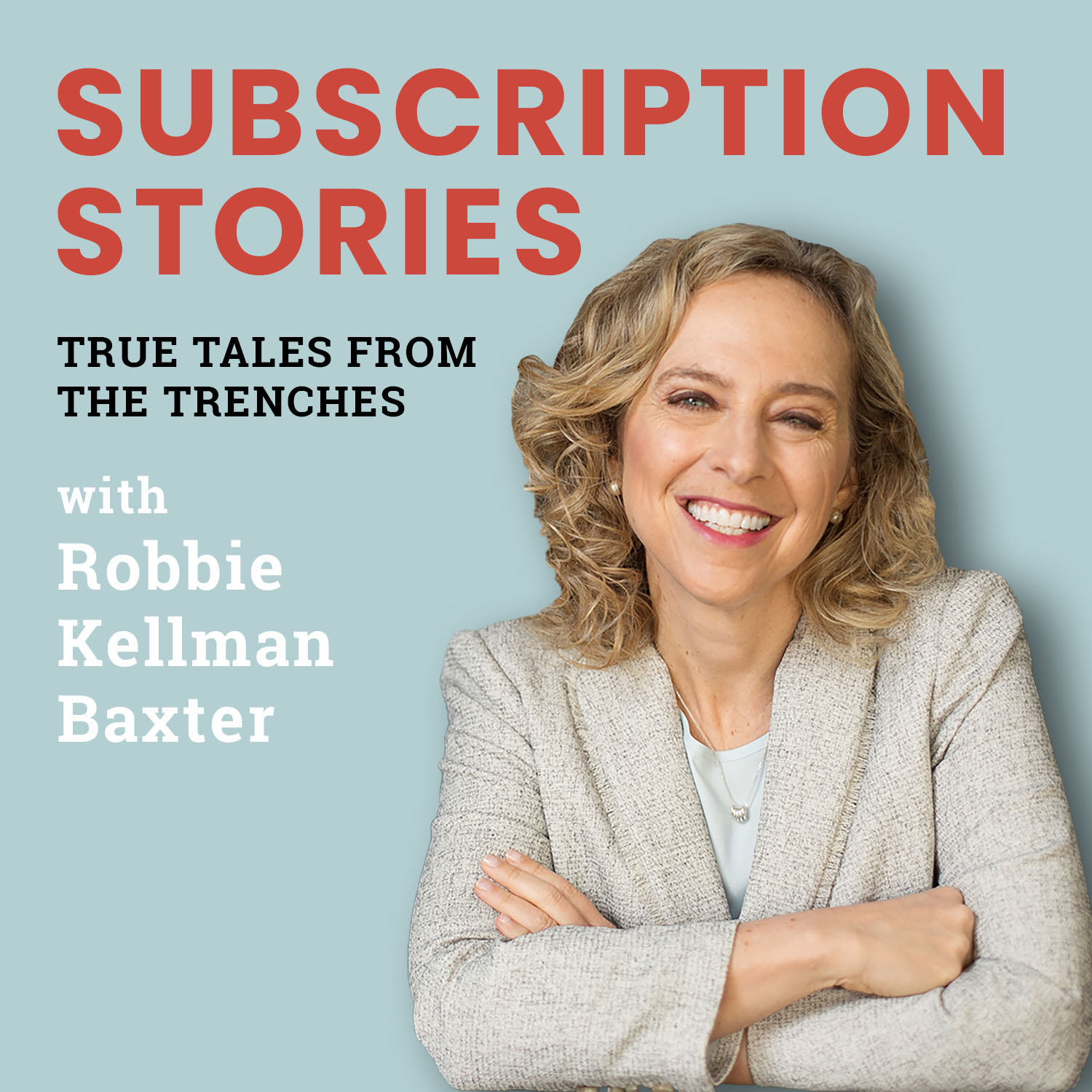
Subscription Stories: True Tales from the Trenches · 2025-07-23 · 40 min
Key moments - from our scoring
Substance score
55 / 100
Five dimensions, 20 points each
Mike Morrison has spent a decade helping solopreneurs build sustainable membership businesses through Membership Geeks, his podcast, blog, and Membership Academy. In this conversation with Robbie Kelman Baxter, he traces how the membership space has matured dramatically since 2015, when memberships were viewed skeptically as gimmicks rather than serious business models. Today the market is more sophisticated but also more saturated - while resources and knowledge are better, the bar for engagement and member retention has risen significantly. Morrison emphasizes that aspiring membership founders should start by building an email audience through blogs, podcasts, or social content to validate both market demand and their own long-term interest in the topic. He debunks common myths about technology requirements, explaining that platforms like Kajabi, Podia, and WordPress with MemberPress plugins can launch a full-featured membership for under $500/month, and that custom mobile apps and advanced features are rarely necessary for solopreneur success. The real differentiator is member satisfaction and retention, not technology sophistication.
Platforms like Kajabi, Podia, and WordPress with the MemberPress plugin are affordable entry points, costing $300-500 monthly and offering all the core functionality most solopreneurs need without custom development or mobile apps.
No - most successful solopreneur memberships never build custom apps because members rarely engage with app notifications and the investment (typically $50,000-$500,000+) rarely generates ROI compared to mobile-optimized web-based platforms.
Build and share free content on your topic first through blogs, podcasts, or social media to validate that your audience has recurring problems willing to pay for, and to test whether you personally can sustain interest in the topic long-term.
The market has normalized around subscription models, resources and education are vastly better, but competition has increased so membership businesses must now excel at member retention and engagement rather than just offering a membership option.
Kevin Kelly's 1,000 true fans principle applies well: 1,000 paying members at $50/month creates $50,000 monthly revenue, which exceeds most solopreneurs' expectations and doesn't require massive scale.
Our reviewer’s read on each dimension, with quotes from the episode.
The episode contains a handful of genuinely useful observations - app investment waste, validating personal longevity in a topic, and the idea that customers will confound your assumptions about features - but much of the runtime is occupied by fairly standard advice (build an audience, start simple, focus on retention) that circulates widely in the membership/subscription space. The insight-to-filler ratio is middling for a 40-minute episode.
The thing, the feature, the type of content, the section of a website that you are convinced is the linchpin to your success, will often turn out to be the thing nobody cares about.
you need to validate your own interest level. Because memberships, particularly if you are the expert, you're the influencer, uh, you might have a great idea, but do you want to be talking about this in 10 years time?
The episode leans heavily on well-travelled frameworks - Kevin Kelly's 1000 true fans, the 2x2 old/new audience-offering matrix (named explicitly by the host), and standard 'build audience before product' advice - offering little that is genuinely contrarian or first-principles. The COVID membership bubble observation and the AI-human prediction gesture toward fresh thinking but are not developed with depth.
there were, particularly during COVID memberships that were started that really could not thrive outside of that unique bubble, that unique circumstance
a big fan of Kevin Kelly, his principle of 1000 true fans
Mike Morrison is a genuine, long-tenured practitioner who built and runs Membership Academy and has directly guided real membership businesses to meaningful scale, giving him legitimate authority. However, his expertise is in coaching solopreneurs rather than operating a massive subscription business himself, placing him solidly competent but below the tier of scaled operators who have done it at enterprise level.
we started specializing more and more in just working with online memberships, with experts, influencers who wanted to start a paid community around their expertise
We worked with him, got him set up really simply and has now I think had about 120 or 130 students come through that. It's uh, an eight figure business annually. I think there's 80 to 90,000 active students right now
The case studies are a real strength - Scott Devine's scottsbaselessons.com with named metrics (eight figures, 80 - 90k active students, sub-10 team) and Musora's named brand replication across Drumeo, Guitario, and singing verticals give genuine texture. Technology cost ranges ($300 - 400/year for MemberPress, $50k - six figures for custom apps) are concrete and actionable, though broader strategic claims remain vague.
It's uh, an eight figure business annually. I think there's 80 to 90,000 active students right now. And it stayed lean. Like his team, I think is still kind of under 10.
you're starting for a good app at 50,000 and for the average person starting out who is just a little one man band, that's going to be beyond their reach for something that is actually powerful, you're getting up into six figures
The host gets credit for one sharp follow-up ('Like what, Give me an example maybe') that successfully extracted a concrete use-case, and for steering the guest toward named examples rather than abstraction. However, the overall tone is highly affirming with no meaningful pushback on vague claims, and the speed round at the end trades substance for lightness.
Like what, Give me an example maybe.
Yeah, it's so right on what you said
Computed from the transcript - who did the talking, and the words that came up most.
Many of my guests on the podcast have built and skilled large membership and subscription businesses with big teams of specialists and sophisticated software to support their efforts. But what if the team is just you? Mike Morrison, launched the Membership Geeks Podcast 9 years ago to help solopreneurs build online membership businesses. You can drive a meaningful subscription without a team and totally online, and that's what Mike teaches at his Membership Academy. In our conversation, we talk about how the membership economy has evolved since we first met 9 years ago, some of the elements that make one membership more successful than another, and what it takes to scale when you're working alone. Love the show? Rate us ⭐️⭐️⭐️⭐️⭐️ and leave a review on Apple Podcasts! Here’s How » Join the Subscription Stories Community today: robbiekellmanbaxter.com Twitter Facebook Robbie Kellman Baxter on Instagram Subscription Stories: True Tales from the Trenches on Apple Podcasts
Transcribed and scored by The B2B Podcast Index.
Speaker A: We all want a business like Netflix or Amazon Prime. Businesses where once a customer engages with them, it becomes automatic and a part of their lifestyle from then on. But how do you build that forever transaction? I'm Robbie Kelman Baxter and I have been studying subscription and membership models for nearly 20 years. In this podcast, my guests and I share the secrets and strategies of the membership economy. Join us for subscription stories, True tales from the trenches. Many of my guests on the podcast have built and scaled large membership and subscription businesses with big teams of specialists and sophisticated software to support their efforts. But what if the team is just you? Today's guest, Mike Morrison, launched the Membership Geeks podcast nine years ago to help solopreneurs build online membership businesses. You can drive a, uh, meaningful subscription without a team and totally online. And that's what Mike teaches at his Membership Academy. In our conversation, we talk about how the membership economy has evolved since we first met nine years ago, some of the elements that make one membership more successful than another, and what it takes to scale when you're working alone. Mike, welcome to the show.
Speaker B: Robbie, thanks so much for having me on. I'm really excited to talk memberships.
Speaker A: Yeah, it's well overdue. We've known each other for a long time, and you really have become one of the de facto experts on membership models. So I wanted to start. Tell me about Membership Geeks and why you started it and why you call it that.
Speaker B: Yeah, so we started Membership Geeks because we'd been running an agency. Myself, my former co founder, we've been running an agency for years, just helping people with their digital marketing, starting online businesses. And the more we grew, the more we just start zeroing in on the types of businesses that lit us up the most. The types we enjoyed working with, where we got our, uh, personal fulfillment from, but also where we saw the most potential for growth and for the future. This was kind of back in 2014, 2015. So we started specializing more and more in just working with online memberships, with experts, influencers who wanted to start a paid community around their expertise. And we kind of figured a lot of people would come to us for help who we couldn't help. We were over capacity, or they just didn't have the budget or it wasn't the right time for them to hire someone to do it for them. So we wanted somewhere to send them. Go read this blog, go subscribe to this newsletter where they would get good, sustainable, ethical advice on this business model. And we couldn't find anywhere. So back in 2015 and we know obviously your book kind of led the charge, I think, within the small business world as well as obviously the big business world too. But there was nothing, no, nobody was talking about this in terms of a business model. The few people who were. It was a gimmick, it was a hook. It was sort of another sleazy way that you could squeeze a little extra money from your funnel. And it was not being treated seriously as a business model. And so there was that thing of, okay, if no one else is doing this, we'll start doing it. So it started as a blog and a podcast and we wanted to create that go to resource for real world ethical advice for the solopreneur to leverage what we saw as kind of the business model of the future. And it very quickly grew from the blog and the podcast into our own membership about memberships and Membership Academy, almost from a necessity. We didn't have any plans to become membership owners. We didn't have any plans to become anyone who was involved in driving the charge for the membership world. We were happy just doing our thing, working with a few clients at a time. But it kind of blew up because that's sort of what the space needed. And there were really only a handful of voices. I can only remember yourself with your book, which snapped it up as soon as it came out.
Speaker A: And James John Worrell, uh, go ahead.
Speaker B: Oh, yes, absolutely. The automatic customer. And, um, James Schramko from Superfast Business. I know he's been a guest on your show before again. Ah, at that time, in terms of the online business space for coaches and solopreneurs, think he was the only other voice sort of speaking the same language, the same sort of ethics. And, um, yeah, that kind of became my whole world. Membership Geeks was formerly called Membership Guys. That was a mistake because about an hour after myself and my co founder, Cali Willows started this, we got an email saying, why have you used the word guys? When one of you is male, one of you is female? So we kind of knew. We, okay, maybe we'll just kind of grit our teeth and stick it out with this brand. We wanted to kind of be. It does what it says on the tin. We are the guys who go talk about memberships pivoted to Membership Geeks a few years ago because that's what we are like. I'm excited to geek out about memberships. I love this stuff. It fascinates me. And, um, the different types of markets that, uh, memberships are evolving in, the different types of people, the real those Pockets of passionate people, fans, communities that are cropping up all over the place. I love this stuff. I'm, um. In the same way people love comic books and superhero movies and all that sort of stuff, I like to, because I am a geek, but my biggest geeky thing is memberships.
Speaker A: So since that launch, and I remember that time well also, and wondering if anybody else was seeing what I was seeing, feeling like it required actually some real bravery to attach my reputation and my brand to membership. Obviously, since 2014, the world of membership and the world of subscription models more generally has dramatically transformed and has been influential in transforming the way business owners think about their business models. You asked me a few weeks ago, you actually invited me back on your podcast, which was a lot of fun and I encourage people to listen. You asked me this question on your podcast, how the world of memberships has changed. And I'm really interested in your thoughts. Kind of turning the tables. What have you seen? What has the journey been like?
Speaker B: I think what we've seen has just been that normalization, that acceptance where people like you and I don't need to be evangelists as much as we did. And um, that hurdle of convincing people, no, this is sustainable. Yes, maybe if you just look at that initial transaction value, if you're still coming in with a transactional mindset, of course it's going to be scary. If you're a coach who is accustomed to charging people thousands of dollars for your time, if you are a software company, even like Adobe, who are charging hundreds of dollars for a yearly license to suddenly reduce that transaction amount, if you're only looking at that first transaction, yes, it is risky, it is scary, it is daunting. And that hurdle of getting people to shift from a transactional mindset to, ah, a membership mindset, I think has been lowered. I still think that there's still some resistance in the market, but we're definitely seeing again in terms of solopreneurs micro memberships, people are better informed, they have a better appreciation of the importance of what happens after the sale. Because so much in online marketing in particular is focused on how to get the sale, how to market, how to get the perfect funnel, how to advertise as, uh, effectively and efficiently as possible, but there's so little about what happens after the sale. Now I do think people come to the membership model with a greater understanding of the importance of retention on the realization that just getting the sale is not enough. Because if you have a membership with poor retention and you only get that first payment, well, you Might as well have a transactional business model if you can't retain people past that first payment. So that's been a fantastic thing in terms of the resistance, the knowledge gap of the average person coming into the membership world being improved because that makes better memberships. It means people are starting their membership journey whether it's integrating into their company or starting up as a new product. They are becoming more customer and more member focused because retention, the secret source, the secret formula of it is to focus on customer satisfaction, to focus on results, to focus on things that are good for your customers. I know that for a lot of people that's just a mind blowing concept, right? Like keep your members, keep your customers happy, give them what they need, give them what they want and pay uh, attention to them. And so I think the quality of the types of membership focused businesses, I do think that level is rising. I do think the starting point in terms of knowledge, in terms of resources is rising. There are more people out there with expertise in various parts of that member journey who you can turn to for advice or for hands on support. But at the same time there has been an over saturation, I think of the membership market in some ways. I love the terminology you used when you came on my show of a right sizing and it is because I think there were, particularly during COVID memberships that were started that really could not thrive outside of that unique bubble, that unique circumstance and then now struggling, maybe they started too early, they didn't have a good enough understanding of their audience profile and there were perhaps lower expectations of what they needed to do to engage their member because of the fact there weren't any real world distractions happening. Whereas now the standard you have to be at as a membership focused business is higher because more people are doing it. And, and so it's not enough to just be membership conversant, it's not enough to just have a membership element to your business because so many other people have that membership element, that membership mindset. You now need to up your game in terms of engagement, in terms of what you're delivering. And um, that's certainly something that I'm seeing within the corner of the membership world that we occupy. The maturing is great in terms of better equipping the people coming into it, but it raises the bar, it raises the standard of what you need to do to actually survive and thrive as
Speaker A: a membership M. Yeah, it's so right on what you said. The resources are better, the knowledge is better. So in some ways it's Easier to launch a membership than it's ever been, but standards are higher. So given this environment, we're talking 20, 25, somebody out there passionate about a little niche somewhere in the world, some topic, some hobby, some business principle. They want to start a membership around it. They're not sure if they can sustain it. They don't know if it's a good idea or not. They want to get started though, in figuring this out. Where do they start? What's your guidance? After 10 plus years of guiding hundreds if not thousands of solopreneurs through this
Speaker B: process, I think it starts with building an audience. That is the part that too many people in the solopreneur space skip past. They have a great idea and they go down the field of dreams kind of approach of build it and they will come. But attention is at a premium now. And just as I said before, just having a membership, just starting a membership isn't a differentiator. So you need to assemble your crowd, you need to find your people and build an audience. Not a following on social media. You need people subscribe to an email list. You need people who are consuming free material from you, listening to your podcast, coming to your blog, watching your videos. Because if you can't get somebody to subscribe to a podcast, you might struggle to get them to subscribe to a paid membership to take that next step. So you need to start building a following and an audience, not just so that you have a market that you're creating and it doesn't need to be huge. I'm a big fan of Kevin Kelly, his principle of 1000 true fans and genuinely a membership in the solopreneur space. With 1,000 paying subscribers at $50 a month for the average solopreneur, $50,000 a month business is way beyond what they might imagine they'll be able to achieve. So you don't have to have huge numbers here if you're an expert or an influencer, but you do need to build that audience so you have the market, but also so you have a place to validate that this idea has legs and that the best solution for the problems that your audience have is in the membership world. It's not a case of your audience have a problem that can be fixed with one 30 minute long training video. The problem needs to be more sophisticated, a problem people need solving again and again and again. A problem that doesn't have an end date, the pursuit of mastery, you never become a complete guitar player. And so memberships that focus around mastery and that continuous Lifelong learning. But you need to validate your understanding of the problems and the needs that your audience have. You need to validate that those problems are such that they would be willing to put their hand in their pocket and pay you as an expert to solve them. You also need to validate your ability to connect the dots, because you could have the best elearning educational membership in the world. You could have the hungriest, neediest audience. But if you're unable to connect the two, and you haven't tested whether you can actually compel people into action and position your value proposition and um, compel people to actually join a membership, then it's never going to get anywhere. So you need to have that audience for market research purposes, for validating your ability to connect all the dots. You need to connect to solve the problems and address the needs that your audience have. And I would also say to validate your own interest level. Because memberships, particularly if you are the expert, you're the influencer, uh, you might have a great idea, but do you want to be talking about this in 10 years time? I'm, we're just about to celebrate the 10 year anniversary of Membership Academy and I said before, I still geek out about this stuff. I eat, sleep, breathe. I love talking about memberships, but not everyone's going to have that kind of passion for their topic. And um, if you can't stick it out, creating a few months worth of blog posts, a few months worth of podcast episodes about a subject, you're really going to struggle to turn up in two years time, three years time, four years time. Even if you're not heavily involved as the face, you're still running a business around a subject that is for most solopreneurs is derived from you, your expertise, your position as an expert and an authority. So yes, of course you need to validate everything in your market, but you need to validate whether you're going to get bored of this to be plain, because if you are, that will become a serious problem.
Speaker A: Yeah, I know when I started in membership, I had spent, and I've talked a lot about this, I had spent a few years trying to figure out where I wanted to plant my brand. And I was looking for something that was narrow enough that I could be credibly the expert, because that's really important. It needed to be broad enough that I could be interested in it for a while. And it took a long time to kind of figure out this little niche around the membership economy and subscription, uh, pricing for all the reasons you said and I just want to emphasize the importance of starting to write about it, starting to speak about it to see if people are interested and what specifically they're interested in and also to validate your own interest and start to put some frameworks around it a couple of other ways. You mentioned blogs, you mentioned podcast. I would also encourage people to start posting on LinkedIn or Facebook or any. I mean if it's more of a personal passion, TikTok or one of the other socials. But just getting in the habit of know your topic, share your hot takes and follow the other leaders in the space. We found each other quite early. Right. There just weren't that many people that were interested in membership. And I think those things are a great way to get started in terms of market validation, product market fit. But then you start pretty quickly to get into real spend, spending real time, spending real money, hiring real people, buying real tools. What kind of infrastructure, support staff budget should somebody expect to need if they're going to launch their own membership business?
Speaker B: Yeah, honestly for again experts, influencers, that solopreneur sort of space, it's not a huge outlay, especially now in 2025. Back in 2015 the options were minimal and they were not very good with no disrespect to the people who were developing software and Solutions back in 2015. But this wasn't a market for which there was much demand and so there wasn't really much reason for software companies to create tools to serve this market. These days there are so many options to get started in an affordable way, in a simple way. Even if you are the biggest Luddite there is most of the tools and software available actually you can be up and running with a membership that has all of the functionality, all the features you would need to get a good start for hundreds of dollars, under $500 to either sign up for one of the all in one platform. So you have platforms like Kajabi is a very popular one. Platforms like Podia like YOU Screen so for video based memberships. So it's a little bit more of a video library. I know we kind of joked about the whole thing of more and more people want to be the Netflix of pet grooming and things like that. But if you are going to have a model where it's video on demand, there's platforms like YOU Screen which enables you to have that kind of interface and app. Uh, and they are all kind of sub$500 in many cases sub$300 a month. And that is for a Few clicks and you are up and running. If you have either the ability or the time or the resource to hire somebody as a developer to go down the self hosted route with WordPress would generally be the kind of engine that I would recommend. It powers the vast majority of the Internet now and there are fantastic plugins like MemberPress, that's the one we tend to recommend, it's the one we use ourselves which again little installation, a couple of hours of setup and you have quite a powerful suite of membership tools at your disposal. Tools that enable customers to self service, canceling, pausing, resuming their own memberships, upgrading, downgrading, all of that kind of stuff built in dashboard, a lot of the interface and that's going to run you three or four hundred bucks for an annual license. So the actual upfront costs for the technology are minimal. Uh, now of course if you want a feature that nobody has in the world, if you want a really specific feature set, if you want.
Speaker A: Like what, Give me an example maybe.
Speaker B: Yeah, it may be so let's just say you have a business coaching membership and you want the ability for members who come in to automatically be matched up with other members and put into mastermind groups or study groups or something like that. Again, just off the top of my head of knowing the kind of thing I know that a business coach might want in their membership if they want to offer kind of peer groups and things like that, that's difficult to do automatically on a technical basis, but it would be the kind of thing that if you were to say to someone hey we can give you a piece of software that let you do that, they would snatch your hands off. If they have a business coaching or a masterminding membership, that kind of thing, I'm not aware of anything that will do that off the shelf. So you need to have that custom developed. You're potentially looking then getting towards tens of thousands for real unique, real advanced functionality. Mobile apps in particular, that is one of the big things. You'll find that very few solopreneur experts, influencers have custom developed mobile apps for their memberships. A lot of them m are web based and obviously you use their website and it's all mobile optimized. But an actual standalone app that is completely custom. The sort of costs involved with that, uh, you're starting for a good app at 50,000 and for the average person starting out who is just a little one man band, that's going to be beyond their reach for something that is actually powerful, you're getting up into six figures so that is something that again, a lot of people starting out doing this themselves who want a membership site think that they need an app. Truthfully, you don't. There are membership businesses that have never had any sort of custom app, that are making tens of millions of dollars and um, still haven't invested in creating an app. Because unless you're beyond compelling or you are one of these social media companies, very rarely will people allow your notifications, very rarely will they put you on their front page of their mobile phone. So you're going to get buried on the fourth or fifth swipe or in a folder and um, they're going to forget about you. So your quarter of a million dollar app investment is just sitting there unused. So that's the kind of thing a lot of people who are just doing this on their own think that they need. That would cost a fortune to get done, right? That actually you can do a heck of a lot without that if you keep things simple. And I think this is what it comes to is memberships are a long term business model. The tech setup, the infrastructure can reflect that. You do not need your year 10 infrastructure in place for your first year. The tech can start really simple. You don't need every bell and whistle. You don't need even a totally custom website design. There's tools that enable you to kind of get up and running a lot quicker with minimal investment and still create something that will be a great platform for building success on.
Speaker A: Yeah, I think the summary of what you just said is most memberships do not need a lot of customized features, do not need a mobile app, and should focus more on what customers are really asking for than on having the perfect technology to align with your imagination.
Speaker B: And uh, that is the thing. Because all you've got to go on when you're just starting out is your imagination. It's guesswork or it's looking at what other memberships you're part of, uh, are doing. You are only going to know whether something is missing from your setup once you have real people in there using it, providing feedback and your customers will confound you. The thing, the feature, the type of content, the section of a website that you are convinced is the linchpin to your success, will often turn out to be the thing nobody cares about. And it will be the simplest little idea or the simplest little afterthought that you put in there that people will go crazy for. You're never going to know this until you have real customers, real members utilizing it. You're getting data from how they use your website, what they're consuming and more importantly, you're getting feedback, they're telling you what they need, they're telling you what they want and data and feedback. They are everything. They are what is going to drive your membership business for decades. But until then it's just what's in your head and your member.
Speaker A: Yeah. So I think this is an important admonishment for people to keep in mind and hopefully something that helps you relax and say you can have a pretty good membership with a very basic WordPress site with either just using that or with any number of membership, uh, based platforms. And I think one other point to just remind people is everybody thinks they're unique, right? Every parent thinks their own parent child journey is unique. Every company thinks their culture and their business model is unique, every company thinks their customers are unique and what their needs are and what makes them mad is unique. People tell me all the time our customers don't like to be pitched to. Well guess what? Nobody likes to be pitched to. People like to be offered a solution that actually reflects what they asked for and what they need. So keep that in mind that a lot of what you're doing has been done before and somebody has figured out what you really need. And at some point, maybe when you're really big, as you mentioned, maybe over time as you discover and need that your customers keep asking about, maybe then it's time to customize. But start simple. Start simple and learn. I think that's the key message. Are there businesses in your ecosystem that you think have started small and scaled effectively? Maybe you can share an example or two of some successful journeys that might be instructive to the community.
Speaker B: Yeah, absolutely. I think one of my favorite all time people that we've seen come through the community is a guy by the name of Scott Devine. Scott is a bass guitar player and now educator here, uh, in the uk, about an hour away from me just coincidentally. And he was perfectly happy making a living teaching students locally and playing in bands and occasionally in shows. And he just loved playing bass guitar. But he found out one day he had a condition called focal dystonia, which means he'll lose sensation in his extremities. And there was a real risk that even picking up a bass guitar, let alone playing it, let alone having a livelihood derived from teaching it, uh, that could all go away. So Scott just kind of wanted to do something with his passion. Zero experience of business, like literally none. But he figured out how to start a YouTube channel and just made Some videos, just teaching some basic techniques. Kind of figured, okay, when I can't play this, at least I'm helping other people. But he would put those videos, he set up simple WordPress website, stuck a PayPal donation button. If you enjoy it, buy me a new set of strings or something like that. And very quickly got to a point where those donations were getting to like two or $3,000 per month for free content because people just so appreciated what he was putting out into the world. And so you kind of figured, okay, maybe there is something here, there's potential for a business. And set about starting scottsbaselessons.com now that name itself tells you the type of person he was. He didn't come into this as an entrepreneur. It's literally just Scott's bass lessons. It could be like Robbie's membership book or Mike's membershippodcast.com even just that branding side of things. Started a membership. We worked with him, got him set up really simply and has now I think had about 120 or 130 students come through that. It's uh, an eight figure business annually. I think there's 80 to 90,000 active students right now. And it stayed lean. Like his team, I think is still kind of under 10. He still operates. I think he's got a little filming space now a few yards away from where he lives. But for the longest time he would literally film in his attic. He turned that into a filming space. And his offering, while some of the tech, it's got a little bit fancier, but ultimately still what he's offering is straightforward. Production values have gone up, but it's still about the basics of serving his audience's needs, showing up himself within the community and making sure the human side of things was there. Even I think 12 years on now with Scott and still listening, still learning, still adapting and still growing. In the meantime, big companies like Fender have adapted now the membership model into their offering. And they have Fender Player, which I believe is a free membership, teaching regular guitar and bass guitar. So his competition has grown, gotten a lot more big brands in the space, but he's still out there ahead of the pack. I think he's still the most successful bass guitar education membership in the world. And um, for a lot of that it's just been him, him and a few people outsourced too. And now I think he's got maybe nine or 10 people on his team now.
Speaker A: Wow, that's a great success story. And the focus and the connection with people and following demand, I think Are all really important. Are there other examples of how people have scaled and decided now is the time to invest more?
Speaker B: Yeah. So again, to kind of contrast Scott's story, where I think Scott, the business has scaled the revenue, the numbers have scaled, but the operation has still been. It's one guy who wants to teach bass guitar. To contrast that in the music space, there's a company called Musora founded by Jared Falk out in British Columbia. And that started with, similarly to Scott, it was a free site teaching drum lessons. But he's gone in a very different direction. So they became very successful in the drumming space. And what they have then done is pretty much literally replicate the model that they used for the drum membership, drumeo.com into piano education.
Speaker A: That's interesting.
Speaker B: Yeah, they took the model, they changed, duplicated everything that worked as a starting point. Obviously. They then learned things that worked within the piano market that didn't work within the drum market. So they adapt and evolve as a separate entity still under their umbrella. And then they took that and brought it into the guitar space with Guitario, I think it's called Guitario, did the same thing, took the framework, took the strategy, replicated, learn more from that market, adapted, and they did the same thing within the vocal coaching, but then the singing space as well. So now again, as a contrast to Scott, which is just kind of going acorn, just growing in the tree, Jared and his approach has been entrepreneurial. Having conversations with Jared wheresai he started the drumming website because he is a drummer, but he's not a great drummer. Maybe being a little modest, but he has great drummers on his roster of coaches. But he sees himself as an entrepreneur first rather than a musician who happens to be running a business. So that kind of replication of a model that is working across different verticals within the music space to create essentially the educational brand Musara for pretty much every instrument. I've got. No doubt he will keep expanding and keep reproducing this model. And yeah, the business is scaling, the business is growing. Whether or not an exit is the end goal is not something he's talked about. But, uh, for the length of time he's been doing it, for the way in which he's spoken in conversations, it doesn't seem like that's what he's shooting for. He's kind of just shooting for industry domination because he doesn't have to be the expert in the guitar membership. He doesn't have to be the expert in the, uh, singing membership because he doesn't know anything. About those. But he's now got that strategy in that he can just implement the right people and he just oversees the whole lot. And he still does drum lessons in his drumming membership because that's his wheelhouse. So I always found them a very interesting contrast. Very same start, same kind of age range, same kind of personality. But their approach from a strategy point of view and a scaling point of view, I think show the different ends of the spectrum for solopreneurs.
Speaker A: Yeah, it's really interesting. I mean, it seems like one is very focused on that area of expertise and expanding what they do for that group over time, whereas the other one is about taking a model and adding new segments to serve. If I can serve drum students, I can also serve singing students or piano students using the same formula and structure. And those are really the two ways to grow business. Right. Is do more for the same people or do the same for more people. Right. It's a, uh, two by two matrix. And one side is old audience, new audience. The other side is old offering, new offering, and the hardest in the world is new offering, new audience. Right? Don't do that. The other thing that you brought up here is exits. And we just had a guest on the podcast, Dave Wharton, longtime, very successful venture investor who now runs the Tugboat Institute, which is completely focused on closely held businesses, private companies. So what do you do if you're an entrepreneur and you don't want to exit, you don't want to sell your business, you want to keep running it? I think a lot of people, and you can tell me if you agree or disagree, a lot of people get into this kind of membership model because they're passionate about it, not because they're trying to make a quick buck, which honestly, it's maybe one of the worst ways to make a quick buck.
Speaker B: A very, very slow buck. No. And, uh, definitely within our communities, like most people in Membership Academy, they are lifestyle driven entrepreneurs. They value autonomy, they value purpose, they value impact over, I wouldn't say over growth, but certainly over aggressive growth or fast growth or huge exits. They are not aiming for that. They are looking for. We always talk about the four Fs freedom, flexibility, fulfillment, and the financial. And I think that wouldn't say it's a reduction of the financial, but it's putting it on par with the lifestyle elements. A lot of people who, if you're an expert or if you're an influencer, uh, we obviously have so many different routes to monetizing. We can consult, we can trade our time for money. But that can lead to burnout, that can be feast, famine. There's all sorts of different kind of products that we can sell, digital products, but many are not sustainable. And I think a lot of information product focused entrepreneurs right now are in a bit of a panicked state because of the rise of AI. You can publish a book, but that can be really, really hard to break through to a place where it's profitable, where it's more than a door opener or a uh, starting point to other opportunities. Speaking on big stages, you know how hard it is to get to that place. You don't just turn up and say, hey, can I just hop there for 20 minutes? It's a very, very small space to try and break into. And so having a business model that actually is more predictable is more stable, it affords uh, more flexibility. It's not so intense and so high pressure that you're going to burn out. Uh, all of these kind of things are so, so appealing. More so for many people than the financial. Some people just want to be able to get to a financial situation where they don't need to stress. And for a lot of people depending on your lifestyle, that is not millions of dollars. Some people just want a little bit more or they just want to be able to clock off at 5pm and not need to worry about work or. One of our members, a guy called Mark Warner, he runs a membership for teachers here in the UK and it's called teaching packs.co.uk they literally just sell bundles of pre made printouts, kind of coloring in sheets, exercise sheets for early stage school kids and they've been running for maybe about 15 years now. And his marker for really what he thought of as when I hit here, I'll make, I've made it is being able to take time away from his business without stressing to take his kids to Disneyland. This was a, it was a business that was growing like tens of thousands of members and making a lot of money. But it wasn't quite there yet in terms of the systems, in terms of his mindset, in terms of stability for him to do that. But him being able to do that was kind of this is me, I'm happy now. This is all I want to be able to do. And for as many people who want that big exit, I think there are more, particularly experts and influencers and solopreneurs who are more driven by lifestyle factors and by being able to do work that they love with their people, fulfillment and the joy and the energy that can come from that is enough for a lot of people. So, yeah, most people coming through my corner of the world, they're not even thinking about exits. It's not a topic that comes up very much. I can think of maybe a handful who have gone on to sell their memberships. One in particular in the, uh, yoga space. But she went on and started another membership in a different area because she kind of missed it. So she wasn't driven by the financial, she was driven by that lifestyle, by the freedom, the flexibility and the fulfillment that it gives that most solopreneurs cannot find from other types of business models.
Speaker A: Yeah, it's really interesting that these, there are some businesses and increasingly more businesses that just, they want to have the business to give them meaning, to create impact, to support their lifestyle and to have control. And so many entrepreneurs say, well, what would I do if I sold it? I love doing this. So I appreciate your sharing about your members and how so many of them are so dedicated. And I like your four Fs. That's great. We're almost out of time because we have so many things to talk about.
Speaker B: That flew over for me.
Speaker A: It flew. The time flew by. We covered a lot of different topics that I think are really important and hopefully instructive for our listeners. Before I let you go though, I would love to do a speed round. Do you have a minute for that? Are you up for it?
Speaker B: I may need to take another sip of coffee if we're going fast. I need a little more caffeine.
Speaker A: Okay, here we go. First subscription you ever had.
Speaker B: Oh, wow. It would be for an online game. I'm a big nerd. Massively multiplayer online role playing game centered around the Matrix movies. The Matrix online was the first subscription I remember having.
Speaker A: Yes, 2005, I think your favorite membership that you personally use today.
Speaker B: Oh, I am a member of Drumeo that I mentioned before. And yes, I really like that membership. Drumeo.com, their customer journey, the member journey, the educational journey, is just so well designed. Their education material is great and the instructors are fantastic.
Speaker A: Besides membership, your favorite thing to geek out on Lego.
Speaker B: If I can create a Lego builders membership on the side, I would be a happy man. I would retire and just do that. I have a tattoo of a LEGO brick on my arm. I'm, um, obsessed.
Speaker A: You'll have to send me a picture of the LEGO tattoo so I can put it in the blog. Okay. And last question. One prediction about the future of membership. Where are we going from here?
Speaker B: I think the human side is going to become amplified exponentially. I think we're maybe only a year or so away from someone being able to go to an LLM and say, I want to learn this thing. Create a course for me in a ux, in an interface that all of the memberships and online courses are using, and it will happen. So I think information is going to take even more of a backseat to transformation into the human element. And the memberships that prioritize the personal touch, tailoring their their experience, are the ones that are going to thrive.
Speaker A: Amazing. Mike Morrison, thank you so much for being on Subscription Stories.
Speaker B: Uh, absolute pleasure. Thanks for having me.
Speaker A: That was Mike Morrison, founder of the Membership Academy and host of the Membership Geeks podcast. For more about Mike, go to membershipgeeks.com and for more about Subscription Stories, as well as a transcript of my conversation with Mike, go to Robbie Kelman. Also, I have a favor to ask. If you like what you heard, please take a minute to go over to Apple Podcasts or Apple Itunes and leave a review. Mention Mike and this episode if you especially enjoyed it. Reviews are how listeners find our podcast and we really appreciate each one. Thanks for your support and thanks for listening to Subscription Stories.
Other episodes covering the same guests and topics, from across The B2B Podcast Index.
 Episode 107 - From Email List to Membership: Build Recurring Revenue Without Ads with Mike MorrisonCreate Online Business Success! · features Mike Morrison86 / 100
 Why Everyone in Martech Feels Behind Right Now with Scott BrinkerMaking Sense of Martech · on WordPress85 / 100
 Episode 70: The Skills You’re Ignoring Might Be Your Biggest Advantage with Omar ZenhomLean Marketing · on Kajabi80 / 100
 Best of Habit Formation: James ClearCapital Allocators · on Audience building79 / 100
 The Great AI Debate: Direct Bookings, Websites, and the Future of Search with Richard Vaughton and Mark SimpsonAlex and Annie · on WordPress77 / 100
 Future-Proof Your AgencySchmidt List · on WordPress73 / 100Subscription Intrapreneurship with Bosch BlueMovement’s E-Lin TanIs the Future of Subscriptions Circular? A Conversation with Patrick Hypscher of Circularity.fmHow Zumba Balances Instructor and Consumer Subscriptions with Yael Dornbusch, Zumba’s Chief Subscription OfficerThe One Medical Story with Dr. Joseph Michelli, the Author of All Business is Personal: One Medical’s Human-Centered, Technology-Powered Approach to Customer EngagementBuilding Evergreen Companies with Dave Whorton, Founder of the Tugboat Institute and Author of Another Way: Building Companies that Last…and Last…and Last