Startuprad.io™ · 2026-05-21 · 42 min
Key moments - from our scoring
Substance score
64 / 100
Five dimensions, 20 points each
The EU Inc proposal attempts to establish a standardized company form across all EU member states, modeled on best practices from existing national regimes but operating as a single 28th legal framework. Nicholas de Bayer, deputy chairman of BAND (German Business Angel Association) and former founder of Iris Analytics (acquired by IBM), pressure-tests whether this actually reduces friction or merely creates institutional elegance. The core problem is clear: founders and investors currently navigate 27 different legal systems for incorporation, employment law, taxation, and financing. Delaware works in the US because of predictability and harmonization; Europe lacks this. EU Inc promises 48-hour incorporation, digital-only processes, standardized employee share option plans, €0-€1 minimum capital, SAFE compatibility, and removal of notary requirements that today force founders to physically travel or obtain apostilles. However, real gaps remain. Disputes still route through national courts, creating potential fragmentation in jurisprudence. German investors accustomed to public shareholder registries will face private ownership records. And the proposal still requires adoption by national parliaments and EU institutions. De Bayer's honest assessment: 50-50 odds that EU Inc becomes the default or that national forms reform to compete with it.
The EU Inc is a proposed unified corporate legal form that would operate across all 27 EU member states as an additional option alongside national company types, hence the '28th regime' (the 27 national systems plus one EU-wide standard). It uses best practices from existing national laws but applies them uniformly, particularly eliminating paper-based notary requirements and creating a digital-only incorporation process.
EU Inc promises 48-hour incorporation including tax ID issuance, while German GmbH founders currently wait 3-4 months for VAT numbers and must physically attend notary appointments where the entire contract is read aloud. Some founders in other German regions report delays extending months before they can legally invoice.
Under current German law, the shareholder registry is public and held by the government (the Handelsregister); under EU Inc, shareholder information becomes privately maintained by the company or a trusted service provider, matching US and UK practice, which means German investors will need to adapt to non-public ownership records.
Not immediately; dispute resolution still routes through national courts, meaning early cases could produce conflicting rulings across countries. Legal certainty will only build over years as courts in Spain, Germany, Italy and elsewhere make decisions, similar to how subsidiarity works within Germany between Berlin and Frankfurt courts.
De Bayer recommends waiting 1-2 years rather than converting immediately; early adopters face higher risk because case law is unestablished. Founders should only choose EU Inc immediately if they prioritize the speed of 48-hour incorporation and fully digital processes, and are comfortable with legal uncertainty during the format's first years.
Our reviewer’s read on each dimension, with quotes from the episode.
The episode covers concrete structural problems (notary requirements, fragmentation, tax ID delays) and specific solutions (48-hour incorporation, digital-only process, standardized SAFEs), but retreats into abstract discussion frequently. There's useful operational friction documented, but also substantial filler: repetition of the 'digital only' principle, unclear follow-ups that don't sharpen thinking, and several moments where the conversation loops rather than progresses.
When you want to found a business in Germany, one thing you have to do is you have to physically go to the notary and they are... you have to sign, assign the role over there. You have to be present.
I know stories of founders here in Germany who've been waiting like three to four months for their tax id which means if you don't have your tax ID you cannot write any invoice, you cannot earn any money.
The episode recycles familiar EU harmonization rhetoric and the Delaware comparison is well-worn ground in European startup discourse. The framing of EU Inc as 'the 28th regime' is moderately clever but not particularly original. Most arguments (fragmentation as bad, digital as good, US as faster) are standard positions in this conversation. Limited contrarian thinking or first-principles questioning of whether the legal form actually solves the core capital formation problem.
The European Union is always talking about a single European market, but it is not yet. We have 27 nations, countries, each of them having their own legal system.
If you look at the United States, they have different states with different rules, but it's much more harmonized... everybody knows the Delaware Inc.
Nicholas de Bayer brings relevant practitioner credibility: founder (Iris Analytics, acquired by IBM), Business Angel of the Year 2020, deputy chairman of Band. He has invested in European startups and understands structural barriers firsthand. However, he is not a founder currently operating at scale, nor is he a legal expert or court authority who could comment on enforcement reality. His perspective is that of an informed investor and ecosystem advocate rather than a operator pushing against the constraints.
Nicholas de Bayer, deputy chairman of the German Business Angel Association Band, founder of BAI and founder of Iris analytics, which was later acquired by IBM, as well as the Business angel of the year.
For me, an investor, this means every time I want to invest internationally, I need to learn a new legal system and how it works.
The episode includes concrete examples of real friction (German notary read-aloud ceremonies, 3-4 month VAT delays, €25,000 minimum capital requirements, DocuSign vs. notary costs). However, there are no named companies using EU Inc (because it doesn't exist yet), no investor names, no financial data on cost savings, and vague projections ('I would guess if all our dreams come true'). The evidence is illustrative of problems but lacks numbers on adoption timing, investor appetite, or cost impact.
When you want to found a business in Germany, one thing you have to do is you have to physically go to the notary and they are... you have to sit there, depending on the length of the contract, for hours.
When you've got an international investor and he needs... he flies into the country and is present, which means costs days of time wasted or he gets the power of attorney.
The host asks structurally sound questions ('What is actually broken today?', 'Is this the single biggest operating problem?') and attempts follow-ups on court fragmentation and risk appetite. However, the host rarely presses on contradictions or weak claims. When Nicholas says courts will eventually converge through precedent (echoing Delaware), the host doesn't challenge whether that scales to 27 legal systems. Several softball moments: 'Nicholas, welcome back' rather than sharpening priors. The host asks good setup questions but seldom challenges assumptions or demand specificity on feasibility timelines.
When a founder asks why is this easier in Delaware than in Europe? What is the shortest honest answer?
Delaware works because people trust in the predictability of outcomes. So what is the European equivalent of that predictability here?
Computed from the transcript - who did the talking, and the words that came up most.
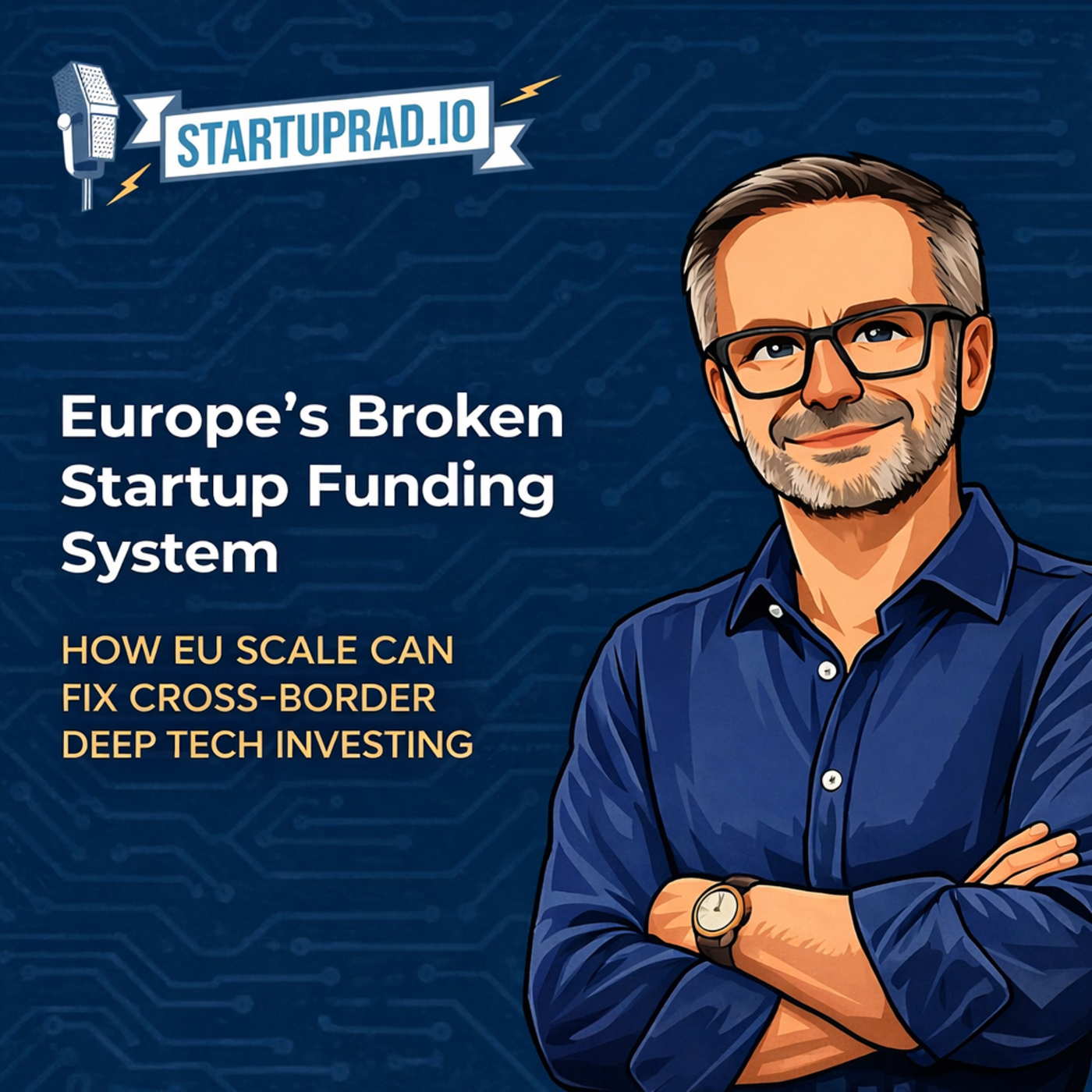
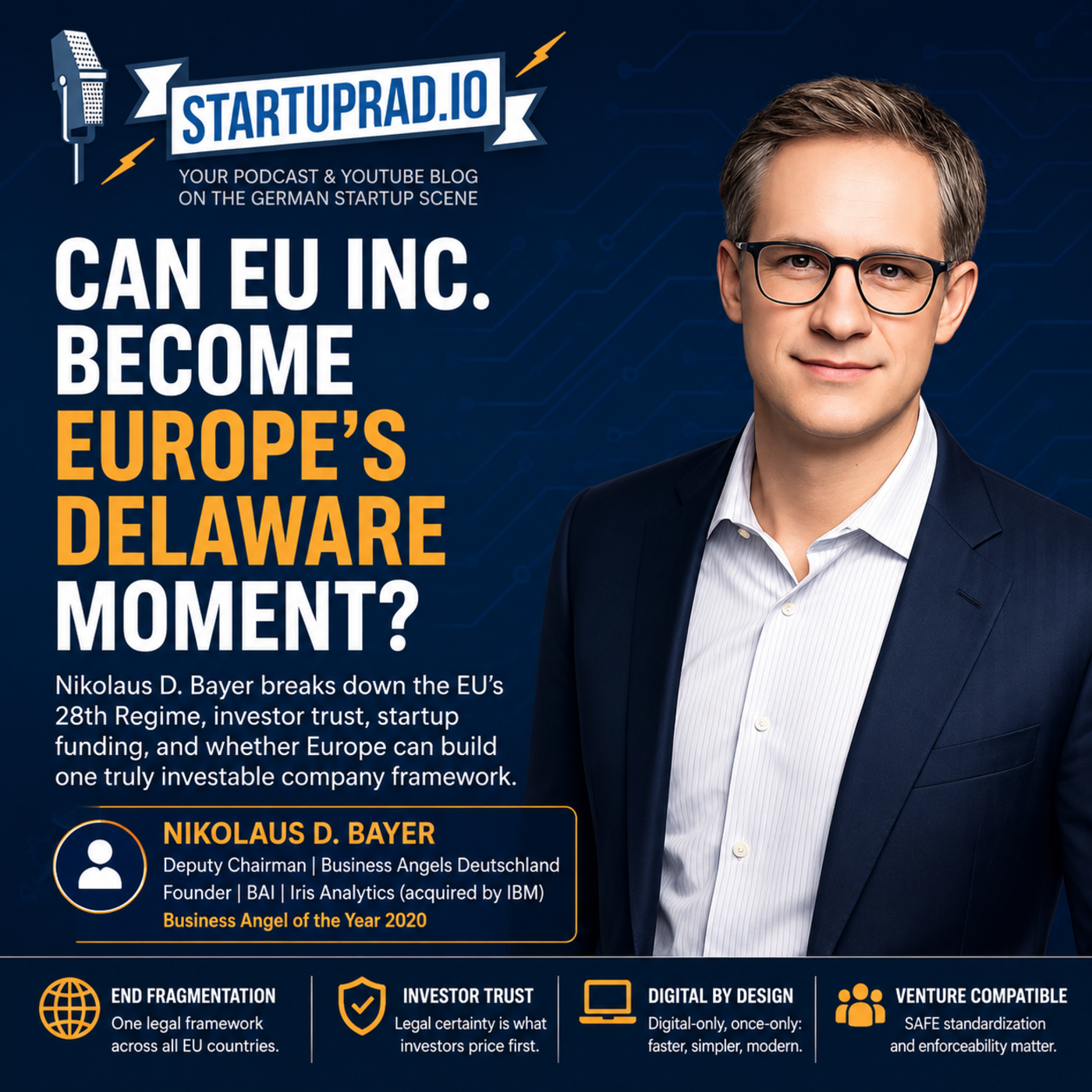
Building a company across Europe still means sitting on top of 27 different legal systems - so can “EU Inc,” the proposed 28th regime, finally be Europe’s Delaware? Nikolaus Bayer , deputy chairman of Business Angels Deutschland (BAND) and founder of IRIS Analytics (acquired by IBM), weighs the promise against the one thing investors price first: legal certainty. Full article, links, and transcript: Read the full episode notes on Startuprad.io Why this episode matters: EU Inc could make Europe genuinely venture-compatible - €1 minimum capital, digital share transfers, SAFEs, 48-hour incorporation. But the hard part isn’t the rules; it’s trust, and that’s built case by case in national courts. In this episode, we cover: What’s actually broken: 27 legal realities, notary visits, and months-long tax-ID waits The 28th regime explained: digital-only, “once only” data, and 48-hour incorporation Why Delaware works - and what EU Inc would need to copy Venture-compatible at last? €1 minimum capital, digital share transfers, and SAFEs The catch: legal certainty depends on national courts and slow-building precedent Politics and resistance - von der Leyen’s quick backing vs.
Transcribed and scored by The B2B Podcast Index.
If Europe says the 28th regime removes fragmentation, why does it still look like a company is trying to sit on top of 27 legal realities? Can the EU Inc. Become Europe's Delaware moment? Or does it fail on the one thing investors actually price first, which is legal certainty?
Welcome to startup Brad IO, your podcast and YouTube blog covering the German startup scene with news, interviews and live events. Joining me today is Nicholas de Bayer, deputy chairman of the German Business Angel Association Band, founder of BAI and founder of Iris analytics, which was later acquired by IBM, as well as the Business angel of the year. Nicholas, I believe this was 2022, right? No, 2020.
2020. Okay. And you can, of course, look at the previous interview. So who better to pressure test whether the 28th regime is a real operating framework or just a cleaner narrative for the European company law?
Hello and welcome, everybody. So, are we finally looking at the first serious attempt to make Europe one investable corporate space? Nicolaus, welcome. So should we start with the simplest version of the problem?
What is actually broken today for a founder who wants to build across Europe? Yeah. What happens is, I mean, the European Union is always talking about a single European market, but it is not yet. We have 27 nations, countries, each of them having their own legal system.
And although the legal systems are somehow harmonized because of the European Union, it's still the case that when you found a startup in one country and in another country, it's different legislation. It is never forget employment law, taxation, always a bummer. Yeah. So effectively, in this space, we don't have a single market yet.
And if we are looking at, for instance, the United States, they. I mean, they have their. They have the different states, they have different rules as well, but it's much more harmonized. And I mean, everybody active in the startup space knows the Delaware Inc.
Which is the standard company type for startups. Yeah. This is something we don't have yet in the eu. And for me, an investor, this means every time I want to invest internationally, I need to learn a new legal system and how it works.
And when you as a founder have a growing business and want to expand into other countries, you have to learn again how it works. And this is creating overhead. This is some hassle. And particularly from an investor's perspective, that means that many say, oh, I don't invest abroad, I just invest in my home country.
I see. Is this the single biggest operating problem the 28th regime is trying to solve? We may add we do have 90% European audience, but we may add that we have 27 states in the European Union. So sitting on top is the 28th regime.
That's where the name comes from. Yeah, that's the idea to add another set of corporate rules so that you have the so called Eu Ying Inc. Type which means the corporate law will be the same regardless whether you set up your startup in Denmark, Germany or Spain for instance. And that is from my perspective, very interesting and sounds like a huge opportunity because it makes things much more easier.
And also what is being promised by the 28th regime is to have it as a general principle, it's digital only. And it's once only means if you supply your company address and company name and tax number to the EU Yink system, it's not going to be requested a second time from any governmental body or so. And you don't have to use paper for any corporate affairs because it's digital only, which as per today is not the case. I vividly remember somebody I talked to a few years ago, they had a requirement for an official stamp, an official seal on some paperwork and they really got Stanford University scrambling to find that again.
I remember stories like that. I was wondering is fragmentation? We've been talking about 27 different states, 27 different but increasingly harmonized legal system. Is this the root cause or is fragmentation just Brussels language for deeper failure in capital formation?
I wouldn't say it's root cause. What we are looking at with the Eu Ying Inc. Is to advance, let's say, I mean startups being founded everywhere and are run everywhere in Europe. What we are aiming at is removing unnecessary overheads and making it more easier.
It's like advancing. When a founder asks why is this easier in Delaware than in Europe? What is the shortest honest answer? He's smiling.
He's smiling for everybody who's listening to that. Yeah. I mean I'm in German so I have most experience here in Germany. So let me give a couple of examples.
When you want to, from a German perspective. If you want to found a business in Germany, one thing you have to do is you have to physically go to the notary and they are. Yeah. And you have to sign, assign the role over there.
You have to be present. Oh, and we may add that they reading out the whole contract loud. So that means not everybody knows it and it's just a signing ceremony, but you sit there, depending on the length of the contract, for hours. Yes.
I mean I recall one notary, he was once telling me, you can dance in this room, you can sleep here. The only requirement I have is you have to be in the room. And if someone in between has to go to the toilet, the whole procedure will pause for like five minutes because not everyone is in the room in the same room. And I mean when you're at the stage of founding a company, this is probably not so complicated.
But when we're later on then talking about financing rounds or an exit, then it gets complicated because then you have to like 10, 20, I don't know how many people have to be in the same room or they need a power of attorney. And this is then becoming increasingly complex. If you have people from abroad involved, like you have an international investor and he needs, if either he comes, he flies into the country and is present, which means costs days of time wasted or he gets the power of attorney.
So someone else can represent this person. But if you're coming from abroad, you have to go and find a notary which is something very uncommon outside of Germany. And then you also have to go to the embassy and get an apostille which then certifies that the notary has done something. Correct.
So this is just very complicated. And if I invest in a UK company for instance, it's just a docusign. Yeah. So it's much faster and more convenient.
And you have so many like US investors you say okay, I like your product, you guy from Germany. But I mean let's stay friends. I won't come over from this. I am going to invest my money in the UK company and this is happening so often and vice versa.
Founders are saying I'm going to set up shop in the US or in Estonia or wherever or in Switzerland because it's much easier there to this all bureaucratic overhead. I was anywhere wondering when you talk about Delaware, it's one of the smallest states in the US where basically everybody's domiciled if they're are not a few states. I do have one suspect in mind who is gunning for their business model as well here in the European Union. But let, let, let us put ourselves in the shoes of being an entrepreneur.
Let's say you Inc. Gets live like this week next Monday. If that works exactly as as advertised. What changes first on Monday on the next Monday morning for a founder.
I mean this then heavily depends on the national laws of the country where he's founding the company in. Yeah, I would say the you, you need some basic training in what Eu Ying is and how it differs from from, from the company. Take like a German GmbH or an SAS in France. How, how and where it differs.
But I don't think that this is like a multi week learning course. This will be some, I mean probably your, your law lawyer will explain to you. The promise is that it is the, the differences are not so huge to a typical limited company type so it will not be difficult to learn it. And once you've done it the first time, I think you're pretty easy pre easily prepared for the next one or for the next fundraise.
So it's, it's not, it's not rocket science. I mean I've read the proposal and from what and it's not yet being accepted by the EU parliament so it's not enforced yet. But what the current proposal states, it's not going to be rocket science. If you can found a limited company, you will also of the national type, you will be able to found it in the EU Ying style.
So there's no real big difference on the first Monday morning when this becomes reality. I mean what have they done in the EU commission? They have looked at different countries and what works best in each country and they have tried to take the best of the national laws and they have been, I mean one has to say there has been an initiative, the EU Inc initiative who initiated the whole process with a proposal but there has also been a consultation process from the EU Commission last year where, where there have been many interviews with people from the ecosystem.
So they have listened to what are the requirements of the ecosystem. That, that's already a very important piece because if you listen to the people from the ecosystem you usually come up with good and pragmatic solutions. Part of the EU Inc. Is a 48 hour incorporation.
If, if that actually works, is it a breakthrough or is the speed just secondary to trust and enforceability of this new legal construct? And I think it will be some kind of breakthrough. Yes, I'm aware. I mean it's not like only founding a company.
It is also of, because of you need a tax ID and a value added tax id, such stuff. And I know stories of founders here in Germany who've been waiting like three to four months for their tax id which means if you don't have your tax ID you cannot write any invoice, you cannot earn any money. This is just ridiculous. You cannot deduce any VAT here in Germany.
So you, so this is going to be sped up. I mean can you explain me why you should wait four months for a VAT number? I mean it's just a random number. So I, I have to admit I, I'm physically located very, very close to you.
And I assume we do have the same finance amp who's responsible for that. And I always have gotten my VAT number in like a week, two at the most. But you have to say you write them an email, but they can't reply via email. They write you back a letter, but for a letter they're fast.
Yeah, that's right. But I know stories of founders who've been waiting for months and not in, not in Frankfurt where we are located, but in other areas of Germany. And this is just ridiculous because you cannot, if you cannot write any invoices, you cannot start your effectively start your business, you cannot pay your employees and so on. And this is another big breakthrough of EU Inc.
Because they say, or the law says. No, it's not a law, it's a. Well, you know, the EU Yin. Let's stick to the term regulation.
Yeah, that was. Thank you. That covers all of it. So the regulation says you have to complete the initial process within 48 hours and this also includes granting a tax number.
And this will be then much faster than most of the current national limited companies. The proposal is optional and national forms stay in place. You just referred to the GmbH, the UG and so on and so forth. So does you ink reduce fragmentation or does it just add a new route through it?
Well, it will depend on the acceptance. I would guess if all our so called dreams are coming true with the EU Inc. Nobody will found a startup based on the national traditional company type anymore. So fragmentation will be reduced.
Or what also could happen is that the national company types will be reformed that they match the quality of the EU Inc. So then we still would have some kind of fragmentation. But looking at potential future international investors, it would always be a wise idea to take the EU Inc. And not the national form.
And I would say right now there's a 5050 chance for both scenarios playing out. Not meaning that startup founders will maybe as a default setting have the EU Inc. But rather that it can turn out very well or very bad that they'll depend on a lot of other influences. You just referring to the legal forms here, for example, the GmbH in Germany.
I was wondering what has to be true for founder to choose this over the term for example GmbH. Because right now a lot of investors in Germany know the GmbH that's the default model for setting up a startup. What needs to happen in order to make this really EU Inc. The default option?
Does it have to be that? There are also. We already interviewed standard investment terms. So basically you have a standard legal Entity, you have standard investment terms and it makes a process more smoothly, meaning only the investment part here, not the looking for investors, pitching investors and all that stuff that stays the same.
So I mean from a legal perspective, what needs to happen. It is now in proposal status from the EU commission, so they have now asked the national parliament for their feedback and then the, the member states have to agree on it and the EU Parliament. So there's still some legal work to do. This process will take for the rest of the year, I would suspect, and of course it still can happen that the proposal will be changed, modified because of the feedback.
And once this then comes into force, we can start founding EU Inks. And for that I think it will be very wise to have some kind of standard agreements to be prepared. This is something which for instance my organization band will do. We have been doing this for years for Germany where we have been providing standard drafts of the usual contracts together with the German Startup Association.
So I mean we have the standard shareholders agreement, we have a standard convertible loan agreement and so on. So it is very likely that we will also provide a standard agreement for EU incs and so on. And once these happen, then once these have been developed, I mean, yeah, let's go. If, if there's a really smooth process of doing that with very easy terms like almost standard.
I know lawyers hate standard and they always have to be adopted and I do believe in some, in most circumstances that is true. But if there's a standard, if there's are successful examples that, that might take the cake. Can you repeat the question? What has to be true for a founder to choose EU Inc over German GmbH in the first place?
What, what has to be true? I mean we, we need to, to fully follow this digital only route. Yeah, if this is happening, is really happening. And by the way, the proposal reminds us multiple times it's not like a general principle.
And the proposal is digital only. It says this in many clauses and just to make sure it must be digital only, there must not be any paper involved. So repeatedly. Yeah, but if this becomes true, then this is a huge leap forward because then we just sit down at our computers and I mean we can still meet in person, but then we can do all the contractual stuff remotely.
And by the way, this is something which works in other countries already, like the UK have been saying. So if anyone is skeptical if this is a good idea to remove, to move to digital only, just look into other countries. It's working, it's no issue and it's much more Efficient and it's much less expensive. And I would also like to have the notary appointment in such a digital form.
If there's a tool, that will be just great. Nicholas, where does the proposal solve a real problem? Found a problem. Where does it still read more like institutional elegance than real operators operate reality?
I'd like to put forward two examples. Just. Yeah, first thing is the EU Inc. Is looking at a standardized employee share option program which will be the case across or which will be in effect across the whole European Union.
This is something we don't have yet. When you've got employees working in another EU country, things are getting, I wouldn't say difficult, but different. So you know you have the single one, your employee share option plan, which is very important for startups. And again, it's digital only.
That is a game changer. And thirdly, I've mentioned that earlier in this session, when you're talking to investors, they will know this kind of company type, so you won't have to explain to them how it works. And they will. For them it will be much easier to invest abroad.
So particularly looking at US early stage investors, they will only have to learn EU Inc. Once and not British Limited, French SAS, German GmbH and so on. So you already talked about early stage investors. Everybody knows the European Union needs to change a lot, but also in their capital allocation.
And until then they need a lot of investment capital from abroad. So what is the first thing a sophisticated investor will test before they decide that EU Inc. Company is genuinely fundable? You mean in general as a.
As a company type? Yeah, I. And by the way, when you've been talking about the EU Inc. I thought there's a lot of market potential in Asia and North America right now for lawyers to learn about the EU Inc.
And how to invest in them. But that's a different topic. Yeah, I'm pretty sure. I mean, I have read the proposal, but this does not mean I'm ready to found a EU Inc.
Yet. Probably what I will do is when this happens the first time, I will talk to my lawyer and get some input from him and say what are the standard drafts and how does it look like? And obviously things are changing. For instance, when you're coming From a German GmbH, the list of shareholders is placed publicly in the company registry.
So we in Germany are used to that. We know for every GmbH it's publicly known, the company register is the source of truth. Who owns the business. This is going to change because in the future the company register.
So who's a shareholder and how much does he own is being maintained by, by the company itself or a trusted service provider. Yeah, this is how it works in, for instance, in the US or also in the uk. So it's nothing. It's not completely new concept, but it will change.
So German investors or founders who have been working with GmbH before will need to understand how this is different now. Yeah, so we all have to learn that. But again, I don't think this is a really complicated thing. This is established best practice in other countries.
So no worries. And I'm pretty sure if you're a French founder or a person who has invested in France multiple times, then obviously EU Inc. Will be different. You have will have to learn the rules.
That is how it works. It's a new, it's a new regime. It's the 28th regime. It, it is not an exact copy of the other 27 regimes.
Mm. Guys. If the whole promise is one European standard, but disputes, enforcement and a lot of practical reality still run through national systems, where exactly does the standard become reality? We'll be back with some more questions with Nicolaas after a short ad break.
Nicholas, welcome back. Delaware works because people trust in the predictability of, of outcomes. So what is the European equivalent of that predictability here? I don't understand the question.
So basically when you do incorporate a company in Delaware, they're usually disputes, they're usually questions. And there's a lot of legal material judgments out there that you can read, that you can inform yourself. So what would be the European equivalent of that? How can you build that trust?
Where's the way to do that? So the competent courts will be the national courts. As everything which is new. There will be cases brought to the courts and they were ruled.
So we will have decisions on the EU Inc. In Spain, in Germany, in Italy and so on, which will perhaps will be contradictory. This could be an issue. However, I think we have the principle of subsidiarity both in the EU and for instance in Germany.
So it happens all the time that a court from Berlin is a little bit in conflict to a court or decides differently than to a court in Frankfurt, and then it's being escalated to the next level. And I guess this will be the case in the early times of the EU Yink that that several court decisions need to be made the first time and then we will see how it evolves. Does that make sense? That's basically how you build that legal trust.
But we'll still have some fragmentation in the start and for certain aspects. But I Do believe that's not different from the S where there's also a little difference depending on where you actually operate. I was wondering at what point would you tell a founder don't use EU Inc yet the legal certainty isn't still here. Would you encourage entrepreneurs you advise you want to invest in?
Would you advise them to start with an EU Inc exactly at the first day? It's possible. I mean depends on your risk appetite probably. From that what I know as of now of course I suspect the proposal will not come to effect as it is being formulated now.
So there will still be changes. But what I would not recommend to change. If you've got an existing startup to change, let's say from a GmbH into EU Inc on the first day. This probably doesn't make sense.
In this case I would say okay, let's do this next year and to see how things work out and maybe let some other people who are more eager to try it out found the first EU Ying. Like if you're very much in a hurry then maybe stick to the old form and convert later. But generally it doesn't look like you have to, you have to wait for four years or so to before you found your, your EU Inc. Mm.
We also may add that for larger companies there's already an SE Associate or Europa that larger companies do adap but they're very much bigger, very much late stage. So the proposal allows €0 or €1 minimum capital, digital share transfers and instruments like SAFE. So is this finally year becoming venture compatible or am I just simply reading too much into it? I mean it's, I would say it's pushed towards reality.
Yeah. Why? Because I mean the nominal capital we have, like when you found a GmbH you have to pay in €25,000 and then you've got 25,000 shares of €1 each. But it does not make any difference whether it's €1 or €25,000 or €50,000 for typical startups.
I mean they are raising much more capital and like €25,000 you burn in less than a month. So the concept of that, this is the capital amount you're responsible for is not realistic. So if your business goes bust and has a nominal share capital of 01 or €25,000 doesn't make a huge difference. So this is a reality check.
The second thing you've mentioned, the SAFE is also a very good aspect of the EU Inc. Because again it, it will reduce fragmentation across the European Union. I yeah, I remember a couple of months ago I talked to Someone who had tried to establish a standard safe template for, for, for the, for all the European Union countries and said is it just not possible because of the different leg. We actually have the interview with EU funded project that is developing exactly that.
You can go back to January. I do believe we published it there. We link it down here in the show notes. I was wondering what is the actual category mistake Europe has made for years?
Is it to underestimate the legal friction or overestimate subsidy logic or misunderstanding what investors need to build trust? I would say this EU Inc thing is, is a very good example where politics respond rather fast to suggestions or initiatives because I mean it's not like having been requested by the startup community in the European Union for many years. It was just no one was talking about it. And so like I think it was two years ago, some people from the startup system ecosystem, they said wouldn't it be a good idea to have a EU Inc.
Company type? And everyone was applauding and suddenly and everyone was saying oh this is a good idea. Why haven't we discussed this before? And then it was like Ursula von der Leyen who said good idea, we want to bring this forward, we want to do this.
And the EU startup commissioner said we want the 28th regime. So it was like someone put a suggestion on the table and everyone was saying, not everyone, very many people were saying, oh this is a great idea, let's do it. I think this is a very nice example where politics react rather quickly. Yeah, I mean keeping fingers crossed, it's still not in force, so there may be obstacles coming up, but at least the EU commission has adopted this at very fast speed.
From my perspective, if you're talking about, about politics in general, how, how they push, how fast they push initiatives, talking about this politics reacting rather fast. Germany on the other side has spent years defending notarial and procedural complexity around the company law. So why do you believe the European route can succeed where we here in Germany struggled with domestic reforms? I mean honestly, here in Germany we have.
Some people and to be frank, we have the notaries which are or will be losing revenue because they don't have the notary appointments because of capital raises anymore in the future. So of course it is understandable they will say ah, let's, let's stick to the notary system because it makes things much more secure and we can prevent fraud and so on. And it is a good thing to read out aloud for several hours the text because we are finding errors and we are helping the young founders who don't have that much experience.
This is the line of argumentation. But on the other hand, again, what we in Germany are doing here is not happening anymore in most countries and we have proof that it's working. And which makes things even more ridiculous. Even in Germany we have company types like the Akzingesellschaft, like what is acting as airshaft in English poc.
Yeah. And some others where you can transfer shares without having to go to the notary. And we have to convince in the remaining process the. The politicians who are involved and especially those who are in the system in Germany that it will work because it works in other areas and with other company types.
But still it is something we have to do. We totally have to do. I'm personally running unfortunately a little bit out of time. So let's close this with one last question.
Nicolaus, on the European versus US growth polarity, where do you sit today? Do we need more American style speed, hyperscaling and standardization or more European style discipline but with less legal drag? Well, you know, I'm a German, I'm a European. No, but I, I think we need the best of both worlds.
I mean there is if like having the. Using the American speed and optimism and so on is something which you need if you want to build a successful startup. On the other hand, there's some criticism with respect to the Delaware Inc. As well because it's not as transparent and it's not as easy to understand who the shareholders are, for instance, and who owns it.
Yeah. So probably it's best to have a good combination of both approaches just doing it. But to make sure you've got your bureaucratic aspects covered to a certain extent. Yeah, Nicolaus, thank you very much.
We may add that this was recorded on 13th April. We can only talk about what we know so far and I do believe since there will be consultations, there will be implementation into law, there will be long time horizons until this is implemented. I do believe there will be at least one, maybe more conversations about that in the future of startup rated. O Nicholas, thank you very much for being here and best of luck with your investments.
Thanks and thanks for having me. Totally my pleasure. Have a good day. Bye bye.
Bye. That's all folks. Find more news, streams, events and interviews@www.startuprad IO go.
Remember, Sherry is carrying.
Other episodes covering the same guests and topics, from across The B2B Podcast Index.
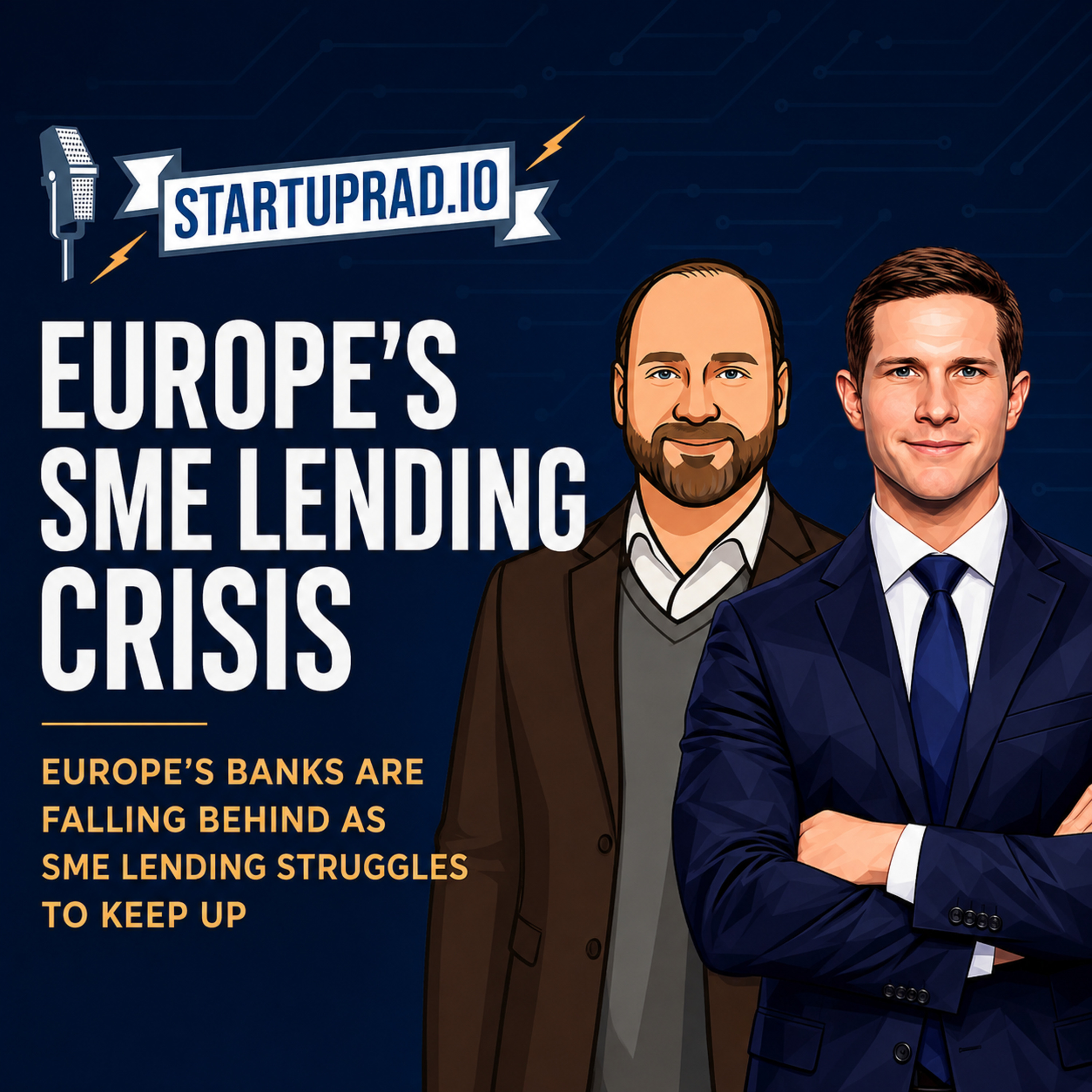 E 771 - Europe's SME Credit Gap Is an Underwriting Problem82 / 100
 E 767 - Unicorn Atlas #1: Helsing - Europe's $18 Billion Defence AI Bet70 / 100
 The Defence Capital Supercycle: Europe's New Venture Capital Infrastructure76 / 100
 Germany's VC Market After the Correction: Stable Is Not Strong66 / 100
 Europe's Scale-Up Gap Isn't Capital - It's Demand56 / 100