Speaking of Supply Chain · 2026-04-16 · 30 min
Key moments - from our scoring
Substance score
60 / 100
Five dimensions, 20 points each
The episode challenges a pervasive assumption in supply chain: that planning performance problems stem from outdated systems. Christine Barnhardt (MEBACH) and Dan Cogan (Solventure) argue the opposite - most organizations are 'running around their planning systems' using spreadsheets and firefighting because foundational issues remain unaddressed. They discuss why companies instinctively pursue APS upgrades or AI tools: it's the 'easy button' that avoids hard organizational work like achieving consensus between sales and supply chain on service levels, or between supply chain and manufacturing on batch sizes. The conversation unpacks 'orchestration' as the missing piece - aligning demand, supply, finance, and customer decisions with unified, continuously-managed data across ERP, APS, and fulfillment systems. Dan explains how Solventure's approach - data orchestration and data quality modules - helps organizations assess data health before implementation and maintain it afterward. They stress the over-investment in demand prediction at the expense of supply-side preparation (safety stock, lead times), and emphasize that better decisions require starting with business problems, not tools.
Users won't self-implicate for lack of knowledge, IT won't blame poor data integration, and management won't acknowledge broken processes - so it's easier to lump everything under 'technology is the problem' and push the button for an APS upgrade, even though that's often not the root cause.
Orchestration aligns decisions around demand, supply, finance, and customer by ensuring unified data across ERP, APS, and fulfillment systems that means the same thing everywhere, is continuously managed, and connects processes across multiple planning horizons - from strategic forecasting through tactical execution.
Invest when there are material changes in your business - increased product proliferation, omnichannel expansion, external volatility, or new geopolitical disruption - that require different processes and tooling, not just because you're frustrated with your current system.
Organizations over-invest in demand prediction but under-invest in supply-side preparation like safety stock and lead time reduction; if you can react faster and be more flexible on the supply side, you don't need as good a demand signal.
They conduct pre-project data scans to assess health and identify gaps before starting implementation, then apply data orchestration and quality modules during the project and post-project alerting to catch integrity errors before they cause problems in the APS.
Our reviewer’s read on each dimension, with quotes from the episode.
The episode delivers several substantive ideas - the distinction between data quality and capability, the imbalance of prediction vs. preparation investment, and the need to align decision-making across horizons - but much of the runtime is consumed by foundational positioning (why companies blame systems instead of themselves) and product explanation. A B2B operator would extract 3 - 4 genuinely novel concepts, but must wade through repetition and conversational filler to find them.
they're chasing the next shiny object, new platforms, advanced capabilities AI without fixing what is fundamentally wrong, you know, be in their architecture and underneath their planning organizations
I think the pendulum has swung towards over investment in prediction at the expense of preparation
The framing that APS upgrades are a scapegoat is useful but not novel in supply chain circles. The observation that 80% of APS functionality is commoditized and that organizational friction (cross-functional consensus) is the real bottleneck is sensible but well-trodden. The prediction vs. preparation rebalancing is more interesting, though the guest acknowledges even this echoes Bram and Lauris Cissiri. Limited contrarian insight.
eighty percent of the functionality is going to be common across all the vendors and effectively works for anybody who's manufacturing
I think for a while now the pendulum has swung towards over investment in prediction at the expense of preparation
Dan Cogan brings ~20 years in supply chain across industry, consulting, and technology, with hands-on engagement leadership at Solventure. He is a practitioner and not a pure thought leader, and the specific context of his consultancy work gives him credibility. However, he is not a Fortune 500 operator or C-suite executive who has scaled businesses, limiting his authority to the highest caliber.
I've got about two decades of experience across industry, consulting technology, all of that time in supply chain
I'm responsible for developing our solutions portfolio, and that includes things like expanding and maturing our service offerings
The episode lacks concrete numbers, named companies, timelines, and data. The one example given - a five-billion-dollar manufacturer with a spreadsheet rough-cut capacity plan - is anonymous and vague. General references to EOQ and process gaps are made without citing specific case outcomes, remediation timelines, or quantified improvements. Mostly abstract principles without grounding.
I just spoke last week with a five billion dollar manufacture and they have a demand forecasting system that's already in place, and that forecast flows into a rough cut capacity plan. It happens to be a spreadsheet
Maybe they grew up on the manufacturing floor and then became a supply planner. Maybe they were in sales became a demand planner
Christine asks reasonable setup questions and engages with Dan's framing, but rarely pushes back or challenges claims. She affirms his points rather than stress-testing them (e.g., 'No, I mean I think I'm seeing the same thing'). When she does interject (e.g., the orchestration definition), she is collaborative rather than probing. The conversation reads as a curated discussion rather than sharp interrogation.
Yeah, No, I mean I think I'm seeing the same thing.
No it's funny. And I think one of the things you said in your blog was something to the effect of you're not running on your planning system, you're running around it.
Computed from the transcript - who did the talking, and the words that came up most.
Most companies know they have a planning problem. The question is whether they are solving the right one. It is easy to blame the technology, push for an APS upgrade, or chase the latest AI tool. But too often, the real issues sit underneath: outdated parameters no one has reviewed in years, data that does not reflect reality, and planning processes that never connect to execution. In this episode, Christine Barnhart sits down with Dan Kogan from Solventure to talk about why so many planning investments fail to deliver, what it actually takes to fix the foundation, and how organizations can stop running around their planning systems and start running on them. They also dig into the overinvestment in prediction at the expense of preparation, and why data health might be the most overlooked lever in supply chain performance. In this episode: Why companies keep blaming their APS when the real problems are elsewhere What orchestration actually means and why most organizations are not doing it How to balance investment in prediction with investment in preparation Why data health is the foundation everything else depends on Read Dan's blog post on APS upgrades HERE
Transcribed and scored by The B2B Podcast Index.
Going back to people running around with their hair on fire, why aren't these fundamentals already addressed? And I think in the large organizations that you and I work with, these seemingly simple things require the effort of a Middle Eastern peace treaty to try to get consensus between sales and supply chain on service levels, or between supply. Chain and manufacturing on batch sizes. And because they're difficult to change, nobody's going to take the initiative to do it, and they're ignored.
Welcome to speaking of supply chain. I'm Christine Barnhardt, head of Industry Engagement and Alliances at MEBACH, and I am your host. Today. This is where we go beyond the buzzwords to unpack what actually drives performance in supply chain.
Today we're going to talk about planning and why despite all the investments in system data and new AI, it still is not delivering consistent results. So most organizations, in my opinion, do have a planning problem. But what we're seeing is that, in my opinion as well, they're trying to solve it in the wrong way. So they're chasing the next shiny object, new platforms, advanced capabilities AI without fixing what is fundamentally wrong, you know, be in their architecture and underneath their planning organizations.
As a result, planning is not translating into performance. So I'm super excited to have a very special guest today, which is Dan Cogan from Solventure. He is an industry leader in supply chain. Dan, welcome, so happy to have you.
Would love for you to introduce yourself to the audience. Yeah, well, first of all, thanks Christine for having me on the podcast. We've probably known each other for about six months now, and maybe it's to the benefit of your audience that we bring some of our otherwise private conversations out from behind closed doors. I know it sounds like a spicy episode already.
That's my hook, so keep listening everyone. I love it. I love it. So you had lost your background and what you're doing these days?
Yeah, so really quickly. I've got about two decades of experience across industry, consulting technology, all of that time in supply chain and even dabbling a little bit in academia these days as well. Today, in my role at soul Venture, I'm responsible for developing our solutions portfolio, and that includes things like expanding and maturing our service offerings, maintaining key partnerships like the one between our companies, and also occasionally rolling up my sleeves and getting my hands dirty on some of our key engagements.
So I'm really it's a combination of working in the business and also on the business, and I wouldn't want it any other way. I love it. Dan and I have kind of similar similar roles to some extent, but I think similar mindset. We're both Midwesterners and so that you just never know where this is.
I'm gonna transplants. I just want to just want to caveat that. Really, where are you from? Originally?
I grew up in Northern Virginia Washington, DC area, but I had to get away from the politics. You know me, I don't like politics. I love it. I love it.
Just this past week we published a blog on your behalf through through Me Bach that I think was titled do you really want an APS upgrade? Tell me about the blog and why do organizations instinctively say yes to an APS upgrade? Yeah, this one's a fun one. I think I really wore my heart on my sleeve when I was writing that blog.
I think I just look at it. It's so cliche to complain about your your advanced planning system, your APS, right. The user is never going to blame themselves for lack of knowledge, The IT team is never going to self implicate for poor data integration. The management team is never going to point the finger at themselves or broken processes.
So it must be the APS right. And it's super easy to lump everything under this umbrella of technology and just push that easy button. But I think that's when we really need to have a hard look in the mirror, if you will. There's definitely some outperforming vendors in the technology landscape, but if you look at what's really happening, it's quite commoditized.
I think that probably there are some vendors that offer specialized features that speak to a certain percentage of their users, but eighty percent of the functionality is going to be common across all the vendors and effectively works for anybody who's manufacturing. Right. Yeah, No, I mean I think I'm seeing the same thing. So the issue isn't that companies don't have a planning system.
It's that those systems and the processes around those systems aren't driving decisions that either are being executed or can be executed, right, So it like the plans don't reflect what's actually executable, what the operational reality is, or the data is not very great, right, and there's like this lack of trust and ownership. Is that Is that really what you're what you're talking about here? Yeah? I think there's so many things to unpack there, you know, do the plans match operational reality?
I think just thinking back, like until port congestion during COVID, when was the last time anyone reviewed their their sourcing lead times? And how many times has it been done since then? And uh, I'm an academic, I already admitted that, So I think it just an example is anytime there's a company that's struggling to balance their production efficiency with inventory, I always bring the model of economic order quantity and the general response is, oh, yeah, EOQ. That's a that's a cute theory, but it's just a theory.
You're like, well, correct, it is a framework, But let me ask you, how are you setting lot sizes today? And there's a lot of well, our plant manager did that unilaterally back in nineteen ninety five. We haven't really adjusted it since. And so yes, this EOQ is a cute theory, but maybe theory is a good starting point there.
Right, No, No, it's funny. And I think one of the things you said in your blog was something to the effect of you're not running on your planning system, you're running around it. And honestly, that image of people kind of with their hair on fire, I can say that because that a redhead right where you know, you're you're utilizing spreadsheets, you're jumping from meeting to meeting because everything is broken, right, So I think that that is that's the reality that people are living with today.
I think it's more companies than not just going back. It's fashionable to complain about your aps and you go back to that easy button. And I think savvy executives do it intentionally, and I think there's also less than savvy executives that kind of do it unwittingly. But there is a hidden benefit to lumping everything under that easy button of technology, and that's what the blog was about.
I mean, And the benefit is twofold one is you have this easy button sitting in front of you, and maybe it doesn't get pushed because it's lack of funding or lack of buying for an APS system, and then you have an excuse to continue with your poor performance. Right. But I think then the other thing is that if the easy button does get pushed, the APS implementation is going to act as a forcing function to clean up all of the issues that were truly the root cause. And in that latter case, the ends justify the means.
Well, I think it can act as a catalyst to clean up the things that we're wrong. I think often it doesn't, unfortunately, because we buy a new tool, but we still don't fix the foundational issues and the process issues. And I see a ton of companies they recognize that they have a problem, right, and then they're jumping straight to I need a new platform or I need some fancy AI tool. And I've said this repeatedly.
One of the things that I think is happening is technology is delivering on its promise to make decisions faster. Unfortunately, we have the wrong data, we have the wrong processes, so we're just driving to a wrong answer faster than what we drove to a wrong answer maybe five to ten years ago. I mean, is that consistent. Doing dumber things faster?
Right? I think it's it's always about chasing the bright, shiny new object and it's going to be the next savior so that we don't have to roll up our sleeves and do any real work. Right, everybody's always chasing that. But I think that most of the value actually comes in doubling down on fundamentals.
Again, just examples, Hey, do we need to reconsider our service levels? Do we need to review our batch sizes? And I'm not just talking about does the data exist, but actually scrutinizing whether those parameters reflect what needs to be happening to drive the performance of your business. And I think, maybe going back to people running around with their hair on fire, why aren't these fundamentals already addressed?
And I think in the large organizations that you and I work with, these seemingly simple things require the effort of a Middle Eastern peace treaty to try to get consensus between sales and supply chain on service levels, or between supply chain and manufacturing on batch sizes. And because they're difficult to change, nobody's going to take the initiative to do it, and they're ignored, and often ignoring them for one or two years becomes five or ten years. But again, these are the parameters that are really driving your business performance.
Right, If you order too much, you carry too much inventory. Finance is complaining at you that you have too much inventory. If you order too little, are you doing order frequently enough? Then you're expediting or you have out of stocks.
And I think that fundamentally, there's a lot of people running supply chains these days that don't understand how those dots all connect. Right. They don't understand that how often I order and the size of the material that I order has an impact on my inventory and my service. And beyond that, I think we have a lot of really crappy data, right, and I think operational data is actually pretty good.
Right. We're recording, you know, where an order goes and how long it took to get there, But then it's not getting back into master data. And so when you talked in your blog about the swamp, right, were you thinking more master data or more operational data? Uh?
Yeah, it can be both. It can be both. So the swamp analogy was about the APS implementation, because again it might seem like this so called easy button, but you and I know and others that have been through it before, No it's anything but an easy button when you start to consider, okay, all of the tribal knowledge or processes that need to be defined and and also agreed cross functionally, all of the parameters that need to be reviewed or captured if they don't exist. You're telling me I have to go out to all of my suppliers and get lead times for all of them.
I've never had to do that before. All of the data capture and integration flows, the configuration of the system, the testing, the training, the change management. It's really it's a swamp. It's not an easy button at all.
But again, it's an effective forcing function that organizations can leverage to transform their planning. I was gonna say, I'm going to be a little provocative switch gears here, but I'm talking to you and you're way more provocative than I am most of the time. So from my perspective, and I say this as somebody that I sol helped design and sell software and now work for a consultant. Right, I don't think that what's missing is capability oriented.
I think it's this concept of orchestration and that and I'm going to define it and then I'm going to let you tell me where I'm right or wrong and help the audience understand it better. But I think it's aligning for me. Orchestration is aligning decisions around demand, supply, finance, customer and ensuring that the data is unified and continuously managed. Meaning the data that I have in the ERP versus the APS versus maybe some customer fulfillment solution, that's the same data.
It means the same thing in all of the various systems, and it's continuously being reviewed, managed updated. It's good. It's healthy data, right, and that we're connecting then these processes and these decisions across multiple horizons, and we're really linking planning to execution. So that's like four bullets, but really lofty.
I think this definition of orchestration, So like, what's your definition of orchestration, and like, where have I missed the mark? Now? I like yours quite a bit. I think it's interesting when you talk about integrating the different planning horizons.
I just spoke last week with a five billion dollar manufacture and they have a demand forecasting system that's already in place, and that forecast flows into a rough cut capacity plan. It happens to be a spreadsheet. Okay, that's all right, but it dead ends there. So they have long term capacity planning, but it doesn't translate to a master production schedule.
It doesn't translate to material requirements plan. It's just orders coming in and being shipped out without any planning on a tactical horizon. So you like to say, yeah, every company is going to have els and operations execution. Right.
If you don't do that, you're you're not in business. But I think a lot of companies have trouble looking beyond the end of their the end of their nose, to have a true S and P process or supply chain planning process that looks beyond the tactical horizon. And I think, okay, we can give it a bunch of different definitions. I think about like what you said about customers, suppliers, finance.
Right. You can also think about it maybe from an internal view. People processes, tools and data. But the purpose of a system is what it does.
And if you're not getting the performance you want, you need to change the system. And in a successful transformation, all of those dimensions have to be reviewed and they have to be aligned and integrated. Exactly exactly, and you know, from my perspective, it's it's kind of this four step process, if you will. I have to have data right, and I have to trust the data so that the data can give me insights into what's happening in my business.
And then once I have insights, I need to make a decision about how to react to those insights, and then I need to take action. And I think a lot of times what I'm at least seeing in terms of planning is we'll do a planning implementation, we clean the data. It's a big part of the process. At the beginning.
We got to get the data, so they've got the data piece, but then we leave the data and it gets bad over time. And then we have the action piece, which is the push of a button that says, okay, we're going to take this action. But the insights and the decisions in between these are like completely disconnected and siloed. Yeah, I mean, you're right.
The goal isn't isn't better data. The goal isn't more training. Those are the means. The goal is better decisions and making sure that those are executed accordingly.
And I think there have to be processes set up around the data, and they have to be institutionalized. I think a lot of time people that are in planning roles have grown up through those roles. Maybe they grew up on the manufacturing floor and then became a supply planner. Maybe they were in sales became a demand planner.
Maybe they're fresh out of fresh out of college. But I see a lack of systems thinking about about the supply chain, and if I think if everybody had just a little bit more knowledge or perspective from that angle, that we'd be better off. So I mean, for the audience and people listening, you know, we've kind of poopooed on you know, don't don't do an APS upgrade, And I don't think that's really what we're saying. I think I would challenge you to say, give some guidance.
When can an upgrade or a new implementation create value. Yeah, it's interesting. So at soul Venture, we work with clients that have their own homegrown systems and are ready to move to a more off the shelf system. We have clients that are looking to upgrade.
It depends on the industry that you're in and the circumstances, and sometimes these decisions take a long time to materialize. You know again, I think we're now in twenty twenty six, we're still dealing with decisions that were made post COVID when things got volatile and people said, oh, I can no. Longer be backwards looking. I need to before it's looking.
I need a better demand forecasting process, I need better supply planning system. So some of those decisions are now just coming to fruition five and six years later, just because of the sales cycles and the budget required. But I think we can acknowledge it that things are becoming more volatile. It's not just because of call it to exogenous events that are happening in our global geopolitical systems and things like that.
But a lot of times consumer companies are having proliferation of their product portfolios. So there's a lot more mixed variability, there's a lot more volume variability. So if there are changes in your business, either because of external events or because your product and your business model is changing, again, think about omni channel as well as as a catalyst. These are triggers that maybe you need to make sure that you have the right process in place and that they're supported by the right tooling and the right data.
You know, it's so funny to me again, I'm going to push a button here. I think I've seen so many companies, so many people jump to demand. I just if I could just predict demands better, right, And they've made huge investments, often with a lack of thinking about the supply side. And on the supply side, if I could just cut a day or two out of my decision process, if I could just you know, trim the lead time, if I could get it to market more reliably, I don't have to have as good of a demand signal, right, because I'm able to react faster, and able to be more flexible, and able to be more agile.
So I actually get really frustrated when I hear people talking about planning and we talk demand, demand, demand, and we don't talk about supply and supply variability and how we reduce supply variability. I mean, is that just me? Is that just my pet? It's not, at least from my perspective.
I think for a while now the pendulum has swung towards over investment in prediction at the expense of preparation. And I use that term a little bit generically, but it could be preparation on the supply side in terms of safety, stock inventories and things like that, nature lead times that you recommend. Yeah, so I think we've headed a lot towards prediction. I think a lot of that is again triggered by vendors in the marketplace bringing machine learning.
And AI and new tools. So again the bright shiny object syndrome. Everybody chases that for a little bit, but there's only so many dollars to go around, so it's at the expense of something else, And sometimes it's at the expense of critical thinking. Right.
You might not even need better or new tooling to do your supply planning better. You might just need to revisit those planning parameters. But yeah, I think it's a balancing act between prediction and preparation. And yeah, you have.
Some industries like spare parts that it doesn't matter how well you're forecasting is not going to solve the problem here, right, It's got to be on the supply side. Yeah. I mean, my key takeaway I think for folks would be, you know, start with what is the problem that you're trying to solve? What are you trying to have better service?
Are you trying to reduce cost? Are you trying to bring you know, more more items to market quicker? Like whatever the problem or problems are, I think you have to start there, and then you have to figure out, well, what is what are the decisions that I need to make in order to enable that? And what is the data?
Like it's like peeling back the onion, right, like starting with the customer kind of working your way back and where do I not have alignment? Where? Where does data not reflect reality? I think that that's where people really need to start.
They don't need to start with, oh, I'm going to go out and buy a new tool, or oh I'm going to go out and buy this fancy you know, you know Agentic, you know, Bolton or whatever. Because look, and I love technology. I'm an early adopter. You know.
We've talked about like I live in the Midwest in a not very big city, and I have an ev right, Like, I can prove that I'm not opposed to technology, but I think that we're fundamentally not looking at the problem appropriately. Yeah, data is at the foundation there, so you can layer on all the technology that you want on top of that. But in pardon my French, but if your data is crap. It's not gonna it's not going to drive the right planning decisions.
So yeah, it's it's it's at the foundation of everything and it has to be correct otherwise you've got to crack in that foundation. That's something unique that sol Venture has really come to market with, right, like this concept of data health and data performance and how does that work. So it's always interesting. You know, you have a boutique consultancy and they start to do APS implementations and one of the first things that you realize repeatedly is that data is always going to be an issue.
This isn't going to surprise anybody. So then over time you start to develop your own internal processes and templates for harmonizing data. And after seeing so many use cases across multiple APS implementations, multiple ERP systems, multiple industries, you're able to begin to templatize the process. And then you templatize it to the extent that you can productize it and have an off the shelf piece of software that helps accelerate time to value.
And so that's what Solventure has done. We have a suite that's Solventure perform as multiple modules. One of them is data orchestration, and as you suggest, another one is data quality. So once we have all of your data in a data hub, we can put a layer of intelligence on top of that, which is data quality, and start to detect all sorts of referential integrity errors, values that don't make any sense, and apply all sorts of business rules that we can then bring up to the user before it actually enters the aps and causes problem.
So we use this during. The project phase, but also post project as well. It has alert so that users can continue to see the health of their master and transactional data and correct issues in real time before they become a problem. In full transparency to the audience.
This is what interested me so much about Solventure. When I came into the Meebok organization is as somebody that had led multiple planning implementations and planning transformations. We were always starting with the data, but then over time the data would be awful again, and it was like, how do I maintain the integrity of the data. And then beyond that, as I'm getting new tools, or maybe I'm doing murders and acquisitions and I'm bringing you new pieces into my business.
It just felt like I was starting from scratch every time, trying to integrate data and make sure data was good. And that's really what this solution kind of helps to solve. Correct there's truth in data, right, And so I just mentioned during the project, implementation and post project, but I'll actually back it up and say pre project, a lot of customers, our prospects are nervous about doing an APS implementation or upgrade because they really don't have a bearing on the health of their data.
They know that it can be a complete show stopper and they don't want to start the train rolling if they know they're going to have to stop it. So the same technology that we use during the project, we can bring in ahead of the project and do a feasibility assessment, a data scan and understand how complete is your data set that you need for APS and where are the gaps and we can help you prioritize those gaps so that you can hit the ground running when you are ready to start the project.
Yeah, it's really I mean, like for me, it's really exciting. I love this concept of a canonical data model or a unified data model. And then really moving from if I'm lucky, once a quarter of people are looking at data to this really being more real time and serving up ay planner. Look at this, you know this is not planning appropriately because the data is wrong.
I just think that that is so exciting. The reason we're able to do a canonical data model is because again at the top of the show, we talked about how probably eighty percent of APS systems are common, right, so they're all going to require lead times, they're all going to require quantities, et cetera, et cetera, right, that the model is not that different from vendor to vendor. And then also we've now worked with enough ERP systems they were able to develop adapters from those respective EER systems to our canonical data model and then back out to whatever APS system you've chosen as well as.
Opposed to an implementation where people are building point to point connections. Yeah, we've probably bypassed this whole ad hoc and customization thing and moved to a pre built solution again under the premise that we can help accelerate your time to value. I love it. I love it, Like I said, for me, super exciting.
I love that we have formalized a collaboration and that you know solve Venture and Meebocker are really I think both invested to help our customers and help the market really understand that there's a better way. And look, by the way, I don't know that you and I are that novel. Like I've been listening to my two thought leaders, like Lauris Cissiri, like brand, They've been talking about this, but it feels like now the market is more receptive, then maybe they understand more than maybe where we were five years ago.
Yeah, I think there takes a lot of beating on the drums to make to make people pay attention. But yeah, thanks to people like Bram and Laurisasari that people are starting to listen. But again, these things take a long time to change. Yeah, Okay, so this has been wonderful, but unfortunately we are kind of at the time.
But I'm gonna I'm gonna bet there there are people out there that are like, oh, Dan, I really want to talk to you and pick your brain. So what is the best way for them to do that? Yeah? Absolutely, I'm I'm a fiend on LinkedIn, so so find me on LinkedIn, happy to connect, happy to talk to all of you.
Yeah, I'm similar. LinkedIn is probably the best way to get a hold of me. Be patient. It Like I travel to a ton of conferences and I'll get like a big slug of LinkedIn messages.
If I haven't responded, feel free to ping me again. Squeaky Wheel gets the grease to some extent. But you can also find me upcoming at the Gartner Supply Chain Symposium in Orlando. I will also be at Koopa Inspire in Vegas and at Home Delivery World in Nashville because I'm I love to be on the road, and you're everywhere I know well, you know, like I and my kids early, So that's it.
Do you avoid the paparazzi? Ah, I wish I had paparazzi. I would love that, you know. I feel like that'd be a good thing for me.
So before we wrap up, I want to thank our program sponsor and my employer, Meeboch. Meebok is a global supply chain consulting and engineering firm focused on helping organizations improve service, optimize working capital, and drive measurable performance across the end. In supply chain, we cover everything from strategy and planning to just general transformation through execution. In manufacturing, warehouse and distribution, and we work with clients to really turn these supply chain decisions into real business outcomes.
So I appreciate everyone joining us, and I look forward to seeing you next time on Speaking of supply Chain. You've been listening to Speaking of Supply Chain a meboch podcast. Keep connected with us by subscribing to the show in your favorite podcast player. If you like what you've heard, please.
Rate the show. That helps us to keep delivering the latest in supply chain information. Thanks for listening.
Other episodes covering the same guests and topics, from across The B2B Podcast Index.
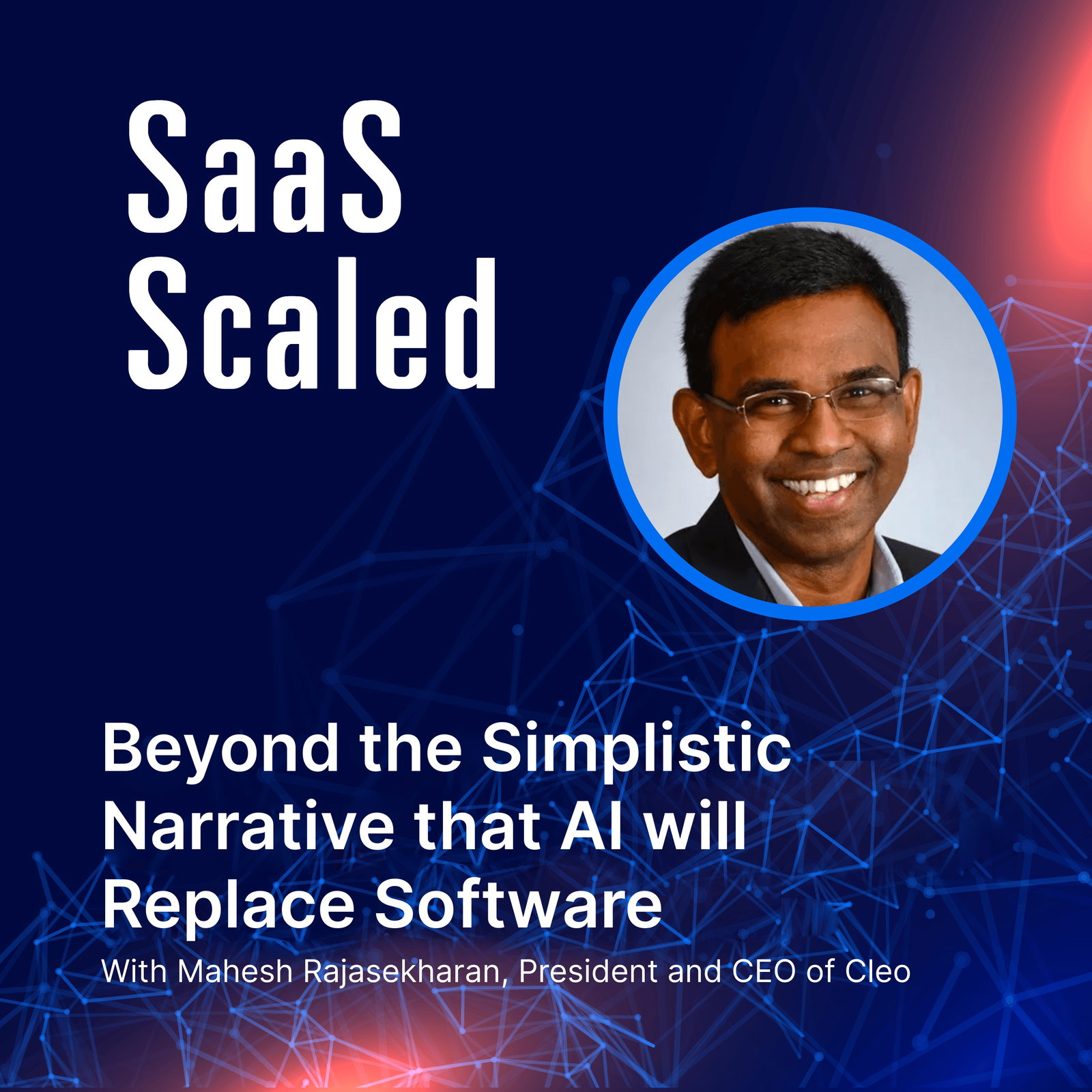 Beyond the Simplistic Narrative that AI will Replace Software with Mahesh RajasekharanSaaS Scaled · on Supply chain orchestration83 / 100
 Raj SubramaniamThe David Rubenstein Show · on Supply chain orchestration79 / 100
 Episode 67: Erik Dove, Security Sales Engineer and incident response expert, CiscoSecure Networks: Endace Packet Forensics Files · on Service Level Agreements (SLAs)63 / 100
 Powering supply chain with agentic AIMcKinsey Talks Operations · on Supply chain orchestration62 / 100
 🌐 Cybersecurity Unmasked 🌐 EP 38: Small Business IT Support: The 2026 Outsourcing GuideCybersecurity Unmasked · on Service Level Agreements (SLAs)53 / 100
 Size Doesn’t Matter: The Truth About IT Sourcing DealsIT Sourcing Sorcerer · on Service Level Agreements (SLAs)
 Half of Outsourcing Projects Never Pay Off61 / 100
 Automation Will Not Fix a Broken Process79 / 100
 Why Pharma Cannot React Its Way Out of the Next Crisis80 / 100
 Why Your Planning System Can't Help You Change76 / 100
 Why Modex Matters More This Year67 / 100