
Searching for Mana with Lloyd Wahed · 2026-07-01 · 45 min
Key moments - from our scoring
Substance score
49 / 100
Five dimensions, 20 points each
Hester Peirce, an SEC Commissioner since 2018, sits down to discuss the state of crypto regulation in the United States and her expectations for the CLARITY Act - legislation designed to allocate regulatory responsibility between the SEC and CFTC for digital assets. She expects the Act to pass this summer, though acknowledges the legislative process moves slowly. The conversation centers on how current regulatory ambiguity has paradoxically discouraged legitimate builders while rewarding those with no intention to create lasting value or, worse, those committing fraud. Peirce explains that CLARITY's key contributions include establishing a federal regulatory structure for crypto spot markets, clarifying the application of the Howey test to token offerings, and crucially, protecting developers from liability when their tools are misused. She ties this to broader economic philosophy: effective regulation should lower barriers to entry for innovators rather than pick winners and losers. The discussion extends to AI regulation, where Peirce advocates for a light-touch approach focused on addressing specific harms as they emerge rather than pre-emptively restricting technology. Her worldview - shaped by economics, securities law, and religious faith - centers on unlocking human potential through market-based systems that reward contribution and enable dispersed knowledge to shape outcomes.
She expects it to pass this summer (2026), noting that both the House and Senate have been working hard on it and a lot of work is still ongoing, though she acknowledges legislation moves slowly due to the complexity of the bill.
It allocates regulatory responsibility between the SEC and CFTC, establishes a formal federal regulatory structure for crypto spot markets (which doesn't currently exist), clarifies how the Howey test applies to token offerings, and provides liability protection for developers.
Regulatory ambiguity has created perverse incentives where builders of useful, long-lasting products face potential enforcement or criminal actions, while those building unusable projects or committing fraud face fewer barriers - the opposite of what should happen.
She believes regulators should take a free-market approach that allows experimentation, then address specific harms as they emerge, rather than trying to centrally manage or pre-emptively restrict technologies from the start.
Firms remain responsible for how they deploy AI as a tool; they cannot claim the AI made decisions they're not accountable for, and must use it with the same care standard they would apply to human employees.
Our reviewer’s read on each dimension, with quotes from the episode.
The episode contains a handful of genuinely useful policy observations - the perverse incentive created by enforcement-first regulation, the SEC's pivot on shareholder arbitration, and the 20-year-old trade-through rule under review - but they are surrounded by substantial filler, philosophical rambling, and host editorialising that dilutes density considerably.
you were actually rewarded more if you built stuff that was kind of not going to be useful or last. Um, because if you built something that people really wanted to use and, and uh, was going to be around, then you faced potential enforcement actions
we've tried to make it clear that we're not going to object if companies decide they want to use arbitration instead
The observation that enforcement-first regulation inadvertently rewarded non-durable or fraudulent projects is the episode's single genuinely fresh framing; everything else - free-market regulatory philosophy, disintermediation benefits, light-touch tech regulation - is well-worn territory for anyone who follows crypto policy discourse.
we inadvertently really set the industry on a pretty bad path
it was also good for people who were trying to rip other people off because it was much harder to distinguish the good actors from the bad actors in that environment where there was not regulatory clarity
Hester Peirce is a sitting SEC Commissioner with seven-plus years of voting authority over rules and enforcement actions - a genuine primary-source decision-maker on the exact regulatory questions discussed, not a commentator or thought-leader; the limitation is that her tenure is ending and she speaks carefully within institutional constraints.
I've been in this job since 2018. As commissioners, we run the agency in the sense of we vote on all the rules, we vote on all the enforcement actions.
I do still, um, I'm still optimistic that it will get done this summer
Concrete details are sparse throughout: the episode names the Howey test, notes the trade-through rule is 20 years old, and references the SEC sitting at three commissioners, but there are no named companies, dollar figures, timeline milestones, or empirical data to ground the policy claims.
the order protection rule or trade through rule that sort of governed the way the market structure worked. It's been around for um, 20 years
We're now at three, but, um, typically five
The host consistently front-loads his own opinions into questions, answers his own questions before the guest can, and never challenges a single claim; the 'Mana round' is pure lifestyle filler, and follow-ups are absent even when the guest makes contestable assertions about regulatory philosophy.
I'm stuck in the current thing where markets are going down because artificial intelligence and quantum is going to take all of um, the blockchains high
I'm just going to dance around how I'm thinking about it, try and make it a question
Computed from the transcript - who did the talking, and the words that came up most.
SEC Commissioner Hester Peirce has spent years arguing that regulators should create clear rules, not make policy through enforcement. Now, with the CLARITY Act advancing, a more supportive administration in Washington and institutions finally entering digital assets, she believes the industry has a genuine opportunity. But she also has a warning. Regulatory clarity alone won’t determine what happens next. Builders will. In this episode of Searching for Mana , Lloyd Wahed sits down with SEC Commissioner Hester Peirce to discuss why markets work better than central planning, how tokenisation could reshape capital markets, why the SEC should remain a referee, not a participant and what the crypto industry must do to avoid wasting this moment.
Transcribed and scored by The B2B Podcast Index.
Speaker A: Foreign.
Speaker B: Welcome onto the Searching for Mana show.
Speaker A: It's great to be with you today. I have to start by giving you my standard disclaimer, which is that my views are my own views as a commissioner, not necessarily those of the SEC or my fellow commissioners.
Speaker B: Thank you. That's. That's the. The, uh, most fun intro that I've had on the show so far. Um, yeah, real, real pleasure and honor.
Speaker A: We're off.
Speaker B: Strong pleasure and honor to have you on with your. Your own views, of course, here, so we can really get stuck into, um, the meat of various topics. Um, if you could be so kind, hasta too. Um, just for anybody in the audience who wants a bit more color or perhaps doesn't know exactly who you are and what you've been doing, give us a brief intro, please.
Speaker A: Sure. So I'm one of, um, typically five commissioners at the SEC. We're now at three, but, um, typically five. And I've been in this job since 2018. As commissioners, we run the agency in the sense of we vote on all the rules, we vote on all the enforcement actions. Um, I'm not the chairman, so I don't have responsibility for the staff, the budget, or the agenda. Um, but I do weigh in on those things as well. Um, and so before being at the SEC in this capacity, I had been here as a staffer, um, had then gone to the Hill for a little bit, worked on the Senate Banking Committee. That was during the financial crisis. And then, um. Uh, I was working at, uh, Mercatus, which was a think tank really, that combined economists and lawyers and others. One of the big things we thought about was financial regulation and regulation more generally. How do you. How do you regulate effectively? Um, and I've spent time at a law firm as well, so that's kind of my background.
Speaker B: Thank you so much. Um, well, what. Um, a period of time. I'm sure they're always interesting, but what a period of time to have been in that position. Um, and certainly, uh, have, um, personally really enjoyed, uh, and. And almost always aligned with the sentiment that you've been commentating around. So to. To start off, let's just before we do any going back and critiquing, think about where we are now. Um, you are coming to the end of a tenure. Um, and it's, um, been a tenure where, um, you know, at the beginning, certainly there might not have been, um, what felt like the regulatory support for, let's be specific, crypto and digital assets, however you want to term it. And now there certainly feels like There could be more, um, but maybe in the right way, um, but that's an assumption that I'm making from afar. How do you feel, how do you, how are you feeling right now about, you know, your, your involvement in where America, um, is and its legislation around crypto?
Speaker A: Well, it's certainly much easier to be in this position now where there is institutional support, um, from, from the president, uh, to the chairman of the SEC and to um, people on both sides of the aisle and Congress as well, wanting to get clarity around crypto regulatory policy. We're working closely also with our fellow agency, the Commodity Futures Trading Commission. And so it really is a moment where there's, there's a lot of unity around the, the idea that we should have a regulatory structure in place that makes sense, um, one that recognizes the technology has unique risks and unique benefits. And um, and, and so I think from that perspective, it's a very nice time, um, to be here. There are always frustrations, right? Things never move as fast as you'd like. Um, but that's partly the process is very important. And so that is part of what we need to do is go through that process. And, um, I've been enjoying doing that for the last year and a half or so.
Speaker B: It's the end of June, 2026, and um, you know, the, the question that I feel is my responsibility to ask to you at the top of the show, for anyone who's on their cappuccino break and wants to know is it feels like the big thing to come through. There's a few, but it's the Clarity act, and there's been a lot of, um, confidence that it will and predictions that it's imminent and you know, know then, then it hasn't just yet. Um, I know it's, um, pushy of me to ask, but I'd love you to rift around for where, where we are with this and what your, what your forecast is for the Clarity Act.
Speaker A: Well, the Senate has been working very hard on it. The House, uh, did their work and the Senate has been, has been working hard. So I, I do still, um, I'm still optimistic that it will get done this summer. Um, it's a lot of hours of work have been put in by a lot of people both in the, in the House and the Senate. And um, there's still a lot of work happening now, so I expect that we'll see it, uh, pass soon. You know, it, it's legislation is very hard. I, I, I know that from the time that I spent on the Senate Banking Committee there are a lot of moving pieces and this is a big piece of legislation that. And, and it's trying to do a lot of hard things too. So I think, um, they're making good progress.
Speaker B: Yeah, well, look, great to hear and just to dial it down for anybody who um, you know, isn't in the detail, um, in the audience, but would have certainly, if they're in the right corners, have seen that this is important. Why is this important? To do a layer more specific. What is this addressing? And then the question out of that's a twofold is what does that allow to follow?
Speaker A: Yeah, I mean it's a good question because we actually do have a fair amount of authority that we can use now, and we have been using now to regulate in this space. We don't need new legislation to do. And CFTC has been doing um, work as well. So there's a lot that can be done without clarity. But having a statutory framework that allocates responsibility between the SEC and the cftc, that puts in a formal regulatory structure for the crypto spot markets, which does not now exist at the federal level, um, that's really a big development and that makes it possible for people to figure out where, where they're going to be regulated. And what does it mean for um. You know, one of the big topics in the US and I, I hate to impose this, this nerdy legal issue, but it's, it's the Howey test is when is. When is a token being offered and sold as part of an investment contract? And, and then what happens to that token? How does that token have to be treated? That's something that the Clarity act helps to lay a clear framework for. Um, so I think there's a lot that again can be done without legislation. But there are other pieces of it too. Um, that you have uh, clear protection for developers, which I think has been um, an area of keen interest, um, for a lot of people. Because there's a fear that if you build something and someone bad uses it to do something bad, you'll be held responsible for that. And I think there's a desire to make sure that people are able to build things without, um, build things that they're intending to be used for good, um, without bearing responsibility when someone uses those things for bad.
Speaker B: Yeah, absolutely. I mean a massive topic over the, you know, last 18 months has been it feels like the institutions are in, um, of course there's a, there's a time to that roadmap. Um, it feels like infrastructure has been laid. And really we need the applications to come through. And if you do look across the, um, the um, space, then, you know, there are but a few remarkable generational applications that certainly, uh, are in the hands of customers. Whilst it doesn't feel like it has fully come through. And perhaps that sentiment around what you're talking about is what we really need for it to inflect to the next layer where there really is an application universe that is valuable. Uh, and that all comes from this clarity act, um, for the dropdown reasons that you suggest.
Speaker A: Yeah, I mean, I think one of the issues has been that because of the regulatory approach to crypto, um, you know, speaking here from the United States perspective, over the years, you were actually rewarded more if you built stuff that was kind of not going to be useful or last. Um, because if you built something that people really wanted to use and, and uh, was going to be around, then you faced potential enforcement actions from the sec, or even criminal, um, actions. And that's just not really a good environment. And so actually we ended up creating this environment that was good for people who didn't really want to build things to last. It was also good for people who were trying to rip other people off because it was much harder to distinguish the good actors from the bad actors in that environment where there was not regulatory clarity. Um, so I think we inadvertently really set the industry on a pretty bad path. Um, and part of what I'm hoping we can do now is pull it back onto the path and say, if you're building something that you think actually meets a human need, um, we're going to be, we want to create an environment in which it's possible for you to build that and experiment and try things, um, so that it does take a while to turn that ship, to get people reoriented. Thinking, um, along those lines, what, um,
Speaker B: personally excites you about, um, crypto and digital assets? What. Why do you think that this has been important work? And there was a time when it could have been questioned whether, you know, the United States was really going to allow its wonderful entrepreneurial weight to get behind this space, which it has recently. Um, but you certainly, for uh, all of that time, could see that this was valuable and not everybody would. And that's obviously opinion and taste. What is it that's so remarkably important about this to you?
Speaker A: Well, one thing really just is the procedural point, which is we're a regulator. We're not supposed to be a merit regulator, so we're not supposed to be picking the Winners and the losers. We're trying. In fact, we do our job best when we, when we have low barriers to entry so that new technologies can come in, new, new, um, entities can come in and challenge incumbents. And um, you know, that's how, that's how progress happens. That's how better, cheaper products and services get out there is if you have, if you have open doors to innovators. And so part of it really is a procedural concern that we hadn't been handling that right. With respect to the technology itself. I mean, I think it's really powerful to have a technology that enables you to transfer value the same way that you've transferred information, that the transfer of information really radically improved our lives, um, using the Internet to be able to transfer data. But the idea of adding a layer where you can transfer value is quite powerful. So that's one piece of it. I think the second piece is that, um, we have seen that when you put intermediaries into transactions, bad things can happen. Some good things can happen too, but some bad things can happen. They can be careless with your, with your money and your property. They can be, uh, just downright dishonest and they can steal it, um, or they can get hacked and things like that can happen. So in instances when you can remove an intermediary, you can remove some of those risks. Now you may introduce new risks and those are ones that you have to think about. I'm not arguing that disintermediation is the right approach for all of finance, but it can be helpful. And then I think another piece of it that's quite interesting in my world is the idea that you can layer a smart contract on top of an asset, um, and you can do things with that smart contract that before would have required back office operations, would have required a more manual touch, and have things automatically happen, I think is quite powerful. Um, and then, you know, as we think about tokenizing securities, the ability for people to use those securities in different ways, to have, um, more mobility of collateral, um, the possibility of you, uh, can do securities lending more easily. Um, and I think also it will enable issuers to communicate with their security holders more directly, even if they don't know who they are, they can drop an NFT into the person's wallet. So there are a lot of potential, um, there's a lot of possibility here and some of it is still being developed. But I think the technology does allow for, um, some very interesting things.
Speaker B: Yeah, it's so refreshing to hear you say that. So I needed that refresh on the exchange of value because um, I'm stuck in the current thing where markets are going down because artificial intelligence and quantum is going to take all of um, the blockchains high. And of course um, you know, it's such a short term way of thinking because it's just so obvious I think when you step back and look at what were back office paper ledgers and you know, databases, um, that were centralized that this inevitably, whether it takes several years or you know, 25 years is just a much more efficient economy. Um, and therefore opportunity in the cookie grows because of that. Um, so I enjoyed that, thank you.
Speaker A: Well and I also think there's a connection with AI too, right? I mean the idea that I don't know where AI is going to go, but the idea that you can have agents who are paying, they're going to probably be paying with some sort of crypto asset is my guess.
Speaker B: Well that's what, that's what Ethereum's hoping right now. It's a new user case in this here. Interesting time. But yeah, but just, but just fundamentally the blockchain technology um, surely has um, more opportunity because of artificial intelligence and AIs interacting with each other. I think that that's become pretty, pretty um, pretty much agreed on but so much exciting things to think through. I'd love to just um, I know it hasn't been necessarily your mandate but you're a great thinker on these things and um, perhaps it will be equally right now with artificial intelligence we're having European and American debates around which way around to manage the regs. Um, for what is one of the most incredible or doomer topics of all time, um, is it to be managed the same as how we have here with crypto where it was kind of pushed back? Quite frankly, as you said, good and bad things happened and now it feels like there's weight behind it. Um, because uh, in America just recently we've had some pretty heavy things happen with anthropic. Um, how do you navigate this? What advice would you give to who's managing that?
Speaker A: Yeah, well I'm certainly not an expert but I think when it comes to my approach to regulation and privacy, particularly regulating technology, I tend to be someone who believes that people should be free to experiment with things because moving forward technology usually makes our lives better. There are always bad consequences that come with new technologies too and we can get very focused on those bad consequences. I've certainly seen some, some things about AI that I don't love and, and I think uh, I'm sure everyone is in the same, same boat there. But in general I think it makes sense to have a very open mind as regulators toward technology and not try to centrally manage it. I think when we, when we try to centrally manage it because we're trying to control its bad parts and trying to emphasize its good parts, it often ends up not working so well. Um, and so you get, you don't get the best parts that the technology has to offer and you come up with a very stunted, um, approach that's, that's too regulatory. Um, you know, the government trying to shape how it, how it, it moves forward. So my, you know, my general theme is let's just take the free market approach to this and, and as we see bad things emerging, let's try to regulate those bad things, but let's not try to um, just control it from the get go and, and, and, and shape it and mold it into something that a regulator thinks is a good, is a good form.
Speaker B: So what, what right now would you, because you know, the experiments on a massive scale, what would you look to regulate with, um, you know, the model builders now?
Speaker A: Well, let me just bring it back to sec because I think this is where I've been steeped. And you know, we did try to adopt a rule, um, several years ago. We, we proposed it at least around the use of AI and other technologies. And it was, it was a pretty universally panned proposal because it almost looked like you were going to make the barrier to using new technology so high that no one would use it. In fact probably would have to roll back the use of some existing technologies. So uh, what I, and now we're seeing the potential for AI to make it easier for people to get access to financial advice. Um, and certainly AI has been used in trading for a long time too. And, and that can make our markets more efficient. And so I would just say let's think about these problems as they arise. If some, if a firm is using AI to make it cheaper to provide financial services, that's a good thing. That doesn't mean that they get to just say, hey, the AI told you to do this, I didn't tell you to do it. So you can't come to me and complain when something goes wrong. It's a tool the firm has decided to use and so they need to use it with the same care that they would use if they're using human beings to provide that service. Um, and so that can seem scary because we're learning how AI works. But I always come back to the point that human beings are much more complex than AI and we figured out how to regulate them. So I think we can figure out how to regulate AI and um, when it's helping to provide service, financial services to people.
Speaker B: Please subscribe to our YouTube, Spotify or iTunes to make sure you receive all the latest episodes as they are released. Amazing. Well, um, with um, that all said, let's just change the gears. So you lightly danced across um, at the beginning, um, how you got here and thanks for covering some of the big challenges and opportunities on the desk today. Love to just um, for the audience, um, jump into some of your backgrounds so we get context of who you are and really some of the perhaps principles and values that you picked up along the way. So if you could um, go back as far as um, you care to and perhaps give us a moment in time where you really for the first time started to identify with who you would be in your career.
Speaker A: Well, I think it really started for me when I took my first economics class. And that's a little bit embarrassing because my dad is an economist and we talked a lot about things around the, the, the dining room table. But um, really taking economics for the first time I saw microeconomics. I'm, I'm um, more of a micro person than a macro person. But taking that class made me realize how powerful economics is in understanding how so many things work. And um, and so it started to shape the way I thought about regulation even back then, because I could see that regulation has to be very carefully calibrated so that it doesn't interfere with the incentives that people have, um, to, to better their own lives. But in the course of doing that to improve the lives of others, um, so I went on to, to law school, um, and that was a nice. I, I decided securities law would be a nice way to mix the economics, which I really loved with the law, um, because it's, it's just, it you have to think about markets all the time. As a securities lawyer, um, and so really that it was the economics that started it and then combined with the law, um, I really started to think about the interplay between regulation and, and the economy.
Speaker B: And so you've come from um, an environment where, you know, there's um, stimulating economic conversations over the dinner table. You've combined, you know, securities law and determined that that is constructive for economics and seen the value that that brings to culture and society. And then whilst this is happening, not to do a LinkedIn walkthrough, I want to know, you know, who you are at that moment. So this is on the personal side. What's um, people who know you at that moment, are they going to be like, Hess is just all in on work. She's just completely 100% focused on, you know, getting a 10 out of 10 career in this domain she's chosen? Or is there some color that's going on alongside that, that uh, then is, you know, forming who you become Also,
Speaker A: I mean there's there certainly, I think in every life there's color and there's, there's a lot. Um, you know, I'm a very um, religious person as well and that certainly plays in, in how I view the world. And in fact I think importantly, um, marries nicely with, with my view of sort of regulation and economics because I, I really do think every person has something unique to offer to the world. And, and it is endlessly fascinating to me to see how different people come to the world with a different set of talents and a different set of experiences. And each one of those is such a treasure. And so we need to set up systems, human systems, economic systems and political systems and regulatory systems that enable people to contribute their unique gifts to society. And so I have looked through that lens to see what I think is the most effective way to unlock people's potential. Um, and I really do think, and you know, it's less, I guess it's less trendy now to think, but I think a market based economy that really does allow people to get rewarded for what they bring to the table is the best way to unlock that talent. It's the best way to reward people for working hard. Um, it's the best way to reward people for finding solutions to broader societal and human problems. Um, and so I get really excited about the capital markets because they enable people who don't have money but who have great idea to get that idea funded and to build something amazing that then serves their community. Um, and, and so all of that kind of ties together.
Speaker B: Yeah. And that, see, I mean they, they, they, they sound like rude questions. Tell me something about your personality. But, but now I'm starting to get a matrix where I could see why, um, the connection being closer, uh, between the entrepreneur in many instances and their customer that crypto has afforded would really get you excited because it's right on thesis. And before that Fintech would have been right on thesis as well. Let's bring the barriers to access down. Let's give what was the preserve of only a few institutions know to, to, to More people and allow opportunity to spread, um, more equally is a uh, much bigger thing that you're trying to uh, achieve in your career.
Speaker A: And uh, therefore is, is for the purpose theme too. Right. So I mean the, the idea that knowledge is dispersed throughout the society, through, throughout society and you want to make sure that people get to weigh in on things and, and so they can do that when they're buying and selling goods and services. Right. And so that enables um, our, our, our world to then reflect what people value, not just what a few bureaucrats sitting in, in um, the capitals, the big capitals across the globe value, but what, what people actually value. And so I think it always needs to come back to what do people on the ground care about? And let's figure out how we can make sure that their voices are heard.
Speaker B: And so I love that. And as you kind of answered one side of it, which was, you know, over this tenure, do you feel like, I suppose the market is in a better position, um, capital markets, crypto, so on and so forth? It sounded like was a yes if we take it from a structural perspective. So the other side, which is to the point that you just made, which is how is um, the construct of um, society and the regulatory processes that we're using and are they fit for practice? Uh, and obviously we've had a very big uh, administration, uh, in the last couple of years, which has been good if I was selfishly looking at it from America coming to crypto perspective. But more broadly, um, you know, your life's work, based on what you've just said, do you feel like society, uh, and obviously particularly America is improving and becoming more efficient at uh, how it manages opportunity?
Speaker A: Well, I mean I'm always going to be someone who believes that we can do better. Right. That's what we're always striving for. And I think the goal for, for uh, from my perspective is to really, uh, again as a regulator of the capital markets is to get more people using those capital markets, more people as investors, more people as entrepreneurs, more people who are trying to grow a company coming to those markets. Because I think then those, those markets really can transform things. That's not a government process. And so my often what I'm trying to do is say to, to my fellow government, uh, regulators, we need to figure out how to have as light a touch as possible to achieve these things. Now there are a couple constraints there. I have statutory mandates that Congress gave and those are mandates that I need to follow. Um, and we also have objectives that we're trying to follow. And government does have a role to play in protecting investors from fraud. It has a role to play in ensuring the integrity of the marketplace. Um, but I do think that when we get too enthusiastic about the role that government can play as a market participant, that's not a good thing. So I'm always trying to argue. Let's make sure to stay in our role of referee. Um, so yeah I think we're, we're celebrating our 250th anniversary as a country um, this week and I think it's, it's very exciting. I, I think this is, this is um, the greatest, no offense to anyone else who's not from the US listening but I do think this is the greatest country because it brings people together from all over the world, um, who come here because they love freedom and um, that's really what this country is about. So, so, so I, I am very uh, excited about that.
Speaker B: Final question. Um, before we go into the, the mana round, I've been looking at um, how capital markets operate through exchanges more recently and I think it's a super interesting thing to hear your view on. So I'm just going to dance around how I'm thinking about it, try and make it a question. So we have had you know, if you go back pretty um, well more straightforward than today capital markets where companies would earlier uh, on come for an ipo, um, and raise capital from the public. Let's just say, I know there's many other methods but let's just say broadly and we really had since the dawn of the Internet a much more aggressive um, capital market venture landscape uh where um, I think is great companies have been able to afford staying public um almost indefinitely or for longer and um, America may well have a good exchange but certainly exchanges more broadly um, have had quite depressing liquidity. Uh and so you're starting to get this really, really interesting um, situation where you know we, we have trillion buck companies who are private still pushing back their um, IPOs. Uh and so I'll try and turn it into a question for you now just to set that, that landscape out. Um, what's going to happen here? Are we going to see radically changed exchange situations where just over time will look back and um, less companies which I think is bad will be in the hands of public.
Speaker A: Yeah, well I mean I think you lay out the landscape well and the problem is that um, retail investors are most likely to get their exposure to the markets in the public markets and public markets have better transparency. So it's easier to test things like valuation. And so I think. And there should be more liquidity in the public markets. And I know that that's not always the case, that it doesn't always work exactly as people like. But exchanges, uh, do offer, you know, better liquidity. And especially if we allow exchanges to experiment so that they can accommodate different sizes of firms, um, and different types of firms and they can, they can tailor the environment for those firms. So in the US at ah, the sec, this is a priority to try to make it easier for companies to go public, um, and stay public, to make it more attractive for them to do that. So what are we doing for that? We're trying to look at the rule book and say which rules really aren't helpful. They built up over time. There are a lot of disclosure requirements, for example, that investors don't even end up looking at. So can we pare those back? Um, can we, can we make it more attractive? Shareholder litigation is a big issue in the US So we've tried to make it clear that we're not going to object if companies decide they want to use arbitration instead. And so what we're, we're thinking about it from a number of different perspectives. We've also proposed a change to our market structure rules which, um, we had something called an order protection rule or trade through rule that sort of governed the way the market structure worked. It's been around for um, 20 years. And so we're taking a look at whether we still need that. So I think we're trying from different angles to address this issue. Um, research analyst coverage is another issue. Can we do something to increase research analyst coverage which then helps to enhance liquidity? Um, and so I think it's a really important project for the reasons, um, that, that you said we, we don't want to have a market where companies just don't want to go public. Even though I'm not, I'm glad we have vibrant private markets also. That's a good thing. Um, but we should, we should be seeing what we're, what we need to do to make it more attractive to be public.
Speaker B: Thank you. So, Mon around, um, just a few questions that I ask, um, all of our guests. Interesting to see the different responses. You can be as short or elaborate as much, if any, particularly pique your interest. So to start with, Esther, if you were to put a message, uh, on the front cover of your preferred publication, what would it be?
Speaker A: Well, if it's for everyone, I would say let's remember that markets are very Powerful forces at ah, bringing good things to society and that having a mechanism that allows people to express their value of things through the price system specifically. This is getting to be quite a long headline I guess, but, but anyway, that markets really have served us well and we shouldn't jettison them in favor of um, more regulate, regulator, controlled allocation of capital. I don't think that will serve us well
Speaker B: right now. And not caffeine. What's keeping you up at night?
Speaker A: Um, well, you know, I think as a regulator lots of things keep us up at night because we see, as I said at the outset, part of my job is to weigh in on enforcement actions. And so I see the worst of human behavior also. I see people who are willing to um, rip off everyone. People that. Their friends and family and strangers. And so um, we're seeing a lot of these kinds of scams now and they're. I don't uh. It's probably easier for people to perpetrate these scams. And so I guess I worry that um, people aren't being skeptical enough. Again, I love the capital markets, as I've been saying, and I want people to invest, but I want people to think about what is good for them and to make considered decisions based on that. I don't want them to be forced um, into investing in products and services that aren't good for them. And so we need more financial education in the United States. Certainly. I don't know if that's, I assume that's true in other parts of the world as well. Um, and so the lack of financial education and the lack of skepticism has led to people getting taken advantage of. And so that's what I would like to see us. Um. Correct.
Speaker B: What do you come into a day, um, when there's all this pressure. I'm not going to say stress, but pressure and weight of responsibility and ground yourself with it might be, um, you know, it might be an, an object that's dear to you or it could be a ah, mantra or a, ah, particular line or passage or quote that um, is something that really, um, you know, when there's all that weight or pressure, um, makes you almost, you know, meditate through it.
Speaker A: Well, I mean, I think it's again just remembering the preciousness of each human life and just being encouraged by seeing how people are living that out, how people are using their talents. So it's really, it's really just reminding myself that um, that everyone I see has something unique to offer and that's. That encourages me.
Speaker B: Um, is there a person that you think the searching for mana audience would get uh, a lot of value from uh, if you were to suggest, uh, anybody, uh, unknown or known to come on the show.
Speaker A: Oh, that's a great question. Um, well, you know, I, I would urge you to have someone on the show who's not in this intellectual sphere, but to have someone who is actually working with her hands on a day to day basis telling us about what that, what, what that is like. Because I think there's a lot of knowledge there that we, we let fall to the ground because we never talk to the, those people.
Speaker B: Thank you. Um, so mana is um, you know, in gaming you've got your um, your life, your, your, Your power and then you've also got your mana, which is your superpower. It might be your special skill.
Speaker A: Um.
Speaker B: Hester, what's, what's your mana?
Speaker A: Well, a couple things. One, as I said, I'm religious person. So I mean I do view this life as, as um, just a piece of a longer eternal life. And so it does enable me to put things in perspective. Um, and I would say the second thing is I've had wonderful people who have, I think taken, um, m. Ah, you know, just been incredibly gracious with me and have, have um, encouraged me in ways that I didn't deserve. Um, and so you know, whether it's my economics professor in college or my, my judge that I worked for right after law school or some of the folks that I worked um, with at the Senate Banking Committee, um, or Chairman Atkins who used to be my boss, he's now the chairman of the sec, but used to be my boss. Um, so I think people who have, who have encouraged me and pushed me forward in ways that I didn't deserve.
Speaker B: Um, amazing. Um, I'm sure having um, briefly got to know your character that you're incredible at doing that for people as well. Um, such an important thing. So just final part of the show now taking a lot of your um, valuable time, which I appreciate and thank you for being. So is that open? Um, what's, what's next? What are you, what are you, what are you looking at on the horizon
Speaker A: for the markets or for me?
Speaker B: You.
Speaker A: I'm heading to uh, to teach law school. So I'm, I'm gonna have a pretty big career change.
Speaker B: Amazing how excited about that.
Speaker A: Yeah, I'm a little nervous, but I, I guess, you know, it'll be, it'll be um, an audience that has to come to my class so, so they'll be forced to listen to me. I Hope I can do them justice.
Speaker B: Amazing. Just, just, just final, um, part of the show then. I'd love to give you the platform. Um, we've heard bits throughout, um, but there's certainly a red thread throughout it that I've picked up on, which is really your optimism for capital markets, uh, and you know, a, ah, career of um, trying to allow it to flourish and not hinder it through overregulation and all the right things, but giving you the platform just to really, and for this specifically to crypto lay out. Why is this important? What do you hope to see over the next several years?
Speaker A: Well, I think what I hope to see is people really spending time building things that they think will serve the needs of other people. Um, this is a rare window where you have a lot of regulatory goodwill and I'd say use that to build things that last, things that matter. Um, and this can matter because it can give people greater control over their financial lives, that can give them more options in addition to potentially making our financial system more efficient. I'm excited to see what happens with tokenization of securities. There are a lot of hard legal and technical questions that have to be answered to move that forward. But I think it will be um, an exciting few years ahead as people experiment with tokenization.
Speaker B: Incredible. I always think that, um, multidisciplinary, um, skill is the real magic that exists when you get these times where you're pushing the technology through. But in essence you're also bringing culture and art and finance through. And so all I can say is, um, your students will be really blessed with that ah, um, hard skill and industry that you bring to then also the, um, you know, the practice that they embark on. Um, thank you so much for uh, coming on the Searching for Mana show.
Speaker A: Well, thanks for having me. It's been fun, a fun conversation.
Speaker B: Thank you for joining us on this edition of the Searching for Mana podcast. We hope you've enjoyed it and hope to see you again next time. Please subscribe to our YouTube, Spotify or iTunes to make sure you receive all the latest episodes as they are released.
Other episodes covering the same guests and topics, from across The B2B Podcast Index.
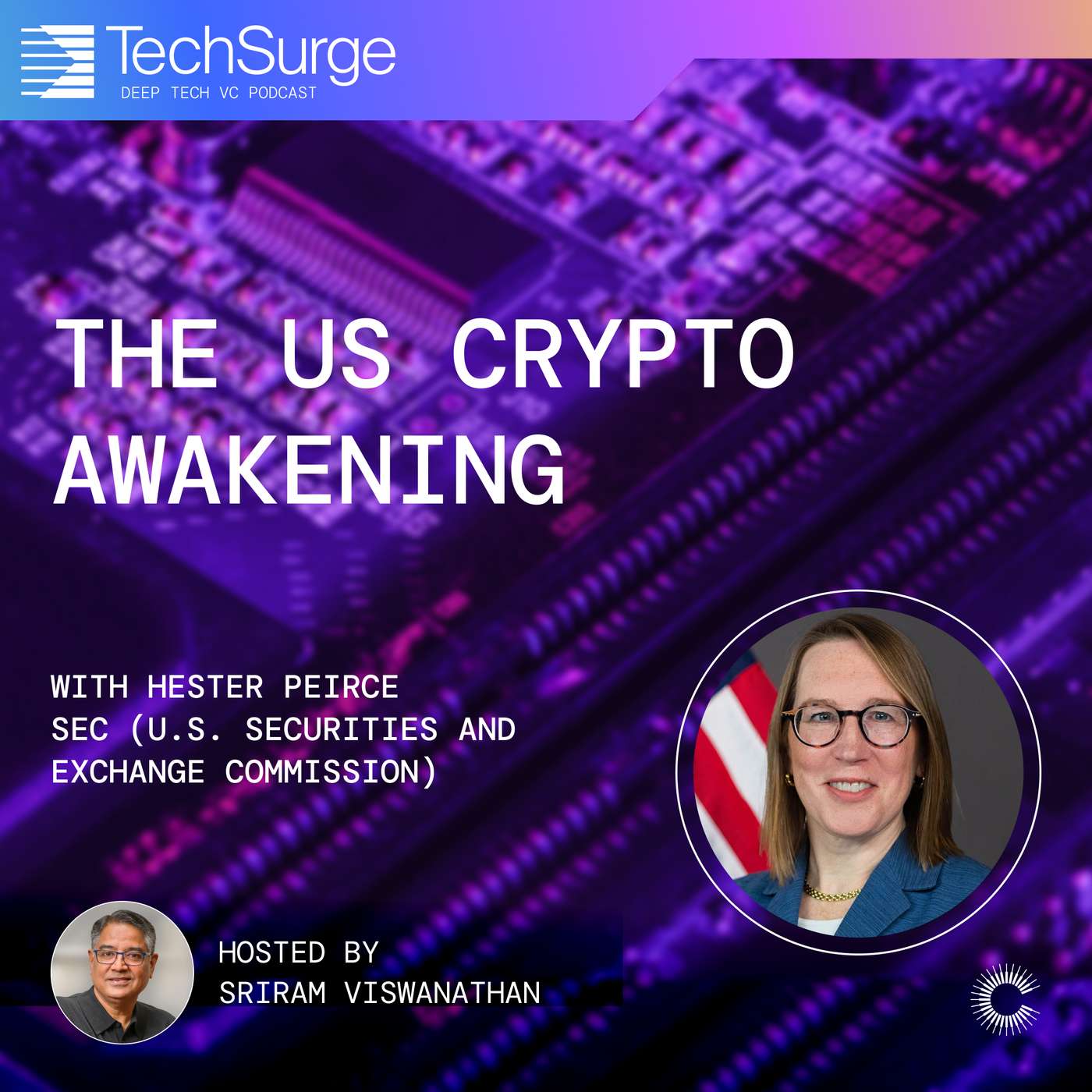 The US Crypto AwakeningTechSurge: Deep Tech Podcast · features Hester Peirce86 / 100
 Kinetic Deposits, the Fraud Stack, and the Inheritance That Won't ArriveWhat's Going On In Banking · on Smart contracts87 / 100
 The Evolution of Digital Asset Infrastructure with Mike Belshe of BitGoRebank: Fintech Analysis · on Clarity Act85 / 100
 Real Estate’s Data Problem: Why Tokenization Keeps Failing | Matthew Schneider, Building Inc.Colors of Web3 & Entrepreneurship · on Smart contracts80 / 100
 Interview: zerohash's Founder & CEO Edward WoodfordFintech Business Podcast · on Clarity Act77 / 100
 EP 163: Demystifying Core Banking Modernisation, AI, and the Future of PaymentsDave and Dharm DeMystify · on Smart contracts76 / 100
 Rani Jabban, 'The Punk Banker' | Crypto, Digital Art and the Long Game
 The Intersection: AI, Crypto and the Institutional Moment
 Alex Buelau, Rayls | AI, Banks and the Invisible Future of Finance
 Boris Revsin, Tribe Capital | The Fight Between AI and Ownership
 Bernard Schmid, Areta | Who's Really Winning the Crypto M&A Race