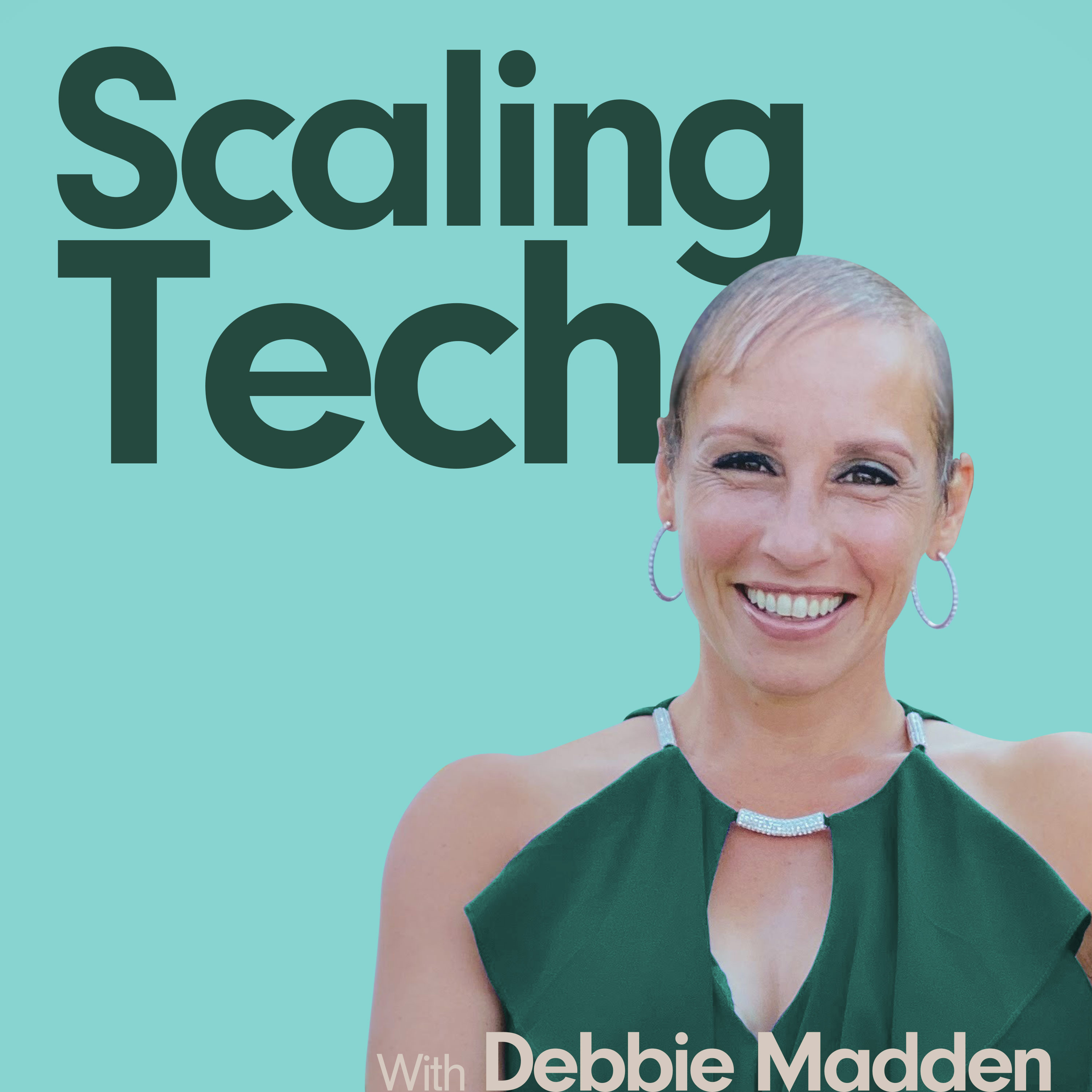
Hosted by Debbie Madden
★5.0on Apple Podcasts · 4 recent reviews
Are you a CTO, Chief Product Officer or Tech leader? Then this one's for you: If there was one tool that would help you learn best practices and avoid top mistakes so that you can achieve your goals, would you consider that tool? If you answered "yes," this is the tool you've been looking for.
45 episodes · publishes fortnightly · latest 2025-01-30 · ~26 min/episode
Rank
#4630
Substance
53.0
/ 100
Breakdown
Scored 2026-07
Updated monthly
Across the index
#4630 of 6203
Substance
Top 75%
outscores 25% of the index
Scaling Tech ranks #4630 on The B2B Podcast Index with a substance score of 53.0 out of 100, scored across 1 recent episode. It scores highest on insight density and originality. The episode contains a handful of genuinely useful technical specifics - the Roslyn-compiler-based tracing approach, the RAG store for code context, and the code-to-requirements inversion - but these are buried under heavy promotional framing, host cheerleading, and conversational filler. The ratio of novel ideas per minute is low.
Averaged across 1 recently scored episode, with cited evidence.
The episode contains a handful of genuinely useful technical specifics - the Roslyn-compiler-based tracing approach, the RAG store for code context, and the code-to-requirements inversion - but these are buried under heavy promotional framing, host cheerleading, and conversational filler. The ratio of novel ideas per minute is low.
“we actually trace the code by, uh, specifying an entry point into the code. And this is highly specific to C. NET code, uh, where we have a tracing tool that works with the Roslyn compiler for C. Net.”
“we can take essentially an exhaustive list of all of the pieces of code that are between you when you do your action in the application and your database. And then we can submit those to an LLM and get the LLM to tell us, you know, like what's going on here”
The framing of reversing the typical GenAI workflow - extracting requirements from code rather than generating code from requirements - is a genuinely non-obvious angle, and the 'unseen code' prediction has some freshness. However, the broader narrative about legacy debt pain is thoroughly recycled territory with no contrarian or first-principles arguments.
“We're essentially doing the reverse process at least in this beginning portion where we're taking the code and we're trying to extract like the, what the heck is going on in terms that people can discuss with one another.”
“I feel like I'm going to go ahead and make a prediction that there's going to be a new class of code... we're going to call it unseen code.”
The guests are internal Stride employees appearing on their own company's podcast to promote their own product; there is no external practitioner, customer, or independent expert. While they demonstrate hands-on knowledge, the format is fundamentally a product marketing piece, not an arm's-length practitioner interview.
“I couldn't be happier, uh, than to have a wonderful chat with some of my favorite coworkers, Michael, uh, Carlson and Michael Wytak.”
“we're going to be putting in the show notes, um, a link so you can have a chat with us, so we can show you 100x um, and how it relates to your needs.”
There are some concrete specifics - the Roslyn compiler, C.NET scope, a real customer anecdote about a fire icon in a UI, and rough time comparisons (same day vs. 2 - 5 weeks) - but no named client companies, no hard ROI metrics, no dollar figures, and the headline stat ('70% of Fortune 500 software is 20+ years old') is unreferenced. Evidence stays at the level of illustration rather than proof.
“we went to the form, we traced through the form, we came back out, we pulled the requirements out, we said, well you know, the fire icon pops up because of Baba Baba Boo. And not only that, it's this color when this happens and this color when this happens.”
“70% of the software that's in use at Fortune 500 companies is 20 or more years old”
The host is interviewing colleagues about their own product, producing an almost entirely softball exchange with no pushback, no probing follow-ups, and repeated enthusiastic agreement. Questions are open-ended invitations to pitch rather than attempts to stress-test claims or surface trade-offs.
“I mean, and I think three, four, five weeks is you're being nice”
“I'm just so excited that we're having this conversation because I think there's like this whole world of what's possible”
First period on the Index - history builds from here.
1 scored on substance · 45 tracked in total.
Loved the insight, “focus on outcomes over output.” Been using that at work to help drive change in our organization’s focus.
- Jondrew33
I loved the quote “If we can't bring the tech leaders to the network, we will bring that network to the tech leaders.” I feel like it’s been more true than ever. Debbie’s connection and knowledge and breaking it down to a podcast will help the tech scene positively! I’m looking forward to the next episodes to come!!
- GoogleMike
Add this badge to your site - it links back here and updates automatically as you rank.

<a href="https://index.fame.so/show/scaling-tech-the-blueprint-for-successful-tech-teams" target="_blank" rel="noopener">
  <img src="https://index.fame.so/badge/scaling-tech-the-blueprint-for-successful-tech-teams/badge.svg" alt="Ranked #249 on The B2B Podcast Index" width="360" height="136" />
</a>Track Scaling Tech's rank
Get an email whenever this show moves up or down the Index. Monthly at most, no spam.
Companies, products and tools that come up most across this show's episodes.
The themes that come up most across this show's episodes.

Ship It Weekly
Teller's Tech - DevOps, SRE and Cloud Podcast

Unsupervised Learning with Jacob Effron
by Redpoint Ventures

Podcast Archives
Podcast Archives - Software Engineering Daily

DevOps Daily with Fexingo
Fexingo

The Pragmatic Engineer
Gergely Orosz
The Engineering Leadership Podcast
The Engineering Leadership Community (ELC)
Podcasts that dig into the same topics.