Reversing Climate Change · 2026-07-02 · 44 min
Key moments - from our scoring
Substance score
21 / 100
Five dimensions, 20 points each
This solo episode from Ross Kenyon uses philosophical and media theory concepts to examine how climate and carbon removal work actually happens. Kenyon begins by explaining dialectic - the method of thesis, antithesis, and synthesis traceable back to Hegel and inverted by Marx - and applies it specifically to the "wizards vs. prophets" framework (from Charles C. Mann's work) that structures environmental thinking. Wizards believe technology will solve problems; prophets warn of hubris and advocate for restraint. Rather than one winning, Kenyon argues climate work requires constant synthesis: earning the right to be wizards through prophetic wisdom, as articulated in David Grinspoon's thinking. He then introduces hyperstition - self-fulfilling ideas that become real through their existence - referencing films like Interstellar and Arrival as examples of how narrative shapes reality. The episode builds toward an upcoming conversation with religious studies scholar DW Pasalka about how these concepts apply to media theory, the paranormal, and climate work itself. Kenyon argues that understanding these dynamics prevents one-sided thinking and reveals how ideas and material reality intertwine.
Dialectic is a philosophical method of discerning truth through thesis, antithesis, and synthesis - two opposing positions clash to create a new understanding. In climate work, it appears as the wizard-prophet dialectic: wizards believe technology solves problems while prophets warn of overreach; effective climate action requires synthesizing both, earning the right to be a wizard through prophetic wisdom.
Hyperstition is a self-fulfilling idea that becomes real through its own existence and narrative power. Films like Interstellar and Arrival use hyperstition to show how stories and ideas can shape material reality; some theorists argue paranormal phenomena like UAPs function similarly, existing outside linear time.
Charles C. Mann is a journalist and author of 1491, 1493, and The Wizard and the Prophet. Wizards are optimists who believe technology improves the future; prophets warn that we've gone off course and need restraint or reversion to simpler ways.
Grinspoon's Earth in Human Hands exemplifies the synthesis Kenyon advocates: becoming a wise civilization on Earth first earns humanity the right to expand beyond it, unifying wizard expansion with prophetic responsibility.
Because wizard and prophet represent archetypal forces that society needs alternately, the synthesis is not permanent but continuously re-synthesized - similar to how coming out of the closet, in queer theory, is ongoing re-emergence rather than a one-time event.
Our reviewer’s read on each dimension, with quotes from the episode.
The episode is a philosophical monologue with almost no actionable insights for B2B operators. The host himself acknowledges the core idea 'may not be immediately actionable,' and large portions of the runtime are spent on tangential digressions through Descartes, Kant, Protestantism, Buddhism, and Bill Hicks with no substantive payoff for practitioners.
It may not be immediately actionable to understand it this way, but I find this way of experiencing, working in climate to help me make sense of it
I sat here for a while trying to figure out the exact right way to introduce you to hyperstition
The application of hyperstition to climate motivation is a genuinely interesting conceptual move, and the wizard/prophet synthesis has some fresh framing, but every framework invoked is borrowed wholesale from other thinkers (Hegel, Mann, Pasalka) without significant transformation or first-principles extension.
the synthesis between the wizard and the prophet, is ideally to earn the right to be wizards by being good prophets
Future humans, whether ourselves or our descendants, are calling to us from the future to create the conditions of a planet they now live in with a stable, livable climate
There is no guest at all - this is a solo monologue by the podcast host. The host is a thoughtful curator but not a practitioner with demonstrated operational scale in CDR or adjacent fields, and no expert voice is present to elevate the episode.
Today's episode is a monologue about some big ideas from, um, media theory, from film, from literature. And it might get just a little bit weird.
That's not what I'm trying to be about. And some days ideas like the hyperition just give me that little. That little boost that I need to stay on track
The episode names specific books and films (1491, Wizard and the Prophet, Arrival, Interstellar, Earth in Human Hands) but contains zero empirical data, metrics, named CDR projects, timelines, or dollar figures. The entire discussion operates at the level of philosophical abstraction with no grounding in concrete evidence.
He wrote 1491 and 1493, both really interesting books about the so called Columbian exchange
I read Daniel Boyarin's book, the no State Solution recently, which is really interesting
As a solo monologue there is inherently no interviewer craft, follow-up, or push-back possible. The structure is visibly associative and undisciplined, wandering through Descartes, Kant, Gnosticism, Protestantism, Judaism, and Bill Hicks without tight connective logic, and the host himself flags mid-stream that the framing 'may not feel super great.'
I'm realizing that the way that I'm framing this may not feel super great to Protestants, and I'm not doing that intentionally
And also, I think it's okay to have movies spoiled a little bit and then go back and watch them
Computed from the transcript - who did the talking, and the words that came up most.
What happens when you care about climate and also want to explore space? What if you love technology but worry we've deeply misunderstood how to relate to it appropriately? What happens when we take the religious claims of others seriously, even when they aren't seen as legitimate as the major faiths? How can philosophy, literary criticism, film, and media studies help solve some of the biggest questions in climate, and maybe even give us all a little bit of extra solace in a time when we sure could use it? Today's a biggie. We talk about some huge concepts, but don't be scared. They're simple enough. You'll get the hang of it while walking your dog and listening to this and soon you'll be able to wow your friends and family with some fancy new $5 words. In all seriousness though, I think these concepts are genuinely useful, and have helped me make sense of my own feelings, how my brain works, and how to understand what it means as a little person to relate to ideality, materiality, and the Antropocene.
Transcribed and scored by The B2B Podcast Index.
Speaker A: Hey, thank you so much for listening to Reversing Climate Change. This is Ross Kenyon. I'm the host of the show. The sponsor is EcoEngineers. Oh, EcoEngineers. What isn't EcoEngineers? I've had a really great vantage point of carbon dioxide removal and so often I'll start talking with a company and they will say something like, oh, well, we've been working with ECO engineers for a while now, either trying to build this methodology or just trying to figure this project out. Uh, trying to get the quantification right, trying to, to figure this M MRV out. That has happened to me so many times and I've been glad to see them have so much success with so many companies in our space. EcoEngineers is essentially a consultancy that helps carbon removal tech and project developers get to market effectively. If you've ever started a company, one of the early decisions that you're going to need to make is which of these things can we bring in house and which of these things do we need to pay consultants for? And often the conventional knowledge here is that it always makes sense to bring stuff in house if you can. But I think bringing in very experienced consultants early on can save projects a lot of time and money. For instance, you might end up on the phone with David Lagreca. David's going to be on the podcast soon and David has done, I don't know, dozens of methodologies within the voluntary carbon market. And if you could just get on the phone with David for a little bit, and you are trying to bring a new, uh, methodology or protocol to market, you have some new approach, you're a biochar project and you're trying to figure out, given your technology region, biomass availability, what is the best way for me to work within the options that I have available to me, that's a person that you could very easily be paired with. David will likely shave off time and money from what would otherwise be a process that is pretty overwhelming. And that's just the start of it too. Eco has been engaged with people I've known or worked with, from everything from project design to the actual MRV plans, doing the LCA itself, registering the project, doing the diligence, support, feasibility studies, tech evaluations, market eligibility. I feel like they're halfway to being an EPC without actually being an EPC for some of these things. Sometimes you don't necessarily need one person full time thinking only about your project. Sometimes it makes Sense to get 10 people on a fractional basis who have worked on collectively hundreds or maybe thousands of projects. Whether or not that will be the way for your company to go, you'll have to take the calls to figure it out. And I think I very much think you should do that. The link is in the show Notes. If you'd like to get in touch with eco engineers, tell them Ross Kenyon sent you. And also two quick points of really fun news. Rudy Krebiel is going to be on the show sometime soon. We've been scoping a show for so long. He's one of those friends of mine that we're always trying to find the right container for a discussion between us. And because we speak so often, it always seems like you can delay and wait a little bit to do it. So Rudy's coming on soon. I'm really excited to have him on. The 2026 Eco Forums training series that Ecoengineers is putting on is coming out soon. It's a Carbon markets training. It's on July 28th. You'll get to hear how experts approach real world, practical how do we do carbon markets, how do credits work, where they think the market is heading, and how to turn those global carbon trends into a smarter strategy than what many people likely have now. If you're listening to this after July 28th, you can go to EcoEngineers US EcoForums link is in the show Notes. Thanks so much for listening. Here's your show. Thanks for listening to Reversing Climate Change. This is Ross Kenyon. I'm the host of the show. Today's episode is a monologue about some big ideas from, um, media theory, from film, from literature. And it might get just a little bit weird. Before I go there, a couple quick shout outs. I have another podcast that I've just recently started up. It's on Substack as writing and as a podcast. If you were a follower of Carbon Removal Newsroom, that feed has now become Climate Workers Anonymous, where people can share their anonymous and unverified information, experiences, feelings about working in climate. If you want to support that show, please subscribe in your podcast app or even better on Substack itself. I'm trying to do a lot more on Substack for both Reversing Climate Change and Climate Workers Anonymous and also Carbon Removal Memes is doing more stuff on Substack now too. Still very early, but trying to figure out how to make the best of the platforms without getting endlessly sucked into distribution. Self promotion. The things that you have to do in this world in order to seemingly to get stuff noticed. Today's show is about two big concepts, two big scary words that are likely to alienate perhaps as much as they are to provoke. These two words are hyperstition and dialectic. And if you're scared and you quit right now, I can't say I would fully blame you. Coming soon is a reversing climate change podcast episode I did with DW Pasalka. Dr. Basalka is a religious studies scholar and author who's written several books that I've found to be genuinely fascinating. She started her work as a Catholic historian. As a religious studies professor, she was interested in stories of the saints and hagiographies and how some of those themes and experiences overlapped with modern ufo. Unidentified flying object, or UAP as the term is more in vogue now. Unidentified aerial phenomena. Not asking you to engage on whether any of that happens to be true or not. It's not germane to this episode. But much of the work that she points to in media theory, media studies, and some of the people who work on some of these strange phenomena have interesting ideas that I think has something to teach people who work in climate. And I very strongly connect this work to my thinking on climate. In order for this to make sense, I'm going to start with the term dialectic, which, if you have any association with it, I have to imagine it's likely negative. It's one of those terms that is sometimes abused. Uh, okay, so it's most famously associated with Hegel, but it goes back to ancient Greek philosophy, and it's basically a way of discerning truth. It's a method. It has some commonality with dialogue. You know, it's between people who are speaking. And in its simplest form, you might have a thesis. Someone sets out a thing that they believe to be true, an interlocutor. They're conversant, has an antithesis, and they sort of battle. And ideally, there's a new synthesis, a new understanding between these two unresolved holes in this resolution, one can progress. One association you likely have with Hegel. And the term dialectic is Karl Marx's famous inversion of Hegel. Hegel was part of the German idealist tradition. Hegel was working on the level of spirit or Geist, you know, zeitgeist, spirit of the times. Hegel has this line that the state is God marching on earth, which I always thought was a really powerful, strange sentence. And the historical process is a dialectic that's working its way towards human freedom. As human civilization grows in complexity and transforms, it engages with both the ideas of the future and its concrete historical past. And it's in a constant negotiation and a, uh, synthesis between these various forces, huge forces. One of the big questions of history is how much do ideas drive progress and how much of it takes place at a more material level. And so if you're familiar with how Marx inverted Hex Hegel, what determines history is conflict between classes. Aristocrats and peasants, factory owners and the uh, proletariat in their friction against one another. History advances. We come to a growing sense of freedom and of self actualization, one might even say. And so once you start thinking in these terms, it's really easy to see how history might have an endpoint or a teleology. Humans have something that they are pointing themselves to that is frankly inevitable. It's going to happen. You don't have to buy this by the way. You can obviously see history as chaos and you can see the various forces running into each other and battling as leading to sound and fury, signifying nothing. It doesn't have to have human freedom as the endpoint. History is not necessarily the development of human freedom. It could be as ah, as is said in Game of Thrones, a ladder. It might just all be power and at some point it might seem like the average person has a leg up and then something else will happen and they'll take a big step backwards and there's no guarantee that we are progressing towards greater spiritual and material freedom. It's actually genuinely challenging to look at history and not see some amount of teleology in there. You look at human civilization and prehistorical times and there's a sense that things are developing, moving, something is coming, something is arriving. Some part of that may be true, some part of that may just be how our brains work. Our brains think in terms of stories and we're guessing the ending before it's even arrived. In the words of Tom Waits, how's it gonna end? At this moment in history, it's hard not to start peering into the future and wondering just how radically our lives will reorient with the ubiquity of artificial intelligence. Especially if artificial general intelligence does arrive. And that would be the moment when human beings are no longer the top species on the planet. But you have a self reinforcing system of intelligence that is non human, that does not require human inputs to grow smarter and better. At least in terms of its abilities, if not its wisdom, kindness or other things that we consider to be humane. One way I like to think about the dialectic as applies to working in climate goes back to the fights between wizards and prophets. So I had Charles C. Man on many years ago. Journalist, author. He wrote 1491 and 1493, both really interesting books about the so called Columbian exchange and American civilization that preceded it. And also his book called the wizard and the Prophet, about how these two paradigms, ways of seeing reality exist within environmental movements and also just within human debates writ large. Wizards are people who think that technology will improve things, that the future will be better than the past, that we're largely on the right track. Prophets are those who wag their fingers and say that we've gone off the track, the course that we're on is bad. We need to revert to an earlier time, a simpler time, a more spiritual time. What's coming may in fact be worse. You will likely have your reactions to the way I've characterized these two groups. You might like one and hate the other, vice versa. You could probably think of examples of wizards and prophets, both that you like and versions of each of them that you don't like as much. You could see yourself as uh, a sort of yin yang with a little bit of wizard inside, uh, a swirl of profit, or a little bit of profit within a swirl of wizard. You are large and contain multitudes. You can do that if you want. No one's stopping you. You can think that all you like. And that's fine with me. And one place I see this especially come through is in debates about whether or not humans should leave Earth and settle other planets. For the people who say that we should leave Earth, the Arthur C. Clarke line is something like Earth is the cradle of humanity, but we were not meant to stay in the cradle forever, Meaning we should expand and grow. It might be a good insurance policy. There could be an asteroid that hits Earth and could wipe us out or send us down an entirely new evolutionary pathway that would take who knows how much time to come back from. There could be any sort of disaster here that would make this really challenging. Or they point to the fact that once we're doing off world projects will have access to microgravity and that will have pharmaceutical impacts. We will learn so much more and technology will grow so much faster. If we're doing this, prophets would say we are not living well here on Earth, things are not going especially well. We are harming the biosphere tremendously. We're stressing all of Earth's systems. And until we have figured out how to live well without greatly harming one another or the systems upon which we Depend, then what right do we have to influence another planet? Alternatively, someone could be a prophet and say, even that is not something that we should do. There's something that is transgressive about leaving Earth. This is actually not what we're meant to do at all. Even if we have earned the right and live peacefully on Earth, it signifies some greater dissatisfaction with life on Earth to seek to leave it. That is spiritually, symbolically unwise. We should listen to indigenous wisdom, stick our toes into the mud, feel the Earth, feel our bodies, stop trying to escape all of that, be content with what we have. A, uh, wizard would retort something like, we have to develop new solutions to the problems that we have in front of us, and that depends upon growth and expansion and trying new things. We can't solve the problems that we've created with the technology of today. We have to keep going. I'm doing my best here to represent these opinions faithfully and non pejoratively. Of course, a synthesis between the thesis and antithesis here would be to say that if we are to expand and become a trans Earth transplantary civilization, we need to be at home on Earth. We need to be wise, we need to earn that so that we can leave in the first place. We need to develop good institutions on Earth, not merely so we can live well on Earth, but so that we can become a truly permanent civilization, one that is not at risk of wiping itself out, but that can explore the universe in perpetuity, in peace and plenty as a wise human order. This is very akin to something like David Grinspoon's Earth and Human Hands. If you've heard any of the podcasts that I've done with him, or a recent episode I did where I summed up some of his work, this is a big influence on the show. And so the synthesis between these two ideas, between the wizard and the prophet, is ideally to earn the right to be wizards by being good prophets. That is how you synthesize this. Not by choosing one over the other, but by trying to unify them and discarding the versions of each that are toxic. That is my synthesis of that key wizard versus prophet dialectic. I suspect we need both of those things. You shouldn't want one to permanently win over the other wizard or prophet. The reason why this is a dialectic is because these forces are archetypal. If this were an opposed set that could be easily synthesized in a permanent fashion, then one would likely permanently win. But that isn't the case. There are times that we need the bold Creativity of wizards. And there are times when we need the stern warnings of the prophet. And you can tell that you have both of them in you in how you play against others that you speak with. If I'm with people who are strongly wizardly, the prophet, parts of my personality will come out. They will be provocative in ways that I think needs to be checked with some of the wisdom from the prophetly tradition. And when I'm with prophets, I often play the opposite role and represent the wizard. The bad way of reading this part of my personality is that I'm a contrarian and I just like picking fights. Maybe there's a piece of that that's true as well. But I think what this signifies is that we're in constant dialectic over these issues. And you can get to synthesis, but it's a constant re becoming of synthesis. It's almost like if anyone listening has read Eve Sedgwick's the Epistemology of the Closet, early piece of queer theory about how quote unquote, coming out of the closet is not a singular event so much as a process of re coming out of the closet in various social scenarios in various ways. And it's not just a, uh, one and done kind of thing. One is constantly re coming out of the closet again and again. And to theorize the closet and the coming out of the closet as a singular time bounded event, we are misunderstanding what it means to do so. By merely listening to this show, you are participating in this wizard prophet dialectic with me. You might write me an email, you might run into me in public somewhere. Or maybe you're just going to be having a conversation with these ideas in your brain about this process of synthesis and this continuing recombination and reforming of both the ideas and the material reality that create space for these ideas to rub against each other. If you have more of an idealistic, and I don't mean that in the romantic sense, if you think ideas move the world, you will see that in our literary life, in the images that we use. If you have a materialistic basis for understanding how the world changes, you will see this in fights over data centers. You will see this over fights of, uh, political economy. And again, even as you try to split idealism and materialism in this way, you've just created a new thesis antithesis complex, which is the foundation, which is the structure and which is the superstructure. Is the basis of reality material about conflicts between classes and who controls the means of production? Or is it about ideas? And ideas determine those things and how do those more abstract parts of our reasoning about freedom and identity and ideas generally shape material reality? That's actually the substrate. The material stuff is just on top of it. And my guess is that the correct synthesis is yes to both. How could you possibly distinguish between these two? Ideas and material reality are so intertwined that how could you possibly think to split these? In fact, one of the good rules that's also annoying to operationalize, and many people have grown impatient with this way of thinking, is that whenever you do have a dichotomy, it's always threatening to break at any moment. If you start pulling on stable categories, even a small amount. What's the John Muir line? You realize that everything is hitched to everything else. Should it really be a surprise that it's that way? My guess is no. I really like the idea of the Lindy effect. It's one of the ways that I choose which books to read. If books have been around for a long time and are still being discussed, they're often worth reading for that reason alone. Um, they've informed civilization in some persistent way. That's one of the reasons why I come back to the classics over and over again. And I tend to be more skeptical of recent literature because I'm waiting to see which of those will truly be worth reading and stand the test of time. Many of the novels or works of art that later proved to be prophetic or genre or zeitgeist defining were not that way at the moment of their creation. Sometimes it takes a while. Sometimes it's only in hindsight that we are able to look back again. The Hegel line. I've quoted this before. In the show the owl of Minerva flies only at dusk. Wisdom arrives in hindsight, looking backwards after it's done. That dialectic of a carbon dioxide removal, climate tech working in climate. It informs the show at such a core level that if you at all enjoy the way that I present ideas and engage with them, it's because you probably have some of that in your brain too. You might not have known until I just explained a little bit of how my brain works that you can see. Oh, that's why I like this. Because it's not editorializing in the same kind of way that maybe other places do. If the show annoys you sometimes, it might also be for that reason. Maybe you want something that has a sharper edge that is sticking out a much stronger position in one of those dualities. Either way you go, you're probably going to enjoy the show that I'm Working on about the Bhagavad Gita. Get ready for that. That's another one of these that's coming soon. Woo. Keeping things weird over here at uh, reversing climate change. Okay, I think that gives the dialectic a fair shake and how to think about it with regard to climate change and carbon dioxide removal, one way to reach through the dialectic entirely is something called a hyperstition. There are many ways to explain this funky concept. I think the easiest way is through narrative. And it's going to be through two films that funnily enough are contemporaneous. Very similar with regard to their use of hyperstition. If you have not seen Interstellar and you have not seen Arrival, both of them use hyperstition in really fascinating ways. I sat here for a while trying to figure out the exact right way to introduce you to hyperstition. I'll share with you a couple definitions that live online and then I'm going to riff on that and add a little of my own complexity and flavor to it on, um, Wikipedia. Hyperstition is a self fulfilling idea that becomes real through its own existence. It's also described as memetic ideas that bring about their own reality. This show is a sort of intro prequel to the DW Pasalka show that's coming out soon. There are some people who work on the paranormal, the occult, new religious movements, new spiritualities. Some of the people who study those ideas will sometimes theorize that uh, what people experience as cryptids like Sasquatch or unidentified aerial phenomena or things like that are hypersticians. They are some kind of trans dimensional being that exist outside of human sense of linear time. Humans as far as I know, experience time in linear, backwards to forwards directionality. As physics has gotten weirder and weirder as time has gone on and this is especially linked to things like quantum theory. There's a sense that time can be experienced all at once, going backwards and forwards, forwards, backwards, all of it at the same time. And that the way that we are seeing things is because that's how our senses have evolved to see and experience reality. If you want to liken this to someone like Kant and look at Kant's relationship to someone like Descartes. Descartes, Very, very famous, I think therefore I am is his attempt to use deductive reasoning out from the fact that he is aware of himself. All he knows essentially is that he, he has consciousness in some way and there is sensory input that is flooding into his body through his senses. To what degree can one trust the senses is one of those super basic questions in epistemology about the study of what we can know that opens up so many questions. Can you trust your sensory input? Descartes was a rationalist of the highest order and thought that the experiential nature of senses were fundamentally untrustworthy. He could only trust the pure rationality of his brain's intellect and to distrust the material world. In fact, Descartes for this reason is uh, often pointed to as quote unquote, Western man's split with nature because it alienated the mind from the body and in doing so it privileges the mind over the body. And that is extended on to material reality into which we abuse nature because it's part of a collective body that we misunderstand. Like all good dualities that eventually gets linked to Christian Gnosticism, which is a well known heresy, uh, at least as it's considered by mainstream Christianity. The world is controlled by a demon, pure spirit is good, but the world, material reality are controlled essentially by the devil. And the point of Gnosticism is to become pure spirit and to not trust the things of the material world. And if you run with this idea, it's really interesting to see how that plays out in something like in Hinduism and as I mentioned, Bhagavad Gita show that's coming. And it has a really interesting nuanced take around material reality beyond what is typically considered to be part of Hinduism. But Buddhism and various types of asceticism, M in general is very much about rejecting the senses, the body and focusing on spirit or mind or nothingness and getting beyond Maya, uh, the things of this world that are distracting to us. In fact, a lot of people see Protestantism as especially is a very cerebralized version of Christianity. Older forms of Christianity were much more embodied and sensory and focused on what is called smells and bells, incense, songs, liturgy. That is meant to be impressive. Protestantism, in its focus on the written word so deeply prioritizes being able to articulate in finite form ideas. Protestantism may in fact only be possible because of the printing press. This ability to access the written word privileges reading and writing to such an extent that it reordered our minds. And much of Catholic and orthodox practice is about the body. And it isn't purely, uh, a cerebral exercise. In fact, Orthodoxy is famous for being less intellectual. I don't mean that in a pejorative sense here. I think Orthodoxy privileges a mystical experience and the Desert Fathers and things of that nature. Judaism is interesting too. Judaism, like I read Daniel Boyerin's book, the no State Solution recently, which is really interesting. Jewish studies, sort of like critical theory, cultural theory, uh, text. A lot of it was spent trying to analyze, like what makes a Jew a Jew. He argues that is not halaka, Jewish law, and, and about whether or not someone is matrilineally descended from a Jewish woman. But it's much more about connecting to a text line that runs throughout Jewish history. Like, do you engage with these texts, yes or no? And if so, one has a claim to Jewishness in a way, among other things. And while that might sound like it privileges the intellect and cerebralizing God's law or something like that, so much of what is debated within, disputing for the sake of heaven, as is often put within Judaism, is about what we do with the body, about how the body is meant to be treated. So it's one of those things that's both like extremely high and cerebral intellectual, but also heavily embodied as well. I'm realizing that the way that I'm framing this may not feel super great to Protestants, and I'm not doing that intentionally. They're all different ways of comprehending reality. And I'm trying not to say one of these is better than the other right now. This is something that people point to Descartes on in any ways, back to Kant. Kant very famously has the split between phenomena and noumena. Kant has this way of understanding perception that we are locked into our bodies, that what we experience is a set of phenomena. And phenomena is inherently subjective, and there may be a transubjective nature of it. Maybe we may not be able to know that because we cannot see outside of our senses, we cannot sense out of our senses, we cannot reason outside of the rational structure of how our brains work. And so there's this noumenal realm that might be outside of what we can sense. And we have only evolved senses for very specific evolutionary purposes. Does this help survival, yes or no? If the answer is yes, those senses will likely be enhanced to protect it over time, if no less so. And how do we know that we are perceiving the full range of what is available in terms of information that exists? We don't know. And in fact, we get better at knowing this all the time. If that is true, one must be open to the fact that there must be information. At the very least, maybe information that exists outside of our ability to perceive it right now or perceive it in full right now, or maybe perceive it in full ever, maybe that's something that exists beyond human capacity. Ipso Facto, if one is open to the idea of ultimate unknowability and open to the fact that physics may be far stranger than our experience of it, and that by some accountings, time may not only move backwards to forwards, and it's possible that non human intelligence exists, which is another huge question. I did a show about this as a thought experiment last year that's about Great Filter Events and David Grinspoon that you should check out. Because, again, I'm not claiming that there are non human intelligences in this way. I'm not trying to convince you one way or the other. Right now, we're talking about it in a very theoretical thought experiment kind of way, then there may in fact be entities who are able to access time in the opposite direction or to experience time in full and all at once. And a hyperstition is something that comes from what we perceive as the future reaches back in time to either create itself or create the conditions for itself in the past. If you haven't seen Arrival or Interstellar, I basically need to spoil them to discuss them. Um, that's the tough part about using literature or film as a exploratory device here, is that there often is not a good way to do it. If not, if that bothers you, go ahead and pause and come back to the show another time. But also, I think it's okay to have movies spoiled a little bit and then go back and watch them. Sometimes I feel like that even increases the enjoyment of them. For instance, I just watched Mother by Darren Aronofsky, and I wish I had read a little bit about it before I just dove in. Sometimes it's nice to go in with literally no information. Sometimes it really does help the enjoyment to know a little bit about the symbolic order that is being presented in arrival. Extraterrestrials arrive on Earth. Various humans are sent to try to make contact with them, to learn what they can, and to figure out what exactly is happening, because the extraterrestrials are just parked on Earth floating above it. Amy Adams goes with a couple other people who are chosen from various scientific disciplines to do this work. And she's a linguist. Her job is to figure out what they're saying. She notices that they have a unique orthography. Actually, it's not even an orthography, because they're not letters. They're full ideas. The language is circular. The symbols that they use are these circles with various types of definition. On the outside, it almost looks like a black paint has been splattered. Everyone thinks that what is going to be learned about these creatures, is going to be learned by the other scientists, and that the linguist is essentially there to, uh, assist them in figuring out the important stuff. Only it turns out that the language itself is what is important. Their language is circular and it conveys an awareness that time is not linear backwards to forwards. It exists all at once. As Amy Adams learns how to speak this language, her awareness of time also changes, such that she experiences time all at once as well. She experiences her entire life and can see her entire life and what that means for her. Near the end of the film, things are not going well. Various governments have sent up their own representatives and scientists to speak with, uh, extraterrestrials in their vehicles above various world cities. There's tension between the US and China at this point in the film. And because Amy Adams has learned how to see reality in this alien way she is able to pull, she knows that she can call the Chinese leader and tell him something that no one else would know that would get him to stand down and to relax this escalation. Amy Adams pulls a memory from the future, which in our view of reality has not happened yet, into the present in order to create that future hyperstition. Funnily, uh, enough, almost the same mechanism exists in Interstellar. Matthew McConaughey, astronaut on a dying Earth, goes through some wormhole, much like contact, ends up in a tesseract, or at least what the movie says is a tesseract, sort of four dimensional cube that has, uh, a temporal element to it that I'm still trying to wrap my head around. What exactly this might be isn't super important for the purpose of explaining this, but inside of this Tesseract, Matthew McConaughey is back where his daughter is when his daughter hears a ghost in her bookshelf. And it's Matthew McConaughey trying to reach her from the future or a trans temporal dimension to tell her to do something in the present as, uh, she experiences it that will impact the future, the future calling back on the present to change or to enact the future. Hyperstition. It's a very cool literary device. Or you can be critical of it and say it has a little bit of the deus ex machina. There's a famous scene from south park where they're making fun of the rules that time travel movies never really make sense. They're all, maybe I'll put the link in substack if you really want to watch that, uh, that little clip. But let's just take for Granted that this idea of hyperstition is a worthwhile literary term. Ignore all the other stuff about whether or not this exists in some sort of real sense, and just think about it. For a story about history that we tell ourselves, our ability to handle climate change is a hyperstican. Think about it this way. Future humans, whether ourselves or our descendants, are calling to us from the future to create the conditions of a planet they now live in with a stable, livable climate. It's only a hyperstition if we hear it this way. If we don't do it, it's a daydream. But if we are able to pull it off, it's because in some sense the future has called to us in the present to enact the future that they now inhabit. It's a weird way of seeing this. It may not be immediately actionable to understand it this way, but I find this way of experiencing, working in climate to help me make sense of it and to work towards making the daydream a hyperstition. It's motivating. It's beautiful. I like to be open to the possibility of things like this because I used to be much more closed off to them. And I'm just open to the fact that reality, uh, might be a really bizarre thing that we've all sort of lost sight of. It reminds me a little bit of when I was a younger person. I really liked Bill Hicks. If you're out there listening and you like Bill Hicks, shout out to you. He reads it so much angrier now that I'm older. But there are parts of him that I find to be helpful. I especially like his famous speech from one of his standup specials, that life's just a ride. We get so distracted by conflict and by pleasure and by our own suffering that we forget that this is a. What, uh, is this thing? Like, how, how did we end up here? We have bodies, there's an atmosphere. We grew out of a space rock. And isn't that amazing? And I think spiritual practice should do at least two things. It should also probably do some others. But the two that I'm going to focus on here is that it reminds us that we ultimately are not in charge of everything. It reminds us that whether it's a living Earth, whether it's the cosmos, whether it's a God or gods, humans are not the ultimate power. We don't actually have to decide literally everything. It's too much responsibility for us. And moreover, believing that we can and should be this powerful can have a toxic effect on us and that it's better that we do not embrace and try to do this in that way. Secondly, it should remind us that both life is incredibly sacred and m important, but also kind of funny. It's amazing that this exists. And if it's amazing that this exists and it's kind of funny that we control bodies and are on a space rock, then can't we just be nicer to each other? Can't we just laugh about why we set everything up like this? Why are we choosing misery when we could have a world that is beautiful for everyone? And ideally, that should make us more humane and connected with one another and better able to do this work. Because life's just a ride, right? We can laugh at it a little bit, right? And if you are thinking about that high precision reaching back into the present, I imagine it just like piercing all the way through synthesis, all the way through thesis and antithesis, breaking that dialectic and sort of shaking us out of this conflict. And to be thinking about how do we create the world that is calling to us from 2050 that needs us here to create it, Some of the dialectical suffering that we're experiencing may not be necessary at all. Maybe some of these things we can set aside so we can make sure that we're oriented in the right ways to achieve the things that we so desperately need to in order to become the species that we must be for us to continue and to develop as a permanent civilization on Earth. We can do it. If I didn't believe that we could, I'd be building a bunker somewhere. That's not what I'm trying to be about. And some days ideas like the hyperition just give me that little. That little boost that I need to stay on track to continue with this very difficult work. Thanks for listening. Hope you love a strange monologue y kind of show. Tell you what, think about this. Don't tell anyone about it. You can just think about it privately for a while. And don't do anything on any of your apps. Just think about this privately and I'll consider that a win for this one. Uh, you made it to the end here. You're one of the real ones. I really appreciate it. Hope this gave you something new, something to chew on. And be sure to listen to the show with DW Pasalka that's coming out and the episode about the Bhagavad Gita. Bye for now. Mhm.
Other episodes covering the same guests and topics, from across The B2B Podcast Index.
 405: Does Managed MRV imply the existence of Unmanaged MRV?! - w/ Varsha Ramesh Walsh, Offstream
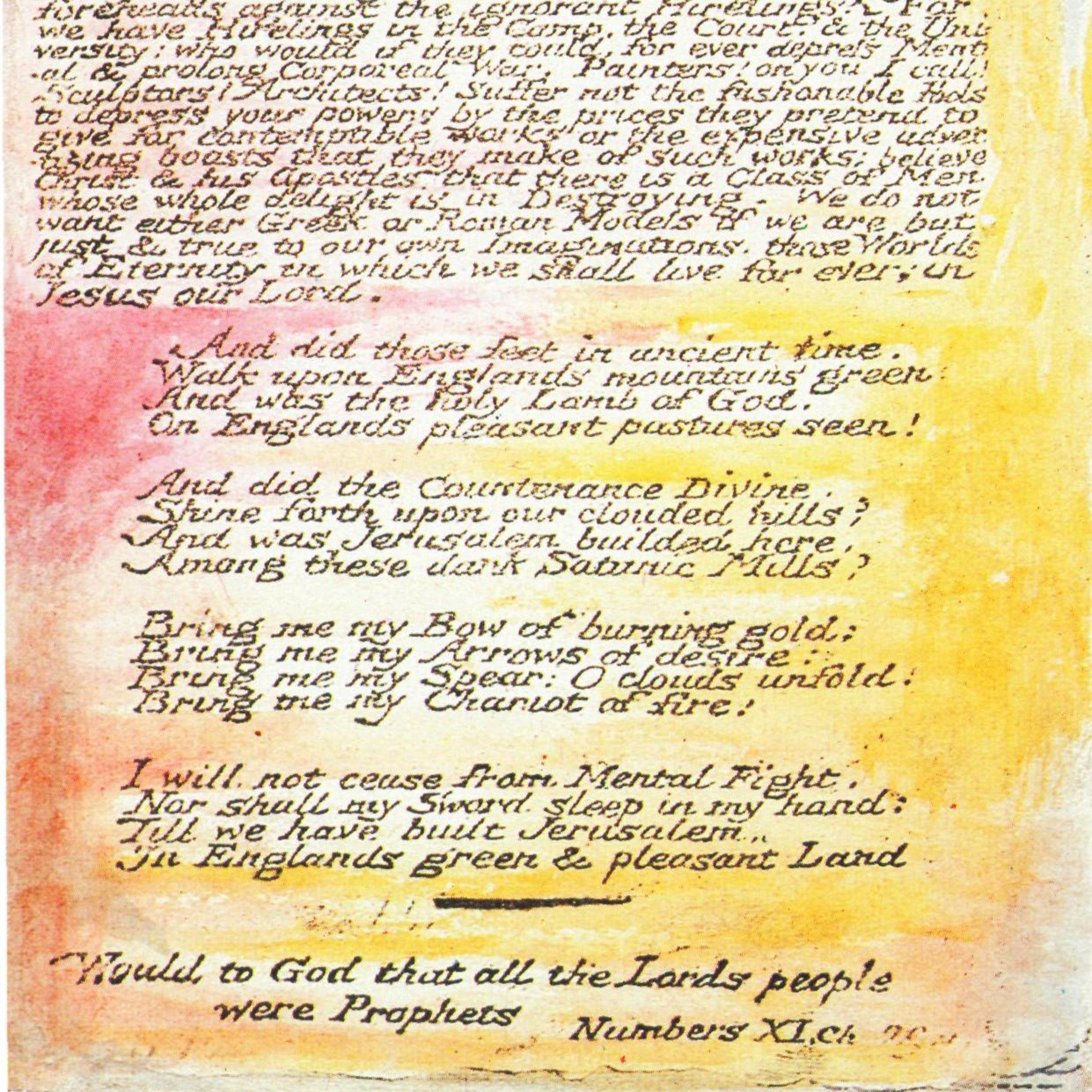 And was Jerusalem builded here, Among these dark Satanic Mills? - "Jerusalem" by William Blake
 404: When will insetting work for carbon dioxide removal? - w/ Tom Mills, Stripe Climate Fellow (former)
 403: How to get max value from carbon market consultants - w/ David LaGreca, EcoEngineers
 402: Reform vs. Revolution from Microsoft to the Salvage Yard - w/ Drew Wilkinson, Climate Leadership Collective