
Productized Podcast · 2026-07-03 · 17 min
Key moments - from our scoring
Substance score
66 / 100
Five dimensions, 20 points each
Feedzai's Rodolfo Cristóvão and Mike Yeardly present a framework of five identity mutations that product teams must undergo during hypergrowth. The first shift moved them from order-taking (saying yes to every customer snowflake) to building a platform that unified fraud detection across bank channels - recognizing that criminals don't respect organizational silos. The second required courage to say no with evidence and customer testimonials, moving from feature-driven to strategy-driven decision-making. Third came the emotional detachment necessary to scale from one-to-one customer relationships to serving entire industries. GenAI triggered the fourth mutation: recognizing that UX alone is no longer a defensible moat, forcing them to shift from design-centric to data-centric and identity-centric product thinking. Finally, they evolved to a partner-led model where product managers become force multipliers and enablers rather than direct builders - setting foundations and frameworks that partners can scale. Throughout, they emphasize that product management roles aren't static; they must evolve with company scale, and PMs themselves must grow in mindset from generalist doers to architects and guiders.
Moving from disconnected products to a unified platform; transitioning from saying yes to every customer to becoming a strategic filter that says no with evidence; shifting from UX-centric to finding competitive moats (data, intelligence); moving from direct customer relationships to partner-led enablement; and recognizing that the PM role itself must evolve from generalist doers to architects and force multipliers.
Because criminals don't respect organizational silos - they exploit fraud across channels (card fraud, account takeover, credit applications, cash-out). Banks needed a unified solution that could see signals across all fraud domains, not just isolated vertical solutions.
By finding defensible moats beyond surface design - in Feedzai's case, the moat is their data (processing 120 billion events annually), trained models that detect fraud faster than criminals can adapt, and proprietary identity intelligence that can't be quickly replicated by competitors.
Detaching from the personal gratification of one-to-one customer relationships and the 'thank you' moment; instead finding fulfillment in enabling scale - protecting billions of customers or serving entire industries rather than individual happy customers.
Say no with evidence - customer testimonials, benchmarks from similar customers, data on what's working across the industry - never saying no in isolation, but backed by intelligence and insights that help customers understand the reasoning.
Our reviewer’s read on each dimension, with quotes from the episode.
The speakers articulate a coherent framework about identity evolution in scaling companies and move beyond surface-level startup advice by grounding observations in concrete Feedzai examples (the shift from custom integrations to platform thinking, the Gen AI threat to UI-centric positioning). However, the insights are somewhat predictable for experienced operators (saying no to customers, building platforms, finding non-UI differentiation) and the density of novel claims drops significantly in the latter half where emotional themes repeat without new substance.
what you do at 100 people is gonna get you fired at 500
Criminals, they don't respect your org chart, neither your customers orc chart
The framing of identity death and rebirth is moderately fresh, and the lens of emotional detachment at scale offers some nuance beyond standard scaling advice. However, the core moves - platform over point solutions, saying no to customers, finding technical moats - are well-trodden in B2B SaaS discourse. The Gen AI section feels somewhat reactive and unoriginal (UI threat from commoditization is widely discussed). The emotional labor angle on PMs is somewhat novel but underdeveloped.
let your current product management identity die so that you can reborn again
the shift for us in in in in particular is is the shift from becoming centric to becoming data
Both speakers are highly credible: Rodolfo is Senior Product Director at Feedzai (9x growth from 100 to 900 people over 8 years, operating at scale with $1T payments processed); Mike is VP of Market Solutions with prior fraud leadership at Lloyd's. Both are practitioners who have actually navigated hypergrowth and scaling challenges at a sophisticated B2B company, not career podcast guests. Their specific operational context (banking fraud detection) gives them real domain expertise.
I joined Fitzai. It was a still a small company...today, fast forward eight years, we are nine hundred people...We process around one trillion dollars in payments
I used to be ahead of fraud. I'm a customer of product
The transcript includes concrete metrics (Feedzai grew from 100 to 900 people in 8 years; processes 120 billion events annually; protects $1B in fraud globally; serves ~1B customers) and specific customer stories (the 'rope' quote, schema/UI customization examples). However, much of the strategic advice lacks supporting evidence: claims about Gen AI replacing UI work lack timelines or customer examples, the emotional shift discussion is largely anecdotal, and partner-led models are mentioned without metrics on outcomes or adoption rates.
one hundred and twenty billion events a year globally from our customers. We we ⁓ Process around one trillion dollars in payments and we protect fraud
sometimes we hang ourselves to the extent of the rope that you provide us. The more we do, the more they'll take
This is largely a back-to-back presentation rather than a dynamic conversation. The two speakers trade segments with minimal challenging questions or follow-ups visible in the transcript. The host's sole intervention at the end is a softball observation ('love that...something to reflect on') with no substantive push-back or deep follow-up questions. There is no evidence of the host probing assumptions, asking for evidence, or driving genuine debate that would test the guests' claims.
Thank you, Mike and Rodolfo. love that, you know, it was a sponsored talk and yet it gave me something to reflect on.
So our next talk a sponsored talk by Rodolfo Cristovau and Yerdli from Feedzai.
Computed from the transcript - who did the talking, and the words that came up most.
In the high-stakes world of B2B SaaS, the very strategies that propel a company to $100M ARR often become the primary obstacles to reaching $200M. Using Feedzai’s decade-long journey as a case study, Rodolfo Cristóvão and Mike Yeardley explore the "PM Scale Paradox" - the realization that scaling a category-defining product requires a series of intentional "identity deaths." - JOIN THE COMMUNITY
Transcribed and scored by The B2B Podcast Index.
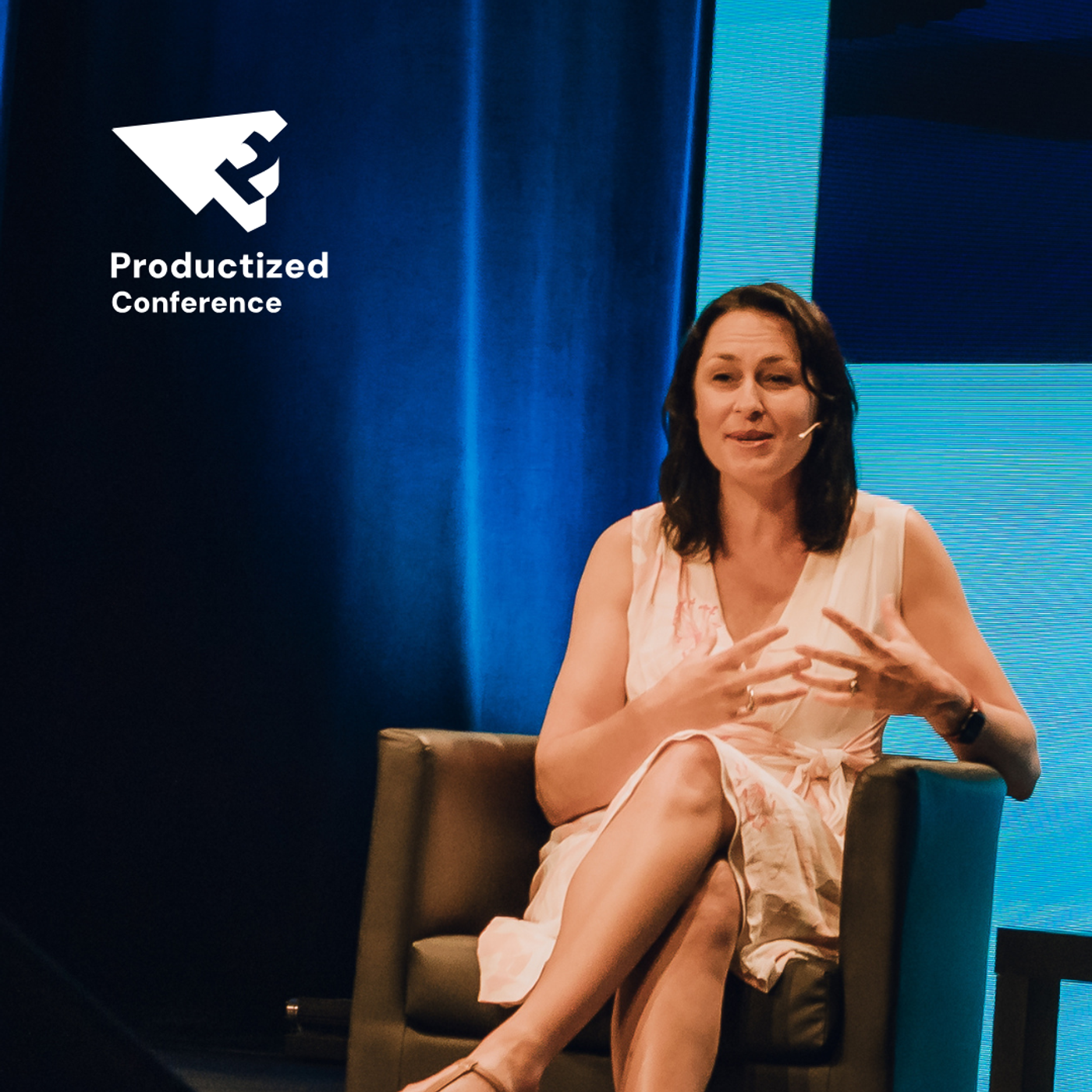
Productized Podcast: So our next talk a sponsored talk by Rodolfo Cristovau and Yerdli from Feedzai. So, talk adaptation, right? Their talk is about how had to constantly change how they were building. and they had to keep killing their identities ⁓ and rebirthing new identities.
so it's kind of the five lives of the Fizai cat. So, to give you a quick background on them before they us, Rodolfo been a builder and engineer all of his life, and he's the senior product director at FeedZye. And Mike is the VP of Market Solutions, and he has led fraud control at Lloyd's in his past So let's welcome Mike and Rodolfo. Hello.
years ago I joined Fitzai. It was a still a small company. I think we could still fit in the same building, although it was not really a s early startup. It was already maybe one hundred people, maybe a little bit less than that.
⁓ so I joined as a product manager. today, fast forward eight years, we are nine hundred people. We have processed ⁓ one hundred and twenty billion events a year globally from our customers. We we ⁓ Process around one trillion dollars in payments and we protect fraud.
That's our core game. We protect about one billion dollars of fraud globally, about one billion customers as well. So here's what nobody tells you when you join like a hyper-growth ⁓ B2B SaaS company ⁓ like Fizai and many others, obviously, the product manager that starts the journey is definitely not the product manager sitting here today. So what you do at 100 people is gonna get you fired at 500.
So you you have to adapt. And the same thing from 500 to 900. that's that's it. This is this is me.
that's Mike. We are both product folks here at FeedSai. and we want to share the convers the ⁓ our personal story with you guys. stories that cost sleep in many cases, some in some cases money, or potentially we can say that.
Potentially money, or customers. and it's about five Five mutations, five experiences we want to share. Five times we had to let our identities die so that we could reborn again. All of them taught us that scaling isn't a skill problem, it's an identity problem.
That's it, five identity tests. So going back to the beginning, feeds eye, our customers are banks. One of them walks in, they sign the contract and they say, Look, we like your APIs. And we like your UIs, but actually, you know what?
We already have an API. This is this is the schema that I want you guys to use. Your UI is really nice, but I actually want this different. And obviously you say yes.
That's your whole job as a startup is saying yes to these companies, right? So a second customer comes in, always big banks. That's also something very specific about Fitzai, anyway. you the same thing, different schema, no problem, different UI, no problem.
So and then another one comes in, another one comes in. Six months later you get ten more customers, that's awesome, but they're all held together heroically by three or four engineers that can't go on vacations. Period. So that's that's what you end up with it.
And that's the feeling I want to for you to have on on this transformation is each customer is a snowflake, you feel productive, you're shipping, you get more and more logos on your website, your company loves you, and you feel like a hero. The hero PM, that's actually something very well very well documented. But over time, you're you you don't become a hero. You actually you're fragmenting your product, you know, becomes too widespread.
So you need to think about what to do. And the shift is actually in ⁓ different from company to company, so there is no no silver bullets here. But you need to do the opposite of what every every startup advisor tells you. In our case, you can't go narrow.
You really can't go near one do one thing well. In our case, our banks, our customers, they they actually suff suffer fraud very differently across domains. So let's imagine you have a card, you lose your card, somebody hacks your card, and they start spending money, they have access to your account, no, they go to a different side of the bank with a different siloed system, and they start, you know, take ⁓ transactions from your financial account. They actually can apply to credit as well, ⁓ can cash out, and then you're the one in deep in deep problems, but it our bank ⁓ the bank itself will have to cover.
So We said no, look, we have we have to understand the customer business. We have to think about a wider solution to this, a platform in our case, that can actually look at all these signals across the bank. If we had stayed in a specific vertical sol just solving for cars or just solving for that other specific problem, it wouldn't have worked. Criminals, they don't respect your org chart, neither your customers orc chart.
I can tell you that. So you we really have to th thought about a a platform that created And see those issues across channels. It's me. I'm gonna start with an apology.
To the productized community, I need to hold my hands up. I need to repent my sins. I the liability. I was the liability.
I used to be ahead of fraud. I'm a customer of product I wanted flexibility. And if I'm brutally honest, I wanted what I wanted. And I didn't care if I needed it.
I just wanted it. I wanted the flexibility. So I then joined Feese Eye, I find I'm on the other side of the fence. But I am the problem.
Thankfully, Rodolfo thinks I'm a snowflake. I have been called far worse by many product organizations. And what we found at Feese Eye was you face into a hundred me's. And fundamentally, there aren't a hundred different me's when I'm ahead of fraud either.
90% of the problems are 90% of the problems. Globally, there's a lot of transferability. So as Rodolfo talked about. Building that platform, it started to move us from how do we win the battles individually with our customers to how do we win the war?
How do we get ahead of what the market needs, what the industry needs and what our customers actually need. That doesn't mean we're arrogant and we think we know better. It means that we've learned together and we share that learning back. So we built a platform.
Analysts loved us, be honest, the banks loved us, the still love us, technology providers love us. But those compliments were great for us. As a reality check, compliments just mean that you're pandering to my needs. You're becoming my professional services organization.
Really, I wanted a product organization that would lead me forward. So us saying we can do something became then going, you can do anything I want. That changed our pricing structure, changed our operating model. By moving to that platform view, it gave us the ability to stop that fragmentation and kind of build from the centre.
If look at the next part, what that really needed was a mindset shift. We needed to change our behaviours. But Alfred's talking this evolutionary cycle, we needed to grow and change. We needed to move from being generalists doers to architects ⁓ and and guiders.
It's not what you need. It's not what you want. It's about matters and what delivers for you, what gives you the outcomes that you're aspiring And we had to go on that journey ourselves as well. How do we move to having a convention, a framework, a structure over infinite configurations and customizations?
So if we kind of go to the next slide, Rodolfo, that then gave us do you have the power to say no? I would actually probably say it's a different sentence. It's how do I have the courage to be able to say no in those circumstances? It wasn't always the easiest customer to go up against.
Not sure anybody in the UK knew better than me what the fraud problems of the UK were. And I have my partner, my delivery partner, my my platform provider having to come and give the courage to say no. Got a couple of customer stories for you about this as well. If you click on Rodolfo, this is actually a genuine statement from one of our customers.
So sometimes we hang ourselves to the extent of the rope that you provide us. The more we do, the more they'll take, and the more they go down the rabbit hole. Of creating an enduring problem. They cannot scale because they've honed themselves so tightly that they can't move.
So that was a real customer quote, and we've had plenty. We've had other customers who've got hugely complex requirements, think they know what they need to do, massive compute costs. But we had to start to say no. The difference we did was we started to say no with evidence.
with backing, with testimonials, with other customers' insights as to what was working. So it was never knowing in isolation, it was know with the right intelligence, the right insight and the right feedback. And for us, was a real mindset shift. Not only how do we federate that information into ourselves ⁓ we can give back more than what we knew individually, but also we needed to move from a build and a deliver mindset.
And we need to start leading and shaping the way that our platform went, but the way that we engaged with our customers. What did that mean for our product management community and specifically our product managers? You had to leave that emotion behind of being able to say, yes, I did something for somebody, and they got what they wanted and they were happy. Needed to focus on how do I provide that as a at scale capability where lots of people, lots of customers, the whole industry perhaps, to be happy, but I personally might not have that give and take in terms of feeling it myself.
So I had to we had to detach ourselves from emotion of a thank you and a well done to realise that by doing that we could do better and we can do a greater good. Victor mean? Okay, so raise of hands. many of you have spent time, let's say in the past month, you know, looking at UIs, developing your user experience with your customers?
Show of hands? Still a good a good portion. I was expecting more, ⁓ to be fair, but it's still fine. we know we spend a lot of time ⁓ polishing the UIs.
That I mean, that for for years this was our job. The product managers thrive with that. surface area with the customer pixel by pixel, maybe together with your designer. But you know, that's that was the way you communicated to the customer, and still is for for the most part.
Right? Then Genai came in. Genai changed everything. And right now, our teams and many, many, many places, you can that that part that usually took you months and months and months to polish with discoveries with the customer, validation of prototypes, back and forth, took months now.
Then in I I'm no I'm gonna say minutes just to be more provocative. But it can be done really fast, maybe less than a day for sure. So Right now that can be replaced by a model that doesn't know your industry, doesn't know anything about you, but the surface itself, the UI, it can be replaced. So we have to make ourselves the question.
So if that's so easily replaced by, you know, someone working in the garage with two freshly newbies from the universities, if you can be copied, if your product can be copied as fast as that, so what's left? How do how do you survive it, right? Again, they're not gonna say any any any any magic bullets here, but The shift for us in in in in particular is is the shift from becoming centric to becoming data, you know, in our case, identity-centric, right? the product cannot be the UX, cannot be the UI alone.
It needs to be more. You have to find that mode inside your own company, right? in our case it was a little easier. we're sitting ⁓ on top of a pile of data.
So we as I said, we process 120 billion. The the intelligence we learned with it, the models that we cre create on top of it that can actually be trained faster than fraudsters can find new cracks on the pavement to you know to steal money from, in some cases to us, into our families. was moat. So it wasn't UI anymore in in many cases.
Actually we're going to a point where customers want to interact with us with agent with agents that they built on their own. So they might not even use in a year or two our AIs anymore. So you have to think what's left. You have to find that moat within our companies, within your own strategies.
It's not does not this doesn't apply to all the the companies out there for sure. So that's it. think about it. that's the feeling I wanna leave you ⁓ on slide is what's your moat in your company.
And back to you, Mike. Yeah, kind of where we are today. I I kind of touched on my last slide about emotion. And if I'm honest, I kind of think if you don't get emotional about your job, then something's kind of going wrong.
And I think we're very proud that we get to demonstrate emotion, even if not maybe with that one-to-one relationship anymore. But our organization has changed as well. From being that user customer experience into a partner-led experience. ⁓ detached ourselves again.
We've further ⁓ back in the cycle chain. One of the problems with that is you move even further away from that personal gratification, that relationship with customers and the The warm fuzzy feeling that you can get. But we can do that at scale. We've got figures that we talk about now protecting one billion customers.
trillion dollars is through the feed-year engine. It's great that I can talk about which individual customers happy, but ultimately at scale, that's the that's the level that we're now at. And to continue grow that, it's moved to that partner-based mindset. We need to set with scale less direct but more.
The ability to kind of shape and give that engagement to others. So how do we set their foundations? Moving from getting the love ourselves to almost feeling that in a secondary nation in terms of the way that we get that from a partner ecosystem. That's an emotional shift.
And it's honest, that's what an emotional shift our PMs are still going through. I think they're doing a great job at it, if I'm honest, but there's still lessons to be learned on that as we grow even further as a partner organisation. If you then look at it, you've now got that trilateral relationship, you, the partner, and the customer. You've moved from delivery to enablement.
Your personal growth was previously aligned with the company in terms of that slow relationship. You could build that over time. But as we've scaled, the relationship has to scale for the product management team as well. They now need to look at how to create that repeatability, that transferability for whether it's API, docs, configs, GTM, whatever that is, we need to be the enablers.
For those to then take that forward. We need to set those foundations, we need to set those frameworks, need to lose a little bit of our soul that we've always had, and we need to find a new part of our soul, which is we can protect a billion customers if we set these things right. We previously protected maybe 30 million in my case, but we're now looking at that level. And our PMs are growing with us, they're leading us in lot of ways in terms of being able to set those right foundations.
So I think if we put the next one on, we need to be that force multiplier. We need to be the ones that make that difference. that's been our evolution. That's kind of where we are today.
That's where we're really pushing on now. We've done some great work, but we've always got more to do. But again, that kind of detachment is a personal goal as much as a professional goal, I think, for our product management team. Thanks, Mike.
So we're about to wrap up. I just want to leave you with ⁓ with this framework. These are five personal experiences, five personal mutations that we did. You know, we went from being disconnected little products to to a platform, and then that platform became too flexible, so we had to become a category architects, solving specialized problems, a order taker saying no way is a feature, strategic filter, and then from UX centric to actually finding your mode with Gen AI.
And right now we're at the partners phase where we need partners to actually scale. So to get from you know two hundred, five hundred million RR, you don't get there with your own company. You need to find partners. And so you to find yours.
So Mike? ⁓ Yeah, final words, PM role's not static. I don't think I'm preaching anything to a ⁓ an uneducated audience around that. It does grow, it grows with scale, and it will continue to grow for us.
We've got that growth mindset as a company, but we also need to bring that through. Our product managers as well. The output that we delivered when we were a fifty colleague company is very different to the outcomes we need to deliver as a five hundred and nine hundred colleague company that we are today. But our colleagues, our product managers grow as we scale.
So hopefully for us, we're also ⁓ that opportunity for our colleagues to grow as company grows and they'll be able to shape the way that we move forward going forward. Yeah, that's where we are today, Rodelpho. So that's it. a takeaway everyone product management is not a static set of skills.
We've actually seen this in previous conversations here in this forum as well, present presentations. You'll need to let your current product management identity die so that you can reborn again. Thank you. Thank you, Mike and Rodolfo.
love that, you know, it was a sponsored talk and yet it gave me something to reflect on. Something interesting where, you know, as I work with organizations, what is an identity that the organization might be holding on to that it's time to let die?
 Welcome to the Software Renaissance. Your Strategy Isn't Ready | Martin Eriksson82 / 100
 Three Money Stories You Need To Tell | Rich Mironov83 / 100
 Pricing in the Age of SaaSpocalypse | Emanuel Martonca89 / 100
 Uncertainty Is the Strategy: Stop Waiting for Clarity | Tania Nemes79 / 100
 Building Out Loud: AI native Startup Journey | Faith Forster and Randy Silver85 / 100