Podcast Ally · 2024-09-26 · 19 min
Key moments - from our scoring
Substance score
34 / 100
Five dimensions, 20 points each
Robbie Hardy brings decades of entrepreneurial experience to this conversation, covering her evolution from corporate M&A work to founding multiple companies while mentoring women since 1986. She shares candid insights about the reality that business growth takes 2-3x longer than projected, the importance of having Plan B and Plan C when things go wrong, and why investors factor in unexpected delays. Hardy's current work centers on three areas: mentoring CEOs and entrepreneurs, serving as a mentor in residence at Duke University (where she helps commercialize university IP through the Duke New Ventures program), and writing books - including her published work Fed Up to Startup (based on a transformative Colorado trip) and forthcoming books on women climbing the corporate ladder and women as angel investors. She founded Excel Ventures to increase female angel investment, having been the only woman investor in male-dominated circles since 1995. Hardy emphasizes that effective mentorship requires meeting mentees where they are, not bragging about accomplishments, and includes practical advice on negotiation, confidence-building, and networking. She stresses that your network - the relationships built over decades - becomes invaluable when you need guidance, capital, or connections.
According to Hardy, it takes twice to three times as long as entrepreneurs initially project, because businesses need rhythm and historical data to base projections on, and unforeseen obstacles always arise.
It's a Duke University program with nine mentor-in-residence entrepreneurs who help faculty members (professors, doctors) commercialize their IP (software, devices, biotech treatments) by advising on licensing or scaling strategies; participation requires employment at Duke University or Duke Hospital.
Hardy focuses on meeting mentees where they are rather than bragging about accomplishments, using practical exercises like breathing techniques for nervousness, confidence-building, and teaching negotiation skills - areas where women typically need more support than men.
After being the only woman investor among men for 25+ years, she realized women needed education on how angel investing actually works, not just encouragement; she created Excel Ventures to make angel investing knowledge digestible for female investors who prefer understanding deals over having FOMO.
She consulted for her corporate employer by day while building the software company nights and weekends, letting customer usage drive product development and validating the business model before needing large capital investments.
Our reviewer’s read on each dimension, with quotes from the episode.
The episode runs nearly 19 minutes but the substantive content could be distilled to two or three sentences: things take longer than expected, have a Plan B, and networking compounds over time. The rest is host chatter, bio recitation, and generic encouragement with no novel frameworks or non-obvious claims per minute.
it takes twice as long or three times as long to do to reach a lot of your goals until you have rhythm
you need a plan b you need a plan c because things happen and there are things so many things out of your control
Every major point recycled standard entrepreneurship canon: timelines slip, investors know your projections are aggressive, networking matters, mentors should meet mentees where they are. The observation that women approach angel investing differently has a kernel of interest but is left unexplored. Steve Jobs as the aspirational dinner guest is a textbook cliché.
Steve Jobs. Let's hear why. You know, he certainly had a tumultuous time, but he never gave up.
always keep your eye on the goal and always be very aggressive about what you know when you're going to get it done but know that you need a plan b
Robbie Hardy has genuine practitioner credentials - serial founder, angel investor since 1995, founder of Excel Ventures, mentor-in-residence at Duke New Ventures - but the interview barely scratches the surface of that experience, so the caliber is real but largely wasted in this episode.
I've been an angel investor since 1995
mentor in residence at Duke University
A handful of concrete details surface - Excel Ventures, the Duke New Ventures nine-mentor cohort, specific licensee types like virtual fencing and Parkinson's detection - but no revenue figures, no investment outcomes, no company names, no timelines or deal sizes appear anywhere in the conversation.
there are nine of us who are mentors and residents
I have a guy who wanted to make do fencing, have a virtual fencing product
The host asks broad, open-ended softballs ('What is one of your biggest lessons?', 'Tell me about that experience') and responds to every answer with affirmation rather than a follow-up. There is no probing, no pushback, and no attempt to extract specifics from a guest who clearly has deeper stories to tell.
I love everything you said there
Tell me about that experience. I'm sure that's very rewarding.
Computed from the transcript - who did the talking, and the words that came up most.
On this season, we’re sharing some recent episodes that our clients have guested on. Today it's Robbie Hardy on That Entrepreneur Show ! If you’re interested in guesting on impactful podcasts like this one, visit PodcastAlly.com and schedule a time to connect. - Join us as we sit down with Robbie, a dynamic entrepreneur with a unique journey. Discover the pivotal moments that shaped her career and fueled her mission to make a lasting impact. She dives into: M&A insight from selling her companies Her mentor in residency role at Duke University Teaching women to be angel investors Meeting you where you are Robbie juggled side businesses with her corporate career, but despite her success, she felt out of sync with corporate norms and craved a deeper impact. A transformative trip to Colorado inspired her to forge a path that fed her soul. Her employer became her first client, and her first company was born. Despite not being a natural at math and science, she delved into statistical programs like SAS and SPSS, discovering a passion for technology management . Over the years, Robbie founded or co-founded over a dozen companies, with her first exit in 1995 with CI Technologies .
Transcribed and scored by The B2B Podcast Index.
You're listening to the Podcast Ally podcast. I'm Podcast Ally CEO Jason Gilligan, and on this season, we're sharing some recent episodes that our clients have guested on. Today, we feature entrepreneurologist, try to say that word five times fast, Robbie Hardy on the That Entrepreneur Show. If you're interested in guesting on impactful podcasts like this one, visit podcastally.
com and schedule a time to connect. Thanks, and we hope you enjoy this episode. you have to eventually it takes much longer than you think so much longer than you think when you can go from building the product actually having customers use it and i think the lesson i've learned in every company and most of the people that i mentor it takes twice as long or three times as long to do to reach a lot of your goals until you have rhythm until you have some history even if it's only a month that you can base things on.
And so, you know, investors actually know that most of them. And so when you are pitching and you're talking about, you know, you're going to be a million dollars tomorrow and you're going to do this and that. And they can be insulting. Don't get me wrong the way they give you that answer.
But it's they they are factoring in, you know, that things go wrong or don't go as smoothly as you think. So I think it's, you know, never always keep your eye on the goal and always be very aggressive about what you know when you're going to get it done but know that you need a plan b you need a plan c because things happen and there are things so many things out of your control when you think you're your own boss and you can do whatever you want that's not the case entrepreneurs we are back with an amazing guest today we are traveling from florida over to chapel hill north carolina robbie thank you so much for joining that entrepreneur show thank you so much for having me i'm excited to be here i'm excited to learn about your journey.
As you can see behind her, she's very accomplished, has some works there on her shelf, but it didn't always happen as easy as that. At one point, I learned she juggled side businesses along her corporate career, dabbling in antiques, high-end jewelry, and pottery. Yet, despite her success, she felt out of sync with corporate norms, craving a deeper impact than simply climbing the ladder. I could certainly resonate with you there, Robbie.
A transformative trip to Colorado under the brilliant Aspen sparked her decision to forge a path that fed her soul. We're going to learn all about this journey today, excuse me, and what ended up having her settle near UNC Chapel Hill. I'm excited to learn from you. You've founded over, if I read this right, a dozen companies.
What is one of your biggest lessons there? So they're not all like big growth companies. I've done a couple of those. So yeah, I mean, Of course, of course.
I've always, I don't know what, I was always an entrepreneur and didn't know it. You know, so you do that square pig, go around hole, and then you realize that you enjoy, you know, I always think there's a better way, whether there is or not is always another question. But as an entrepreneur, you always think, oh yeah, there's going to be a better way to do that. And so that's how a lot of those companies came to be.
Well, I'm excited to learn some lessons from any of those. Of course, not every company out there can be a home run. Everyone out there, don't give up. Sometimes it's not the first, the second, the third.
We'll learn from her perseverance, her resilience today. But if it's your first time joining us, I do want to welcome you to That Entrepreneur Show, the number one podcast for small business owners, entrepreneurs, and high achievers. We've been rocking and rolling on this platform since 2019. And that has led us up till today, finally getting a sit down with Robbie.
If you are looking for a path in your field, I work very hard to find all industries with founders of companies and brands. Scroll through the directory. We will find one for you. But today, Robbie is going to do a great job at giving advice to all entrepreneurs out there.
And today, I want to start with what you're working on now. What's your latest company out of all of these that you've been with? So right now, I'm just me. I do mentoring and coaching and I've had that practice forever, way back.
Once I exited actually before I exited my first company but anyway and so I a mentor in residence at Duke University So I do that But I also coach CEOs and entrepreneurs and I working on my third book Or it's going to be, I'm not sure what it's going to be. I'm very passionate. I've had a series of three books in my head. One about young women climbing the corporate ladder and how to do that as a, told as a story so you can relate to the characters.
There's my latest book, Fed Up to Startup. It's based on my trip to Colorado. It's not in there. These are all characters, so I can make it more interesting or less, depending.
And the third book is really about getting women to be angel investors. You know, I've been an angel investor since 1995. And I've been, you know, the only woman with a bunch of white men over 50. And so that has certainly changed in the last few years, but we're still a long way from where we need to be.
So rather than harassing these guys all the time, saying we need to get more women, I finally looked in the mirror and said, you know, we need to do this ourselves. So founded a fund of women investing in women, the Excel Ventures. It's still going. But my passion is to educate women about, you know, what does it mean to be an angel investor?
Women are not like men. They don't just jump in. So they have the cocktail party. Oh, I invest in this.
they just don't have that same FOMO. They want to understand somewhat what they're doing. So I'm trying to figure out the best delivery mechanism to do that so that it's easily digestible. I was working on flashcards yesterday, just as an example.
So well, I love the flashcards in a million years, but yeah. I love the passion you're bringing. And I love the passion you're giving back to others through your experiences. That is truly admirable.
And I love how you said there, you were the only female at the table for so long. And now the dynamics are slowly changing, but not, but then we may, but we've regressed really. So what, let's go back to your early days as an angel investor. What was one of the biggest hurdles, whether mentally or working with strictly being the only female in many scenarios?
Well, you have to remember that my whole career was that way. So it didn't seem odd to me until, until I was, you know, you start looking around and as you know, and sometimes sort of a lot of crankiness. And I was all excited. I loved hearing entrepreneurs pitch.
I love learning about other businesses. And so that was not a good thing, actually. It's good that I have that curiosity, but falling in love with the entrepreneur is not the way to do investing. So for me, because I had done M&A in the corporate world, I had sold my companies.
So I thought I understood all sort of the process of what it's all about. But I learned that, you know, I had a lot to learn about how other people do things and what to look for. And I learned a lot from those white men over 50. And some of, you know, it was great, but it wasn't enough.
It wasn't enough. And now you're certainly giving it so far forward where you said your residents, mentor residents at Duke University giving back there. Tell me about that experience. I'm sure that's very rewarding.
That's really fun because, you know, if you work in a university, if you're a professor or a doctor or whatever, you know, the hospital, the university owns your intellectual property. And so you have to license it out. So there's a there's a department that that's what they do. And in that is a Duke New Ventures group.
And there are nine of us who are mentors and residents. If somebody has software or a drug or a device that they want to get a license from Duke, we can work with them to help them commercialize it if that's what they want to do or if they want to just license it to somebody else. So I get to meet all I would never in my normal practice. You know, it's kind of the typical things and a lot of software because that's my background.
But in this case, you know, I had a guy who wanted to make do fencing, have a virtual fencing product, but, you know, the, the technology wasn't fine enough to do that. I have a guy who's doing something with film. I have people doing, you know, some cures for Parkinson's or some ways to, you know, check motion, or how do you detect DRAMs so that perhaps it can help depression. So it's just this myriad of, um, things that are fun for me.
And it's a completely different audience. These people, you know, have they work full time and have jobs and good benefits and whatever, but they've, you know, are out there discovering things. And so it's very cool. I love that.
The reason I ask, I'm in an incubator program right now for myself. We actually finish up next month and we have mentors and CEOs in the community who come in and it just so invaluable to just have these conversations with someone who been there before Something that comes so quickly to the mentors I've been frustrated on for weeks going on, whatever. And then they help me just think outside the box. So I'm sure all the kids appreciate you there.
And they're not all kids either, by the way. So let's learn more about this program. Maybe there's someone out there in North Carolina right now. How do they get involved in this program?
Well, they have to be, I mean, they have to be employed by Duke University or Duke Hospital. So that's how they get to be part of it. Unfortunately, it's not open to the rest of the world. But yes, but they are.
I mean, you know, they're professors, they're doctors. So, you know, they're not all kids. Just although we do do. I do some things in the with the undergraduates that are fun.
But yeah, I'm sure it's a lot of fun for you as well. Something I want to talk about a little more is how women can claim their seat at the table by leveraging mentorship. we teased your mentor shipping a little bit throughout the show but i know you you give so back so much back to this this area please teach us so i mean i have been mentoring young women since 1986 so it's a long time ago some of the people listening weren't born then um and because i had a secretary who it was back in the day when you had a secretary in a conference room and you know, I didn't do anything.
She did it all. And she was so talented, but was, you know, didn't see herself that way. So, you know, helping women, particularly men are more adapt at, let me, I can fake it till I make it. Women are tend to be much less that way.
And so, you know, in mentoring, you know, there's so much you can learn from somebody who has been successful, as long as that mentor meets you where they are. One of the downsides of mentoring is it can be a brag contest. You know, I did this, I did this, I did this, who cares? It's really, it's all about the entrepreneur and it's all about meeting them where they are and helping them see how they can, you know, take those next steps and that if they want their seat at the table, they have to take it.
And so we go through exercises, you know, what's the worst thing that can happen? How do you go into the bathroom before you have to go somewhere scary and talk to yourself? How do you sing in the car on your way somewhere so that you're breathing? Because women don't breathe when they're nervous.
So it's there's a whole myriad of things in addition to how do you ask for a raise? How do you go about those things? And it's that give and take. I learn every every session I do, I learn something from them.
So it's a pretty cool experience. And I love how you said that there, that it's not just the mentee learning from the mentor. The mentor is actually getting some takeaways as well. Oh, absolutely.
Absolutely. What goes around comes around. And then you have these relationships. And so, you know, maybe you we talked five years ago and then maybe one day you just reach out to me and say, hey, can you help me with whatever?
So it's this it's an indirect way of networking. And because then, you know, there's so many positive things that can come out of it. But having the right match for the mentor, I think, is really key. I think you gave some more advice there too, where, Hey, just network to network.
So what they're not your right now client. That doesn't mean the conversation won't blossom. You planted the seed. Now you're talking five years later.
Someone remembers all the great work you do and you made such an impact where they're coming around. And this in my latest book is about the importance of networking, about how important your tribe is, your community. You know, I was traveling a lot in my corporate days. And so, you know, I would believe some of us would meet at the airport.
It turned out to we had this airport squad where we would meet at the airport, try to find a lounge where you can spend it because we were kind of all in the same business. And when I was doing my first company, I called on those people. I hadn't seen them in a long time. But I reached out, you know, so in here, what do you think I should do there?
That kind of thing. And it's just you just never, never know. And as long as you've been in as long as I have, you realize how amazing this community is and you'll reach out. And the worst thing they can do is ignore you or say no.
But it doesn't you'd be shocked at how often, you know, you get what you need and more. And then you can do the same for them because it's another what goes around comes around. I love it. I'm a big believer and it only takes one, one conversation that can change your trajectory.
Absolutely. And always, because you never know again, who's in their network. You may know of someone, they're your friend, but you have no idea who their cousin is or their friend from high school or who their colleagues are Yeah I love that perspective Definitely inspiring to me I would love to now we mentioned the most recent business We talked about some of the earlier ones Out of all the companies you founded, what is one of your biggest lessons learned? One of your biggest takeaways that we can share with our audience?
Well, so, I mean, my first company was a software company and we bootstrapped it. And so I was the way I bootstrapped it was we consulted with my the corporate company that I worked for. We did work by day and night and then built the company on nights and weekends. And the I think I have the most and it's expensive to have all those people and all those engineers and space, et cetera, et cetera.
but in the idea that you have to eventually it takes much longer than you think so much longer than you think when you can go from building the product actually having customers use it and I think the lesson I've learned in every company and most of the people that I mentor it takes twice as long or three times as long to do to reach a lot of your goals until you have rhythm until you have some history, even if it's only a month that you can base things on. And so, you know, investors actually know that most of them.
And so when you are pitching and you're talking about, you know, you're going to be a million dollars tomorrow and you're going to do this and that, and they can be insulting. Don't get me wrong the way they give you that answer, but it's, they, they are factoring in, you know, that things go wrong or don't go as smoothly as you think. So I think it's, you know, never always keep your eye on the goal and always be very aggressive about what, you know, when you're going to get it done, but know that you need a plan B, you need a plan C because things happen and there are things, so many things out of your control.
When you think you're your own boss and you can do whatever you want, that's not the case. I love everything you said there. You turn out to your client is really your boss, right? You're working for them that you're the one now you're working for you and your investors are your boss and and the universe is your boss because you're trying to do something and then a pandemic happens i mean come on you want to talk about yeah all those revenue projections for some people just gone um and so that the lesson but there's lessons in all this stuff but i think it's understanding and i'm a big believer that you have here's your plan a but what's your plan b c or d if this doesn't quite work out or some element of it doesn't.
Certainly no one predicted what happened to us in 2020 or as long as it happened to us, especially with every state having different guidelines. Advice has been endless. Robbie, before we sign off, I have brought back this question. I started my podcasting career with it.
We took a break for time. If you could choose to have a conversation with any entrepreneur dead or alive who you do not know, who you do not already know, who would you choose to pick there, Brayden? Steve Jobs. Let's hear why.
You know, he certainly had a tumultuous time, but he never gave up. He, you know, he had, you know, things didn't quite work out at Apple the way he wanted. He did next that failed. He went back.
And so there's just a lot of stories in his, you know, in his career that I think are very valuable. Let's delve a little deeper. Where would you have this meeting if you could choose that to? Somewhere, let's say in San Francisco, exactly where I can't tell you, but yeah.
I love it. Well, listen, thank you so much for, as we're recording this, starting your day with me, really appreciate all the insight you brought to our audience. Where can we find you online? Robbiehardy.
com, or you can find me on LinkedIn and you can send me a direct message and I'd love to talk to you. She's a great resource to have. She inspired me, everyone out there, especially ladies out there. It looks like she could take you to the next level very, very quickly.
Be sure to reach out. That's Robbie, R-O-B-B-I-E, H-A-R-D-Y. That's the website and on LinkedIn. Say hi to her there.
And the show is at That Entrepreneur Show on all social media and YouTube. I am at Vincent A. Lancey on all social as well as YouTube.
Other episodes covering the same guests and topics, from across The B2B Podcast Index.
 The Truth About Bootstrapping an AI Startup with David Pourquery (#80)Exit Algorithms · on bootstrapping81 / 100
 Building Without Funding: Control, Trade-offs, and DisciplineThe Fractional CFO Show with Adam Cooper · on bootstrapping81 / 100
 Cahlan & Colt: 10-Year DevMountain Reunion, Bootstrapping, Bootcamps, AcquisitionsStartup Ignition Podcast · on bootstrapping80 / 100
 Bootstrapped 20 Years to Life Changing Exit | Simon Swords, S3E3ProfitLed Podcast · on bootstrapping80 / 100
 S4 Eps 18: Leigh Lewis InterviewThe Dirty Verdict · on Duke University76 / 100
 Networking, Identity and Building Monday Girl with Rachel WongStartup Women Podcast · on bootstrapping68 / 100
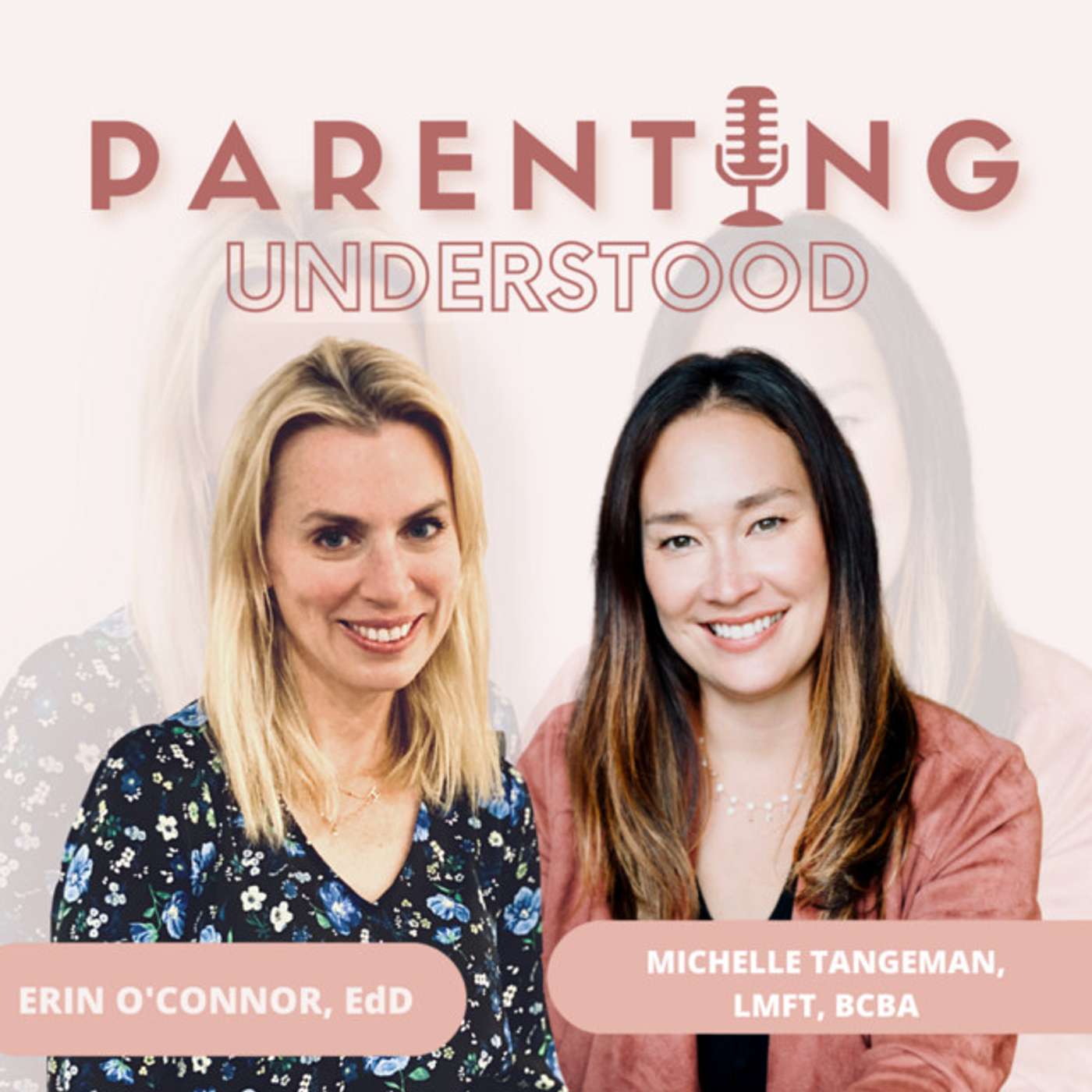 Dr. Rebecca Dekker from Evidence Based Birth® on Parenting Understood
 Divorce Attorney Jaime Davis on the Close the Chapter Podcast
 Dr. Matt on Accidental Experts with Bryce Hamilton
 New Media Advisors Scott Gardner and Brett Bouldin on Retain: The Customer Retention Podcast
 AI Expert Jen McFarland on Profit is a Choice