
Pillars Of Wealth Creation · 2026-08-11 · 20 min
Key moments - from our scoring
Substance score
20 / 100
Five dimensions, 20 points each
This solo episode from Todd Dexheimer dives into the strategic importance of identifying and operating within your zone of genius rather than chasing every skill you think you need for business success. Using his multifamily real estate and property renovation experience as examples, Dexheimer distinguishes between being good at something and truly being in your zone of genius - the latter being what excites you and drives momentum. He shares how he excels at vision creation and problem-solving for broken systems, while acknowledging that capital raising, though part of his toolkit, isn't his core genius. The episode emphasizes practical steps: write down what you're currently doing, eliminate low-dollar and no-dollar tasks (like email scrolling), and intentionally build teams around your gaps. Dexheimer also connects this concept to goal-setting, encouraging listeners to work backwards from "impossible" five-year goals rather than just achievable ones. He ties the philosophy to his broader vision for Endurance (his company) and VitaCare, positioning the zone of genius framework as essential for true business multiplication rather than mere growth.
Your zone of genius is where what you're good at intersects with what genuinely excites you and moves your business forward. Dexheimer explains that he's competent at capital raising but it's not in his zone of genius because his true excitement lies in vision creation and fixing broken systems. You can be skilled at something without it being your zone of genius.
Dexheimer observes that people who attempt to master tasks outside their zone - like someone poor at sales trying to raise capital because they think they need millions to scale - lack motivation, fear the work, and perform poorly, leading to stalled progress. They'd be far more successful focusing on what naturally energizes them and hiring others for the gaps.
You should identify goals that are currently impossible for your business today and work backwards to determine what needs to change. This differs from only pursuing achievable goals that others have done; true multiplication requires doing fundamentally different things and thinking bigger about where your business can go.
Write down what you're currently working on, identify low-dollar and no-dollar tasks that don't move the needle (like scrolling emails or social media), and eliminate them to focus time on high-impact work that aligns with what excites you and your core strengths.
Surround yourself with business partners, employees, or subcontractors whose zones of genius fill your gaps. Dexheimer emphasizes that a good business partner succeeds precisely because they excel in areas you don't want to focus on, multiplying the team's combined capabilities.
Our reviewer’s read on each dimension, with quotes from the episode.
The episode relies heavily on broad motivational frameworks (zone of genius, working on vs. in the business) that are well-established in business literature and self-help discourse. While the host provides some personal application through real estate examples, the core insights are standard and lack novel mechanisms or counterintuitive claims. Much of the content is repetitive throat-clearing and motivational padding without actionable specificity.
How can I spend my time more efficiently? How can I really commit to that and be working in your zone of genius?
If you're gonna grow your business, you can continue to do the same things. If you're gonna multiply your business, you have to do different things.
The 'zone of genius' concept is directly borrowed from Gay Hendricks' established framework and the host recycles standard business orthodoxy without fresh perspective. The advice to identify strengths, delegate weaknesses, and work on rather than in the business are ubiquitous frameworks in entrepreneurship content. No contrarian positioning or first-principles thinking is evident.
What is my zone of genius? And I think it's really important for you to think about what, like, what's your zone of genius and what gets you going
working on the business, not working in the business, like working on the business
This is a solo episode with no guest. The host (Todd Dexheimer) is presented, but no credentials, business scale, or proof of execution at meaningful scale is established in the transcript. The brief mentions of real estate and business partnerships lack specificity about actual outcomes, capital raised, or portfolio size.
I'm your host, Todd Deximer
Another solo podcast episode
The episode contains minimal concrete data or named examples. There is one vague reference to remodeling 'a big apartment building' on the Mississippi river and mentions of business partners and companies (Endurance, Vitacare) without metrics, timelines, or financial figures. No actual numbers, deal sizes, or measurable results are provided to validate claims.
Just recently we remodeled a big apartment building and we came up with a great vision for that property
we've started to bring things in house, um, and that's helped multiply our business, or I wouldn't say multiply necessarily significantly grow our business
This is a solo monologue with no guest to challenge or probe deeply. The host talks at the audience without genuine conversation, follow-up questions of substance, or willingness to test ideas. The episode is essentially a motivational speech with no dialectical engagement or intellectual friction.
Hello, and welcome to Pillars of Wealth Creation
Another solo podcast episode, and today I want to talk about
Computed from the transcript - who did the talking, and the words that came up most.
What really gets you going in life and business? In this solo episode of Pillars of Wealth Creation, Todd Dexheimer discusses why finding your zone of genius is so important. It's not just about the broad picture of what you do for a living, but identifying the specific things you are great at and what motivates you to take action. Todd loves real estate, but he believes his true zone of genius is seeing a vision for what something could become and then executing that vision. Understanding what drives you and where you naturally excel can help you focus your energy, build a stronger business, and spend more time doing the things you do best. YouTube: Interested in coaching? Schedule a call with Todd at Listen to the audio version on your favorite podcast host: SoundCloud: Apple Podcasts: Google Podcasts: iHeart Radio: CastBox: Spotify: Pandora: Amazon/Audible:
Transcribed and scored by The B2B Podcast Index.
Speaker A: How can I spend my time more efficiently? How can I really commit to that and be working in your zone of genius? And I think if you can set your day up to where you're working in the things that get you going, that get you excited, that, you know, are moving the business forward, that's going to be where you're going to get so productive you can't even believe it. Hello, and welcome to Pillars of Wealth
Speaker B: Creation, where we talk about creating financial success with a special focus on business and real estate. I'm your host, Todd, uh, Dexheimer.
Speaker A: Now, let's get to it. Hello.
Speaker B: Welcome back to the show.
Speaker A: I'm your host, Todd Deximer. And, uh, hey, we got another solo podcast episode, and today I want to talk about understanding, uh, your zone of genius and getting in that zone and really thinking through, um, what gets you going and where do you want to go? Uh, what are you defiantly committ and, and are you divinely committed to things or are you just kind of going along with things? Right. So, um, you know, so what I've been thinking about this a lot lately is, first of all, what's my zone of genius? And I think it's really important for you to think about what, like, what's your zone of genius and what gets you going m. In. In, you know, in life. And I think you can think about this in many aspects of your life, but for today's purposes, we're going to talk about it in your business life. And so you want to think about what gets you excited, what gets you going, and what do you, what are you really good at? Um, and it doesn't, it doesn't necessarily mean so for me, like, okay, real estate is my, my niche in multifamily. Real estate is my niche, but it doesn't necessarily. That's not my zone of genius necessarily. Like, that doesn't necessarily get me going. Do I like real estate? Do I believe in it? Do I think that real estate's a great, uh, product? Yeah, absolutely. Do I think that real estate, um, makes people wealthy? Yeah, absolutely. Do I think people need housing? Yes, of course. Do I think people need safe, secure, clean housing? Absolutely. Does it get me excited that we're providing, uh, great housing for people? That it does actually. It does get me excited because, uh, I've seen people, I've bought places where people are living in horrible circumstances, and I think that's unfair to people. I think it's gross. I don't think people deserve that. And so, uh, yeah. Does it get me Excited that we don't do that. Absolutely. But what I think, you know, when I go, okay, what is my zone of genius? What gets me going and exciting? What am I really good at? I, uh, look at myself and go, okay, I feel like I'm really good at a couple different things. And so I have to focus on those things. One of the things that I think I'm really good at is coming up with a vision and uh, and helping execute that vision, bringing that vision to life. And so I'm good at that a couple different ways. And so when you look at my business, I can go into a property, uh, that is complete disaster and I can think through what this property can become and I can create a vision for it. I look at, you know, just recently we remodeled a big apartment building and we came up with a great vision for that property. It was this nasty, down and dirty, uh, you know, apartment building. If you listen to this podcast before, you know exactly what I'm talking about. It's in a beautiful location right on the Mississippi river. And we took and did a ton of great things with it and turned this down and out property, smelly, vacant, just gross property, into a beautiful property that people call their homes and they're proud to live there. Uh, it's got a ton of amenities. It's just a great place to be. And that's the vision that I am really good at. So I'm good at taking something and having a great vision and then helping, uh, guide other people to help execute on that vision. And I've done that a ton of times with our, uh, flip properties. I've, uh, done that with houses that my wife and I have lived in. Of course, you know, other people have helped along the way. We've had designers from my wife and, and the places that we've lived in, um, you know, other, you know, people along the way that, that help with that vision. But I think I'm, I'm good at leading that and I'm good at fixing things that aren't working right. And it doesn't necessarily mean a house or apartment or anything like that. I'm good at taking something that's broken. And it could be a business, it could be just, uh, the way things are done and helping bring a new idea and a new vision to it. Uh, so I think, you know, like, okay, so that's me, of course, uh, but what's, what is it for you? And one of the things I think a lot of people get stuck on is they hear a podcast you, uh, listen, you go to some meetups, conference, whatever, you meet with somebody, whatever it is, and you hear what somebody else is good at. You hear what somebody else is excited at with. And you think that that's what you have to do and that's who you have to become. You don't think about what you are truly good at. And ah, I see that a lot. And I'm thinking of some people that I've mentored along the way. Maybe I haven't given them great advice at times. Um, I feel like I try to give people great advice, but maybe I need to be more blunt, uh, and say, look, that's not your zone of genius. You need to figure it out. Because I've watched people and I've watched people like for instance, raise money. Okay? I think I'm pretty good at raising money. I certainly could get better at it. But I've watched people that just. That that's not their zone of genius at all, right? That they're just not good at communicating. Um, selling, probably. Selling is the biggest one, right? You actually have to be a fairly decent salesperson to raise money. Do you have to be a, uh, slick, you know, used car salesman? No, actually, that's probably gonna work against you. But you have to be a really good communicator and a good salesperson to be able to do that. And I watch people that aren' but they hear that, they have to be, that they know that, man, I don't have the money to buy this, a big apartment building, but I want to buy this big apartment building. And I've got to. I know I'm going to have to raise 5 or 10 million dollars for it. So I got to learn how to be this excellent capital raiser. And they go and they try to do it, but that's not where they're at. That's not their zone of genius. They don't like doing it, uh, they're scared to do it, uh, they're not good at it. And they focus their time and they wonder why they fall flat on their face, can't get, gain any traction, they can never move forward. If they would have just focused and said, what am I actually good at? What actually gets me going and excited? They would have, they wouldn't have came up with raising money. They would have came up with, I, uh, you know what? I'm really good at doing this. I'm really good at organization, I'm really good at tech. I'm really good at, you know, you name it and you got to dig in deeper too. It's not just, I'm really good at tech. Well, what are you really good at tech about? Right? What, what is that? That you can do really well? So I think it's so easy again to get focused on the go. Okay. In order for me to, to do really well in business, I got to do these, you know, things. I got to get really good at these things and to not actually understand what you're good at and what's going to make you the most profitable and then filling in those gaps, going, okay, this is my zone of genius. Now. Uh, I got figure out, I got to figure out then how can I raise the money if that's not my zone? Okay, how can I raise the money? Like, who is it? That's what you have to surround yourself with. Look, I look at my business partners and, you know, one of my business partners is not the money raiser. Can he bring some money to the table? Yeah, because he's, he's great dude and people trust him. Right. But that's not his zone of, uh, genius, and that's not what he's should be focused on. And if he was focused on it, we, and nobody else was, we wouldn't be able to raise nearly the amount of capital we, we can raise because that's not what he's going to excel at. How did he get, uh, the company he's got. He surrounded himself with other people that can fill in his, his areas that he struggles in. Same thing with. Why, why does he make a good business partner? Because he fills in the areas that I'm not good at or I don't want to do. Right. So those, those are the things you have to figure out. Uh, it doesn't have to be. Could be somebody, uh, employees, it can be partners, uh, whatever, subcontractors, whatever it might be. Um, so once you figure out that, then I think it's just, it's easier to go, all right, so what does that look like? And then now I'll go, okay, how can I really scale this? How can I really take it to the next level? Um, and so that's kind of what I've been focusing on a lot lately and thinking about different areas of the business and how can we take in the business to the next level? Um, by working on the business, not working in the business, like working on the business. How could we, you know, 5x10x our company? Um, and it doesn't necessarily mean we're doing the same things today, because we aren't Quite frankly, if you're gonna grow your business, you can continue to do the same things. If you're gonna multiply your business, you have to do different things. So what does that actually look like? And so that's kind of what I'm trying to focus on within, with. With endurance. And Vitacare is saying, okay, where's my zone of genius? How can I multiply our business? How can we take endurance to the next level by working and not in it? What are the things that we can do to be multipliers? Um, and I think it's super important to. To think about those goals because, you know, you got these goals that you've done before. You've got goals that are achievable. You know, hey, I can do these. Uh, somebody else has done them. I watched so and so do them. Um, my mentor's done them. Um, you know, whatever it might be. And then you've got these goals that you go, today, they're impossible. Like, we can't do that today. We're not there. But these are. This is where I want to go. This is what I want to achieve. This is. This could be done. I know it can be done, but it's impossible today to do. Um, so how do I get there? What. But, you know, what do we need to start doing today to get to that impossible goal tomorrow to be able to achieve that? How can I start to multiply the business to be able to make it to that level? Is it adding more businesses? Is adding different streams of income? Is it adding different departments? Is it, you know, like, look, we've started to bring things in house, um, and that's helped multiply our business, or I wouldn't say multiply necessarily significantly grow our business. But how do we now then multiply our business, truly make it to that next level? And what are we doing? What are we defiantly committed to doing, um, in getting it there? So, um, practical steps. I think the most practical step is truly writing this stuff down, going through the process and taking some time and figuring out the zone of genius, figuring out what you are working on today that's not working. What are you working on today? That is your low dollar that you're just getting caught up in on a daily basis. And I'm talking like, you know, look, I can get stuck in a day, like, going through emails all day, right? It feels like you've just done a ton of stuff, but when you really think about it, you're going, okay, I've done nothing today. Like, I just went Through a bunch of emails. Nothing happened today. So getting rid of those low dollar tasks that you spend and waste your time on in, and quite frankly the no dollar task, uh, you know, going through social media, just scrolling on videos, whatever that type uh, of stuff, and working then on the high dollar stuff, the, the things that are going to truly move the needle, that's how you start to achieve your goals, is like, get that, focus on those things. How can I spend my time more efficiently? How can I really commit to that? In your zone of genius? And I think if you can set your day up to where you're working in the things that get you going, that get you excited, that, you know, are moving the business forward, that's going to be where you're going to get so productive you can't even believe it. But it starts with your goals. It starts with understanding where you're going and how can you multiply your business. And not only things that are achievable, like I said, but things that are impossible today, completely impossible. You can't get there today. You have to, things have to change drastically to get there. That's. Those are the goals that you want to have. And then you want to start to work that path. Work, work backwards and say, how can I actually achieve that? And stop focusing on the what and focus on the why, focus on the who. Um, and, and how do we actually get there? Right. Um, all right. Hopefully this helped at least get the wheels spinning. It's just stuff that I've been looking and thinking about, uh, asking God for signs and guidance and like, what do I want the next year to look like? What do I want the next five years to look like? Um, look, you know, how can we move forward with things and, and where is God opening up the doors for the business and for me to be able to achieve the greatest outcomes possible? Uh, that's what gets me going is like, how can we achieve the greatest outcomes possible and create a business that, like, a thing that gets me excited is like just thinking about your business in years from now and going, what would it look like? Like, close your eyes, think about your business, think about the people in your business. Think about. You know, for me it's like, man, I would love, and it's not a requirement, but I would love my kids to be somehow in the business. I would love to be able to, you know, like something as simple as, like, hey, I want to throw great Christmas parties, uh, great parties, like for my employees, for our apartment communities. Like, I, I wanna, I wanna have, uh, you know, be able to go and donate our time and our energy and our resources and our money to things, um, that I'm passionate about. Like, I want to be able to do those types of things. I want. Allows that to happen. And so just closing your eyes and, like, thinking through what your business could look like will look like in the future, and go, okay, I'm committed to that. That's what's going to happen. And how are we going to get there? Let's, let's work that backwards into the steps, into the things that we need to do today in order to achieve the outcome that I'm looking for, that I want to get to, um, and really reflect on that and understand how do we get there. All right. Hope this helps. Again, um, there's a lot to it, but it's. It's. Quite frankly, it's simple and it's. It's fun. Um, if. If you think through it, and I think it's exciting. And to me, that's what gets you going. That's what gets me going at least, is knowing the things I do, the hard times that I go through, sometimes, uh, the difficulties, sometimes in the end, it's worth it. Because we're trying to do something greater than just make money for ourselves. We're trying to do something greater than just get more properties, right? We're trying to do something greater than just the next deal. Uh, we're trying to create something powerful that can impact thousands of lives and, and can achieve great things. So that's what gets me going. Um, and I think that's what keeps me motivated when times get really tough. All right, hope you have a fantastic rest of the day. Make every day a Saturday.
Speaker B: Hey, thanks so much for listening. I appreciate you being a loyal listener. Say, I would love to have you go on to our Facebook page and subscribe. Uh, give us a thumbs up, go on to itunes or wherever you listen and give us a rating and review. Don't forget to subscribe. It's a rating review just helps us push this out to more and more people and continue to grow our audience and hopefully positively affect a ton of people out there that really need this and want this. So, uh, the other thing I've got for you is a free ebook on my website. So go on to venture deproperties.com ventured properties.com and download our free ebook, uh, on real estate and on syndication. And I've got some data points in there, some really good stuff for you. So I'd love to have you take a look at that. It's free. I'm not expecting anything from it. Uh, and also, look, if you want some help in multifamily, want some help learning, growing, getting your business off the ground, I would love to talk to you about what it would look like, uh, to work with me potentially and see if that's a good fit. So you can go to coachwithdex.com and check that out, and, uh, we can definitely have a, uh, call. Thanks a lot for listening. You make it a fantastic rest of the day. I'll catch you on the next episode.
Other episodes covering the same guests and topics, from across The B2B Podcast Index.
 Pitch Anything's Oren Klaff: From Spreadsheet to Deal TableFinancial Modeler's Corner · on Capital raising88 / 100
 Why Billionaires Work Harder Than Anyone and Why "Work Smart" Is a TrapBig Hitters with Larry Weidel · on Capital raising75 / 100
 Executive Drift; Leadership Under Uncertainty: When Results LagGet Hired Up: Executive Brand Management · on Capital raising72 / 100
 S02E11 Embracing Change in the Workplace | Hallie Condon | Wired for WonderWired for Wonder · on Zone of Genius framework71 / 100
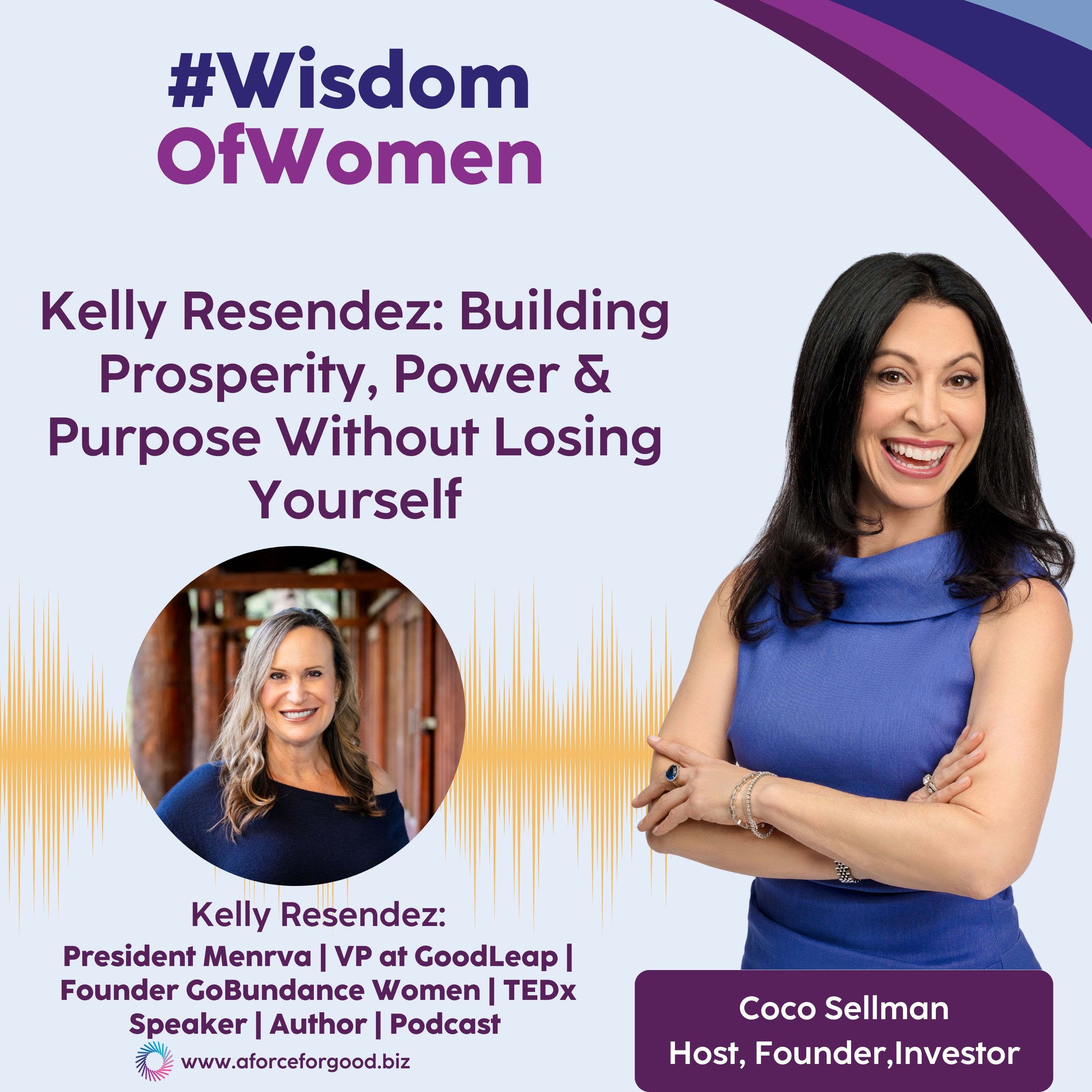 Kelly Resendez: Building Prosperity, Power & Purpose Without Losing Yourself#WisdomOfWomen Show · on Zone of Genius framework67 / 100
 The Mindset Shift That Helped Her Scale a Multi-Million Dollar BusinessLife Changing Money with Barbara Schreihans · on Zone of Genius framework65 / 100
 POWC # 873 - The Right Kind of Stress35 / 100
 POWC # 878: Inflation isn’t stopping: What are you doing to protect your money? | David MorganPOWC # 877 - 10 Rules Every Passive Investor Should KnowPOWC # 876: Why Self-Storage Still Wins | Ryan GibsonPOWC # 875 - 7 Things That Will Blow Up Your Real Estate Deal