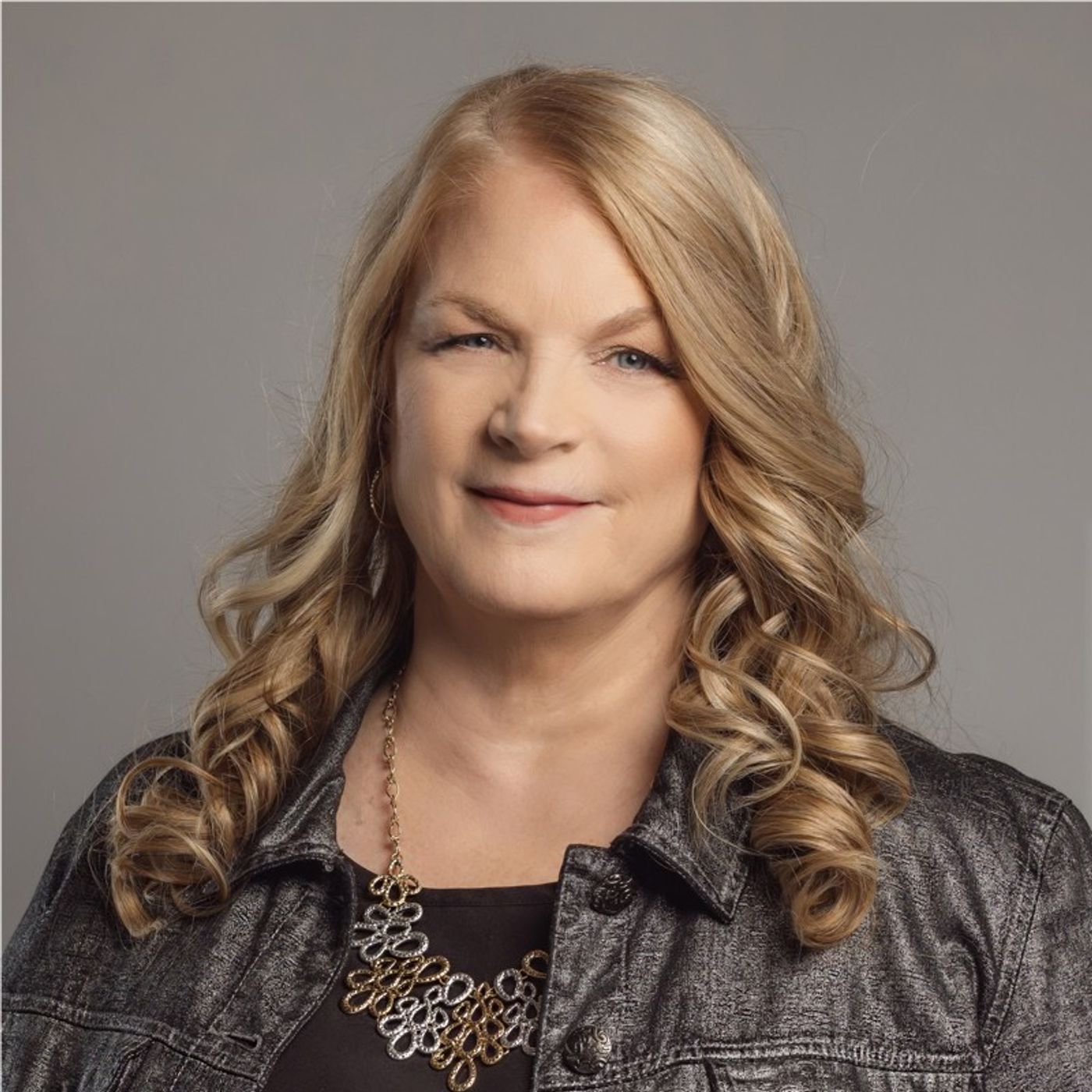
On the Brink with Andi Simon · 2026-10-30 · 43 min
Key moments - from our scoring
Substance score
31 / 100
Five dimensions, 20 points each
Michelle Griffin brings industrial-organizational psychology expertise to the practical challenge of organizational change, which she frames as fundamentally a people problem rather than a technical one. Her consulting firm, Griffin Resources, works with 70 clients using assessment tools like Predictive Index, High Match, and DISC to match candidates to roles while also preparing organizations for rapid transformation. The conversation explores how companies struggle with talent scarcity in competitive markets, the need for certified interpretation of behavioral assessments, and the critical gap in succession planning as baby boomers delay retirement. Griffin emphasizes that external hires bring outside culture into organizations that are themselves transforming, creating a dual adaptation challenge. She also addresses how different industries embrace AI and technology change based on risk tolerance, compliance requirements, and individual capability, while highlighting cybersecurity training as a human vulnerability point. The episode will resonate with operations leaders, CHROs, and business owners wrestling with retention, leadership development, and preparing for workforce transitions - particularly those facing the demographic shift of 20 million fewer job holders entering the workforce.
Hosted by Andi Simon. The show scores 65.0/100 on substance across its analysed episodes. See the full show profile.
Griffin Resources uses Predictive Index, High Match, and DISC depending on the need - Predictive Index and High Match for overall candidate assessment including cognitive ability, and DISC for communication-style understanding in leadership roles. All assessments require certified interpretation to be effective.
Michelle Griffin recommends 5-10 years of intentional preparation, during which emerging leaders shadow different functions, understand customer relationships, and learn organizational culture - not just receiving leadership training in the final stage.
Griffin Resources charges hourly rates without retainers or minimums, billing in 6-minute increments only for authorized work performed, designed to keep services affordable for small businesses that typically lack access to HR resources.
Adoption varies by industry - tech and computer companies push faster, while service industries and government agencies move cautiously due to compliance requirements. Risk tolerance and individual technological understanding also drive variation, and cybersecurity training gaps create human vulnerability to AI-based manipulation.
Companies often fail to assess cognitive ability and learning aptitude, and they don't prepare current employees through continuous upskilling and training, so new hires can't succeed even if well-matched if the organization isn't keeping pace with technological change.
Our reviewer’s read on each dimension, with quotes from the episode.
The episode is dominated by biographical recounting, generic change-management platitudes, and host monologues, with only occasional operational nuggets (billing model, cognitive assessments for hiring speed). The ratio of novel-to-obvious is poor for a B2B audience.
we round in six minute increments. Law firms tend to do 15 or 30 minutes, but we try to keep it as small as possible
I've seen it work well in five to 10 years, but that obviously means you really have to be intentional about your succession plan
Almost entirely recycled territory - people hate change, culture matters, succession planning is neglected, AI is coming. The one genuinely fresh moment is the story of the employee who flatly rejected promotion, but it's anecdotal and not developed into a framework or contrarian argument.
she's like, this is my ambition. This is my growth. I'm done. This is where I want to be in my career. I don't want the additional stress
people hate to change. But these are very fast-changing times
Griffin is a genuine practitioner - PhD in I/O psychology, founder of a real firm with 40 employees and 70 clients, and an unusual prior career in fraud investigation. However, the firm is modest in scale and the conversation never pushes her to surface the depth her credentials imply.
I now have about 40 team members and about 70 clients
I actually worked in an insurance company. I did auto theft and arson investigations for six and a half years
A handful of concrete details appear - firm size, billing increments, named tools (Predictive Index, DISC), a specific New York AI regulation, and the doctor's-note anecdote - but much of the episode is abstract generalisation with no named client outcomes, dollar figures, or hard data.
we round in six minute increments
New York was the first one to write a regulation saying that AI cannot make the final hiring decision
The host regularly embeds her own answers inside questions, interrupts with lengthy personal anecdotes, and never pushes back on any claim. Questions are multi-part and rambling, giving the guest little room to go deep, and there is no productive disagreement anywhere in the episode.
Do you find people are embracing the changes or resisting it? Because humans hate change. They create a lot of cortisol floats around and it says, would you please flee it or fight it or, you know, abandon it
And I have a hunch you are already watching the future organization emerging spot here and another spot there. And all of a sudden, you're watching... You know, we're not the same organization as we were 10 years ago
Computed from the transcript - who did the talking, and the words that came up most.
What happens to people when an organization grows, restructures, or asks them to work in entirely new ways? Michelle Griffin, Ph.D., CEO of Griffin Resources, joins Andi Simon to explore how leaders can help employees navigate change while building the talent their organizations will need next. Together, they discuss career development, succession planning, and why successful transformation requires organizations to rethink not only where they are going, but how their people can grow with them. On the Brink With Andi Simon is broadcast live Thursdays at 3PM ET Music on W4CY Radio ( ) part of Talk 4 Radio ( ) on the Talk 4 Media Network ( O Gladsome Light is viewed on Talk 4 TV ( ). On the Brink With Andi Simon Podcast is also available on Talk 4 Media ( ), Talk 4 Podcasting ( ), iHeartRadio, Amazon Music, Pandora, Spotify, Audible, and over 100 other podcast outlets.
Transcribed and scored by The B2B Podcast Index.
Welcome to On the Brink with Andy Simon. I'm Andy, and as you, my listeners or viewers know, my job is to help you get off the brink. And I love our Thursday afternoon podcast because it brings to you people who are going to help you do what an anthropologist might do, see, feel, and think in new ways, so you can begin to adjust, particularly to these fast-changing times. Now, today's conversation is important because I specialize in helping organizations change.
And I look for people who do the same. Remember, people hate to change. But these are very fast-changing times. So it's interesting to begin to think about how can we help you begin to see your organization through a fresh lens.
New technologies, evolving workforce expectations. You know, I spoke at a conference, an international conference at the end of September. And there were 6,000 people there. And they were all very interested in the workforce of the future.
What are we going to do? How are we going to do it? How are we going to get our workforce to redesign that workforce for the future? Interesting questions.
And then I do a lot of leadership development. The leadership transitions are fascinating. What should a leader of tomorrow actually be like? Not what you might expect.
And then organizational change is never simply about strategy. systems or technology. Rather, it's about people. Member culture is about what people do and how they do it and what they believe is the right thing to do.
And it's what bonds us together as people. So in our conversation, we're going to explore these topics. How can organizations better help employees navigate uncertainty? Your brain wants certainty and you want to protect your status and you're not sure how are you going to do it.
So today, I have a wonderful person to help us think about this through a fresh lens. Her name is Dr. Michelle Griffin, and she is the founder and CEO of Griffin Resources, a human resource and business consulting firm that really helps organizations strengthen their people's strategies, develop leaders, and navigate growth and change. Sounds like a very timely topic, isn't it?
With a PhD in industrial organizational psychology and extensive experience in corporate human resource leadership, Michelle brings both a research-based understanding of human behavior and practical experience helping organizations build effective workplaces. Today, she is helping organizations connect their business goals with the people who make those goals possible. Michelle, thank you for joining me today. I am so anxious for us to have this great conversation.
Hi, Andy. Thank you so much for having me. I'm very excited to be here. Well, I am as well.
First question, who's Michelle? Tell us about your own journey, because it hasn't been a destination. It's been a lot of exploration. So you have learned how to change and adapt, innovate, create, curious.
Help us know who is Michelle, and then we'll talk about all the things you do. Thanks. So I. Definitely feel like I have morphed and changed over the years as my own goals have changed, and I've changed my career several times.
I think most of us have. Right out of college for my undergrad, I actually worked in an insurance company. I did auto theft and arson investigations for six and a half years. And I have many, many, many great stories of those types of investigations.
I really liked that work, but I didn't want to become a special investigator. So I ended up going back to school to get my master's in IO psychology. And that's when I found my way to human resources as the practical application of IO psychology. And then I worked at an IT software development company for about five and a half years, I think almost six years.
And then I went to a residential construction company. So that was a huge culture shock since you mentioned cultures. And that was definitely going from IT to construction. I had a lot to learn.
And while I was at the construction company is when I started getting my PhD and And then I went independent, um, for just a few months at the end of 2019. And, uh, by early 2020 is when I had enough clients to start bringing on employees. And then we kind of grew it all together through COVID and I kind of finished growing it while I was getting my PhD, which I finished about three years ago. Um, Thank you.
So, yeah, it was definitely an intentional road most of the time. I would look for specific career goals and be able to kind of adapt what I wanted for my education and my career and kind of align everything together. So that took a little bit of soul searching and kind of keeping things in a unified direction as much as possible. Well, you know, you've told.
Us wonderful stories about your early experiences. There are a couple of things in those experiences that really highlighted for you the problems that you wanted to move on to solve. It did. I really liked the challenge of investigations and learning a lot about the patterns to look for for.
Human behavior when it came to fraud. And a lot of times there were essentially, I'd say, more crimes of passion if they were just trying to get rid of their vehicle for, you know, just they couldn't afford it anymore. And a lot of mistakes can happen that way. A lot of dangerous mistakes can happen that way.
And several things were just accidents, and some things obviously really were true theft. And those types of pattern recognition or understanding human behavior, I was surprised to see that follow me into HR and still be practically used. One of the first times I think I got to actually do that from a.... Documentation perspective in HR.
I was new. I had probably only been in the job a few months, so I was right out of investigation. So I was used to looking at documents and making sure that they were authentic. And all we had done was ask someone to turn in their doctor's note because they had been out sick for a couple days and we told them they needed a doctor's note to come back.
and they said that they had gone to the doctor's the day before, and so we just said, great, bring us the doctor's note. You can come in. They were a few hours late. And then showed up with a doctor's note that looked like it had been essentially falsified a little bit to change the dates or information or to say it was okay to be at work.
So I contacted the doctor's office, and they wouldn't authenticate anything over the phone, but I said, I'll fax you what I was given, and if you can fax me back an authentic one and we can compare. That's what they did. The corrected version came in basically saying it was the same day. All they did was lie about what day they went to the doctor or being able to get a doctor's note to come to work.
When we went to approach the person about just updating or falsifying their documents, they quit on the spot without even really being approached with any kind of resolution. So that one was interesting. And so there was a lot of, you know, really interesting uses of the skills that I had developed. And then obviously I was talking with a friend of mine the other day that's a CFO and we had long discussions about fraud and, you know, white collar crime and embezzlement and things like that.
Cause I feel like there's lots of, when it comes to obviously myself being a business owner, but as well as for our clients and protecting people and companies against that, which is a whole rabbit hole in itself. But, you know, definitely something that I think has been an interesting part of my career. But, you know, as you formed this new business, you had a strategy and I have a hunch of good positioning and a brand desire to explain why you. So help us understand that and then we'll get into the kinds of things you're doing But, you know, who is this company and how have you positioned it?
Not just for fraud, I bet. Oh, no. So I initially kind of started working with small business owners, letting them know what my knowledge was about human resources and managing people and the operations. And so most of my clients at the very beginning pretty much just said, well, I'll give you an email address and you can just do the HR.
I thought it would be more consulting and it turned into something very hands-on and that became the entire premise for the company. And so now I've been in business since the end of 2019, and now I have about 40 team members and about 70 clients. And with that, we've been able to completely customize what they need for anything related to HR, since we have such a diverse group of people. So we can focus on anything from areas of HR, onboarding, offboarding, leadership coaching, to...
You know, investigations, obviously, things like that, as well as payroll and talent acquisition and recruiting. And so I ended up talking with quite a bit of business owners and morphing my business over the years to stay flexible with. What the clients want. We ended up not having any retainers, not having any reoccurring payments or minimums.
And so we pretty much have an hourly rate for every level of worker in the company. And we only it looks more a little bit more like a law firm, but we round in six minute increments. Law firms tend to do 15 or 30 minutes, but we try to keep it as small as possible. And then we only charge for the time of work that we perform that was authorized to perform.
And at the end of the month, we just send them an invoice for the work that was done. And if they don't need us, then there's no bill to them. And so I wanted to stay really affordable and available to small businesses because I worked for larger companies. And I realized small businesses just forego those types of resources.
They just don't have access to the same kind of brokers or the same kind of HR or or other opportunities and vendors that bigger companies have that a lot of companies fight for. And so I have been. Working with tons of opportunities for small businesses to get the same type of feel that they can for bigger companies and bring that to them. So that had been like my overall passion over the years.
It doesn't sound like that was your initial vision. No, my initial vision was to just work as an HR consultant while getting my PhD. And I figured it would just be enough work to cover my portion. Of the bills.
And I didn't even intend to have a company. Life has taken you on a journey. It's so interesting to listen to you. But the kind of things that I thought we would talk about, though, might be...
It's interesting, from your perspective, are you finding the kinds of challenges in the companies who use you that require some consulting, perhaps, but also some thinking about how to help them track, retain, and develop employees when the times are changing so much? What are you finding out there? Yeah, so especially, it depends as the economy has changed. It will ebb and flow if it's more of a employer-friendly workforce issues or if it's.
More of kind of towards the employees. When there's large layoffs and there's a lot of talent available, there's been years where companies have so many people to choose from. And then eventually those people start finding jobs. And we're in a point now that we're finding that it's pretty hard to find talent.
It's kind of scarce. Usually you could post a job and you would see tons of applicants and you kind of just go through the application process. sometimes you would need to reach out to them as like a passive candidate and find those types of candidates as well. But most of the time now we're seeing that even as we're recruiting, if you don't act fast, other companies will and getting them, you know, off the market and making decisions quickly is, is very important.
But also with that, most companies are nervous about making those decisions because what if it is, you know, the wrong person, you need, you know, need to make sure it's the right person, right seat. And so we usually try to encourage companies to use assessments, make scientific type assistance when you can. And if it's, you know, we try to also keep that pretty affordable and use, you know, we'll use what they are, you know, available to use. We tend to lean towards like predictive index or high match and disk, depending on if we need something more of a communication tool and things like that if it's a leadership role.
So we try to really help companies identify the best talent that they can and identify the right role, try to do job match assessments as well. So if they can identify all of the, you know, the proper type of person that can go in the role and then that way we're making a match. So it's really difficult for companies to try to do all of those things and do them quickly. And that's what we're seeing happening right now.
Because I had a client who used a predictive index and it was interesting and others that use disk. And that is always interesting because often the tool is useful, but not unless you are familiar with how to interpret it and respond or change the way you interact with somebody because of the way. they interact with you. And it's hard to know if the problem is that employee or the employer or the environment around it.
The tools are very powerful, but only if you're really knowledgeable about how behavior matters and how communication gets done. So do you do any training and development for them so that they can make the decisions they are making actually work for them in the culture that they've developed? We do. We usually make sure that they are working with someone in the company that's certified in those tools and that they're not left alone to interpret anything.
And we'll make sure that we explain what the job match is, what the person's behavioral and cognitive results might look like, how to interpret that. And even recently, One of my head of talent acquisition was working with a CEO who was misinterpreting the results, and she spent literally an hour explaining everything and making sure he understood the results and read through everything together. And we also usually have leadership coaches working with the client as well. In this case, we do also have a leadership coach that works with the rest of the team.
So she was also able to pull in this candidate's results and compare it against the rest of the leadership team and explain how this person would fit in. And that's ultimately the person they gave the offer to. So it's really interesting when they aren't familiar with it, but at least they're open to accepting the results that come through and having an open conversation about what this person looks like and how you can use it as a piece of the entire puzzle of this person as an offer.
Because obviously you shouldn't rely just on this and say yes or no, you should or shouldn't hire them based on the results. But it is definitely a nice piece of the puzzle and you can be open to conversations about it. But yeah, you definitely have to have someone that knows what they're doing with these tools. And while they do make them very simple now, you definitely don't want to just leave them to their own devices.
Well, it was interesting listening to the fintech companies with thousands of employees across the globe trying to enable the employees to redesign the work for the future. And I often say that the future is already here. It's just not widely distributed yet. And then we use tools, whether it's DISC or performance in DISC or whatever, around a human.
But the environment in which they're going to have to operate may be moving quickly towards a new way of getting things done. And are you preparing both the organization and the individual going in for the changes that are coming? Because what you see may not be what you get, right? Yeah, there's a lot that happens so fast, even with, I would say, the use of technology, but even the use of AI now.
And knowing what that person's skill set is, their aptitude for learning. That's also why I like taking the cognitive assessment with candidates as well, because then you at least know how fast they learn, how easy it is. It is to train them on new concepts because if, you know, especially if they're moving into a company that's a very fast paced environment that is really up to keeping up with the new technology versus some companies are, you know, not as easy to embrace it.
And some companies are kind of in the middle. So knowing what those environments are and that culture is for that organization, finding the right people or making sure that the current team members are, in those right environments as well, because ultimately even current employees can fail if they are not kept up to speed as well. And that they do have training and continuing education around different technology and resources that they need to have. And they really need to be upskilling their current employees as well as making sure that that type of knowledge bandwidth is coming in with the people that they're hiring.
Do you find people are embracing the changes or resisting it? Because humans hate change. They create a lot of cortisol floats around and it says, would you please flee it or fight it or, you know, abandon it or don't, they don't really know what they mean. And they, So they'll even say, of course, and then go back to doing what they've always done.
And habits are very powerful. And it's difficult. And my last thought, my last question for you is when you hire someone from outside, they invariably bring the outside with them. And then they need a sea change to begin to get them to the inside.
But the inside is changing. And so which is, you know. I worked with a company that kept acquiring people and they kept acquiring companies and they liked their culture, but nobody knew what it was. It was the most interesting.
How are you seeing, what do you see going on out there? And how can you do that? I definitely see both. I see some companies and it really depends on the individuals.
And if they're the type to embrace change and be a. Little more. Risk oriented, acceptable to that versus risk of, you know, just, so I think they're risk tolerant. is definitely a factor for that.
But also their level of intelligence when it comes to understanding computers. So computer companies in any aspect, whether it be, you know, a hardware company, a software company, you know, security management, any aspect of computers, I see them pushing more for it versus other type of service-based industries, government agencies. So it really depends on the tolerance of the industries, the compliance around that, and the individuals that are willing to just go in and play with it.
And there's definitely times where. the people that can understand, especially AI, and they understand what it is, they understand the agents and the environments that they can work in, then I see those really pushing for those types of changes. we're starting to obviously see a lot of things in the news about AI breaking out of their agents and starting to do things on their own. So I think as we hear more about bigger companies that are supposed to be controlled environments, not able to keep them controlled, then I think that can be more of an issue and we'll start to see more...
caution happening with the ones that are even embracing it versus the ones that are already a little cautious about it. And the change is, like you said, just happening so fast that it's one of those things where you have to be on board because the ones that are going to be pushing for it, they're going to push other people out of work. And we're seeing that happen already. So you really can't just dig your heels in and not be available to get on board You know.
Get on board with it. And, you know, there's issues with, I think... the fact that. AI can be manipulated or can also manipulate people.
We're starting to see a lot of issues where the people are the weak link in certain, you know, hacks that are happening because they gave out their passwords. They, you know, they were somehow using bots or chat bots that have manipulated them to give out company information or, you know, they've been able to make it look like they're talking to their IT department and reset a password. They think they're doing the right thing. So that also comes down to a lot of cybersecurity and training for the people and really somewhere balancing between the protection of your company, protection of your cybersecurity, and being able to grow and change and keep up with everything that's changing.
I have a particular interest, let my bias come through, because we've been working... on this whole topic of retirement and working with companies to prepare succession and succession planning, but also to understand that the role of somebody who's been there for, I don't know, 20 years is more than just simply a job that they've done. They have enormous amount of wisdom and intuition and client relationships and a sense of how things are done and not done. And unless there are some companies that I've found that are doing a lot of reverse mentoring, where conversations go from the new hires to the folks who've been a long time trying to build better collaboration and transformation.
Are you seeing folks becoming intentional? Because the ones who do can have a very different relationship with the person who might be retiring. And there's going to be a huge tsunami where there are going to be 20 million fewer job holders. They're not going to be around.
And we're letting them go at a time when we probably could use their wisdom a lot more than we're doing. So what are you seeing in this transformation that's coming? Yeah, there's with the aging population now and there's it's, you know, kind of a upside down pyramid because of, you know, the just the. change of how fewer next generations there are coming in through the workforce and kind of taking the place of the older generations.
Um, I, we're seeing a few things. One, the older. Generations are just deciding to stick around longer. Um, they are waiting a little too long to actually start their succession planning properly.
Yes, that is very, very, very, very true. So, so I feel like that is a little bit to their detriment as well, because I, because like you said, there is so much wisdom and, And you can't just knowledge dump to the next person and expect them to kind of follow in the right footsteps. They have to really learn the entire organization. They have to learn how to obviously conduct the work.
I think a lot of times people just bring in leadership and they just train them on how to do the leadership function well. but I think it's better done when they can literally just sit on a customer service call or they, you know, are a salesperson for, you know, even if it is smaller stints, like just a few months, they kind of shadow people do the job and, and kind of literally see the different roles and responsibilities that make the company function, um, is important for them to grow into the leadership position.
And I would say it, um. I've seen it work well in five to 10 years, but that obviously means you really have to be intentional about your succession plan and they have to know everything about the company and how it functions and be empathetic to the people doing the job as well in order, I think, for companies to thrive. If you just all of a sudden wait and you kind of hold on to that as the leadership and then you You know, don't think that anything is going to ever happen.
And then all of a sudden something is last minute. And then you just. Either have to, you know, figure out something quickly, but it's never the same. And I've seen a lot of companies either have leadership problems or they end up losing the company or it has a dramatic impact.
financial issue and impact on the company when you have to do fast changes. That's usually when we start seeing discussions about very fast M & As. And they'll take evaluations for less than it could have been if they had taken the time to build it or rebuild it, depending on any kind of impacts that they had. People being forced out of their own companies, So there's a lot of negative impacts that can happen if you don't take the time to at least start training a successor.
And even if that person is kind of a VP and has like an official, you know, title to then step up later, you know, but it's important to kind of be able to do that even, you know, even in my company, I have people that obviously know how to run the company and be able to run the divisions and the people and hire people and bring in new clients. Like other people besides me know how to do that. But I had to intentionally do that, I think at year four. is when I started making sure that it could run well without me.
And that I think most owners don't stop and think, if I'm just not here, or even if I just want a vacation, that's something I haven't yet done, is ever take a vacation day. But I would like to. So it's kind of, if I'm not there, what are the bottlenecks? And really making sure that there's ways around that, and other people have that responsibility.
Yeah. Well, it sounds like Griffin Resources has to run itself so you can have a little time off. I'm working with another client and she just came back from three weeks on the West Coast. And I guess where was she?
All through Arizona hiking. And she never takes time. And she just decided if it's not here when she comes back, she'll figure it out. But right now she needed some time.
And it's important. Do you see... I want to go back to the succession issue because... Do you see people beginning to understand the changes in aspirations for employees, the corporate ladders, how you can grow sideways instead of just upwards?
And there's lots of changes in that organizational structure. And I bet you've seen a bunch of them. I have. And I usually try to tell managers that they should never be surprised by the career path intentions of their employees.
And usually they are, and they don't usually talk about it into the one-time annual review. And I'm like, that's not healthy for either the company or the person. Because it's really important if you align that person's growth with the company's strategies. And making sure that they're on the same page and that you're working towards the same goals.
And I remember when I was working at the construction company and this was, you know, I had only been in leadership a handful of years at that point. And there was someone who was very good in accounting. And they'd been doing it for 40 years. And I was like, this is great.
You're so good at your job. And we really need someone to train the new hires coming in. So we have a lot of policies, procedures, and things like that. And she was more than happy to train the people coming in.
But did not want an official title of team lead, did not want responsibility for that. She's like, I will train people, but I'm going back to my job. And that was my first time. I'm like, but wait, where's the ambition?
Where's the growth? And she's like, this is my ambition. This is my growth. I'm done.
This is where I want to be in my career. I don't want the additional stress. And I've been doing this long enough that I want to come here, contribute to the company and go home. And that doesn't follow me home.
I'm not worried about whatever happened with these financial issues with the company or someone's check, not cashing, whatever, like that's someone else's problem. And that was the first time I think I got pretty humbled with really listening to the employees, even though I knew the company could get more out of her. And I really had to respect her decision. And And ever since that conversation, I was wanting to make sure that that never happened to another employee, that they were never pushed beyond their boundaries.
And when they said no, that they were respected. And I think that's really important of, like you said, if it's lateral or if they're fine where they are, they don't need that upward mobility. They don't necessarily need more money. They just are fine with the salary band that they're in.
They're comfortable in their life. And Um, if even if you're like, Hey, you're really good at your job, I'm going to promote you to manager now and managing people is much better. It's, it's not managed. You can't just do that.
And expect them to manage people well, just because they did their job well. And, um, that's actually why we now have, you know, a leadership coach on the team because there were so many clients that kept doing that. And then we're like, now you have to train this person to be a leader and you have to, you know, help decide what kind of leader you would like them to be and make. Sure they can grow into that too.
So that's usually what we have. To do to help clients, like, really understand that, but also respect people's boundaries. You know, I'm very interested in our conversation, but I'm anxious to know what you see coming next. People call me a futurist, and I really do know that the future is actually already here, just not widely distributed.
And I have a hunch you are already watching the future organization emerging spot here and another spot there. And all of a sudden, you're watching... You know, we're not the same organization as we were 10 years ago. And that pandemic created all kinds of noise.
And I'm working with a client who's trying to figure out how to manage work at home from work in the office and the cultures that they create. The profound questions about how are we going to be? Any thoughts to share about what you see as the future coming? Yeah, and actually, it's actually what I did my dissertation research on, was multinational corporations and communications and functions.
And what I really saw coming was companies being able to do multinational business faster, easier, and cheaper than ever before. And, you know, there's a lot, and I think honestly that that's what this president's administration focused on as well with trying to focus on you know, bringing manufacturing into the United States because so much had just been, it's so easy to just send your manufacturing abroad and have it done by a lower rate at a country with a lower cost of living.
And then you can very, you know, easily ship that good or, you know, piece or part back to the United States to be, you know, to be assembled here, let alone manufactured here. And, you know, I started seeing that with any type of service and good and the Even intellectual property is being used that way as well. People can work anywhere in the world. And we saw this domestically during the pandemic when people could work remotely.
And we saw so many companies, which is actually why my company ended up doing well during the shutdown and everything, is because people started thinking, well, I can just hire the best talent regardless of what state they're in. And they didn't realize. And then what they didn't realize was the complication behind employment laws in different states. And we'd have a company from Ohio all of a sudden hiring people in California.
And I'm like, your policies and procedures are not designed for that. And so we'd have to really educate companies on where they choose to hire people, changes Everything from even paid time off policies, time in attendance policies, the sales and use tax and nexus that can happen in multi-states. And they can end up in corporate tax situations, let alone employment tax issues. And so there was a lot of education that had to happen.
But we had same thing with multinational companies where companies were coming into the United States wanting to work here and set up business here. And especially as they saw the manufacturing regulations and tariffs happening, They were quickly trying to set up base in the United States and bring the manufacturing here and start setting up here, which kind of showed that the administration's intents were working. Obviously, that just takes years to develop. But we started seeing that happen already.
And so I think that's the future of companies really trying to figure out how to work internationally. And honestly, even now, even though I only have 70 clients, about 10 of those are headquartered in other countries. And they have subsidiaries here in the United States. And so that's kind of and I've also taken companies abroad as well.
When I worked for the tech company, we were headquartered here in the United States, but started setting up in England, Australia and Canada. And now they've gone even further since they've gone into private equity. So we're starting to see, I think, that global economy happening. Well, I think you're having fun, aren't you?
And I actually, I was going to say, my dissertation research was on a company that was in Macedonia and Serbia. Yeah. But you are having fun. Yes.
And I say that because building a business where entrepreneurs have taught entrepreneurship at Washington University to buddy entrepreneurs. We had a program at Washington University called the Simon Initiative for Entrepreneurship. I like entrepreneurs. I'm married to a serial entrepreneur.
And we often don't sleep at night because the problems are ours. And yet the opportunities are also there for us to be curious and creative. If they would like to get a hold of you and Griffin Resources, could you tell us about what they might think about for you and where they can find you? Yeah, the best way to research the company, because we try to make everything available on our website, and also it's very easy to contact us directly, and that is griffin-resources.
com. And our literal phone number contact information is right there, and our chat feature is directly connected to our top sales administrator. So we're trying to be very easy to get a hold of. Well, and I do think that's wise because, you know, the first thing that happens is a problem.
And the second thing is, how do I find it? Maybe I won't even Google it. I'll ask my favorite AI buddy. And I asked actually every one of my favorite AI buddies how to stay high on AI.
And they gave me my to-do list. And it's an interesting time. And the number of AI purchases are increasing where they don't even get to the end user anymore. but they just decide for you that that's a good solution and purchase it for you.
It's going to be an agent driven world. And unless you can find the word accountability came up so often at that conference, who is responsible for a decision made where the agent misunderstood your intent. And how do you, you know, you talked about that doctor's note, really can make errors or, you know, whatever, but, One woman said, I can fire my agent. I said, you can fire your agent.
You've humanized it, and you think you can fire it. I'm anxious to see how you dissemble it. What is the language for firing an agent? You can change agents, I guess, but then you just have to retrain it again.
I hope so. But then there was one woman who said, my daughter's looking for a job, and she's being interviewed by a bot. And we didn't get to talk about it. Can you give us a quick thought about it?
Are bots now becoming the interviewers of a potential person? Yeah, they are, and we're starting to see some regulation around that. I think New York was the first one to write a regulation saying that AI cannot make the final hiring decision. You could still use it for, I believe, sparsing through resumes and things like that.
I would be really curious on how they'll keep up with the fact that people are being. Hired or not hired based on their interactions with the bot, but there's a lot of recruitment companies that are basically finding candidates all through AI and removing that human interaction to make judgment calls on people. And I'm not going to ask you how that's going to affect you. It depends on, yeah, I mean, it's already coming.
And because it's being known, clients of ours often ask us a couple of things. One, if our team members are, you know, based in the States, if they're U.S. based, because a lot of companies, if they are human based, they'll offshore that work.
And then they may not understand, you know, the culture, the economy, what's going on locally, speak, you know, English as a native language. and understand the idioms of our language and things like that. So they're asking intelligent questions about how we conduct our work to try to keep, you know, to not have those types of bots or offshore people doing the work themselves. And so we've stayed true to that in order to have that competitive advantage.
And, you know, we won't, you know, we're kind of choosing to you know, keep that differentiation versus saying, you know, if you want that environment and you want a bot doing that, then, you know, you have companies and options for that. But we're trying to hopefully, you know, really keep that human touch and make sure that it's what people want. Well, they don't know what they want. They may have to taste it before they know whether they liked it or they didn't like it.
And I like experiments because when you don't know, you don't know. then it's a good time to do it. So I'm going to wrap us. I can't tell you what a joy it's been.
I love the topic and I love to work with companies that are, you know, they're trying to deal with the new world that's coming and make it advantageous to themselves. But when we don't know what we don't know, it's a big wide piece of paper and we're writing on it fast and furiously testing stuff. So the themes that run through on the break with Andy Simon are exactly what we're talking about today. These are the changes in our society.
I'm an anthropologist. I really do love to help people understand change, to manage change. And your mind is probably saying, I don't want to change. And I know that the brain really doesn't like to.
But if you know more, then you can change wisely. And what you can do is begin to make wise decisions about testing, experimenting, and pilots i love pilots because you don't know what you don't know so let's pilot things but make sure you have some data to measure the impact so you know that the new may be improving or not and it's a really interesting time because technology is not going away and you can resist and be an ostrich and put your head in the ground but i will tell you that those who can figure out how to use this to the advantage for their sales and their customers are going to do i'm a blue ocean strategist they're going to create new sandboxes create a new blue ocean and and really transform the world that we're in.
And I hope they enjoy it like Michelle enjoys what she's doing. Michelle, thank you so much for coming today. Thank you so much for having me. It was a pleasure.
Let's wrap up. So until next time, every Thursday at 3 o'clock Eastern Time, I bring on great people to talk to you. I hope you enjoy them as much as I enjoy them. Sometimes I feel like I'm having such fun.
Are you having fun too? Send me at info at simonassociates.net your thoughts. And I'll always bring new people on based upon the things that my folks recommend.
So until next time, stay curious. Keep looking for what others miss. And please never stop asking, what's next? That's our show for today.
Bye-bye now.
Other episodes covering the same guests and topics, from across The B2B Podcast Index.
 Episode 71: Rebecca Gooch on Succession Planning and the Family Enterprise BoomFamily Business Audiocast · on succession planning84 / 100
 How ESOPs Help Family Business Owners Exit Without Losing Their Legacy | The Family Biz Show Ep. 40The Family Biz Show · on succession planning84 / 100
 Episode 103: 1 Family, 4 Generations, 100 Years: The Sprague Pest Solutions Story with Ross TrelevenFamily Business Today · on succession planning81 / 100
 Why So Many Successful Advisors Feel Stuck - Best of ReplayThe Diamond Podcast for Financial Advisors · on succession planning80 / 100
 More Asking, Less Telling: Manager Habits for a Faster-Changing WorkplaceThe LeaderLab: Powered by LifeLabs Learning · on Industrial organizational psychology76 / 100
 Beyond Numbers: Business Leadership for CFOs Part 2Informed Decisions · on succession planning74 / 100