
Mitchell Levy Presents AHA Moments · 2024-11-13 · 32 min
Key moments - from our scoring
Substance score
20 / 100
Five dimensions, 20 points each
Howard Brown brings a lived perspective on values-driven leadership shaped by overcoming two stage four cancer diagnoses (non-Hodgkin's lymphoma at 23, colorectal cancer at 53). A serial entrepreneur with experience at NCR, Avid Technology, and Liquid Audio, Brown has pivoted to authorship, speaking, and mentorship to share lessons on living credibly and purposefully. The conversation centers on how foundational values - drawn from Jewish teachings of healing the world (tikkun olam), justice, and generosity (tzedakah) - provide a framework for rebuilding trust in an increasingly divided world. Mitchell Levy, a global credibility expert, helps reframe Brown's three values as heal, justice, and love with hope woven through them. Brown's forthcoming memoir features unscripted interviews with family, friends, mentors, and community members, offering non-sequential, story-driven chapters on mentorship, interfaith relations (particularly his experience in Detroit with Arab Muslim and Chaldean communities), and cancer advocacy. For B2B leaders, this episode addresses how personal authenticity and transparent values overcome media distrust (citing Reuters/Oxford data showing only 26% US trust in news) and how coachability and seeing others living fuller lives builds organizational credibility.
Healing the world (tikkun olam), justice, generosity (tzedakah), and love with hope - values rooted in Jewish tradition that emphasize being your brother's and sister's keeper and helping those in need.
At 23, he was in denial and overwhelmed with limited resources; at 53, as a husband, father, and veteran of his first diagnosis, he became public about it, built a support network (HB Strong), accepted help from others, and maintained mental toughness and positivity.
His forthcoming memoir features real-life stories and interviews with important people in his life - family, friends, mentors, business associates, and basketball teammates - covering mentorship, interfaith relations, and lessons learned, written non-sequentially so readers can pick chapters independently.
Accepting help from his wife, friends, and medical team; building a worldwide cheering and praying section (HB Strong); weeding out negativity; maintaining mental toughness; and executing his core values of healing, justice, love, and hope through daily action.
He advocates for understanding other viewpoints without immediately striking back, building foundational values early (like he learned at NCR), savoring positive stories (like John Cena's make-a-wishes), and believing that healing, justice, love, and hope can bring people together.
Our reviewer’s read on each dimension, with quotes from the episode.
The episode is almost entirely a personal narrative about cancer survivorship and inspirational values, with no actionable frameworks, tactics, or non-obvious ideas for B2B operators. The entrepreneurial career is name-dropped but never unpacked into lessons.
I have now metamorphosized into an author, a speaker, a podcaster, and an inspiration trying to be able to bring positivity and light into this world
we're going to share hope and inspiration. You can get as plenty of negative news you want on any broadcast channel up there
The content recycles familiar cancer-survivor-turned-motivational-speaker tropes: team sport metaphors, positivity-plus-action, healing the world, values from upbringing. There is no contrarian, first-principles, or counterintuitive argument aimed at operators.
fighting cancer is a team sport fundraising is a team sport well helping howard's a team sport
positivity and the inspiration with action, as my daughter Emily says
Howard Brown has genuine entrepreneurial history (NCR, Avid Technology, Liquid Audio) and a compelling personal story, but appears in this episode purely as a soon-to-be memoir author and inspirational speaker rather than as a practitioner with current, scalable B2B expertise to share.
I went to a true startup called Liquid Audio and the timing was wrong because it was iTunes 10 years too early
I'm a serial entrepreneur. I like to build things and tinker with things, especially in technology
There are some concrete biographical details (1989 diagnosis age, 4% survival statistic, 29 years as Big Brother, Oxford/Reuters trust figures) but all specificity is personal or anecdotal rather than business-relevant data that an operator could act on.
I just checked Dr. Google and said I have 4% chances of living 12 months
the country with the highest trust in the news media was Finland. I saw that. And that was only 69%
The host explicitly describes his own questions as softballs, frequently hijacks the conversation with personal commentary and tangential statistics, and offers only one token pushback that is immediately and gently withdrawn. There is no meaningful probing of the guest's business experience.
I throw up a softball, but some people hit it like a hardball
I'm going to take a slightly opposing side on something you said
Computed from the transcript - who did the talking, and the words that came up most.
Howard Brown is a true example of resilience and determination. In his memoir, Shining Brightly , he tells the story of how he battled stage IV cancer twice. He explains how he faced this huge challenge head-on and came out of it with a new sense of purpose and a strong entrepreneurial spirit. Brown’s story reminds us that we all have the ability to shine brightly, no matter what obstacles we face. His steadfast determination and relentless pursuit of success serve as an inspiring model for us all. In a world where it's easy to feel overwhelmed by life's difficulties, Brown’s story stands out as a beacon of hope. It shows us that resilience and determination are key to overcoming adversity and finding meaning and purpose, even in the toughest times. Here are the best inspiring AHA messages from this episode: At the end of the day, we want to be remembered for our loyalty, mentorship, and love - for being a great friend, parent, and community member. Life is fleeting, and we must work together to preserve and improve the world we leave behind, holding fast to our values and democracy. Our children are reflections of our actions and values.
Transcribed and scored by The B2B Podcast Index.
Welcome to C-Suite Radio. on Disney+. 18 plus subscription required. T's and C's apply.
Welcome to Mitchell Levy Presents, where I dive into the essential elements of clarity and credibility. Hosted by global credibility expert Mitchell Levy, today's episode offers invaluable insights to make you think and act more credibly. Join us as we explore living your values, boosting your credibility, and leading purposefully. I'm Mitchell Levy, global credibility expert.
And, you know, I'm excited to feature humans that have had interesting journeys who show up in the world in a credible way. I've got Howard Brown with me. And, you know, I want to just throw over the question. Howard, who are you?
Well, first of all, thank you for having me, Mitchell. I'm excited to be on your show and talk to your listeners and viewers. But Howard Brown at first is a son, a twin brother, a husband, a dad, and a family guy, a community servant. That's who I am to start.
That's the first line that I'll lead with. So afterwards, then you can- By the way, I love it. And so, by the way, for those who are watching this in preparation for another show, like Howard couldn't have answered the question better. I throw up a softball, but some people hit it like a hardball.
So tell me about the rest of you. OK, so then you actually that's that's the important stuff at the end of the day. Right. When they want to when you want to read your your epitaph or want to read you at a funeral.
I want to be remembered as a loyal friend and a mentor and a great dad and husband and brother and son. So I actually am an entrepreneur. I'm a serial entrepreneur. I like to build things and tinker with things, especially in technology.
And I've had some great success in my career. But I started my building blocks at a company called NCR, formerly National Cash Register. And I had a couple of jobs. One is an intern in the hospitality division, installing cash register computers and training waitresses and bartenders and hotel managers.
A lot of fun for a college job. And then I went into their banking division and we were processing bank accounts over punch cards and 1200 baud motives. Some of your younger viewers will not even understand what a punch card is and that 1200 baud busy signal. But I used that as a foundation because the training that I received at a big company, NCR, that was bought by AT&T, and then I moved on to startup land.
And I had some really fun times in startup land. So one was Avid Technology and the broadcast business of basically making television and making entertainment. And we turned it from analog to digital and the timing was right. And then I went to a true startup called Liquid Audio and the timing was wrong because it was iTunes 10 years too early.
We're in the Sony cassette days and the Sony Walkman days and MP3 hadn't been invented and Napster hadn't been invented. And we were trying to download humongous wave files over a 28, 8 modem, but it's all about timing, right? As Dave Letterman used to say, location, location, location, timing, timing, timing. But I had some success in the cloud computing space.
And then I started my own startups and I did some very innovative stuff. So the world's first community calendar for faith, private networks for Christianity and faith and religion. So I'm pretty proud of my track record of innovation. And who are you now?
Well, that's a great question because I have now metamorphosized into an author, a speaker, a podcaster, and an inspiration trying to be able to bring positivity and light into this world because unfortunately, I've had two bouts with stage four cancer, one with non-Hodgkin's lymphoma in 1989 and 90 as a 23-year-old, and then these last six years as a 50-year-old with a colonoscopy that gave me stage three, and then a year later, metastatic stage four diagnosis. So you take stock of things when the dark side of the reaper is knocking at your door.
And I've decided that my new passion in life is going to produce a memoir that talks about lessons that I've learned. And I interviewed people in my life that are important and start to talk about mentorship and paying it forward and talking with others that are not like you. And instead of all the negativity, I call it positive street, right? We're going to share hope and inspiration.
You can get as plenty of negative news you want on any broadcast channel up there. So I decided to do that moving forward. I love it. It turns out yesterday, I went on a 10 radio station tour because Reuters and the University of Oxford did their annual report.
And Howard, across the world, the trust in the news media continues to wade. And what I'll say is the number one country, the country with the highest trust in the news media was Finland. I saw that. And that was only 69%.
And the country for the second year in a row had the least trust in the news media is the United States at 26%. Like really? And then what was interesting to me, and then we'll jump on this a little bit, is in the survey, specifically in the United States, they separated into left and right. And the left distrust of the news media was only 20%.
So I think having some discernment makes sense. So 20%, one fifth, I guess I'm okay with that. It was 55% for those on the right. And that started with, from what I can tell, and certainly this was what was quoted in the report, but what I could tell is the start of Donald Trump focusing on, and this is, I don't want to do political stuff, but focusing on fake news and that you can't believe some of the mainstream media.
And what it's caused is, and by the way, you and I are on the same path, right? We have different approaches to get there, but what it's caused is left and right to disagree with each other, like vehemently without even seeing each other. How do we deal with that? So I too see the divisiveness and I don't love it because, we here sharing this earth for a very short period of time and I know that square and center And so I think it comes down to that the digital world that we live in right now is a blink of an eye soundbite And you don go to the depth.
The depth is not there anymore. And I'm fearful for my daughter, who's 20, and the younger generations, because they live in a soundbite world. And you've got to build that foundation like I did at NCR. And you have to have these values moving forward.
And this ability to understand the other point of view, not accepting it, I didn't say accepting it, but understanding it, giving it some consideration before immediately striking back and out. But people don't take the time. They're not patient enough now. They're jammed with a lot of stuff going on in the world, most of it negative.
And when you hear a positive story, you gloss over it. Oh yeah. You know, you know, this athlete, um, or this actor or this wrestler, John Cena, you know, he's done 60 make a wishes for kids. And, uh, you know, Shaq, Shaq went and bought everybody, you know, dinner at a restaurant one night, you know, we gloss over that.
That's beautiful stuff. We should actually savor that, right. We should recognize that we should move that up the list to importance, but we don't. But again, we live in a very tough digital time right now.
And we need to come together. Because if we stay divided apart, I said, bad things happen. You're right. Bad things happen.
Absolutely. Yeah, Paul Sappho, who I don't know if you knew Paul, when you were in the Bay Area as well, Paul actually predicted, this was about 10 years ago, or maybe 15, I watched a video, he predicted the end of the United States in 50 years. And so there was a recent post he made that said, so my prediction is looking much closer than the craziness that it sounded like 15 years ago. Well, I hope not.
I will tell you that, you know, people that have immigrated here, I'm a family of immigrants that came here very early on in the early 1900s. And we built this the greatest, freest country in the world. And we need to uphold that and keep that. Because if we want to go look at fascism or communism and this is not politics, the other choices are not they don't look attractive to me.
And I would tell you that we need to maintain our way of democracy and life because that's what I grew up in and that's what I will die in. But I don't I don't like the other choices. By the way, that was a great answer. And let's let's work together on making sure that this is not something we just hope for.
But we do it because I've got a 24 year old and I had the same thought process. I'm like, man, this was this is one of those like you don't ever change time. But like, who do you want? Do you want to bring new people into the world the way you see it today?
And the answer is no. So let's fix let's fix the world. Right. So I love the values question because, you know, you're really when we come out of the womb.
All right. You don't hate. You don't have any biases. When we come out of the womb, we're a newborn child.
We have to learn those things. You have to learn those bad habits. You have to learn those biases. And I always like to say is like, you know, why can't all the kids swing on the swing set and just be free and be kids?
Right. But the values that we get are from the people around us, most likely influenced by your parents. Or if you're an orphan, you grew up in an orphanage, but you need to grab values. And I feel very lucky that although I'm not ultra religious, I have the values of the Jewish community.
And I'm not saying that's the only right answer, but it's the answer that I was given. And so we are taught to repair and heal the world. And that kindness makes the world a better place. And that justice or generosity, meaning sedaka, to help someone in need is some core values that we need to, one, try to honor and live by.
And again, I fall down all the time. I'm human. But those three core tentacles, be thy brother's keeper, be thy sister's keeper as well. If we can uphold to some of that, I think that we do start to improve that divisiveness and heal and bring people together.
Yeah, it's interesting. I'm thinking about those three things. And I'm going to play with the order, right? Because I'm going to start with love, right?
So it's really, it's love. It's either love, justice, and heal, or love, heal, justice. Or heal, just love. there's something there that that that sort of says to me the there there's an order that makes sense i think maybe today it's heal maybe heals first i think so yeah heal in a just way and you do it through love and i'm gonna add the word hope you gotta have hope was somewhere in those three.
I love that. We heal and we do it with, you know, generosity or justice. And then we love and hope. I love that.
Wow. Yeah. Yeah. That's really cool.
I mean, that's the, you know, in terms of thinking about how you show up. So how, so you're, you know, you've got a book that's come, that's going to be coming out. And, and what is the, what is the Howard Brown plan? Like, what is it like how do we how do we move this forward how can i support you oh i appreciate that so it's it's it's done by a movement it's done by teamwork um i always call uh for example uh fighting cancer is a team sport fundraising is a team sport well helping howard's a team sport all right i'm a big team howard i'm it by the way i'm in i'm on the team so on team oh excellent so i'm on team howard okay i love it well first of all you had me as a guest here and i'm thrilled about that.
And we'll share that amongst our networks. But I am going to push my book out there because it's all real life stories. And I'm the narrator. And I dictated that book, which became transcripts on Zoom, which became chapters.
But I interviewed the most important people in my life. All right. So family, friends, camp counselors, mentors, business associates, but guys I play basketball with. So there's so many voices in the book.
You don't just hear me talking. You have it being confirmed or not always agreeing with me, but the stories, I mean, the book can be read non-sequentially. You can pick a chapter and read it. You want to read a chapter on mentorship where I've been a Jewish big brother for 29 years.
That's one of the most important things I've ever done in my life. You want to talk about interfaith relations where I moved to Detroit and I actually moved to the largest population of Arab Muslims outside of the Middle East and Iraqi Christians called Chaldeans outside of the Middle East. You walk in and you can say, I can walk with blinders on and live in a walled garden and I can just order great Mediterranean food or you can interact in friendship and business and community building.
Well, I've chosen to do that. And I've met some of the most fantastic, interesting people that I had at my home they had me at their home These are experiences this makes what makes at least according to me and I no expert a fuller life And so that the first part is the book is going to come out. And I hope to be honored to speak about this in many venues from whether it be hospitals or pharmaceutical companies or churches or business and share lessons and inspiration. i'm gonna take i'm gonna i'm gonna take a slightly opposing side on something you said okay and and what you said is i'm no expert on having a fuller life i'm gonna argue with you on that okay well you might you right.
I have lived a little bit, but I don't, just like I don't compare, someone has stage one cancer versus stage four, cancer sucks, S-U-X, across the board. So I don't want to appear judgmental. The way I did it was my way, just like the song, right? Frank Sinatra's song.
So I have lived a little bit. I do think I can pass on some wisdom. So I changed my position. Well, it's, you know, what is, I think living a fuller life, when I look at your values, part of your values is living for today and sharing with those for tomorrow.
Yes. I can't think of a better set of values. So credibility has 10 values associated with it. And it's really about allowing people to truly see you.
Credibility is the quality of trust, know, and like, or to use your words, trust, know, and love, right? And people end up trusting you when they really see your heart. They see externally who you are and how you're showing up. They need to get to know you, right?
And I think you could be living a full life whether or not you jump to, I've done so many different things. You could be living a full life at 20. You could be living a full life at six. It's just, I do agree, we are conditioned to not follow those basic three values that you brought to the table.
And for whatever reason, the educational system also reinforces that condition. So I think when you see somebody else, when you're mentoring somebody else, when you're being mentored, coachability is a part of credibility. when you're being coached, you can actually see those that have and are living and what appears to be living a fuller life. I kind of think that makes you an expert.
Now, many of us can be experts, but you have to at least recognize what you're looking for. Well, I'm putting myself out there for evaluation. Not everyone will agree, but I hope many will and more many than not. And I agree.
So exactly. Exactly. But my daughter always likes to correct me. She goes, Dad, you really are an inspiration and you're very positive.
But none of that is possible without positivity and inspiration without action. So that's a wise 20-year-old that tells me that you can't just stay ceremonially on those words. You have to prove it and prove it each day. And she's absolutely right.
So that's what I got to go out and do. And we all should do. I like your daughter. That sounds great.
It's always amazing to see the children and people who show up in the world credibly, to see how they show up and potentially how much more aware they are than certainly than I was at that age. Yeah, my daughter, unfortunately, didn't know if I was going to live to see her graduate high school. And that impacted her greatly. She is now at an internship in Missoula, Montana.
She hiked the Delta Lake at the Grand Tetons this past weekend. She's living a good life. She's learning how to be a journalist and a reporter. and but she's coming out of a very dark period of what she had to as a high schooler watch me go through and she compacted it didn't share it and now she's starting to one get help for it and come out of it and and be her true self and she's done that through nature and climbing mountains and snowshoeing and all that but she's she's wise beyond her years because of unfortunately of what happened to me, but I will see her graduate college at the University of Michigan this next December and May for the big house.
And then I didn't think I could actually do this, but now my bigger goal, at the right time, I will be walking her down the aisle. And that's something a few years ago that was absolutely not guaranteed and most likely not going to be an option I had. And now it's going to. And boy, do I take that in.
I drink that in. That really really gives me purpose. Wow. Wow.
Yeah. That's impressive. That does give you purpose. I'd like to, I'd like to extend the thought process because we can now to five years from now, 10 years from now, post this asset that you have called a book because that's just one asset.
That's right. Who's Howard Brown? What are you doing then? You know, I would like to someone said, you got to think big, you know, who's playing me in the movie script, right?
The movies that, you know, you know, you get a big director and someone's playing me in the movie. Right. But I'm not sure if that will happen. I guess you have to be open to everything.
I would like to, you know, I'm rebuilding, you know, myself and basically rebuilding a lot of things in my life after getting torn down. So I call it Humpty Dumpty version 2.0. My goal is I love the fact that some of these philanthropists in the world, I'm so impressed by Melinda Gates, her donations to certain causes, the Big Brothers, $123 million.
If I have that blessed opportunity, I want to be able to be that impactful in the world. And if I can't, I will do that with whatever volunteer time and whatever dollars I have. So I want to be known as someone that made a difference and moved the needle in as many lives as I can. And so in one way, I do this in the cancer world by screaming from the rooftop, go get screened.
Colorectal cancer can be prevented if you go get a colonoscopy or do a colo guard test. I don't want anyone in the world to have to go through the chemotherapies, the surgeries, the failed clinical trials, the side effects, the emotional, physical and financial hardship that I've had to go through. I'll save you the time. Go to your doctor, get a mammogram, go get a colonoscopy, go get your prostate check.
So if I can affect one person from this podcast today, mission accomplished, Mitchell. Mission accomplished. Howard, what question did you expect me to ask that maybe I didn't? Well, I think that we're all a work in progress.
And I will tell you that you didn ask me how I felt OK when I was given you know at the moment you know two dire stage four colorectal cancer you know colorectal cancer and a lymphoma diagnosis And I just want to share with you they were two different experiences. I'm 23 and a half years old. I decide to move home with mom and dad. That was one thing.
And my parents were my caregivers. I will tell you that in 1989 and 1990, I was a deer in the headlights. There was very little resource. There was encyclopedias.
There were people in the waiting room. There was the busy signal on a landline. When I got diagnosed this time around, stage three of the metastatic stage four, I was already a veteran. I already had the learning.
I had the chops. I was grateful for living and getting to remission in five years and then getting to remission in 26 years. and then it struck me down again. And I will tell you that this time, way different.
I'm a dad, I'm a husband, and I was a Marine on a mission. That's the question that I think that I wanted to share and would love to be asked because two different, total different experiences and I handled them very differently at two different varied times of my life. How did it feel? like what what happens when that when you first get that so two questions so because you can tie them together a the probably the slap on the side of the head or the brick that falls on your head so how did it feel and then b how do you get to the point where you're that positive person you are now?
So the answer to the first one is that I was in denial. It's very common. I didn't even hear the words that the doctor was saying after he says you have stage four T cell non-Hodgkin's lymphoma. It's very aggressive.
We're not sure we can help you. I heard Charlie Brown. I didn't hear anything else. So the second time around, I heard it loud and clear.
And unfortunately, my question back to the doctor was that, you know, I'm 53 years old. You know, I just checked Dr. Google and said I have 4% chances of living 12 months. Can I get through this?
And he said, oh, the word that struck with me rarely does it happen. Rarely was the word. And he walked out of the room and I sat there and I was like, oh my God. I said, you know, well, I said, obviously he's seen too many people die and I have two in the stage four world, but I have a choice.
I can actually isolate. I could probably deal with anger and depression and start blaming, or I can decide to actually, and again, I respect people that keep their diagnosis very private. I became very public about it. And I started to build the HB strong cheering section, praying section, people that actually took time out of their day to say, you got this, You know, and, you know, they don't even know what to say half the time.
But, you know, I believe in you and I'm praying for you. And I took all that energy in. And I believe that, you know, that worldwide network actually helped push me forward. And I also have to say that I learned something.
I decided I would take help. Okay, being an entrepreneur, you know, we think we got it all, we don't read the directions. Well, I changed. I let my college friends and high school friends run and go fund me for me.
My wife took over the control of caretaking, and they are superheroes. My infusion nurses, I let them care for me and listen to them. And I started to be able to take help, because I needed it. And that's a discipline.
But at the same time, I built up a very strong mental toughness. I weeded out as much negativity in my world as possible, which includes friends, family and relationships, which now have to need repair. But I decided I was going to if I'm going down, I'm going down kicking and I'm going down with a fight. And I'm going to actually keep plotting ahead and keep working on those values and keep executing those values.
You know, the positivity and the inspiration with action, as my daughter Emily says. And I have to tell you, it's allowed me to meet amazing people in this world that are one, fighting cancer, two, caregivers in the cancer world, but in the interfaith world, in the entrepreneurship world, in the mentorship world, it has expanded my network. And I got to meet guys like you, Mitchell, right, that are here talking about serious issues, how to make this world a better place and values.
And that's what I appreciate. So that long answer to your two part question. No, it's a great question. And I'll introduce you to, I'll introduce you to, we're working, or we're about to kick off the start of a book of a woman who's had stage four cancer twice, breast cancer and survived.
And the book and the focus we're going to be working on is actually for the husband. Is your wife has, because it doesn't exist. your wife has stage four cancer now what i mean that's not the title in this particular case although it's it's not a bad one but no we have other things um howard i loved listening to you uh how you show up uh who you are now and uh and and count me on team howard so i'm there And so for those who are watching this or have seen this, can they get on your mailing list or how do they get aware of your book when it comes out?
What's the best way for people to reach out to you? Well, we all want to shine brightly. So you got to have a pair of shades. So there's shining brightly shades and merch coming out over the summer.
But the book will be out for preorder on Amazon.com. I'm going to say July, mid-July-ish. Give me a little leeway there because the final proof just got approved.
And shining brightly.com is my website. Please come there, register, get a free pair. There you go.
We're shining together. But come, come there and interact with me. Ask me questions. We can invite me as a speaker, invite me as a guest.
I'll invite you back. But let's get into a dialogue. That's how we actually find out where we have common ground, where we disagree. And that's okay.
And but interactivity, that that's what I want. And so shining brightly.com is the best way to get in touch with me. And then September 13th is the worldwide launch date when everything's going to go live on Amazon.
And I'm already booking lots of podcasts as a guest and a host and also lots of speaking for this fall. So I would love that opportunity that presents itself from anyone that wants to contact me. Howard, thank you so much for showing up you and sharing your values and who you are. And let's add more shine to the world.
Absolutely. Keep on shining. Take care, everyone. See you in the next episode.
Bye now. Thank you for tuning in. We hope you found value in today's episode. Like, subscribe, and share your aha moments on your preferred platform.
Remember, credibility starts with clarity and living your values. Learn more at MitchellLevy.com. Until next time.
This podcast is a part of the C-Suite Radio Network. For more top business podcasts, visit c-suiteradio.com. This podcast is a part of the C-Suite Radio Network.
For more top business podcasts, visit c-suiteradio.com.
Other episodes covering the same guests and topics, from across The B2B Podcast Index.
 Lou Shipley: Founder-Led Sales, Product-Market Fit, and the Go-To-Market Playbook Behind a $565M ExitFounder Views · on Avid Technology77 / 100
 "If you wanna have a bestseller, you gotta be a bestseller" with Lou Shipley, author of Unlikely EntrepreneursThe Account Experience Podcast · on Avid Technology69 / 100
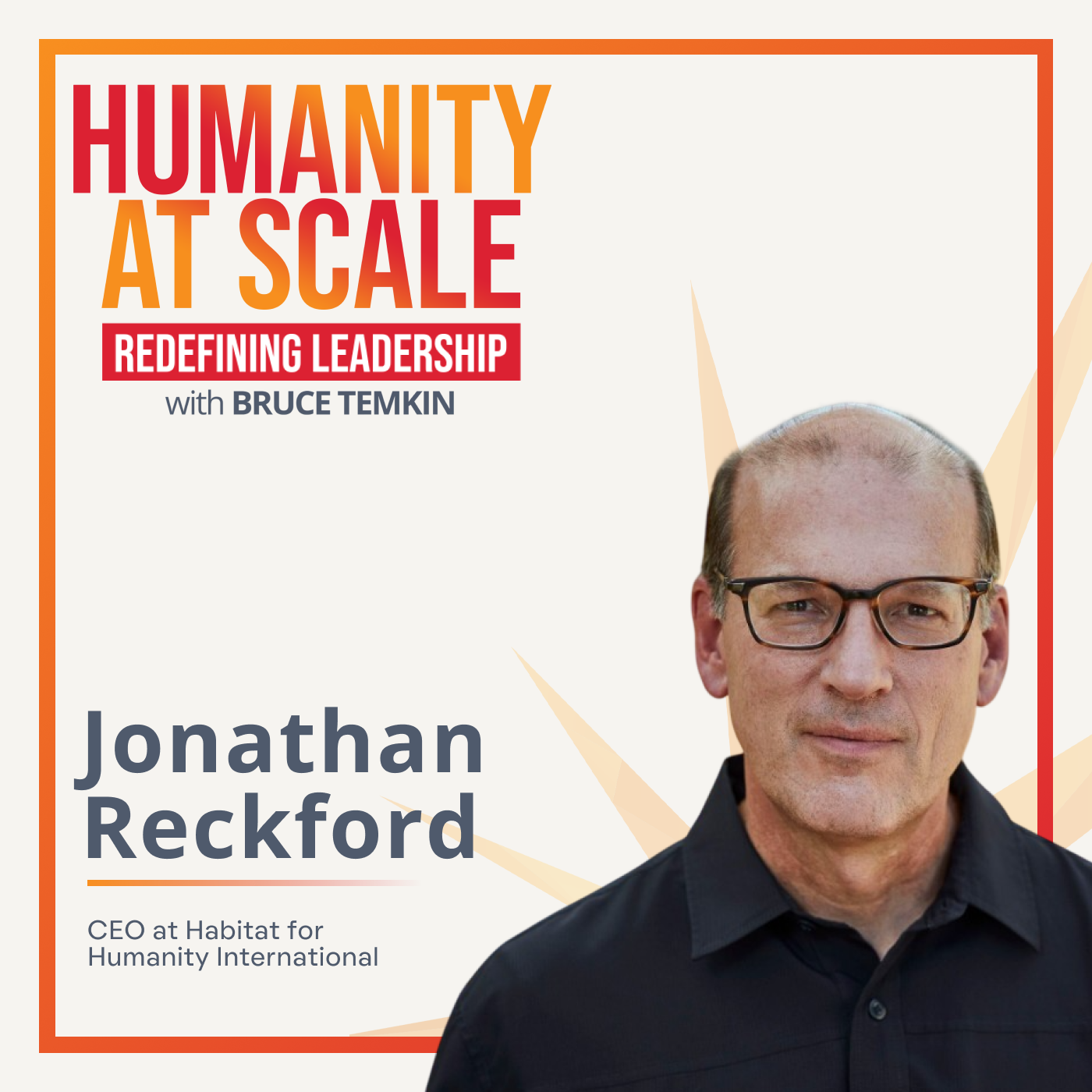 Leading Habitat for Humanity: Purpose, Service, and Faith with Jonathan ReckfordHumanity At Scale: Redefining Leadership · on values-driven leadership68 / 100
 From CFO to Female Founder Champion: David Horne’s StoryThe Secrets of Learning & Development · on NCR (National Cash Register)67 / 100
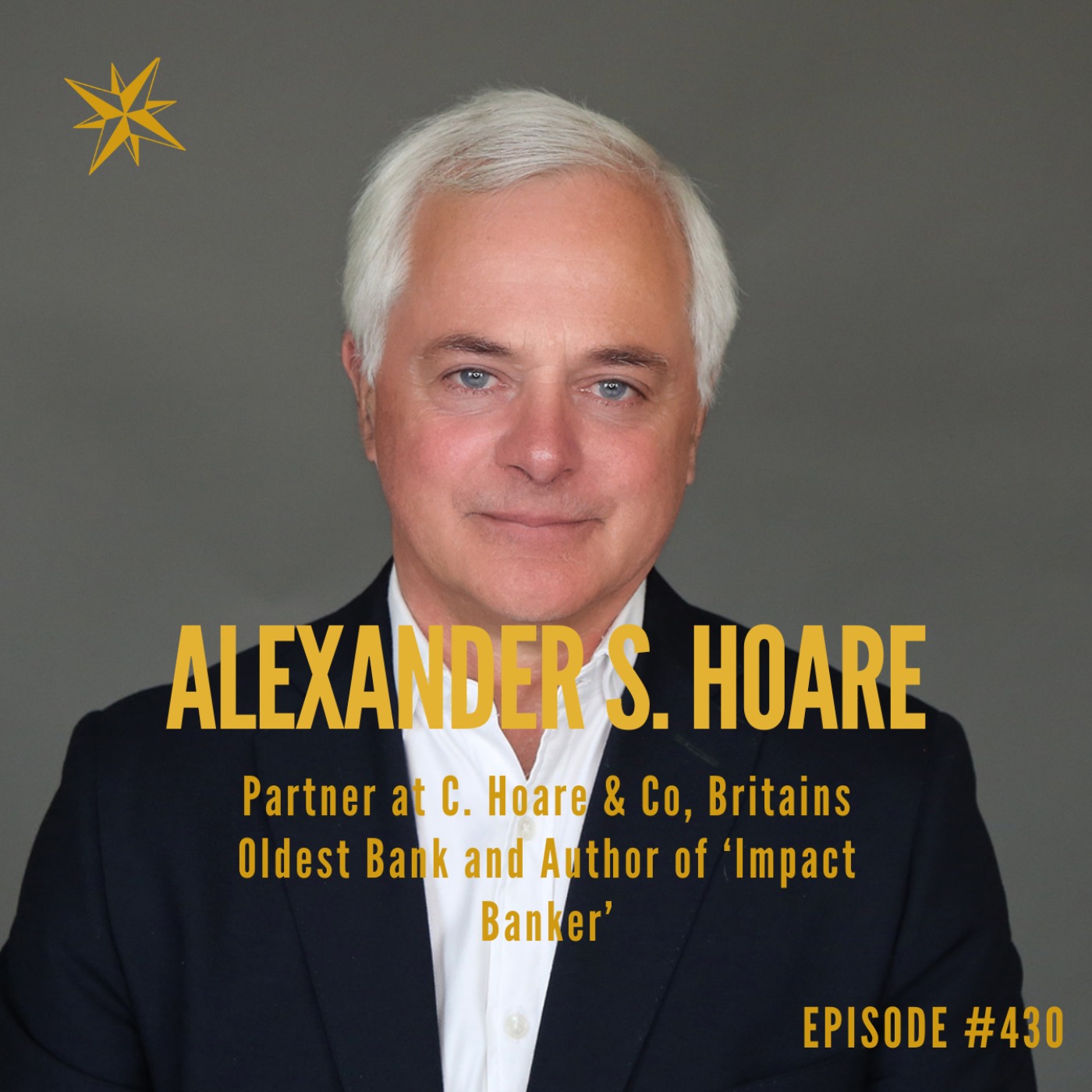 430. The Impact Banker - For Good with Alexander S HoareInspiring Leadership with Jonathan Bowman-Perks MBE · on values-driven leadership65 / 100
 HR People Pod - Ep 52: Courageous leadership, clarity and organisational falafel - with Diana OsagieCIPD · on values-driven leadership63 / 100Dianna Booher On Leaders Living Their Values (MLP 254)Jackie Lapin on Leaders LIVING Their Values (MLP 253)Nate Hagerty on Leaders Living Their Values (MLP 252)Dagmar Fleming on Leaders LIVING Their Values (MLP 251)David Meltzer on Leaders LIVING Their Values (MLP 250)