Million Dollar Relationships · 2026-06-30 · 24 min
Key moments - from our scoring
Substance score
43 / 100
Five dimensions, 20 points each
Jason Henneberry built a national mortgage brokerage with 600 agents across Canada by leveraging mentorship and relationship capital over 25 years. Starting in banking in the early 2000s, he was recruited by a mentor who saw entrepreneurial potential in him - a relationship that has endured nearly two decades of partnership. Henneberry survived the 2008 financial collapse by pivoting from his failed seminar marketing strategy (which had committed him to expensive annual contracts just before the market crashed) to a leaner operational model. Around 2016, another mentor in capital markets showed him how to raise funds and acquire competing brokerages, leading to the acquisition of roughly 2% of the Canadian mortgage market in 12 months. Beyond his core brokerage, Henneberry runs coaching platforms for sales and marketing, teaches financial strategies that layer tax planning and wealth management onto mortgages, and tests new SaaS products to internal teams before offering them to the broader industry. His leadership philosophy centers on finding capable people, pointing them in the right direction, and getting out of their way - a lesson learned from three key mentors who each brought different expertise to critical moments in his career.
As a second-generation mortgage broker, he watched his father work in the industry as a child. After trying banking after university, a mentor pulled him out of the bank system in 2003 and recruited him to focus on mortgages, recognizing he was destined to be self-employed.
He had committed to 12 months of expensive radio, TV, and bus advertising in August 2008, just before the market crashed on September 14th. His 45 planned seminars attracted zero attendees between September and December, forcing him to sell real estate and nearly bankruptcy to restructure the business.
He teaches brokers how to layer accounting, tax planning, financial planning, wealth planning, and estate planning onto mortgages - the largest single financial transaction most people make - to create deeper value for clients beyond simple transactional mortgage services.
Around 2016, a mentor in capital markets taught him how to raise capital, which enabled him to form Tango and acquire multiple large brokerages across Canada in approximately 12 months, transforming the business into its current national version.
He protects the core business, tests 2-3 new ideas simultaneously with external market pricing (rather than building for internal use first), scales whichever works into the main business, then explores new opportunities - this prevents spreading resources too thin while validating demand and generating revenue to fund development.
Our reviewer’s read on each dimension, with quotes from the episode.
A handful of genuinely useful ideas appear (test ideas externally before rolling them internally to validate demand and fund development; a staged portfolio approach to new ventures) but they're surrounded by substantial filler, host self-narration, and generic entrepreneurial affirmations. The density of actionable insight per minute is low.
before we even introduce it internally to our own company, I'll just throw it out there to the world and see if it resonates
you can put a price point on it and you can say, hey, this is what we're doing. It's, you know, 50 bucks a month, 99 bucks a month, whatever it is, and you can actually test real market demand for it
The 'Dependency Design' framing (founders get trapped by the freedom-seeking business they built) is the only genuinely fresh concept, but it is barely developed. The core portfolio management framework is explicitly borrowed from a book, and the leadership philosophy ('point in the right direction and get out of the way') is ubiquitous. No contrarian or first-principles arguments appear.
it's not even my process, but I read it in a book some time ago
it talks about how as founders, we often end up building a business that we think is supposed to give us freedom, but we get, you know, it ends up being heavy and it ends. We end up feeling like we're trapped by it
Jason is a legitimate operating practitioner - a second-generation broker who built a 600-agent national brokerage, ran a large seminar marketing operation at scale, survived the 2008 crash firsthand, and executed a roll-up strategy. He has real scar tissue. However, the conversation extracts only surface-level narrative from this experience rather than deep operational knowledge.
we put 20,000 homeowners through 300 seminars over the course of a two year period across the country
we bought up about 2% of the Canadian mortgage market in about a 12 month period of time
The 2008 crash section is the episode's strongest passage, containing genuine operational specifics (300 seminars, 20,000 homeowners, $1B in mortgage applications, 600K flyers per quarter, 45 seminars cancelled). Outside of that window, results are described in vague terms and the coaching business impact is entirely anecdotal.
we were dropping 600,000 flyers a quarter, getting, you know, 100 people into a Thursday night seminar
I had 45 seminars planned between September and December, and zero. Nobody showed up.
The host relies almost entirely on warm, open-ended questions ('what inspires you most?', 'what's an example of a result?') with no meaningful probing or pushback. He regularly narrates his own life story in lieu of follow-up questions and responds to substantive answers with 'very cool, very cool' and 'yeah, yeah.' The 2008 question was the lone moment of genuine curiosity but was not pressed further.
Very cool, very cool. And you know, that that is such the life of an entrepreneur
I, I spent four years in the army, then in the next seven years working as a commercial fisherman on Alaska's Bering Sea so that I could save up money to start my own business
Computed from the transcript - who did the talking, and the words that came up most.
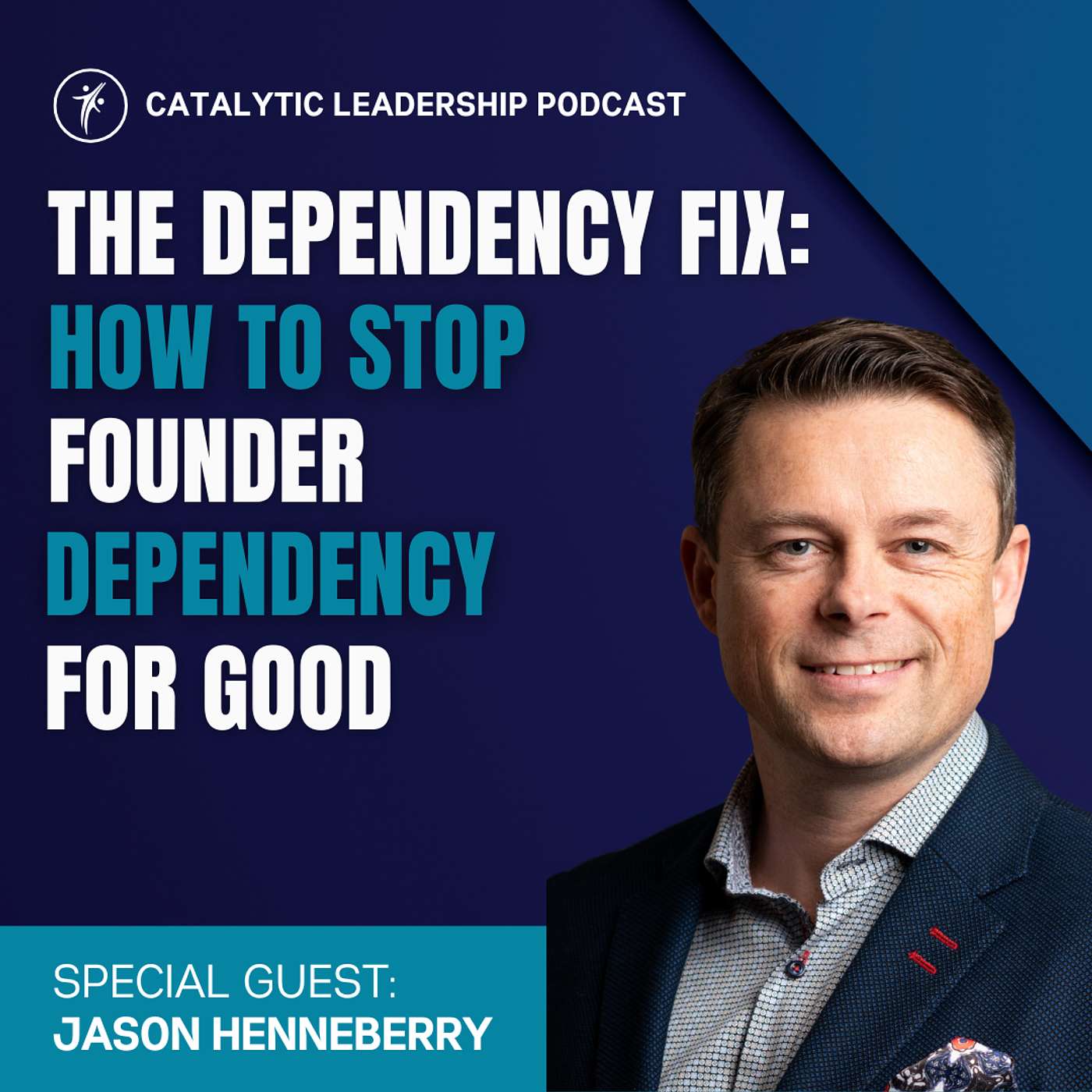
What if the person who pulled you out of the wrong room turned out to be the right partner for the next 25 years? In this episode, Jason Henneberry, founder of Dependency Design and senior partner in a national Canadian mortgage brokerage with over 600 professionals, shares the story of a career that has spanned market peaks, a near-bankruptcy in 2008, a dramatic rebuild, and a bold acquisition spree that captured 2% of the Canadian mortgage market in 12 months. At the center of it all is a man who walked into a bank branch, pulled a young Jason out of the corporate world, and said: come do mortgages with me. That was 2003. They still work together today.
Transcribed and scored by The B2B Podcast Index.
Speaker A: So no one wakes up and says, I want to be a mortgage broker. Like, that doesn't happen. When you ask most mortgage brokers, it's usually like, my first choice didn't work out, so I did this instead. However, I am a second generation mortgage broker, so, uh, I was a kid watching my dad do this, and so I kind of, I guess there's maybe a part of me deep in the recesses of my mind that said, this is what I'm going to end up doing.
Speaker B: Uh, have you ever been introduced to a person, person that completely changed the course of your business or life so much so that much of what you have today wouldn't be possible if not for this person. Each week on, um, the Million Dollar Relationships podcast, your host, Kevin Thompson interviews successful entrepreneurs, founders and CEOs as they share their personal stories and experience around this very question. Your invitation is to have a seat at the head of the table as they honor and introduce you to the most valuable people in their lives and remind us that relationship capital, the most valuable asset we possess. Each week, you'll be inspired and motivated to intentionally create more meaningful, rewarding and profitable relationships in your life so that together we can make a far bigger impact in this world. Your host, Kevin Thompson, places the highest value on relationships. He's created $16.1 million in revenue solely through strategic partnerships. And the introductions he's made have been worth millions.
Speaker C: Hey, guys, it's Kevin Thompson. And you know, we've been igniting limitless opportunities for impact driven entreprene in the Tribe for Leaders community for over two years now. And I've got an invitation for you. It's the only one you're going to get and it's for the preferred partnership community. And those aren't my words. That's just what's happened where we've made millions and millions of dollars in introductions that have allowed our members to grow their businesses and make a far bigger impact in this world. And if that's something that you're interested in, check it out today at www.tribeforleaders.com to see if you qualify. All right, Kevin, back with you for another episode of the Million Dollar Relationship podcast. And today I'm here with Jason Hanniberry. Jason, welcome. So awesome to have you on the show today.
Speaker A: Good to be here, Kevin. Thanks for having me on the show. Appreciate it.
Speaker C: You bet. I'll tell you after our last conversation, I've been really looking forward to this. And before we get into anything, I just want to start off by giving A, uh, shout out to Brianna and Kennedy, the whole team over at Interview Valet. Brianna and Luz are kind of my two front people that are, that I'm always in communication with and, But I'll tell you, Jason, they have sent me some absolutely amazing guests for this podcast over the last few years. And now every time I get an email from Briana, it's kind of like Christmas time. It's like, I don't know exactly what's going to be in here, but I do know it's going to be good, you know.
Speaker A: Well, I will do my best to make sure that this isn't the first time they don't hit the mark, but I agree, they're fantastic. They've, they've got me introduced to some fantastic podcasts, so I tend to agree with you.
Speaker C: Yeah, just kick off our conversation. I'll start with a nice, simple, easy question to get us started and then we'll dig in deeper. You do, Jason, and who do you serve?
Speaker A: Sure. Okay, that sounds great. So I grew up in the mortgage finance business. I'm up in Canada, uh, and we have a, uh, national mortgage brokerage from coast to coast, about 600 mortgage agents. That great in our business. That's the main business. I got a whole bunch of ancillary services around that. We do have a coaching platform for sales and marketing, and then we have some SaaS services that we do to support, you know, operational processes and stuff like that. So some of those things I do for the people in our company. And the rest I offer those services to the industry at large. And it really helps as a way to get to know everybody in the industry and recruit people into our business when it's appropriate.
Speaker C: Okay. Okay. So I'm curious, how did you get into this? You know, because I always think about, you know, to when I was a kid. You know, when I was a kid, I wanted to be a fireman, you know, and so I don't know if when you were a kid you thought about, I want to do the work I'm now doing, but maybe not. So how did this come to me?
Speaker A: It's funny that you said that. So no one wakes up and says, I want to be a mortgage broker. Like, that doesn't happen. When you ask most mortgage brokers, it's usually like my first choice didn't work out, so I did this instead. However, I am a second generation mortgage broker. So I was a kid watching my dad do this, and so I kind of, I guess there's maybe a part of me deep in the recesses of my mind that said, this is what I'm going to end up doing.
Speaker C: Yeah. So how did it happen? So what was your path? I mean, did you go to college after high school or.
Speaker A: I did, yeah. I did a BCom degree. I thought that I would end up working in commercial banking. I tried working in the bank environment for a little bit after college, uh, university, and just, it wasn't for me. I realized pretty early on that I was destined to be self employed. And it's funny that, uh, that actual environment is where I met someone who pulled me out of the banking system to say, hey, you know, if you came and worked for me, you'd only have to do mortgages, you wouldn't have to open up bank accounts and do all this other stuff that you're doing and, and you'd have an easier life. So I believed him and I, uh, went down that path. Turns out no path is easy, Kevin.
Speaker C: Well, uh, I'll agree with you there. I'll agree with you there and, But I'll tell you, like, like you, I, I'd much rather have the path of the entrepreneur than working for somebody else. Because I found that, uh, you know, I spent four years in the army, then in the next seven years working as a commercial fisherman on Alaska's Bering Sea so that I could save up money to start my own business. That was my whole reason for going to Alaska. Cool. And since 1995, I've been an entrepreneur ever since. And I couldn't imagine working for somebody else again.
Speaker A: Yeah. You know, from where I'm sitting today, I'm the same way. Like, I look back and I'm like, of course, why did it even bother trying at the bank? But at the time I really felt like I was going to be a corporate person. Yeah. And I actually couldn't get, I couldn't get any interviews to, you know, get the next promotion or the next opportunity. And I guess everybody that, that I applied with or I, uh, talked to, they saw something in me that I didn't even know existed in myself. I really wasn't a corporate person.
Speaker C: Yeah.
Speaker A: You can see it in retrospect and in the moment. It's, you know, it's a big leap of faith to go from that to, okay, I'm gonna go do my own thing.
Speaker C: Yeah. Because now it's all dependent on you.
Speaker A: Yeah.
Speaker C: You know. Yeah. So. Well, so what, um, inspires you most about the work you get to do and the impact you get to make? Jason?
Speaker A: I like, I like the creative process of coming up with new ideas. I really do. So I mentioned earlier I have a few other things that I do around our core business. And, you know, it's not because I have to do those things. The core business is a pretty substantial business and it keeps me pretty busy. But that's where I find I get to explore my creative side, uh, coming up with new projects, new ventures. So, uh, I've, you know, I've probably got 20 or 30 things that I've tried over the years, and some have worked. We've had some exits along the way. Just small stuff, but, you know, really fulfilling and it's been great. So I, I don't see a world where I stop kind of tinkering or exploring how do you make the main business even that much more efficient or that much better? And a lot of that for me starts with just testing the market. So, uh, oftentimes I'll come up with an idea, and before we even introduce it internally to our own company, I'll just throw it out there to the world and see if it resonates. Yeah. And it's a great way to explore ideas, and it's also a great way to pay for ideas. So, you know, when you own a company, you're like, okay, I want to do this for my people. Oftentimes it's a huge investment. Time, energy, brain power. You don't even know if it's going to land. But when you do it externally, you can put a price point on it and you can say, hey, this is what we're doing. It's, you know, 50 bucks a month, 99 bucks a month, whatever it is, and you can actually test real market demand for it. And then if it, that, that can often be a good way to get a project off the ground, test market viability, generate some revenue to pay for the development, and then you have, uh, something better that you can bring, you can bring home. And so that's sort of been my process. I love that. So, you know, that's where I spent a lot of my creative juices.
Speaker C: Very cool, very cool. And you know, that that is such the life of an entrepreneur, you know, especially, uh, once we start getting some traction, going into the direction that we're going and stuff now, it's just, how do we become most effective? How do we just continue, you know, just finding little nuances and making those little discoveries that just allow us to make a much bigger impact as we just continue moving forward and stuff, you know? Yeah, I love that whole discovery process and just Trying stuff out and just, you know, experimenting and just seeing what happens, you know.
Speaker A: Yeah, you got to make sure you don't keep chasing shiny objects. Like, you totally got to protect the core.
Speaker C: Oh, you bet.
Speaker A: I actually have a process around that, and it's not even my process, but I read it in a book some time ago. But, you know, if you've got your main business that is, that's feeding you and it gives you the space to. That allows you that creativity. A lot of entrepreneurs are, you know, we get squirrely. We're like, okay, I'm going to, I'm going to go and do something else now. Even though you've got this good thing going on. And so the process is sort of. The idea is protect the core, test a few things. So I'll often have two or three projects on the go that are like new ideas testing and, and then, uh, if something works, I'll like, ditch to. I'll go deep on the thing that's working and I'll figure out how to build it up enough so that I can actually become part of the core. Really put a lot of effort into that, and then I'll find that I'm looking to kind of explore something new again. And so you test a couple of other ideas and you just sort of repeat that process, but do it in a way that you don't blow yourself up and you don't neglect the main business.
Speaker C: Amen.
Speaker A: Uh, anything I touch, it's. Could this potentially become part of the main business? And if I can't say yes to a certain. A few questions, I, I just won't touch it at all. So that's really important.
Speaker C: Yeah. And, uh, yeah, I'm a hundred percent with you. I want, you know, the stuff that I'm testing to just really. I want it to better and improve what I'm already doing. I want to become more effective in what we're already doing.
Speaker A: Yeah, yeah. And then you get these, you get that. I'm not even sure you get a leverage effect off it. So anytime you put into new project, if it works out, then it's time invested that enhances the other. So you just get a multiplier effect on your time as opposed to sort of diffusing your time and then not doing anything well.
Speaker C: Yeah, yeah. So what's an example of a result? And you can name names here, or you don't have to name names is what I meant. Uh, you can if you want. Totally your co. But what's an example, uh, of a result that you guys have helped a client get that you're just incredibly proud of. Jason?
Speaker A: Yeah, well, I mentioned my coaching group earlier and one of the things we do so in the mortgage industry, we tend to be very focused on, you know, the transaction at hand. Maybe people are buying a home or they're renewing or refinancing their mortgage and it's a very transactional type experience with, you know, mortgage rate payments, you know, what you would expect. And, but there's a lot of cool financial strategies that you can layer onto mortgages. They're really, it's, you know, it's the biggest single financial transaction that most people have in their financial portfolio. And so if you, there's things that you can do to sort of link it up with the, you know, the accounting and the tax planning and the financial planning, the wealth planning, the estate planning and there's all kinds of really cool things you can do with mortgages without getting into it. I think the biggest impact that I've had probably on the mortgage industry or some of the people around me is just in helping other mortgage professionals see those opportunities through our coaching platform and then watching them execute where we're not even involved in the transaction side of things, we're just actually just helping them find a new way to grow and build their business and support their clients is a really rewarding process.
Speaker C: Wow. Um, very cool. So you, yeah, you're not there on site with them or anything like that. You're just showing them how to do this stuff and you just watch, you get to kind of watch them implement and they, you kind of, you know, m help them out and they got questions, you answer questions around it and all of that kind of stuff.
Speaker A: Yeah, yeah, exactly.
Speaker C: Very cool, Very cool. Well, okay, so now that we've got a little bit of context set, uh, I want to switch gears just a little bit. I want to start talking about the relationship side of this. So Jason, have you ever been introduced to a person or persons who completely changed the course of your life or your business so much so that much of what you have today would not be possible if not for this person or persons? And I'm just really excited to hear your story and your experience around this topic of relationships?
Speaker A: Yeah, sure, I can. We're, you know, uh, we're in the mortgage business. I told you, we have a company with 600 agents. We are very much a relationship based business. None, uh, of this works without relationships. I mentioned earlier, I, when I worked in the branch, it's funny, they asked that question I worked in the branch, bank branch system. And there's a gentleman who pulled me out of that and said, hey, come work for me and do mortgages. Well, that was in 2003, I think it might have been 2004. So we're talking like 22, 23 years ago.
Speaker C: Yep.
Speaker A: That, that uh, person we've worked, I've worked with them ever since that moment. I worked under them and then beside them. And now we actually. So this company that we have it together and he sits as chairman of the board of the company is no longer operational, but a big influence, big impact on my life and, and now almost 25 years later, we still work together and we've grown the business from those early seeds to what it is today.
Speaker C: Yeah.
Speaker A: So that's just one example of a relationship that, you know, without that moment where he pulled me out of the bank branch, I, uh, you know, none of what I'm doing today would be possible and we certainly wouldn't be working together 25 years later.
Speaker C: Wow. So now I've got a question I want to ask that I have never ever asked this question before. And because I've never had, uh, and this is totally self serving too. I'm just curious. So what was. So you got into this in 2003. So what was it like for you going through 2007, 2008, 2009. Talk about your experience through that time. Because a lot of stuff happened in the mortgage industry.
Speaker A: Okay. Yeah. So while 2006, 7 and the early part of 2008 were like amazing stratospheric moments in our career, it was when the mortgage market was really peaking. But then after August or September 2008, things took a bit of a turn. We all know. So the next couple of years after that sort of Peter Long was a little tough. But I'll tell you, we had a really good program, uh, 6, 07 and 08, where we would get back to the financial strategy stuff that I coach brokers on today. That's actually at the time I was the mortgage broker. I didn't have this platform and so I was drumming up business. And we did consumer seminars or homeowner seminars to teach people some of these financial strategies. And we put 20,000 homeowners through 300 seminars over the course of a two year period across the country. And it was a machine. We did radio, bus ads, flyers, we were dropping 600,000 flyers a quarter, getting, you know, 100 people into a Thursday night seminar and taking them. We took uh, $1 billion with a mortgage app. So over that period of time, it was. It was really, really cool. And In September of 2008, we. The world changed and the market shifted and nobody wanted to come to our seminars anymore. It was a big moment for me because I had spent a year and a half or two years really perfecting all our marketing processes, dialing in all, everything. And we were right at that inflection point where all the hard work was about to pay off and we were going to scale dramatically in 0, 8, 0, 9, and 10. I had a big plan and I basically blew myself out of the water because it. When you're spending money on radio and TV ads and bus ads and flyers, the most expensive line item in the books is your marketing. But with all of those things, if you make a big commitment in advancing, if you buy six months or 12 months worth of radio, you get like 50, 60, 70% off the radio instead of buying like 30 second slots at a time. So in, uh, I wrote the chat for the next 12 months of marketing in August of 2008.
Speaker C: Oh, wow. Wow.
Speaker A: And then on September 14th, the bottom fell out of the market. And I had 45 seminars planned between September and December, and zero. Nobody showed up.
Speaker C: Wow.
Speaker A: And I had. I was a complete reset. I basically. I basically bankrupted myself. We didn't quite get that bad, but I had to sell. I had a bunch of real estate. I had a house with an ocean view. I was young, too. I was like 30 years old. I'd done pretty well early in my career. We had three kids, young babies. Like everything was going well. And all of a sudden it came to a dead stop and I burned all my cash in one moment and had to completely restructure the business, sell everything and start over. So it was, uh. If you had asked me that question in 2009, I would have cried. But it's been a long time since then. So we're, we've, obviously we've rebuilt, but that was a difficult couple of years, let me tell you.
Speaker C: You bet. Yeah. Wow. And I want to make sure, uh, if there's any other relationships that you want to honor, I want to make sure I don't. I want to give you the opportunity to do that.
Speaker A: So, yeah, sure. I mean, I had a different business partner at the time with all those seminars, and he really taught me how to grow a business and how to operationalize a business. So, you know, it's not all bad. You know, we came out the other end a lot smarter. And then we applied that knowledge into building you know, Tango, which is what we have today, and, and that works out. And it was probably around 2016, I met a gentleman who was, uh, who was more involved in the capital markets and he really showed me how to raise capital and, and do some pretty cool stuff. And what we did is we, that, that's the moment that we formed Tango and we raised a bunch of capital and then we went and bought a bunch of. Our business was doing well by then. We'd fully recovered from 2008 and 9 and 10, but we ended up buying a bunch of big brokerages all across the country. And that's how that was basically the moment that we formed the version of the business that we have today. And man, I learned a lot through that. And I wouldn't have had the ability or the knowledge to bring in all the shareholders, the investors and that, that, that capital base that would have allowed us to scale so quickly. So we bought up about 2% of the Canadian mortgage market in about a 12 month period of time. And, and then, you know, that put us down a different path and some bumps in the road there too. But it's led us to where we are today. And I feel pretty fortunate for that moment.
Speaker C: Yeah. So what's an example of a situation where you personally got to make a really substantial impact and maybe even in the moment, maybe it even surprised you a little bit. And yet you also know that would have never been possible if not for your relationship with any one of these people that you've been talking about. What's an example of a situation where you were empowered in that way?
Speaker A: Yeah, that's a good question. I think there are many moments like that. I think that, you know, without naming names or things like that, I've touched on two or three, two or three mentors or pivotal moments, people in my career. They've all been really good. Uh, from the same perspective is sort of, you know, the one thing I learned from kind of all of them is they ah, all had different skill sets, believe me, but it's sort of like point people in the right direction and then get out of their way. And so, so something that I've taken away from all three of those relationships. There's been moments where it's been great, there's been moments where it hasn't been good. We've definitely had some bumps in the road.
Speaker C: Sure.
Speaker A: But what I've learned for myself as a leader, because we now have layers of leadership, you know, that support the businesses that we built and that uh, support me and what I've learned has been the most effective is first you gotta find good people, but point them in the right direction and then get out of their way. Because. Because oftentimes those people, they've got ideas, they've got capacity, they've got skill sets, knowledge. And when you let them apply it in the way that they know how, with a little bit of direction, they can do things that far exceed anything that you could possibly imagine doing for yourself. And so a lot of what we have today comes from the fact that I'm surrounded and supported by really, really great people that I try my best to stay out of their way and networks, uh, up more often than not.
Speaker C: Yeah, what a great example. So, well, for anyone listening to this that might be thinking, you know, man, Kev, man, what a great guy he is. I love the way Jason shows up. I really appreciate some of the stuff he shared. Is there any website, any resources we can share with folks?
Speaker A: Yeah, 100%. I'm doing a little bit of introspective work right now myself, Kevin. I actually wrote a book recently.
Speaker C: Oh, wow.
Speaker A: And made it available for free to download off my site. It's called, it's called Dependency Design. So you can find it@decenderency design.com.
Speaker C: okay.
Speaker A: And it's, uh, a PDF. It's a 15 minute read. As I, one day I might write a full book. If this, if I ever get there, this will be the intro to that full book. But what it does is it talks about how as founders, we often end up building a business that we think is supposed to give us freedom, but we get, you know, it ends up being heavy and it ends. We end up feeling like we're trapped by it. And I'm doing some personal exploration to try to figure out how you can kind of like rise above the business and really let that, you know, the business sort of run itself so that you can have that freedom. Not an easy thing to do. But I share some of my thoughts in that book. So, you know, if anybody wants it, go check it out. It's free. Like I said, enjoy it.
Speaker C: Well, and if you're listening to this, a, uh, link to that website is right below in the show notes. So we've got it handy there for you and stuff. Jason, any last thing that you feel led to share before we call it around?
Speaker A: No, it's great. I love, I love what you're doing with the show, Kevin. You know, very relationship based, very people based. And I'm just glad that you, you know, invited me on and we had the opportunity to chat.
Speaker C: Same Same. I really appreciate you taking the time to have the conversation today, Jason, and I'm excited to get this out there and share it with a lot of folks. So thank you so much as well.
Speaker A: Same thanks, Kevin M M We trust
Speaker B: you were inspired by this episode of the Million Dollar Relationships podcast with your host, Kevin Thompson. One more time by invitation only. It's the preferred partnership community for the highest level entrepreneurs and experts. If you're ready to experience something better, check out www.tribe4leaders.com today and we'll see you on the next episode.
Other episodes covering the same guests and topics, from across The B2B Podcast Index.
 The Loneliness Epidemic with Dr. Julie Radlauer
 The Room of 400 That Became One Business with Tyler Ryan
 The Detour That Built Five Companies with Justin Gray
 From Prison Yard to Boardroom with Doug Noll
 The 30,000 Feet Conversation with Carrie Waible