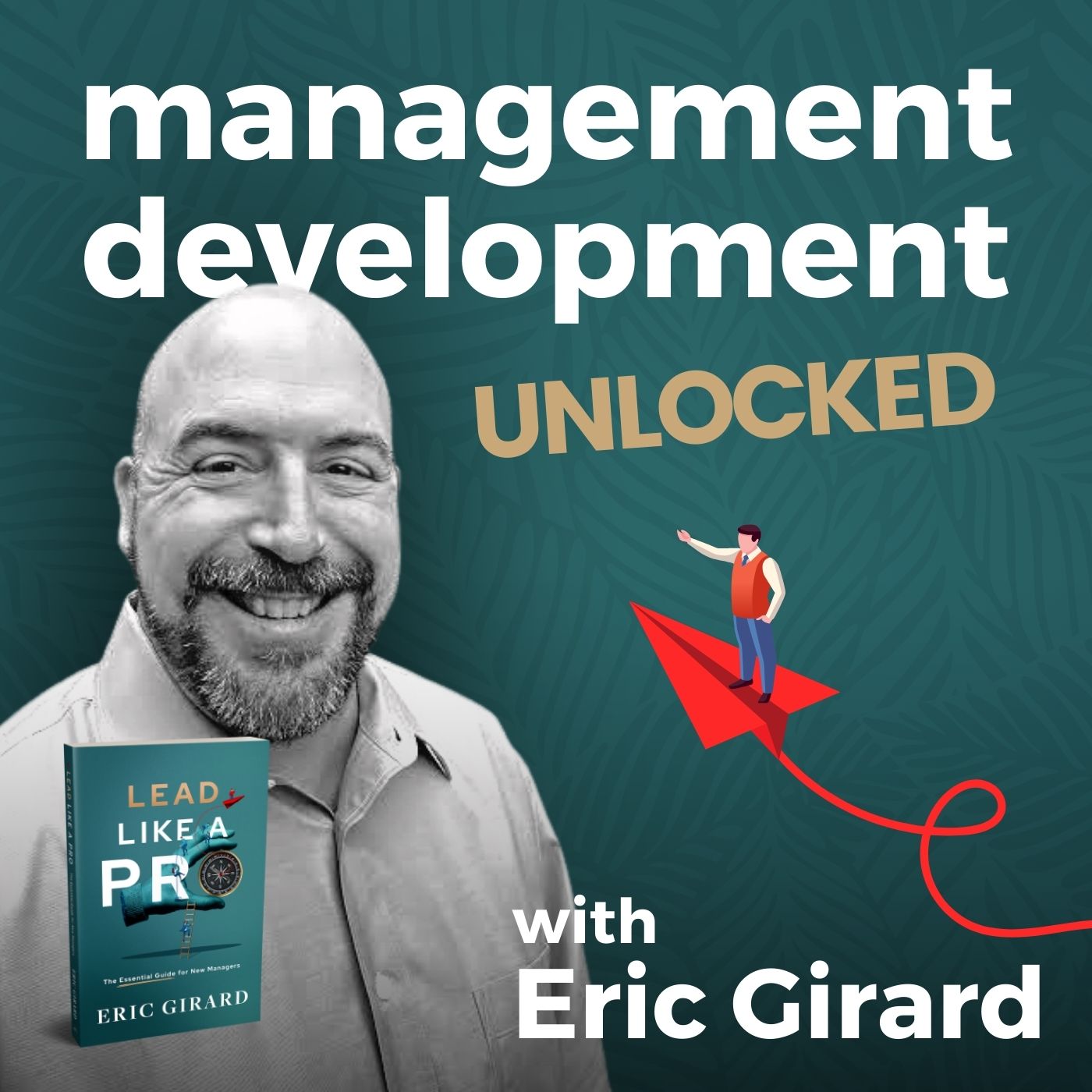
Management Development Unlocked · 2025-05-20 · 20 min
Key moments - from our scoring
Substance score
30 / 100
Five dimensions, 20 points each
Heather Burright, a nonprofit learning and development consultant and host of the Learning for Good podcast, challenges the assumption that training solves organizational problems. She argues that L&D professionals are often treated as vendors receiving predetermined solutions rather than strategic partners who diagnose root causes. Drawing on behavior change experts like Charles Duhigg (habit loop), James Clear (cue, craving, response, reward), and BJ Fogg (starting small), Burright illustrates why simple behavior changes require awareness, urgency, and prompts - using her personal struggle to take iron supplements as a case study. She introduces the ABSS framework: Awareness (do employees know change is needed?), Buy-in (are they motivated?), Skills (are they capable?), and Social Support plus prompts (what accountability helps?). For people managers, this means leading reflective conversations to help teams discover problems themselves, clarifying expectations, and surrounding employees with support through mentoring, job shadowing, and regular check-ins rather than relying solely on formal training.
Training is often positioned as the default solution due to a "game of telephone" where problems are reported as "we need a training" before L&D can properly diagnose the issue. When L&D lacks strong relationships, strategic credibility, or the right questions to ask, they're treated as vendors executing predetermined solutions rather than partners diagnosing root causes.
ABSS stands for Awareness (do employees know change is needed?), Buy-in (are they motivated?), Skills (are they capable?), and Social Support plus prompts (what accountability helps?). Together these ensure behavior change is intentionally designed at every step rather than assuming training alone will create adoption.
Duhigg's habit loop is cue, routine, reward; Clear adds craving as motivation between cue and response; and Fogg emphasizes starting small by anchoring new behaviors to existing routines. All three stress that behavior change requires environmental triggers, internal motivation, and reinforcement.
Managers can lead reflective conversations using open questions like "What have you done in the past to solve this?" and "What would you want to be different?" This allows teams to self-discover problems and feel ownership in the solution, increasing buy-in and intrinsic motivation.
Managers can use mentoring, job shadowing, job aids, on-the-job practice, team check-ins, and observations. The key is surrounding employees with supportive environments and clear accountability while building skills toward a specific expectation.
Our reviewer’s read on each dimension, with quotes from the episode.
The episode has very low idea density for its runtime; large portions are taken up with a job-market announcement, a long personal iron-supplementation anecdote, and the host's reminiscences about past managers. The few substantive points - that training isn't always the answer, and that behaviour change requires awareness, urgency, and prompts - are L&D fundamentals, not novel claims.
We produce a lot of content, but if we're just producing content, we aren't creating impact.
training isn't always the answer. The answer really should be whatever produces the change our stakeholders need to see.
The episode leans entirely on three widely circulated behaviour-change frameworks (Duhigg, James Clear, BJ Fogg) without adding any new synthesis or contrarian angle; the ABS acronym is a light repackaging of standard instructional-design logic rather than a fresh model.
in his book the Power of Habit, Charles Duhig talks about the habit loop. So that habit loop is cue, routine, reward
James Clear has a similar model, but adds craving in as the second part of the process
Heather Burright is a practitioner, but her scope is limited to nonprofit L&D consulting and podcast hosting; there is no evidence of large-scale organisational impact, senior executive experience, or quantified results that would signal genuine at-scale operator credibility.
I am a nonprofit learning and development consultant. So basically I help organizations improve performance and scale change through learning and development.
I host a private community for nonprofit learning and development professionals and share my experiences on my podcast, Learning for Good.
The only concrete examples are the guest's personal iron-supplement story and the host's anecdotes about named former managers; there are no organisational case studies, no metrics, no timelines, and no data on outcomes from any L&D intervention described.
she was going to start me on an IV to give me iron
I got hired in December of 99, and in October of 2000, my mom was diagnosed with metastatic lung cancer
The host asks sequential, pre-set questions ('Why is behaviour change important?', 'Why is the traditional approach not effective?') with no meaningful pushback, and the latter half of the episode is dominated by the host's own lengthy personal anecdotes rather than extracting depth from the guest.
And if we wanted to learn more about the ABS framework, where would we go?
Okay, so the behavior is good or bad or what the people manager did was good or bad?
Computed from the transcript - who did the talking, and the words that came up most.
On today’s episode of Management Development Unlocked, Eric sits down with Heather Burright, a nonprofit learning and development consultant. Heather specializes in helping organizations improve performance and skill change through learning and development. She also hosts a private community for nonprofit learning and development professionals. Heather is the host of the podcast Learning for Good. Eric is currently on the job market. He is seeking a role as a senior manager of learning and development, focusing on leadership and management development in tech. If you know anyone hiring, let Eric know. In this episode, you’ll hear: Behavior change as a component of L&D to create impact. L&D’s role as an essential part of the employee or customer experience. Organizational response to a need for behavior change and why training isn’t always the answer. The science behind behavior change and what it looks like in action. Why Heather recommends ABS (awareness, buy-in, skills, social support, and prompts) for a behavior change method at work. How people managers often deal with their team members’ behavior - both good and bad.
Transcribed and scored by The B2B Podcast Index.
Speaker A: Hey everybody, Big news. At the urging of my long suffering wife, I am in the job market. I'm seeking a role as a senior manager of learning and development, focusing on leadership and management development in tech. If you know of anyone hiring in that space, please connect us on LinkedIn. Thank you.
Speaker B: So behavior change is funny, right? Like taking iron is a simple task, yet I needed this awareness, a sense of urgency and a prompt to do it. So even that simple, simple change can feel pretty complex. And so I think the key here is that we have to intentionally design for behavior change every step in the process, both in learning and development and in how we are equipping our people. Managers, welcome to Management Development Unlocked, where you will learn how to nurture a, ah, world class management team. And now your host, Eric Girard.
Speaker A: Welcome back to Management Development Unlocked. I am delighted that you're here. I'm Eric Girard, CEO of Gerard Training Solutions, a management development firm that focuses on helping new managers transform from high performing individual contributors to great people managers. I also have an Amazon number one bestselling book called Lead Like a Pro, the essential guide for new managers. Today. I am delighted to have Heather Bureit with me. Heather, welcome to the show. Who are you and what do you do?
Speaker B: Thanks Eric. Excited to be here. I am a nonprofit learning and development consultant. So basically I help organizations improve performance and scale change through learning and development. And I host a private community for nonprofit learning and development professionals and share my experiences on my podcast, Learning for Good.
Speaker A: Yeah, and we were just talking, um, as we were getting set up that life is kind of difficult for non profits at the moment. So uh, I think this will be interesting to have a chat.
Speaker B: Challenging times.
Speaker A: Yeah. Yeah. Okay, so our topic today is Creating behavior Change and I am excited to, to have this conversation because that's what I'm all about. My first question to you, Heather, is this. Why is behavior change important to consider?
Speaker B: Yeah, I think for when I think about learning and development specifically. Right. We produce a lot of content, but if we're just producing content, we aren't creating impact. And in L and D, people often come to us to solve every problem with training. But training isn't always the answer. The answer really should be whatever produces the change our stakeholders need to see. And when we can produce this change, we are providing value to the organization and to the individuals. Which in nonprofits might be a little bit different than other for profit companies. But in nonprofits that could be staff, it could be volunteers, it could be whoever that client or customer base Is whoever it is that we're serving with our kind of learning solutions or helping to improve their performance or create some sort of change. If we don't produce this change, we really aren't providing value to those people and not providing value to the organization either. We aren't creating impact and we aren't really a necessary function within the organization. Right. We become a nice to have. And that's just not how I view learning and development. We aren't a, uh, nice to have. We are an essential part of the employee or the customer experience. We're an essential part of the business, and we're an essential part of the mission in the case of nonprofits. But to be essential, we have to create that behavior change.
Speaker A: I totally agree. And not only do we create behavior change, but it needs to be behavior change that moves a specific business needle. So it's great if you get everybody marching in a straight line, but if what the business really needs is something different, that's what we need to be focused on. And so I completely agree with you that the behavior change connected to a business need is crucial.
Speaker B: Yeah, absolutely. And I think that's part of the process. Right. Is helping to uncover what that business need is.
Speaker A: I agree. Well, let's move on to my second question for you. How have organizations typically responded to the need for behavior change?
Speaker B: Yeah. So here's what I've seen and I'm curious, Eric, if this is similar to what you've experienced. Someone, uh, someone somewhere in the organization notices something and they think we have a problem. But when they open their mouth, it comes out we need a training. And then they call up the L and D leader who then tells the instructional designer, who calls a meeting with a subject matter expert and it becomes like a game of telephone.
Speaker A: Mhm.
Speaker B: And when the instructional designer finally sits down with the subject matter expert, there's a preset solution in mind. So if there is a change that's needed, we usually aren't ever presented with that change. What we're presented with is someone saying we need a training, we need an elearning or whatever it is. And if learning and development doesn't have the right relationship with their internal partners, if they aren't equipped, equipped with the right questions to ask, and if they aren't viewed as a valuable part of the organization, that's where the conversation ends and a training gets created. That's what I typically see.
Speaker A: And I, uh, have experienced that. So I have, I have been on the receiving end where I was treated like a vending machine.
Speaker B: Right.
Speaker A: And when I said, hey, let's do some analysis. Let me come in and talk to some people, I was rebuked. You know, like, we've already done that. We just need you to go away and create this training. And if you won't do it, then we'll find somebody else who will.
Speaker B: Right. There's some resistance there.
Speaker A: Yeah, it was, it was pretty rough. And you know, in hindsight, that was a red flag that I should have really waved, uh, to my boss and to my, my chain of command say, listen, I'm. I've got expertise. I've been doing this for 25 years, and I'm just being asked to go and create what they tell me. And. And that's. That may or may not do anything.
Speaker B: Yeah, absolutely.
Speaker A: Yeah. Okay. Well, that's fun. So why is the traditional approach not effective?
Speaker B: Yeah, it's not effective because training isn't always the answer. So, uh, specifically, when it comes to behavior change, improving performance, and looking for that specific change, it's complex and it often requires more than training. So L and D needs to be able to influence that stakeholder to help them see that there are other good solutions beyond training. So there's a lot of just relationship building and trust building that has to happen. We need to be able to simplify the scope of the project because we need the change to really be expressed in its simplest state. And a lot of times when someone says we need a training, they're going to throw a million different pieces of content at you. And if you haven't been really clear on what that change is, you really get content overload. So we need to simplify that scope based on what that change is. And then we need to be able to use behavior change principles, kind of the science behind how change happens in order to make it stick. M. And then this one is always a little bit complicated, I think, for nonprofit, for L and D. But nonprofit specifically, we need to look for signals to know if whatever we create is working or adapt as needed. And that's really about measurement, which is a whole other conversation, but can be very complex for nonprofit organizations. And then I know you focus specifically on people manager development. And where I think the people managers fit in is really with the science behind behavior change, because a lot of that happens outside of traditional, uh, training.
Speaker A: Yeah, I'm with you. I wanted to double click on something you said about the behavior change and, and how you actually change behavior, the science behind changing behavior. So can you, can you delve into
Speaker B: that a little bit yeah, and I think, again, I think this is where people, managers specifically, can thrive. I want to start by sharing what some of the experts have said about behavior change before. I kind of share, like, some examples and what that could look like for your people managers. But. So in his book the Power of Habit, Charles Duhig talks about the habit loop. So that habit loop is cue, routine, reward, M. So something triggers the change. That's the cue. You then implement the change. And when you've implemented the change, you see or feel or receive some sort of. Some sort of reward. So that's his kind of view of, uh, behavior change. James Clear has a similar model, but adds craving in as the second part of the process. And he changes routine to response. So he has cue again. Something's triggering the change craving. You also have to want that change. Then you respond, and then you receive some sort of reward. And then BJ Fogg, another behavior change expert, talks about the importance of starting small. Find a place in your existing routine to try something new. So that's where I think those three examples of behavior change, I think that's where we can really equip people managers to support their teams. I want to share a kind of a personal example, though, from my life to show what this looks like and like what behavior change looks like in action. So I went to my primary care physician last year or the year before. They did some blood work, and the, uh, doctor called me after my appointment to say everything looked good. So I didn't take any action. I didn't do anything different because I wasn't aware there was any kind of problem. There was no cue or trigger to make a change. Later in the year, I saw a specialist about something else. And they pulled up my recent blood work as they do, and she pointed out that my iron levels were a little low and suggested I take iron at least every other day. So I bought some iron. There was a trigger, There was a cue. I bought some iron. I took it when I remembered to do it, but I wasn't super regular about it. I didn't have any sense of urgency motivating me to do it because she just said they were a little low. Uh, then I saw a different specialist about something else, and they too, pulled up my blood work from earlier that year. But this doctor, when she looked at my blood work, she paused and she told me that my iron levels were so low that if I didn't get them up, she was going to start me on an IV to give me iron. Well, that's A completely different picture. And you know what I did? I started taking my iron. Right. But it wasn't until someone made me aware of the problem, gave me instructions on how to fix it, and made me uncomfortable thinking about the alternative that I decided to change my behavior. And even then I had to set, uh, an alarm on my phone to remind me to do it. Behavior change is funny, right? Like, taking iron is a simple task, yet I needed this awareness, a sense of urgency, and a prompt to do it. So even that simple, simple change can feel pretty complex.
Speaker A: Yeah.
Speaker B: And so I think the key here is that we have to intentionally design for behavior change every step in the process, both in learning and development and in how we are equipping our people managers.
Speaker A: You know, I love, I, uh, love the whole idea of starting small as well. Like, you know, you don't need to completely change your personality. You don't need to completely change your, your whole day's routine. Just with breakfast, take a pill. Just a small thing can make a big difference in those results, right?
Speaker B: Absolutely.
Speaker A: Uh, excellent. Well, we've had a really good kind of discussion here on why the traditional approach isn't effective. Now I'd like to talk about what should people managers do instead? And I think we've started to cover this, so maybe we could expand on what we've started to talk about.
Speaker B: Yeah, absolutely. What I like to recommend is abs. We're going to build our behavior change muscle. So the A is awareness. Do your staff know they need to change this? The B is buy in. Are they motivated to make the change? The first S is skills. Are they capable of making the change? And then the last S, uh, two S's, social support and prompts. What accountability can you provide to help them change? So if we think about people managers, there are a few things that they can they, we can help them do with their teams. So the first is to lead times of reflection with your team. So if you know there's a change that's going to happen. Right. Or there's a challenge that you are needing to address, there will be a change because of it. Ask, uh, them questions like, what have you done in the past to solve this challenge? What has worked? What hasn't worked? When you think about how it's going, what would you want to be different in the future? Right. So just these open questions allows them to reflect and to share and they're going to be able to discover that a change is needed and they'll feel like they've been part of that process which Helps create that buy in. Um, and so just in those times of reflection, we're creating awareness, we're creating buy in that a change needs to happen. And then to build skills and provide support the two S's. It's important as a people manager to get really clear on exactly what you need done, how and by when clarity is your friend. And then you can consider whether your team needs formal training, but also consider things like mentors, job shadowing, job aids on the job, practice team, check ins, observations. Right. What are those things you can do? You can surround them with that, help build those skills towards that, uh, clear expectation, but also provides a supportive environment and accountability for the change.
Speaker A: Nice. And if we wanted to learn more about the ABS framework, where would we go?
Speaker B: That is an excellent question. I would say the best place is probably my podcast, Learning for good.
Speaker A: Okay, cool. Great. Well, thank you for that. That was really interesting. Now let's pivot. And you have a question for me. Yeah.
Speaker B: I'm always curious to hear other people's experiences, and you've done a lot of work with people managers, and so I'm curious to hear how you've typically seen people managers deal with their team members behavior good or bad?
Speaker A: Okay, so the behavior is good or bad or what the people manager did was good or bad?
Speaker B: Both.
Speaker A: Okay. All right. I started my career in Silicon Valley at a company called Veritas. And I had three managers that were amazing, and I throw them props every chance I get. Brent, Jeff and Sandy. Brent was incredibly empathetic. And for example, not long after I got hired, actually, I got hired in December of 99, and in October of 2000, my mom was diagnosed with metastatic lung cancer. And it moved so fast that we went from, oops, the cat's out of the bag, let's get you on chemo. No, let's get you on hospice. No, there's no time for hospice. I mean, it went really, really fast. And so I kept Brent apprised of what was going on. He's like, go be with your family. Go be with your mom. We got it here. Don't worry. And so I would go to the hospital and hang out, and then I would come back to work and Brent would shoo me away. He's like, go back to the hospital. We got this. We got you. So then when she died, Brent's like, don't. Don't even come into work. Like, you hang out with your family. You do what you need to do. We got it. And so, you know, I felt very well taken care of and felt like I didn't have to worry about work. And then he sends an email to the entire department, which at that point there was like 20 of us in the learning and development department. It sends a note and says, folks, Eric Girard's mother has just died. I'd appreciate if you'd say a little prayer for Eric and his family and that he didn't do a lot, but the small things that he did do demonstrated such empathy that it created a bond between us that is still there today. So I just talked to him a week or so ago. We talk a lot. He's still an important figure in my life. So that's an example of somebody doing something right, you know, using empathy to support an employee and build a bond. I then had an opposite experience years later, uh, at a company in Silicon Valley also. It was a unicorn startup, so it was growing very, very fast and they were getting ready to go public and so everybody was running around with their hair on fire. And my boss was a yeller and used guilt and shame to get us to do what we, she wanted us to do. And that was just a horrible experience. And almost as soon as I started working for this person, I realized, oh boy, I've made a mistake. And I started looking for an exit. Luckily, events transpired and she was the one who exited. But the whole idea of guilt and shame and, you know, calling people out in public was, was the way that this person got things done and it was horrible. So I would encourage, you know, the folks listening, please, please, you know, err toward the side of empathy and building a bond with folks and please don't use guilt, shame, bullying. Be a good human when it comes to managing your team.
Speaker B: 100%. I think there is just like a human piece that people forget sometimes when they get into management.
Speaker A: Yeah. And I think I will give this person the benefit, some benefit of the doubt. And I'm just going to assume that she was getting incredible pressure from her boss. But still there's a, there's a graceful way to handle that and there's a non graceful way to handle that. And so I think you need to let people know what's going on and still do your best to be a shield between the pressure coming down from on high and what you're, what your team actually experiences. Because you want your team to, to thrive and to do lots of good work and you don't want them to be afraid all the time that if they make a misstep, they're going to get fired. So that was the environment that she created.
Speaker B: All.
Speaker A: Uh, right, well, that brings us to the end of the show. Thank you so much, Heather. That was a marvelous conversation. How can people find you if they want to learn more?
Speaker B: Yeah, thank you, Eric. Thanks for having me. You, uh, can find me on LinkedIn. I'm very active there. Just under my name. Or like I said, you can find me in the Learning for Good podcast.
Speaker A: All right, well, thanks for listening, everybody. Please subscribe to the show and connect with me on LinkedIn. Pick up my book, Lead Like a Pro, the Essential Guide for New Managers, available on Amazon. If you'd like to chat about how I can help you or your new managers, please drop me a line via my website, which is gerardtrainingsolutions.com we will catch you on the next one. Bye. Bye.
Speaker B: Thank you for listening to this episode of Management development Unlocked. Want more? Get a ton of insider tips and tools@, uh, gerardtrainingsolutions.com.
Speaker A: Hey, everybody, don't forget I am in the job market seeking a role as a senior manager of learning and development, focusing on leadership and management development in tech. If you know of anyone hiring in that space, please connect us on LinkedIn. Thank you.
Other episodes covering the same guests and topics, from across The B2B Podcast Index.
 The No-BS Approach to Aligning Your Career with Diana Alt
 Translating Numbers into Stories with Geoff Schmidt
 Leading Remote and Hybrid Teams Like a Pro with Adam Hickman
 The Human-Centric Future of Work with Cheryl Fields Tyler
 Zoom-Proof Your Management Skills with Kameko Leung