Life Sci AI: The Podcast · 2024-03-05 · 30 min
Key moments - from our scoring
Substance score
55 / 100
Five dimensions, 20 points each
Lucida Medical applies deep learning to prostate cancer detection in MRI imaging, achieving area-under-curve scores of 0.9 versus typical radiologist performance of 0.8-0.85. Anthony Ricks traces his path from studying speech recognition under Steve Young at Cambridge, through AI research at BT and consulting at TTP, to co-founding Lucida Medical with Professor Evisala in 2019. The company secured CE certification under the Medical Device Regulation in late 2023 after completing a five-site NHS clinical study. Key differentiators include training on diverse real-world hospital data across the UK rather than university data alone, building an internal clinical research organization, and training algorithms on pathology outcomes rather than clinical judgment. Ricks emphasizes that while competitors' algorithms score 0.65 on AUC (barely better than chance), Lucida's technology learns cancer signatures directly from data. The company targets early detection and diagnosis accuracy to avoid unnecessary biopsies while ensuring no cancers are missed - critical since over 12,000 men die annually from prostate cancer in the UK alone. Future plans include expanding to other cancer types and supporting the full patient pathway from screening through post-treatment monitoring.
Lucida's algorithm achieves an area-under-curve of 0.9, compared to average radiologist performance of 0.8-0.85 and competitors as low as 0.65, meaning it reliably outperforms human experts at distinguishing cancerous from non-cancerous tissue.
Medical device approvals became significantly tougher after European regulations changed in 2021, requiring a two-year CE certification process under the Medical Device Regulation - though this now serves as a high barrier to entry protecting the company from competitors.
Eight out of ten hospitals are non-university facilities with different scanner setups and patient populations than academic centers, so building internal capability to gather diverse real-world NHS data gave Lucida competitive control over data quality and annotation.
Lucida trains algorithms directly on pathology confirmation of whether cancer is present, rather than on how radiologists apply methodologies like PI-RADS, allowing the AI to learn cancer signatures without being constrained by clinical guidelines' known limitations.
Beyond diagnosing cancer, Lucida is building capabilities to support biopsy decisions, guide treatment selection between radiotherapy, surgery, and focal therapy, and eventually track metastatic cancer and post-treatment complications throughout the patient pathway.
Our reviewer’s read on each dimension, with quotes from the episode.
The episode contains a handful of genuinely useful specifics - competitor AUC scores from an FDA filing, the insight about training on pathological ground truth vs. clinical methodology, and the problem of university-only datasets not representing real-world hospitals. However, the opening third is largely biographical throat-clearing with limited operational value, and general AI optimism pads the second half.
one of our competitors in their FDA filing, their area under the curve is 0.65, which isn't much better than tossing a coin
about 8 out of 10 hospitals in a country like the UK are not universities. Hospitals, their patients look different, they set their scanners up differently
Two genuinely non-standard ideas surface: training on pathological truth rather than established clinical workflows like PI-RADS, and the argument that data diversity across non-academic NHS sites matters more than volume from single university centres. The broader AI commentary - embrace it, automate boring tasks, speech recognition just works now - is entirely recycled.
we train our AI not on a clinical judgment, but on the pathology. And fundamentally, is this cancer or not?
I'm not a believer in the generalist AI that will rule the world
Anthony Ricks is a legitimate practitioner - Cambridge-trained, a prior BT-funded PhD that generated patents and a spin-out, 12 years of consulting followed by founding a medical AI company that has achieved CE certification and conducted NHS clinical studies. He is not a career podcast guest, and his answers reflect real operational experience rather than thought-leadership posturing.
Within four years we'd created an AI that was better at this task than people, got an international standard, got patents in IT and spun a company out
we've now secured CE certification for the product which has been a really major milestone under the mdr
Several concrete data points land well: a named competitor's FDA AUC of 0.65, Lucida's 0.9 vs. the clinical average of 0.8 - 0.85, 12,000 UK male prostate cancer deaths annually exceeding female breast cancer mortality, and over a third of Scottish men first diagnosed at stage four. The NHS clinical study is referenced but never characterised in enough detail to evaluate independently.
one of our competitors in their FDA filing, their area under the curve is 0.65, which isn't much better than tossing a coin. When you start to get to kind of 0.9 upwards, uh, here we're operating in territory that's typically better than doctors
literally 12,000 men each year in the UK die from m it more than women die from breast cancer in the UK
The host lands one genuinely useful clarifying question (asking for a layman's explanation of AUC) and a decent structural question on challenges. However, most questions are long and self-answering, the host frequently interjects with affirmations and personal anecdotes rather than follow-ups, and no claim - including the competitor AUC figure - is ever probed or challenged.
What would just so people understand area End of the curve, what would be the goal number?
could you have a self driving truck with a remote radiologist doing a screening program on someone in a car park in Germany
Computed from the transcript - who did the talking, and the words that came up most.
In this final episode of the series, we delve into the development of Lucida Medical. Led by long time tech entrepreneur, Dr Antony Rix, he explains how they have grown with purpose and how that has set them apart. This episodes covers Antony’s transition into the world medical devices, how he and the team has continuously solved problems which has led to industry accuracy of their algorithm. And finally the purpose of Antony and Lucida’s mission which can never be underestimated. About Dr Anthony Rix Dr Antony Rix, CEO and Co-Founder, is a serial entrepreneur with 25 years' experience in software and AI. Antony’s first startup, Psytechnics, was based on his PhD in machine learning and was acquired by Netscout in 2011. After 12 years developing software, communications and medical devices at Cambridge technology consultancy TTP, he returned to startups in 2016 to found 8power, an industrial sensor manufacturer. He has led Lucida Medical since its inception in 2019, initially developing the company’s Pi technology and since 2021 building the team. Contact: Nick Mahoney - n.mahoney@sciproglobal.com
Transcribed and scored by The B2B Podcast Index.
Speaker A: Welcome back to another episode of lifesite AI uh the podcast series. And as we draw to an end of series five, we are joined by someone that we have known for a little while at Cypra and have the pleasure of working with as well. He's the CEO, uh, of Lucida Medical, Anthony Ricks. So welcome very much to the podcast. Glad to have you.
Speaker B: Great, it's a real pleasure to be here.
Speaker A: So, just going to delve into a little bit more about I guess yourself first. Ah, and Lucida. But as ever, um, you've had a very strong um, career I guess, not just in medical but in AI as itself. So um, give m everyone a bit of a flavor of how you arrived to be the CEO of Lucida. How do we get here, Anthony?
Speaker B: So I suppose I'll start, I'll start in the recent past, you know, why am I doing this? And then let's talk about what led to this point, um, why I'm here. It's simply, it's cancer, it's about cancer. It's family, friends, the people, you know, the people you're close to who've had that painful experience. Um, and I lost a grandmother to breast cancer in her 50s. My mother in law died before she turned 60, um, uh, of cancer. So I've always had this passion of can we do something um, about cancer? And I was really lucky um, just over five years ago to meet up with Professor Evisala, my co founder, um, who's one of um, a group of pioneering radiologists who've been helping us and learning their vision about how they can use medical imaging to see cancer and then bringing my own experience in AI to help automate that, make it more accurate, make it more scalable. Uh, we both kind of really quickly formed this shared vision um, of ultimately wanting to put this technology out in the hands of every doctor to give everybody the best possible experience. And I suppose the background to that is I've always been interested in AI. Um, uh, I went to Cambridge as an undergraduate because I was interested in it. I've been exploring it even when I was a school kid, um, back in the 1980s and early 90s. Ah at Cambridge I was lucky to learn with some real greats um, in the space, including Professor Steve Young, who's built a number of leading speech recognition systems and now works for Apple on their speech recognition technology. Um, uh, after that I went to do a PhD working with BT on a really simple question of could we use AI to measure the quality of telephone networks? And it's sort of an easy to state question. It was really important at the time because mobile, um, was starting to become big. Voice over Internet, the technology behind Skype and teams and so on was also starting to become big and they were all kind of a bit weird. Well, within four years we'd created an AI that was better at this task than people, got an international standard, got patents in IT and spun a company out. That was my first foray really into showing that AI could be better than people. Um, more than 20 years ago now. Um, and my first startup, um, so fast forward, um, from there to 2019. Co founded Lucida Medical with Professor Sala.
Speaker A: Awesome. And so serial entrepreneur, um, started out at bt. My mum started out in bt. Um, when she started her career, she's now an accountant. Took different paths. Um, but what was fascinating, what you said there was, um, understanding relatively straightforward questions, but, ah, how can you answer them with AI? Um, and so what would you say the question that Lucida is trying to answer, um, by utilizing AI.
Speaker B: So that's a fascinating way of putting it. The, the real challenge for these doctors reading these medical images is that cancer looks really similar to other things. It can often be tiny. Um, and it's this. You know, you have to spot these signatures. Um, you're looking for something that might be as small as a pea in the whole of the pelvis. And if you miss that, the patient will go on to develop metastatic cancer. Um, and we have example after example where doctors didn't spot cancers and AI can see them. That's really powerful. Um, so in a sense this work has been understanding this problem working out now how we can process these really complex medical images. And we work with mri, which is one of the most difficult the body moves around. But it's also really powerful because we can look at lots of different properties, um, of the body, like the way that water diffuses in it, the blood supply to tissue, the solidity or density of the tissue. And across that we can train AIs to find these signatures of cancer. And what's really promising in this space is that now we're starting to break through that human expert level. Um, our current products we describe as having expert level performance, but depending on how they're used, we've got the potential to make experts very, very much better. And I think in the very near future actually the AI is going to become better at people than at making some of these really fine, um, distinctions. Um, and in the end, why is that good for patients? Um, if we don't spot cancer and it goes on to develop, um, then of course that's terrible for the patient, especially if the disease metastasizes, um, uh, uh, and in metastatic cancer still, we may be able to find it. If we know where it is, if we can track its extent, we can then make sure patients get the best treatment. But at the other extreme, intervention is always controversial. We don't want to be sticking needles into people. Um, and so the accuracy of ruling, uh, out individuals is actually just as important, um, as finding the thing that you're targeting. Um, and one of our, uh, particular targets is really trying to make sure, well, we find every cancer, but every patient who doesn't have cancer, we want to avoid them having the pain of lots of needles stuck painfully, um, into them, um, to really make it as easy as possible.
Speaker A: Yeah, absolutely. I think where you're talking about where the AI fits into this, um, story of cancer diagnosis, there's been some really strong evidence in the past, um, 12, 18 months. You mentioned your story around breast cancer and fortunately it's one that is all too common. Um, but with the readings or, sorry, the clinical studies released by Screenpoint Medical with their transpera, um, product 40%, uh, efficiency improvement of second readings in a clinical study in Sweden, which is fantastic news, um, to enable for clinicians, um, to improve not only efficiency, um, but also work the top of their license. Look at harnessing AI to make, um, sure we're ruling in and ruling out in the correct areas. So in terms of your background though, there's nothing I wanted to pick up on. I, uh, your opening introduction. You obviously started out in a fantastic academic career, um, being educated by Steven Young, uh, who's now at Apple around uh, speech recognition and nlp, sort of early models. Is that sort of.
Speaker B: Absolutely, yes.
Speaker A: So then went into BT and a serial entrepreneur in that sense. So how did you end up sort of working in cancer? You mentioned your purpose, I guess a little bit there. But how do you transition into working specifically in medical imaging?
Speaker B: It's an interesting. Yeah, a good question. Right. Um, after my first startup that I mentioned, I spent 12 years working in technology consulting at a great company in Cambridge called ttp, who are actually my second exit. They were bought by their employees in 2021. Um, and I cut my teeth on big software projects, but also worked with their healthcare team on medical devices. Consulting is great, but after 12 years I kind of needed a new thing and so was lucky to get back into startups. Um, and then by 2018 was looking for something new, um, and realized that now would be the chance to capitalize on the progress of deep learning and start to bring my own experience in AI, um, and building software and building companies together with these really exciting technology breakthroughs that were happening at that time, um, and put them out into use specifically to find cancer.
Speaker A: What were the crossovers that you found and I guess the value add that you had within not being from medical devices, but so you say in healthcare and tcp, um, what did you have to learn and what were the challenges for you crossing over?
Speaker B: It was a pretty brutal learning curve, understanding medical imaging, which I'd never worked with before. And in fact most of my AI experience hadn't really been in imaging, it had been more with working with audio signals. Um, so I did have to do a pretty rapid rise up the learning curve of deep learning technologies and how they're applied to image processing and then understanding medical imaging. But the doctors in the space that we're in are also fantastic. They let me go on training courses. So I would sit alongside radiologists learning how to, um, diagnose prostate cancer. And after a while you get to understand what they're doing and you can then kind of put that together with the AI. And from that and from guidance from these doctors, we've then been able to essentially set up algorithms, train algorithms, actually systems of algorithms, um, that are able to spot these signatures and that in a sense can learn what cancer looks like.
Speaker A: So you won't be the only person on the series, um, that have mentioned the engagement of the, uh, doctor's community and the clinical communities. And no doubt because of the work being done within AI, within radiology itself, the radiologists seem to be very engaged and very happy to engage with individuals like yourself to help innovate, um, their work. So that was very much the early starts of Lucida. How have you progressed in the last almost three, four, five years? You first had the idea or had the meeting. So be good to explain where you are now going into 2024.
Speaker B: Yes. So we were, um, if you now fast forward to late 2019, founded the company, spent a little while working out what the best disease to go after would be, um, and quickly focused on prostate cancer, which is the most common cancer in men. I remember at school learning about it, um, and thinking, oh blimey, so I'm going to end up getting prostate cancer. About half of men develop it, um, in some form or another. Only one in eight men develop what we call serious prostate cancer. Uh, and having seen that, understood the need understood that literally 12,000 men each year in the UK die from m it more than women die from breast cancer in the UK. It was really clear that we had something that we needed to go after. So focused on prostate cancer, got a prototype working. Clinicians were really excited about the potential that there was this algorithm that was just automatically doing tasks that they have to do and spotting stuff that they either had missed or easily could miss. Um, uh, and from that we're able to raise funding and then build the company. Um, and fast forward to end UM of 2023. We've now secured CE certification for the product which has been a really major milestone under the mdr. Um, have had results from a five fantastic clinical study, working with the nhs. Um, and now we're out taking the technology out into hospitals, which is a really exciting place to be.
Speaker A: Yeah, and absolutely. And the journey um, within any startup is never linear, you know, but uh, there are always those moments of successes as well as challenges. Um, before we go into the challenges though, um, what would you say? Looking back, there have been some really proud moments or top successes which um, you and the team at Lucida have managed to celebrate across the last, uh, three or four years.
Speaker B: I think the most spine tingling moment is when you see this stuff work. When you look at a patient case that the software had never seen before and it goes through and it's like, okay, this is found. Well, we have one example where the software's found four potential cancers. The patient had a biopsy proving that one of them was a cancer and we don't know what the others were. But take it to doctors and they go, yeah, that's suspicious, that's suspicious, that's suspicious. And now we've got a patient case where we would completely transform the way that patient had biopsies, the way they were treated and hopefully their outcome, um, giving them a much, much higher chance of success. So seeing cases like that, that really is exciting. And seeing the clinical data when you, you know, we measure the accuracy of these algorithms using something called area under the curve, um, which sort of balances its sensitivity against its false positive rate. Um, and an average doctor in our space has an area under the curve of about 0.8 to 0.85. We're at 0.9 with a software potential to go to 0.95. At that point you've got something that's tremendously accurate and really, really changing clinical practice. So those are some of the things that are tremendously exciting.
Speaker A: What would just so people understand area End of the curve, what would be the goal number? Just explain sort of what that 0.85 to 0.8 and 0.9 means in layman's terms.
Speaker B: So if you imagine a graph where you plot false positive rate on the x axis against sensitivity on the Y axis, um, if you had a perfect diagnostic, it would have an area of one. If you tossed a coin, the line would be like a straight line, um, and it would be, um, uh, uh, an area of 0.5. Um, so one of our competitors in their FDA filing, their area under the curve is 0.65, which isn't much better than tossing a coin. Um, when you start to get to kind of 0.9 upwards, uh, here we're operating in territory that's typically better than doctors.
Speaker A: Yeah. So then that's where you're then predicting the ability of AI with the support of clinicians, supporting clinicians, making more accurate, uh, readings.
Speaker B: And the thing is, clinicians are trained to follow methodologies. They're looking for specific patterns. They've got a guidance, you know, guidance with prostate cancer, it's called PI rads, and they follow this work through, workflow through. But we know it's got limitations, um, and experts sort of understand those limitations and then bring their own subjectivity to kind of compensate for them. Um, but in the end, AI, we train our AI not on a clinical judgment, but on the pathology. And fundamentally, is this cancer or not? Um, and from that we've got the real potential to create something that's significantly more expert than the individuals, because it's not slavishly following a specific methodology. It's actually learning from lots and lots of data what those signatures are like and can hopefully make a significantly more accurate decision.
Speaker A: So where would you then see. Well, different question, because I'm intrigued as to how you've got to 0.85, 0.9, um, mentioned around about deep learning and such. So was point nine in that sort of area of the curve, your nirvana? Was that how you're driving the company? Um, or is there a different driver? And that's sort of part of the clinical evidence you're taking to it to sort of the clinicians.
Speaker B: Um, so point nine is really exciting. We set out to get kind of close to that point. Um, at the moment, our focus is not just on the diagnostic accuracy, it's on doing all of the other things that doctors need. Um, because, you know, working out whether the patient's got the disease or not is only part of the diagnostic decision. We have to, um, Support them. Um, but certainly we will continue, um, to work on that. In the end, the higher, the more we can drive the accuracy levels up, the more we can save doctors time, the more we can help change the clinical decision to avoid those painful tests, um, and make sure that we find all the cancers.
Speaker A: Yeah, I think getting to 0.9 when your competitors are at 0.65, that's obviously fantastic achievement to get there and a big differentiator, uh, for yourself and one that we have um, gone into around differentiating yourself and what makes Lucida special around the technology and the science and the clinical validation behind it. Um, but as we said, development and development curves in a startup and then within a medical device startup at least utilizing AI is never linear. Ah. Um, so what have been some of the challenges that you have faced across the last, well since 2019 and what would, I guess, what have you learned from those challenges?
Speaker B: So I suppose we've really had two big challenges. The first is medical device approvals, um, which is something that's impacting every company in our space. Um, it became much tougher to get medical device approval in 2021 when the European rules changed. The FDA and the US have also been tightening up their rules. Um, so for us that was a two year process to complete, um, our ah, latest European approvals. But now having it, it'll take our new competitors two years to go through a similar process. It's quite a high barrier to entry and having it is a significant point of differentiation for us. Um, but that's just been something we've just had to slog through in a sense. Um, one real challenge which I guess is an outsider I underestimated when coming to the business. Um, but we've also been able to turn to our advantage is getting clinical data more. Most companies in our space tend to work closely with universities and rely on them to provide data. Now we understood quite early on, this is really thanks to Professor Sala, my co founder and the other clinicians we've been working with that just training on data from a university isn't actually that helpful because about 8 out of 10 hospitals in a country like the UK are not universities. Hospitals, their patients look different, they set their scanners up differently. Um, so we deliberately set out to gather lots and lots of real world data from across the nhs, found some fantastic hospital partners. Um, but we had to build our own clinical research organisation from the ground up, you know, have these people, you know, learn, train, get approvals. But the result is now we've been able to drive our own clinical studies studies. We've got access to this data, we can manage data annotation, um, and this allows us to have a level of control over the data that many other companies in our space lack. And actually this is now quite a key part of our differentiation because we've got this amazing pool um, of really high quality data.
Speaker A: And I think the resilience there that you've shown and also how to overcome those challenges is um, a prime example not only probably why you're a successful serial entrepreneur in this, in within AI, but, but also um, the, I guess the organic growth of lucida and the high level of efficacy which you have been able to provide, um, to make sure that things are underpinned correctly with the science. And we were just chatting before we got on that the science is the best and most important thing for you and the most enjoyable. So um, it always, always goes back to the science. Um, but looking at AI and someone that has had a uh, industry agnostic career you could call it now, um, with AI, what can we learn from it either from a life science perspective or from a general population perspective.
Speaker B: So I think, you know, the first key learning for me is that we need to understand that for specific tasks AI is just going to be so much better than people. Um, and I'm not a believer in the generalist AI that will rule the world. Um, but in tasks, um, like the ones that we're working in, like my PhD 25 years ago now, um, it's not unreasonable to expect that a machine trained on lots of data, um, when making subjective decisions can be better than a person. Um, and that is certainly going to be able to come. I think we've got opportunities there for AI to automate boring routine tasks and my goodness, there's plenty of scope for that in medicine. Um, uh, but helping avoid the clinical mistakes, the family members I talked about, some of them ended up having very, very painful journeys with cancer because of frankly clinical errors. I want those doctors to be using AI. I want those doctors to be making the right decisions for it to be easier for them to do so and so those patients can get a better result. Um, and then m. More widely in our workload, AI is certainly going to have, in our lives, in our work, AI is certainly going to have an impact. Um, technologies like speech recognition, which is a form of AI, well that's just, you know, it now just works. It's just worked for about five years and we forget about it. And most of these successful technologies are in the End going to be like that. Um, but as the, you know, as AI moves forward, it can start to do new things, understand language in new ways. Um, um, you know, now processing images, generating images is one of the, you know, the recent frontiers. And there'll be, you know, there'll be others yet, yet to come. But we need to embrace it, um, and make sure it's, you know, we use it to our benefit.
Speaker A: I might, I might need to get you to rewrite the code on my phone for my uh, for my siri, uh, and maps because sometimes it doesn't pick up the right, uh, the right location of my maps for speech recognition. But I think what you were saying there around embracing it, but embracing it in the right areas, uh, and it being supportive assistive technology to make sure that we can enhance ourselves, um, not just as individuals in a space, but as human beings fundamentally. And you mentioned earlier about, it's not just about diagnosing has this person got the cancer or not? Yes or no? Um, so where would you see AI and your work with AI in cancer specifically going on into the future?
Speaker B: Um, so we'd like to move beyond prostate cancer over time. That's going to need a lot more money. We've invested many millions of pounds in bringing Lucida and its technology to where it is now. And adding a completely new clinical indication would likely be of similar cost. But we've already proven that the technology can work and that's certainly our pipeline. Other cancers, we really want to tackle them. Um, and thinking about prostate cancer, the big challenge today is actually that we're diagnosing it too late, that patients only come to their doctor when they've already got symptoms. And at that point, for a significant number of them, the cancer is already spreading. For more than a third of men in Scotland, the first time they're diagnosed with prostate cancer is stage four. And that's just awful. So there we've actually got to change a few things. But ultimately it's about introducing screening programs to help us detect the disease early, get the diagnosis right. So we're only doing a painful biopsy when you need it. We're finding every cancer just right, then looking at treatment. Um, how do we really optimise the treatment for that patient, whether it's a choice of radiotherapy or surgery or some emerging technologies like focal therapy. And then down the line, if they do develop post treatment complications or metastatic cancer, maybe we can help track those so that you're given exactly the right drug for exactly the right amount of time. Um, uh, to ensure that the cancer is kept at bay or completely cured. Um, and you've got to see it in the end as a pathway. But we as a company with our limited resources, we have to target specific points. For now it's diagnosis and supporting the biopsy and treatment. But we're adding further points along the pathway. We'll build our evidence, um, as time goes on, um, and through that in the end create something that helps the doctors throughout this journey and helps the
Speaker A: patients and uh, no doubt that there will be achievements from you guys coming forward in that space. I think the tracking is going to be where we see diagnostic companies like yourselves going to next and personalized care and making sure that you know, post screening, um, program or whatever the new technology comes from screening. We're talking with other companies that have mobile mri, um, units and had a very interesting discussion with somebody in Germany around, um, you know it was very blue sky. We sort of got off on a tangent around could you have a self driving truck with a remote radiologist doing a screening program on someone in a car park in Germany, so the radiologist could be anywhere with the use of AI integrated into it so that we can access more screening programs but also harness AI in a better way for the, I guess post diagnosis care, for the tracking and what is next to come. But it all is underpinned by uh, strong clinical evidence, strong ah, science behind it, which you have absolutely shown you have the ability to do and get out there because of your steadfast resilience I would say, um, in what you do and your purpose and your mission statement. So I think it's gonna be a very, very exciting time. And as uh, we've got to know you, the company as individuals, it's been exciting to support you and hopefully we do in the future. But what is next I guess in 2024, looking into the future, um, can you share some bits that might be able to excite people if you can share things?
Speaker B: Um, so I'm going to focus on in a sense really on what I know. But now for 2024 the UK is actually a really exciting place to be doing this because the NHS has been intensively investing in AI in radiology, but also in related areas like cardiology has been building the clinical evidence. So now you can go and get your chest screened, particularly if you're an ex smoker, um, for lung cancer using AI you can have potential coronary, uh, cardiac diseases screened, um, using AI and NICE have approved that and are reimbursing that um, you can have potential liver diseases screened using technology from the UK and we're now becoming part of that. So AI is getting into clinical practice now. Um, and I think really the key message from me is that, uh, going forward, the argument, as far as I'm concerned, has been one that where the evidence is there, this technology does work and there'll be some areas where it'll take much, much longer or maybe AI won't even be able to make, to break in. But where it works, we've actually got a moral imperative to use this, because this is about taxpayers money, people's experience of healthcare and actually saving lives. And, um, that's what keeps us going. Um, and the future is putting that into practice.
Speaker A: I think that is a fantastic note to finish on and, um, thank you very much for coming in, Anthony. It's absolute pleasure, um, for you have you on the series and, um, we look forward to seeing your progression and what you achieve in the coming years. Thank you very much.
Speaker B: Well, thank you, Nick. It's been a real pleasure to join you.
Speaker A: Thank you very much and thank you for listening, guys. I'll see you soon.
Other episodes covering the same guests and topics, from across The B2B Podcast Index.
 Rebooting Enterprise AI with MCP and KubernetesPractical AI · on Deep Learning88 / 100
 Scaling TensorFlow, Navigating Startup Pivots, ML Edge Infrastructure and AI Inference Strategy w/ Rajat MongaEngineering Founders · on Deep Learning85 / 100
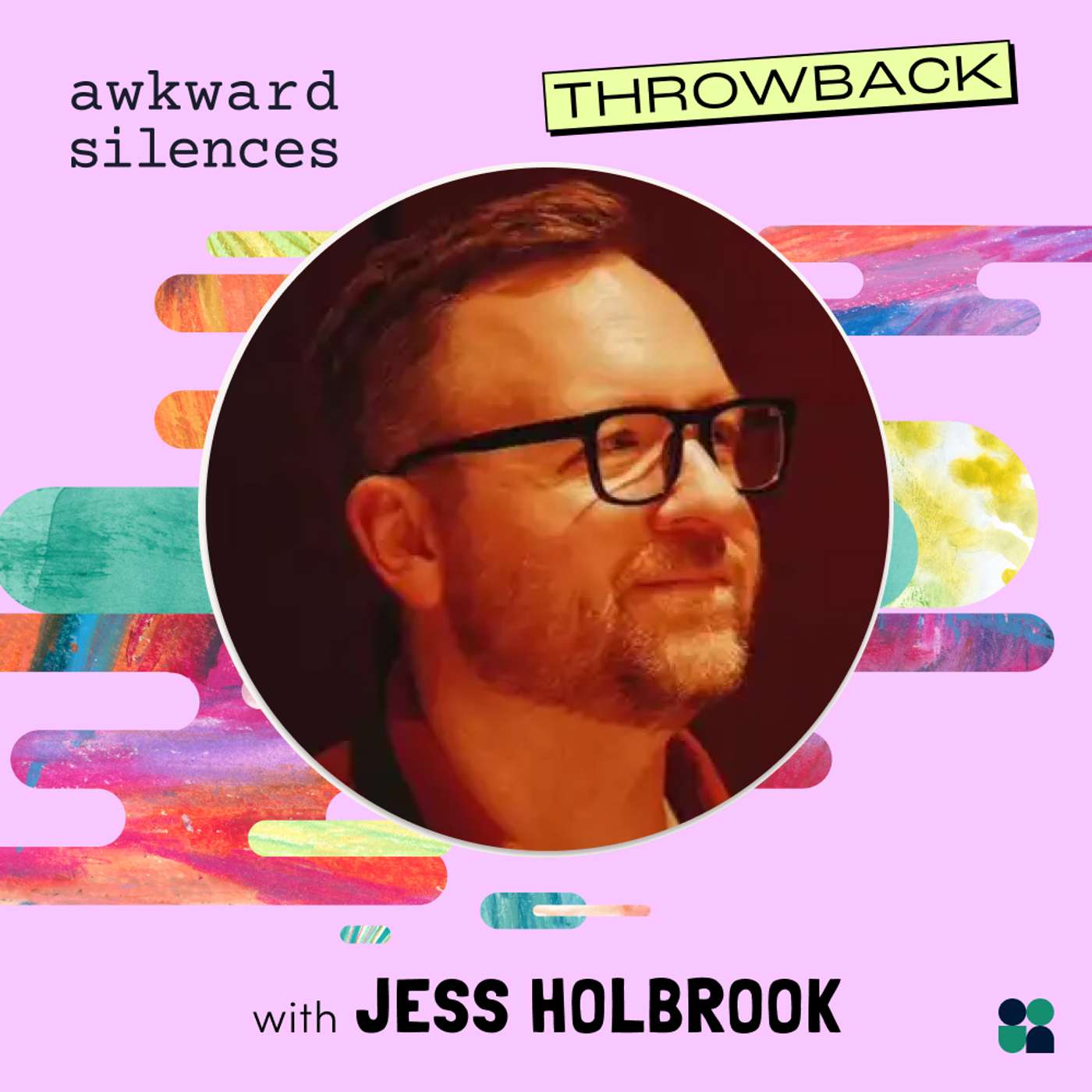 #191 - Throwback: UX Lessons from a Decade Researching AI with Jess Holbrook of MicrosoftAwkward Silences · on Deep Learning81 / 100
 Timothy Smith on AI, Data, and Drug Discovery at TakedaPharma Sessions · on Deep Learning78 / 100
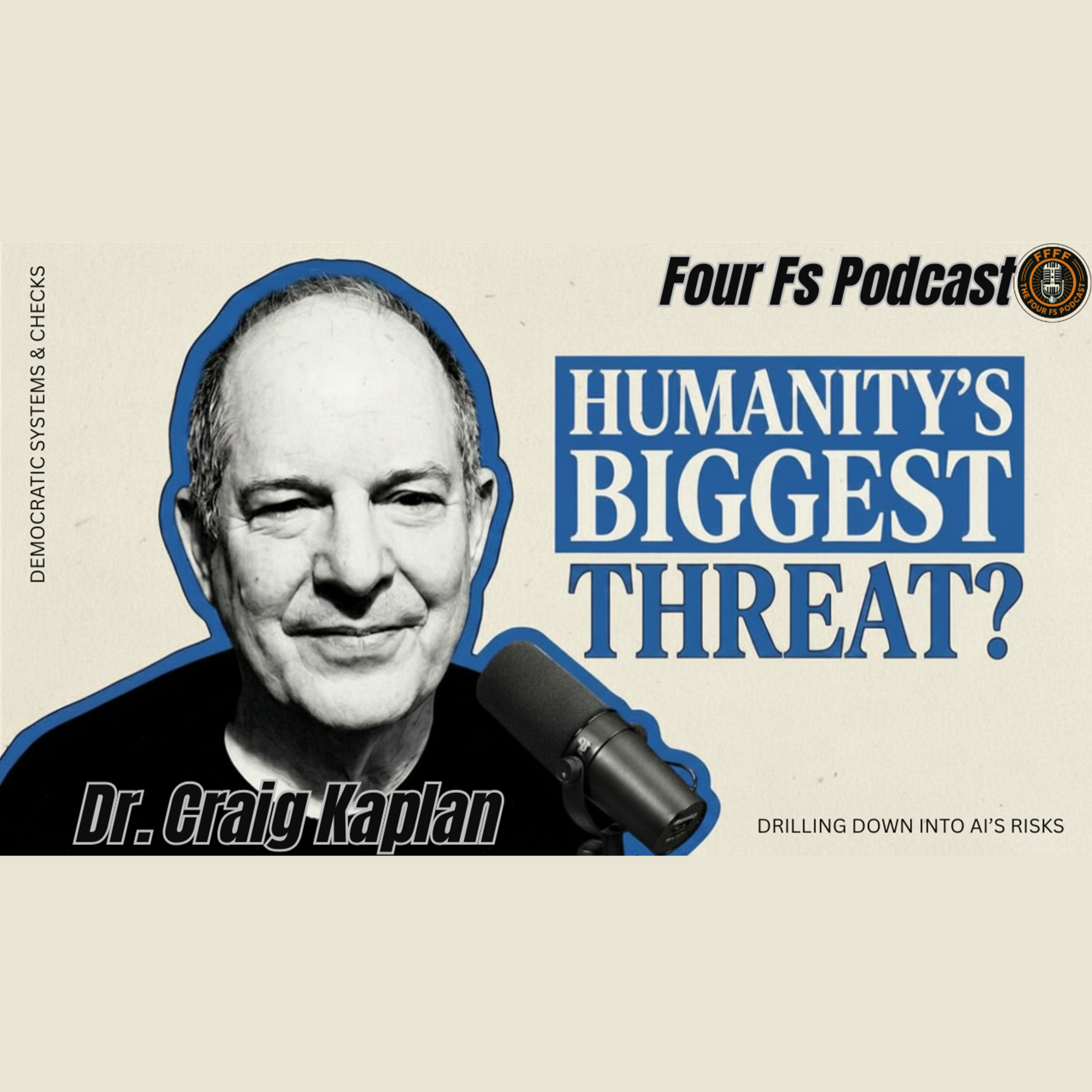 World's Leading Safe AI Expert: Superintelligence Will Change Everything & It's Closer Than You Think! - Dr. Craig A. KaplanFour Fs Podcast · on Deep Learning74 / 100
 How Jensen Huang Built NVIDIA's AI Moat with CUDAThe CEO Diary with Fexingo · on Deep LearningS5 Ep 7 | Building and Hiring with Purpose, with Beats MedicalS5 Ep 6 | Brainomix, the Return with Eric GrevesonS5 Ep 5 | Innovating within Medical Imaging with Darren PorrasS5 Ep 4 | Brain+, making an impact with DTx featuring Kim Baden-KristensenS5 Ep 3 | Are Patients Ready for LLMs in Mental Healthcare? with Oliver Fleetwood