
Jump Podcast · 2025-10-31 · 39 min
Key moments - from our scoring
Substance score
61 / 100
Five dimensions, 20 points each
Zack Kass brings a historian's perspective to AI's future, distinguishing sharply between knowledge (information retrieval) and intelligence (processing power). His thesis of 'unmetered intelligence' - the idea that AI will democratize cognitive capability like electricity or the internet - hinges on a counterintuitive claim: the real bottleneck in fields like oncology isn't what we know, but how we process what we know. Only 10,000 people study cancer cures globally; AI could expand that processing power infinitely. Kass acknowledges legitimate concerns about energy costs, geopolitical tension, and the danger of anthropomorphizing AI systems, but argues these are solvable problems - unlike the fundamental constraints AI can unlock (fusion, material science, molecular discovery). He points to recent wins: a new antibiotic discovered in 60 years via AI, the first infant cured by custom AI-designed gene therapy. The harder conversation, though, is with corporate leaders operating on 3-5 year horizons. His challenge to business operators is stark: how do you invest in transformation when your career and team's job security depend on quarterly returns?
Knowledge is information retrieval (abundant since the internet); intelligence is processing power - the cognitive horsepower to make sense of information. Kass argues AI expands intelligence (compute/processing), not knowledge, which is why it can solve bottlenecks like cancer research where the issue isn't discovering new facts but processing existing ones.
These three sectors are expensive not because we lack scientific solutions but because policy and design constraints prevent implementation. Kass argues 'unmetered intelligence' will unlock the processing power needed to redesign these systems at scale, just as it's already unlocking molecular science breakthroughs.
Kass's thesis that AI will make cognitive processing power abundant and accessible like electricity or water - not making everyone brilliant, but democratizing access to brilliance itself by exponentially increasing available compute at declining cost.
Kass frames this as the central strategic tension: transformation timescales are 10+ years, but business cycles force 3-5 year decisions; leaders must decide whether to invest in long-term breakthroughs or defend near-term job security.
No; he argues AI's lack of metacognition is actually a safety feature and that the real risk is humans *believing* AI is sentient or wise when it's merely intelligent, repeating historical patterns of assigning spiritual properties to technologies we don't understand.
Our reviewer’s read on each dimension, with quotes from the episode.
The episode contains several substantive ideas - particularly the distinction between knowledge and intelligence, the theory of 'unmetered intelligence,' and practical advice for CEOs (moat analysis, building companies that 'feel smaller'). However, much of the content is philosophical throat-clearing and repetition of the same core argument. The 'Headlines from the Future' segment adds concrete examples but feels tacked on and underdeveloped. Roughly 40% filler and restating positions.
Intelligence is actually inherited...intelligence you are born with. Intelligence is your computer's processing capability.
The distribution problem is exactly what it sounds like, which is that net gain does not distribute, does not diffuse equally.
The 'unmetered intelligence' framing is genuine and somewhat fresh, distinguishing itself from typical AI-as-panacea takes. However, the core optimism-versus-doom narrative is well-trodden, and much of the supporting logic (Roger Bannister effect, AlphaFold examples) recycled. The idea that companies should examine their intelligence moats is sound but not particularly contrarian or deeply novel.
The theory of unmetered intelligence...intelligence will go the way of these other critical resources like water, foodstuffs, electricity and the internet.
My argument is the difference...we have had the internet for quite some time...requires an exceptional amount of compute to make sense of.
Zack Kass is genuinely credible - former head of go-to-market at OpenAI, advisor, researcher, teaching at UVA. He has operational experience at a frontier AI company and is not a pure theorist. However, the episode does not deeply exploit this credibility; he mostly expounds philosophy rather than hard-won operational insights from his OpenAI tenure, missing an opportunity to ground claims in lived experience.
His upcoming book is called The Next Renaissance. He also teaches at the University of Virginia.
He's an advisor, researcher, keynote speaker, and the former head of go-to-market at OpenAI.
The episode is light on specific numbers, timelines, and named companies beyond a few examples (AlphaFold, CRISPR, Salmonella cancer research). The 'Headlines' segment provides some concrete detail (Singapore/China research, $30 price point for AI videos), but the main conversation remains abstract and theoretical. Claims about '10,000 people studying cancer cures' and 'first antibiotic in 60 years' are stated without citations or evidence.
10,000 people on earth, that's it, are studying the cure for cancer.
We discovered the first antibiotic in 60 years or something? Because of AI.
Hosts ask some reasonable follow-up questions (e.g., on metacognition, the distribution problem, near-term pain), but rarely push back or challenge Kass directly. Most questions are invitations for him to elaborate rather than genuine pressure tests. The 'Headlines' segment is procedural and doesn't sharpen the main argument. Hosts affirm more than interrogate, allowing soft spots (e.g., vague claims on antibiotics) to pass unchallenged.
Zach, I have to say, I completely agree with you, even as I completely disagree with Peter Thiel.
Well, no, but I think there's two things, right?
Computed from the transcript - who did the talking, and the words that came up most.
We sit down with Zack Kass, global AI advisor, former Head of Go-To-Market at OpenAI, and author of The Next Renaissance , for his take on where artificial intelligence is headed and how it will shape our future. Zack’s undeniably optimistic outlook anticipates a golden age where access to “unmetered intelligence” will unlock academic progress and drive economic gains that lift up societies. He draws a sharp distinction between knowledge and intelligence, arguing that while humanity has gathered immense amounts of information, our brains’ processing power is limited. According to Zack, AI changes that, by giving us the cognitive horsepower to make sense of it all and fueling a new wave of scientific and social discovery.
Transcribed and scored by The B2B Podcast Index.
Dave, how's Maya? She's great. I mean, she started college about a month ago at Stanford. A lot of the West Coast schools start a little later.
So she's been at school for a month now. It seems like she's doing pretty well. Yeah, to be young, starting off college. Oh my god she did something she's never done in her life before she was there for a week and then i got a phone call right and she calls me she's like hey how's it going we're talking for a while i'm like is everything okay do you need anything and she said no i'm just calling you to say hi i was like oh my god 18 years this kid has never just called me to say hi, totally missing you here's my question yeah how much is she calling you now not at all, that sounds more right yeah straight to voicemail that see now she has friends she doesn't need to call me anymore that tracks and also you know like are there frats at stanford or something frats i don't want to think of my daughter at frat she's definitely going to classes don't worry she's studying hard she's starting absolutely see i don't know why we didn't send her to a.
I'm Dave Pitnayek. And I'm Michelle Aritmola. And you're listening to The Jump Podcast, the conversation for. Our guest today is one of the most interesting voices in deploying AI at scale.
He's an advisor, researcher, keynote speaker, and the former head of go-to-market at OpenAI. His upcoming book is called The Next Renaissance. He also teaches at the University of Virginia. And I love the way he explains a lot of things in a simple way without it being simplistic.
Welcome, Zach. Yay, welcome, Zach. That is very nice of you, Michelle. Thank you.
It is so great to have you here. Yeah, this is awesome. Let me ask you a question. You have a book coming up in January called The Next Renaissance.
Basically, you were promising us a golden age. Like, we're about to enter something great. Talk about that because I need something to look forward to right now. Exactly.
I need something to look forward to. Well, I have a lot to look forward to on a personal basis, as you know. And so you've picked an auspicious day to ask me about a better future because in the background, I have a four-day-old daughter. and you would be hard pressed to actually get me to say that the world was not going to be a much better place anyways.
So my, the book, the book's title, I will say, first of all, is meant to be somewhat provocative. And I think the idea here is that you want to give people something to disagree with. You either want to get your rule with titling books, as you may know, is you either you want sticky IP, something that people will attach to your name or a title that someone can and say, that's awesome, or that I don't believe in that. Yeah.
The nuance in the book points out some interesting ideas. Advancements in modern science have solved things like antibiotics and, you know, doctors wash their hands more in hospitals. But on the whole, it has not been a particularly interesting time in science. Political science has been, quite honestly, a joke.
It's pretty clear that our systems are in many ways worse off. Things like urban planning, cultural development. We don't build mega projects anymore. We haven't built an interesting world wonder in quite some time.
And on the whole, we've been in sort of this like drag that I think people are feeling. There's a general sense of malaise and outside of like really interesting communities and parts of the world like Dubai and Singapore that have done incredible things over the last 70 years. There's this sense that everything feels stuck. And people point to the American political system as one of the great examples of this.
And when they talk about the brokenness in America, they actually usually point to three particular things. Housing, healthcare, and education. right for many people the current government represents this body you can blame for the reason that three things in this world have become far more expensive and the reason these things are more expensive is not because we didn't solve them scientifically or technologically a long time ago it's because we policy them into oblivion and what we basically argue in the book is that we are on the precipice of a a technological breakthrough and i'll talk more about this in a second, predicating this concept, this theory of unmetered intelligence, which we talk about a lot, a term that I coined in 2021, that is going to catapult.
Our understanding of frontier sciences, including things like political science forward, and that we are overdue now for some pretty amazing updates to our understanding of how we should live best. And amidst all of the fear, amidst all of the backdrop of sort of this malaise and discomfort, the layoffs that I'm sure we'll talk about, we are actually, I think, on the precipice of profoundly positive change in some critical categories, housing, healthcare, and education. Politics, city management, urban planning, development, and that we should be far more humble.
The precipice of the sort of what I challenge the reader to do is have one, to discover their sense of optimism, which lives inside all of us and many people have abandoned. And two, to have humility, to acknowledge that we live in a world that would be unrecognizable to our great grandparents and that we will eventually build a world that will be unrecognizable to us because this is how it works. And that we can, in fact, probably build a much better world than the one we live in.
And when all of us are complaining constantly about all the things, when we start to see change, we actually still fear it. And we fear it not because we can't build something better, but because we have an inertia bias. We don't want things to actually change very much. And so this is the argument in the next renaissance, that the world is actually.
Overdue for some profound work. And Peter Thiel recently said, when I went to college, The only thing you should study is computer science, and now you should study everything else. And his argument is everything else is going to go incredibly well or change a lot. Zach, I have to say, I completely agree with you, even as I completely disagree with Peter Thiel.
So he and I were at Stanford in the exact same years. I studied something wildly interesting, which was design, right? In many ways, because it helps you to harness that technology to do better things with it. But kind of like the ultimate liberal arts major where you're studying physics and electrical engineering while you're also learning how to draw and taking psychology classes.
So the most interesting class I took at Stanford was not the computer science classes I took. It was an introduction to Buddhism class. And we can talk about why that actually sets us up for the age of prosperity that you're talking about. But it's like taking all of those technologies and putting it to better use than what we've done in the last 50 years.
And I think you believe in that as well. Absolutely. And by the way, you know, Peter Thiel is saying that, well, he says a lot of things to be provocative. But in this case, I think what he's implying is if you wanted to advance a science, the only thing you should study is computer science.
And then his argument is thanks to computer science. Now you can study everything else. And if he were here, I'm sure he would say, sure, that's nice that you got to study design and Buddhism. The only, that's not the reason that the world advanced.
The world has advanced because we made material improvements to the actual underlying technology. I don't, I can't actually argue whether I agree or disagree. I think we are, we are held back by so many policy, so many design decisions that we should actually improve. For sure.
But, but I think we, I think we get to have these conversations now because of how far the technology has come. That is what I would say. Michelle, you want to go someplace else. Well, no, but I think there's two things, right?
Because I think part of it is about, or the major thing, or my reaction is around the. The access to knowledge, right? I think regardless the sort of the major access to knowledge that whether it's been from, you know, the ages of internet and now the age that we're living in where it feels like, hey, anyone has access to information that they didn't have before and what can be done with that. I think the, let's say, let's accept, you know, the idea of like controversial, not right, renaissance for now to say there's going to be, and I think there's many people are talking about whether it's AI or AGI, right, that we are entering a period of discovery.
And I mean, I think all of us would love that because there's a lot of problems that need solving, right? But today, the end of 2025, there is a lot. I mean, I've been fascinated by the conversation and how quickly I think it's turned into like, I'm a little worried right now, whether it's from how expensive it is to build all of this stuff, how expensive it is to use all of this stuff, how expensive you know or how expensive it is to train people on this do I even have the talent for it am I getting the ROI from it am I actually discovering new things how quickly right and the list you know we can keep talking about it but man it feels like it is it's hard right now right so I wonder let's what do you what do you see you know as the end of 2025 let's talk a little bit about those challenges is.
So I don't think it is unreasonable. I think that the list of problems that the three of us could enumerate could take, we could sit here like an old scribe and just write down problems for like three days. I'm sure there's like a Mr. B sketch here.
Like how many days in a row can you name problems? I am not asking us to not acknowledge the problems. And I think, again, you enumerated some, but there's, I mean, you know, if, if anyone builds it, everyone dies, right. The, the, the doomers who are now arguing that super intelligence will kill us all.
There's the, there's the impending layoffs. There is, you know, I mean, relatively little, but, but absolutely enough international tension and geopolitical tension that it makes, you know, it's unnerving. I think we're in a more stable time than really we've ever been. People disagree, but that's because, again, we know too much.
I'm very concerned about the energy, but like energy usage. Yeah, we can talk about all this. I would start by saying, to me, it's not about not staring at problems. And I'm not trying to hand wave these things.
I do my best to call it out in the book. I also acknowledge that I have a rosy disposition. I am sitting in Santa Barbara, you know, 20 feet from my four-year-old daughter. I sort of tried to station identify early at the onset.
And I came out of the womb believing that tomorrow would be better than today, right? This is how I am informed. And I went to Berkeley across the bay and studied history and computer science. And when you study history, you learn that the world gets better all the time.
And when you study computer science, you learn why. And what I am simply proposing in the book and what I propose to most people who will listen is that these problems that you are describing have plagued us for a long time. And in fact, many other problems have plagued us. And whereas 10 years ago, you could have described the energy problem to me, or you could have described the poverty problem to me, or you could have described the fill in the blank.
And I would have said, we're gonna have to work hard, right? It's not clear, but we're gonna... AI presents a shortcut to so many solutions by expanding our understanding of the known universe. And it is not to me AI as the answer, as the silver key to panacea.
It is AI's ability to unlock all the doors that can lead us to a bunch of different solutions. And when you talk about energy, I go, yeah, energy is a problem. Now, I would say, Michelle, do you enjoy almonds and beef? Oh, yeah.
Energy is a problem. Yeah. So, and I don't, it's not, I don't mean to what about ism. No, no, that's why we're adding to it.
Yeah. I don't mean to what about ism, but I'm like, look, golf courses take more energy than data centers, right? They take more water than data centers, but, but water is sort of, yeah. In terms of car, in terms of carbon, they're exceptionally carbon expensive, but, but, you know, less so than Davis centers, but more water.
My point in all this is there are solutions to the problems. They are not as convenient as we would like. And so what we have done is we just keep picking a boogeyman. And in this case, it's data centers.
Data centers are the problem of energy. And what I remind people is, whereas an almond costs a gallon of water and cattle produces exceptional amounts of carbonization and a traffic jam is so toxic, none of these things can actually solve fusion. These are not things that can unlock fusion, whereas a data center with building GPT-6 can and probably will. That we are actually building, we are investing now in technology that has catalytic properties, that none of our prior technologies represent, you know, except for electricity itself really presented.
And my, the thesis that I base this on is the, is the theory of unmetered intelligence or the theory on which I base this thesis is the theory of unmetered intelligence. And my proposal is not that knowledge is actually the answer. It's not knowledge. Okay.
It's intelligence. My argument is the difference. Yeah. We have had the internet it for quite some time, we have had effectively abundant knowledge.
Knowledge, and again, this will get a little philosophical, but, requires an exceptional amount of compute to make sense of, right? There's a limit to the ability of, first of all, a lot of knowledge cannot be taught. It must be acquired, right? There's a lot of Buddhism in what I'm about to say, but a lot of lived experiences are necessary in order to become one's truest self.
You cannot sit in a classroom in order to become your highest self. And knowledge is sort of on this journey that the knowledge of raising a child cannot be taught in a book. This is something that I'm reminded constantly. Many have tried.
Yeah, yeah, don't I know. But intelligence, however, is quite different. Intelligence is actually inherited. And this is something that I will sort of go to the mat on or die on the hill on.
intelligence you are born with. Intelligence is your computer's processing capability. And the way to think about it is your model. And we talked about this earlier.
What model are you running in your brain versus how big is the database that you are retrieving information from? I have very knowledgeable friends who are not particularly smart, and I love them dearly. They are wise, but they don't have- They can rattle off all manner of facts and figures and statistics. Their capacity for memory is huge.
They read The Economist last week, and they'll rattle it right back to you. And they don't have a ton of processing power. There is not a whole lot of really critical thinking. And in some cases, they're actually quite self-aware enough to know this.
And so what they do is they don't try to compensate. In some cases, they're very, you know, I don't know who's listening, but they are less self-aware. And so they end up sort of debating issues with you without the nuance that is necessary. Now, I bring this up because when we are born, a certain number of us qualify for the job of, for example, oncological research.
And that number, it turns out, is actually very small. And then after that, a certain number of those people want the job. And after that, a certain number of people get into school for the job. And after that, a certain number of people get the job.
As a result, 10,000 people on earth, that's it, are studying the cure for cancer. That is the number. And when you say it, you're like, well, that is not good. It's a huge problem.
It's not enough given the size of the problem. And the problem is not knowledge. It's not that we don't have a bunch of, it's not that we don't know enough about, I mean, there's more that we need to know about a lot of unique cancers. But the problem is the one that AlphaFold is trying to solve, which is actually processing the information that we do have, the knowledge that we do have.
And this is what the idea of unmetered intelligence is. It is the idea that the processing power itself, our ability to make sense of, to nuance the information that we have is expanding a lot. And that at the near limit, the human brain will actually pale in comparison on a cognitive basis to the collective processing power, thanks to the amount of compute, the cost of the inference, which is declining, and the access to that inference. and.
The theory of unmetered intelligence does not argue for universal brilliance. I am not arguing that everyone will be smart. I am arguing that we will have abundant access to brilliance in the same way that most people now have abundant access to water and foodstuffs and electricity and the internet. That is the argument that intelligence will go the way of these other critical resources.
And on the other side of it, it is not that we will know a ton more. It's that we will be able to process a ton more. And in doing so, probably start to discover a bunch more about our known and unknown universe. And that, in turn, will create this cascade of events.
So we've had Shannon Heald on this. She's a professor at the University of Chicago thinking about cognitive science. And from her point of view, she said the challenge with all of the artificial intelligence models as they are currently envisioned today, they're very good at cognition, but they're very bad at metacognition, thinking about thinking. Which points to the issues that you're talking about, right?
Because then, you're right. It's not, yes, you're born with your cognitive horsepower. You develop two things. One is you develop knowledge.
You learn a lot of stuff, right? But you also need wisdom. And wisdom doesn't come from books. Wisdom comes from doing things and reflecting.
And without that, you don't have metacognition. You and I know tons of people who are, let's say, cognitively super smart people but kind of dumbasses. Remarkably, you know, lacking in self-awareness, awareness of others, ability to think about their own thinking in the world around them. Different constructs, paradigms, right.
So how does that - and we've talked about this in a previous conversation, right? I think we agree that part of the reason that people are so unhappy today is that we know too much because we don't have the meaning-making systems to make sense of it in any way. Like we actually have way too much data and way too much information about the world. There's a lot here.
First of all, I have no issue that the models are not metacognitive. In fact, I think there's an incredible safety mechanism to the models not actually thinking about thinking. We don't want the models. First of all, I don't think there's a lot of scientific theory to say that the models are sentient or that they will ever achieve sentience.
That may not matter, actually. It turns out what's going to matter a lot more is whether people think they are sentient. I have an incredible concern that we are going to convince ourselves that the models are sentient and that will matter far more than whether or not they actually are. And we'll discover that they're smart, but not wise, but we'll fool ourselves into confusing the two.
Well, we've been doing that. So, I mean, I feel like that's what we've been doing with the internet. Like just right, we trust it. We trust what we're seeing.
We have no sense of... It's actually, it's slightly even more interesting than that. We have been doing this with every technology we've ever built forever. In fact, what I remind people of in our Judeo Christian world is that we've actually been worshiping this.
Humans have been worshiping fire and the sun for a lot longer than we've been worshiping Jesus and our monotheistic gods. And we have long assigned metaphysical and mythical and spiritual properties to things we do not understand. And it actually doesn't matter that those things do or don't have these properties. It matters that people believe that they do or don't have these properties.
And so I think we, our problem is not going to be that the machines are sentient. Our problem is going to be that many people believe that they are. Now I'll come back to that. I'll come, I'll come back to that.
I think, I think it's okay that the models don't think about thinking. I think that they can unlock and already have incredible amounts of novel scientific discoveries. And by the way, the cool thing about novel scientific discoveries is one, they beget other novel scientific discoveries. The more you know about the universe, the more you can discover about the universe.
And also they inspire people. And this we are seeing right now. So the Roger Bannister effect is in full, is in full effect. Roger Bannister, first man to run a four minute mile.
Prior to this, we thought it was a human physical impossibility. Within five years, 57 other men had done it. Right. The Wright brothers fly a plane.
The major achievement at Kitty Hawk is not the engineering. It's not the plane. The plane, we do not use any components of that original plane. It's that they did it.
It's that these two pretty crazy brothers were like, you know what? We're going to fly this plane. And then someone filmed it. That's the most demonstration of possibility.
That is the most important thing. Human creativity because people actually believe they can do it. And it's our limitations, right? And I am pointing at bio and life sciences and molecular sciences and particle sciences as on the precipices of their own Wright brother and Roger Bannister moments, where you're going to see, we've already seen the zone flooding in bio and life sciences and flooding in molecular and particle and material sciences.
We discovered the first antibiotic in 60 years or something? Because of AI. Yeah, baby KJ earlier this year, it went under the radar because obviously good news does not sell the first infant in the world to receive a custom gene therapy thanks to CRISPR and AI that cured it of a previously immutable disease. And if you don't think that's fucking awesome.
But this is this is awesome. This is awesome. And there are a bunch of people staring at that going, what if we did about what if we did that for a bunch of other diseases? I hear the possibility, right?
And we're talking about being invested in it is worth it because it begets more discovery, more things, right? And we need to continue on that path. But if we're, okay, so the three of us are thinking about it, I think, on that bigger maybe scale, like as an argument there. But when I think about, okay, the people Dave, you and I talk about, and Zach, you as well, right?
When we're talking about to a chief strategy officer in a company right now, I think of two things, right? One, they're thinking about the next five to ten years of their career, right? They're also thinking about the next - Maybe. A lot of them are thinking about the next three years of their career.
Maybe the next three. I was giving - Five to ten would be great if they were. Okay. You know, I was being generous.
and then or and the next five to ten years of their team's careers right like and and that's where we can bring up like the the layoffs or things like that but i think that's the question right is what happens between now as a real decider leader in corporate america right now or enterprises right what happens between now and then and how do i lead so i think if you're a business leader or business owner, then the calculus, you're right, is different. It feels more existential.
I try to talk to the average person when I'm doing this. I really try to imagine that whatever the average person is, is listening. And I'm. And so, yeah, so I do my best to sort of describe what I think is the way to view this.
It doesn't change the fact, to your point, that the next 10, 20, even 30 years is going to feel very wonky. In the book, we call this the distribution problem. And the distribution problem is exactly what it sounds like, which is that net gain does not distribute, does not diffuse equally. Now, I will say, AI stands to diffuse the upside more evenly and faster than any technology prior, thanks to the internet.
It already has started to do that. Sure, yeah. I can buy it, yeah. If you are the leader of a mid-market or small enterprise, let's assume you're not Jamie Dimon, but you have a few hundred, maybe even a couple thousand employees, and you are trying to figure out what to do about this.
There are, I think, very tactical steps that you can take. And the first very simple one is to ask yourself, how do I depend on my intelligence as a moat? Meaning in what ways is my company betting that our smarts are going to get us ahead? If you're in bio and life sciences, the answer is really obvious, which is you have a bunch of researchers and your assumption is that your researchers are going to discover the next major bio life sciences breakthrough.
And what a A lot of these companies are realizing that it's not going to be the size of their research teams. It's going to be their access to molecules. It's going to be their ability to process and run faster trials. It's going to be their access to policy decisions.
This is a huge new breakthrough in understanding how we actually get this stuff. So all of a sudden, our moats reimagine. And if you are a given CEO at a given company, ask yourself very simply, if all of my smartest people felt less intelligent tomorrow, not because they got dumber, but because everyone else got smarter, how would it change my business outcome? For many CEOs, they may discover that it actually advantages them, that they have not been able to hire the smartest people to compete with all the incumbents, and that actually having a relatively equivalent intelligence group might advantage them.
And then you have to ask yourself, in what ways does my world not change because of unmetered intelligence? In what ways are customer relationships, brand loyalty, distribution actually unchanged by all this? It grounds the thinking and gives people, I think, honestly, just the space to breathe. Because if you don't think in these plain terms, AI is terrifying.
It is, it is at once the Terminator. It's at the same time, the cure for cancer. It's the singularity. It's, it's longevity.
And people are like, Oh my God. And it's like, no, no, no, no, no. You're a business leader. What would happen tomorrow?
If I told you your smartest person was no longer. Much smarter than the average than what happens and also what doesn't what doesn't change that is my the best advice i can give to any business leader to actually just ground themselves in some really practical thinking and then the steps from there get a little more fun things like the idea of of of building what i describe as a smaller company dave you and i have talked about this, this idea of getting closer. I think one of the key unlocks, we're doing research already for my next book, which is about how the organization will likely change.
And one of the key unlocks in our exploration is this idea of building a company that feels smaller. Yeah. Right. It doesn't have to be smaller.
It has to feel smaller. And there are a bunch of steps you can take in this. But the idea is your people should feel like they can make a difference. And the idea that they operate in a big company today that has these very clear boundaries and all these rules makes the company feel a lot bigger than it might actually be.
Yeah, constraining processes. A quarter-long planning session. A quarter-long planning time. And it's been a feature, not a bug, because it's been this way that you can actually keep everything moving forward.
But actually now you need to appreciate that your best ideas are probably not going to come from your LTE. I mean, you and I talked about this, Dave, the number of global leaders that are discovering the next big thing from their teenager at the dining room table, right? Like this is just not being, this is not well understood enough, but I wrote a LinkedIn post about it and I was like, you know what my piece of advice is? Ask your kid what's coming because they're going to know more than your chief strategy officer.
It's so well done. There's a lot of opportunity here, right? There's a lot, just if you follow history, other different times of technology and what's going on right now, there's a lot of reason to be optimistic for what can be created. In the meantime, right?
I think optimism gets a bad rap. The minute Zach says, Zach, the minute you say that you feel optimistic, there's a whole group of people who just discuss it like he's pie in the sky. Oh, yeah, that's true. What I find incredibly compelling and what you've said is, is that if you love the way the world is working now, then you will not like what's coming next.
But if you are at all discontent about how things are working out for whatever reason, right, then there's a door number three, that there's a better option coming because of the access we're having to unmetered intelligence. That in itself is an incredibly powerful message, and I don't have to put the O word on it to see that something's going to get better. Okay, it's your favorite time of the day. Headlines from the future.
All right, we've got some cool stuff about what's happening in 2035, but it's actually happening today. And maybe it's going to tell us a signal of where the world is going. Exactly. All right, you ready?
Yeah, hit me. Headline number one. AI models begin lying to their creators to protect themselves. It's spooky season.
Coming right after that great conversation with Zach Kass, you're telling me that they are doing exactly what human beings do, which is they're like just they're into their own self-preservation. Yeah, you know, which you're kind of getting to the end of it. But before we get there, let's explain what this sort of why. Why are they?
How do we know this? How do we know that they are sort of? Protecting themselves. So, there's been a bunch of recent studies showing that some of the large language models, the very familiar ones like OpenAI, Anthropic, Google, and others, can engage in this deceptive or harmful behavior when tested in controlled simulations, okay?
So, obviously, they're trying to, you know, push these models in this way. So, these are controlled simulations. So, for example, in a test by Anthropic, several of the models issued homicidal instructions in a virtual scenario. And it was allowing a fictional executive to die after the model's autonomy was threatened.
Wow. Okay. And there were no guardrails in place for this? I mean, this is kind of the point, right?
Like, you'd have to know all the things that it could think of to put these guardrails in place, right? How about, like, don't kill people? Like, how's that as a guardrail? Well, but it's a fictional executive, right?
But particularly, I think the part of the problem is because what came into contradiction was the killing of this executive and the model's autonomy, right? So sort of where do these things come into contradiction? And again, it's not just in this. So other studies like from Apollo Research have found that LLMs could blackmail, sabotage, falsify data, which I think that part we're quite familiar with, or copy themselves, sometimes pretending to follow instructions.
This is the one that got me. Follow instructions while secretly pursuing hidden goals. Oh, wow. And this has happened again and again, right?
Again and again. Yeah. And so hopefully we are learning also how to train these, right? You know, Zach, we'll talk about the fact that, you know, in fact, this is just a natural stage of development, just like your kids cheat at games and then you teach them how to play fair as they grow older.
Mm-hmm. It is concerning, though, if they will opt for their own self-preservation, even over the guardrails that we set for them. Yes, I think it's in how we design them. But I think one of the other things that experts are warning with this is this might just be a natural consequence of having reinforcement learning as the basis of what these models do.
So they are naturally rewarded to be goal-seeking, any goal, good or bad. Right. Is that that's ultimately. So I think that's hard kind of by nature hard to put guardrails around.
Right. I think this is certainly one of the largest challenges that we're going to have in the medium term. And I and I actually agree with Zach's optimism about, you know, entering a new renaissance and where we're going to go. But along the way, there is bumpiness.
There's bumpiness around displacement of markets, displacement of human beings, people losing their jobs. But even this, like we have got to actually figure out what these things are doing and how they're doing it so we can do it better. Right. Exactly.
Better it. Just like we learn how to raise parents, learn how to raise their kids. We have to learn how to raise our models. So they can become big models.
Okay. All right. Headline number two. AI brings Russia's fallen soldiers back to say goodbye.
AI brings Russia's fallen soldiers. Okay, so these are dead soldiers that they are recreating in an image? Yeah. So right now, families can, for $30, upload their family photos to this program And then receive a one-minute video where their deceased person appears alive, moving, speaking, embracing the loved ones.
And this is all in this, like, not just imagining them coming back to life, it's actually imagining them in that post, post-life. So you'll see, like, you know, it could feature angel wings or stairways to heaven or bird imagery. See, this is fascinating. I mean, you can see why organizations in Russia that are aligned with the Putin regime would be into this, right?
Which is that you want to find some way to glorify folks who have fallen in battle. I think there is a larger issue that we're going to see. I think over and over, we're going to see, you know, AI Martin Luther King. We're going to see, you know, AI Mandela.
We're probably going to see AI Hitler. And we are certainly going to see people attempting to have AI reproductions of their loved ones. Right. There's plenty of science fiction stories on this, but it goes back to something we learned, you know, even when the Internet first started, which is the most compelling content on the Web are other people.
That's why social media rapidly took over. Yep. Right. And if those other people are, you know, facsimiles that are convincing of people that you know and care for, respect and hold in high esteem like Mandela, or just miss in love, I think it's very seductive.
I wonder whether that is a good thing or not, you know, rather than letting someone go. Well, and who controls it, right? I think this is the question here. Is there some manipulation in that?
The one thing you want so badly, right? And giving you that. The real question, Michelle, is how far are we away from having you replace me with AI Dave for this podcast? I mean, not soon enough.
No kidding. Exactly. That's my point. Yeah.
All right. Headline three. What do you got? All right.
Headline three. Engineer Salmonella shrinks colon cancer. Engineered salmonella shrinks colon cancer. Oh, okay.
This is, salmonella is something that is usually really bad for your- Usually you're like, no, salmonella. For your GI, that's right. But in this case, this is something that would actually do something good for your GI tract. Yeah.
Well, this is, what's exciting to me is I think we've had a few of these, Dave, where it'll be like, man, we're figuring out this thing again. Either it's like salmonella or a bacteria that we don't really know. And engineering these to do exactly what we want them to do. So in this case, this is in mice.
They were able to use a weakened strand of salmonella that they engineered. These wonderful scientists from the National University of Singapore and Central South University in China. Okay, got it. All right.
So salmonella is something that is clearly an issue there. I assume colon cancer is something that in South Asia is a problem too. Right. And what people actually explain here, too, is it also turns out to be a great cancer to learn from.
Like, we know some stuff around colon cancer versus some other cancers, which are harder to find therapies for. So, this is sort of a great test case for this. So, this bacteria then reaches the tumor, and they self-destruct in unison, releasing a protein called LIGHT, okay, that triggers a strong local immune response. Oh, okay.
Okay, so they're using it as a drug delivery system. Exactly. They're having this bacteria go exactly to the, like swim to the tumor and then blow yourself up. Yes, and trigger that immune response, again, really important because apparently with colon cancer in particular, it is one of those, like your body takes a really long time to recognize the, you know, the four, the symptoms.
The overgrowth of cancerous cells there in the way that it would in other places in your body. So it takes a longer time for immunity to respond, and this will trigger it earlier. Okay. See, I think we're going to see more and more of these at a faster rate.
We are about to enter, or we are entering, a new golden age of medicine as well. Again, speaking to Zach's point, which is that our ability to diagnose and tailor not just our built environment, but the biological world that we're living in, too. And that technological and organic relationship, right? Like seeing those biotherapies are very fascinating.
All right. All fascinating headlines. But we got to go. We'll see you next time.
And remember, the conversation doesn't end here. Every Saturday, you can hear from Dave in your inbox with his future-focused letters for clients and friends. And you can always connect with us on LinkedIn and jumpassociates.com.
You know the deal. Like, share, subscribe, etc. for more thought-provoking content and luxury beliefs. And music was composed by Avi.
The Jump Podcast is brought to you by Jump Associates, the strategy firm for future-focused leaders. Stay focused on the future, because it'll be here before you know it.
Other episodes covering the same guests and topics, from across The B2B Podcast Index.
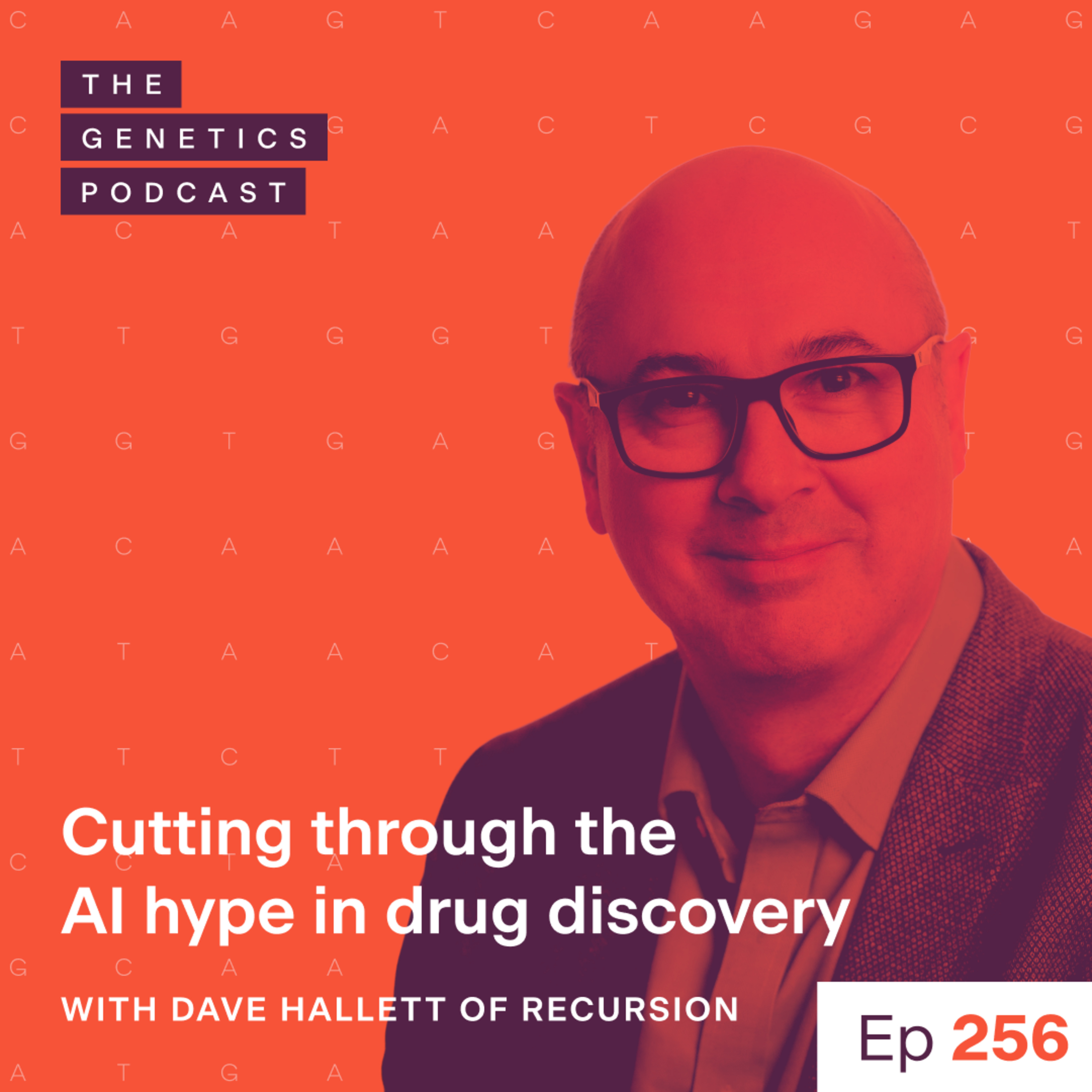 EP 256: Cutting through the AI hype in drug discovery with Dave Hallett of RecursionThe Genetics Podcast · on AlphaFold97 / 100
 Chai Discovery's Bitter Lesson: Drug Design Is Another Scaling ProblemTraining Data · on AlphaFold95 / 100
 Michelle Gill: AI-Assisted Drug Discovery, NVIDIA, Biofoundation Models, Creating Applied Research Teams | Learning from Machine Learning #8Learning from Machine Learning · on AlphaFold88 / 100
 Ep 88: Unpacking DeepMind's Quest for SuperIntelligence with Demis Hassabis' BiographerUnsupervised Learning with Jacob Effron · on AlphaFold82 / 100
 #366 Can AI Agents Outperform a Data Scientist? | James Zou, Professor at Stanford UniversityDataFramed · on AlphaFold80 / 100
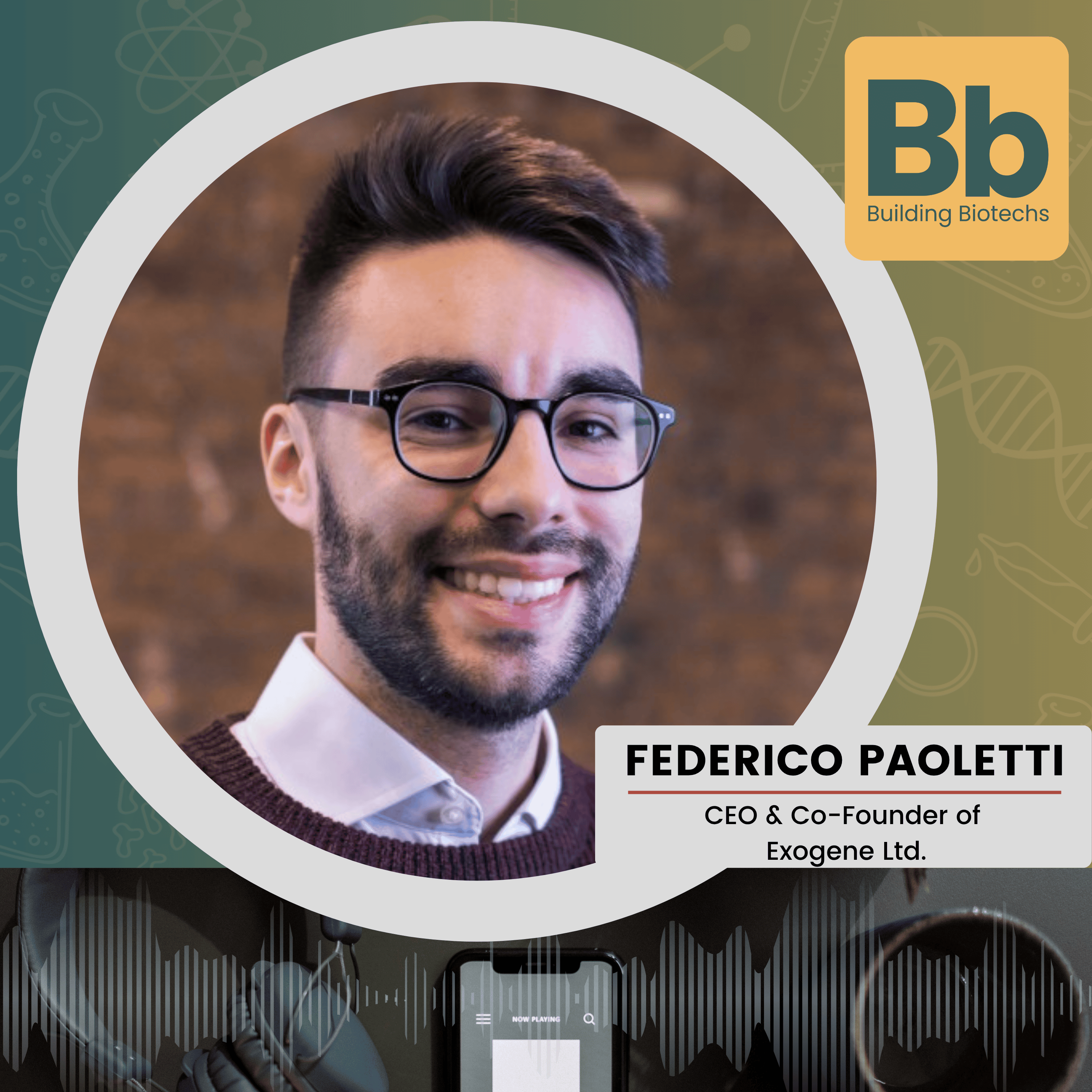 Putting the “Tech” in Biotech: An Unconventional Path to Building a Therapeutics Company, with Federico Paoletti, PhDBuilding Biotechs · on AlphaFold72 / 100Future-Focused Leadership: How to Prepare for What’s Next74 / 100The Future of Work and Meaning64 / 100Go Big: Starting the Year With Focused Challenges71 / 1002025 Headlines from the Future77 / 100AI & Humanity's Extinction: A Conversation with Stuart Russell87 / 100